



Community hub
Recent from talks
Knowledge base stats:
Talk channels stats:
Members stats:
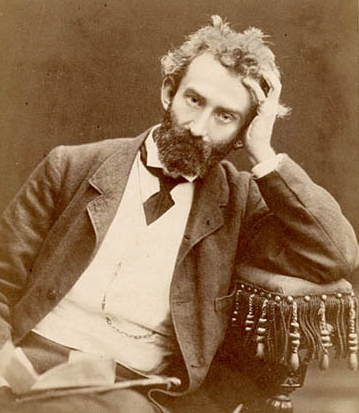
Nicholas Miklouho-Maclay
Nicholas or Nicholai Nikolaevich Miklouho-Maclay (Russian: Никола́й Никола́евич Миклу́хо-Макла́й; 17 [O.S. 5] July 1846 – 14 [O.S. 2] April 1888) was a Russian explorer and scientist. He worked as an ethnologist, anthropologist and biologist. He became famous as one of the earliest scientists to settle among and study indigenous people of New Guinea "who had never seen a European".
Miklouho-Maclay spent the major part of his life travelling and conducted scientific research in the Middle East, Australia, New Guinea, Melanesia and Polynesia. Australia became his adopted country and Sydney the hometown of his family.
He became a prominent figure of nineteenth-century Australian science and became involved in significant issues of Australian and New Guinea history. Writing letters to Australian papers, Miklouho-Maclay expressed his opposition to the labour and slave trade ("blackbirding") in Australia, New Caledonia and the Pacific, as well as his opposition to the British and German colonial expansion in New Guinea. While in Australia, he built the first biological research station in the Southern Hemisphere, was elected to the Linnean Society of New South Wales, was instrumental in establishing the Australasian Biological Association, stayed at the elite Australian Club, became the intimate of the leading amateur scientist and political figure Sir William Macleay, and married Margaret-Emma Robertson, the daughter of the Premier of New South Wales. His three grandsons have all contributed to the public life of Australia.
One of the earliest followers of Charles Darwin, Miklouho-Maclay is also remembered today as a scholar who, on the basis of his comparative anatomical research, was one of the first anthropologists to refute the prevailing view that the different races of mankind belonged to different species.
Miklouho-Maclay was born in a temporary workers' camp in Borovichsky Uyezd, Novgorod Governorate, Russia, the son of a civil engineer working on the construction of the Saint Petersburg–Moscow railway. Miklouho-Maclay was partly of Ukrainian Cossack descent. His Ukrainian father, Nikolai Ilyich Myklukha, was born in 1818, in Starodub, Chernigov Governorate, and descended from Stepan Myklukha, a Zaporozhian Cossack who was awarded the title of noble by Catherine II for his military exploits during the Russo-Turkish War of 1787–1792, which included the capture of the Ochakov fortress. His Cossack lineage was extensive and also included the Zaporizhian ataman Okhrim Myklukha, who later became the prototype of Nikolai Gogol's main character Taras Bulba. His paternal grandparents were friends of Gogol. About his origins, Miklouho-Maclay wrote:
My ancestors came originally from the Ukraine, and were Zaporogg-cossacks of the Dnieper. After the annexation of the Ukraine, Stepan, one of the family, served as sotnik (a superior Cossack officer) under General Count Rumianzoff, and having distinguished himself at the storming of the Turkish fortress of Otshakoff, was by the order of Catherine II made a noble...
Nicholai's father graduated from the Nezhin Lyceum, after which he walked all the way to Saint Petersburg, where he enrolled in the Roadway Institute of Engineering Corps. He graduated from the institute in 1840 and became an engineer assigned to work on the construction of the Moscow–Saint Petersburg Railway. After becoming the first chief of the Moskovsky passenger railway station in Saint Petersburg, Myklukha moved his family there. He died in December 1857 from tuberculosis and was survived by his wife and five children. Before his death, Myklukha was fired from his job for sending 150 rubles to Taras Shevchenko.
Nicholai's mother, Ekaterina Semenovna (née Bekker), was of German and Polish descent (her three brothers took part in the January Uprising of 1863). After 1873, the Miklouho-Maclay family purchased and lived in a country estate in Malyn, 100 kilometres (62 mi) northwest of Kiev in the Polesia region.
Hub AI
Nicholas Miklouho-Maclay AI simulator
(@Nicholas Miklouho-Maclay_simulator)
Nicholas Miklouho-Maclay
Nicholas or Nicholai Nikolaevich Miklouho-Maclay (Russian: Никола́й Никола́евич Миклу́хо-Макла́й; 17 [O.S. 5] July 1846 – 14 [O.S. 2] April 1888) was a Russian explorer and scientist. He worked as an ethnologist, anthropologist and biologist. He became famous as one of the earliest scientists to settle among and study indigenous people of New Guinea "who had never seen a European".
Miklouho-Maclay spent the major part of his life travelling and conducted scientific research in the Middle East, Australia, New Guinea, Melanesia and Polynesia. Australia became his adopted country and Sydney the hometown of his family.
He became a prominent figure of nineteenth-century Australian science and became involved in significant issues of Australian and New Guinea history. Writing letters to Australian papers, Miklouho-Maclay expressed his opposition to the labour and slave trade ("blackbirding") in Australia, New Caledonia and the Pacific, as well as his opposition to the British and German colonial expansion in New Guinea. While in Australia, he built the first biological research station in the Southern Hemisphere, was elected to the Linnean Society of New South Wales, was instrumental in establishing the Australasian Biological Association, stayed at the elite Australian Club, became the intimate of the leading amateur scientist and political figure Sir William Macleay, and married Margaret-Emma Robertson, the daughter of the Premier of New South Wales. His three grandsons have all contributed to the public life of Australia.
One of the earliest followers of Charles Darwin, Miklouho-Maclay is also remembered today as a scholar who, on the basis of his comparative anatomical research, was one of the first anthropologists to refute the prevailing view that the different races of mankind belonged to different species.
Miklouho-Maclay was born in a temporary workers' camp in Borovichsky Uyezd, Novgorod Governorate, Russia, the son of a civil engineer working on the construction of the Saint Petersburg–Moscow railway. Miklouho-Maclay was partly of Ukrainian Cossack descent. His Ukrainian father, Nikolai Ilyich Myklukha, was born in 1818, in Starodub, Chernigov Governorate, and descended from Stepan Myklukha, a Zaporozhian Cossack who was awarded the title of noble by Catherine II for his military exploits during the Russo-Turkish War of 1787–1792, which included the capture of the Ochakov fortress. His Cossack lineage was extensive and also included the Zaporizhian ataman Okhrim Myklukha, who later became the prototype of Nikolai Gogol's main character Taras Bulba. His paternal grandparents were friends of Gogol. About his origins, Miklouho-Maclay wrote:
My ancestors came originally from the Ukraine, and were Zaporogg-cossacks of the Dnieper. After the annexation of the Ukraine, Stepan, one of the family, served as sotnik (a superior Cossack officer) under General Count Rumianzoff, and having distinguished himself at the storming of the Turkish fortress of Otshakoff, was by the order of Catherine II made a noble...
Nicholai's father graduated from the Nezhin Lyceum, after which he walked all the way to Saint Petersburg, where he enrolled in the Roadway Institute of Engineering Corps. He graduated from the institute in 1840 and became an engineer assigned to work on the construction of the Moscow–Saint Petersburg Railway. After becoming the first chief of the Moskovsky passenger railway station in Saint Petersburg, Myklukha moved his family there. He died in December 1857 from tuberculosis and was survived by his wife and five children. Before his death, Myklukha was fired from his job for sending 150 rubles to Taras Shevchenko.
Nicholai's mother, Ekaterina Semenovna (née Bekker), was of German and Polish descent (her three brothers took part in the January Uprising of 1863). After 1873, the Miklouho-Maclay family purchased and lived in a country estate in Malyn, 100 kilometres (62 mi) northwest of Kiev in the Polesia region.