
Recent from talks
Nivkh people
Knowledge base stats:
Talk channels stats:
Members stats:
Nivkh people
The Nivkh, or Gilyak (also Nivkhs or Nivkhi, or Gilyaks; ethnonym: Нивхгу, Nʼivxgu (Amur) or Ниғвңгун, Nʼiɣvŋgun (E. Sakhalin) "the people"), are an indigenous ethnic group inhabiting the northern half of Sakhalin Island and the lower Amur River and coast on the adjacent Russian mainland. Historically, they may have inhabited parts of Manchuria.
Nivkh were traditionally fishermen, hunters, and dog breeders. They were semi-nomadic, living near the coasts in the summer and wintering inland along streams and rivers to catch salmon. The land the Nivkh inhabit is characterized as taiga forest with cold snow-laden winters and mild summers with sparse tree cover. The Nivkh are believed to be the original inhabitants of the region, and to derive from a proposed Neolithic people that migrated from the Transbaikal region during the Late Pleistocene.
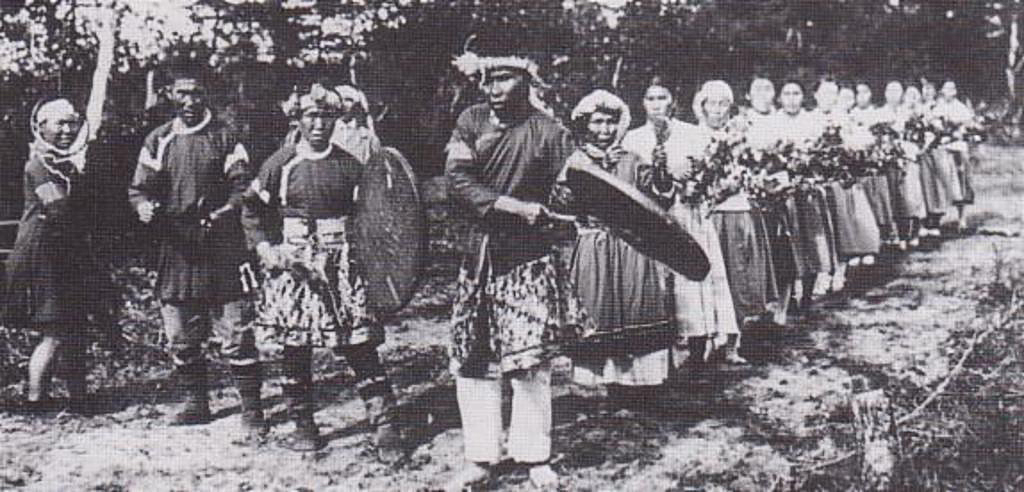
The Nivkh had long maintained trade and cultural relations with neighboring China and Japan. Previously within Qing China's sphere of influence, the Russian Empire annexed the region following two treaties in 1858 and 1860. Subsequently, traditional Nivkh lifestyle was significantly altered by colonization and collectivization. Today, the Nivkh live in Russian-style housing and with the overfishing and pollution of the streams and seas, they have adopted many foods from Russian cuisine. The Nivkh practice shamanism, which is important for the winter Bear Festival, though some have converted to Russian Orthodoxy.
The population of Nivkhs according to successive censuses is 3,842 (2021 census); 4,652 (2010 census); 5,287 (2002 census); a decrease is evident. Most speak Russian today, while less than 5 percent speak their native Nivkh language. Nivkh is considered a language isolate or small family, although it is grouped for convenience with the Paleosiberian languages. Nivkh is divided into four dialects or languages.
Nivkh (plural Nivkhgu in the Nivkh language), an endonym, means "person" in the Nivkh language. They may also be referred to as Nivkhi in 1920s Western literature, due to the romanization of the Russian term plural "нивхи" from "нивх" (nivkh). In the seventeenth and eighteenth centuries, Russian explorers first termed the group Gilyak (also Giliaks or Giliatski). The etymology of the name "Gilyak" is disputed by linguists, with some believing the name originated from an exonym given to the Nivkhs by a nearby Tungusic group. Other scholars believe that "Gilyak" derives from Kile, another nearby Tungusic group that the Russians had mistakenly named Nivkhs. "Gilyak" is the Russian rendering of terms derived from the Tungusic "Gileke" and Manchu-Chinese "Gilemi" (Gilimi, Gilyami) for culturally similar peoples of the Amur River region, and was applied principally to the Nivkh in Western literature.
The origins of the Nivkh are hard to discern from current archaeological research. Their subsistence by fishing and coastal sea-mammal hunting is very similar to the Koryak and Itelmen on the Kamchatka Peninsula. The rigging of dog-sledges is also similar to these Chukotko-Kamchatkan groups. Spiritual beliefs are similar to those of the Northwest Coast Indians of North America, whose ancestors migrated from this area. The Nivkh are physically and genetically different from the surrounding peoples, and scholars believe they are the Indigenous inhabitants of the area. The current archaeological model suggests that a sub-Arctic microlithic culture originating from the Transbaikal region migrated across Siberia and populated the Amur and Sakhalin region during the Late Pleistocene, or perhaps earlier. Scientists believe that people of this culture were the first to migrate eastward into the Americas.
The microlithic culture was technologically adept in the harsh climate of Siberia during the last ice age. After the ice receded, Tungusic peoples from the south pressed into the warmer northern areas, soon dominating the settled peoples. The Nivkh are considered the last surviving ethnic group able to adapt to the warmer climate and not be assimilated or squeezed out by the newcomers, hence the Nivkh isolate language. The earliest archeological radiocarbon dating for Northern Sakhalin as of 2004 is the Neolithic Age Imchin Site 2, dated to 4950–4570 BC near the Tym' River estuary on the west coast.
Michael Fortescue suggests that Nivkh might be related to the Mosan languages of North America (however, Mosan is generally considered a Sprachbund rather than a language family). Fortescue also presents evidence that Nivkh is related to the Chukotko-Kamchatkans, forming a Chukotko-Kamchatkan–Amuric family, though the evidence was judged to be "insufficient" by Glottolog.
Hub AI
Nivkh people AI simulator
(@Nivkh people_simulator)
Nivkh people
The Nivkh, or Gilyak (also Nivkhs or Nivkhi, or Gilyaks; ethnonym: Нивхгу, Nʼivxgu (Amur) or Ниғвңгун, Nʼiɣvŋgun (E. Sakhalin) "the people"), are an indigenous ethnic group inhabiting the northern half of Sakhalin Island and the lower Amur River and coast on the adjacent Russian mainland. Historically, they may have inhabited parts of Manchuria.
Nivkh were traditionally fishermen, hunters, and dog breeders. They were semi-nomadic, living near the coasts in the summer and wintering inland along streams and rivers to catch salmon. The land the Nivkh inhabit is characterized as taiga forest with cold snow-laden winters and mild summers with sparse tree cover. The Nivkh are believed to be the original inhabitants of the region, and to derive from a proposed Neolithic people that migrated from the Transbaikal region during the Late Pleistocene.
The Nivkh had long maintained trade and cultural relations with neighboring China and Japan. Previously within Qing China's sphere of influence, the Russian Empire annexed the region following two treaties in 1858 and 1860. Subsequently, traditional Nivkh lifestyle was significantly altered by colonization and collectivization. Today, the Nivkh live in Russian-style housing and with the overfishing and pollution of the streams and seas, they have adopted many foods from Russian cuisine. The Nivkh practice shamanism, which is important for the winter Bear Festival, though some have converted to Russian Orthodoxy.
The population of Nivkhs according to successive censuses is 3,842 (2021 census); 4,652 (2010 census); 5,287 (2002 census); a decrease is evident. Most speak Russian today, while less than 5 percent speak their native Nivkh language. Nivkh is considered a language isolate or small family, although it is grouped for convenience with the Paleosiberian languages. Nivkh is divided into four dialects or languages.
Nivkh (plural Nivkhgu in the Nivkh language), an endonym, means "person" in the Nivkh language. They may also be referred to as Nivkhi in 1920s Western literature, due to the romanization of the Russian term plural "нивхи" from "нивх" (nivkh). In the seventeenth and eighteenth centuries, Russian explorers first termed the group Gilyak (also Giliaks or Giliatski). The etymology of the name "Gilyak" is disputed by linguists, with some believing the name originated from an exonym given to the Nivkhs by a nearby Tungusic group. Other scholars believe that "Gilyak" derives from Kile, another nearby Tungusic group that the Russians had mistakenly named Nivkhs. "Gilyak" is the Russian rendering of terms derived from the Tungusic "Gileke" and Manchu-Chinese "Gilemi" (Gilimi, Gilyami) for culturally similar peoples of the Amur River region, and was applied principally to the Nivkh in Western literature.
The origins of the Nivkh are hard to discern from current archaeological research. Their subsistence by fishing and coastal sea-mammal hunting is very similar to the Koryak and Itelmen on the Kamchatka Peninsula. The rigging of dog-sledges is also similar to these Chukotko-Kamchatkan groups. Spiritual beliefs are similar to those of the Northwest Coast Indians of North America, whose ancestors migrated from this area. The Nivkh are physically and genetically different from the surrounding peoples, and scholars believe they are the Indigenous inhabitants of the area. The current archaeological model suggests that a sub-Arctic microlithic culture originating from the Transbaikal region migrated across Siberia and populated the Amur and Sakhalin region during the Late Pleistocene, or perhaps earlier. Scientists believe that people of this culture were the first to migrate eastward into the Americas.
The microlithic culture was technologically adept in the harsh climate of Siberia during the last ice age. After the ice receded, Tungusic peoples from the south pressed into the warmer northern areas, soon dominating the settled peoples. The Nivkh are considered the last surviving ethnic group able to adapt to the warmer climate and not be assimilated or squeezed out by the newcomers, hence the Nivkh isolate language. The earliest archeological radiocarbon dating for Northern Sakhalin as of 2004 is the Neolithic Age Imchin Site 2, dated to 4950–4570 BC near the Tym' River estuary on the west coast.
Michael Fortescue suggests that Nivkh might be related to the Mosan languages of North America (however, Mosan is generally considered a Sprachbund rather than a language family). Fortescue also presents evidence that Nivkh is related to the Chukotko-Kamchatkans, forming a Chukotko-Kamchatkan–Amuric family, though the evidence was judged to be "insufficient" by Glottolog.
Recent media