



Community hub
Recent from talks
Knowledge base stats:
Talk channels stats:
Members stats:
Novi Sad raid
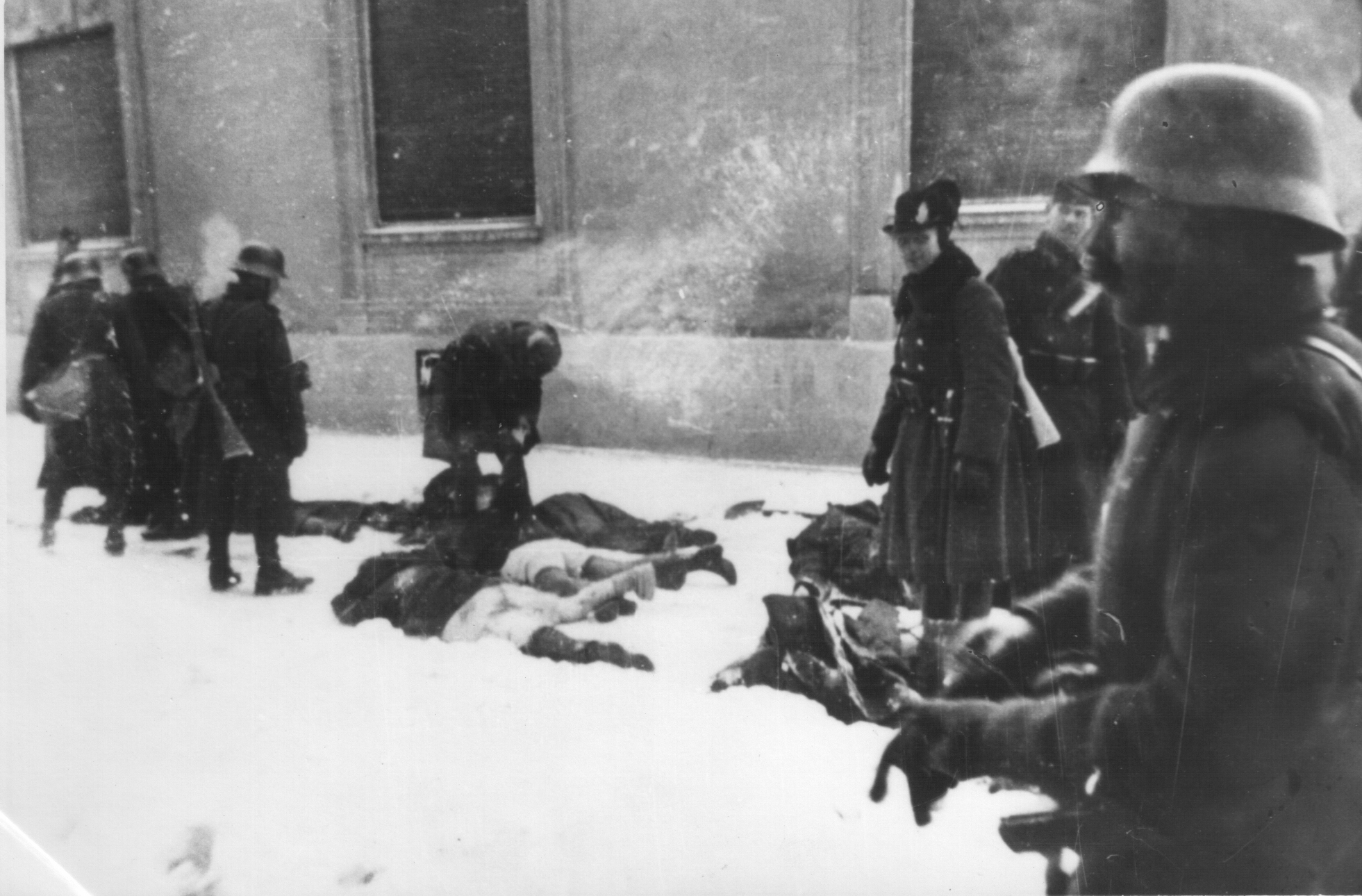
The Novi Sad raid (Serbian Cyrillic: Рација; also known as the Raid in southern Bačka, the Novi Sad massacre, the Újvidék massacre, or simply The Raid) was a massacre carried out by the Royal Hungarian Army, the armed forces of Kingdom of Hungary, during World War II, after the Hungarian occupation of Yugoslav territories and annexation of the Kingdom of Yugoslavia. It resulted in the deaths of 3,000–4,000 civilians in Novi Sad and surrounding towns in the southern Bačka (Bácska) region.
The Hungarian occupational authorities began raiding towns and villages in southern Bačka as early as 4 January 1942, ostensibly as a means of suppressing Partisan resistance, though the historical record shows that the Hungarian Government was attempting to improve its geopolitical standing vis-à-vis Germany. The first town to be raided was Čurug, followed by Gospođinci, Titel, Temerin, Đurđevo and Žabalj. The victims were seemingly detained at random while conducting everyday activities. On 20 January, the city of Novi Sad (Hungarian: Újvidék) was surrounded and placed on curfew; its telephone lines were cut. Over the next several days, the occupational authorities went about arresting "suspicious" individuals. More than 1,000 of the city's residents were killed by the time the raid ended. The victims in both Novi Sad and the wider region were mostly Serbs and Jews, though several Romani, Rusyns, Russians and Hungarians were killed as well. In Novi Sad, victims were forced to march across the frozen Danube, only to perish when the ice sheet was shattered by shelling from the shore. Some were pushed into holes in the ice sheet, causing them to drown or succumb to hypothermia, while others were shot in the street.
The Hungarian government and news media condemned the raid, calling for an immediate investigation. In 1943, the Hungarians conducted a mass trial of those suspected of organizing the raid, handing down prison terms ranging from 10 to 15 years. The convicts escaped to Germany. After the war, several trials were held in Hungary and Yugoslavia, resulting in the conviction and execution of a number of key organizers. The final court proceedings relating to the raid took place in 2011, when Sándor Képíró was tried and acquitted of murdering over 30 civilians in Novi Sad.
The raid has been fictionalized in literature and film in both Serbia and Hungary. The killings continue to strain relations between the two countries. In June 2013, Hungarian President János Áder formally apologized for the war crimes that the Hungarian military had committed against Serbian civilians during the war.
Germany, Italy and Hungary invaded Yugoslavia on 6 April 1941, in response to a coup d'état that deposed the country's regent, Paul, and hastened the ascent of his underage cousin, Peter to the throne. The country was overrun in less than two weeks, occupied and partitioned among its neighbours. The area that constitutes the present-day province of Vojvodina, in northern Serbia, was divided between Germany, Hungary and the Axis puppet state known as the Independent State of Croatia (Croatian: Nezavisna Država Hrvatska; NDH), which was established shortly after the invasion. The Germans assumed direct control of the Banat, which became an autonomous district of the German-occupied territory of Serbia, primarily to satisfy the demands of the region's sizeable ethnic German (Volksdeutsche) population. The Croatians occupied Syrmia and incorporated it into the NDH, stopping just short of Belgrade. The Hungarians occupied Bačka, which had been a part of Hungary until the Treaty of Trianon of 1920, when it was incorporated into the newly formed Kingdom of Serbs, Croats and Slovenes (later Yugoslavia). A large number of Hungarians and ethnic Germans had remained in the areas despite the cession. Hungarian-occupied Bačka consisted of that part of the former Danube Banovina once bounded by the Hungarian–Yugoslav border to the north, the Danube to the south and west, and the Tisza to the east. The total area of Hungarian-occupied Bačka was 8,558 km2 (3,304 sq mi).
The Hungarian occupational authorities resolved to "rebalance" the ethnic makeup of Bačka while the invasion was still underway. Within days of the invasion, Serb and Jewish homes were attacked and looted. On 14 April 1941, as many as 500 Serbs and Jews were killed, likely in accordance with previously assembled lists of people marked for death. Legislation was soon passed requiring that all non-Hungarians and non-Germans who had moved to the area after 1918 be deported. The Hungarian occupational authorities expelled between 25,000 and 60,000 Serbs from Bačka, both colonists from the interwar period, as well as pre-World War I inhabitants. They were first interned in concentration camps before being deported to the German-occupied territory of Serbia. The Hungarians originally intended to expel as many as 150,000, but this plan was opposed by the German command in Belgrade, and subsequently fell through. More than 15,000 Hungarian colonists later settled the area, moving into the homes of the Serbs that were forced out.
A policy of "systematic magyarization" was implemented within the occupied territories. "Less-desirable elements" of the population, such as Serbs, Croats and Jews, were discriminated against in matters of communication and education. Hungarian and German were the only languages permitted in almost all secondary schools, and Serbo-Croatian books, newspapers and periodicals were virtually banned. Despite this, most Serbs and Croats that had lived in the Hungarian-occupied territories prior to 1918 retained their citizenship rights as Hungarians, and some lower-level non-Hungarian public employees retained their jobs. On 14 December 1941, Bačka, along with the other Hungarian-occupied areas of Yugoslavia, referred to by Hungary as the "Recovered Southern Territories" (Hungarian: Délvidék), were officially annexed and formally incorporated into Hungary.
Small-scale armed resistance broke out in Bačka in the second half of 1941 and the Hungarian military reacted with heavy repressive measures. More than 300 prisoners were executed in September 1941 alone. Thousands of Serbs and Jews were detained in concentration camps that had been established in Ada, Bačka Topola, Begeč, Odžaci, Bečej, Subotica and Novi Sad, as well as at Pécs and Baja, in Hungary-proper. The communist-led Partisan resistance movement of Josip Broz Tito was never strong in Bačka because the region's flat terrain did not lend itself to guerilla warfare, and because South Slavs, from whom the Partisans drew most of their recruits, made up only one third of the regional population. By the end of 1941, the Partisans of Bačka had largely been destroyed, as had their regional committee. The Chetniks, Serbian nationalist irregulars seeking to reinstate the Yugoslav monarchy, offered sporadic resistance during the invasion, but were largely inactive for much of the occupation, maintaining some covert activity only.
Hub AI
Novi Sad raid AI simulator
(@Novi Sad raid_simulator)
Novi Sad raid
The Novi Sad raid (Serbian Cyrillic: Рација; also known as the Raid in southern Bačka, the Novi Sad massacre, the Újvidék massacre, or simply The Raid) was a massacre carried out by the Royal Hungarian Army, the armed forces of Kingdom of Hungary, during World War II, after the Hungarian occupation of Yugoslav territories and annexation of the Kingdom of Yugoslavia. It resulted in the deaths of 3,000–4,000 civilians in Novi Sad and surrounding towns in the southern Bačka (Bácska) region.
The Hungarian occupational authorities began raiding towns and villages in southern Bačka as early as 4 January 1942, ostensibly as a means of suppressing Partisan resistance, though the historical record shows that the Hungarian Government was attempting to improve its geopolitical standing vis-à-vis Germany. The first town to be raided was Čurug, followed by Gospođinci, Titel, Temerin, Đurđevo and Žabalj. The victims were seemingly detained at random while conducting everyday activities. On 20 January, the city of Novi Sad (Hungarian: Újvidék) was surrounded and placed on curfew; its telephone lines were cut. Over the next several days, the occupational authorities went about arresting "suspicious" individuals. More than 1,000 of the city's residents were killed by the time the raid ended. The victims in both Novi Sad and the wider region were mostly Serbs and Jews, though several Romani, Rusyns, Russians and Hungarians were killed as well. In Novi Sad, victims were forced to march across the frozen Danube, only to perish when the ice sheet was shattered by shelling from the shore. Some were pushed into holes in the ice sheet, causing them to drown or succumb to hypothermia, while others were shot in the street.
The Hungarian government and news media condemned the raid, calling for an immediate investigation. In 1943, the Hungarians conducted a mass trial of those suspected of organizing the raid, handing down prison terms ranging from 10 to 15 years. The convicts escaped to Germany. After the war, several trials were held in Hungary and Yugoslavia, resulting in the conviction and execution of a number of key organizers. The final court proceedings relating to the raid took place in 2011, when Sándor Képíró was tried and acquitted of murdering over 30 civilians in Novi Sad.
The raid has been fictionalized in literature and film in both Serbia and Hungary. The killings continue to strain relations between the two countries. In June 2013, Hungarian President János Áder formally apologized for the war crimes that the Hungarian military had committed against Serbian civilians during the war.
Germany, Italy and Hungary invaded Yugoslavia on 6 April 1941, in response to a coup d'état that deposed the country's regent, Paul, and hastened the ascent of his underage cousin, Peter to the throne. The country was overrun in less than two weeks, occupied and partitioned among its neighbours. The area that constitutes the present-day province of Vojvodina, in northern Serbia, was divided between Germany, Hungary and the Axis puppet state known as the Independent State of Croatia (Croatian: Nezavisna Država Hrvatska; NDH), which was established shortly after the invasion. The Germans assumed direct control of the Banat, which became an autonomous district of the German-occupied territory of Serbia, primarily to satisfy the demands of the region's sizeable ethnic German (Volksdeutsche) population. The Croatians occupied Syrmia and incorporated it into the NDH, stopping just short of Belgrade. The Hungarians occupied Bačka, which had been a part of Hungary until the Treaty of Trianon of 1920, when it was incorporated into the newly formed Kingdom of Serbs, Croats and Slovenes (later Yugoslavia). A large number of Hungarians and ethnic Germans had remained in the areas despite the cession. Hungarian-occupied Bačka consisted of that part of the former Danube Banovina once bounded by the Hungarian–Yugoslav border to the north, the Danube to the south and west, and the Tisza to the east. The total area of Hungarian-occupied Bačka was 8,558 km2 (3,304 sq mi).
The Hungarian occupational authorities resolved to "rebalance" the ethnic makeup of Bačka while the invasion was still underway. Within days of the invasion, Serb and Jewish homes were attacked and looted. On 14 April 1941, as many as 500 Serbs and Jews were killed, likely in accordance with previously assembled lists of people marked for death. Legislation was soon passed requiring that all non-Hungarians and non-Germans who had moved to the area after 1918 be deported. The Hungarian occupational authorities expelled between 25,000 and 60,000 Serbs from Bačka, both colonists from the interwar period, as well as pre-World War I inhabitants. They were first interned in concentration camps before being deported to the German-occupied territory of Serbia. The Hungarians originally intended to expel as many as 150,000, but this plan was opposed by the German command in Belgrade, and subsequently fell through. More than 15,000 Hungarian colonists later settled the area, moving into the homes of the Serbs that were forced out.
A policy of "systematic magyarization" was implemented within the occupied territories. "Less-desirable elements" of the population, such as Serbs, Croats and Jews, were discriminated against in matters of communication and education. Hungarian and German were the only languages permitted in almost all secondary schools, and Serbo-Croatian books, newspapers and periodicals were virtually banned. Despite this, most Serbs and Croats that had lived in the Hungarian-occupied territories prior to 1918 retained their citizenship rights as Hungarians, and some lower-level non-Hungarian public employees retained their jobs. On 14 December 1941, Bačka, along with the other Hungarian-occupied areas of Yugoslavia, referred to by Hungary as the "Recovered Southern Territories" (Hungarian: Délvidék), were officially annexed and formally incorporated into Hungary.
Small-scale armed resistance broke out in Bačka in the second half of 1941 and the Hungarian military reacted with heavy repressive measures. More than 300 prisoners were executed in September 1941 alone. Thousands of Serbs and Jews were detained in concentration camps that had been established in Ada, Bačka Topola, Begeč, Odžaci, Bečej, Subotica and Novi Sad, as well as at Pécs and Baja, in Hungary-proper. The communist-led Partisan resistance movement of Josip Broz Tito was never strong in Bačka because the region's flat terrain did not lend itself to guerilla warfare, and because South Slavs, from whom the Partisans drew most of their recruits, made up only one third of the regional population. By the end of 1941, the Partisans of Bačka had largely been destroyed, as had their regional committee. The Chetniks, Serbian nationalist irregulars seeking to reinstate the Yugoslav monarchy, offered sporadic resistance during the invasion, but were largely inactive for much of the occupation, maintaining some covert activity only.