



Community hub
Recent from talks
Knowledge base stats:
Talk channels stats:
Members stats:
Nur Jahan
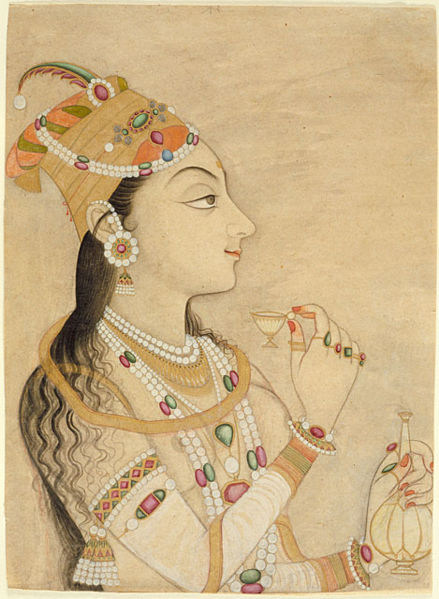
Nur Jahan (lit. ' Light of the world '; 31 May 1577 – 18 December 1645), born Mehr-un-Nissa, was the twentieth wife and chief consort of the Mughal emperor Jahangir.
More decisive and proactive than her husband, Nur Jahan is considered by certain historians to have been the real power behind the throne for more than a decade. Wielding a level of power and influence unprecedented for a Mughal empress, she was granted honours and privileges never enjoyed by any of her predecessors or successors, such as having coinage struck in her name. It is wrongly assumed that her pre-eminence was in part made possible by her husband Jahangir's addiction to hunting, alcohol, and opium and his frequent ill-health. This reflects a Western, Eurocentric, and masculinist interpretation of what actually took place. Nur Jahan rose to the position of a co-sovereign not because of her husband's abdication or incapacity to rule, but rather due to her intellect, political skill, and the ability to forge strategic alliances in the imperial court.
Nur Jahan was born as Mehr-un-Nissa (1577) in Kandahar, present-day Afghanistan, into a family of Persian nobility and was the second daughter and fourth child of the Persian aristocrat Mirza Ghiyas Beg and his wife Asmat Begum. Both of Nur Jahan's parents were descendants of illustrious families – Ghiyas Beg from Muhammad Sharif and Asmat Begum from the Aqa Mulla clan. Her paternal grandfather, Khwaja Muhammad Sharif, was first a wazir to Tatar Sultan the governor of Khurasan, and later was in the service of Shah Tahmasp, who made him the wazir of Isfahan, in recognition of his excellent service. For unknown reasons, Ghiyas Beg's family had suffered a reversal in fortunes in 1577 and soon found circumstances in their homeland intolerable. Hoping to improve his family's fortunes, Ghiyas Beg chose to relocate to Mughal India where the Emperor Akbar's court was said to be at the centre of the growing trade industry and cultural scene.
Halfway along their route the family was attacked by robbers who took from them their remaining meager possessions. Left with only two mules, Ghiyas Beg, his pregnant wife, and their two children (Muhammad Sharif, Asaf Khan) were forced to take turns riding on the backs of the animals for the remainder of their journey. When the family arrived in Kandahar, Asmat Begum gave birth to their second daughter. The family was so impoverished they feared they would be unable to take care of the newborn baby. Fortunately, the family was taken in by a caravan led by the merchant noble Malik Masud, who would later assist Ghiyas Beg in finding a position in the service of Emperor Akbar. Believing that the child had signaled a change in the family's fate, she was named Mehr-un-Nissa or 'Sun among Women'. Her father Ghiyas Beg began his career in India, after being given a mansab of 300 in 1577. Thereafter he was appointed diwan (treasurer) for the province of Kabul. Due to his astute skills at conducting business, he quickly rose through the ranks of the high administrative officials. For his excellent work he was awarded the title of Itimad-ud-Daula or 'Pillar of the State' by the emperor.
As a result of his work and promotions, Ghiyas Beg was able to ensure that Mehr-un-Nissa (the future Nur Jahan) would have the best possible education. She became well-versed in Arabic and Persian languages, art, literature, music and dance. The poet and author Vidya Dhar Mahajan would later praise Nur Jahan as having a piercing intelligence, a volatile temper and sound common sense.
In 1594, when Nur Jahan was seventeen years old, she married her first husband Ali Quli Istajlu (also known as Sher Afgan Khan). Sher Afgan was an adventurous Persian who had been forced to flee his home in Persia after the demise of his first master Shah Ismail II. He later joined the Mughal army and served under the Emperors Akbar and Jahangir. As a reward for his loyal service, Akbar arranged Nur Jahan's marriage with Sher Afgan. Their only child together, a daughter, Mihr-un-Nissa Begum, popularly known as Ladli Begum, was born in 1605. While participating in a military campaign in Mewar under Prince Salim, Ali Quli Istajlu was bestowed the title of Sher Afgan or "Tiger Tosser". Sher Afgan's role in the rout of the Rana of Udaipur inspired this reward, but contemporaries did not record his exact actions. A popular explanation is that Sher Afgan saved Salim from an angry tigress.
In 1607, Sher Afgan Khan was killed after it was rumoured he had refused to obey a summons from the Governor of Bengal, took part in anti-state activities, and attacked the governor when he came to escort Sher Afgan to court. Some have suspected Jahangir of arranging Sher Afgan's death because the latter was said to have fallen in love with Nur Jahan and had been denied the right to add her to his harem. The validity of this rumour is uncertain as Jahangir only married Nur Jahan in 1611, four years after she came to his court. Furthermore, contemporary accounts offer few details as to whether or not a love affair existed prior to 1611 and historians have questioned Jahangir's logic in bestowing honours upon Sher Afgan if he wished to see him removed from the picture.
After her husband Sher Afgan was killed in 1607, Nur Jahan and her daughter, Ladli Begum, were summoned to Agra by Jahangir for their protection and acted as lady-in-waiting to the Ruqaiya Sultan Begum, who had been one of the chief wives of the late Emperor Akbar. Given the precarious political connections of Sher Afgan before his death, his family would be in certain danger with him gone from those seeking to avenge Qutbuddin's murder. For her protection, then, Nur Jahan needed to be at the Mughal court in Agra, she was brought back in honour (presumably because of her father's position at court) was clear from her new post with Ruqaiya Sultan Begum.
Hub AI
Nur Jahan AI simulator
(@Nur Jahan_simulator)
Nur Jahan
Nur Jahan (lit. ' Light of the world '; 31 May 1577 – 18 December 1645), born Mehr-un-Nissa, was the twentieth wife and chief consort of the Mughal emperor Jahangir.
More decisive and proactive than her husband, Nur Jahan is considered by certain historians to have been the real power behind the throne for more than a decade. Wielding a level of power and influence unprecedented for a Mughal empress, she was granted honours and privileges never enjoyed by any of her predecessors or successors, such as having coinage struck in her name. It is wrongly assumed that her pre-eminence was in part made possible by her husband Jahangir's addiction to hunting, alcohol, and opium and his frequent ill-health. This reflects a Western, Eurocentric, and masculinist interpretation of what actually took place. Nur Jahan rose to the position of a co-sovereign not because of her husband's abdication or incapacity to rule, but rather due to her intellect, political skill, and the ability to forge strategic alliances in the imperial court.
Nur Jahan was born as Mehr-un-Nissa (1577) in Kandahar, present-day Afghanistan, into a family of Persian nobility and was the second daughter and fourth child of the Persian aristocrat Mirza Ghiyas Beg and his wife Asmat Begum. Both of Nur Jahan's parents were descendants of illustrious families – Ghiyas Beg from Muhammad Sharif and Asmat Begum from the Aqa Mulla clan. Her paternal grandfather, Khwaja Muhammad Sharif, was first a wazir to Tatar Sultan the governor of Khurasan, and later was in the service of Shah Tahmasp, who made him the wazir of Isfahan, in recognition of his excellent service. For unknown reasons, Ghiyas Beg's family had suffered a reversal in fortunes in 1577 and soon found circumstances in their homeland intolerable. Hoping to improve his family's fortunes, Ghiyas Beg chose to relocate to Mughal India where the Emperor Akbar's court was said to be at the centre of the growing trade industry and cultural scene.
Halfway along their route the family was attacked by robbers who took from them their remaining meager possessions. Left with only two mules, Ghiyas Beg, his pregnant wife, and their two children (Muhammad Sharif, Asaf Khan) were forced to take turns riding on the backs of the animals for the remainder of their journey. When the family arrived in Kandahar, Asmat Begum gave birth to their second daughter. The family was so impoverished they feared they would be unable to take care of the newborn baby. Fortunately, the family was taken in by a caravan led by the merchant noble Malik Masud, who would later assist Ghiyas Beg in finding a position in the service of Emperor Akbar. Believing that the child had signaled a change in the family's fate, she was named Mehr-un-Nissa or 'Sun among Women'. Her father Ghiyas Beg began his career in India, after being given a mansab of 300 in 1577. Thereafter he was appointed diwan (treasurer) for the province of Kabul. Due to his astute skills at conducting business, he quickly rose through the ranks of the high administrative officials. For his excellent work he was awarded the title of Itimad-ud-Daula or 'Pillar of the State' by the emperor.
As a result of his work and promotions, Ghiyas Beg was able to ensure that Mehr-un-Nissa (the future Nur Jahan) would have the best possible education. She became well-versed in Arabic and Persian languages, art, literature, music and dance. The poet and author Vidya Dhar Mahajan would later praise Nur Jahan as having a piercing intelligence, a volatile temper and sound common sense.
In 1594, when Nur Jahan was seventeen years old, she married her first husband Ali Quli Istajlu (also known as Sher Afgan Khan). Sher Afgan was an adventurous Persian who had been forced to flee his home in Persia after the demise of his first master Shah Ismail II. He later joined the Mughal army and served under the Emperors Akbar and Jahangir. As a reward for his loyal service, Akbar arranged Nur Jahan's marriage with Sher Afgan. Their only child together, a daughter, Mihr-un-Nissa Begum, popularly known as Ladli Begum, was born in 1605. While participating in a military campaign in Mewar under Prince Salim, Ali Quli Istajlu was bestowed the title of Sher Afgan or "Tiger Tosser". Sher Afgan's role in the rout of the Rana of Udaipur inspired this reward, but contemporaries did not record his exact actions. A popular explanation is that Sher Afgan saved Salim from an angry tigress.
In 1607, Sher Afgan Khan was killed after it was rumoured he had refused to obey a summons from the Governor of Bengal, took part in anti-state activities, and attacked the governor when he came to escort Sher Afgan to court. Some have suspected Jahangir of arranging Sher Afgan's death because the latter was said to have fallen in love with Nur Jahan and had been denied the right to add her to his harem. The validity of this rumour is uncertain as Jahangir only married Nur Jahan in 1611, four years after she came to his court. Furthermore, contemporary accounts offer few details as to whether or not a love affair existed prior to 1611 and historians have questioned Jahangir's logic in bestowing honours upon Sher Afgan if he wished to see him removed from the picture.
After her husband Sher Afgan was killed in 1607, Nur Jahan and her daughter, Ladli Begum, were summoned to Agra by Jahangir for their protection and acted as lady-in-waiting to the Ruqaiya Sultan Begum, who had been one of the chief wives of the late Emperor Akbar. Given the precarious political connections of Sher Afgan before his death, his family would be in certain danger with him gone from those seeking to avenge Qutbuddin's murder. For her protection, then, Nur Jahan needed to be at the Mughal court in Agra, she was brought back in honour (presumably because of her father's position at court) was clear from her new post with Ruqaiya Sultan Begum.