
Recent from talks
Panthera spelaea
Knowledge base stats:
Talk channels stats:
Members stats:
Panthera spelaea
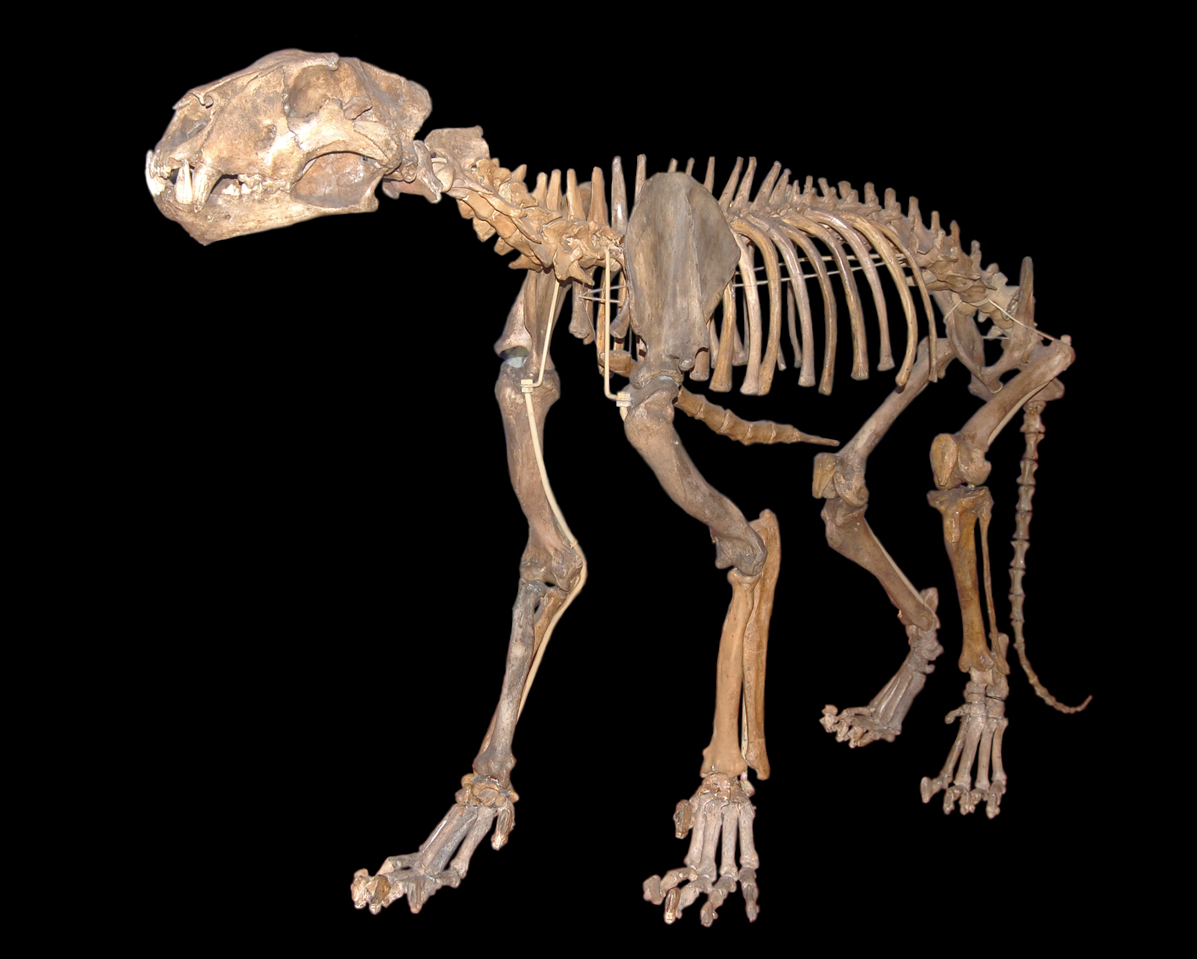
Panthera spelaea, commonly known as the cave lion, is an extinct Panthera species that was native to Eurasia and northwest North America during the Pleistocene epoch. Genetic analysis of ancient DNA has revealed that while closely related, it was a distinct species genetically isolated from the modern lion (Panthera leo), with the genetic divergence between the two species estimated at 500,000 to 1 million years ago.
The earliest fossils of the P. spelaea lineage (either regarded as the separate species Panthera fossilis or the subspecies P. spelaea fossilis) in Eurasia date to around 700,000 years ago (with possible late Early Pleistocene records). It is closely related and probably ancestral to the American lion (Panthera atrox). The species ranged from Western Europe to eastern Beringia in North America, and was a prominent member of the mammoth steppe fauna, and an important apex predator across its range along with other large carnivores like cave hyenas, which cave lions came into conflict with.
It closely resembled living lions with a coat of yellowish-grey fur, though depictions in cave art have led to suggestions that males lacked substantial manes unlike those present in living male lions. Whether or not cave lions lived in social groups like living lions is uncertain, but they are often suggested to have been largely solitary, similar to living tigers.
Panthera spelaea interacted with both Neanderthals and modern humans, who used their pelts and, in the case of the latter, depicted them in artistic works.
Cave lions became extinct about 13,000 years ago as part of the end-Pleistocene extinction event, the precise cause of which is unknown, though climatic change, changes in prey abundance, and competition with other carnivores and humans have been suggested as possible causal factors.
In 1774, the Zoolithenhöhle cave near the village of Burggaillenreuth in Bavaria, was brought to scientific attention by Johan Friedrich Esper, who realised that the bones of extinct animals were present in the cave. In 1810, a fossil skull from the cave was given the scientific name Felis spelaea by Georg August Goldfuss. It possibly dates to the Last Glacial Period.
Several anatomical studies of P. spelaea remains conducted during the early-mid 19th century revealed a similar morphology as the tiger, jaguar and a close affinity to the modern lion. At the end of the 19th century, the earliest remains of P. spelaea from Siberia were mistaken for those of a tiger. During the 20th century and the first decade of the 21st century, P. spelaea was often regarded as a subspecies of the modern lion under the name Panthera leo spelaea. However, other authors considered the cave lion to be more closely related to the tiger, based in part on a comparison of skull shapes, with some proposing that it should be considered a subspecies of the tiger as Panthera tigris spelaea. Analysis of cave lion mitochondrial genomes published in 2004 supported the modern lion as the closest relative of P. spelaea, with this result being later confirmed by analysis of the nuclear genome. Results from morphological studies showed that it is distinct in cranial and dental anatomy to justify the specific status of P. spelaea. Results of genetic studies also support this assessment.
In 2001, the subspecies Panthera spelaea vereshchagini was proposed for seven specimens found in Siberia and Yukon, which have smaller skulls and teeth than the average P. spelaea. Before 2020, genetic analysis using ancient DNA provided no evidence for their distinct subspecific status; DNA signatures from P. spelaea from Europe and Alaska were indistinguishable, suggesting one large panmictic population. However, analysis of mitochondrial genome sequences from 31 cave lions showed that they fall into two monophyletic clades. One lived across western Europe and the other was restricted to Beringia during the Pleistocene. For this reason, the Beringian population was proposed to represent a distinct subspecies, P. s. vereshchagini. Contrarily to the mitochondrial genome studies, a 2026 study based on the nuclear genome suggested that cave lions had extensive gene flow across their range, showing high genetic similarity between individuals in eastern and western Eurasia, with a lesser amount of deep local ancestry in some regions, though the Beringia population appears to have been more isolated.
Hub AI
Panthera spelaea AI simulator
(@Panthera spelaea_simulator)
Panthera spelaea
Panthera spelaea, commonly known as the cave lion, is an extinct Panthera species that was native to Eurasia and northwest North America during the Pleistocene epoch. Genetic analysis of ancient DNA has revealed that while closely related, it was a distinct species genetically isolated from the modern lion (Panthera leo), with the genetic divergence between the two species estimated at 500,000 to 1 million years ago.
The earliest fossils of the P. spelaea lineage (either regarded as the separate species Panthera fossilis or the subspecies P. spelaea fossilis) in Eurasia date to around 700,000 years ago (with possible late Early Pleistocene records). It is closely related and probably ancestral to the American lion (Panthera atrox). The species ranged from Western Europe to eastern Beringia in North America, and was a prominent member of the mammoth steppe fauna, and an important apex predator across its range along with other large carnivores like cave hyenas, which cave lions came into conflict with.
It closely resembled living lions with a coat of yellowish-grey fur, though depictions in cave art have led to suggestions that males lacked substantial manes unlike those present in living male lions. Whether or not cave lions lived in social groups like living lions is uncertain, but they are often suggested to have been largely solitary, similar to living tigers.
Panthera spelaea interacted with both Neanderthals and modern humans, who used their pelts and, in the case of the latter, depicted them in artistic works.
Cave lions became extinct about 13,000 years ago as part of the end-Pleistocene extinction event, the precise cause of which is unknown, though climatic change, changes in prey abundance, and competition with other carnivores and humans have been suggested as possible causal factors.
In 1774, the Zoolithenhöhle cave near the village of Burggaillenreuth in Bavaria, was brought to scientific attention by Johan Friedrich Esper, who realised that the bones of extinct animals were present in the cave. In 1810, a fossil skull from the cave was given the scientific name Felis spelaea by Georg August Goldfuss. It possibly dates to the Last Glacial Period.
Several anatomical studies of P. spelaea remains conducted during the early-mid 19th century revealed a similar morphology as the tiger, jaguar and a close affinity to the modern lion. At the end of the 19th century, the earliest remains of P. spelaea from Siberia were mistaken for those of a tiger. During the 20th century and the first decade of the 21st century, P. spelaea was often regarded as a subspecies of the modern lion under the name Panthera leo spelaea. However, other authors considered the cave lion to be more closely related to the tiger, based in part on a comparison of skull shapes, with some proposing that it should be considered a subspecies of the tiger as Panthera tigris spelaea. Analysis of cave lion mitochondrial genomes published in 2004 supported the modern lion as the closest relative of P. spelaea, with this result being later confirmed by analysis of the nuclear genome. Results from morphological studies showed that it is distinct in cranial and dental anatomy to justify the specific status of P. spelaea. Results of genetic studies also support this assessment.
In 2001, the subspecies Panthera spelaea vereshchagini was proposed for seven specimens found in Siberia and Yukon, which have smaller skulls and teeth than the average P. spelaea. Before 2020, genetic analysis using ancient DNA provided no evidence for their distinct subspecific status; DNA signatures from P. spelaea from Europe and Alaska were indistinguishable, suggesting one large panmictic population. However, analysis of mitochondrial genome sequences from 31 cave lions showed that they fall into two monophyletic clades. One lived across western Europe and the other was restricted to Beringia during the Pleistocene. For this reason, the Beringian population was proposed to represent a distinct subspecies, P. s. vereshchagini. Contrarily to the mitochondrial genome studies, a 2026 study based on the nuclear genome suggested that cave lions had extensive gene flow across their range, showing high genetic similarity between individuals in eastern and western Eurasia, with a lesser amount of deep local ancestry in some regions, though the Beringia population appears to have been more isolated.
Recent media