Hubbry Logo
Philip FreneauPhilip FreneauMain
Open search
Philip Freneau
Community hub
Philip Freneau
logo
8 pages, 0 posts
0 subscribers
Be the first to start a discussion here.
Philip Freneau
Philip Freneau
from Wikipedia

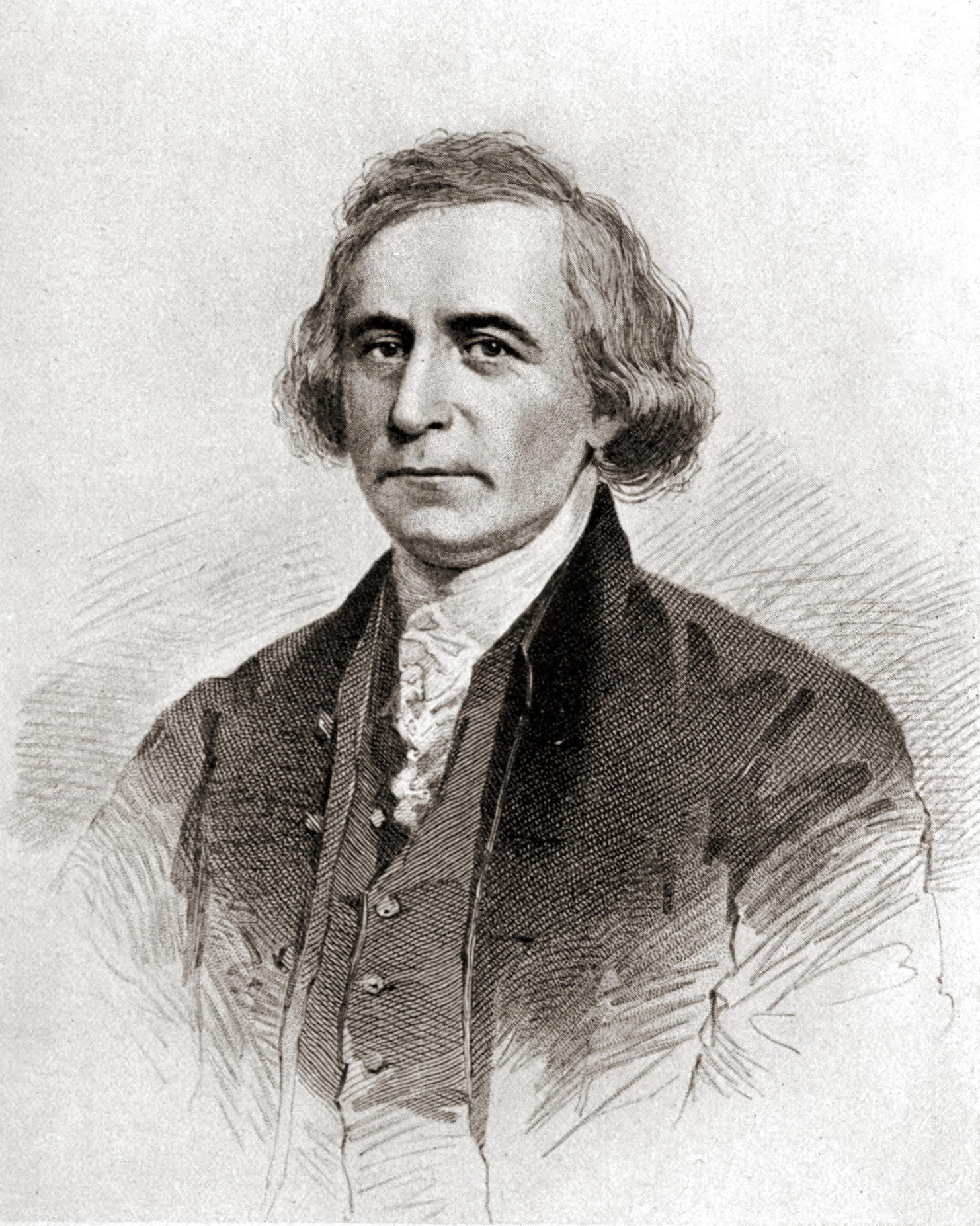
Philip Morin Freneau[1] (January 2, 1752 – December 18, 1832) was an American poet, nationalist, polemicist, sea captain and early American newspaper editor sometimes called the "Poet of the American Revolution". Through his Philadelphia-based newspaper, the National Gazette, he was a strong critic of George Washington, Alexander Hamilton, and the Federalist Party, and a proponent of Jeffersonian policies.

Key Information

Early life and education

[edit]

Freneau was born in New York City, the oldest of the five children of Huguenot wine merchant Pierre Freneau and his Scottish wife. Freneau was raised Calvinist by parents who were part of a Presbyterian congregation led by a New Light evangelical, Rev. William Tennent, Jr.[2] Freneau later attended a grammar school directed by Tennent.[3] Philip was raised in Matawan, New Jersey. He attended the College of New Jersey, later renamed Princeton University, where he studied under John Witherspoon.

At Princeton, Freneau was close friends with James Madison, and his relationship with Madison later was a factor in his co-founding the National Gazette with Madison and Thomas Jefferson. Freneau family tradition suggests that Madison became acquainted with and fell in love with the poet's sister, Mary, during visits to their home while he was studying at Princeton. While tradition has it that Mary rejected Madison's repeated marriage proposals, this anecdote is undocumented and unsupported by other evidence.[4]

Freneau graduated from Princeton in 1771.[5] He had already written the poetical History of the Prophet Jonah and, with Hugh Henry Brackenridge, the prose satire Father Bombo's Pilgrimage to Mecca, which is considered by some to be the first American novel.

Career

[edit]

Following his graduation, he tried his hand at teaching, but quickly gave it up. He also pursued a further study of theology, but gave this up as well after about two years. As the Revolutionary War approached in 1775, Freneau wrote a number of anti-British pieces.[citation needed] However, by 1776, Freneau left America for the West Indies, and for two years was a business agent on Saint Croix, observing the horrors of slavery up close. One of his best-known poems, "On Sir Toby", catalogs these horrors[6] and has become a well-known anti-slavery poem.[7] In 1778, Freneau returned to America, and rejoined the patriotic cause. Freneau eventually became a crew member on a revolutionary privateer, and was captured in this capacity. He was held on a British prison ship for about six weeks. This experience, which almost killed him, was detailed in his work The British Prison Ship, which prompted many more patriotic and anti-British writings throughout the revolution and after.[8] For this, he was named "The Poet of the American Revolution".

In 1790, Freneau married Eleanor Forman, and became an assistant editor of the New York Daily Advertiser. Soon after, Madison and Secretary of State Thomas Jefferson worked to get Freneau to move to Philadelphia in order to edit a partisan newspaper that would counter the Federalist newspaper The Gazette of the United States. Jefferson was criticized for hiring Freneau as a translator in the State Department, even though he spoke no foreign languages except French. Freneau accepted this sinecure, which left free time to head the Democratic-Republican newspaper Jefferson and Madison envisioned.

This partisan newspaper, National Gazette, which Freneau founded in Philadelphia with Jefferson, Madison, and others, provided a vehicle to promote criticism of the rival Federalist Party. The Gazette took particular aim at the policies promoted by Alexander Hamilton, and like other papers of the day, would not hesitate to shade into personal attacks, including President George Washington during his second term. Owing to The Gazette's frequent attacks on his administration and himself, Washington took a particular dislike to Freneau.

Freneau later retired to a more rural life and wrote a mix of political and nature works.

Death

[edit]

He died at 80 years of age, frozen to death while returning to his home near Freehold, New Jersey, and was buried in what became the Philip Morin Freneau Cemetery on Poet's Drive in Matawan, New Jersey. His mother was also buried there but his wife was laid to rest at her family plot in Mount Pleasant Church Cemetery on what is now Route 516 and Main in Matawan.

Legacy

[edit]

The non-political works of Freneau combined neoclassicism and romanticism. Although he is not as generally well known as Ralph Waldo Emerson or James Fenimore Cooper, Freneau introduced many themes and images for which later authors became famous. For example, Freneau's poem "The House of Night", one of the early romantic poems written and published in America, included the Gothic elements and dark imagery that later were seen in the poetry by Edgar Allan Poe. Freneau's nature poem "The Wild Honey Suckle" (1786) was considered an early seed to the later Transcendentalist movement taken up by William Cullen Bryant, Ralph Waldo Emerson, and Henry David Thoreau. Romantic primitivism was anticipated by Freneau's poems "The Indian Burying Ground" and "Noble Savage."

Memorials to him in Matawan include:

  • The Matawan Post Office on Main Street has a sculpture of Freneau on its wall, depicting him with black slaves as he was an abolitionist later in life. It was created in 1939 by Armin Scheler under a New Deal commission from the Treasury Department.
  • There is a Freneau fire company on Main Street/Route 79.
  • A site Freneau frequented in Matawan is now in use as a restaurant. From 1961 until 2008, it operated as The Poet's Inn, honoring Freneau's memory. The business has changed hands several times, and the building has been renovated over the years.[9]
  • Freneau, New Jersey, an unincorporated community within Matawan, was named in his honor.[10]
  • Freneau Woods Park, named after Philip Morin Freneau, whose family once partly owned the property is located along the headwaters of Matawan Creek and Lake Lefferts. This 313-acre park is composed mostly of woodland and protects critical wildlife habitat and bolsters water quality in the region. Both historically and environmentally significant, the park provides open space in a densely populated area of the county.

In 2022, the band Bird in the Belly used the words from Freneau's poem "Pestilence" for their concept album After the city. The lyrics appear in the song "Pale Horse" and represent the arrival of the pale horse into their fictional depiction of London.[11]

See also

[edit]

Notes

[edit]

References

[edit]
[edit]
Revisions and contributorsEdit on WikipediaRead on Wikipedia
from Grokipedia
Philip Morin Freneau (January 2, 1752 – December 18, 1832) was an American poet, journalist, and editor recognized as the "Poet of the " for his partisan verses that rallied support for independence and satirized British forces during the War for Independence. Freneau's experiences as a captured by the British inspired key works like his account of horrors, which fueled anti-Loyalist sentiment. Educated at , from which he graduated in 1771 alongside future president , Freneau initially composed neoclassical poetry on themes of nature and exotic travels before the Revolution redirected his pen toward political advocacy. In the early republic, he edited the National Gazette in , using it to promote Thomas Jefferson's Democratic-Republican ideals against Alexander Hamilton's financial system, prompting critics to denounce him as a dangerous propagandist. Beyond polemics, Freneau's lyric poems on American landscapes marked an early shift toward romantic sensibilities in U.S. , emphasizing and the sublime in over European models, though his later years brought obscurity and financial hardship as a and occasional mariner.

Early Life and Education

Family Background and Childhood

Philip Morin Freneau was born on January 2, 1752, in to Pierre Fresneau, a prosperous French Huguenot importer of wines and brandies who had immigrated to the colony earlier in the century, and his wife Agnes, of Scottish Presbyterian background. As the eldest of five children in a family of modest wealth derived from trade, Freneau grew up amid the mercantile circles of mid-eighteenth-century New York, where his father's business exposed him to transatlantic commerce and colonial economic ties. In 1762, when Freneau was ten years old, his family relocated from New York to a 1,000-acre in , near present-day Matawan, seeking rural stability amid urban growth and familial expansion. Freneau remained briefly in New York under private tutors to continue his preparatory studies, while the move immersed the family in New Jersey's agrarian landscape, fostering early familiarity with the region's revolutionary sentiments that would later shape his writings. His early education occurred primarily at home, supplemented by access to the family's substantial library, which emphasized classical texts and moral instruction under his mother's guidance, preparing him for formal collegiate entry despite the era's limited structured schooling for colonial youth.

Princeton Education and Influences

Freneau entered (now ) as a in 1768 at age sixteen, after preparatory studies in under William Tennent in . He graduated in 1771 with a degree, having pursued a centered on classical languages including Latin, Greek, and Hebrew, alongside , logic, , moral philosophy, and , as was standard for the institution in the late 1760s. Initially intending to prepare for the ministry at his parents' urging, Freneau's exposure to Enlightenment ideas and pre-Revolutionary political discourse shifted his interests toward and republican principles. During his time at Princeton, Freneau formed close friendships with classmates such as Hugh Henry Brackenridge, , and William Bradford, with whom he shared a room with Madison and collaborated in forming the American Whig Society, a debating and literary group opposing the more conservative Cliosophian Society. These associations fostered his early and optimism about American destiny, evident in the commencement poem The Rising Glory of America, co-authored with Brackenridge and recited by Brackenridge on September 25, 1771, in Freneau's absence due to illness or travel. The poem envisioned America's intellectual and moral superiority over Europe, drawing on classical republican ideals and deistic that would recur in Freneau's later work. A pivotal influence was college president , who arrived in 1768 and emphasized moral philosophy, natural rights, and resistance to tyranny in his lectures, aligning with emerging Whig sentiments that shaped Freneau's critique of authority. Witherspoon's integration of thought into the curriculum reinforced Freneau's rejection of orthodox in favor of rational inquiry and poetic expression, though Freneau abandoned ministerial aspirations post-graduation. The politically charged campus atmosphere, including student resolutions favoring American manufactures over British imports in 1770, further honed Freneau's satirical bent and commitment to colonial autonomy.

Revolutionary War Involvement

Military and Maritime Service

In 1778, following his time abroad, Freneau enlisted in the First Regiment of the Monmouth County Militia in New Jersey, initially serving as a private and later promoted to sergeant, with his militia service extending through 1780. During this period, he participated in land-based revolutionary activities as part of the Continental cause, though records indicate limited engagement in major engagements. Parallel to his militia duties, Freneau engaged in maritime service by joining revolutionary privateering expeditions, which combined trade and combat operations against British shipping. These voyages, often in the Caribbean and along the Atlantic coast, aimed to disrupt enemy supply lines and capture prizes, reflecting the hybrid nature of privateer operations authorized by Congress. In May 1780, Freneau sailed aboard the sloop Aurora—fitted as a privateer—from the Delaware River toward St. Eustatius, but the vessel was intercepted and captured by the British frigate Iris under Captain John Maitland off Cape Henlopen on May 15. This incident marked the culmination of his active maritime service during the war, underscoring the high risks faced by American privateers, with Freneau among the crew and passengers taken prisoner.

Capture, Imprisonment, and "The British Prison Ship"

In May 1780, Philip Freneau served as master of the sloop Aurora, a privateer commissioned to disrupt British shipping, when it was captured by a British cruiser while sailing down the Delaware River en route to St. Eustatius in the Caribbean. The vessel and its crew, including Freneau, were taken to New York Harbor, where Freneau was imprisoned aboard British prison ships, beginning on June 1, 1780. These hulks, including the notorious HMS Jersey anchored in Wallabout Bay, held thousands of American prisoners under squalid conditions marked by overcrowding, inadequate food rations, rampant disease such as dysentery and smallpox, and high mortality rates—historical records indicate over 11,000 prisoners died on the Jersey alone during the war from starvation, exposure, and neglect. Freneau's six-week confinement, ending with his exchange and release on July 12, 1780, exposed him to brutal treatment, including forced labor, verbal abuse from guards, and witnessing the deaths of fellow captives; he later described the ships as "floating tombs" reeking of decay and filled with emaciated men chained below decks. Contemporary accounts from other survivors corroborate the systemic cruelty, though British officials disputed exaggerated claims of deliberate malice, attributing deaths to wartime logistics and prisoner resistance to parole. Freneau's firsthand observations fueled his critique of British conduct, emphasizing not isolated incidents but the causal link between naval blockade policies and prisoner welfare failures. Upon release, Freneau channeled his ordeal into The British Prison-Ship, a poem in four published early in 1781 by Francis Bailey in . Written in heroic couplets as a , it recounts the capture in Canto I, the infernal conditions of the prison ships in Canto II (depicting "groans ascending through the hatch"), a brief stint on a in Canto III, and reflections on liberty and retribution in Canto IV. The work blends neoclassical form with vivid realism, exaggerating some details for rhetorical effect—such as demonic of guards—but aligning with verified accounts of feverish holds and mass burials, serving as propagandistic verse to rally Patriot sentiment against British "tyranny." The poem's publication amplified awareness of prison ship atrocities, influencing public opinion and later historical narratives, though its polemical tone invited skepticism from Loyalist sources claiming Freneau inflated hardships to stoke revenge. Manuscripts and early editions reveal Freneau revised for intensity, yet core elements—overcrowding exceeding 1,000 per ship and daily death tolls—match independent eyewitness testimonies, underscoring the poem's value as both literary artifact and empirical testimony to wartime inhumanity.

Literary Output

Early and Revolutionary Poetry

Freneau's earliest published work, co-authored with classmate Hugh Henry Brackenridge, was the commencement poem "The Rising Glory of America", delivered at Princeton's on September 25, 1771. This epic-style verse prophesied America's continental dominance and intellectual ascendancy, drawing on neoclassical influences and Enlightenment optimism to contrast the New World's potential with Europe's decay. Privately composed verses from his pre-college years explored personal themes, but Princeton's revolutionary fervor shifted his focus toward public patriotism, evident in occasional pieces experimenting with and moral . As tensions escalated toward war, Freneau's output intensified with satirical broadsides and newspaper verses targeting British policies. In 1775, he penned "A Political Litany", a mocking prayer invoking divine intervention against King George III and , circulated to ridicule monarchical overreach. That same year, "American Liberty, a Poem" decried remnants and tea taxes, framing colonial resistance as a defense of natural rights against tyranny. These early revolutionary efforts, often anonymous or pseudonymous, blended heroic couplets with invective, aiming to galvanize public sentiment amid events like Lexington and Concord. During active hostilities from 1776 onward, Freneau's maritime service informed sharper polemics, including "General Gage's Soliloquy" (1775, revised post-1776), which lampooned the British commander's hesitancy, and "The Midnight Consultations", satirizing Loyalist scheming in New York. His 1781 prose-poem "The British Prison Ship", drawn from six weeks' captivity aboard HMS after his privateer's capture, detailed squalid conditions—overcrowding, disease, and starvation—killing thousands, as a firsthand of British cruelty. Published amid ongoing conflict, these works, totaling dozens in periodicals, boosted patriot morale through wit and outrage, establishing Freneau as the era's premier versifier of independence.

Post-War Poems and Themes

Following the Treaty of Paris in 1783, Freneau's poetic focus broadened from Revolutionary polemics to encompass nature's , Native American spiritual traditions, and the socioeconomic neglect of war veterans, often underscoring the fragility of republican virtues amid emerging . In 1786, he published The Poems of Philip Freneau, Written Chiefly During the Late War, which incorporated reflective pieces composed postwar, signaling a pivot toward lyrical introspection. This collection, alongside the 1788 Miscellaneous Works of Mr. Philip Freneau, featured additional poems that blended neoclassical form with proto-Romantic sensibilities, prioritizing empirical observation of the American wilderness over abstract moralizing. A hallmark of this period is "The Wild Honey Suckle" (1786), a on a flower's brief bloom amid encroaching decay, symbolizing life's inexorable passage under nature's indifferent laws. First appearing in the Freeman's Journal on August 2, 1786, the poem employs and couplets to evoke deistic harmony, where "art's a jealous wretch" yields to organic cycles, critiquing human presumption against natural causality. This work anticipates Transcendentalist emphases on innate beauty, rooted in Freneau's firsthand maritime and rural encounters rather than European imitation. Freneau's romantic emerged prominently in "The Indian Burying Ground" (1788), which contrasts sedentary European with Native practices of leaving bodies in sitting postures atop graves, positing the latter as evidence of enduring souls intertwined with the land. Included in his Miscellaneous Works, the poem challenges "learn'd" by affirming indigenous beliefs in active afterlives—warriors "still in active motion"—as causally aligned with observed customs, rather than superstitious relics. Themes of and nature's vitality critique colonial erasure, drawing from Freneau's interactions with indigenous groups during coastal travels, without romanticizing violence. Social inequities surfaced in "The American Soldier," portraying a destitute "too poor to shine in courts, too proud to beg," who laments unfulfilled promises of after shedding blood for . Likely composed in the late and anthologized in Freneau's collections, it indicts postwar ingratitude and aristocratic drift, using the speaker's isolation in a "vale" to highlight causal disconnects between sacrifice and civic reward. These works collectively warn of 's erosion, privileging empirical vigilance over complacency, as Freneau observed in the Confederation's fiscal woes and speculative land booms.

Political Engagement and Journalism

Editorship of the National Gazette

In 1791, Philip Freneau assumed the editorship of the National Gazette in , launching its inaugural issue on October 31, 1791, as a semiweekly publication appearing on Mondays and Thursdays. The newspaper positioned itself as a Republican organ, promising coverage of foreign and domestic intelligence, agriculture, commerce, literature, and moral philosophy, while explicitly serving as a counterweight to the pro-administration edited by John Fenno. To enable Freneau's focus on this role amid limited initial revenue, appointed him translating clerk for foreign languages in the Department of State on August 16, 1791, at an annual salary of $250—a position Freneau accepted despite his limited proficiency in languages beyond English and French. Under Freneau's direction, the National Gazette advanced Democratic-Republican critiques of policies, particularly Hamilton's financial measures, which it portrayed as erecting an aristocratic structure through perpetual debt and centralized banking power. Freneau contributed original satirical verse and prose, such as pieces decrying tendencies toward in the funding system and executive overreach. The paper also hosted essays from allies, including James Madison's pseudonymous contributions like "A Candid State of Parties" in 1792, which delineated emerging partisan divides, and the 1793 "" series, which contested Hamilton's "Pacificus" defense of broad presidential authority in proclaiming neutrality toward the European wars. These publications amplified arguments for strict al limits on federal power and warned against corruption in . Federalists, including Hamilton, retaliated by denouncing the Gazette as a for and factionalism, with Hamilton authoring anonymous attacks under "T.L." that highlighted Freneau's government salary as evidence of Jefferson's scheme to fund opposition journalism at taxpayer expense. President Washington, apprised of the paper's assaults on cabinet policies, viewed it with disapproval and later referenced its "diabolical" influence in private correspondence. Amid subscriber losses, financial strain, and escalating partisan hostilities, the National Gazette published its final issue in October 1793, after which Freneau resigned his State Department post and relocated.

Critiques of Federalist Policies and Figures

Through his editorship of the National Gazette, launched on October 31, 1791, Philip Freneau mounted a sustained campaign against financial policies, portraying them as mechanisms to entrench elite power and erode republican principles. He particularly targeted Alexander Hamilton's Report on the Public Credit, decrying the and assumption of state debts as "wretched and oppressive" measures that rewarded speculators at the expense of farmers and Revolutionary War veterans, thereby fostering a speculative economy burdened by excessive taxation. In essays signed "Brutus," Freneau alleged the system funneled approximately $50 million to the wealthy, creating a class of revenue officials and perpetuating debt as a tool of control. Freneau's poetry amplified these charges, as in his 1792 verse "Public Debts Are Public Curses," where he lambasted Hamilton's funding approach for enriching speculators while impoverishing soldiers who had borne the war's costs, framing perpetual debt as a "curse" on the populace and a boon to aristocrats. He extended this to the Bank of the , established in 1791, condemning it under pseudonyms like "A Spectator" as a conduit for "monarchical and corrupt principles," urging disclosure of its subscribers to expose elite favoritism. In a February 1792 poem addressed to , Freneau argued the president lacked constitutional authority to charter such banks, warning they centralized undue power. Critiques of other policies included the excise tax on whiskey, which Freneau highlighted as disproportionately harming western distillers and signaling an "aristocratic" tilt toward eastern manufacturing interests, as echoed in contributions like those from Hugh Henry Brackenridge. He also assailed Hamilton's Society for Useful Manufactures, incorporated in with federal subsidies, as prioritizing industrial elites over agrarian republicans and consolidating influence among the propertied class. On July 4, 1792, Freneau described Hamilton's debt management as a "Grand nostrum" designed to transform America's limited into an "unlimited . Satirical pieces like "A New Political Creed" (1792) further mocked alignments with monarchical tendencies and British influence, implying a covert creed that subordinated American sovereignty to foreign . These writings, often under pseudonyms such as "" or "Brutus," warned of federal overreach through "imperceptible advances" of power, urging public vigilance to preserve against what Freneau saw as insidious elite consolidation.

Controversies and Counterarguments

Freneau's editorship of the National Gazette drew sharp rebukes for its vehement opposition to administration policies, particularly Hamilton's , which Freneau satirized as fostering and through mechanisms like the national bank and public debt assumption. In essays such as "Changing a into a " published on July 18, 1792, Freneau warned that Hamilton's measures represented a "grand nostrum" for subverting republican government, prompting Hamilton, under pseudonyms like "," to denounce Freneau as an "insolent scribbler" and tool of Jeffersonian intrigue. , including President George Washington, viewed the paper's content as undermining executive authority, with Washington personally complaining to Jefferson on August 23, 1792, about its "diabolical" attacks on his integrity and policies. A central controversy centered on Freneau's simultaneous employment as a translating clerk in the State Department, appointed August 1791 at $250 annually under Jefferson, while publishing the Gazette, which Federalists alleged constituted a taxpayer-funded assault on the government. Hamilton argued this arrangement evidenced partisan corruption, claiming Freneau's sinecure enabled "aspersions" on the administration without merit, and questioned the timing of his salary relative to his Philadelphia residence. Jefferson countered on September 9, 1792, to Washington that Freneau's clerical duties were minimal and unrelated to journalism, insisting the appointment predated major controversies and that Freneau's independence was preserved, as he rejected direct influence. Critics like Rufus Griswold later claimed Freneau confessed Jefferson authored inflammatory pieces, though this assertion, drawn from 19th-century recollections, lacks primary corroboration and has been contested as exaggerated Federalist propaganda. Defenders, including Jefferson and , framed Freneau's work as essential republican journalism countering the pro-administration , which they saw as monarchist in tone and subsidized by interests. Freneau maintained his critiques stemmed from principled opposition to centralized power, not personal vendetta, emphasizing in pre-launch correspondence with Madison on July 25, 1791, a commitment to "pure " against perceived aristocratic encroachments. While acknowledging the paper's bordered on , proponents argued it exemplified First protections for dissent, fostering partisan balance absent in -dominated media and preventing unchecked executive dominance, a view substantiated by the era's reciprocal hostilities where outlets similarly vilified Republicans. Modern assessments note that, despite ethical lapses in dual roles, Freneau's efforts advanced oppositional press traditions without violating laws, as no prosecutions ensued despite threats.

Later Career and Personal Life

Maritime and Editorial Pursuits

Following the end of his tenure with the National Gazette in 1793, Freneau established the Jersey Chronicle at his Mount Pleasant farm in , with its first issue dated May 2, 1795. The weekly publication advocated Democratic-Republican views, critiquing policies and aiming to educate local readers on , but it struggled with low subscriptions and ceased after April 30, 1796. In 1797, Freneau launched The Time-Piece; and Literary Companion, a New York-based periodical that serialized political essays, including Thomas Paine's First Principles of Government from May 8 to 12 and Jean-Jacques Rousseau's Dissertation on from August 25 to September 13. This venture, like the Jersey Chronicle, proved financially unviable and folded within months, reflecting Freneau's persistent challenges in sustaining independent Republican amid partisan divisions. Freneau's maritime background, where he had captained the sloop Industry and schooner Columbia on irregular coastwise and West Indies trade routes from Georgia to New York during the 1780s, occasionally intersected with these editorial efforts, as his seafaring experiences provided material for essays on commerce and navigation. However, by the late 1790s, active voyages diminished, with his focus shifting to intermittent contributions for smaller New York and New Jersey newspapers until approximately 1804. These pursuits underscored Freneau's commitment to republican ideals through print, even as economic realities limited their longevity.

Final Years and Death

In the early 1800s, following intermittent maritime voyages, Freneau retired to his farm in Mount Pleasant, near Matawan in , where he focused on literary pursuits amid rural seclusion. He continued composing and essays that lambasted political greed and corruption, while supplementing his income by selling parcels of inherited family land. During this phase, spanning roughly three decades until his death, Freneau compiled and published retrospective collections of his work, including Poems Written and Published During the in 1809 and A Collection of Poems, on Various Subjects in 1815, which preserved his Revolutionary-era satires and nationalist themes for posterity. From his retreat, he maintained interest in national affairs, commenting occasionally on the young republic's expansion and governance. Freneau met his end on December 18, 1832, at age 80, succumbing to exposure during a near Freehold, . After departing a local inn, he became disoriented in the storm, fell, and froze overnight while attempting to reach his home. His body was recovered the following day, and a coroner's confirmed death by . He was interred beside his mother in the family burial ground at Locust Grove, later formalized as the Philip Morin Freneau Cemetery in Matawan.

Legacy and Critical Reception

Influence on American Literature and Journalism

Philip Freneau earned the moniker "Poet of the American Revolution" for his verses that rallied colonial support and critiqued British rule, such as "The British Prison Ship" published in 1781, which drew from his own 1780 capture by British forces and exposed prisoner abuses to foster anti-Loyalist sentiment. His integration of neoclassical forms with emerging American themes of liberty and nature anticipated , distinguishing U.S. from British models and influencing poets like , who echoed Freneau's emphasis on indigenous landscapes and republican ideals in works such as "" (1817). Freneau's advocacy for aesthetic poetry independent of propaganda marked a shift toward valuing beauty in American verse, as noted in analyses of his post-war collections like Poems (1786), which blended satire with descriptive lyricism to elevate native subjects over imported European conventions. This approach positioned him as a foundational figure, often termed the "father of ," by prioritizing originality amid a literary scene dominated by theological and didactic writing. In journalism, Freneau pioneered satirical partisanship through his editorship of the National Gazette from October 1791 to 1793, where he lambasted Alexander Hamilton's financial policies and centralization in essays like "The History of the Foll somanik" pseudonymously attacking monarchical tendencies. Backed by , who secured Freneau a State Department clerkship in 1791 to subsidize the paper, this venture exemplified the era's fusion of news and advocacy, blurring lines between reporting and opinion to mobilize Republican opposition. Freneau's legacy in press freedom and polemicism shaped the partisan newspaper model prevalent until the mid-19th century, as his unapologetic critiques—drawing ire from , who labeled him a "rascal" in 1792 cabinet discussions—demonstrated journalism's role in checking executive power and fostering ideological debate. His method of embedding within editorials prefigured literary , influencing outlets that prioritized persuasion over neutrality and contributing to the Republican press network that countered dominance by 1800.

Political and Ideological Impact

Freneau's editorship of the National Gazette from October 31, 1791, to 1793 positioned him as a key propagandist for the emerging , where he articulated an ideology rooted in agrarian republicanism, skepticism of centralized authority, and opposition to perceived aristocratic tendencies in policies. Through satirical essays and poems, he lambasted Hamilton's as fostering corruption and elite dominance, arguing it echoed finance rather than virtuous , thereby rallying public sentiment against what he termed the "shadow of monarchy." His advocacy aligned with Thomas Jefferson's vision, emphasizing individual liberty and state sovereignty over federal consolidation, and contributed to the ideological framing of the Republicans as defenders of the revolutionary "good old republican cause." This partisan journalism exemplified and accelerated the development of ideological press warfare in the early republic, influencing subsequent editors like and establishing a model for opinion-shaping media that prioritized republican virtue against federal overreach. Freneau's critiques, often blending with , helped galvanize opposition networks, including Democratic-Republican societies, by portraying as antithetical to the egalitarian ideals of , thus aiding the partisan realignment that culminated in Jefferson's 1800 victory. Historians note his role in popularizing anti-Federalist tropes, such as warnings against executive aggrandizement, which echoed in later debates over constitutional limits and informed the ideological bedrock of . Ideologically, Freneau's work reinforced a causal link between unchecked power and liberty's erosion, drawing from Enlightenment to argue that vigilance via public discourse was essential to republican survival, a that resonated beyond his era in American political thought. While his influence waned post-1790s due to declining readership and personal misfortunes, it laid groundwork for viewing as an ideological bulwark, though critics contemporaneously decried it as seditious, highlighting tensions in balancing free expression with governmental stability. Modern assessments credit him with advancing a proto-populist that prioritized empirical threats to over abstract federal necessities.

Modern Assessments and Criticisms

In contemporary scholarship, Philip Freneau's literary contributions elicit divided evaluations, with proponents emphasizing his pioneering role in American and , while detractors highlight inconsistencies and polemical excesses that undermine artistic depth. Richard C. Vitzthum's 1978 analysis reframes Freneau beyond the "Poet of the Revolution" label, portraying his post-1780 verse as an evolution from romantic individualism to rationalistic , symbolized by a "female land-male polarity" where land evokes harmony and chaos; this work underscores Freneau's adaptability through revisions, such as transforming "The Farmer’s Winter Evening" into the more didactic "The Citizen’s Resolve," though it leaves questions about his innate poetic talent unresolved. Scholars like Mary W. Bowden (1976) commend the expansive scope of his oeuvre, which documents personal and national experiences across varied forms, positioning him as a foundational voice despite flaws. Freneau's journalistic legacy fares better in modern appraisals, often celebrated as the archetype of the oppositional press that scrutinized emerging republican institutions. Recent assessments, such as those in Commonplace (2020), depict him as the republic's inaugural "journalistic gadfly," whose National Gazette satires targeted the quasi-monarchical veneration of figures like —lampooning "absurd panegyrics" and "birth-day odes" to defend egalitarian principles against cult-like leadership praise. This vigilance against power consolidation aligns with enduring republican ideals, influencing later anti-federalist traditions. Criticisms, however, center on Freneau's pronounced partisanship, which contemporaries and scholars alike viewed as subordinating independence to Jeffersonian advocacy, potentially alienating audiences during events like the Citizen Genêt Affair in 1793. Lewis Leary's study characterizes his career as a "literary failure," marked by repeated professional setbacks attributable to innate restlessness and the volatile post-revolutionary milieu, with poetry often devolving into propaganda rather than inspiration. Detractors note his bitter invective overshadowed subtler wit, and American cultural solemnity clashed with his introspective tendencies, limiting broader anthological inclusion despite satirical prowess in works like "The House of Night" (1779). These flaws, per Oxford assessments, render much of his verse mediocre, though occasional lyric strengths persist in deistic explorations of nature and liberty.

References

Add your contribution
Related Hubs
User Avatar
No comments yet.