Hubbry Logo
QuadrupedalismQuadrupedalismMain
Open search
Quadrupedalism
Community hub
Quadrupedalism
logo
8 pages, 0 posts
0 subscribers
Be the first to start a discussion here.
Quadrupedalism
Quadrupedalism
from Wikipedia
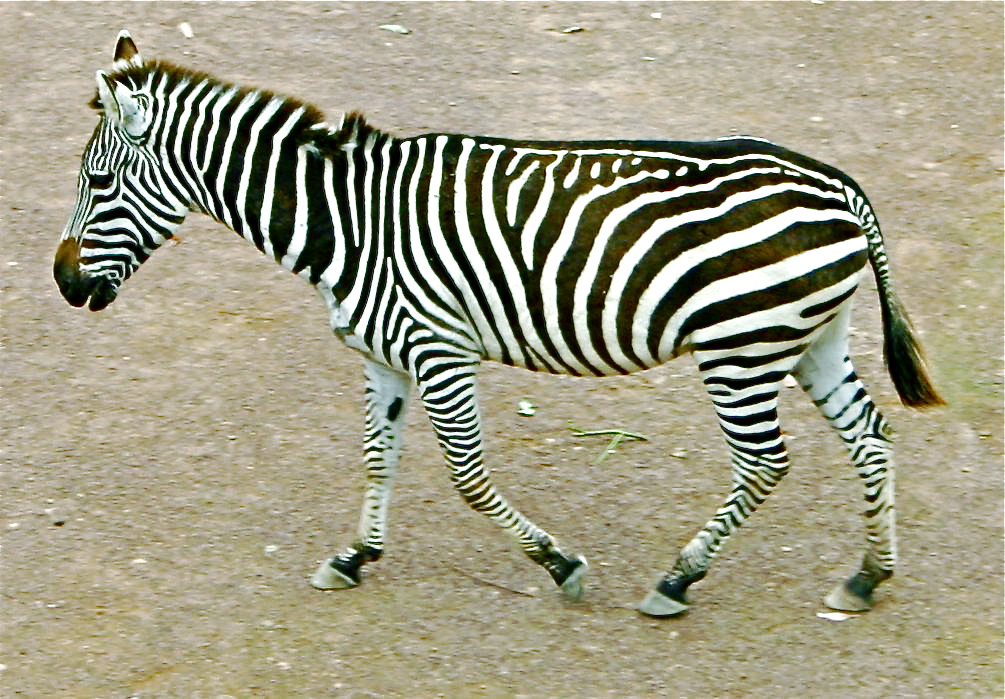
The zebra is a quadruped.
The monarch butterfly, while a quadruped, is not a tetrapod, but a hexapod. Arrow points to the miniature front leg not used for locomotion.

Quadrupedalism is a form of locomotion in which animals have four legs that are used to bear weight and move around. An animal or machine that usually maintains a four-legged posture and moves using all four legs is said to be a quadruped (from Latin quattuor for "four", and pes, pedis for "foot"). Quadruped animals are found among both vertebrates and invertebrates.

Quadrupeds vs. tetrapods

[edit]

Although the words 'quadruped' and 'tetrapod' are both derived from terms meaning 'four-footed', they have distinct meanings. A tetrapod is any member of the taxonomic unit Tetrapoda (which is defined by descent from a specific four-limbed ancestor), whereas a quadruped actually uses four limbs for locomotion. Not all tetrapods are quadrupeds and not all quadrupedal animals are tetrapods; some arthropods are adapted for four-footed locomotion, such as the raptorial Mantodea, or mantises, and the Nymphalidae, or brush-footed butterflies—the largest butterfly family, with ~6000 species, including the well-known monarch (see photo).

The distinction between quadrupeds and tetrapods is important in evolutionary biology, particularly in the context of tetrapods whose limbs have adapted to other roles (e.g., arms and hands in the case of humans, wings in the case of birds and bats, and fins in the case of whales). All of these animals are tetrapods, but not all are quadrupeds. Even snakes, whose limbs have become vestigial or lost entirely, are, nevertheless, tetrapods.

In infants and for exercise

[edit]

Quadrupedalism is sometimes referred to as being "on all fours", and is observed in crawling, especially by infants.[1]

In the 20th century quadrupedal movement was popularized as a form of physical exercise by Georges Hebert.[2] Kenichi Ito is a Japanese man famous for speed running on four limbs in competitions.[3]

Other human quadrupedalism

[edit]
Quadrupedalism in an Iraqi family

In July 2005, in rural Turkey, scientists discovered five Turkish siblings who habitually walked on both their hands and feet. Unlike chimpanzees, which ambulate on their knuckles, the Ulas family walked on their palms, allowing them to preserve the dexterity of their fingers.[4][5][6]

Quadrupedal robots

[edit]

BigDog is a dynamically stable quadruped robot created in 2005 by Boston Dynamics with Foster-Miller, the NASA Jet Propulsion Laboratory, and the Harvard University Concord Field Station.[7] Its successor was Spot.

Also by NASA JPL, in collaboration with University of California, Santa Barbara Robotics Lab, is RoboSimian, with emphasis on stability and deliberation. It has been demonstrated at the DARPA Robotics Challenge.[8]

Pronograde posture

[edit]

A related concept to quadrupedalism is pronogrady, or having a horizontal posture of the trunk. Although nearly all quadrupedal animals are pronograde, bipedal animals also have that posture, including many living birds and extinct dinosaurs.[9]

Nonhuman apes with orthograde (vertical) backs may walk quadrupedally in what is called knuckle-walking.[10]

References

[edit]
[edit]
Revisions and contributorsEdit on WikipediaRead on Wikipedia
from Grokipedia
Quadrupedalism is a form of in which an animal uses all four limbs to bear its body weight and move forward, typically maintaining a pronograde posture parallel to the ground. This mode of movement is the ancestral and predominant form of progression among vertebrates, encompassing the majority of mammals such as dogs, cats, and , as well as many reptiles like and amphibians. Quadrupedalism exhibits considerable variation across and environments, including terrestrial forms on the ground and arboreal variants adapted for navigating branches and trunks. Common gaits include symmetrical patterns like the walk and , as well as asymmetrical ones such as bounding and galloping, which optimize speed, stability, and energy efficiency depending on and body size. In , quadrupedalism often features diagonal coordination, where contralateral limbs move in near-synchrony, distinguishing it from the lateral sequence typical in many other mammals and aiding balance on uneven substrates. The evolution of quadrupedalism traces back to early tetrapods transitioning from aquatic to land environments, providing a stable foundation for weight support and propulsion that later enabled specializations like in humans and birds. Specialized adaptations, such as in great apes, reflect biomechanical adjustments to loading during terrestrial progression. Overall, quadrupedalism's versatility has contributed to its persistence as a fundamental locomotor strategy in diverse taxa.

Fundamentals

Definition

Quadrupedalism is a form of locomotion in which an uses all four limbs for both support and propulsion, typically while maintaining a pronograde body orientation with the trunk held horizontally parallel to the ground. This mode of movement relies on coordinated limb action to generate forward progress, distinguishing it from other forms of terrestrial travel such as or saltation. The term "quadrupedalism" derives from the Latin roots "quadru-" meaning "four" and "ped-" meaning "foot," combined with the suffix "-ism" to denote a practice or condition, with the base word "quadruped" entering English in the 1640s to describe four-footed animals. Its earliest recorded use in biological literature dates to the 1930s, initially in anthropological contexts to describe patterns of four-limbed movement. Key characteristics of quadrupedalism include the of the four limbs, often through diagonal coupling (where opposite limbs move together) or lateral coupling (where limbs on the same side coordinate), which enhances balance and . This limb coordination provides greater stability than , particularly on uneven , by distributing weight across a broader base of support and minimizing the risk of tipping. Fundamental s in quadrupedalism encompass the walk, a slow symmetrical pattern with three limbs always in contact with the ground; , a faster involving diagonal limb pairs; and the gallop, an asymmetrical, high-speed sequence with periods of suspension. These patterns represent core mechanisms for adapting speed and stability in four-limbed locomotion.

Pronograde Posture

Pronograde posture refers to a horizontal orientation of the body axis, where the trunk remains parallel to the ground, and the limbs are positioned laterally or ventrally to support the body's weight. This configuration is fundamental to quadrupedalism, enabling the animal to maintain a low center of gravity through bent elbows and knees. In this posture, the forelimbs and hindlimbs are typically of relatively equal length to facilitate balanced support. Anatomically, pronograde posture involves adaptations such as a mediolaterally broad and laterally positioned scapulae, which align the shoulders for effective across the limbs. The spinal column exhibits a relatively straight or gently curved profile suited to horizontal alignment, differing from the pronounced lumbar seen in orthograde postures; this reduces vertical loading on the vertebrae. Limb structures often include robust phalanges and elongated forelimbs in some species to optimize and stability during static support. Hand and foot positions are typically palmigrade or ; in terrestrial quadrupeds, they often involve pronated orientations for stable support, while arboreal species may use supinated orientations to enhance grip on branches and uneven substrates. This posture provides advantages including enhanced stability through four-point contact with the ground, which minimizes tipping risks and supports load-bearing activities. It also reduces gravitational on the spine and joints by distributing body mass evenly across the limbs, promoting energy efficiency for prolonged horizontal positioning compared to upright alternatives. In contrast to orthograde posture, which features a vertical trunk and extended hips for upright support as in humans, pronograde alignment avoids the increased associated with elevating the center of mass. Unlike saltatorial postures adapted for , which emphasize powerful extension, pronograde maintains a consistently horizontal axis for steady, ground-parallel support.

Biological Contexts

In Animals: Quadrupeds Versus Tetrapods

A quadruped is defined as an animal, particularly a mammal, that habitually uses all four limbs for locomotion and weight-bearing during movement on land. This functional description emphasizes the behavioral aspect of quadrupedalism, distinguishing it from animals that may have four limbs but do not rely on them consistently for walking, such as occasional users like certain primates. In contrast, a refers to any member of the Tetrapoda, a taxonomic group of vertebrates characterized by descent from ancestors with four limbs, encompassing amphibians, reptiles (including birds), and mammals. Not all tetrapods exhibit quadrupedal locomotion; for instance, bipedal birds like ostriches and humans, as well as limbless forms such as snakes, are tetrapods despite lacking functional quadrupedal gait. Snakes, derived from limbed reptilian ancestors, represent limbless tetrapods where evolutionary loss of limbs has eliminated quadrupedal capability, yet they retain the clade's defining phylogenetic traits./05%3A_Biological_Diversity/29%3A_Vertebrates/29.4%3A_Reptiles) The primary distinction lies in quadrupedalism as a locomotor adaptation versus tetrapod as an anatomical and evolutionary category: the former describes habitual four-limbed gait, often in pronograde posture, while the latter includes diverse forms regardless of limb usage. Quadrupedalism predominates among mammals, where most species—such as ungulates (e.g., deer, horses) and carnivores (e.g., wolves, lions)—are obligate quadrupeds adapted for terrestrial travel. It is also prevalent in reptiles, including the majority of squamates (lizards), turtles, and crocodilians, which employ four limbs for stability and propulsion. However, quadrupedalism is rare in birds, the avian subgroup of reptiles, as most species have evolved bipedal locomotion suited to their flight-oriented lifestyles.

Evolutionary and Biomechanical Aspects

Quadrupedalism emerged in the earliest tetrapods around 390 million years ago during the period, as lobe-finned fishes transitioned from aquatic to semi-terrestrial habitats, developing limbs capable of substrate interactions that supported weight-bearing on land. Fossil evidence, including trackways from the Middle , indicates that these early forms achieved efficient terrestrial locomotion shortly after their origin, with bony remains of species like confirming polydactylous limbs adapted for pushing against substrates rather than full aerial support. This gait pattern, characterized by diagonal-sequence coordination, was likely inherited from sarcopterygian ancestors, where fin movements in water prefigured limb alternation on land. The retention of quadrupedalism across most non-avian tetrapod lineages underscores its adaptive stability, persisting in amphibians, reptiles, and mammals while avian tetrapods evolved bipedality for flight. Phylogenetic analyses reveal an ancestral lateral-sequence diagonal-couplet in gnathostomes, conserved in diverse quadrupeds from crocodilians to ungulates, reflecting minimal selective pressure for gait overhaul despite morphological divergence. This evolutionary continuity highlights quadrupedalism's role as a versatile basal locomotor strategy, enabling exploitation of varied niches without the energetic penalties of specialized postures. Biomechanically, quadrupedal locomotion relies on precise (CoM) management to ensure stability and efficiency, with the CoM typically following a double-peaked vertical per stride—rising during double support phases and falling during single limb support—mirroring dynamics in bipedal walking but distributed across four limbs. Limb coordination is critical, maintaining at least three points of ground contact in walking gaits to counteract gravitational and inertial forces, while forelimbs often handle braking and hindlimbs , reducing peak loads on any single . In the frontal plane, mediolateral CoM excursions are minimized through synchronized ipsilateral limb placement, preventing tipping and allowing traversal of uneven with minimal corrective . Gait efficiency in quadrupeds is quantifiable via the , a dimensionless parameter that scales speed across body sizes and predicts transitions between walking, trotting, and galloping. Fr=v2gLFr = \frac{v^2}{g L} Here, vv denotes forward , gg is , and LL is effective leg length; values below 0.5 typically favor walking for stability, while higher Fr promote faster gaits for energy savings. This metric, rooted in , reveals that animals converge on similar Fr thresholds for gait shifts, optimizing mechanical work against gravity and optimizing stride frequency. Adaptations in quadrupedal forms vary by ecological demands, with cursorial species like ungulates evolving elongated limbs, reduced digit number, and spring-like tendons for sustained high-speed running on flat terrains. The exemplifies extreme specialization, achieving gallop speeds up to 100 km/h through a flexible spine for stride extension, lightweight , and retracted claws for traction, though limited to short bursts due to anaerobic reliance. Scansorial quadrupeds, such as tree-climbing mammals, conversely feature opposable digits, rotatable ankles, and elongated phalanges for gripping, enabling vertical and oblique progression in arboreal environments. Quadrupedalism incurs metabolic energy costs comparable to in similarly sized animals, facilitating endurance activities like long-distance migration in herbivores, where efficient limb loading and storage in tendons minimize per-stride expenditure. For instance, sustain trots at costs of approximately 130 ml O₂ kg⁻¹ km⁻¹, leveraging symmetrical gaits to recover via CoM vaulting, outperforming bipedal counterparts in load-bearing persistence. This equivalence in cost, independent of limb count, underscores quadrupedalism's evolutionary favor for versatile, sustained terrestrial mobility.

Human Applications

In Infants and Development

In human infants, quadrupedalism manifests primarily through crawling, a key locomotor stage that typically begins around 6 to 9 months of age and serves as a precursor to bipedal walking, which emerges around 12 months. This phase allows infants to explore their environment using all four limbs in a pronograde posture adapted to , with the torso positioned horizontally despite evolutionary adaptations for upright locomotion. Crawling typically lasts from a few weeks to several months, enabling infants to achieve greater mobility and independence before transitioning to walking. Neurologically, infant crawling relies on a progression from brainstem-mediated reflexes, such as the asymmetric tonic neck reflex that influences early limb coordination, to higher cortical maturation that supports voluntary control and interlimb synchronization. This integrates sensory feedback from the vestibular and proprioceptive systems, fostering the development of balance and spatial awareness essential for later motor skills. For instance, the demands of maintaining stability during hands-and-knees crawling enhance visual-proprioceptive coupling, allowing infants to anticipate obstacles and adjust posture in real time. Key milestones in this quadrupedal phase include the initial prone creeping or belly crawling, often starting around 6-7 months, where infants propel themselves using arms while dragging the trunk, followed by the transition to hands-and-knees crawling by about 8.5 months on average. This shift requires increased trunk extension and coordinated limb alternation, marking a refinement in quadrupedal patterns. Cultural practices can influence these timelines; for example, supine sleeping positions recommended in Western cultures to prevent reduce opportunities for , delaying the onset of crawling. Long-term benefits of this quadrupedal stage include strengthened core and limb muscles through sustained weight-bearing on , which builds foundational stability for upright posture. Additionally, crawling experiences correlate with enhanced cognitive-motor integration, as the active exploration promotes neural connections between and problem-solving, potentially facilitating later and social skill development.

For Exercise and Therapy

Quadrupedal exercises, such as bear crawls, have become integral to fitness routines like , where they engage the full body by activating the core, shoulders, arms, legs, and stabilizing muscles simultaneously to promote coordination and dynamic warm-ups. These movements mimic natural , enhancing overall strength and without equipment, making them accessible for various fitness levels. In therapeutic contexts, quadrupedal training aids rehabilitation for injuries by re-engaging interneuronal networks through step training, facilitating recovery of limb coordination and neural pathways. For balance disorders, mat-based quadruped exercises improve postural stability and pelvic mobility, often incorporated into protocols post-surgery or during sedentary recovery periods. Modified quadrupedal poses, such as downward-facing dog in , serve as therapeutic tools by strengthening the arms, shoulders, and core while elongating the spine and hamstrings to alleviate tension. These practices yield benefits including enhanced joint mobility, core strength, and cardiovascular endurance, as evidenced by studies on quadrupedal movement training (QMT) showing improvements in functional movement scores and active ranges of motion. Specifically for , QMT has demonstrated reductions in symptoms and enhanced functional performance in patients with non-specific , supporting its role in and flexibility gains. Since the , quadrupedal elements have integrated into modern trends like Animal Flow—a ground-based system founded in 2010 that combines mobility flows with primal movements—and Pilates routines, where quadruped variations build and shoulder dissociation for balanced strength. Building on precursor skills from infancy, these adult applications foster holistic physical resilience.

Other Forms in Humans

One notable pathological condition involving quadrupedalism in humans is (UTS), a rare congenital disorder first reported in 2005 among members of the in a rural village near , . Affected individuals exhibit habitual quadrupedal locomotion using a diagonal-sequence , severe , and limited or absent speech, often preferring all-fours movement due to instability when attempting upright posture. The syndrome is linked to , with revealing inferior vermian and reduced cerebellar glucose metabolism, stemming from autosomal recessive mutations such as those in the VLDLR gene on chromosome 9p24 or other loci like 17p13. At least 10 families across have been identified with similar traits, highlighting its genetic heterogeneity and association with consanguineous unions. In cultural and performative contexts, quadrupedalism appears in acrobatic and dance forms, such as (also known as b-boying), where moves like the turtle freeze involve supporting the body on hands and one bent leg with the other extended, mimicking a quadrupedal stance for dynamic transitions and freezes. These elements, originating in 1970s New York hip-hop culture, emphasize ground-based agility and have evolved into competitive displays in global events. Historically, art and mythology have depicted humans in quadrupedal forms, exemplified by centaurs in lore—hybrid beings with human torsos atop equine bodies—symbolizing untamed nature and appearing in sculptures, vases, and literature from the 8th century BCE onward. Experimental applications of quadrupedalism include simulations for microgravity environments, where studies on rhesus monkeys post-spaceflight reveal altered quadrupedal stability upon return to gravity, informing human for balance recovery after prolonged . In adaptive contexts, while bipedal exoskeletons dominate paraplegic mobility aids, conceptual designs explore quadrupedal supports to enhance upper-body propulsion for lower-limb paralysis, though clinical implementation remains limited. Ethical debates surrounding "human quadrupeds" like those with UTS arise in evolutionary psychology, particularly critiques of Üner Tan's hypothesis framing the condition as "reverse evolution" or devolution, which risks stigmatizing affected individuals by implying regression from bipedalism. Researchers counter that UTS represents a neurological adaptation rather than evolutionary reversal, emphasizing cerebellar dysfunction over phylogenetic implications to avoid dehumanizing portrayals in scientific discourse. Such discussions underscore the need for sensitive framing in studies of atypical gaits, prioritizing medical empathy over speculative evolutionary narratives.

Technological Implementations

Quadrupedal Robots

Quadrupedal robots are bio-inspired mechanical systems designed to emulate the locomotion of four-limbed animals, enabling enhanced mobility across uneven and complex terrains where wheeled or tracked vehicles may falter. These robots typically incorporate dynamic balance mechanisms, actuators, and sensors to replicate gaits such as walking, trotting, or bounding, drawing from biomechanical principles observed in quadrupeds like dogs and horses. Developed primarily since the early , they address challenges in environments requiring stability and adaptability, such as rough outdoor landscapes or disaster zones. A seminal example is Boston Dynamics' BigDog, unveiled in 2005 as a dynamically stable platform capable of carrying loads up to 340 pounds while navigating slopes and obstacles at speeds of about 4 miles per hour. Funded by the U.S. Defense Advanced Research Projects Agency (DARPA), BigDog represented an early milestone in rough-terrain locomotion, with its hydraulic actuators and onboard computer enabling real-time balance recovery. More recent commercial iterations include Boston Dynamics' Spot, released for sales in 2019, which is optimized for inspection tasks in industrial settings and can autonomously map environments using LiDAR and cameras while climbing stairs or traversing debris. Historical precursors trace back to Sony's AIBO, introduced in 1999 as a pet-like entertainment robot that demonstrated basic quadrupedal movement and adaptive behaviors through simple AI routines. Advancements in the 2020s have expanded accessibility and applications, with companies like Unitree Robotics releasing affordable models such as the Go2 (2024) and A2 (2025), priced under $10,000 for consumer and educational use, featuring AI-driven mobility and 3D for terrain mapping. Despite these efforts to broaden access, companion roles for quadrupedal robots remain limited, primarily confined to industrial, educational, or research settings rather than achieving widespread adoption as home AI companions. In contexts, Ghost Robotics' Vision 60 has been adopted by the U.S. Army as of 2024 for , perimeter , payload delivery, counter-drone operations, and testing of armed variants in hazardous environments. These robots find applications in , where they provide in hazardous areas without risking human lives; , aiding in through rubble or flooded regions; and search-and-rescue operations, such as delivering supplies or scouting collapsed structures. Autonomy varies across systems: early models like relied on for guidance, while advanced versions like Spot incorporate AI for independent path planning and obstacle avoidance, reducing operator intervention. Key milestones in the 2010s include DARPA's (LS3) program, launched in 2010, which built on to enhance load-carrying capacity and terrain adaptability, achieving demonstrations of semi-autonomous following of human squads over extended distances. These efforts advanced stability algorithms and power efficiency, paving the way for broader deployment in real-world scenarios. Ongoing developments in quadrupedal robots emphasize greater autonomy through AI integration for advanced navigation, task execution, and decision-making. Military applications continue to expand in areas such as reconnaissance, perimeter security, and payload delivery, with ongoing development of armed variants. While early and affordable models have explored pet-like or companion functionalities, such roles remain limited to industrial or educational contexts without widespread home use as AI companions. Future trends include enhanced AI for full autonomy, improved endurance via better power systems, and expanded deployment in hazardous environments for military, disaster response, and other high-risk scenarios.

Design Principles and Challenges

Quadrupedal robots typically feature leg configurations with compliant joints to enable flexible adaptation to uneven terrains, often employing series elastic actuators that incorporate springs or compliant elements between the motor and joint to absorb shocks and improve energy efficiency. Sensors such as inertial measurement units (), /torque sensors at the feet, and or depth cameras are integrated to provide real-time feedback on body orientation, ground reaction s, and environmental obstacles, facilitating terrain-adaptive locomotion. Power sources commonly include lithium-ion batteries for electric actuation, offering portability and quiet operation but limited runtime, in contrast to hydraulic systems that provide higher power density for dynamic tasks at the expense of added weight and noise. Control algorithms for quadrupedal robots often draw bio-mimetic inspiration from animal s, utilizing (CPGs) to produce rhythmic oscillatory signals that simulate natural locomotion patterns across coupled neural oscillators. CPGs enable stable generation by modulating phase differences between legs, allowing transitions between walking, trotting, and galloping without explicit programming for each mode. For stability, solves the mapping from desired end-effector positions to joint angles, ensuring dynamic balance; in a simplified 2D projection for leg placement, the joint angle θ can be computed as θ = \atan2(y, x), where (x, y) represents the foot position relative to the . Key challenges in quadrupedal robot design include energy efficiency, with battery-powered systems typically achieving 1-2 hours of operation under moderate loads due to high actuation demands during locomotion. Maintaining dynamic balance on slopes or irregular surfaces requires robust real-time computation to prevent tipping, often limited by sensor noise and processing delays. Additionally, development and manufacturing costs vary widely, from a few thousand dollars for consumer-grade models to over $70,000 for enterprise versions, driven by precision components and integration complexity. Materials such as lightweight carbon fiber composites are employed for structural elements to enhance durability while minimizing mass, thereby improving overall agility and payload capacity.

References

Add your contribution
Related Hubs
User Avatar
No comments yet.