Hubbry Logo
logo
QT interval
Community hub

QT interval

logo
0 subscribers
Read side by side
from Wikipedia
QT interval
Electrocardiogram showing QT interval calculated by tangent method
ICD-10-PCSR94.31
ICD-9-CM89.52
MeSHD004562
MedlinePlus003868

The QT interval is a measurement made on an electrocardiogram used to assess some of the electrical properties of the heart. It is calculated as the time from the start of the Q wave to the end of the T wave, and correlates with the time taken from the beginning to the end of ventricular contraction and relaxation. It is technically the duration of the aggregate ventricular myocyte action potential. An abnormally long or abnormally short QT interval is associated with an increased risk of developing abnormal heart rhythms and even sudden cardiac death. Abnormalities in the QT interval can be caused by genetic conditions such as long QT syndrome, by certain medications such as fluconazole, sotalol or pitolisant, by disturbances in the concentrations of certain salts within the blood such as hypokalaemia, or by hormonal imbalances such as hypothyroidism.

Measurement

[edit]
Illustrations of the tangent and threshold methods of measuring the QT interval

The QT interval is most commonly measured in lead II for evaluation of serial ECGs, with leads I and V5 being comparable alternatives to lead II. Leads III, aVL and V1 are generally avoided for measurement of QT interval.[1] The accurate measurement of the QT interval is subjective[2] because the end of the T wave is not always clearly defined and usually merges gradually with the baseline. QT interval in an ECG complex can be measured manually by different methods, such as the threshold method, in which the end of the T wave is determined by the point at which the component of the T wave merges with the isoelectric baseline, or the tangent method, in which the end of the T wave is determined by the intersection of a tangent line extrapolated from the T wave at the point of maximum downslope to the isoelectric baseline.[3]

With the increased availability of digital ECGs with simultaneous 12-channel recording, QT measurement may also be done by the 'superimposed median beat' method. In the superimposed median beat method, a median ECG complex is constructed for each of the 12 leads. The 12 median beats are superimposed on each other and the QT interval is measured either from the earliest onset of the Q wave to the latest offset of the T wave or from the point of maximum convergence for the Q wave onset to the T wave offset.[4]

Correction for heart rate

[edit]

The QT interval changes in response to the heart rate - as heart rate increase the QT interval shortens. These changes make it harder to compare QT intervals measured at different heart rates. To account for this, and thereby improve the reliability of QT measurement, the QT interval can be corrected for heart rate (QTc) using a variety of mathematical formulae, a process often performed automatically by modern ECG recorders.

Bazett's formula

[edit]

The most commonly used QT correction formula is the Bazett's formula,[5] named after physiologist Henry Cuthbert Bazett (1885–1950),[6] calculating the heart rate-corrected QT interval (QTcB).

Bazett's formula is based on observations from a study in 1920. Bazett's formula is often given in a form that returns QTc in dimensionally suspect units, square root of seconds. The dimensionally correct form of Bazett's formula is:
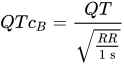
where QTcB is the QT interval corrected for heart rate, and RR is the interval from the onset of one QRS complex to the onset of the next QRS complex. This dimensionally correct formula returns the QTc in the same units as QT, generally milliseconds.[7]

In some popular forms of this formula, it is assumed that QT is measured in milliseconds and that RR is measured in seconds, often derived from the heart rate (HR) as 60/HR. Therefore, the result will be given in seconds per square root of milliseconds.[8] However, reporting QTc using this formula creates a "requirement regarding the units in which the original QT and RR are measured."[7]

In either form, Bazett's non-linear QT correction formula is generally not considered accurate, as it over-corrects at high heart rates and under-corrects at low heart rates.[8] Bazett's correction formula is one of the most suitable QT correction formulae for neonates.[9]

Fridericia's formula

[edit]

Fridericia[10] had proposed an alternative correction formula (QTcF) using the cube-root of RR.

Sagie's formula

[edit]

The Framingham correction, also called as Sagie's formula based on the Framingham Heart Study, which used long-term cohort data of over 5,000 subjects, is considered a better[11] method.[12]

Again, here QT and QTlc are in milliseconds and RR is measured in seconds.

Comparison of corrections

[edit]

A retrospective study suggests that Fridericia's method and the Framingham method may produce results most useful for stratifying the 30-day and 1-year risks of mortality.[11]

Upper limit of normal QT interval, corrected for heart rate according to Bazett's formula,[5] Fridericia's formula,[10] and subtracting 0.02 s from QT for every 10 bpm increase in heart rate.[13] Up to 0.42 s (≤ 420 ms) is chosen as normal QTc of QTB and QTF in this diagram.[14]

Definitions of normal QTc vary from being equal to or less than 0.40 s (≤ 400 ms),[13] 0.41 s (≤ 410 ms),[15] 0.42 s (≤ 420 ms)[14] or 0.44 s (≤ 440 ms).[16] For risk of sudden cardiac death, "borderline QTc" in males is 431–450 ms; and, in females, 451–470 ms. An "abnormal" QTc in males is a QTc above 450 ms; and, in females, above 470 ms.[17]

If there is not a very high or low heart rate, the upper limits of QT can roughly be estimated by taking QT = QTc at a heart rate of 60 beats per minute (bpm), and subtracting 0.02 s from QT for every 10 bpm increase in heart rate. For example, taking normal QTc ≤ 0.42 s, QT would be expected to be 0.42 s or less at a heart rate of 60 bpm. For a heart rate of 70 bpm, QT would roughly be expected to be equal to or below 0.40 s. Likewise, for 80 bpm, QT would roughly be expected to be equal to or below 0.38 s.[13]

Abnormal intervals

[edit]

Prolonged QTc causes premature action potentials during the late phases of depolarization. This increases the risk of developing ventricular arrhythmias, including fatal ventricular fibrillation.[18] Higher rates of prolonged QTc are seen in females, older patients, high systolic blood pressure or heart rate, and short stature.[19] Prolonged QTc is also associated with ECG findings called Torsades de Pointes, which are known to degenerate into ventricular fibrillation, associated with higher mortality rates. There are many causes of prolonged QT intervals, acquired causes being more common than genetic.[20]

Genetic causes

[edit]
Distribution of QT intervals amongst healthy males and females, and amongst those with congenital long QT syndrome

An abnormally prolonged QT interval could be due to long QT syndrome, whereas an abnormally shortened QT interval could be due to short QT syndrome.

The QTc length is associated with variations in the NOS1AP gene.[21] The autosomal recessive syndrome of Jervell and Lange-Nielsen is characterized by a prolonged QTc interval in conjunction with sensorineural hearing loss.

Due to adverse drug reactions

[edit]

Prolongation of the QT interval may be due to an adverse drug reaction.[22]

Antipsychotics (especially first generation/"typical")

DMARDs and antimalarial drugs

Antibiotics

Other drugs

Some second-generation antihistamines, such as astemizole, have this effect. The mechanism of action of certain antiarrhythmic drugs, like amiodarone or sotalol, involve intentional pharmacological QT prolongation. In addition, high blood alcohol concentrations prolong the QT interval.[30] A possible interaction between selective serotonin reuptake inhibitors and thiazide diuretics is associated with QT prolongation.[31]

Due to pathological conditions

[edit]

Hypothyroidism, a condition of low function of the thyroid gland, can cause QT prolongation at the electrocardiogram. Acute hypocalcemia causes prolongation of the QT interval, which may lead to ventricular dysrhythmias.

A shortened QT can be associated with hypercalcemia.[32]

Use in drug approval studies

[edit]

Since 2005, the FDA and European regulators have required that nearly all new molecular entities be evaluated in a Thorough QT (TQT) or similar study to determine a drug's effect on the QT interval.[33] The TQT study serves to assess the potential arrhythmia liability of a drug. Traditionally, the QT interval had been evaluated by having an individual human reader measure approximately nine cardiac beats per clinical timepoint. However, a substantial portion of drug approvals after 2010 have incorporated a partially automated approach, blending automated software algorithms with expert human readers reviewing a portion of the cardiac beats, to enable the assessment of significantly more beats in order to improve precision and reduce cost.[34] In 2014, an industrywide consortium consisting of the FDA, iCardiac Technologies and other organizations released the results of a seminal study indicating how waivers from TQT studies can be obtained by the assessment of early phase data.[35] As the pharmaceutical industry has gained experience in performing TQT studies, it has also become evident that traditional QT correction formulas such as QTcF, QTcB, and QTcLC may not always be suitable for evaluation of drugs impacting autonomic tone.[36]

As a predictor of mortality

[edit]

Electrocardiography is a safe and noninvasive tool that can be used to identify those with a higher risk of mortality. In the general population, there has been no consistent evidence that prolonged QTc interval in isolation is associated with an increase in mortality from cardiovascular disease.[37] However, several studies[which?] have examined prolonged QT interval as a predictor of mortality for diseased subsets of the population.

Rheumatoid arthritis

[edit]

Rheumatoid arthritis is the most common inflammatory arthritis.[38] Studies have linked rheumatoid arthritis with increased death from cardiovascular disease.[38] In a 2014 study,[18] Panoulas et al. found a 50 ms increase in QTc interval increased the odds of all-cause mortality by 2.17 in patients with rheumatoid arthritis. Patients with the highest QTc interval (> 424 ms) had higher mortality than those with a lower QTc interval. The association was lost when calculations were adjusted for C-reactive protein levels. The researchers proposed that inflammation prolonged the QTc interval and created arrhythmias that were associated with higher mortality rates. However, the mechanism by which C-reactive protein is associated with the QTc interval is still not understood.

Type 1 diabetes

[edit]

Compared to the general population, type 1 diabetes may increase the risk of mortality, due largely to an increased risk of cardiovascular disease.[19][39] Almost half of patients with type 1 diabetes have a prolonged QTc interval (> 440 ms).[19] Diabetes with a prolonged QTc interval was associated with a 29% mortality over 10 years in comparison to 19% with a normal QTc interval.[19] Anti-hypertensive drugs increased the QTc interval, but were not an independent predictor of mortality.[19]

Type 2 diabetes

[edit]

QT interval dispersion (QTd) is the maximum QT interval minus the minimum QT interval, and is linked with ventricular repolarization.[40] A QTd over 80 ms is considered abnormally prolonged.[41] Increased QTd is associated with mortality in type 2 diabetes.[41] QTd is a better predictor of cardiovascular death than QTc, which was unassociated with mortality in type 2 diabetes.[41] QTd higher than 80 ms had a relative risk of 1.26 of dying from cardiovascular disease compared to a normal QTd.

See also

[edit]

References

[edit]
[edit]
Revisions and contributorsEdit on WikipediaRead on Wikipedia
from Grokipedia
The QT interval is a key component of the electrocardiogram (ECG) that represents the duration of ventricular electrical systole, encompassing the phases of ventricular depolarization and repolarization from the onset of the QRS complex to the end of the T wave.[1] Physiologically, it corresponds to the ventricular action potential duration, providing insight into the heart's repolarization process and overall electrical stability.[2] Abnormalities in the QT interval, particularly prolongation or shortening, are associated with an increased risk of malignant ventricular arrhythmias, such as torsades de pointes and sudden cardiac death.[1] The QT interval varies with heart rate and is corrected (QTc) to a standardized value for assessment. Normal QTc values depend on age and gender, generally less than 440 milliseconds (ms) in adult males and less than 460 ms in adult females, though values can be longer in children and post-menopausal women.[1][3] Prolongation is typically defined as exceeding 450 ms in males or 470 ms in females.[1] Clinically, the QT interval holds significant implications for diagnosing and managing cardiac conditions, including congenital long QT syndrome (LQTS), which arises from genetic ion channel defects, and acquired forms triggered by medications, electrolyte imbalances, or structural heart disease.[2] Prolonged QTc intervals, especially above 500 ms, markedly elevate the risk of polymorphic ventricular tachycardia; clinical management may include beta-blockers, implantable cardioverter-defibrillators, or avoidance of QT-prolonging drugs, while regulatory guidelines emphasize monitoring and evaluation in drug development to mitigate proarrhythmic risks.[2][4] A short QT interval is rarer and linked to short QT syndrome (QTc ≤ 340 ms), predisposing to atrial and ventricular fibrillation.[5] Monitoring the QT interval is thus integral to routine ECG interpretation, arrhythmia risk stratification, and therapeutic decision-making in cardiology.[1]

Definition and Physiology

Definition

The QT interval is measured on a surface electrocardiogram (ECG) as the duration from the beginning of the QRS complex to the end of the T wave.[1] This interval encompasses the electrical activity associated with ventricular depolarization and repolarization.[2] Specifically, it represents the total time for the ventricles to depolarize, as seen in the QRS complex, followed by repolarization, which includes the ST segment and T wave.[6] In contrast to the QRS complex, which captures only the rapid ventricular depolarization phase, the QT interval provides a broader view by incorporating the entire repolarization process.[7] The ST segment, a component within the QT interval, spans from the end of the S wave to the start of the T wave and reflects the initial plateau of repolarization.[8] The QT interval was first described in 1895 by Willem Einthoven, who named the key deflections P, Q, R, S, and T in his early ECG studies. He later developed the string galvanometer around 1901.[9][10] Physiologically, it corresponds to the duration of the ventricular action potential.[2]

Physiological Role

The QT interval represents the temporal span of ventricular myocardial depolarization and repolarization, directly mirroring phases 0 through 3 of the action potential in ventricular myocytes. Phase 0 initiates rapid depolarization via influx of sodium ions through voltage-gated sodium channels, establishing the upstroke of the action potential. This is followed by phase 1, an early repolarization notch driven by transient outward potassium currents (I_to), and phase 2, the plateau phase, where a delicate balance between inward L-type calcium currents (I_Ca,L) and outward potassium currents sustains membrane depolarization to allow sufficient time for excitation-contraction coupling. Phase 3 then culminates in full repolarization, primarily through activation of delayed rectifier potassium currents that efflux potassium ions to restore the negative resting potential.[11][12] Central to phase 3 repolarization are the rapid delayed rectifier potassium current (I_Kr), mediated by hERG channels (KCNH2 gene), and the slow delayed rectifier potassium current (I_Ks), mediated by KCNQ1/KCNE1 channels, which together increase potassium permeability to drive membrane hyperpolarization. Sodium currents, particularly the late sodium current (I_Na,L), and calcium currents (I_Ca,L) indirectly regulate repolarization duration by prolonging the plateau if unopposed, while their inactivation supports the transition to phase 3. These ion channels form a redundant system known as repolarization reserve, where I_Ks activation compensates for potential reductions in I_Kr, ensuring robust repolarization even under stress.[12][13][14] The autonomic nervous system exerts dynamic control over QT duration to adapt to physiological demands. Sympathetic stimulation, via beta-adrenergic pathways, enhances I_Ks conductance, shortening the action potential and QT interval to accommodate faster heart rates during exercise or stress, thereby preventing excessive prolongation. In contrast, parasympathetic (vagal) tone tends to prolong the QT interval by slowing heart rate and modulating ion channel expression, though its direct effects on repolarization currents are less pronounced. This bidirectional modulation ensures QT adaptation to heart rate variations, maintaining electrical stability and minimizing the risk of arrhythmias by preserving homogeneous repolarization across the ventricle.[15][16][17] The adaptive significance of QT interval regulation lies in its role as a safeguard against arrhythmogenic heterogeneity during fluctuating cardiac workloads. By providing repolarization reserve through overlapping potassium currents, the system prevents action potential duration prolongation at higher heart rates, which could otherwise foster early afterdepolarizations or re-entrant circuits. This physiological flexibility is evolutionarily conserved to support survival in environments requiring rapid cardiovascular adjustments, optimizing ventricular filling and contractility while averting life-threatening rhythm disturbances.[12]

Assessment

Normal Values

The uncorrected QT interval in healthy adults typically ranges from 300 to 440 milliseconds, though this value decreases as heart rate increases due to its inherent dependence on cardiac cycle length.[2] The heart rate-corrected QTc interval provides a standardized measure, with normal values generally ≤440 milliseconds in adult males and ≤460 milliseconds in adult females.[2][3] In pediatric populations, QTc values are similar to adults but exhibit variations; for instance, newborns may have upper limits up to 440 milliseconds in the first week of life, with mean values around 400 milliseconds, and intervals can transiently reach 500 milliseconds in the initial days before normalizing.[18][19] Several factors influence these normal ranges. Age-related changes include slight prolongation of QTc with advancing years, such as thresholds increasing to 455 milliseconds for males and 460 milliseconds for females over 70 years.[20] Sex differences emerge post-puberty, with females exhibiting longer QTc intervals than males by approximately 10-20 milliseconds, attributed to hormonal influences.[21] Racial variations also exist; for example, QT intervals tend to be shorter in Asian males but longer in Asian females compared to White counterparts, while African Americans may show shorter QTc overall.[22][23] Borderline QTc values, indicating potential concern but not definitive abnormality, are often considered 431-450 milliseconds in adult males and 451-470 milliseconds in adult females, with prolongation defined as >450 milliseconds in males and >470 milliseconds in females in some age-stratified guidelines.[20] These thresholds underscore the need for heart rate correction to accurately interpret QT intervals across diverse populations.[3]

Measurement Methods

The QT interval is typically measured from a standard 12-lead electrocardiogram (ECG), with lead selection playing a critical role in accuracy. Lead II is commonly preferred due to its clear depiction of the T wave, while precordial leads such as V5 or V6 serve as alternatives when they provide a more distinct T-wave morphology.[24][25] In cases where variability exists across leads, the lead yielding the longest QT interval should be selected to capture the maximum duration, and automated 12-lead analysis can integrate measurements from multiple leads for a global assessment.[26][27] Manual measurement remains the gold standard for QT interval assessment, often employing digital calipers on ECG tracings to mark the onset of the QRS complex and the end of the T wave. Two primary techniques are used: the threshold method, which defines the T-wave end at its intersection with the baseline (typically at 0 mV), and the tangent method, which draws a tangent line to the steepest downslope of the T wave and identifies the intersection with the baseline.[3][25] The tangent method generally yields shorter QT intervals compared to the threshold method, with studies showing differences of up to 10-20 ms, but it exhibits lower inter-observer variability, making it preferable in clinical settings for reproducibility.[3][28] For noisy signals or irregular rhythms, manual techniques may involve averaging multiple beats or using a superimposed median beat to enhance signal clarity before measurement.[4] Automated measurement, facilitated by ECG software algorithms, offers efficiency in high-volume settings but requires validation against manual methods due to potential inaccuracies in T-wave detection. These systems typically apply digital filters and pattern recognition to identify QRS onset and T-wave offset, often defaulting to the tangent or threshold approach, though discrepancies arise in up to 20% of cases compared to manual readings.[24][28] Manual verification is recommended, particularly in scenarios with borderline values, as automated tools can overestimate or underestimate by 5-15 ms in the presence of artifacts.[26][29] Several challenges complicate accurate QT measurement, including the distinction between T and U waves, where prominent U waves may be erroneously included, leading to QT prolongation artifacts of 20-50 ms.[27] Variations in T-wave morphology, such as biphasic or notched patterns, further obscure the endpoint, necessitating careful visual inspection to exclude U-wave contributions and include the entire T-wave deflection.[24][30] In atrial fibrillation, irregular R-R intervals introduce beat-to-beat variability, often requiring measurement from multiple cycles and averaging to mitigate errors exceeding 30 ms.[30][31]

Heart Rate Correction Methods

The QT interval varies inversely with heart rate, shortening during faster rates due to a reduced RR interval and lengthening during slower rates, which complicates direct comparisons across individuals or within the same individual under varying physiological conditions.[32] This variability arises because the QT interval reflects ventricular repolarization duration, which adapts dynamically to changes in cardiac cycle length, but without adjustment, it cannot reliably indicate abnormalities like prolonged repolarization that increase the risk of arrhythmias such as torsades de pointes.[33] Heart rate correction standardizes the QT interval (QTc) to a reference heart rate, typically 60 beats per minute, enabling consistent clinical assessment independent of rate fluctuations.[33] The RR interval, defined as the time in seconds between two consecutive R waves on the electrocardiogram, quantifies heart rate and forms the basis for all correction methods, as it inversely correlates with heart rate (shorter RR indicates faster rate).[32] Correction approaches generally fall into linear and nonlinear categories, reflecting the debated nature of the QT-RR relationship. Linear methods, such as the Framingham formula derived from population-based regression analysis, apply a straightforward proportional adjustment to the QT interval based on deviations from a reference RR, providing simplicity and reduced bias across moderate heart rates.[34] In contrast, nonlinear methods, including those using square root or cubic root transformations of the RR interval (as in Bazett's or Fridericia's formulas), model the curvilinear dependency observed in physiological data, aiming to better capture repolarization adaptation at varying rates.[35] Despite these approaches, heart rate correction methods have inherent limitations, particularly at extreme heart rates below 60 beats per minute or above 100 beats per minute, where over-correction (exaggerating QTc prolongation) or under-correction (masking true prolongation) commonly occurs, potentially leading to misdiagnosis of repolarization disorders.[33] This stems from the dynamic, hysteresis-laden QT-RR relationship, where QT adaptation lags behind rate changes and varies individually due to autonomic influences, underscoring the need for context-specific formula selection.[33]

Correction Formulas

Bazett's Formula

Bazett's formula, introduced by Henry C. Bazett in 1920, calculates the corrected QT interval (QTc) to standardize the QT duration for a heart rate of 60 beats per minute. The formula is expressed as:
QTc=QTRR \text{QTc} = \frac{\text{QT}}{\sqrt{\text{RR}}}
where QT is the measured QT interval and RR is the interval between consecutive R waves, both in seconds. This correction assumes a parabolic relationship between the QT interval and the cardiac cycle length (RR interval), derived empirically from electrocardiographic data collected from 39 healthy men. Bazett adapted earlier work on systolic duration by Waller, fitting the data to a square-root model to account for the observation that QT duration shortens nonlinearly as heart rate increases.[36] The formula's primary advantages lie in its mathematical simplicity and ease of manual calculation, making it the most widely used heart rate correction method in clinical settings, electrocardiogram reporting software, and major guidelines, including those from the European Society of Cardiology.[24][37] It facilitates rapid assessment of QT prolongation risk in routine practice without requiring complex computations.[24] Despite its prevalence, Bazett's formula has notable limitations, particularly in its rate-correction accuracy outside moderate heart rates. It overcorrects (overestimates QTc) at elevated heart rates greater than 100 beats per minute and undercorrects (underestimates QTc) at bradycardic rates below 60 beats per minute, leading to potential misclassification of QT abnormalities.[37][38] For example, consider a patient with a measured QT of 0.30 seconds (300 ms) and RR of 0.50 seconds (heart rate 120 bpm); applying the formula yields QTc = 0.30 / √0.50 ≈ 0.30 / 0.707 ≈ 0.424 seconds (424 ms), which overestimates the true corrected value relative to more linear formulas, potentially flagging unnecessary concern for prolongation.[38] Conversely, for a QT of 0.40 seconds (400 ms) and RR of 1.00 seconds (heart rate 60 bpm, but illustrating low-rate bias in slower contexts), the formula gives QTc = 0.40 / √1.00 = 0.40 seconds (400 ms), but at even lower rates like RR = 1.20 seconds (50 bpm) with QT = 0.42 seconds, QTc ≈ 0.42 / √1.20 ≈ 0.42 / 1.095 ≈ 0.384 seconds (384 ms), underestimating by approximately 10-15 ms compared to individualized corrections.[38] These biases arise from the formula's fixed square-root exponent, which does not fully capture the variable QT-RR dynamics across extreme rates.[37]

Fridericia's Formula

Fridericia's formula for correcting the QT interval for heart rate was developed by Danish physician Louis Sigurd Fridericia in 1920, based on electrocardiographic studies of 50 healthy individuals aged 16 to 82 years. Observing that the QT interval's duration varies inversely with heart rate but not in a simple linear fashion, Fridericia analyzed the relationship between the QT interval and the RR interval using mathematical modeling, including a two-constant exponential equation to minimize measurement errors and achieve an average error of 0.015 seconds. He determined that the cube root of the RR interval provided a more linear approximation of this relationship compared to other exponents, leading to the formula's core structure.[39] The formula is expressed as:
QTc=QTRR3 \mathrm{QTc} = \frac{\mathrm{QT}}{\sqrt[3]{\mathrm{RR}}}
where QT and RR are measured in seconds, and QTc represents the corrected QT interval standardized to a heart rate of 60 beats per minute (RR = 1 second). This cubic root correction assumes a power-law dependency that better captures the physiological shortening of ventricular systole at higher heart rates.[39] One key advantage of Fridericia's formula is its reduced tendency to overcorrect or undercorrect the QT interval at heart rate extremes relative to other methods, resulting in lower residual dependence on heart rate and improved prognostic accuracy in clinical populations. For instance, in a large cohort study, it demonstrated superior rate correction and better prediction of mortality outcomes compared to alternatives. It is also recommended by the U.S. Food and Drug Administration for evaluating QT prolongation in certain drug safety trials, where precise heart rate adjustments are critical.[40][4][41] Despite these strengths, Fridericia's formula is not ideal for very low heart rates, where it can still introduce some overestimation of QTc due to its exponential nature. To illustrate differences, consider a bradycardic example with RR = 1.5 seconds (heart rate ≈ 40 bpm) and measured QT = 0.48 seconds: Fridericia yields QTc ≈ 0.419 seconds (0.48 / 1.5^{1/3}, where 1.5^{1/3} ≈ 1.145), while a square-root method undercorrects to ≈ 0.392 seconds, potentially masking prolongation. In tachycardia (RR = 0.5 seconds, heart rate = 120 bpm, QT = 0.30 seconds), Fridericia gives QTc ≈ 0.378 seconds (0.30 / 0.5^{1/3}, where 0.5^{1/3} ≈ 0.794), avoiding excessive overcorrection seen in other approaches. These examples highlight its relative accuracy but underscore the need for context-specific application at extremes.[42][40]

Other Formulas

In addition to the more commonly used nonlinear correction methods, several linear formulas have been developed to adjust the QT interval for heart rate, offering advantages in specific clinical contexts. The Framingham formula, derived from the longitudinal Framingham Heart Study, provides a linear correction expressed as QTc = QT + 0.154(1 - RR), where QT and RR intervals are in seconds.[43] This approach was proposed by Sagie et al. in 1992 as an improvement over earlier methods, emphasizing its suitability for population-based analyses due to reduced bias across a wide range of heart rates in large cohorts.[34] Another linear correction is the Hodges formula, formulated as QTc = QT + 1.75(HR - 60), where QT is in milliseconds and HR is heart rate in beats per minute.[25] Developed by Hodges in 1983, this method argues for a direct proportional relationship between QT interval and heart rate, avoiding the overcorrection seen in nonlinear formulas at extreme rates. These linear formulas, such as Framingham and Hodges, are particularly applicable in scenarios where nonlinear corrections like Bazett's or Fridericia's may introduce inaccuracies, including pediatric populations with higher baseline heart rates and athletic individuals during exercise-induced tachycardia.[44] In population studies, the Framingham formula excels by maintaining stability across diverse heart rates without the rate-dependent distortions observed in other methods.[40]

Formula Comparisons and Limitations

Various studies have compared the accuracy of QT correction formulas, with Fridericia's formula generally outperforming Bazett's across a wide range of heart rates. In a 2023 systematic review of athletes and young people, Fridericia's correction demonstrated the lowest heart rate dependence and highest accuracy for heart rates between 39 and 120 bpm, while Bazett's was least reliable outside 60-90 bpm, overestimating QTc at higher rates and underestimating at lower ones.[45] Similarly, a 2016 analysis in a large cohort found Fridericia and Framingham formulas provided the best rate correction, with Bazett performing worst due to excessive variability at extremes of heart rate.[40] Meta-analyses and cohort studies highlight significant variability in corrected QT (QTc) values across formulas, often resulting in differences of 20-30 ms that can affect clinical interpretation. For instance, upper limits of normal QTc using Bazett reached 472 ms in men and 482 ms in women, compared to approximately 450 ms with Fridericia, illustrating how formula choice influences threshold assessments.[40] Short-term and long-term QTc stability analyses show Bazett introduces greater variability (standard deviation up to 12 ms) than Fridericia (around 6 ms), particularly during heart rate fluctuations.[46] Recent research as of 2025 continues to support Fridericia's formula as the most accurate for heart rate correction in large healthy volunteer cohorts, with a September 2025 analysis of over 22,000 individuals confirming its minimal bias across broad heart rate ranges.[47] Emerging methods aim to address remaining limitations; for example, the AccuQT approach, a model-free technique using transfer entropy to minimize information transfer between RR and QT intervals, has shown superior discrimination in long QT syndrome patients and potential for clinical studies (as of 2024).[48] Additionally, a demography-based adaptive formula (QTcAd), incorporating factors like age, demonstrated enhanced performance across pediatric and adult datasets in humans and animal models, published in February 2025.[49] These developments suggest ongoing refinement, particularly for specialized populations. All QT correction formulas serve as approximations of the QT-RR relationship and carry inherent limitations, including reduced accuracy in the presence of arrhythmias or electrolyte imbalances. Bazett and Fridericia both falter with R-R interval variability, such as in atrial fibrillation or sinus arrhythmia, where irregular heart rates distort corrections.[50] None adequately account for direct influences of electrolytes like hypokalemia or hypomagnesemia on repolarization, potentially leading to erroneous QTc estimates independent of heart rate.[33] ECG guidelines emphasize verifying QTc with multiple formulas in ambiguous cases to mitigate these limitations. The 2023 Canadian Cardiovascular Society guidelines favor Bazett for routine use but highlight its inaccuracies at heart rates below 60 bpm or above 100 bpm, recommending manual measurement and consideration of alternatives like Fridericia for faster rates to ensure reliable assessment.[50] Regulatory bodies such as the FDA and EMA endorse Fridericia for drug safety studies, underscoring the need for formula selection based on clinical context to improve verification.[51]

Abnormal Intervals

Prolonged QT Interval

The QT interval is considered prolonged when the heart rate-corrected QT interval (QTc) exceeds 450 milliseconds (ms) in males or 460 ms in females, based on standard electrocardiographic criteria for identifying repolarization abnormalities.[52] Degrees of prolongation are often classified as mild (451-500 ms) or severe (>500 ms), with severe cases carrying heightened clinical concern due to arrhythmia risk.[2] These thresholds account for sex-based differences in repolarization duration, where females typically exhibit longer baseline QTc values post-puberty.[53] On electrocardiogram (ECG), prolonged QT intervals manifest with characteristic repolarization changes, including flattened or low-amplitude T waves, notched T waves (particularly in leads V2-V3), and prominent U waves that may fuse with the T wave, complicating measurement.[25] These features reflect delayed ventricular repolarization and are more pronounced in severe prolongation, often requiring measurement in multiple leads (e.g., II, V5) for accuracy.[3] Prolonged QT intervals increase susceptibility to early afterdepolarizations (EADs), triggered by prolonged action potential duration that reactivates L-type calcium channels during phase 3 of the cardiac action potential.[54] EADs can initiate polymorphic ventricular tachycardia, such as torsades de pointes, potentially degenerating into ventricular fibrillation and sudden cardiac death.[55] In the general population, prolonged QTc affects approximately 2-5% of individuals in Western populations, with higher prevalence (up to 15%) reported in some Asian cohorts; overall, it is more common in females, older adults, and those with comorbidities such as electrolyte imbalances or cardiac disease.[56] Congenital forms, due to genetic ion channel mutations, occur in about 1 in 2,000 people but represent only a subset of cases.[57]

Short QT Interval

A short QT interval is generally defined as a corrected QT interval (QTc) of less than 360 milliseconds in adults, though thresholds can vary slightly by sex and measurement method, with values below 330-350 ms often indicating a more severe abnormality associated with short QT syndrome (SQTS).[58][59] SQTS represents a rare inherited arrhythmogenic disorder characterized by accelerated cardiac repolarization, leading to this abbreviated QT duration, and is typically diagnosed when the short QT is accompanied by symptoms such as syncope or family history of sudden cardiac events.[60][61] On electrocardiogram (ECG), a short QT interval in SQTS often manifests with distinctive features, including tall and peaked T waves, particularly in the precordial leads, and a shortened or absent ST segment, where the T wave appears to rise immediately after the QRS complex.[62][58] These morphological changes reflect the underlying ion channel dysfunction that hastens ventricular repolarization, distinguishing it from other causes of abbreviated QT such as hypercalcemia or digitalis effects.[63][64] The clinical risks associated with a short QT interval include a heightened susceptibility to life-threatening arrhythmias, notably ventricular fibrillation (VF) and atrial fibrillation (AF), which can precipitate sudden cardiac arrest, particularly in younger individuals.[61][65] SQTS has a low prevalence, estimated at 0.02% to 0.1% in the general population, making it an underrecognized entity compared to its counterpart, long QT syndrome.[66] Recent analyses from 2025 have highlighted a U-shaped relationship between QTc duration and adverse outcomes, showing that short QTc intervals (below approximately 350 ms) are linked to increased 3-month risks of new-onset AF, ventricular arrhythmias, and all-cause mortality, independent of other cardiovascular factors.[67][68]

Causes of Abnormalities

Genetic Causes

Genetic causes of QT interval abnormalities primarily involve inherited channelopathies affecting cardiac ion channels, leading to either prolongation or shortening of the QT interval. The most common is long QT syndrome (LQTS), an autosomal dominant disorder characterized by delayed ventricular repolarization due to loss-of-function mutations in potassium or sodium channel genes. LQTS types 1 through 3 account for the majority of cases, with mutations in KCNQ1 (LQT1, 30%-35% of cases) causing reduced IKs current, KCNH2 (LQT2, 25%-30%) impairing IKr, and SCN5A (LQT3, 5%-10%) resulting in persistent sodium influx.[69] These mutations lead to heterogeneous T-wave morphologies and arrhythmia triggers specific to each subtype, such as exercise for LQT1 and auditory stimuli for LQT2. The prevalence of congenital LQTS is estimated at 1:2000 live births.[70] Romano-Ward syndrome represents the autosomal dominant form of LQTS without congenital deafness, distinguishing it from the recessive Jervell and Lange-Nielsen syndrome. It is caused by heterozygous mutations in the same major genes (KCNQ1, KCNH2, SCN5A), which disrupt ion channel function and prolong the action potential duration. LQTS exhibits incomplete penetrance, with approximately 25% of mutation carriers displaying a normal QTc interval (<440 ms), and variable expressivity, where clinical severity ranges from asymptomatic to sudden cardiac death, influenced by genetic modifiers and environmental factors.[69] Short QT syndrome (SQTS), a rarer autosomal dominant condition, results from gain-of-function mutations that accelerate repolarization, shortening the QTc to <320 ms and increasing susceptibility to atrial and ventricular arrhythmias. Key subtypes include SQT1 due to KCNH2 mutations enhancing IKr, SQT2 from KCNQ1 variants boosting IKs, and SQT3 involving KCNJ2 increasing IK1; additional types (4-6) are linked to genes like CACNA1C and CACNB2 affecting calcium channels, though evidence for some remains moderate.[71] Fewer than 200 families have been reported worldwide as of 2023, underscoring its rarity. The estimated prevalence is approximately 0.02% to 0.1% (2.7 per 100,000 individuals).[72][73] Other genetic disorders impacting the QT interval include Andersen-Tawil syndrome (ATS), classified as LQT7, which features prolonged QTc or QUc intervals alongside periodic paralysis and dysmorphic features due to KCNJ2 mutations that suppress inward rectifier potassium currents.[74] These mutations exert a dominant-negative effect, altering repolarization and producing distinctive T-U wave patterns on ECG.[74] Diagnosis of these genetic QT abnormalities relies on molecular genetic testing, which identifies a pathogenic variant in approximately 80% of LQTS cases and is recommended for symptomatic individuals with QTc prolongation, family history of sudden death, or high clinical suspicion per 2024 international guidelines.[69] Cascade screening of first-degree relatives is advised when a variant is confirmed in the proband, given the incomplete penetrance and variable expressivity that necessitate clinical correlation beyond genetic findings alone.[75] Early testing in minors is supported for risk stratification and preventive measures.[75]

Drug-Induced Causes

Drug-induced prolongation of the QT interval primarily occurs through blockade of the human ether-à-go-go-related gene (hERG) potassium channel, which encodes the rapid delayed rectifier current (I_Kr) responsible for cardiac repolarization. This blockade delays ventricular repolarization, extending the action potential duration and thereby prolonging the QT interval on the electrocardiogram (ECG).[76] In addition to direct channel inhibition, some drugs disrupt hERG protein trafficking to the cell membrane, reducing functional channel availability and contributing to the same effect.[77] Common examples include antiarrhythmic agents like sotalol, which potently blocks hERG and is associated with dose-dependent QT prolongation of 10-40 ms at therapeutic doses; macrolide antibiotics such as erythromycin, which inhibits I_Kr and poses a conditional risk; and antipsychotics like haloperidol, known for significant hERG affinity leading to marked QT extension in susceptible individuals.[78][79] The CredibleMeds database categorizes QT-prolonging drugs based on their risk of torsades de pointes (TdP), a potentially fatal ventricular arrhythmia linked to excessive QT prolongation. Drugs in the Known Risk (KR) category demonstrate strong evidence of causing TdP, such as sotalol and haloperidol; Possible Risk (PR) includes agents with documented QT prolongation but insufficient TdP evidence, exemplified by recent additions like mavorixafor in August 2024; and Conditional Risk (CR) covers drugs that prolong QT under specific circumstances, like electrolyte imbalances or high doses, including erythromycin and new entries such as opipramol, revumenib, and sitafloxacin added in December 2024.[79] Post-2023 updates reflect ongoing pharmacovigilance, with April 2024 reclassifying ivabradine to KR due to TdP cases and adding quizartinib to KR, alongside December 2023 adjustments to several entries based on emerging clinical data.[80][81] The incidence of drug-induced long QT syndrome (LQTS) varies by agent and population but generally affects 1-3% of patients exposed to high-risk drugs, with TdP occurring at a rarer rate of approximately 4 cases per 100,000 person-years in hospitalized settings.[82][83] Monitoring protocols recommend baseline ECG assessment prior to initiating therapy with KR or PR drugs, especially in patients with risk factors like female sex, advanced age, or bradycardia, followed by repeat ECGs at peak drug levels or after 3-5 days for ongoing therapy.[84] If QTc exceeds 500 ms or increases by >60 ms from baseline, dose reduction, discontinuation, or electrolyte correction (e.g., potassium, magnesium) is advised to mitigate TdP risk.[84] Recent advances in 2024 include artificial intelligence models like QTNet, a convolutional neural network (CNN) applied to ECGs that predicts drug-induced LQTS with high accuracy in outpatient settings, outperforming traditional manual measurements by integrating waveform morphology and maintaining performance over time.[85] Such tools enhance early detection, particularly for polypharmacy scenarios common in psychiatric and critical care patients.[85]

Acquired Causes from Pathologies

Acquired causes of QT interval abnormalities arising from underlying pathologies encompass a range of non-genetic, non-pharmacological medical conditions that disrupt cardiac repolarization through mechanisms such as electrolyte disturbances, hormonal imbalances, or ischemic processes. These pathologies can lead to either prolongation or shortening of the QT interval, increasing the risk of ventricular arrhythmias like torsades de pointes.[86][87] Electrolyte imbalances are among the most common acquired pathological causes of QT prolongation. Hypokalemia, often resulting from conditions like gastrointestinal losses or renal disorders, reduces the outward potassium current (IKr), thereby extending the action potential duration and QT interval.[88] Similarly, hypomagnesemia impairs repolarization by affecting potassium channels, while hypocalcemia prolongs the ST segment, contributing to an extended QT interval; these imbalances are frequently observed in critically ill patients and can compound each other.[86][89] In contrast, hypercalcemia, typically from hyperparathyroidism or malignancy, shortens the QT interval by accelerating phase 2 repolarization due to increased calcium influx.[90][5] Various systemic diseases also induce QT abnormalities through direct myocardial effects or autonomic dysregulation. Hypothyroidism prolongs the QT interval by reducing thyroid hormone modulation of potassium channels, leading to decreased repolarizing currents; this effect is reversible with thyroid replacement therapy.[91][92] Myocardial ischemia, as seen in acute coronary syndromes, causes heterogeneous repolarization prolongation due to regional hypoxia and altered ion channel function, with QTc extension correlating to infarct size and adverse outcomes.[93][94] Stroke, particularly ischemic types, is associated with QT prolongation in 38-71% of cases, likely from central autonomic imbalance and neurogenic stress, heightening arrhythmia risk.[87][95] Additional pathological states include starvation and hypothermia, which both promote QT prolongation. In starvation, such as in anorexia nervosa or severe malnutrition, electrolyte shifts and metabolic acidosis extend the QT interval, often within normal ranges but predisposing to arrhythmias.[96] Hypothermia slows ion channel kinetics, prolonging the QT interval and potentially inducing Osborn waves on ECG.[97] These acquired abnormalities are prevalent in intensive care unit (ICU) settings, affecting up to 24-25% of patients due to multifactorial stressors like sepsis or organ failure.[88][98] Recent studies as of 2025 highlight links between QT prolongation and specific chronic pathologies. In liver cirrhosis, QT interval extension occurs in up to 70% of cases, correlating with disease severity, electrolyte imbalances, and complications like ascites or hepatic encephalopathy, independent of cirrhotic cardiomyopathy.[99][100] Among HIV patients, particularly those with opportunistic infections such as tuberculosis or pneumocystis, QT prolongation is prevalent (up to 30-50%), driven by inflammation, immune dysregulation, and associated electrolyte disturbances, elevating sudden cardiac death risk.[101][102]

Clinical Significance

Associated Arrhythmias and Risks

Prolonged QT intervals are strongly associated with torsades de pointes (TdP), a polymorphic ventricular tachycardia that can degenerate into ventricular fibrillation and sudden cardiac death. In patients with congenital long QT syndrome (LQTS), TdP typically arises from early afterdepolarizations during repolarization.[103] Short QT intervals, as seen in short QT syndrome (SQTS), predispose individuals to ventricular fibrillation (VF) due to accelerated repolarization and shortened refractory periods, leading to re-entrant arrhythmias and a high risk of sudden cardiac arrest. SQTS is characterized by familial sudden death, with VF often inducible during electrophysiological studies.[104][105] In LQTS type 2, events such as syncope and seizures are frequently triggered by pause-dependent mechanisms, such as sudden auditory stimuli or arousal from sleep, which initiate short-long-short sequences promoting TdP. These symptoms, often misdiagnosed as epilepsy, occur more commonly in LQT2 compared to other genotypes and can result from transient cerebral hypoperfusion during arrhythmic episodes.[106] Recent analyses from 2025 highlight the short-term risks of QT extremes, showing a U-shaped relationship where both prolonged (>500 ms) and short (<370 ms) QTc intervals correlate with elevated 3-month hazards of new-onset atrial fibrillation (HR 7.4-7.7) and ventricular arrhythmias, independent of underlying genetic causes like LQTS or SQTS.[107]

Prognostic Implications

The QT interval, particularly when corrected for heart rate (QTc), serves as a significant prognostic marker for mortality in general populations. Prolonged QTc intervals exceeding 440 ms have been associated with an increased risk (hazard ratios approximately 1.2- to 1.7-fold) of cardiovascular death, independent of other factors. For instance, in a large cohort study, individuals in the highest tertile of long-term average QTc demonstrated a 24% higher hazard ratio for all-cause mortality compared to those in the lowest tertile, after adjusting for demographics and comorbidities. Similarly, the Framingham Heart Study has linked prolonged QTc to elevated all-cause mortality risk, with analyses confirming this association persists even when accounting for heart rate correction methods like Bazett's formula.[108][109][110] Short QTc intervals also carry prognostic weight, showing a U-shaped risk profile for mortality outcomes. Recent 2025 analyses from a retrospective cohort of over 145,000 patients revealed that short QTc (200–370 ms) was associated with a hazard ratio of 10.03 for 3-month all-cause mortality compared to normal ranges (370–420 ms), highlighting heightened immediate risks. This finding aligns with broader evidence that deviations in either direction from normal QTc values predict adverse events, though short QTc risks may be partially attenuated after excluding influences like QT-prolonging medications.[68] QTc prolongation acts as an independent predictor of mortality beyond traditional risk factors, such as left ventricular ejection fraction. In post-myocardial infarction patients, QTc >445 ms independently forecasted all-cause death and heart failure, adding prognostic value to clinical predictors like NT-proBNP. A validated risk score study further demonstrated that QT prolongation predicted all-cause mortality with a hazard ratio of 1.90 for short-term events, overriding comorbidity indices like the Charlson score. However, limitations include confounding by underlying comorbidities, which can influence QTc measurements and outcomes; for example, renal dysfunction or electrolyte imbalances may exaggerate associations. Additionally, QT variability (QTV), an advanced metric capturing beat-to-beat fluctuations, offers enhanced prognostic insight, independently predicting 5-year mortality post-myocardial infarction with risks up to 16% in high-QTV groups versus 4% in low-QTV groups among those with preserved ejection fraction.[111][112][113]

Role in Specific Conditions

In rheumatoid arthritis, prolongation of the corrected QT interval (QTc) beyond 424 ms has been identified as a predictor of increased mortality, largely driven by the underlying inflammatory burden that exacerbates cardiovascular risk.[114] This threshold, derived from median QTc values in cohort studies, highlights how chronic inflammation in RA contributes to repolarization abnormalities, thereby elevating the likelihood of adverse cardiac outcomes in affected patients.[115] In type 1 diabetes, a QTc exceeding 440 ms is strongly associated with cardiac autonomic neuropathy, a condition that impairs vagal and sympathetic control of the heart, leading to heightened mortality risk.[116][117] Longitudinal data indicate that such prolongation approximately doubles the risk of all-cause death in type 1 diabetic populations.[118] Autonomic dysfunction further amplifies this by promoting heterogeneous repolarization, as evidenced in studies linking QT indices to arrhythmic events in type 1 diabetes patients. For type 2 diabetes, QT dispersion—measuring variability in QT intervals across leads—serves as a superior prognostic indicator compared to simple QTc prolongation alone, particularly for long-term cardiovascular mortality.[119] In a 15-year follow-up of over 1,300 patients, elevated QT dispersion independently predicted cardiovascular death with a hazard ratio of 1.26, even after adjusting for confounders like age and hypertension, while QTc length showed no significant association.[120] This metric better captures myocardial inhomogeneity driven by diabetic microvascular changes, offering enhanced predictive value in routine clinical assessment. In chronic kidney disease, QTc prolongation emerges as an independent risk factor for sudden cardiac death and all-cause mortality, with prevalence rising to over 60% in advanced stages.[121] Uremic toxins and electrolyte derangements contribute to this abnormality, conferring a hazard ratio of up to 2.6 for mortality in cohorts with extended QTc, independent of dialysis status.[122] Such changes portend poor prognosis, particularly in end-stage renal disease, where they correlate with heightened cardiovascular event rates. Among oncology patients, chemotherapy-induced QT prolongation, often from agents like tyrosine kinase inhibitors or anthracyclines, heightens the risk of torsades de pointes and sudden cardiac death, complicating treatment regimens.[123] Up to 40% of patients on certain therapies exhibit severe QTc extension (>500 ms), necessitating vigilant monitoring to mitigate fatal arrhythmias while preserving oncologic efficacy.[124] The 2025 resurgence of pertussis has drawn attention to its underrecognized cardiac complications, including QT interval prolongation in severe pediatric cases, which may precipitate arrhythmias amid respiratory distress.[125] In infants, this abnormality, alongside pulmonary hypertension, contributes to acute hemodynamic instability, with early ECG evaluation recommended to avert life-threatening events during outbreaks.[126]

Use in Drug Development and Approval

The assessment of QT interval prolongation plays a central role in drug development to mitigate the risk of torsades de pointes and other arrhythmias. The International Council for Harmonisation (ICH) E14 guideline, adopted in 2005, mandates the clinical evaluation of a drug's potential to prolong the QT/QTc interval through dedicated Thorough QT (TQT) studies, typically conducted early in clinical development during phase I trials to inform subsequent phases.[127] These studies involve randomized, placebo- and positive-controlled designs to measure changes in QTc, with a threshold of concern set at 5 milliseconds or more for regulatory purposes.[128] An update to the E14 guideline via questions and answers in 2022, endorsed by regulatory bodies including the FDA, has refined implementation, emphasizing integrated assessments that have led to a 34% reduction in dedicated TQT studies between 2016 and 2024 by allowing alternatives for low-risk drugs.[129][130] To streamline evaluations and reduce costs, newer strategies have shifted toward modeling and preclinical screening. Concentration-QTc (C-QTc) modeling analyzes the exposure-response relationship between drug plasma concentrations and QTc changes, often using data from early-phase trials to predict effects without a full TQT study, thereby reducing sample sizes and resource demands.[131][132] Complementing this, preclinical in vitro assays targeting the human ether-à-go-go-related gene (hERG) channel, as outlined in ICH S7B guidelines, screen for blockade that may lead to repolarization delays, providing an early indicator of QT risk before advancing to clinical stages.[133][134] Advancements in artificial intelligence have further enhanced QT assessment efficiency. Between 2023 and 2025, convolutional neural network (CNN) models have been developed to predict drug-induced QT prolongation from ECG data, achieving high accuracy in outpatient settings and outperforming traditional methods for identifying long QT syndrome risks.[135] Similarly, mobile applications like the QTc Tracker app, introduced in 2023, support semi-automated QTc measurements using single-lead ECGs from smartphones, particularly aiding oncological monitoring to detect prolongation in routine care.[136][137] Regulatory outcomes from QT evaluations directly influence drug approval and post-market actions. The FDA requires labeling warnings for drugs with QT-prolonging potential, categorizing risks as conditional, known, or possible based on TQT and modeling results.[127] In cases of significant risk, drugs may be withdrawn; for instance, terfenadine, an antihistamine associated with dose-dependent QT prolongation and torsades de pointes, was removed from the U.S. market in 1998 after safer alternatives emerged.[138]

References

User Avatar
No comments yet.