


Community hub
Recent from talks
Contribute something to knowledge base
Content stats: 0 posts, 0 articles, 1 media, 0 notes
Members stats: 0 subscribers, 0 contributors, 0 moderators, 0 supporters
Subscribers
Supporters
Contributors
Moderators
Hub AI
Rameswaram AI simulator
(@Rameswaram_simulator)
Hub AI
Rameswaram AI simulator
(@Rameswaram_simulator)
Rameswaram
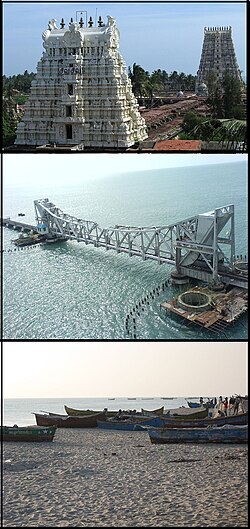
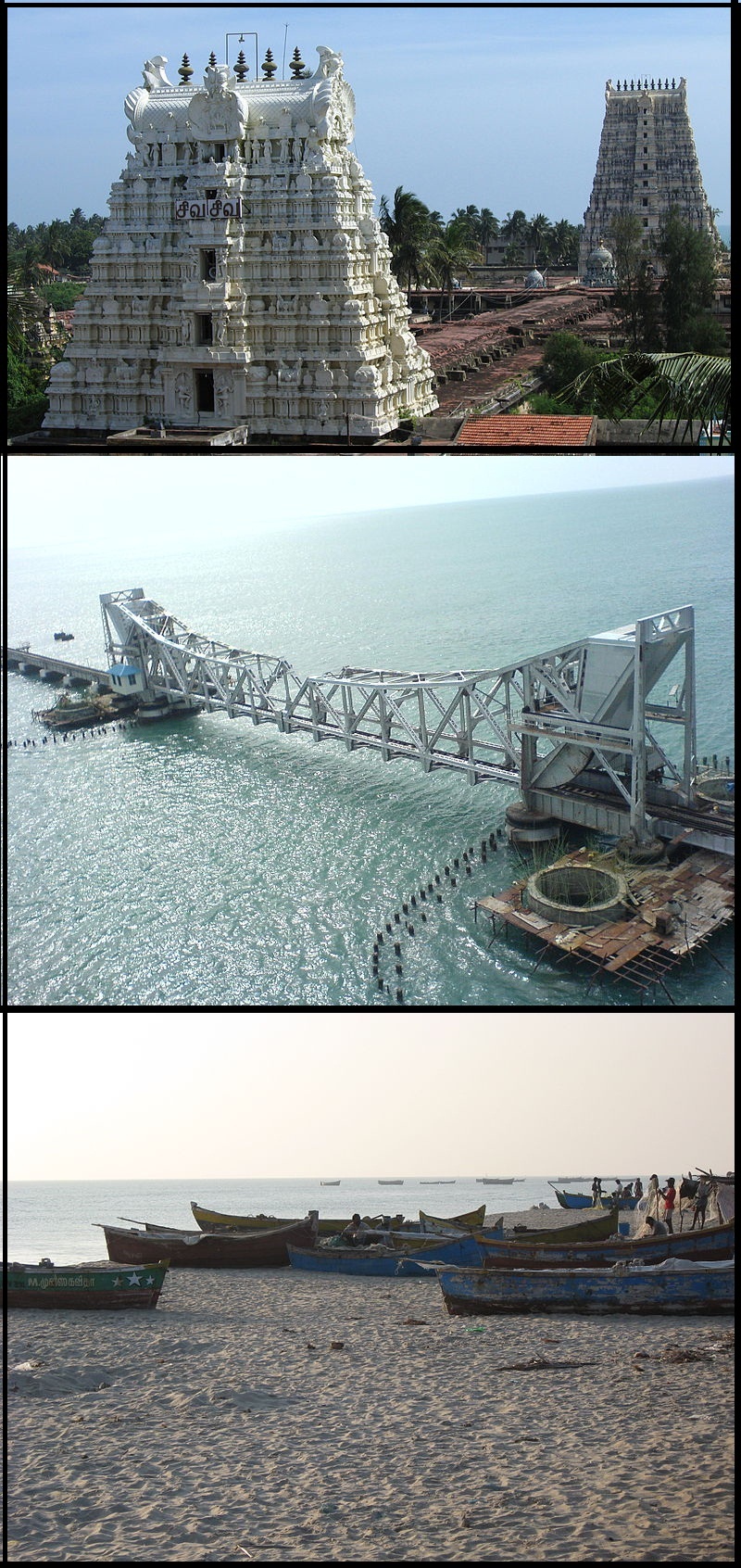
Rameswaram (IPA: [ɾaːmeːsʋaɾam]; also transliterated as Ramesvaram, Rameshwaram) is a municipality in the Ramanathapuram district of the Indian state of Tamil Nadu. It is on Pamban Island separated from mainland India by the Pamban channel and is about 40 kilometres (25 mi) from Mannar Island, Sri Lanka. It is in the Gulf of Mannar, at the tip of the Indian peninsula. Pamban Island, also known as Rameswaram Island, is connected to mainland India by the New Pamban Bridge. Rameswaram is the terminus of the railway line from Chennai and Madurai. Together with Varanasi, it is considered[by whom?] to be one of the holiest places in India for Hindus and is part of the Char Dham pilgrimage.[citation needed]
According to the Ramayana, Rama is described to have built a bridge from the vicinity of this town across the sea to Lanka to rescue his wife Sita from her abductor Ravana. The temple, dedicated to the Hindu god Shiva, is at the centre of the town and is closely associated with Rama and Shiva. The temple and the town are considered a holy pilgrimage site for Shaivas and Vaishnavas.
Rameswaram is the second closest point from which to reach Sri Lanka from India and geological evidence suggests that the Rama Sethu was a former land connection between India and Sri Lanka.
The town has been in the news in the past due to controversies such as the Sethusamudram Shipping Canal Project, Kachchatheevu, Sri Lankan Tamil refugees and the capturing of local fishermen for alleged cross-border activities by Sri Lankan Forces.
Rameswaram is administered by a municipality established in 1994. The town covers an area of 53 km2 (20 sq mi) and had a population of 44,856 as of 2011. Tourism and fishery employ the majority of workforce in Rameswaram.[citation needed]
Rameswaram means "Lord of Rama" (Rāma-īśvaram) in Sanskrit, an epithet of Shiva, the presiding deity of the Ramanathaswamy Temple. According to Hindu epic Ramayana, Rama, the seventh avatar of the god Vishnu, prayed to Shiva here to absolve any sins that he might have committed during his war against the demon-king Ravana in Sri Lanka. According to the Puranas (Hindu scriptures), upon the advice of sages, Rama, along with his wife Sita and his brother Lakshmana, installed and worshipped the lingam (an iconic symbol of Shiva) here to expiate the sin of Brahmahatya incurred while killing of the Brahmin Ravana. To worship Shiva, Rama wanted to have a lingam and directed his trusted lieutenant Hanuman to bring it from Himalayas. Since it took longer to bring the lingam, Sita built a lingam made of sand from the nearby seashore, which is also believed to be the one in the sanctum of the temple. Sethu Karai is a place 22 km (14 mi) before the island of Rameswaram from where Rama is believed to have built a floating stone bridge, the Ramsetu bridge, that further continued to Dhanushkodi in Rameswaram till Talaimannar in Sri Lanka. According to another version, as quoted in Adhyatma Ramayana, Rama installed the lingam before the construction of the bridge to Lanka.
The history of Rameswaram is centred around the island being a transit point to reach Sri Lanka (Ceylon historically) and the presence of Ramanathaswamy Temple. Tevaram, the 7th–8th century Tamil compositions on Shiva by the three prominent Nayanars (Shaivites) namely Appar, Sundarar and Sambandar. The Chola king Rajendra Chola I (1012–1040 CE) had a control of the town for a short period. The Jaffna kingdom (1215–1624 CE) had close connections with the island and claimed the title Setukavalan meaning custodians of the Rameswaram. Hinduism was their state religion and they made generous contribution to the temple. Setu was used in their coins as well as in inscriptions as marker of the dynasty.
According to Firishta, Malik Kafur, the head general of Alauddin Khalji, the ruler of Delhi Sultanate, reached Rameswaram during his political campaign in spite of stiff resistance from the Pandyan princes in the early 14th century. He erected a mosque by name Alia al-Din Khaldji in honour of victory of Islam. The records left by the court historians of the Delhi Sultanate state that Malik Kafur raided Madurai, Chidambaram, Srirangam, Vriddhachalam, Rameswaram and other sacred temple towns, destroyed the temples which were sources of gold and jewels. He brought back enormous loot from Dwarasamudra and the Pandya kingdom to Delhi in 1311.
Rameswaram
Rameswaram (IPA: [ɾaːmeːsʋaɾam]; also transliterated as Ramesvaram, Rameshwaram) is a municipality in the Ramanathapuram district of the Indian state of Tamil Nadu. It is on Pamban Island separated from mainland India by the Pamban channel and is about 40 kilometres (25 mi) from Mannar Island, Sri Lanka. It is in the Gulf of Mannar, at the tip of the Indian peninsula. Pamban Island, also known as Rameswaram Island, is connected to mainland India by the New Pamban Bridge. Rameswaram is the terminus of the railway line from Chennai and Madurai. Together with Varanasi, it is considered[by whom?] to be one of the holiest places in India for Hindus and is part of the Char Dham pilgrimage.[citation needed]
According to the Ramayana, Rama is described to have built a bridge from the vicinity of this town across the sea to Lanka to rescue his wife Sita from her abductor Ravana. The temple, dedicated to the Hindu god Shiva, is at the centre of the town and is closely associated with Rama and Shiva. The temple and the town are considered a holy pilgrimage site for Shaivas and Vaishnavas.
Rameswaram is the second closest point from which to reach Sri Lanka from India and geological evidence suggests that the Rama Sethu was a former land connection between India and Sri Lanka.
The town has been in the news in the past due to controversies such as the Sethusamudram Shipping Canal Project, Kachchatheevu, Sri Lankan Tamil refugees and the capturing of local fishermen for alleged cross-border activities by Sri Lankan Forces.
Rameswaram is administered by a municipality established in 1994. The town covers an area of 53 km2 (20 sq mi) and had a population of 44,856 as of 2011. Tourism and fishery employ the majority of workforce in Rameswaram.[citation needed]
Rameswaram means "Lord of Rama" (Rāma-īśvaram) in Sanskrit, an epithet of Shiva, the presiding deity of the Ramanathaswamy Temple. According to Hindu epic Ramayana, Rama, the seventh avatar of the god Vishnu, prayed to Shiva here to absolve any sins that he might have committed during his war against the demon-king Ravana in Sri Lanka. According to the Puranas (Hindu scriptures), upon the advice of sages, Rama, along with his wife Sita and his brother Lakshmana, installed and worshipped the lingam (an iconic symbol of Shiva) here to expiate the sin of Brahmahatya incurred while killing of the Brahmin Ravana. To worship Shiva, Rama wanted to have a lingam and directed his trusted lieutenant Hanuman to bring it from Himalayas. Since it took longer to bring the lingam, Sita built a lingam made of sand from the nearby seashore, which is also believed to be the one in the sanctum of the temple. Sethu Karai is a place 22 km (14 mi) before the island of Rameswaram from where Rama is believed to have built a floating stone bridge, the Ramsetu bridge, that further continued to Dhanushkodi in Rameswaram till Talaimannar in Sri Lanka. According to another version, as quoted in Adhyatma Ramayana, Rama installed the lingam before the construction of the bridge to Lanka.
The history of Rameswaram is centred around the island being a transit point to reach Sri Lanka (Ceylon historically) and the presence of Ramanathaswamy Temple. Tevaram, the 7th–8th century Tamil compositions on Shiva by the three prominent Nayanars (Shaivites) namely Appar, Sundarar and Sambandar. The Chola king Rajendra Chola I (1012–1040 CE) had a control of the town for a short period. The Jaffna kingdom (1215–1624 CE) had close connections with the island and claimed the title Setukavalan meaning custodians of the Rameswaram. Hinduism was their state religion and they made generous contribution to the temple. Setu was used in their coins as well as in inscriptions as marker of the dynasty.
According to Firishta, Malik Kafur, the head general of Alauddin Khalji, the ruler of Delhi Sultanate, reached Rameswaram during his political campaign in spite of stiff resistance from the Pandyan princes in the early 14th century. He erected a mosque by name Alia al-Din Khaldji in honour of victory of Islam. The records left by the court historians of the Delhi Sultanate state that Malik Kafur raided Madurai, Chidambaram, Srirangam, Vriddhachalam, Rameswaram and other sacred temple towns, destroyed the temples which were sources of gold and jewels. He brought back enormous loot from Dwarasamudra and the Pandya kingdom to Delhi in 1311.
Recent media
Recent media