


Community hub
Recent from talks
Contribute something
Nothing was collected or created yet.
Reebok Freestyle
View on Wikipedia
 | |
| Product type | Sneakers |
|---|---|
| Owner | Reebok |
| Introduced | 1982 |
| Related brands | Reebok Classics |
| Markets | Worldwide |
| Website | reebok.com/freestyle |
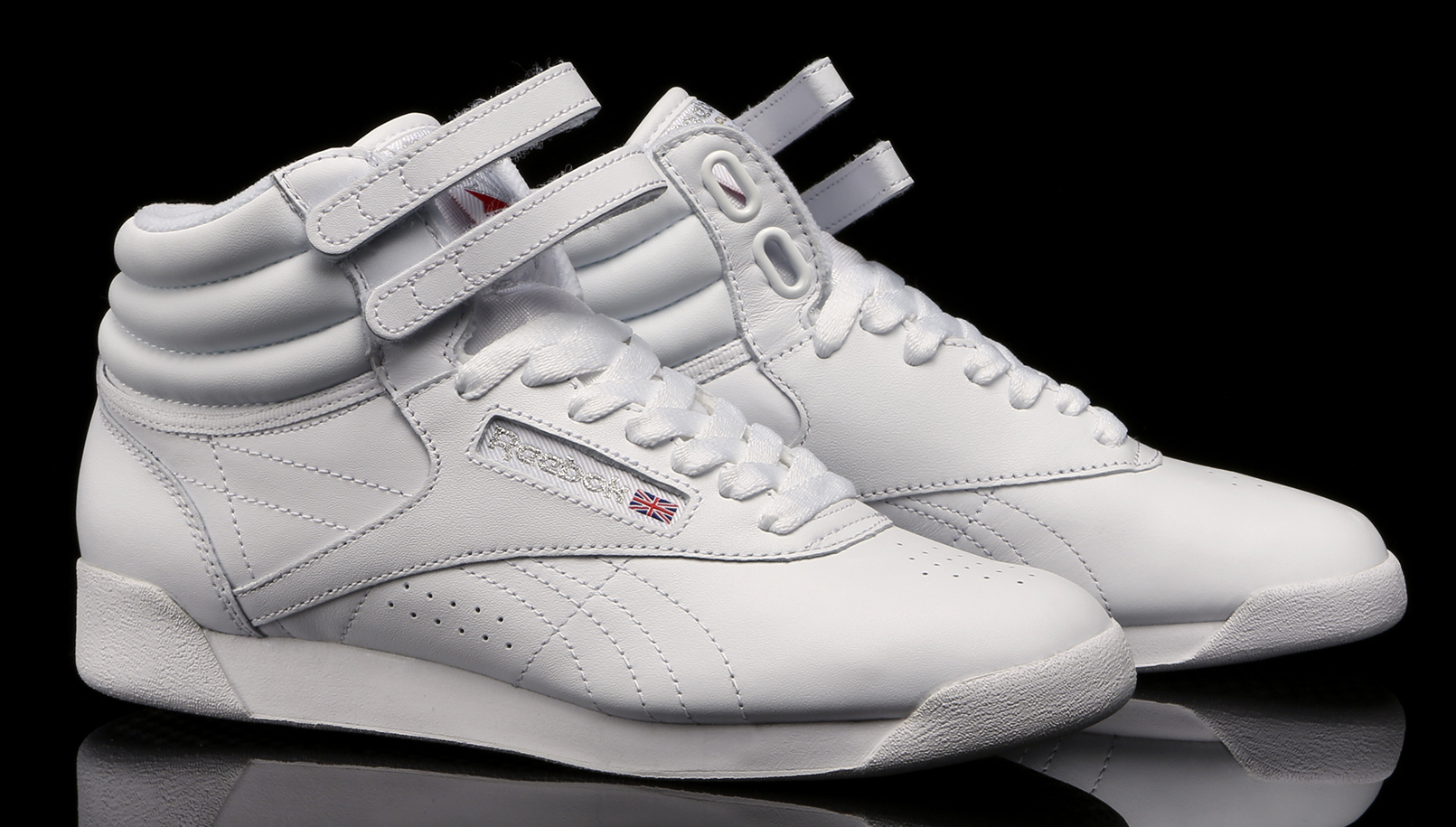
Reebok Freestyle is an athletic shoe introduced in 1982 by Reebok. The Freestyle was the first sneaker designed (by Angel Martinez[1]) and marketed for women.[2][3][4] It helped Reebok into the mainstream athletic wear market and fashion scene along with becoming one of the most popular athletic shoes of all time.[5] In 1984, the shoe accounted for more than half of Reebok sales.[6] The Reebok Freestyle was popular during the 1980s aerobics craze[7][8] and is still in production and remodeled through various collections and style variations.
History
[edit]
Released in 1982, the Reebok Freestyle was the first athletic shoe designed for women, even though it has also become fairly popular among males.[3] Martinez and Steve Liggett, head of Reebok production, were instrumental developing the shoe.[9] The shoe was made to accommodate aerobics workouts and was released during the height of the 1980s aerobics craze.[10] Fitness Instructor Denise Austin was one first to promote the shoe by wearing them at a sport and fitness exposition in Los Angeles.[11] "I absolutely loved this time in my career, I was the first spokesperson for the very first aerobic shoe," Austin said in a November, 22, 2019 Facebook post.[12][13] Following the debut and success of the Freestyle, Reebok began sponsoring clinics and workout programs throughout the 1980s and 1990s. The shoes could be seen on the trainers of Jane Fonda workout videos and classes,[2][14] and the Step Reebok workout routine was released in 1989.[15]
By 1983, Reebok's sales were over $13 million, accounting for half of the company's total sales[6] and the following year concluded with $66 million in sales.[3]
The Freestyle success and the athletic shoe fad of the late 1980s saw new competition from Avia, LA Gear, and Nike. Many competitors, like LA Gear and off-price retailers like Fayva, had models that looked like the Freestyle high-top complete with velcro enclosures.
Description
[edit]The Freestyle debuted as a terrycloth lined sneaker with "glove-soft" leather designed for aerobics workouts.[2] The shoe was designed for fitness purposes but became used for casual wear as well.[16] The shoe comes in two different styles including below the ankle, like a tennis shoe, or the high-top style that covers the ankle, like a basketball shoe. The Freestyle high-top features two velcro straps that fasten around the ankle and is made in women's sizes, but is considered unisex, being also worn by men.[17] Both the low-top and high-top were offered in white, black, red, yellow, blue, pink, orange, and green colors over the years.
Athletic use
[edit]Consumers were impressed with the styling, comfort, and support the shoe provided for working out. The Freestyle's athletic use spread to walking, bodybuilding, dance, and cheerleading. Ms. Olympia Cory Everson wore Freestyle high-tops frequently in competition, working out, and on ESPN's BodyShaping program. Reebok sponsored the Los Angeles Laker Girls in the late 1980s and supplied them with white Freestyle high-tops. Since then, other professional cheerleading and dance teams have used Freestyles. High school and college cheerleading teams have used Freestyles as their shoe of choice. It is also used in competitive aerobics.
Casual wear
[edit]Outside the gym, the Freestyle became popular casual wear. Women could wear Freestyles with jeans, shorts, capri pants, sweatpants, tights or leggings, and even as commuter shoes to work.[14] In the 1980s, Freestyles were often seen with flop or slouch socks which were usually stretched over the bottom of the pant leg to help highlight the shoe.
Styles
[edit]

After the Freestyle's initial debut, Reebok released various collaborations and special edition styles of the shoe. The Freestyle had several special editions released in the 1980s including the Rainbow Suede version.[18] The Freestyle celebrated its 25th anniversary with a special collection of six limited-edition shoes that debuted at a New York City exclusive event in March 2007. The Reebok sponsored event called "Freestyle Forever" included celebrity guests such as Cybill Shepherd, Brooke Shields, and Tara Reid and highlighted moments in past and present Freestyle history.[19]
In 2008, Reebok introduced a Freestyle collaboration with the French boutique Colette and American women's wear company, Married to the Mob.[20] The Reebok Freestyle - Wonder Woman was released in 2009[21] and had design features such as a red metallic upper with a star-spangled back tab that mimicked the costume of comic book character Diana Prince, aka Wonder Woman, and the lace-stay looked similar to the tiara of the superhero while the two gold metallic straps that closely resembled her bracelets.[22]
Alicia Keys teamed up with Reebok in 2012 for a collection of different shoes including high-top Freestyles and Freestyle Double Bubble along with Classic Nylon Slim and Princess sneakers.[23] Reebok introduced collaborations with Takahiro Miyashita and the Sand.W.Man project in 2014 for the Reebok Freestyle high-top and the Reebok Ex-o-Fit released in a signature monochromatic, sandy style look.[24]
In 2018, the Netflix original series GLOW and Reebok Classics teamed up to create two new Freestyle Hi designs to be worn by characters on the show.[25] Costume designer Beth Morgan shared how the partnership came together: "I reached out to Reebok about product placement since we used the shoes so often in the show to see if they had any reproductions of the authentic shoes. Through those conversations, I said it would be awesome to design shoes that were authentic to the period, and they were all on board... The whole idea behind the collaboration is that the product would be in the show, and we could sell them to our fans after we air."[26]
In 2026, recording artist Karol G was announced as Reebok's global brand ambassador to coincide with a rebrand of the Reebok Classic range including the Reebok Freestyle[27]. The new range features original garment leather and terrycloth lining, and is offered in both low and high top versions.
In popular culture
[edit]- Film
- In Jumpin' Jack Flash (1986), Whoopi Goldberg wore high-top red, white, and yellow pairs.[28]
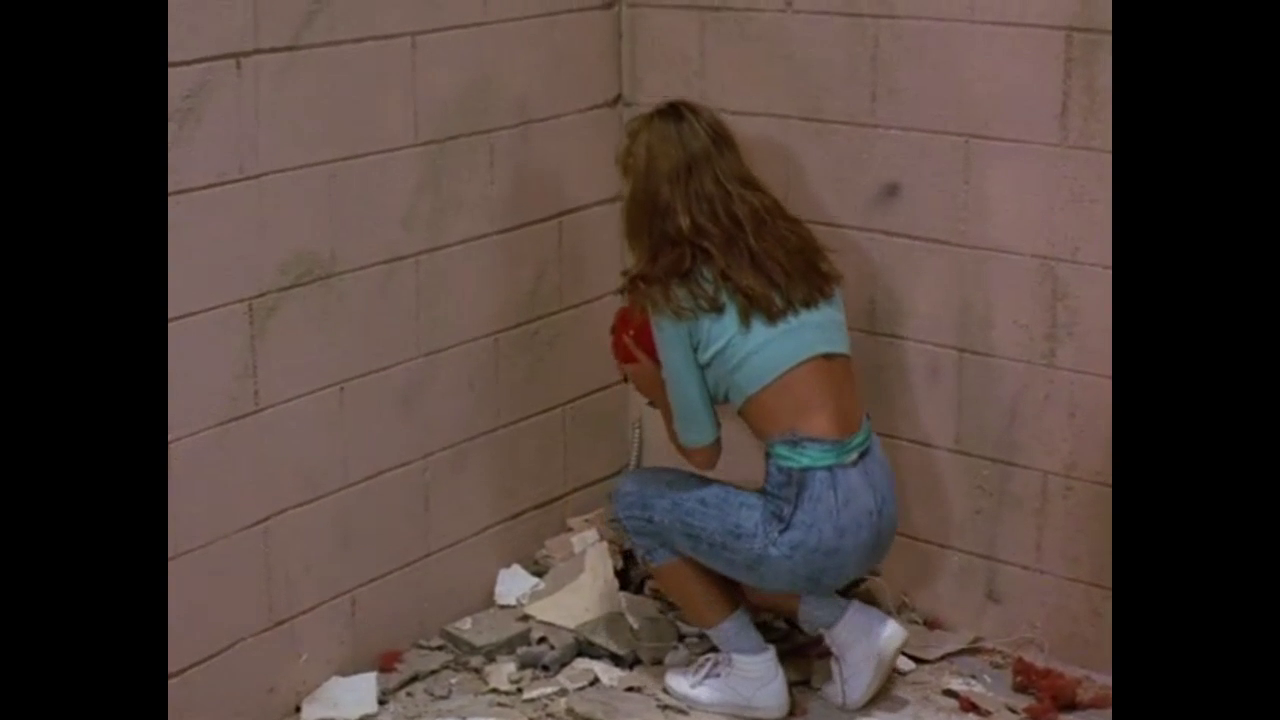
- In Return of the Killer Tomatoes (1988), Karen M. Waldron wore a white, high-top pair through half of the movie.[29]
- In Frankie and Johnny (1991), Michelle Pfeiffer wore a white, high-top pair playing a waitress. The shoes can be seen on movie posters.[30][31]
- In Masterminds (2016), Kristin Wiig wore a white, high-top pair as part of her 1990s era costume.[32][33][34]
- In The Bad Batch (2016), Suki Waterhouse wore a white, high-top pair with a prosthetic leg throughout most of the movie.[35]
- In Chick Fight (2020), Malin Åkerman wore a white, high-top pair throughout most of the movie.[36][37]
- Music
- Rolling Stones front-man Mick Jagger wore a pair of Freestyles in his "Dancing in the Street" video with David Bowie in 1985.[38]
- French singer Yelle (Julie Budet) wore various colored high-top Freestyles on stage during her concerts. At a 2008 Reebok Freestyle World Tour Collection event, she promoted a special Freestyle Paris edition, which was part of a six fashion-forward city collection.[39][40]
- English singer Perrie Edwards wore a white, high-top pair while performing with Little Mix on the set of Good Morning America on June 7, 2013.[41]
- Canadian Singer Kiesza has also been photographed wearing various Freestyle shoes, both casually and in her music video for her single "Hideaway".[42]
- Rapper, singer, and model Iggy Azalea wore white Freestyle high-tops and her back-up singers wore black high-top pairs while performing "Fancy" and "Beg for It" at the 2014 American Music Awards. The shoes were paired with retro gym outfits and scrunched down socks.[43][44][45]
- Singer Shakira wore a pair of white high-tops to match her 1980s inspired workout outfit in the "Girl Like Me" video, which was released on December 4, 2020.[46]
- Slang
- The slang name for the shoes was a "fifty-four elevens" because the retail price for a pair was usually $49.99 and with tax, in New York City, they cost $54.11.[47]
- Television
- Actress Cybill Shepherd wore a bright orange high-top pair of Reebok Freestyles, with a black strapless gown, at the 1985 Emmy Awards.[48][49]
- In 1986, actress Whoopi Goldberg wore a white high-top pair at the 43rd annual Golden Globe Awards.[50]
- Soleil Moon Frye wore two different colored shoes in combination, like white and black or red and yellow, as the title character of the Punky Brewster television series, which popularized this style.[51]
- In The Middle, Sue Heck (Eden Sher) wore various colors of Reebok Freestyle high-tops throughout the entire 2009 to 2018 run of the series.[52][53]
- In The Goldbergs, Beverly Goldberg (Wendi McLendon-Covey) regularly wore various high-top pairs through the series.[54]
- In the 2019 Netflix series Stranger Things, Season 3, Eleven (Millie Bobby Brown) wore a white, high-top pair during the whole season 3 episodes.
- In the 2020 Netflix miniseries The Haunting of Bly Manor, Dani Clayton (Victoria Pedretti) wore a white, high-top pair in eight of the nine episodes.[55][56]
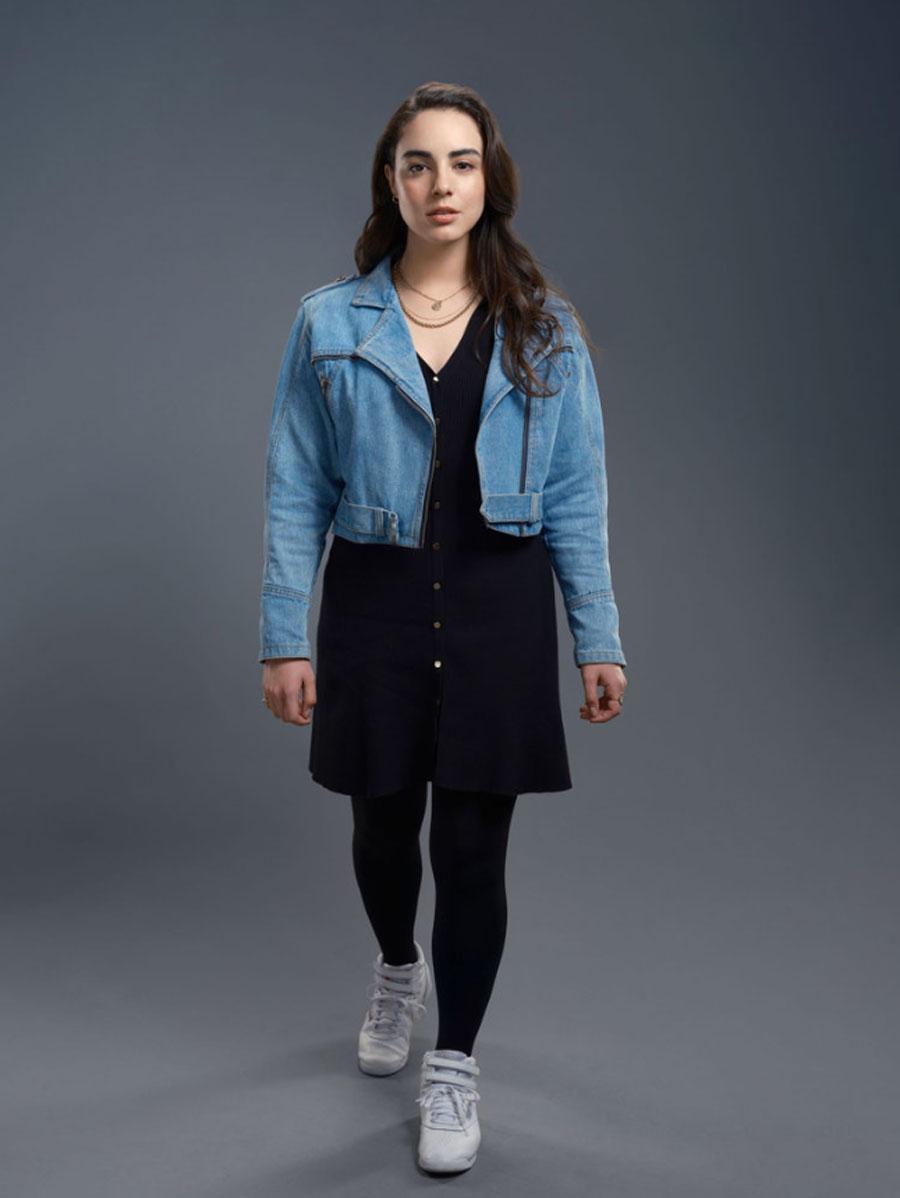
- In the second season of La Brea, Riley Valez (Veronica St. Clair) wore a white, high-top pair.[57]
- Events
- In the UFC during 1996, some round girls (Vanessa Hanson, Brittney Palmer, Chrissy Blair) wore white, high-top pair during events
See also
[edit]

References
[edit]- ^ "Does This Shoe Fit?; Reebok Marketing Ace Stamps His Style on Rockport". The Times. October 14, 1995. Retrieved September 8, 2019.
- ^ a b c Hal Rubenstein (September 7, 1986). "Kicking Up Your Heels Never So Stylish As Now". Sun Sentinel. Archived from the original on December 7, 2014. Retrieved November 30, 2014.
- ^ a b c "Reebok International Ltd. History". Funding Universe. Retrieved November 30, 2014.
- ^ "EasyTone Freestyle HI – In shape in style with a special edition sneakers". 2 Luxury 2. March 10, 2012. Retrieved November 30, 2014.
- ^ "Reebok International Ltd". Hoovers. Retrieved November 30, 2014.
- ^ a b "Reebok Freestyle - Museum Recap". Sneaker Freaker. December 31, 2012. Retrieved November 30, 2014.
- ^ Matthew Karnitschnig; Stephanie Kang (August 4, 2005). "For Adidas, Reebok Deal Caps Push to Broaden Urban Appeal". The Wall Street Journal. Retrieved November 30, 2014.
- ^ Patrick Johnson (May 31, 2014). "Reebok Freestyle Hi "Exotics" - Black - Metallic Silver". Sneaker News. Retrieved November 30, 2014.
- ^ Scottie Beam (June 18, 2018). "Flipping the Game" (Podcast). Reebok Classic and Gimlet Creative. Retrieved June 18, 2018.
- ^ "Reebok Freestyle". Kicks On Fire. Retrieved November 30, 2014.
- ^ Scottie Beam (June 18, 2018). "Flipping the Game" (Podcast). Reebok Classic and Gimlet Creative. Retrieved June 18, 2018.
- ^ Denise Austin on Facebook
- ^ "Today". Getty Images. NBCUniversal. Retrieved October 25, 2021.
- ^ a b Nadja Sayej. "Out of the Box: The Rise of Sneaker Culture". Noisey by Vice. Retrieved November 30, 2014.
- ^ Edward Wong (June 19, 2001). "Nike Trying New Strategies For Women; Company Seeks Merger Of Athletics and Fashion". The New York Times. Retrieved November 30, 2014.
- ^ Martha Groves (August 3, 1986). "Reebok Sprinting to the Lead: Field of Eager Competitors". Los Angeles Times. Retrieved November 30, 2014.
- ^ Anne-Marie Schiro (June 15, 1985). "In Athletic Shoes Reebok Leads the Pack". The New York Times. Retrieved November 30, 2014.
- ^ Elizabeth Nolan Brown (October 1, 2013). "12 Classic (or Classics-Inspired) Reebok Hi Tops". Bustle. Retrieved November 30, 2014.
- ^ "Reebok Kicks Off Collection With Retro Bash". BizBash. March 7, 2007. Retrieved November 30, 2014.
- ^ "Reebok Freestyle x Colette x Married to the Mob". Sneaker News. July 25, 2008. Retrieved November 30, 2014.
- ^ "Reebok Freestyle – Wonder Women". Limite Magazine. August 20, 2009. Retrieved November 30, 2014.
- ^ "Wonder Woman Reebok Freestyle". The Shoe Game. August 19, 2009. Retrieved November 30, 2014.
- ^ Nikki Ogunnaike (September 5, 2012). "Introducing Alicia Keys x Reebok: Or As I Like To Call It "The Perfect Collaboration Ever!"". Glamour. Retrieved November 30, 2014.
- ^ Brendan Dunne (June 24, 2014). "Sand.W.Man x Reebok Classics "#003/Dance"". Retrieved November 30, 2014.
- ^ "Reebok Partners With Netflix's 'GLOW' on '80s-Inspired Kicks — And They're Going to Be on the Show". June 28, 2018.
- ^ "'GLOW' Costume Designer Talks Sneakers & Those '80s Trends You Love to Hate". July 16, 2018.
- ^ "Reebok Announces Music Icon KAROL G as Global Brand Ambassador for New Era of Reebok Classics". Retrieved February 26, 2026.
- ^ Kosko, Jill S. (October 15, 1986). "'Jumpin' Jack Flash' succeeds thanks to talented Whoopi's saucy charisma". Daily Collegian. Penn State University. Retrieved October 21, 2021.
- ^ "Karen Mistal 'Return of the Killer Tomatoes' 620". Fanpop. Retrieved October 24, 2021.
- ^ Evans, Mary (October 11, 1991). "Stock Photo - Michelle Pfeiffer & Al Pacino Characters: Frankie, Johnny Film: Frankie And Johnny". Age Fotostock. Paramount. Retrieved October 22, 2021.
- ^ Evans, Mary (October 11, 1991). "Stock Photo - Movie Poster Film: Frankie And Johnny (1991) Director: Garry Marshall". Age Fotostock. Paramount. Retrieved October 22, 2021.
- ^ "The Reebok shoes Freestyle Hi white in The Brains". Spotern. Retrieved October 24, 2021.
- ^ "The Reebok white Hi lace up Kristin Wiig in The Brains". Spotern. Retrieved October 25, 2021.
- ^ Barbuto, Dana (September 30, 2016). "Movie review: 'Masterminds' wastes its A-list comedic cast". Recordnet.com. Retrieved October 25, 2021.
- ^ Amirpour, Ana Lily (June 20, 2017). "How They Did It: Designing the Amputee Protagonist of Ana Lily Amirpour's Dystopian Desert Trip, The Bad Batch". Alterian Inc. Retrieved October 22, 2021.
- ^ "Chick Fight". Box Office Buzz. Retrieved October 22, 2021.
- ^ Singh, Prerna (November 13, 2020). "Where Was Chick Fight Filmed?". The Cinemaholic. Retrieved October 22, 2021.
- ^ Groves, Martha (August 3, 1986). "REEBOK SPRINTING TO THE LEAD: Field of Eager Competitors". Los Angeles Times. Retrieved October 21, 2021.
- ^ Anitai, Tamar (February 22, 2008). "PARLEZ VOUS YELLE POUR REEBOK FREESTYLE?". MTV News. Archived from the original on October 21, 2021. Retrieved October 21, 2021.
- ^ "Sneaker Reebok hi freestyle of Yelle in the clip Completely crazy". Spotern. Retrieved October 21, 2021.
- ^ Rothenberg, Debra L. (June 7, 2013). "Lil Mix And Emblem Perform On ABC's 'Good Morning America'". Getty Images. Retrieved October 25, 2021.
- ^ Jennifer Lynn (July 14, 2014). "Kiesza's Kicks: The Hideaway Singer's Top 10 Sneaker Looks". MTV UK. Retrieved November 30, 2014.
- ^ "Divas dominate: Taylor Swift, Lorde, Iggy Azaela rock American Music Awards". Firstpost. November 24, 2014. Retrieved October 23, 2021.
- ^ "Iggy Azalea - Fancy_Beg For It (Medley) (2014 American Music Awards) ft. Charli XCX". Dailymotion. Retrieved October 23, 2021.
- ^ Clinton, Leah Melby (November 24, 2014). "Last Night's American Music Awards Had a Major Clueless Style Moment. Did You Notice?". Glamour. Retrieved October 23, 2021.
- ^ Sacasa, Alma (December 10, 2020). "6 Things You Need to Recreate Shakira's New Music Video Look". People Espanol. Retrieved October 21, 2021.
- ^ Ogunnaike, Nikki (September 5, 2012). "Introducing Alicia Keys x Reebok: Or As I Like To Call It 'The Perfect Collaboration Ever!'". Glamour. Retrieved October 21, 2021.
- ^ Groves, Martha (August 3, 1986). "REEBOK SPRINTING TO THE LEAD: Field of Eager Competitors". Los Angeles Times. Retrieved October 21, 2021.
- ^ "Cybill Shepherd". People. September 16, 1996. Retrieved November 30, 2014.
- ^ Galella, Ron. "43rd Annual Golden Globe Awards". Getty Images. Retrieved October 24, 2021.
- ^ Sayej, Nadja. "Out of the Box: The Rise of Sneaker Culture". Noisey by Vice. Retrieved November 30, 2014.[dead link]
- ^ Keller, Joel (December 11, 2013). "Eden Sher on The Middle's Christmas Episode and Why Sue Heck Is a Fashion Icon". Parade. Retrieved December 11, 2013.
- ^ "Sneakers Reebok Freestyle Hi in The Middle". Spotern.
- ^ Tom, Ron (November 8, 2017). "ABC's "The Goldbergs" - Season Five". Getty Images. Getty Images. Retrieved November 18, 2022.
- ^ Braun, Don (August 25, 2020). "Victoria Pedretti – 'The Haunting of Bly Manor' Promotional Material 2020". Celebmafia. Retrieved October 22, 2021.
- ^ Romano, Nick (August 31, 2020). "The Haunting of Bly Manor teaser trailer spins a new ghost story — and October premiere". Entertainment Weekly. Retrieved October 22, 2021.
- ^ King, Ben (September 23, 2022). "La Brea Actress Veronica St. Clair Talks Season 2, Filming in Australia & More!". Bionic Buzz. NBC. Retrieved November 18, 2022.
Further reading
[edit]- Scottie Beam (June 2018). "Flipping the Game" (Podcast). Reebok Classic and Gimlet Creative.
External links
[edit]
- Official website

- Charlie's Sneaker Pages "Memories - Reebok Freestyle"
- It's The Shoes episode with the "Reebok Freestyle 5411" on YouTube

| Subsidiaries |
|  | ||
|---|---|---|---|---|
| Brands | ||||
| Sneakers | ||||
| Related companies |
| |||
| Advertising | ||||
| Sponsorships | ||||
| Key people |
| |||

![[50]](/Reebok_Freestyle#cite_note-10773279.jpg-50)

Reebok Freestyle
View on GrokipediaHistory
Development and Launch
The Reebok Freestyle was developed in 1982 amid the burgeoning aerobics fitness trend of the early 1980s, which gained massive popularity through Jane Fonda's workout videos and studio classes that emphasized high-energy, barefoot or minimally shod exercises.[2] Recognizing the need for supportive footwear to alleviate foot pain reported by participants in these classes, Reebok sales representative Angel Martinez pitched the concept of a dedicated women's aerobic shoe to company chairman Paul Fireman.[2][5] Fireman initially rejected the idea, viewing the aerobics market as too niche, but Martinez persisted by sketching a prototype inspired by ballet slippers, featuring soft leather uppers with intentional wrinkles at the toe for flexibility. The prototype was developed in East Asia.[2] He convinced another executive to produce a small batch, which was tested and endorsed by fitness instructors for its lightweight support and padded ankle design.[5] Fireman ultimately approved production of 32,000 pairs after seeing the positive feedback, marking Reebok's strategic entry into women's athletic footwear as the first brand to target this underserved segment.[2] The Freestyle launched in 1982 exclusively for women, available in low-top and high-top variants in white and pastel colors like pink and blue, with Velcro straps for secure fit during dynamic movements.[2][1] Priced at $49.99, the high-top version quickly earned the nickname "5411" in New York City due to the total cost reaching $54.11 after state sales tax, reflecting its immediate retail appeal.[1] Early marketing focused on fitness channels, including promotions tied to celebrity-led classes such as those by Richard Simmons, where buyers received complimentary sessions; initial sales were modest, but this led to rapid sell-outs and validation of the shoe's role in the era's health revolution.[5]Rise to Popularity
Following its 1982 launch as a women's aerobic shoe, the Reebok Freestyle quickly gained traction in fitness classes amid the aerobics boom, with initial shipments of 32,000 pairs selling out rapidly after targeted promotions tied to exercise programs.[2] By 1983, the shoe drove half of Reebok's $13 million in total sales, establishing it as a cornerstone of the company's growth in the women's athletic market.[6] The Freestyle's popularity propelled Reebok to surpass competitors, accounting for more than half of the brand's $66 million in sales by 1984 and contributing 42% the following year, which helped Reebok overtake Nike to become the top U.S. athletic footwear brand in 1987, reaching approximately $1.4 billion in revenue that year.[6][1][7] It emerged as a bestseller in women's footwear, particularly in fitness categories, broadening from aerobics-specific use to general athletic wear and outselling rivals in that segment.[8] In the late 1980s, the Freestyle faced intensifying competition from emerging low-top sneaker styles, contributing to Reebok's overall market share decline to around 24% by 1989 amid slumping profit margins.[6][9] Popularity endured through expanded color options, including vibrant hues like bubblegum pink and electric blue, alongside endorsements from figures such as Jane Fonda in workout videos and the 1986 "Life Is Not a Spectator Sport" campaign featuring celebrities like Paula Abdul.[1][2][10] By the late 1980s, the Freestyle supported Reebok's global expansion, with international sales reaching 10% of revenues by 1985 and further growth into Europe and Asia, influencing fitness trends abroad.[6][8]Design Features
Construction and Materials
The original Reebok Freestyle, launched in 1982, featured a low-top upper constructed from soft garment leather, providing flexibility and durability for aerobics.[2] The design included a wrinkled toe box inspired by ballet slippers, allowing natural foot flexion, and a terry cloth lining for comfort and moisture absorption during workouts.[2][1] The sole unit consisted of a gum rubber outsole suitable for grip on indoor gym floors, supporting lateral movements common in aerobics.[11] Beneath it, a split innersole enhanced foot mobility and flexibility.[2] The leather upper balanced breathability and pliability, suited to dance-like exercises.[1] The shoe weighed approximately 9 ounces per shoe (women's size 8), contributing to its lightweight, agile feel.[12] Initially available in women's sizes 5 through 11, it used a narrower last to fit feminine foot shapes.[13] In 1983, the high-top variant (Freestyle Hi) was introduced with a padded collar and tongue for ankle stability, along with two Velcro straps—one medial and one lateral—for a secure, adjustable fit without laces.[1] Later models incorporated suede or other materials.[14]Innovative Elements
The original Reebok Freestyle pioneered a split innersole that allowed greater foot flexion and movement, tailored to the pivots and steps of 1980s aerobics.[2] The wrinkled toe detailing further enhanced pliability, contrasting with the stiffer running shoes of the era.[2] The 1983 high-top introduced a Velcro closure system with dual adjustable straps, enabling quick fastening and a secure fit for high-energy activities.[1][15] Its padded ankle collar, augmented by poufy supportive ribs, helped reduce sprain risks from lateral movements, advancing women's fitness footwear.[2] Visually, the Freestyle featured a clean white base with pastel accents like pink and blue, complementing aerobics attire and blending performance with style.[2] Later variants expanded to bold colorblocking with vibrant hues such as hot pink and turquoise.[15]Applications and Usage
Athletic and Fitness Use
The Reebok Freestyle was originally designed as an athletic shoe tailored for women's aerobics classes in the early 1980s, emphasizing stability during dynamic movements such as grapevines, jumping jacks, and floor work. Its high-top construction and supportive ankle collar helped prevent twists and rolls on studio floors, making it ideal for the high-energy, repetitive motions central to aerobics routines. The shoe's lightweight glove leather upper and flexible sole facilitated quick directional changes, aligning with the sideways and pivoting actions that defined the era's fitness trends.[2] Fitness icon Jane Fonda prominently featured the Freestyle in her later workout videos, further solidifying its role in home and class-based aerobics and exposing it to millions of viewers seeking accessible exercise options. Early promotions, including collaborations with instructor Richard Simmons, highlighted its suitability for group classes, where 32,000 pairs sold out rapidly after a single event. Backed by aerobics pioneers, the shoe received praise from fitness experts for its immediate comfort without a break-in period, enabling seamless participation in prolonged sessions.[2] Key performance attributes included a durable rubber outsole with a high-traction pattern that minimized slips on studio mats, carpet, hardwood, or concrete surfaces common in aerobics environments. The padded foam insole and terry cloth lining provided cushioning to absorb impact from repetitive jumps and landings, helping to reduce leg fatigue during extended workouts. The double Velcro straps offered adjustable ankle support for secure fit during rapid movements, with one sentence noting their utility for quick adjustments in class settings. These features collectively enhanced user confidence and endurance in impact-heavy exercises.[2][16][12] Over time, the Freestyle adapted to evolving fitness landscapes, transitioning from pure aerobics to broader dance-based routines in the 1990s, including step aerobics popularized by Reebok's own platforms. Its supportive design proved versatile for various low-impact exercises. Today, it remains a choice for low-impact exercises, with the high-top variant continuing to offer ankle protection in group classes and home routines.[1][17]Casual and Fashion Applications
By the mid-1980s, the Reebok Freestyle had transitioned from its original aerobic roots into a staple of casual wear, often paired with jeans and tracksuits to embody the era's sporty yet relaxed aesthetic.[15] This shift was facilitated by its lightweight construction and versatile high-top silhouette, which contributed to the tomboyish fashion trends prevalent in 1980s pop culture, appealing to women seeking comfortable, gender-neutral street style. In aerobics-inspired fashion, the Freestyle was frequently integrated with outfits featuring miniskirts, leg warmers, spandex leotards, and tights, enhancing its role in the vibrant, body-positive workout culture of the time.[2] Later, during the 2000s athleisure revival, it reemerged as a retro essential, blending seamlessly with casual ensembles that prioritized comfort and nostalgia, such as layered activewear and denim.[15] In contemporary settings, the Freestyle features prominently in streetwear outfits, valued for its all-day support that suits urban lifestyles, including extended walking and daily errands.[17] Its padded collar and cushioned midsole provide enduring comfort beyond athletic contexts, making it a practical choice for modern casual wardrobes.[1] Reebok offered low-top and high-top variants of the Freestyle from its original launch, with the low-top providing a sleeker profile for everyday versatility while preserving the high-top's iconic edge for those desiring a bolder casual statement.[1] The original high-top design, with its double Velcro straps, continues to symbolize a distinctive, edgy casual vibe rooted in the shoe's aerobic origins.[15]Cultural Impact
In Popular Culture
The Reebok Freestyle gained significant visibility in 1980s media through its association with the aerobics boom, particularly in Jane Fonda's workout videos, where she wore the shoes in later installments to promote fitness routines.[2] Fonda's series, starting with her 1982 release, sold over 17 million copies worldwide by 1995, amplifying the shoe's role in popularizing women's athletic footwear.[19] In the 1990s, the Freestyle maintained cultural relevance through music and advertising aimed at youth audiences, with rappers like Redman and DMX referencing the shoe—often by its street name, the 5411—in their lyrics, embedding it in hip-hop narratives of style and streetwear.[1] Reebok's marketing campaigns during this era, including Step Reebok videos released in 1989 and continued into the decade, targeted younger demographics by tying the shoe to energetic, accessible fitness trends. These efforts helped sustain the Freestyle's presence beyond its aerobics origins, positioning it as a versatile icon in evolving pop culture. During the 2000s and 2010s, revivals brought the Freestyle back into the spotlight via celebrity endorsements and media nods. It is frequently documented in sneaker history literature as a pivotal cultural artifact, symbolizing the shift toward women-specific athletic design and the intersection of fitness with mainstream entertainment.[20]Influence on Fashion and Hip-Hop
The Reebok Freestyle, particularly the high-top variant known as the Freestyle Hi, earned the nickname "5411s" in East Coast urban scenes, derived from its original retail price of $54 plus $1.11 in New York sales tax, symbolizing its affordability and accessibility within hip-hop communities.[1] This moniker reflected its transition from a women's aerobics shoe in the early 1980s to a staple of street culture, where it was embraced for its bold colorways like Electric Blue and Bubblegum Pink, allowing wearers to express personal style amid the raw energy of New York City sidewalks.[1] In hip-hop circles, it signified an urban aesthetic that blended athletic functionality with expressive flair, influencing the genre's visual identity during the late 1980s and 1990s.[21] The shoe's adoption in hip-hop helped bridge fitness wear and emerging streetwear trends, paving the way for sneakers as central elements in oversized ensembles that defined the era's casual rebellion. By the 1990s, the Freestyle's velcro straps and high-top silhouette complemented baggy silhouettes, contributing to a fusion that inspired urban apparel lines focused on cultural representation.[21] Its role extended to challenging gender norms in a male-dominated genre, as it became one of the first dance sneakers tailored for women in hip-hop, enabling female artists to assert presence through athletic yet feminine styling.[22] Pioneering groups like Salt-N-Pepa prominently showcased the Freestyle Hi, transforming it into a must-have item in urban fashion and empowering women to integrate sneakers into bold, performative looks that disrupted traditional expectations.[23] The Freestyle's legacy persisted into the 2010s, experiencing revivals that echoed trap music's emphasis on nostalgic, maximalist aesthetics through collaborations and reissues. Rappers like Remy Ma have recalled its cultural weight, highlighting how the "5411s" represented aspiration in hip-hop's formative years.[23] These efforts, including a 2017 anniversary event featuring ambassador Teyana Taylor and ongoing partnerships like the 2025 Reebok x Walker Wear collection—which reimagined the Freestyle Hi to celebrate unity, empowerment, and women's history—positioned the shoe in contemporary streetwear, often cited in fashion discourse for its retro-futurist appeal that merges 1980s innovation with modern urban narratives.[1][23][24]Variants and Revivals
Original Styles
The Reebok Freestyle was introduced in 1982 in both low-top and high-top versions targeted at women, with the high-top featuring soft leather construction and distinctive Velcro straps for secure fit during aerobics.[1][2] Initial colorways included white leather uppers accented with baby blue lettering on the nameplate and a small British flag detail, as well as pastel pink and blue, setting a minimalist yet versatile tone for the model's early aesthetic.[15][2] This debut scheme emphasized purity and functionality, aligning with the era's fitness trends.[25] Following the launch, core color schemes expanded to include all-white, black, and metallic silver variants, enhancing the shoe's adaptability for both athletic and everyday wear.[15] Early iterations also incorporated vibrant accents like hot pink, electric blue, and banana yellow, often in monochromatic or subtle trim details to maintain the high-top's streamlined silhouette.[1] By the mid-1980s, the lineup diversified further with solid leather options in navy, red, orange, turquoise, and purple, providing options that reflected the aerobics boom's colorful energy.[15][25] Pattern variations during this period ranged from uniform solid leathers to two-tone combinations, such as white/navy or orange/white, which added visual contrast without compromising the original design's simplicity.[15] Seasonal releases introduced thematic hues, including holiday-inspired reds for winter collections, broadening appeal beyond standard palettes.[15] In terms of fit, the Freestyle started exclusively in women's sizing but expanded to men's sizes by 1985, making it more unisex in practice.[26] The low-top variant, the Freestyle Lo, was released alongside the high-top in 1982, offering a sleeker profile for casual settings while retaining core design elements.[14] Limited editions from the 1980s highlighted the model's cultural resonance, with neon colorways in yellow, green, orange, pink, purple, and blue emerging around 1985 to capture the decade's rave and fitness scenes.[27] These bold, high-visibility options contrasted the subdued originals and became synonymous with 1980s exuberance.[15] Notable early collaborations included the 1989 All American Barbie edition, which bundled two Freestyle pairs in complementary colors.[15] Other variants featured metallic and jewel-toned accents in the World Tour Collection, using materials like patent leather for added shine.[15] By the early 2000s, many of these pre-revival styles, including select neon and two-tone releases, were discontinued, elevating them to collector's status among vintage sneaker aficionados.[15]Modern Collaborations and Releases
The Reebok Freestyle was reintroduced in 2009 as part of the Reebok Classics line, featuring fresh Spring/Summer colorways such as mint green, orange, yellow, and a multicolored variant to revive its aerobic heritage for contemporary audiences.[28] In 2022, to mark the 40th anniversary, Reebok released special editions of the Freestyle Hi and Lo in colorways such as Pale Pink Gum, Glass Blue Gum, and Chalk Gum.[29] Since 2015, Reebok has maintained annual drops of the Freestyle, incorporating updated constructions like premium leather uppers and vibrant palettes to blend nostalgia with modern aesthetics.[30] Notable collaborations have refreshed the silhouette, starting with Amber Rose's 2017 partnership, which introduced the "Muva Fuka" Freestyle Hi edition featuring bold pony hair uppers in merlot and rose gold for a edgy, feminine twist.[31] In 2022, Reebok teamed with DC Comics for a "Super Heroes and Super Villains" collection, including a Harley Quinn-inspired Freestyle Hi with white leather, graphic prints, and dual Velcro straps evoking comic book themes.[32] More recently, the Spring 2025 Walker Wear collaboration launched an empowerment-focused Freestyle Hi in khaki hairy suede with metallic gold accents and hidden purple straps, paired with apparel promoting unity and self-expression.[24] Revivals have incorporated innovations like eco-friendly elements, drawing from Reebok's broader sustainability initiatives such as plant-based materials and recycled components in classic lines. Some Freestyle models feature vegan options for reduced environmental impact. Recent releases expand inclusive sizing up to women's 11 and feature limited drops through the Reebok app, enabling exclusive access to colorways like pastel-inspired Spirit Hi variants that echo the 2015 pack's soft tones in green, purple, yellow, and peach.[33][34]References
- https://www.[highsnobiety](/page/Highsnobiety).com/p/reebok-freestyle-history-5411/