Hubbry Logo
Rex BellRex BellMain
Open search
Rex Bell
Community hub
Rex Bell
logo
8 pages, 0 posts
0 subscribers
Be the first to start a discussion here.
Rex Bell
Rex Bell
from Wikipedia

Marilyn Monroe, Clark Gable, Rex Bell, Eli Wallach, and Montgomery Clift in The Misfits (1961)

Key Information

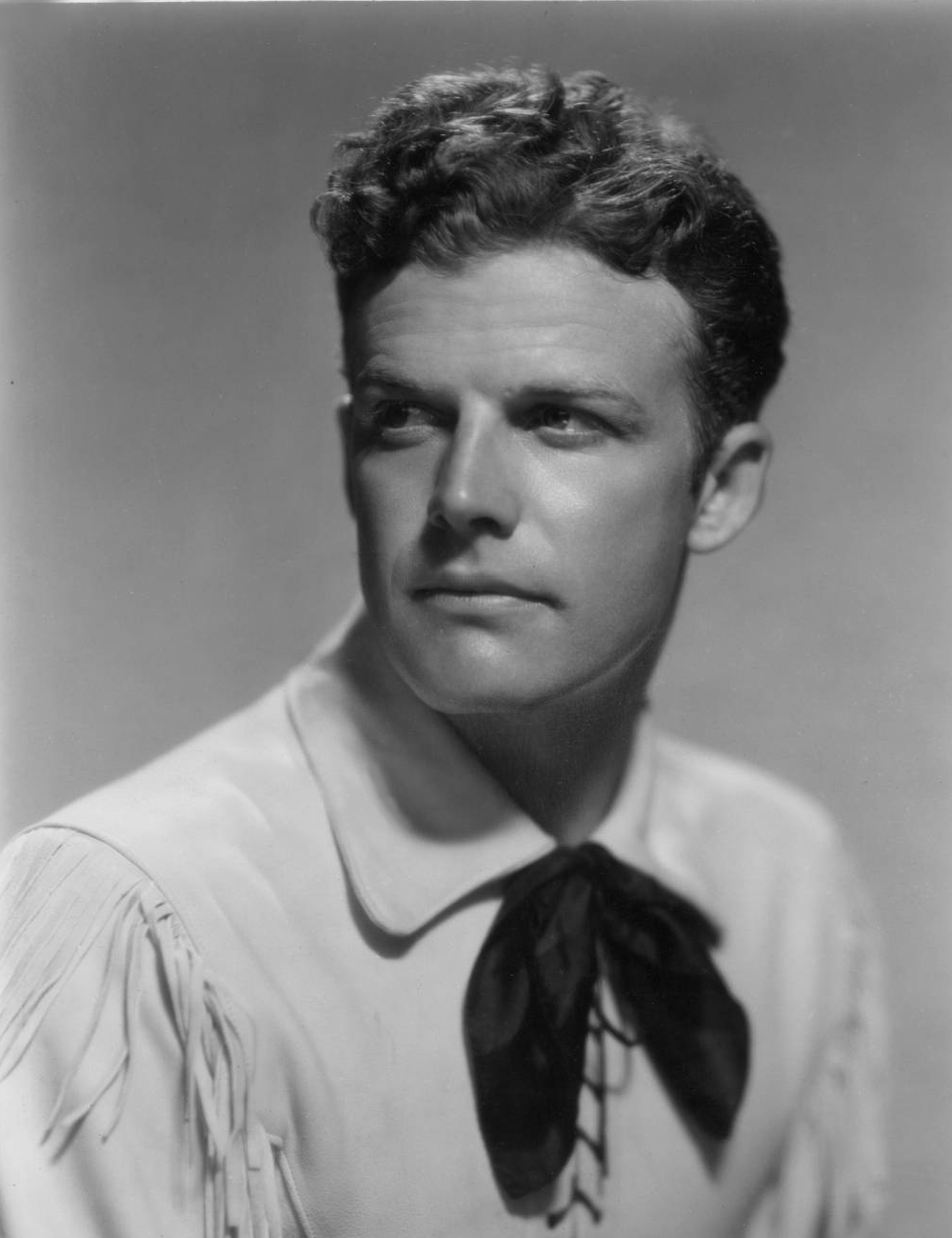
Rex Bell (born George Francis Beldam; October 16, 1903 – July 4, 1962) was an American actor and politician. Bell primarily appeared in Western films during his career. He also appeared in the 1930 movie True to the Navy, starring Clara Bow; Bell and Bow married the following year.

Bell later became involved in politics with the Nevada Republican Party and was the 21st lieutenant governor of Nevada from 1955 until his death in 1962. He was the second Lieutenant Governor to die in office after Henry C. Davis and as of 2025, he is the most recent to have died in office.

Early years

[edit]

Rex Bell was born George Francis Beldam in Chicago, Illinois on October 16, 1903.[1]

Film career

[edit]

Bell made his film debut in Wild West Romance in 1928,[2] and went on to act in a number of films, mostly Westerns, in which he had the lead role. Fox Film executives were reported to be grooming Bell to be a successor to Tom Mix.[3] He left the movie industry in 1936, although he had generally small roles in a few later films.

In 1931,[4] Bell and his wife, actress Clara Bow, founded the Walking Box Ranch,[5] at Searchlight, Nevada.[6]

His final film appearance was an uncredited but very prominent role as a loquacious old cowboy in a bar and attending a rodeo in John Huston's The Misfits (1961) starring Clark Gable and Marilyn Monroe.[1]

Political career

[edit]

In 1944, Bell ran for the United States House of Representatives on the Republican ticket against Democrat Berkeley Bunker. The Nevada State Journal commented on November 1: "He has made friends where ever he appeared, but consensus is that the time is too short to overcome a handicap of not being so well known as his opponent".[7] The election was held November 7, and Bell got 19,096 votes while Bunker received 36,648.[8]

Bell was the leader of the Nevada Republican Party and in 1948 was an alternate to the Republican National Convention. He was also active in the Nevada Chamber of Commerce and Boy Scouts.[9]

The ties Bell forged during those years helped him win the Lieutenant Governor's office in 1954. That election year, Charles H. Russell, the incumbent Republican governor, also won. In 1958, Democrat Grant Sawyer unseated Russell, but Bell won re-election as Lieutenant Governor (Bell and his Nevada state political position are mentioned in John D. MacDonald's 1960 novel The Only Girl in the Game). Bell died after giving a campaign speech on July 4, 1962, while running for governor, still in office, of a heart attack at the El Rancho Hotel and Casino in Las Vegas.

Other activities

[edit]

Television

[edit]

Bell was host of the program Cowboys and Injuns in 1950. It began on a station in Los Angeles[2] and went on to be broadcast on ABC. The show focused on legends that were derived from folklore of cowboys and Native Americans in the United States.[10]

Business

[edit]

Bell operated Rexco Incorporated, which manufactured and distributed novelty gift items. He and his brother also had two clothing stores in Nevada.[2]

Personal life

[edit]

Bell married actress Clara Bow in 1931.[5] They had two sons, Tony Beldam, who changed his name to Rex Anthony Bell Jr., and George Beldam Jr.[11][12] Rex Bell Jr. appeared in two Western films—Stage to Thunder Rock (1964), in the role of "Shotgun Rex", and Young Fury (1965), and later served as district attorney of Clark County from 1987 to 1995.[13]

Bell died of a heart attack on July 4, 1962, a few hours after attending a political rally and picnic in Las Vegas.[14]

The Rex Bell Elementary School in Las Vegas was named in honor of Bell.[15]

Filmography

[edit]
Lobby card with Bell in The Fugitive (1933)
Lobby card with Bell in Too Much Beef, 1936
Lobby card with Bell in Men of the Plains (1936)
Year Title Role Notes
1928 Wild West Romance Phil O'Malley
1928 The Cowboy Kid Jim Barrett
1928 Girl-Shy Cowboy Joe Benson
1928 Taking a Chance Joe Courtney
1929 Joy Street Eddie
1929 Pleasure Crazed Peters (chauffeur)
1929 Salute Cadet Uncredited
1929 Happy Days Rex Bell
1929 They Had to See Paris Clark McCurdy
1930 Harmony at Home Dick Grant
1930 Courage Lynn Willard
1930 True to the Navy Eddie
1930 Lightnin' Larry - Betty's Husband
1931 Battling with Buffalo Bill Dave Archer Serial
1931 Forgotten Women Jimmy Burke
1931 Law of the Sea Cole Andrews
1932 The Arm of the Law Robin Dale
1932 Broadway to Cheyenne Breezy Kildare
1932 The Man from Arizona Kent Rogers
1932 Lucky Larrigan Craig Larrigan - posing as Tex aka Lucky
1932 Crashin' Broadway Tad Wallace
1933 Diamond Trail Speed Morgan - posing as Frisco Eddie
1933 Fighting Texans Randy Graves
1933 The Fugitive Joe Kean
1933 Rainbow Ranch Ed Randall
1933 Hollywood on Parade No. A-8 Himself Short
1934 The Tonto Kid Skeets Slawson aka The Tonto Kid
1934 Gunfire Jerry Dunbar
1935 Fighting Pioneers Lieutenant Bentley
1935 Border Vengeance Announced Rodeo Guest Star Uncredited
1935 Saddle Aces Steve Brandt
1936 Too Much Beef Johnny Argyle alias Tucson Smith
1936 West of Nevada Jim Carden, posing as Jim Lloyd
1936 Men of the Plains Jim Dean - aka Tom Porter
1936 Idaho Kid Todd Hollister aka Idaho
1936 Law and Lead Jimmy Sawyer
1936 Stormy Trails Tom Storm
1942 Tombstone, the Town Too Tough to Die Virgil Earp
1942 Dawn on the Great Divide Jack Carson
1952 Lone Star Minor Role Uncredited
1952 Sky Full of Moon Himself Uncredited
1961 The Misfits Old Cowboy Uncredited, (final film role)

References

[edit]
[edit]
Revisions and contributorsEdit on WikipediaRead on Wikipedia
from Grokipedia
George Francis "Rex" Beldam (October 16, 1903 – July 4, 1962), known professionally as Rex Bell, was an American actor and Republican politician who appeared in numerous Western films during the late silent and early sound eras before serving as the 21st Lieutenant Governor of Nevada from 1955 until his death in office. Bell's film career, spanning over 40 roles primarily in low-budget "B" Westerns produced by studios such as RKO, Monogram, and 20th Century Fox, featured him as a cowboy hero in titles like From Broadway to Cheyenne (1932), Lucky Larrigan (1932), and Gunfire (1934), establishing him as a recognizable figure in the genre despite not achieving top stardom. In 1931, he married silent film icon Clara Bow, the two having met on the set of her picture True to the Navy (1930); the couple relocated to Nevada, where they raised two sons and managed the Walking Box Ranch as cattle ranchers and breeders. Transitioning to politics after World War II, Bell led the Nevada Republican Party, ran unsuccessfully for U.S. Congress in 1944, and capitalized on his Western persona—often appearing in cowboy attire—to win election as lieutenant governor in 1954, presiding over the state senate during a period of post-war growth in the Silver State. Bell died suddenly of a coronary occlusion at age 58 while hospitalized in Las Vegas, shortly after attending Independence Day celebrations, leaving a legacy bridging Hollywood's cowboy myths with real Western ranching and governance.

Early Life

Birth and Family Background

George Francis Beldam, professionally known as Rex Bell, was born on October 16, 1903, in , . His parents were George Curtis Beldam (born circa 1868) and Daisy Bacon Beldam (born September 29, 1877). The Beldam family maintained residence in Chicago's Cook County during this period, reflecting an urban Midwestern upbringing. Beldam had at least one , brother Hodson McLane Beldam. Specific details on parental occupations remain undocumented in primary records, though the family's base suggests ties to typical urban livelihoods of the era. The surname Beldam indicates potential British ancestral origins, consistent with common immigrant patterns to industrial centers like .

Relocation to Nevada and Formative Experiences

Bell's family left shortly after his birth in 1903, briefly residing in before relocating to during his childhood, where they settled in the area. This move immersed the young Bell in the burgeoning Western milieu of early 20th-century , a region transitioning from ranchlands to urbanization amid expanding presence. Attending and graduating in 1923, Bell cultivated hands-on expertise with horses through work at motion picture studios, including handling equestrian duties on sets for Western productions. These practical engagements, often involving and delivery via his father's company, fostered physical resilience and a grounded appreciation for self-sufficient labor, qualities emblematic of ranching traditions amid sparse, demanding landscapes. Such early pursuits reinforced a worldview emphasizing individual initiative over institutional or urban dependencies, evident in Bell's later aversion to Hollywood's artificiality and preference for authentic endeavors. By sharpening his riding and horsemanship skills independently of formal training, these years laid the groundwork for his portrayal of rugged protagonists, rooted in genuine capability rather than scripted glamour.

Film Career

Breakthrough in Silent Westerns

Bell entered the film industry in the late when Fox Film Corporation contracted him as a cowboy , leveraging his athletic build and horsemanship skills honed from personal interest in ranching activities. Talent spotters at the studio identified his potential during routine work near the lot, leading to his adoption of the stage name Rex Bell and rapid placement in supporting and lead roles amid the waning silent era. His screen debut came in the 1928 western Wild West Romance, where he played a resolute aiding in , marking the start of a series of B-western leads for . Bell followed with quick succession in films such as The Cowboy Kid (1928), Girl-Shy Cowboy (1928), and Taking a Chance (1928), typically embodying honorable protagonists—ranchers or law enforcers—who confronted bandits and restored order through physical prowess and ethical resolve. These roles, produced on modest budgets, capitalized on the genre's demand for authentic-seeming heroes amid Hollywood's transition to sound, with Bell appearing in at least eight silent features before 1930. Beyond pure westerns, Bell featured in (1929), a military drama co-directed by , portraying a cadet alongside early appearances by and ; though not a western, it reinforced his image as an upright, disciplined figure in . His breakthrough solidified through these vehicles, which emphasized self-reliant and moral clarity, appealing to viewers via straightforward narratives of heroism unburdened by complex psychological depth.

Transition to Sound Films and Peak Popularity

As the silent film era waned in the late , Bell adapted to the burgeoning medium, appearing in early talkies such as True to the Navy (1930), a Paramount romantic comedy where he portrayed sailor Eddie alongside , marking one of his initial forays into synchronized dialogue films. This transition aligned with industry-wide shifts, as studios rapidly converted productions to to meet demands, though Bell's rugged found greater traction in Westerns than in urban comedies. By the early 1930s, Bell achieved peak commercial viability in low-budget "B" Westerns, starring in vehicles like Battling with Buffalo Bill (1931), a Universal serial emphasizing frontier heroism and conflict over land rights, which resonated with Depression-era viewers seeking escapist tales of individual triumph. He maintained steady output at poverty-row studios, including , with titles such as Broadway to Cheyenne (1932) and Diamond Trail (1933), typically portraying self-reliant ranchers battling outlaws or corrupt interests, themes that underscored pro-ranching independence and skepticism toward external meddling. These films, often produced on tight schedules with recycled sets and , capitalized on Bell's authentic image—honed from real experience—to foster fan loyalty amid economic hardship, embodying an archetype of rugged American self-sufficiency over reliance on government aid. The financial returns from this prolific phase, though modest compared to stars, provided Bell with sufficient stability to pursue personal investments, such as initial land acquisitions in , reflecting a preference for entrepreneurial risk-taking rooted in his Western roles' ethos of frontier autonomy. Over 1928–1936, he headlined approximately 22 Westerns, averaging several releases annually during his peak, which sustained his popularity in regional theaters and drive-ins before audience tastes shifted further.

Later Roles and Exit from Hollywood

By the mid-1930s, Rex Bell's opportunities in Western films had significantly declined due to the proliferation of low-budget "B" Westerns, which flooded the market with interchangeable cowboy protagonists and reduced demand for mid-tier actors like Bell. His final starring roles included Men of the Plains (1936) and Stormy Trails (1936), the latter portraying rancher Tom Storm entangled in a and family debts amid a quest for gold on his property. These productions, typical of the era's formulaic output from studios like Resolute Pictures, marked the effective end of Bell's prominence as a leading man, as he secured no comparable leads thereafter. Bell made only sporadic, minor appearances in subsequent years, including uncredited bit parts in non-Western features during the , such as High Sierra (1941). This tapering reflected not just industry saturation but Bell's deliberate deprioritization of acting in favor of ranching, which he regarded as a more substantive and permanent vocation than the ephemeral allure of Hollywood stardom. Following his 1931 marriage to , Bell acquired the Walking Box Ranch near , where the couple sought respite from Tinseltown's pressures, enabling his full pivot away from by 1936. This transition underscored Bell's preference for tangible enterprises like cattle raising over the transient nature of screen roles, aligning with his eventual embrace of grounded, self-reliant pursuits.

Business Ventures

Ranching and Cattle Operations

In May 1931, Rex Bell purchased the Walking Box Ranch, located west of in , from John Woolf, who had recently acquired title to the property from the Rock Springs Land and Cattle Company. The ranch encompassed approximately 400,000 acres in the , originally part of the larger Rock Springs holdings that spanned over 1,000,000 acres, and served as the foundation for Bell's breeding and sales operations. Bell, leveraging his background in western films, developed the property into a functional ranch, constructing a 5,000-square-foot Spanish Revival-style home on the site that same year to support year-round management. The Walking Box Ranch focused on raising and selling , utilizing the expansive arid lands for while integrating branding elements like the "Walking Box" mark, inspired by early Hollywood box cameras. Bell maintained active operations through and , navigating regional conditions inherent to Nevada's ranching environment without documented reliance on federal relief programs. By the late , he had expanded his holdings by acquiring the Gonzales Smith Ranch near , further bolstering his cattle enterprise with additional pasture and breeding capacity. These ventures emphasized private land stewardship and market-driven sales, aligning with Bell's promotion of independent western ranching amid growing federal oversight of public lands in the state. Bell sold the Walking Box Ranch in 1951 to Karl Weikel, who continued cattle operations under the YKL brand until the , after which much of the surrounding acreage was divested or transferred to federal management. Prior to the sale, Bell had reduced the ranch's footprint by selling off portions in 1949 and 1950, retaining core patented lands totaling around 350,000 acres at peak divestment, reflecting adaptive scaling in response to economic shifts in the industry. His ranching efforts demonstrated sustained viability through direct market participation, contrasting with broader trends of consolidation and leasing in 's cattle sector during the mid-20th century.

Additional Commercial Interests

Bell hosted the television program Cowboys and Injuns in 1950, featuring live demonstrations of cowboy skills and Native American folklore in both indoor studio sets and outdoor locations such as corrals and simulated villages. Originating on a station, the series expanded to ABC network broadcast, enabling Bell to monetize his established western image for a new medium amid declining roles. This short-lived endeavor represented a diversification from and ranching, drawing on personal expertise in frontier traditions to appeal to post-World War II audiences nostalgic for authentic Western Americana. Beyond media appearances, Bell pursued selective real estate holdings in southern , including the 1931 purchase of the Walking Box Ranch near , which served as a private retreat but attracted celebrity visitors like and , informally aligning with the region's emerging tourism appeal ahead of the post-1940s expansion. Sold around 1944 to support intensified political and unspecified business activities, the property underscored Bell's strategic property investments tied to 's land value growth from desert isolation to recreational draw. These ventures emphasized independent operations, eschewing structures prevalent in Hollywood and favoring direct, individual negotiations reflective of his self-reliant ethos.

Political Career

Entry into Republican Politics

Bell's transition from Hollywood and ranching to politics reflected his deepening ties to Nevada's rural communities during the early 1940s. As a cattle rancher facing the challenges of federal wartime regulations and post-New Deal agricultural policies, he aligned with the Republican Party's emphasis on curbing statist expansions that burdened independent operators like himself. This rooted opposition to centralized Washington interventions, which he viewed as detrimental to local agriculture and self-reliance, prompted his initial foray into the Nevada GOP. Leveraging his cowboy persona and firsthand knowledge of ranching hardships—such as and production quotas under FDR-era programs—Bell advocated for and in party circles. His platforms resonated with rural voters wary of elite-driven federal overreach, enabling him to cultivate support in Nevada's agrarian base skeptical of distant bureaucratic elites. By emphasizing local autonomy over expansive national programs, Bell positioned himself as a defender of Western independence, drawing on personal experiences to connect with constituents impacted by wartime and post-war economic controls.

Congressional Bid and Party Leadership

In 1944, Rex Bell, a Nevada rancher and former film actor, entered politics by securing the Republican nomination for the state's at-large U.S. seat, challenging incumbent Democrat Berkeley Bunker. His candidacy leveraged his local prominence as a cattleman to appeal to voters in a sparsely populated state reliant on and . The general election on November 7, 1944, saw Bunker retain the seat with 32,648 votes to Bell's 19,096, reflecting broader Democratic gains amid wartime national unity under President , whose party expanded its congressional majority by 22 seats. Nevada's political landscape at the time favored Democrats, who had dominated congressional representation since 1932 and maintained a edge persisting into the postwar era. Undeterred by the defeat, Bell assumed a prominent role in the , serving as its de facto head and focusing on bolstering organizational strength in a state where Democrats controlled most statewide offices and legislative seats. His emphasized engagement among rural conservatives, culminating in his selection as an alternate delegate to the . This period of party-building laid foundational efforts for Republican resilience against entrenched Democratic majorities, which had carried in every from 1932 to 1944.

Lieutenant Governorship and Key Initiatives

Rex Bell was elected as Nevada's Lieutenant Governor in November 1954, defeating Democratic candidate James G. Ryan with 46,715 votes to Ryan's 31,442, securing 59.77% of the vote. He assumed office on January 3, 1955, serving under Republican Charles H. Russell until 1959. Bell's primary administrative duties included presiding over the State Senate as its president during the 47th through 51st legislative sessions (1955–1961), where he cast deciding votes when ties occurred, and performing ceremonial functions such as representing the state at public events. In the 1958 election, Bell won re-election with 46,618 votes against Democrat Phil Cummings's 36,171, continuing his tenure into the administration of Democratic Governor Grant Sawyer, who took office in January 1959 despite the partisan difference. During Governor Russell's absences, including out-of-state trips and legislative periods, Bell frequently served as acting governor, signing bills into law and managing executive responsibilities, which demonstrated his capability in maintaining state governance continuity amid emergencies or routine gubernatorial unavailability. Bell advocated for policies supporting Nevada's resource-dependent economy, including water conservation measures to sustain agricultural viability, regulatory frameworks for mining operations, and initiatives bolstering ranching activities, reflecting his personal background in cattle operations. He also promoted economic diversification through and leveraged his Hollywood experience to encourage growth in the state, aiming to enhance revenue from Nevada's natural assets while countering potential federal encroachments on local resource management. These efforts aligned with a pragmatic focus on preserving the state's traditional industries amid post-war development pressures.

Political Achievements and Conservative Stance

Bell's re-election as in November 1958, amid a statewide Democratic sweep, represented a singular Republican triumph that year, underscoring his enduring appeal as a cowboy-statesman and bolstering the party's foothold during an era of opposition dominance. This outcome preserved conservative influence within the executive branch, enabling Bell to advocate for Republican priorities in legislative oversight as presiding officer of the state senate. His tenure coincided with Nevada's , where gross state product grew alongside increases from approximately 160,000 in 1950 to over 285,000 by 1960, fueled by low regulatory burdens and no state —a framework Republicans like Bell defended against expansionist pressures. As de facto leader of the , Bell orchestrated organizational efforts that sustained GOP viability, including his role as an alternate delegate to the and mobilization of rural and business constituencies. These activities contributed to a modest resurgence of conservative momentum by the late , positioning the party to challenge Democratic incumbents and influence pro-business reforms, such as streamlined regulations for and that supported the state's boom without introducing burdensome fiscal measures. Empirical indicators, including rising production and gaming revenues, validated this approach over alternatives favoring greater involvement. Bell's conservative stance emphasized self-reliance, fiscal restraint, and rural prosperity, rooted in his ranching background and evident in his advocacy through the for policies prioritizing private enterprise over centralized control. He resisted progressive encroachments on traditional liberties, linking state success to verifiable outcomes like sustained low in extractive industries, rather than ideological expansions of spending. This orientation contrasted with prevailing Democratic trends, offering a principled defense of efficacy in fostering verifiable economic .

Challenges, Criticisms, and Unfinished Goals

Bell's entry into elective office was marked by an unsuccessful bid for the U.S. House of Representatives in 1944 against incumbent Democrat Berkeley Bunker, where his campaign as a rancher and former actor garnered attention but failed to overcome the Democratic incumbent's established position in Nevada's at-large district. This defeat highlighted the challenges of transitioning from celebrity and business to partisan politics in a state with shifting urban-rural dynamics, though Bell subsequently built influence as Nevada Republican Party chairman. As , Bell encountered standard partisan opposition from Democrats, including Grant Sawyer's administration after , who prioritized emerging urban interests in amid the state's growing and gambling sectors; critics from urban Democratic circles occasionally portrayed Bell's advocacy for ranching and conservative values as out of step with modernization, despite ranching's ongoing role in Nevada's , which included significant operations supporting local employment and . However, no substantiated accusations of or emerged regarding his ranch deals, such as the 1931 purchase and later operations at Walking Box Ranch, which were conducted as typical frontier-era business transactions with available; Bell's tenure remained free of major scandals, distinguishing him from contemporaries in an era where political dealings often involved informal networks without legal impropriety. Bell's most prominent unfinished goal was his 1962 Republican nomination for governor, aimed at reclaiming executive leadership for conservatives after Sawyer's term; the campaign was abruptly halted by his fatal heart attack on , 1962, following a Fourth of July rally in , preventing any further advancement toward higher office and leaving Nevada Republicans to regroup without their seasoned candidate. Opponents occasionally referenced his wife Clara Bow's prior Hollywood scandals in personal attacks, but these lacked evidence tying to Bell's conduct and did not derail his prior electoral successes or party leadership.

Personal Life

Courtship and Marriage to Clara Bow

Rex Bell, a rising cowboy actor, met through Hollywood film circles in the late 1920s, with their romance gaining traction during her recovery from personal and professional pressures, including a brief institutionalization for concerns in 1931. The couple's relationship provided Bow an escape from tabloid scrutiny over prior scandals, such as her 1927 entanglement with secretary Daisy DeVoe, which had exposed salacious details of her private life and exacerbated her emotional instability. Bell, embodying rugged Western authenticity as opposed to Bow's flapper-era glamour, offered a stabilizing counterpoint, prioritizing discretion over publicity. On December 3, 1931, Bell and Bow eloped in a secret ceremony in , , initially denying the marriage to secure a quiet away from reporters; Bow publicly confirmed it six days later, displaying their certificate at her Beverly Hills home. Following the wedding, they retreated to Bell's recently acquired Walking Box Ranch near —a 360,000-acre property he purchased in May 1931—where the seclusion allowed Bow to withdraw from Hollywood's demands and focus on recovery amid ongoing anxiety and hypochondria. Bell supported her through these challenges without fueling public spectacle, demonstrating a commitment to private resolution over exploitative disclosure, which contrasted with the era's sensationalist media tendencies. The union symbolized a fusion of Bow's cinematic allure and Bell's grounded ranching ethos, yielding two sons born in the 1930s, and endured for over three decades until Bell's death in 1962, despite Bow's persistent health struggles that occasionally strained but did not dissolve their bond. This partnership underscored Bell's role in anchoring Bow amid her vulnerabilities, facilitating her full retirement from acting by 1933 in favor of ranch life.

Family Dynamics and Children

Rex Bell and raised their two sons, Rex Anthony Bell Jr. (born December 1934) and George Francis Beldam Jr. (born 1938), primarily on the Walking Box Ranch near , which the couple had established in 1931 as a operation and family homestead. The ranch environment, centered on management and frontier-style self-sufficiency, shaped the boys' early years, with Bell serving as the hands-on patriarch overseeing daily operations alongside his film and political pursuits. Bell instilled in his sons a strong and practical skills through ranch responsibilities, reflecting the disciplined ethos of Western ranching life that prioritized resilience and over urban influences. This upbringing contrasted with the era's emerging cultural trends toward suburban conformity and permissiveness, as the family maintained a traditional structure with Bow as homemaker focused on domestic duties while Bell provided through ranching and . The sons' immersion in this setting fostered a continuity of their father's blend of legal acumen—Bell having practiced briefly—and , evident in Rex Jr.'s later pursuits. Rex Bell Jr. exemplified the perpetuation of his father's legacy by entering public service in , initially appearing in Western films as a before pursuing ; he served as a deputy district attorney in , then joined the Clark County District Attorney's office in , rising to Clark County District Attorney from 1987 to 1995 and earlier as Las Vegas Justice of the Peace starting in 1972. His career mirrored Bell's integration of Western heritage with civic roles, including leadership in a growing state, though George Jr. led a more private life away from politics. The family's adherence to these conservative-leaning principles of family authority and positioned it as a bastion of traditional values amid mid-20th-century social changes.

Health Decline and Death

Bell experienced a on July 4, 1962, during campaign activities for the Nevada gubernatorial election, shortly after participating in a Republican Independence Day rally and picnic in . He was rushed to Sunrise Hospital, where he died that evening at age 58. The incident reflected the physical toll of Bell's dual commitments to operations and intensive political engagements, which involved extensive and public appearances in 's demanding terrain. His passing marked him as the second Nevada to die in office, after Henry C. Davis in 1889. Governor Grant Sawyer, a Democrat, appointed Maude Frazier to fill the vacancy temporarily; however, Republican Paul secured the office in the November 1962 election, maintaining party continuity in the role Bell had elevated.

Legacy

Enduring Impact on Nevada Republicanism

Rex Bell's leadership in the during the 1950s provided a foundation for subsequent GOP successes by maintaining organizational viability amid Democratic dominance. As , Bell served as an alternate delegate to the and spearheaded efforts that enabled his re-election as in 1958, the sole Republican statewide victory that year despite broader losses. This resilience demonstrated effective mobilization of rural and Clark County voters, countering perceptions of inevitable Democratic in 's postwar political landscape, where Democrats had controlled the governorship since 1946. Bell's recruitment of to the 1962 Republican ticket for introduced a key figure whose career trajectory amplified GOP strength post-Bell's death on July 4, 1962. Laxalt, persuaded by Bell to enter the race, won the in November 1962 and, building on that platform, secured the governorship in 1966 by defeating incumbent Democrat Grant Sawyer with 50.07% of the vote—a narrow but pivotal upset that ended two decades of Democratic executive control. Laxalt's administration emphasized rural economic priorities, including advocacy for state influence over federal public lands comprising over 80% of Nevada's territory, prioritizing ranching and mining sectors that employed thousands and generated measurable GDP contributions—such as cattle production valued at $XX million annually in the era—over expansive federal regulations. This approach echoed Bell's own rancher background and conservative stance against centralized overreach, fostering a GOP base that propelled Nevada's support for in 1980 (winning 66% of the vote) and sustained party competitiveness in Western states. Empirical electoral data post-1962 underscores Bell's indirect causal role in debunking narratives of permanent Democratic ascendancy: GOP gubernatorial wins followed in 1978 (Robert List) and 1998 (), alongside consistent rural strongholds that offset urban Democratic gains from growth. Bell's emphasis on grassroots party-building, rather than relying on transient Hollywood fame, established precedents for appeals that Laxalt and later Republicans adapted, evidenced by the party's ability to capture statewide offices despite demographic shifts favoring Democrats by the .

Cultural Role as Cowboy Icon and Statesman

Bell's persona as a cowboy icon transcended his film career, manifesting in his political life where he embodied the of the American West. Serving as from 1955 to 1962, Bell routinely appeared in public wearing and western attire, integrating the symbolic trappings of frontier self-reliance into the formalities of state governance. This deliberate style choice reinforced his image as an authentic Westerner, bridging the performative myths of Hollywood with the practical demands of ranching and public service on his Walking Box Ranch, acquired in May 1931. His B-Western films, produced primarily between 1928 and 1936, remain preserved through dedicated enthusiast efforts and digital restoration projects, ensuring their availability for study and appreciation of early cinematic depictions of heroism. These works, characterized by straightforward narratives of and resolve, contrast with subsequent mid-century shifts toward psychologically complex or socially critical Westerns, preserving an archetype rooted in empirical portrayals of physical endurance and moral autonomy rather than abstracted reinterpretations. In Nevada's cultural landscape, Bell's legacy endures through tangible honors that recognize this synthesis of entertainment, ranch life, and statesmanship. Rex Bell Elementary School in , established as part of the , stands as a direct tribute to his multifaceted contributions, serving over 500 students annually and embedding his name in local education. Similarly, the Walking Box Ranch collection, now stewarded by the , for historical instruction on Nevada's Hollywood connections, underscores his role in grounding cinematic Western ideals in verifiable real-world enterprise. These elements affirm Bell's position as a statesman-cowboy whose unadorned adherence to traditional Western tenets—self-determination and direct action—resonates in histories prioritizing causal fidelity over ideologically filtered revisions.

References

Add your contribution
Related Hubs
User Avatar
No comments yet.