Hubbry Logo
RhyniophyteRhyniophyteMain
Open search
Rhyniophyte
Community hub
Rhyniophyte
logo
8 pages, 0 posts
0 subscribers
Be the first to start a discussion here.
Rhyniophyte
Rhyniophyte
from Wikipedia

Rhyniophyte
Temporal range: Early Devonian[1]
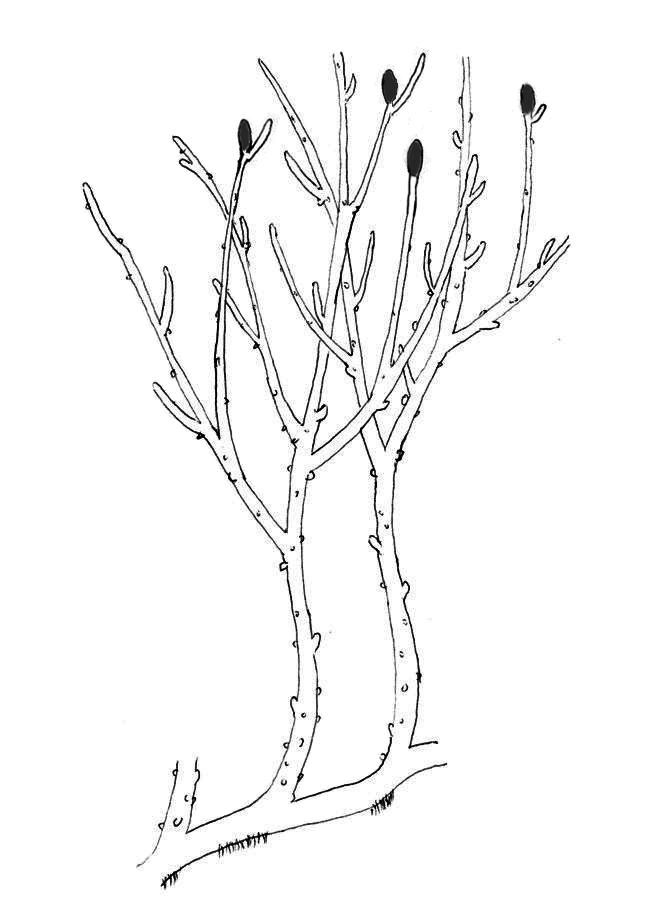
Reconstruction of Rhynia gwynne-vaughanii[1]
Scientific classification Edit this classification
Kingdom: Plantae
Clade: Polysporangiophytes
Clade: Tracheophytes
Stem group: Rhyniophytes
Synonyms
  • Rhyniopsida Krysht. (1925)
  • Rhyniophytina Banks (1968)
  • Rhyniophyta Cronq., Takht. & Zimmermann (1966)
  • paratracheophytes

The rhyniophytes are a group of extinct early vascular plants that are considered to be similar to the genus Rhynia, found in the Early Devonian (around 420 to 393 million years ago). Sources vary in the name and rank used for this group, some treating it as the class Rhyniopsida, others as the subdivision Rhyniophytina or the division Rhyniophyta. The first definition of the group, under the name Rhyniophytina, was by Banks,[2]: 8  since when there have been many redefinitions,[1]: 96–97  including by Banks himself. "As a result, the Rhyniophytina have slowly dissolved into a heterogeneous collection of plants ... the group contains only one species on which all authors agree: the type species Rhynia gwynne-vaughanii".[1]: 94  When defined very broadly, the group consists of plants with dichotomously branched, naked aerial axes ("stems") with terminal spore-bearing structures (sporangia).[3]: 227  The rhyniophytes are considered to be stem group tracheophytes (vascular plants).

Definitions

[edit]

The group was described as a subdivision of the division Tracheophyta by Harlan Parker Banks in 1968 under the name Rhyniophytina. The original definition was: "plants with naked (lacking emergences), dichotomizing axes bearing sporangia that are terminal, usually fusiform and may dehisce longitudinally; they are diminutive plants and, in so far as is known, have a small terete xylem strand with a central protoxylem."[2]: 8 [4] With this definition, they are polysporangiophytes, since their sporophytes consisted of branched stems bearing sporangia (spore-forming organs). They lacked leaves or true roots but did have simple vascular tissue. Informally, they are often called rhyniophytes or, as mentioned below, rhyniophytoids.

However, as originally circumscribed, the group was found not to be monophyletic since some of its members are now known to lack vascular tissue. The definition that seems to be used most often now is that of D. Edwards and D.S. Edwards: "plants with smooth axes, lacking well-defined spines or leaves, showing a variety of branching patterns that may be isotomous, anisotomous, pseudomonopodial or adventitious. Elongate to globose sporangia were terminal on main axes or on lateral systems showing limited branching. It seems probable that the xylem, comprising a solid strand of tracheids, was centrarch."[5]: 216  However, Edwards and Edwards also decided to include rhyniophytoids, plants which "look like rhyniophytes, but cannot be assigned unequivocally to that group because of inadequate anatomical preservation", but exclude plants like Aglaophyton and Horneophyton which definitely do not possess tracheids.[5]: 214–215 

In 1966, slightly before Banks created the subdivision, the group was treated as a division under the name Rhyniophyta.[6] Taylor et al. in their book Paleobotany use Rhyniophyta as a formal taxon,[3]: 1028  but with a loose definition: plants "characterized by dichotomously branched, naked aerial axes with terminal sporangia".[3]: 227  They thus include under "other rhyniophytes" plants apparently without vascular tissue.[3]: 246ff 

In 2010, the name paratracheophytes was suggested, to distinguish such plants from 'true' tracheophytes or eutracheophytes.[7]

In 2013, Hao and Xue returned to the earlier definition. Their class Rhyniopsida (rhyniopsids) is defined by the presence of sporangia that terminate isotomous branching systems (i.e. the plants have branching patterns in which the branches are equally sized, rather than one branch dominating, like the trunk of a tree). The shape and symmetry of the sporangia was then used to divide up the group. Rhynialeans (order Rhyniales), such as Rhynia gwynne-vaughanii, Stockmansella and Huvenia, had radially symmetrical sporangia that were longer than wide and possessed vascular tissue with S-type tracheids. Cooksonioids, such as Cooksonia pertoni, C. paranensis and C. hemisphaerica, had radially symmetrical or trumpet-shaped sporangia, without clear evidence of vascular tissue. Renalioids, such as Aberlemnia, Cooksonia crassiparietilis and Renalia had bilaterally symmetrical sporangia and protosteles.[8]: 329 

Taxonomy

[edit]

There is no agreement on the formal classification to be used for the rhyniophytes.[1]: 96–97  The following are some of the names which may be used:

  • Division Rhyniophyta Cronq., Takht. & Zimmermann (1966)[3]: 227ff, 1028,  [6]
    • Subdivision Rhyniophytina Banks (1968)[2]: 8 [4]
      • Class Rhyniopsida Kryshtofovich (1925)[9]
        • Order Rhyniales Němejc (1950)[10]
          • Family Rhyniaceae Kidston & Lang (1920)[11]: 616 

Phylogeny

[edit]

In 2004, Crane et al. published a cladogram for the polysporangiophytes in which the Rhyniaceae are shown as the sister group of all other tracheophytes (vascular plants).[12] Some other former "rhyniophytes", such as Horneophyton and Aglaophyton, are placed outside the tracheophyte clade, as they did not possess true vascular tissue (in particular did not have tracheids). However, both Horneophyton and Aglaophyton have been tentatively classified as tracheophytes in at least one recent cladistic analysis of Early Devonian land plants.[8]: 244–245 

Partial cladogram by Crane et al. including the more certain rhyniophytes:[12]

polysporangiophytes

(See the Polysporangiophyte article for the expanded cladogram.)

Genera

[edit]

The taxon and informal terms corresponding to it have been used in different ways. Hao and Xue in 2013 circumscribed their Rhyniopsida quite broadly, dividing it into rhynialeans, cooksonioids and renalioids.[8]: 47–49  Genera included by Hao and Xue are listed below, with assignments to their three subgroups where these are given.[8]: 329 

It has been suggested that the poorly preserved Eohostimella, found in deposits of Early Silurian age (Llandovery, around 440 to 430 million years ago), may also be a rhyniophyte.[13] Others have placed some of these genera in different groups. For example, Tortilicaulis has been considered to be a horneophyte.[12]

Rhynie flora

[edit]

The general term "rhyniophytes" or "rhyniophytoids" is sometimes used for the assemblage of plants found in the Rhynie chert Lagerstätte - rich fossil beds in Aberdeenshire, Scotland, and roughly coeval sites with similar flora. Used in this way, these terms refer to a floristic assemblage of more or less related early land plants, not a taxon. Though the rhyniophytes are well represented, plants with simpler anatomy, like Aglaophyton, are also common; there are also more complex plants, like Asteroxylon, which has a very early form of leaves.[14]

See also

[edit]

References

[edit]
[edit]
Revisions and contributorsEdit on WikipediaRead on Wikipedia
from Grokipedia
Rhyniophytes represent a paraphyletic group of extinct early land that emerged during the Late Silurian to periods, approximately 430 to 400 million years ago, including some of the earliest known vascular to colonize terrestrial environments. These primitive polysporangiophytes are defined by their simple morphology, including upright, leafless, and rootless axes that exhibit dichotomous branching, culminating in terminal sporangia containing trilete spores. Notable examples include genera such as , , Aglaophyton, and Horneophyton, which were preserved in exceptional detail in sites like the in , , dating to about 410 million years ago. Anatomically, some rhyniophytes featured rudimentary vascular tissues with tracheids possessing annular or spiral thickenings but lacking the lignified secondary walls of true tracheids found in later plants, while others had S-type conducting cells. Their sporophytes were often isomorphic with gametophytes—meaning the two life cycle stages were similar in size and complexity—contrasting with the dominant, independent of modern vascular plants. Some taxa, like Rhynia gwynne-vaughanii, displayed stomata on aerial axes and simple rhizomes for anchorage, while others, such as Aglaophyton major, showed transitional water-conducting elements that blurred the line between bryophyte-like and vascular forms. In evolutionary terms, rhyniophytes mark a critical transitional stage between non-vascular bryophytes and more derived tracheophytes, contributing to the diversification of terrestrial vegetation during the Siluro-Devonian. Although modern cladistic analyses reveal their diverse phylogenetic positions— with some aligning closer to bryophytes and others to basal lycophytes or euphyllophytes—the group illustrates key innovations like vascular tissue and polysporangiate reproduction that facilitated plant adaptation to land. Their fossils, often preserved through permineralization or charcoalification in Welsh Borderland and Scottish deposits, provide invaluable insights into the origin of plant terrestrialization and the co-evolution of ecosystems with early arthropods.

Definition and Characteristics

Definition

Rhyniophytes represent a paraphyletic assemblage of basal early land plants, some with primitive vascular tissue, that emerged during the Late Silurian to Early Devonian periods, approximately 423 to 393 million years ago, and are characterized by simple, leafless, dichotomously branching axes bearing terminal sporangia. These early land plants mark a transitional stage in plant evolution, bridging non-vascular forms and more complex vascular lineages through their possession of branched sporophytes adapted for terrestrial environments. In contrast to modern vascular plants, rhyniophytes lacked true roots, leaves, and secondary xylem, relying instead on rhizoids for anchorage and absorption, and featuring primary xylem organized in simple, central strands without extensive differentiation. Their vascular tissue, when present, consisted of primitive tracheids with annular or helical thickenings, enabling basic water conduction but limited structural support. The name "rhyniophyte" derives from the genus Rhynia, originally described by Kidston and Lang from exceptionally preserved fossils in the in , the primary site yielding these plants. This group's scope includes both truly vascular forms and non-vascular relatives such as Aglaophyton, which possess hydroid-like conducting cells rather than tracheids, but it excludes more derived zosterophylls and lycophytes that exhibit greater complexity in branching and reproductive structures.

Morphological Features

Rhyniophytes exhibited simple vegetative morphology characterized by naked, dichotomously branching axes that reached heights of up to 20 cm, lacking leaves, true , or other appendages. These axes arose from basal rhizomes or anchoring structures, such as rhizoids, which provided stability in terrestrial substrates without specialized systems. The branching pattern was primarily isotomous, involving equal division of the main axis, reflecting a primitive growth strategy without distinct apical meristems akin to those in modern vascular . Their vascular anatomy was rudimentary, featuring a simple protostelic xylem strand at the center of the axes, composed of tracheids with annular or spiral secondary wall thickenings. This central vascular cylinder, often in development, was surrounded by a thin cortex and lacked any evidence of or cambial activity, limiting the to herbaceous forms. The , inferred from surrounding tissues, was simple and non-conducting in the modern sense, supporting minimal water and nutrient transport suited to damp environments. The of aerial axes was covered by a waxy that aided in water retention, a key adaptation for early terrestrial life. Stomata, consisting of paired , were sparsely distributed on these surfaces to facilitate while minimizing water loss. Epidermal cells were typically thick-walled externally, providing mechanical protection without specialized hypodermal layers in most forms. Growth habits varied between upright, erect forms that reached toward light sources and prostrate or rhizomatous variants adapted to surfaces, enabling of margins. Some rhyniophytes displayed variations such as bulbils or tuber-like structures at basal nodes, potentially serving for vegetative in unstable substrates. Overall, these traits underscore their role as basal vascular pioneering .

Fossil Record

Discovery and Preservation

The Rhynie chert deposits near the village of Rhynie in , , were discovered in 1912 by geologist William Mackie. The rhyniophytes preserved there were first described by paleobotanists Robert Kidston and William H. Lang, who published their initial descriptions between 1917 and 1921. These early finds revealed simple vascular plants preserved in exceptional detail, marking a pivotal moment in understanding terrestrial flora. The fossils owe their remarkable preservation to rapid silicification processes associated with ancient hot spring activity, where silica-rich waters permeated tissues and surrounding sediments, replacing organic material at the cellular level before decay could occur. This captures intricate structures such as spores, vascular tissues, and even associated fungi and arthropods within the chert matrix, providing a snapshot of an ancient . Traditional study methods for rhyniophyte fossils rely on thin-section petrography, where rock slabs are ground to translucent slices for microscopic examination of cellular anatomy. Advanced imaging techniques, including scanning electron microscopy (SEM) for surface details and synchrotron X-ray tomography for non-destructive 3D reconstructions, have further enhanced resolution and allowed virtual modeling of plant morphology. Major collections of Rhynie chert specimens, including those studied by Kidston and Lang, are housed at the Natural History Museum in London and National Museums Scotland in Edinburgh, facilitating ongoing research. Despite this, challenges persist due to the limited geographic distribution of well-preserved rhyniophyte fossils, confined primarily to the Rhynie and nearby Windyfield chert sites, which restricts broader comparative analyses.

Geological Context

Rhyniophyte fossils are primarily known from the Period, specifically the Pragian stage, dating to approximately 411.5 million years ago (U-Pb ). This temporal placement positions them within the initial phases of diversification on land. The principal locality for rhyniophyte preservation is the , situated in , , as part of the Windyfield Chert Bed within the Dryden Flags Formation. This formation consists of interbedded shales, sandstones, and chert lenses formed in a rift basin setting. Similar, though less complete, assemblages of early s akin to rhyniophytes have been reported from sites in Yunnan Province, , such as the Posongchong Formation, which yields comparable flora. The paleoenvironment of these deposits reflects siliceous hot springs associated with activity, characterized by periodic flooding events that contributed to deposition. These settings ranged from terrestrial to semi-aquatic habitats, featuring low oxygen levels and elevated silica concentrations that facilitated exceptional preservation through rapid . In a broader global context, rhyniophyte occurrences align with the Silurian-Devonian transition during terrestrialization, a period marked by the colonization of land by early alongside the initial arthropod incursions onto continental surfaces. This timeframe underscores the establishment of rudimentary terrestrial ecosystems amid rising sea levels and continental fragmentation.

Taxonomy and Phylogeny

Classification History

The classification of rhyniophytes traces back to the early 20th century with the detailed anatomical descriptions of fossils from the . In , Robert Kidston and William H. Lang erected the family Rhyniaceae to accommodate the simple, dichotomously branching Rhynia gwynne-vaughanii, marking the initial formal recognition of these forms as a distinct group within . Earlier, D. H. Scott had grouped similar primitive , including Psilophyton and related genera, into the class Psilophytales in the third edition of his seminal work, viewing them as the basal stock of tracheophytes. By the mid-20th century, rhyniophytes were frequently interpreted as primitive ferns or as core components of the broader psilophyte assemblage, encompassing simple, leafless early vascular from the . This perspective persisted until the , when Harlan P. Banks proposed a major reorganization, elevating rhyniophytes to the class Rhyniopsida within Tracheophyta and subdividing Psilophyta into more precise categories like Rhyniophytina to reflect their shared morphological features such as terminal sporangia and naked axes. Revisions in the 1980s and 1990s highlighted the paraphyletic nature of traditional rhyniophyte groupings, as detailed anatomical studies revealed that some included taxa lacked true . For instance, David S. Edwards reclassified major as the non-vascular Aglaophyton major in 1986, based on the absence of lignified tracheids and presence of hydroid-like conducting cells. Similarly, Paul Kenrick and Patrick R. Crane in 1997 established the class Horneophytopsida for Horneophyton and allies, excluding them from tracheophytes due to their non-vascular conducting strands and basal position among embryophytes. Since 2000, rhyniophytes have been reframed as a grade of basal tracheophytes in cladistic phylogenies, representing early polysporangiophytes with but without later innovations like leaves or roots. Recent studies in the , incorporating analyses of extant plant genomes, have refined this view by estimating the divergence of basal tracheophyte lineages, including rhyniophyte-like forms, in the Late to , aligning evidence with genomic timelines for early land plant radiation.

Phylogenetic Relationships

Rhyniophytes occupy a basal position in the phylogeny of tracheophytes, forming a paraphyletic grade sister to all other vascular , known as eutracheophytes. This arrangement positions them as stem tracheophytes, with lineages ancestral to both the zosterophyll-lycophyte and the , reflecting their role in the initial diversification of vascular during the . Cladistic analyses consistently recover rhyniophytes as a grade rather than a monophyletic group, highlighting their transitional morphology between non-vascular embryophytes and more derived vascular forms. Key synapomorphies uniting rhyniophytes with other tracheophytes include the development of featuring simple tracheids for water conduction, while they lack specialized and leaves that characterize later groups such as zosterophylls and euphyllophytes. In summarized cladograms, rhyniopsids like appear as the most basal tracheophytes, exhibiting dichotomously branching axes with terminal sporangia, whereas non-vascular relatives such as Aglaophyton fall outside Tracheophyta due to their conducting strands composed of hydroids rather than true tracheids. Recent phylogenetic studies incorporating morphological data and fossil-calibrated molecular phylogenies from 2022 affirm rhyniophytes as stem , with the crown tracheophyte divergence estimated at 452–447 Ma (Late Ordovician), while the oldest fossils appear around 423 Ma in the late Silurian. A proposes an alternative placement for some rhyniophyte-like forms, such as Horneophyton, within tracheophytes as sisters to eutracheophytes based on reinterpretations of conducting tissues, though this remains debated. Controversies persist over the vascular status of Aglaophyton, with evidence indicating it lacks lignified tracheids, thus excluding it from Tracheophyta and influencing interpretations of rooting structure evolution, which emerged later in euphyllophytes rather than at the tracheophyte base.

Representative Genera

Rhynia

is the of the rhyniophytes, established by Kidston and Lang in 1917 based on exceptionally preserved fossils from the in , . The genus originally included two species: the Rhynia gwynne-vaughanii Kidston and Lang, 1917, and R. major Kidston and Lang, 1920; however, R. major was reclassified as Aglaophyton major in due to its non-vascular conducting tissues. These leafless, rootless plants represent some of the earliest known vascular land plants, with simple axial construction and no differentiation into stem, , or organs. The morphology of Rhynia gwynne-vaughanii features smooth, cylindrical axes that arise from horizontal basal rhizomes and exhibit . The upright aerial axes reach heights of 10–20 cm and diameters of 1–3 mm. Branching occurs infrequently and primarily by , with occasional adventitious branches emerging laterally. Terminal sporangia, measuring 3–5 mm long, are borne at the apices of the main axes or branches. The rhizomes, which anchor the plant, bear simple rhizoids and show evidence of symbiotic associations with fungi, suggestive of early mycorrhizal interactions for uptake. Anatomically, Rhynia gwynne-vaughanii possesses a simple vascular system consisting of a protostele with a central, cylindrical strand occupying a small portion of the axis cross-section. The comprises true tracheids with annular to helical thickenings, confirming its vascular nature. Cortical tissues surround the , including a layer of thick-walled hypodermal cells, and stomata—oval to circular, 75–100 µm in size—are distributed across all aerial axes for . No has been definitively identified, though sieve-like elements may be present. Reproduction in Rhynia gwynne-vaughanii is homosporous, with a single type of trilete produced within the terminal sporangia; spore diameters range from 30–60 µm, featuring ornamentation typical of Apiculiretusispora plicata. The sporangia dehisce longitudinally via a slit, releasing spores for dispersal, and there is no of or differentiated sexual organs in the preserved sporophytes. The fossils of are preserved permineralized in the siliceous chert deposits, providing exquisite cellular detail that reveals upright growth directly from the substrate in a volcanic-sedimentary environment. This preservation mode highlights the plants' gregarious habit and adaptation to wet, terrestrial conditions.

Aglaophyton and Horneophyton

Aglaophyton major, formerly classified as major, represents a key transitional form among early land preserved in the , characterized by its non-vascular nature and intermediate features between bryophytes and tracheophytes. The consists of decumbent axes forming extensive stands, with dichotomous branching and spiny surfaces along the axes, culminating in terminal, spindle-shaped sporangia with thick walls. Its water-conducting cells feature a three-zoned strand—central thin-walled cells, a middle zone of thick-walled cells without differential thickenings, and outer thin-walled cells—lacking true tracheids and resembling bryophytic hydroids more than vascular . This underscores its debated vascular status, positioning it as a pre-vascular plant rather than a true rhyniophyte like . was homosporous, with retusoid spores measuring 45–80 μm, featuring smooth walls and a trilete mark in a thinned exine region. Horneophyton lignieri exhibits a more basal morphology within the rhyniophyte grade, with a leafless reaching about 20 cm in height, supported by a tuberous at the base that anchors it in the substrate. The upright axes display dichotomous branching and bear terminal sporangia distinguished by a central , around which a dome-shaped spore sac develops, facilitating release through a pore-like . Like Aglaophyton, it lacks true , with conducting strands showing thick-walled cells but no lignified secondary walls typical of tracheids. are homosporous and ornamented, including forms assigned to Emphanisporites decoratus with spiny or conate surfaces, alongside diverse morphotypes such as Ambitisporites, Apiculiretusispora cf. plicata, and Retusotriletes, reflecting varied exine patterns like radial muri and spines. The stage, preserved as Langiophyton mackiei, features complex axes up to 1 cm long with cup-like gametangiophores, highlighting affinities to basal land plants through its isomorphic life cycle and fungal symbioses. Both genera share dichotomous branching patterns and homosporous , contributing to their placement in the rhyniophyte grade as early colonizers of terrestrial environments, though their non-vascular tissues distinguish them from more derived vascular forms. Aglaophyton appears more robust with its decumbent, spiny axes suited for mat-like growth, while Horneophyton is characterized by upright growth from basal tubers and better-preserved details, emphasizing its primitive traits. Recent studies, particularly on morphologies, have refined understanding of their reproductive diversity; for instance, 2021 analyses of Horneophyton spores revealed multiple morphotypes, including novel forms like Cymbosporites raistrickiaeformis, confirming Emphanisporites attribution and suggesting broader palaeodiversity implications without implying . These findings, combined with anatomical re-evaluations, reinforce their transitional role in land plant evolution based on preserved material.

Rhynie Chert Assemblage

Flora Composition

The Rhynie chert assemblage features a diverse array of early land plants, dominated by rhyniophytes that represent some of the earliest known vascular and vascular-like tracheophytes from the (Pragian stage). Key rhyniophytes include Rhynia gwynne-vaughanii, Aglaophyton majus (formerly classified as Rhynia major), and Horneophyton lignieri, which together form the core of the preserved flora and exhibit simple, leafless axes with terminal sporangia. Additionally, Asteroxylon mackiei appears as a transitional form bridging rhyniophytes to early lycophytes, characterized by enations and a more complex vascular system. Complementing these dominants are other vascular plants, including zosterophyll-like forms such as Trichopherophyton teuchansii, Ventarura lyonii, and Nothia aphylla, which display creeping rhizomes and emergences suggestive of proto-leaves. Non-vascular associates encompass free-living gametophytes of the , including Lyonophyton rhyniensis (associated with Aglaophyton), Kidstonophyton dawsonii (linked to Horneophyton), and Langiophyton mackiei (related to ), which exhibit isomorphic growth patterns resembling their sporophyte counterparts. The broader assemblage also incorporates , such as charophycean forms, and nematophyte-like thalloid organisms, alongside extensive fungal elements. In terms of diversity, the component comprises approximately seven species, reflecting a relatively low but specialized early terrestrial compared to contemporaneous lowland assemblages elsewhere. The total floral assemblage expands to include around 10-12 entities when accounting for gametophytes, , and fungi, preserved across over 50 chert horizons. Taphonomic biases favor the overrepresentation of siliceous-adapted forms, as the were permineralized in silica-rich waters from ancient hot springs, potentially excluding less robust or non-adapted taxa from the record.

Paleoecological Insights

Rhyniophytes inhabited marginal pools and adjacent mudflats within a geothermal system during the , colonizing sandy and muddy clastic substrates as well as sinter aprons influenced by silica-rich alkali-chloride fluids with temperatures up to 45°C and ranging from 6.5 to 9.1. These environments featured periodic flooding and exposure, with plants preserved in life position amid organic-rich litter and cyanobacterial mats. Tolerance to was facilitated by anatomical adaptations such as sunken stomata, thick-walled epidermal cells for , and a protective that minimized during dry phases. Growth strategies of rhyniophytes emphasized resilience in nutrient-poor, unstable soils, with clonal propagation achieved through fragmentation and bulbils in genera like Aglaophyton, allowing rapid vegetative spread and resource allocation across patchy habitats. Symbiotic associations with mycorrhizal fungi, including endomycorrhizal Glomites species forming arbuscules in cortical tissues, enhanced nutrient uptake—particularly —in these oligotrophic settings, supporting both and stages. Such mutualisms were crucial for establishing pioneer populations on barren volcanic-derived substrates. Ecological interactions included herbivory by early arthropods, such as the insect Rhyniognatha hirsti, whose mandibulate mouthparts suggest feeding on tissues, marking one of the earliest records of insect-plant interactions. Endophytic fungi colonized axes and rhizomes, with some acting as mutualists for nutrient exchange while others induced secondary wall thickenings or potential , as evidenced by fungal hyphae within Aglaophyton and Horneophyton. Spore dispersal likely occurred primarily via wind, though the presence of contemporaneous arthropods raises possibilities of incidental insect-mediated transport in this nascent terrestrial ecosystem. In community dynamics, rhyniophytes served as pioneer on volcanic sand and sinter surfaces, with Rhynia gwynne-vaughanii dominating initial colonizations of sands and Horneophyton lignieri establishing on sinter deposits in alluvial plains with local lakes. Succession progressed from these basal communities to more diverse assemblages, as seen in sequences where rhyniophyte layers precede later taxa, reflecting stabilization of unstable geothermal substrates over time. This pioneering role facilitated development and creation for subsequent, more complex . Early land plants, including rhyniophytes from the , employed C3 photosynthesis, as C4 photosynthesis evolved much later in plant evolution. Recent studies estimate atmospheric CO₂ levels during the at approximately 525–715 ppm based on stomatal density proxies. These estimates, combined with anatomical traits like conduit vulnerability, indicate a reliance on wet-dry cycles, with adaptations for resistance enabling survival in fluctuating geothermal wetlands subject to periodic .

Evolutionary Significance

Role in Early Vascular Plant Evolution

Rhyniophytes represent a pivotal stage in the of , marked by the first appearance of rudimentary with primitive conducting elements that enabled upright growth and structural support beyond the limitations of non-vascular bryophytes. This innovation, consisting of simple S-type cells with annular or helical thickenings, facilitated efficient water and nutrient transport, allowing plants to reach heights of up to 20 cm, as seen in Early Devonian fossils like gwynne-vaughanii. Concurrently, the of stomata in rhyniophytes, featuring paired reniform , supported and , enhancing photosynthetic efficiency and resistance in terrestrial environments. These adaptations collectively addressed the challenges of land colonization, transitioning from bryophyte-like hydroids to true vascular conducting elements. As a transitional group, rhyniophytes bridged non-vascular bryophytes and more derived eutracheophytes, providing evidence for the stepwise acquisition of through the development of branched, independent sporophytes with conducting strands. Their simple , lacking leaves and roots, illustrates an intermediate grade where evolved gradually from algal ancestors, likely charophyte-like hydroids, into specialized capable of supporting aerial growth. This progression is evident in their protostelic condition—a primitive central core surrounded by —representing the basal organization from which more complex vascular systems arose. Fossil evidence from the , dating to approximately 407 million years ago, documents early diversification in rhyniophyte sporangia and branching patterns, underscoring their evolutionary significance. Terminal, spindle-shaped sporangia in forms like Aglaophyton major and laterally stalked, reniform sporangia in Nothia aphylla highlight varied reproductive strategies, while isotomous and dichotomous branching supported and spore dispersal. These features reveal a radiation of vascular architectures shortly after the bryophyte-vascular split. Recent 2025 analyses of Psilophyton crenulatum emergences further clarify post-rhyniophyte developments, identifying the oldest rooting structures—irregular, apically growing appendages with absorptive functions—that evolved independently from rhyniophyte-grade axes, filling gaps in the timeline of root acquisition around 10-12 million years later.

Implications for Land Plant Diversification

The onset of dominance occurred around 410 million years ago (Ma) during the , marking a pivotal phase in the terrestrialization of land and preceding the major radiations of lycophytes and euphyllophytes in the Middle . This temporal context highlights rhyniophytes as key components of the initial wave of vascularization, contributing to the establishment of more complex terrestrial ecosystems through their simple, branching morphologies. Rhyniophytes occupy a paraphyletic position as stem-group tracheophytes, providing critical evidence for reconstructing the anatomy and morphology of the ancestral , which likely featured dichotomously branching axes without specialized leaves or . Their stem-group status influences estimates, suggesting a crown tracheophyte age of approximately 420 Ma in the Late , aligning with the earliest records and setting the stage for subsequent diversification. The simple, leafless axes of rhyniophytes served as evolutionary precursors to microphylls in lycophytes, arising through the sterilization and vascularization of lateral branches or enations, and to in later tracheophytes via specialization of basal structures for anchorage and nutrient uptake. Fossils of rhyniophytes appear in both Gondwanan (e.g., Australia, Bolivia) and Euramerican (e.g., Europe, North America) floras during the Silurian-Devonian, indicating a cosmopolitan distribution that underscores the global scale of early land plant diversification. This widespread occurrence facilitated the rapid colonization of continental interiors, influencing soil formation and biogeochemical cycles. Although rhyniophytes have no direct modern descendants and are entirely extinct, their foundational role as basal tracheophytes underpins the evolutionary history of all vascular plants.

References

Add your contribution
Related Hubs
User Avatar
No comments yet.