Sedimentation coefficient
Main page

Sedimentation coefficient

logo
Community Hub0 subscribers
Read side by side
from Wikipedia

In chemistry, the sedimentation coefficient (s) of a particle characterizes its sedimentation (tendency to settle out of suspension) during centrifugation. It is defined as the ratio of a particle's sedimentation velocity to the applied acceleration causing the sedimentation.[1]

The sedimentation speed vt is also the terminal velocity. It is constant because the force applied to a particle by gravity or by a centrifuge (typically in multiples of tens of thousands of gravities in an ultracentrifuge) is balanced by the viscous resistance (or "drag") of the fluid (normally water) through which the particle is moving. The applied acceleration a can be either the gravitational acceleration g, or more commonly the centrifugal acceleration ω2r. In the latter case, ω is the angular velocity of the rotor and r is the distance of a particle to the rotor axis (radius).

The viscous resistance for a spherical particle is given by Stokes' law: where η is the viscosity of the medium, r0 is the radius of the particle and v is the velocity of the particle. Stokes' law applies to small spheres in an infinite amount of fluid at the small Reynolds Number limit.
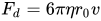
The centrifugal force is given by the equation: where m is the excess mass of the particle over and above the mass of an equivalent volume of the fluid in which the particle is situated (see Archimedes' principle) and r is the distance of the particle from the axis of rotation. When the two opposing forces, viscous and centrifugal, balance, the particle moves at constant (terminal) velocity. The terminal velocity for a spherical particle is given by the equation:

Rearranging this equation gives the final formula:
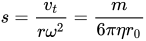
The sedimentation coefficient has units of time, expressed in svedbergs. One svedberg is 10−13 s. The sedimentation coefficient normalizes the sedimentation rate of a particle to its applied acceleration. The result no longer depends on acceleration, but only on the properties of the particle and the fluid in which it is suspended. Sedimentation coefficients quoted in literature usually pertain to sedimentation in water at 20 °C.

The sedimentation coefficient is in fact the amount of time it would take the particle to reach its terminal velocity under the given acceleration if there were no drag.

The above equation shows that s is proportional to m and inversely proportional to r0. Also for non-spherical particles of a given shape, s is proportional to m and inversely proportional to some characteristic dimension with units of length.

For a given shape, m is proportional to the size to the third power, so larger, heavier particles sediment faster and have higher svedberg, or s, values. Sedimentation coefficients are, however, not additive. When two particles bind together, the shape will be different from the shapes of the original particles. Even if the shape were the same, the ratio of excess mass to size would not be equal to the sum of the ratios for the starting particles. Thus, when measured separately they have svedberg values that do not add up to that of the bound particle. For example ribosomes are typically identified by their sedimentation coefficient. The 70 S ribosome from bacteria has a sedimentation coefficient of 70 svedberg, although it is composed of a 50 S subunit and a 30 S subunit.

Dependence on concentration

[edit]

The sedimentation coefficient is typically dependent on the concentration of the solute (i.e. a macromolecular solute such as a protein). Despite 80+ years of study, there is not yet a consensus on the way to perfectly model this relationship while also taking into account all possible non-ideal terms to account for the diverse possible sizes, shapes, and densities of molecular solutes.[2] But in most simple cases, one of two equations can be used to describe the relationship between the sedimentation coefficient and the solute concentration:

  • denotes the sedimentation coefficient of the solute at "infinite" dilution
  • s denotes the solute's sedimentation coefficient at a given concentration.
  • ks, sometimes called the “Gralen coefficient” (after its use in the PhD thesis of the biochemist Nils Gralén), varies based on the shape & dynamics of the solute in question (including its propensity for self-to-self association, aggregation, or oligomerization). Generally speaking, it is about 0.008 L/g (mL/mg) for a typical globular protein.
  • c is the concentration of the protein, in the reciprocal units to ks.

For compact and symmetrical macromolecular solutes (i.e. globular proteins), a weaker dependence of the sedimentation coefficient vs concentration allows adequate accuracy through an approximated form of the previous equation:[2][3]

During a single ultracentrifuge experiment, the sedimentation coefficient of compounds with a significant concentration dependence changes over time. Using the differential equation for the ultracentrifuge, s may be expressed as following power series in time for any particular relation between s and c.  

  • st is the sedimentation coefficient at time t
  • si is the sedimentation coefficient corresponding to the concentration of the initial solution.[4]

See also

[edit]

References

[edit]
[edit]
Revisions and contributorsEdit on WikipediaRead on Wikipedia
from Grokipedia
The sedimentation coefficient, denoted as s, is a fundamental biophysical parameter that quantifies the rate at which a macromolecule or particle sediments under the influence of a centrifugal field in analytical ultracentrifugation (AUC). It is defined as the ratio of the sedimentation velocity (v) to the centrifugal acceleration (ω²r), where ω is the angular velocity and r is the radial distance from the axis of rotation, yielding the equation s = v / (ω²r). Expressed in Svedberg units (S), with 1 S equivalent to 10⁻¹³ seconds, the sedimentation coefficient serves as a characteristic property of biological macromolecules, reflecting their size, shape, and hydrodynamic behavior in solution.[1][2] Named after the Swedish chemist Theodor Svedberg, who invented the ultracentrifuge in the 1920s and received the Nobel Prize in Chemistry in 1926 for this work, the sedimentation coefficient enables precise characterization of biomolecular properties without requiring chemical modification or immobilization. Its value is influenced by several factors, including the macromolecule's molar mass (M), partial specific volume (), the solvent's density (ρ) and viscosity (η), and the translational friction coefficient (f), as described by the relation s = M(1 - ρ) / (NAf), where NA is Avogadro's number. To standardize measurements across varying experimental conditions, the observed sexp is corrected to s20,w at 20°C in water, using the formula s20,w = sexp × (η / η20,w) × ((1 - ρ20,w) / (1 - ρ)).[1][2] In practice, sedimentation coefficients are determined through sedimentation velocity experiments in AUC, where the movement of concentration boundaries is monitored optically (e.g., via absorbance or interference) and fitted to the Lamm equation, which models the radial distribution of solute concentration over time. This approach allows for the resolution of heterogeneous samples into distributions of s values, providing insights into molecular weight, oligomeric state, and conformational changes. For instance, ribosomal subunits are classically identified by their s values, such as the 30S and 50S prokaryotic subunits, while proteins like hemoglobin exhibit s ≈ 4.5 S.[1][2] The sedimentation coefficient's significance extends to studying biomolecular interactions, including self-association, hetero-complex formation, and ligand binding, under near-native conditions, making it indispensable in biochemistry for purity assessment, aggregation detection, and therapeutic protein development. Advanced computational tools, such as SEDFIT and SEDPHAT, further enhance analysis by accounting for diffusion and non-ideality, enabling high-resolution c(s) distributions even for complex systems like membrane proteins or amyloid fibrils. Despite its sensitivity to experimental variables, the sedimentation coefficient remains a cornerstone of hydrodynamic studies, complemented by techniques like dynamic light scattering for comprehensive characterization.[1][2]

Definition and Fundamentals

Definition

The sedimentation coefficient, denoted as $ s $, is defined as the ratio of a particle's terminal sedimentation velocity $ v_t $ to the applied centrifugal acceleration $ a $, expressed as $ s = \frac{v_t}{a} $, where $ a = \omega^2 r $, with $ \omega $ representing the angular velocity of the rotor and $ r $ the radial distance from the axis of rotation.[3] This parameter characterizes the sedimentation behavior of macromolecules or particles in a centrifugal field, reflecting their intrinsic properties such as size, shape, and density relative to the solvent.[4] Physically, $ s $ quantifies the rate at which particles migrate toward the bottom of a centrifuge tube under the influence of the centrifugal force, normalized to the strength of the field, which makes it independent of the specific rotor speed or instrument settings.[3] The term "Svedberg," abbreviated as S, serves as the unit for this coefficient, where 1 S equals $ 10^{-13} $ seconds, honoring the pioneering work of Theodor Svedberg, who developed analytical ultracentrifugation in the 1920s to study colloidal particles and macromolecules.[5] A representative example is the prokaryotic ribosome, which sediments at 70 S, indicating its relatively large size and compact structure compared to smaller macromolecules like proteins that typically exhibit coefficients in the range of 1–10 S.[6]

Units and Notation

The sedimentation coefficient, denoted as $ s $, is expressed in units of time, specifically seconds, as it represents the ratio of a particle's sedimentation velocity to the applied centrifugal acceleration. This dimensional form arises historically from adaptations of Stokes' law, which originally described sedimentation under gravitational acceleration where the coefficient $ s = v / g $ yields units of time, with $ v $ as velocity (length per time) and $ g $ as acceleration (length per time squared); in ultracentrifugation, $ g $ is replaced by $ \omega^2 r $ (angular velocity squared times radial distance), preserving the time dimension.[7] The standard unit for reporting sedimentation coefficients is the Svedberg (S), named after Theodor Svedberg, where 1 S = $ 10^{-13} $ seconds; this scale was chosen because typical coefficients for macromolecules fall in the range of 1 to 100 S, making the numerical values convenient for experimental reporting. In SI units, the sedimentation coefficient thus equates to $ 10^{-13} $ s per Svedberg, emphasizing its temporal nature rather than a direct measure of size or mass. This unit is standardized for aqueous solutions at 20°C in water, ensuring comparability across experiments by normalizing for solvent density and viscosity effects.[7][8] Common notations distinguish between observed and corrected values: $ s $ denotes the experimentally observed sedimentation coefficient under specific conditions, while $ s_{20,w} $ refers to the value corrected to standard conditions of 20°C in water to account for temperature and solvent variations. Additionally, $ s^\circ $ (or $ s^0 $) specifically indicates the sedimentation coefficient extrapolated to infinite dilution, eliminating concentration-dependent interactions between solute molecules. These notations facilitate precise communication in biophysical analyses, such as those involving proteins or nucleic acids.[3][9]

Theoretical Principles

Sedimentation Velocity

The terminal sedimentation velocity, vtv_t, represents the constant speed attained by a particle sedimenting through a solvent under the influence of an applied acceleration, once the driving force balances the opposing frictional drag.28003-1) This steady-state motion occurs after an initial acceleration phase, where the particle reaches a uniform velocity independent of time.28003-1) In analytical ultracentrifugation, the sedimentation process is driven by a centrifugal field rather than Earth's gravity, providing much higher accelerations for studying macromolecules. The centrifugal acceleration a=ω2ra = \omega^2 r acts on the particle, where ω\omega is the angular velocity of the rotor and rr is the radial distance from the axis of rotation.28003-1) This contrasts with gravitational sedimentation, where acceleration is limited to g9.8m/s2g \approx 9.8 \, \mathrm{m/s^2}, as the centrifugal approach enables precise measurement of sedimentation rates for large biomolecules that would otherwise sediment too slowly.28003-1) The frictional drag opposing sedimentation is quantified by Stokes' law for spherical particles, giving the frictional coefficient f=6πηr0f = 6 \pi \eta r_0, where η\eta is the solvent viscosity and r0r_0 is the particle's hydrodynamic radius. At terminal velocity, this drag force fvtf v_t equals the net driving force. Additionally, buoyancy reduces the effective mass of the particle due to solvent displacement, expressed as m(1vˉρ)m(1 - \bar{v} \rho), where mm is the particle mass, vˉ\bar{v} is the partial specific volume, and ρ\rho is the solvent density.28003-1) This correction accounts for the buoyant force, ensuring the velocity reflects the particle's intrinsic properties rather than solvent interactions alone. The sedimentation coefficient ss normalizes vtv_t by the acceleration aa, providing a characteristic parameter for the particle.28003-1)

Derivation of the Coefficient

The derivation of the sedimentation coefficient begins with the force balance on a sedimenting particle in a centrifugal field, where the particle achieves a constant terminal velocity vtv_t when the net driving force equals the opposing frictional force. The driving force arises from the centrifugal force minus the buoyant force, given by m(1vˉρ)ω2rm (1 - \bar{v} \rho) \omega^2 r, where mm is the mass of the particle, vˉ\bar{v} is the partial specific volume, ρ\rho is the solvent density, ω\omega is the angular velocity, and rr is the radial distance from the axis of rotation.[10] The opposing frictional force is fvtf v_t, with ff as the frictional coefficient. At equilibrium, m(1vˉρ)ω2r=fvtm (1 - \bar{v} \rho) \omega^2 r = f v_t, yielding the terminal velocity vt=m(1vˉρ)ω2rfv_t = \frac{m (1 - \bar{v} \rho) \omega^2 r}{f}.[4] The sedimentation coefficient ss is defined as the ratio of the terminal velocity to the centrifugal acceleration, s=vtω2rs = \frac{v_t}{\omega^2 r}. Substituting the expression for vtv_t gives the fundamental form s=m(1vˉρ)fs = \frac{m (1 - \bar{v} \rho)}{f}.[3] This equation, originally developed by Svedberg in the context of ultracentrifugation, normalizes the sedimentation behavior independent of the instrument's speed and position.[10] For spherical particles under low Reynolds number conditions, Stokes' law provides the frictional coefficient as f=6πηr0f = 6 \pi \eta r_0, where η\eta is the solvent viscosity and r0r_0 is the hydrodynamic radius. Substituting this into the expression for ss results in s=m(1vˉρ)6πηr0s = \frac{m (1 - \bar{v} \rho)}{6 \pi \eta r_0}.[4] This form assumes spherical geometry, laminar flow (low Reynolds number), negligible diffusion, and absence of particle interactions.[3] To relate the sedimentation coefficient to molecular properties, express the particle mass as m=MNAm = \frac{M}{N_A}, where MM is the molar mass and NAN_A is Avogadro's number. The resulting equation is sM(1vˉρ)NA6πηr0s \approx \frac{M (1 - \bar{v} \rho)}{N_A 6 \pi \eta r_0}, which links sedimentation behavior directly to the molar mass of the macromolecule.[4] This approximation holds under the stated assumptions and facilitates the characterization of molecular size and shape.[3]

Experimental Methods

Ultracentrifugation Techniques

Analytical ultracentrifugation (AUC) is a primary technique for measuring sedimentation coefficients, employing high-speed rotors that generate centrifugal forces up to approximately 300,000 times gravity at speeds of 60,000 rpm to induce sedimentation of macromolecules in solution.[11] Samples are placed in specialized sector-shaped cells within the rotor to minimize convection and wall effects, ensuring that sedimenting boundaries move radially outward without mixing due to density differences.[12] Optical detection systems, such as absorbance at UV-visible wavelengths or Rayleigh interference optics, monitor the migration of these boundaries in real time, allowing direct observation of sedimentation behavior without disrupting the experiment.[13] In AUC protocols, rotors are accelerated stepwise to the target speed to prevent initial turbulence and ensure stable sedimentation, with typical run times ranging from several hours to multiple days depending on the particle size and desired boundary resolution.[11] This setup enables the determination of sedimentation coefficients by tracking the velocity of boundaries under controlled centrifugal fields, providing insights into macromolecular size, shape, and interactions.[1] Preparative ultracentrifugation complements AUC by focusing on large-scale isolation of particles based on their sedimentation coefficients, often using fixed-angle or swinging-bucket rotors to fractionate samples into distinct layers.[14] A common method involves sucrose density gradient centrifugation, where a preformed gradient of increasing sucrose concentration separates components by their sedimentation rates, with faster-sedimenting species (higher s values) penetrating deeper into the gradient before equilibrium is reached.[15] Fractions are collected post-run for further analysis, making this technique valuable for purifying biomolecules like proteins and viruses.[16] The foundational development of ultracentrifugation traces back to Theodor Svedberg, who constructed the first oil-turbine-driven ultracentrifuge in 1924, capable of 12,000 rpm, and refined it in the 1920s to study colloidal particles, earning the 1926 Nobel Prize in Chemistry for this work on disperse systems.[10] Modern advancements since the early 2000s include fluorescence detection systems integrated into AUC, which use laser excitation and photomultiplier tubes to label and track specific macromolecules at lower concentrations with higher sensitivity than traditional optics.[17]

Data Acquisition and Analysis

In analytical ultracentrifugation for determining sedimentation coefficients, raw data are acquired through optical scanning systems that monitor the movement of solute boundaries in the sample cell. These systems produce boundary patterns revealing a sedimenting boundary, where macromolecules migrate toward the cell bottom under centrifugal force, and a non-sedimenting plateau representing the depleted region near the meniscus. Traditional detection methods include schlieren optics, which visualize refractive index gradients as deflections in a light beam, and Rayleigh interference optics, which quantify concentration via phase shifts in interference fringes corresponding to solute displacement.[18][19] The sedimentation coefficient $ s $ is derived from the radial position $ x $ of the boundary as a function of time $ t $, using the relation
s=1ω2xdxdt, s = \frac{1}{\omega^2 x} \frac{dx}{dt},
where $ \omega $ denotes the angular velocity of the rotor. This expression arises from the balance of centrifugal and frictional forces on the sedimenting species. For cases where boundary motion is non-linear—due to initial acceleration or varying field strength—numerical integration techniques approximate the path by solving the underlying Lamm equation, which governs the spatiotemporal concentration profile.[19][20] Analysis of these datasets relies on specialized software to fit theoretical models to the observed scans and extract $ s $. SEDFIT, developed for sedimentation velocity experiments, employs finite-element solutions to the Lamm equation for generating sedimentation coefficient distributions $ c(s) $, enabling deconvolution of sample heterogeneity and correction for diffusion-induced broadening. SEDPHAT extends this capability with global nonlinear least-squares fitting across multiple datasets or detection wavelengths, facilitating multi-signal integration for complex systems like interacting proteins. These tools typically achieve sedimentation coefficient precisions of ±1-5% through robust statistical optimization.[20] Significant error sources in $ s $ determination include diffusion, which progressively broadens the boundary and biases velocity estimates if unaccounted for, and inaccuracies in the partial specific volume $ \bar{v} $, which influences the buoyant correction in the effective mass. Least-squares fitting in SEDFIT and SEDPHAT mitigates these by simultaneously optimizing for sedimentation and diffusion parameters, though experimental signal-to-noise ratios remain critical for precision.[20]

Influencing Factors

Concentration Dependence

In non-ideal solutions, the observed sedimentation coefficient ss decreases with increasing solute concentration cc primarily due to hydrodynamic interactions among macromolecules, which hinder their motion, and backflow effects where the solvent displaced by sedimenting particles creates opposing flows.[21] These non-ideality effects become significant at concentrations above approximately 1 mg/mL for typical proteins, complicating the interpretation of sedimentation velocity data without corrections.[21] A common empirical approach to quantify this dependence is the linear approximation s=s(1ksc)s = s^\circ (1 - k_s c), where ss^\circ is the sedimentation coefficient at infinite dilution and ksk_s is the Gralén coefficient, a measure of non-ideality typically ranging from 0.007 to 0.008 L/g for globular proteins.[21] This model, first established in the 1940s through studies on cellulose derivatives and viruses, provides a practical first-order correction for moderate concentrations.[21] For higher concentrations, advanced models incorporate non-linear terms via virial expansions, such as s=s(1ksc+βc2+)s = s^\circ (1 - k_s c + \beta c^2 + \cdots), where higher-order coefficients account for multi-body interactions and are linked to the osmotic second virial coefficient B2B_2 through relations like ks2B2MkDk_s \approx 2 B_2 M - k_D, with kDk_D being the corresponding diffusion non-ideality coefficient.[22] These expansions, building on 1940s theoretical frameworks including hydrodynamic corrections for particle interactions, enable more accurate modeling in concentrated solutions.[21] To obtain ss^\circ, experimental data from multiple concentrations are analyzed using extrapolation techniques, such as plotting 1/s1/s versus cc, which yields a straight line with intercept 1/s1/s^\circ and slope related to ksk_s.[21] This correction is essential for reliable molecular weight estimation via the Svedberg equation, as uncorrected ss values can lead to systematic errors in macromolecular characterization.[21]

Solvent and Temperature Effects

The sedimentation coefficient ss is inversely proportional to the solvent viscosity η\eta, as frictional drag on the sedimenting particle increases with higher η\eta, slowing the sedimentation rate.[23] Additionally, solvent density ρ\rho modulates the buoyancy term (1vˉρ)(1 - \bar{v} \rho), where vˉ\bar{v} is the partial specific volume of the solute; higher ρ\rho enhances buoyancy, reducing ss.[3] These effects are accounted for in the standard Svedberg relation s=m(1vˉρ)fs = \frac{m (1 - \bar{v} \rho)}{f}, with the frictional coefficient ff proportional to η\eta.[23] Temperature influences ss primarily through its impact on solvent viscosity and density, both of which vary significantly. Viscosity decreases with rising temperature, accelerating sedimentation; for water, η1.00\eta \approx 1.00 cP at 20°C but drops to 0.65\approx 0.65 cP at 40°C.[24] Density also declines slightly (e.g., from 0.998 g/cm³ at 20°C to 0.992 g/cm³ at 40°C), further increasing the buoyancy term.[25] Corrections for temperature are exponential due to the nonlinear viscosity-temperature relationship, typically transforming observed sT,Bs_{T,B} (at temperature TT in buffer BB) to standard conditions via
s20,w=sT,B(1vˉρ)20,wηT,B(1vˉρ)T,Bη20,w, s_{20,w} = s_{T,B} \frac{(1 - \bar{v} \rho)_{20,w} \, \eta_{T,B}}{(1 - \bar{v} \rho)_{T,B} \, \eta_{20,w}},
where subscripts denote water (ww) at 20°C.[3] Solvent composition alters ss beyond pure water, particularly in non-aqueous or mixed media used for specialized studies. In deuterated water (D₂O), higher density (≈1.105 g/cm³ vs. 0.998 g/cm³ for H₂O at 20°C) reduces ss via enhanced buoyancy, enabling precise vˉ\bar{v} measurements through comparative sedimentation equilibrium.[26] This isotope substitution is valuable for neutron scattering contrast but requires corrections for the ≈10% slower sedimentation in D₂O. Cosolvents like urea modify both η\eta and ρ\rho, with 8 M urea increasing η\eta by ≈1.45-fold and ρ\rho by ≈8% relative to water, thus decreasing ss.[27] Urea also perturbs vˉ\bar{v} slightly (e.g., by 0.01–0.02 cm³/g for proteins), reflecting hydration changes during denaturation.[28] Standardization to s20,ws_{20,w} ensures comparability across experiments, using literature-derived factors for η\eta and ρ\rho. Seminal tables from Kawahara and Tanford (1966) provide empirical polynomials, such as η/η0=1+3.75×102C+3.15×103C2+3.10×104C3\eta/\eta_0 = 1 + 3.75 \times 10^{-2}C + 3.15 \times 10^{-3}C^2 + 3.10 \times 10^{-4}C^3 for urea (C in M), enabling precise corrections in denaturant solutions.[27] Modern computational tools, like SEDNTERP software, automate these using updated databases for diverse solvents, incorporating compressibility and cosolvent interactions for accuracy within 1–2%.[29]

Applications

Macromolecular Characterization

The sedimentation coefficient, ss, serves as a key parameter in characterizing the physicochemical properties of synthetic and natural macromolecules, such as proteins, nucleic acids, and polymers, by providing insights into their size, shape, and interactions in solution. Measured via analytical ultracentrifugation (AUC), ss reflects the rate at which a macromolecule sediments under centrifugal force, influenced by its mass, buoyancy, and frictional drag. This enables precise determination of molecular attributes without relying on matrix-based separation techniques, making it particularly valuable for studying isolated macromolecules in their native or near-native states.[30] One primary application is the estimation of molecular weight (MM) through the Svedberg equation:
M=sRTD(1vˉρ) M = \frac{s R T}{D (1 - \bar{v} \rho)}
where RR is the gas constant, TT is the absolute temperature, DD is the diffusion coefficient, vˉ\bar{v} is the partial specific volume, and ρ\rho is the solvent density. This relationship combines sedimentation velocity data (ss) with diffusion measurements to yield absolute molar mass, assuming knowledge of vˉ\bar{v} and ρ\rho, which are often determined experimentally or estimated from amino acid composition for proteins. For instance, this approach has been instrumental in confirming the molecular weights of globular proteins like hemoglobin at approximately 64,500 Da, using ss values around 4.5 S combined with corresponding DD.[31][10] The sedimentation coefficient also reveals macromolecular shape and conformation via the frictional ratio, f/f0f/f_0, defined as the ratio of the actual frictional coefficient (ff) to that of a hypothetical anhydrous sphere of equivalent mass (f0f_0). A value of f/f0=1f/f_0 = 1 corresponds to a perfect sphere, while f/f0>1f/f_0 > 1 indicates deviations due to non-sphericity, hydration, or asymmetry; typical globular proteins exhibit f/f01.2f/f_0 \approx 1.2, elongated proteins or DNA up to 2.0–3.0, and flexible polymers even higher. This parameter is derived from ss and MM using f/f0=RTM(1vˉρ)s/f0f/f_0 = \frac{R T}{M (1 - \bar{v} \rho) s} / f_0, allowing assessment of conformational changes or compactness in proteins, rigid rod-like DNA structures, and coiled synthetic polymers like polystyrene.[32][33] Oligomerization states can be detected through shifts in ss, as association increases effective mass while frictional effects moderate the change; for example, dimerization typically elevates ss by a factor of 1.4–1.6 relative to the monomer, rather than the ideal factor of 2, due to shape alterations and hydrodynamic interactions. This concentration-dependent variation in ss enables monitoring of self-association equilibria in proteins and polymers, distinguishing monomers from dimers or higher oligomers without assuming ideality.[34] Representative examples illustrate these applications: globular proteins like hemoglobin sediment at 4.5 S, reflecting their compact tetrahedral structure with f/f01.25f/f_0 \approx 1.25, while viral capsids, such as adeno-associated virus (AAV) particles, show s95s \approx 95 S for filled capsids versus 65 S for empty ones, highlighting mass and density differences. Integration of ss distributions from AUC further assesses polydispersity in heterogeneous samples, such as polymer mixtures or protein aggregates, by resolving multiple species and quantifying their relative abundances to evaluate sample homogeneity.[10][35][36]

Biological and Biomedical Uses

In biological research, sedimentation coefficients are essential for analyzing ribosomal assemblies and their associated polysomes, which are key to protein synthesis. Bacterial ribosomes sediment at 70S, consisting of 50S and 30S subunits, while eukaryotic cytoplasmic ribosomes sediment at 80S, with 60S and 40S subunits.[37] Sucrose density gradient centrifugation exploits these distinct sedimentation profiles to isolate polysomes—multiple ribosomes bound to mRNA—from cellular extracts, enabling studies of translation regulation and ribosome biogenesis in organisms like Synechocystis sp.[38][39] Sedimentation analysis also characterizes viral particles and biomimetic nanoparticles for biomedical applications. For instance, HIV-1 virus-like particles, modeling mature capsid structures, exhibit sedimentation coefficients around 200–300 S in analytical ultracentrifugation, aiding in the assessment of assembly and maturation states critical for antiviral drug development. Density gradient methods, such as sucrose gradients, size nanoparticle-based drug delivery vehicles like silver or lipid nanoparticles by their sedimentation rates, which depend on particle mass and shape, facilitating optimization for targeted therapies.[40][41] In studies of protein complexes, sedimentation coefficients reveal assembly dynamics relevant to disease. The 26S proteasome, named for its sedimentation coefficient, degrades ubiquitinated proteins and its dysfunction contributes to aggregate accumulation; its ~26 S value confirms the integration of a 20S core with 19S regulatory caps.[42] Spliceosomes, dynamic RNA-protein machines, form complexes sedimenting at 40–60 S depending on the assembly stage, such as the 35S tri-snRNP intermediate or the 60S active spliceosome.[43][44] In Alzheimer's disease, sedimentation velocity ultracentrifugation profiles amyloid-β aggregates, distinguishing oligomeric species (e.g., ~10–20 S for small oligomers) from fibrils, linking their size distribution to neurotoxicity.[45][46] Recent advancements integrate sedimentation analysis with cryo-electron microscopy (cryo-EM) and mass spectrometry for comprehensive structural biology of biological assemblies. Sedimentation velocity provides purity and heterogeneity data to select optimal samples for cryo-EM, as in characterizing ribosome or viral complexes before high-resolution imaging.[47] Hybrid approaches combine sedimentation with mass spectrometry to map protein stoichiometries in complexes, such as detecting co-sedimenting partners in proteomic workflows.[48] In therapeutics, post-2010 applications include assessing vaccine purity; for example, sedimentation velocity quantifies empty versus full capsids in enterovirus A71 vaccines (e.g., ~160 S for full particles), ensuring potency and safety in formulations.[49] Similar methods evaluate adeno-associated virus vectors for gene therapy, distinguishing genomic-filled particles (~120–140 S) from empty ones.[50]

References

User Avatar
No comments yet.