Recent from talks
Contribute something
Nothing was collected or created yet.
Absorbance
View on WikipediaThis article may be too technical for most readers to understand. (July 2025) |
In spectroscopy, absorbance is a logarithmic value which describes the portion of a beam of light which does not pass through a sample. While name refers to the absorption of light, other interactions of light with a sample (reflection, scattering) may also contribute attenuation of the beam passing through the sample. The term "internal absorbance" is sometimes used to describe beam attenuation caused by absorption, while "attenuance" or "experimental absorbance" can be used to emphasize that beam attenuation can be caused by other phenomena.[1]
History and uses of the term absorbance
[edit]Beer-Lambert law
[edit]The roots of the term absorbance are in the Beer–Lambert law (or Beer's law). As light moves through a medium, it will become dimmer as it is being "extinguished". Bouguer recognized that this extinction (now often called attenuation) was not linear with distance traveled through the medium, but related by what we now refer to as an exponential function.
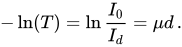
If is the intensity of the light at the beginning of the travel and is the intensity of the light detected after travel of a distance , the fraction transmitted, , is given by
where is called an attenuation constant (a term used in various fields where a signal is transmitted though a medium) or coefficient. The amount of light transmitted is falling off exponentially with distance. Taking the natural logarithm in the above equation, we get
For scattering media, the constant is often divided into two parts,[2] , separating it into a scattering coefficient and an absorption coefficient , obtaining
If a size of a detector is very small compared to the distance traveled by the light, any light that is scattered by a particle, either in the forward or backward direction, will not strike the detector. (Bouguer was studying astronomical phenomena, so this condition was met.) In such case, a plot of as a function of wavelength will yield a superposition of the effects of absorption and scatter. Because the absorption portion is more distinct and tends to ride on a background of the scatter portion, it is often used to identify and quantify the absorbing species. Consequently, this is often referred to as absorption spectroscopy, and the plotted quantity is called "absorbance", symbolized as . Some disciplines by convention use decadic (base 10) absorbance rather than Napierian (natural) absorbance, resulting in: (with the subscript 10 usually not shown).
Absorbance for non-scattering samples
[edit]Within a homogeneous medium such as a solution, there is no scattering. For this case, researched extensively by August Beer, the concentration of the absorbing species follows the same linear contribution to absorbance as the path-length. Additionally, the contributions of individual absorbing species are additive. This is a very favorable situation, and made absorbance an absorption metric far preferable to absorption fraction (absorptance). This is the case for which the term "absorbance" was first used.
A common expression of the Beer's law relates the attenuation of light in a material as: , where is the absorbance; is the molar attenuation coefficient or absorptivity of the attenuating species; is the optical path length; and is the concentration of the attenuating species.
Absorbance for scattering samples
[edit]For samples which scatter light, absorbance is defined as "the negative logarithm of one minus absorptance (absorption fraction: ) as measured on a uniform sample".[3] For decadic absorbance,[1] this may be symbolized as . If a sample both transmits and remits light, and is not luminescent, the fraction of light absorbed (), remitted (), and transmitted () add to 1: . Note that , and the formula may be written as . For a sample which does not scatter, , and , yielding the formula for absorbance of a material discussed below.
Even though this absorbance function is very useful with scattering samples, the function does not have the same desirable characteristics as it does for non-scattering samples. There is, however, a property called absorbing power which may be estimated for these samples. The absorbing power of a single unit thickness of material making up a scattering sample is the same as the absorbance of the same thickness of the material in the absence of scatter.[4]
Optics
[edit]In optics, absorbance or decadic absorbance is the common logarithm of the ratio of incident to transmitted radiant power through a material, and spectral absorbance or spectral decadic absorbance is the common logarithm of the ratio of incident to transmitted spectral radiant power through a material. Absorbance is dimensionless, and in particular is not a length, though it is a monotonically increasing function of path length, and approaches zero as the path length approaches zero.
Mathematical definitions
[edit]Absorbance of a material
[edit]The absorbance of a material, denoted A, is given by[5]
where
- is the radiant flux transmitted by that material,
- is the radiant flux received by that material, and
- is the transmittance of that material.
Absorbance is a dimensionless quantity. Nevertheless, the absorbance unit or AU is commonly used in ultraviolet–visible spectroscopy and its high-performance liquid chromatography applications, often in derived units such as the milli-absorbance unit (mAU) or milli-absorbance unit-minutes (mAU×min), a unit of absorbance integrated over time.[6]
Absorbance is related to optical depth by
where τ is the optical depth.
Spectral absorbance
[edit]Spectral absorbance in frequency and spectral absorbance in wavelength of a material, denoted Aν and Aλ respectively, are given by[5]
where
- is the spectral radiant flux in frequency transmitted by that material;
- is the spectral radiant flux in frequency received by that material;
- is the spectral transmittance in frequency of that material;
- is the spectral radiant flux in wavelength transmitted by that material;
- is the spectral radiant flux in wavelength received by that material; and
- is the spectral transmittance in wavelength of that material.
Spectral absorbance is related to spectral optical depth by
where
- τν is the spectral optical depth in frequency, and
- τλ is the spectral optical depth in wavelength.
Although absorbance is properly unitless, it is sometimes reported in "absorbance units", or AU. Many people, including scientific researchers, wrongly state the results from absorbance measurement experiments in terms of these made-up units.[7]
Relationship with attenuation
[edit]Attenuance
[edit]Absorbance is a number that measures the attenuation of the transmitted radiant power in a material. Attenuation can be caused by the physical process of "absorption", but also reflection, scattering, and other physical processes. Absorbance of a material is approximately equal to its attenuance[clarification needed] when both the absorbance is much less than 1 and the emittance of that material (not to be confused with radiant exitance or emissivity) is much less than the absorbance. Indeed,
where
- is the radiant power transmitted by that material,
- is the radiant power attenuated by that material,
- is the radiant power received by that material, and
- is the radiant power emitted by that material.
This is equivalent to
where
- is the transmittance of that material,
- is the attenuance of that material,
- is the emittance of that material.
According to the Beer's law, T = 10−A, so
and finally
Attenuation coefficient
[edit]Absorbance of a material is also related to its decadic attenuation coefficient by
where
- l is the thickness of that material through which the light travels, and
- a(z) is the decadic attenuation coefficient of that material at z.
If a(z) is uniform along the path, the attenuation is said to be a linear attenuation, and the relation becomes
Sometimes the relation is given using the molar attenuation coefficient of the material, that is its attenuation coefficient divided by its molar concentration:
where
- ε is the molar attenuation coefficient of that material, and
- c(z) is the molar concentration of that material at z.
If c(z) is uniform along the path, the relation becomes
The use of the term "molar absorptivity" for molar attenuation coefficient is discouraged.[5]
Use in Analytical Chemistry
[edit]Absorbance is a widely used measurement in quantitative absorption spectroscopy. While the attenuation of a light beam can be also be described by transmittance (the ratio of transmitted incident light), the logarithmic formulation of absorbance is convenient for sample quantification: under conditions where the Beer's law is valid, absorbance will be linearly proportional to sample thickness and the concentration of the absorptive species.[8]
For quantitative purposes, absorbance is often measured on a sample solution held in a cuvette, where the solution is sufficiently dilute that the linear relationship of the Beer's law holds. The cuvette provides a known and consistent path length for the light beam passing through the sample.[8] Measuring first the absorbance of the cuvette and a "blank" solution containing no analyte, differences in absorbance between samples can be used to quantity the analyte. Spectrometers generally measure absorbance separately for a range of wavelength: this data is then plotted as absorbance vs. wavelength.[9]
Shade number
[edit]Some filters, notably welding glass, are rated by shade number (SN), which is 7/3 times the absorbance plus one:[10]
For example, if the filter has 0.1% transmittance (0.001 transmittance, which is 3 absorbance units), its shade number would be 8.
See also
[edit]References
[edit]- ^ a b Bertie, John E. (2006). "Glossary of Terms used in Vibrational Spectroscopy". In Griffiths, Peter R (ed.). Handbook of Vibrational Spectroscopy. doi:10.1002/0470027320.s8401. ISBN 0471988472.
- ^ Van de Hulst, H. C. (1957). Light Scattering by Small Particles. New York: John Wiley and Sons. ISBN 9780486642284.
{{cite book}}: ISBN / Date incompatibility (help) - ^ IUPAC, Compendium of Chemical Terminology, 5th ed. (the "Gold Book") (2025). Online version: (2006–) "decadic absorbance". doi:10.1351/goldbook.D01536
- ^ Dahm, Donald; Dahm, Kevin (2007). Interpreting Diffuse Reflectance and Transmittance: A Theoretical Introduction to Absorption Spectroscopy of Scattering Materials. doi:10.1255/978-1-901019-05-6. ISBN 9781901019056.
- ^ a b c IUPAC, Compendium of Chemical Terminology, 5th ed. (the "Gold Book") (2025). Online version: (2006–) "Absorbance". doi:10.1351/goldbook.A00028
- ^ GE Health Care (2015). "ÄKTA Laboratory-Scale Chromatography Systems - Instrument Management Handbook". Uppsala: GE Healthcare Bio-Sciences AB. Archived from the original on 2020-03-15.
- ^ Kamat, Prashant; Schatz, George C. (2013). "How to Make Your Next Paper Scientifically Effective". J. Phys. Chem. Lett. 4 (9): 1578–1581. Bibcode:2013JPCL....4.1578K. doi:10.1021/jz4006916. PMID 26282316.
- ^ a b Ham, Bryan M.; MaHam, Aihui (2024). Analytical chemistry: a toolkit for scientists and laboratory technicians (2nd ed.). Hoboken, New Jersey: John Wiley & Sons, Inc. pp. 235–237. ISBN 978-1-119-89445-2.
- ^ Reusch, William. "Empirical Rules for Absorption Wavelengths of Conjugated Systems". Retrieved 2014-10-29.
- ^ Russ Rowlett (2004-09-01). "How Many? A Dictionary of Units of Measurement". Unc.edu. Archived from the original on 1998-12-03. Retrieved 2010-09-20.
Absorbance
View on GrokipediaDefinition and Basic Principles
Mathematical Definition
Absorbance, denoted as , is mathematically defined as the negative base-10 logarithm of the transmittance , expressed by the equation where transmittance is the ratio of the transmitted light intensity to the incident light intensity , or .[7] This definition quantifies the fraction of light absorbed by a sample in a dimensionless manner, with absorbance values typically ranging from 0 (no absorption) to higher numbers indicating greater absorption.[7] In optics and chemistry, the common logarithm (base 10) is conventionally used for absorbance to align with practical measurement scales in spectrophotometry.[7] In contrast, physics contexts often employ the natural logarithm (base ) to define related quantities like optical depth , which is equivalent to .[8] Absorbance is a unitless quantity, though it is commonly reported in absorbance units (AU) for clarity in spectroscopic data.[7] For example, if transmittance (indicating 10% of the incident light is transmitted), then AU, corresponding to 90% absorption of the incident light.[7] This basic metric forms the foundation for applications such as the Beer-Lambert law, which relates absorbance to sample concentration and path length.[7]Beer-Lambert Law
The Beer-Lambert Law provides the foundational quantitative relationship in absorbance spectroscopy, stating that the absorbance of a solution is directly proportional to the concentration of the absorbing species and the path length through which the light travels. This law is mathematically expressed as where is the absorbance (dimensionless), is the molar absorptivity (in L mol⁻¹ cm⁻¹), is the optical path length (in cm), and is the concentration of the analyte (in mol L⁻¹). The molar absorptivity is a constant specific to the substance and wavelength, reflecting its inherent ability to absorb light.[9][10] For the law to hold, several key assumptions must be met: the solution must be homogeneous and dilute to ensure non-interacting absorbing molecules; the incident light must be monochromatic; and there should be no scattering, fluorescence, or significant changes in refractive index. These conditions ensure a linear response, enabling reliable quantitative analysis.[9][10] Deviations from linearity arise at high concentrations due to intermolecular interactions that alter the effective absorptivity.[10] As an illustrative calculation, consider a compound with L mol⁻¹ cm⁻¹, cm, and mol L⁻¹; the resulting absorbance is .[9]Historical Development
Origin of the Term
The term "absorbance" emerged in the 1940s among American chemists as a precise descriptor for the logarithmic measure of light absorption in spectroscopic analysis, specifically to supplant "absorptivity" and prevent conflation with the linear absorption coefficient that scales with concentration and path length. This linguistic shift addressed ambiguities in earlier nomenclature, particularly as spectrophotometric techniques advanced rapidly during World War II to support optical research for military applications such as material identification and quality control.[11] Standardization efforts culminated in the 1952 report by the Joint Committee on Nomenclature in Applied Spectroscopy, a collaboration between the Society for Applied Spectroscopy and the American Society for Testing Materials, which formally defined absorbance and promoted its use across scientific literature to ensure consistency in reporting absorption data. The report distinguished absorbance (dimensionless, A = log_{10}(I_0/I)) from related quantities, emphasizing its role in quantitative analysis based on principles predating the term, such as the Beer-Lambert law.[11] Preceding the adoption of "absorbance," practitioners relied on terms like "optical density," coined by Ferdinand Hurter in 1888 as the natural logarithm of opacity (1 - transmittance) and later adapted in bacteriology to quantify microbial turbidity via light scattering. In astronomy, "extinction" had long described the overall diminution of light intensity through interstellar media, encompassing both absorption and scattering effects. These predecessors highlighted the need for a dedicated term focused solely on absorptive processes in solution-based spectroscopy.[12]Evolution in Spectroscopy
Following World War II, the concept of absorbance became integral to ultraviolet-visible (UV-Vis) spectrophotometry, transitioning from manual photometry to automated instruments that facilitated routine quantitative analysis. In the late 1940s and 1950s, instruments like the Cary 11 (introduced in 1947) and Cary 14 (launched in 1954) represented pivotal advancements, as the first commercial recording and double-beam UV-Vis spectrophotometers, respectively. These devices, developed by Applied Physics Corporation (later Cary Instruments), allowed simultaneous measurement of sample and reference beams, minimizing errors from source fluctuations and enabling precise absorbance determinations for applications in chemical analysis.[13][14] The 1960s marked a shift toward digital integration in spectrophotometers, enhancing data accuracy and usability. Early implementations, such as the Librascope Digital Readout Unit coupled with General Electric recording spectrophotometers, automated absorbance data capture and transfer to punched cards for computational processing, reducing manual transcription errors and supporting complex quantitative studies. By the 1980s, absorbance measurements were incorporated into Fourier Transform Infrared (FTIR) spectroscopy, where practical limitations like low sensitivity and solvent interference were overcome, allowing absorbance spectra to probe molecular vibrations for structural analysis in comparative studies with other techniques.[15][16] Absorbance's evolution influenced diverse fields, particularly biochemistry and environmental science. In biochemistry, the A280 method—measuring absorbance at 280 nm due to aromatic amino acids—emerged as a standard for protein quantification, enabling rapid assessments in purification and characterization workflows since the mid-20th century. In environmental monitoring, UV-Vis absorbance spectroscopy expanded post-1950s for detecting pollutants, such as organic contaminants in water through spectral absorbance patterns indicative of composition and sources.[17] A key standardization event occurred in 1972, when the International Union of Pure and Applied Chemistry (IUPAC) recommended adopting "absorbance" over "optical density" to promote clarity and consistency in spectroscopic nomenclature, distinguishing it from scattering effects. This formalization, building on earlier biochemical terminology debates, solidified absorbance as the preferred term for logarithmic light attenuation in non-scattering media.[19]Absorbance in Various Media
Non-Scattering Samples
Non-scattering samples consist of homogeneous liquids or gases that lack turbidity, ensuring that light propagation occurs without deflection by particles or inhomogeneities. In these media, absorbance arises solely from molecular absorption processes, where incident photons excite molecules to higher electronic or vibrational states through specific transitions. This absorption is governed by the interaction of light with individual molecules acting independently, without interference from scattering events.[20] A key feature of non-scattering samples is the strict adherence to the Beer-Lambert law in dilute conditions, where absorbance is directly proportional to the analyte concentration and the optical path length. This linearity facilitates precise quantitative analysis, as the law assumes uniform distribution and negligible inter-molecular effects. For instance, in aqueous dye solutions like those of organic acids used in tropospheric aerosol studies, absorbance measurements reliably quantify concentrations without complications from light redirection. Similarly, gas-phase spectroscopy applies this principle to trace gas detection, such as atmospheric species, where low densities ensure ideal behavior.[20][21][22] Such samples are prevalent in laboratory spectroscopy for their simplicity and accuracy, enabling routine applications in chemical analysis. However, deviations from the Beer-Lambert law can occur at high concentrations due to chemical interactions, including molecular aggregation or dimerization, which alter the effective absorptivity and disrupt linearity. These effects are particularly noted in concentrated dye solutions, where non-additive absorption cross-sections lead to underestimation of absorbance.[20][23]Scattering Samples
In scattering samples, such as turbid suspensions or particulate media, light propagation deviates from the ideal conditions assumed in the basic mathematical definition of absorbance, where scattering confounds direct measurement of absorption by redirecting photons away from the detector path.[24] This leads to an apparent absorbance that exceeds the true absorbance , expressed as , where accounts for the light lost to scattering.[25] Rayleigh scattering, dominant for particles smaller than 20 nm, follows a wavelength dependence and arises from molecular or small-particle interactions, while Mie scattering, prevalent for larger particles (20 nm to several micrometers), exhibits less steep wavelength dependence (between and ) and forward-biased patterns that further complicate path length assessment.[24] These processes effectively shorten the straight-line optical path while potentially enhancing the average path length through multiple scattering events, inflating measured attenuation beyond pure absorption.[26] Representative examples include milk suspensions, where fat globules (typically 0.1–10 μm) induce strong Mie scattering that distorts near-infrared absorbance spectra, requiring corrections to isolate protein or water absorption signals.[27] In biological tissues, such as skin or muscle, heterogeneous scattering from cells and extracellular matrix elevates apparent absorbance in the visible range, affecting oximetry measurements and necessitating models to disentangle hemoglobin absorption from scattering losses.[28] Similarly, colloidal nanoparticle dispersions, like gold nanoparticles (10–100 nm), exhibit coupled absorption and Mie scattering that broadens plasmonic peaks, leading to overestimation of molar absorptivity without accounting for size-dependent scattering cross-sections.[29] To correct for these effects, the Kubelka-Munk theory provides a foundational approach for analyzing diffuse reflectance in highly scattering media, modeling light as two diffuse fluxes (forward and backward) to relate absorption and scattering coefficients.[30] Developed by Paul Kubelka and Franz Munk in 1931 and refined by Kubelka in 1948, the theory yields the function , where is the absorption coefficient, is the scattering coefficient, and is the reflectance at infinite sample thickness; this indirectly links to absorbance by transforming reflectance data into absorption-like metrics for opaque or turbid layers.[30] Instrumentally, integrating spheres capture both transmitted and scattered light to compute total attenuation, enabling separation of absorption from scattering in transmission setups for turbid samples.[31] These methods ensure more accurate quantification in applications like pigment analysis or tissue optics, though they assume isotropic scattering and may require empirical adjustments for anisotropic cases.[30]Optical Applications
Absorbance is fundamental to the design and performance of optical devices, where it governs the controlled attenuation of light intensity without significantly altering the spectral composition. In engineered systems such as neutral density filters, eyeglasses, and laser optics, materials are selected for their specific absorption properties to achieve desired transmission levels, minimizing unwanted losses while enabling applications like intensity reduction and wavelength-selective blocking.[32] These components typically feature low scattering to ensure that absorption dominates the light interaction, allowing precise prediction of performance based on material thickness and inherent absorptivity.[33] A key principle in these solid-state applications is the linear relationship between absorbance and path length, expressed as , where is the absorption coefficient (typically in cm⁻¹) quantifying the material's intrinsic light absorption per unit distance, and is the thickness of the optical element. This approximation holds well for thin films and low-absorption regimes, where multiple internal reflections are negligible and the Beer-Lambert law applies directly to bulk absorption.[34] In neutral density filters, for instance, absorptive types incorporate dyes or metal oxides in glass to provide uniform density across the visible spectrum, enabling photographers and microscopists to reduce light intensity by factors corresponding to optical densities from 0.1 to 4.0 without color shifts. Similarly, in laser optics, low values in materials like fused silica ensure minimal thermal heating during high-power beam propagation, with absorbance directly scaling transmission efficiency per unit thickness.[32][35] Practical examples highlight absorbance's impact in everyday and specialized optics. UV-blocking sunglasses employ coatings or substrates with high absorption in the ultraviolet range, achieving (over 99% blocking) at 300 nm to safeguard ocular tissues from UVB radiation, as verified through spectrophotometric transmission measurements showing residual transmittance below 0.5%.[36] In fiber optics, absorption losses—primarily from material impurities like OH groups—are quantified to evaluate waveguide quality, using techniques such as calorimetric detection of heat from absorbed laser power, which isolates intrinsic contributions to total attenuation below 1 dB/km in low-loss silica fibers.[37] Historically, neutral density filters emerged in early 20th-century photography for exposure control in bright conditions, enabling consistent image density despite varying ambient light.[32]Advanced Formulations
Spectral Absorbance
Spectral absorbance, denoted as , represents the absorbance of light by a sample as a function of wavelength , typically plotted as an absorption spectrum to reveal characteristic patterns of light absorption. These spectra exhibit peaks corresponding to electronic or vibrational transitions in molecules, where the energy of absorbed photons matches the energy differences between molecular states, enabling the identification of chemical species based on their unique spectral fingerprints.[38][39] Key characteristics of spectral absorbance include the wavelength-dependent molar absorptivity , which quantifies the intrinsic absorption strength of a substance at each and varies significantly across the spectrum due to molecular structure. Absorption bands often display specific bandwidths, influenced by factors such as vibrational coupling and environmental interactions, while peak positions can shift—known as solvatochromism—owing to solvent polarity effects that stabilize excited states differently, resulting in bathochromic (red) or hypsochromic (blue) shifts. For instance, increasing solvent polarity typically induces a red shift in charge-transfer transitions by lowering the energy of the excited state relative to the ground state.[40][41] Representative examples illustrate these features: the UV absorption spectrum of benzene shows intense peaks at approximately 180 nm (due to π → π* transitions) and 254 nm (weaker forbidden bands), with the latter exhibiting fine structure from vibrational modes. In contrast, chlorophyll's visible absorption spectrum features prominent peaks around 430 nm (blue, Soret band) and 660–670 nm (red, Q-band), corresponding to porphyrin ring transitions essential for photosynthesis, where the red peak dominates under natural light conditions.[42][43][44] In modern applications, hyperspectral imaging, advanced since the 2010s, enables remote sensing of spectral absorbance by capturing hundreds of contiguous wavelengths to map absorption features across large areas, such as vegetation health or mineral compositions, without physical sampling. This technique has revolutionized environmental monitoring by providing detailed absorbance profiles for non-invasive analysis in fields like agriculture and geology.[45][46]Absorptivity and Material Properties
Absorptivity coefficients characterize the intrinsic ability of materials to absorb light at specific wavelengths, independent of sample geometry or concentration, and are essential for linking measurable absorbance to fundamental material properties. Molar absorptivity, denoted ε, quantifies absorption per mole of substance and is defined within the Beer-Lambert framework as the constant in the relation A = ε c l, where A is absorbance, c is molar concentration in mol L⁻¹, and l is path length in cm; its units are L mol⁻¹ cm⁻¹. The linear absorption coefficient α describes the attenuation per unit distance in a homogeneous medium via the exponential law I = I₀ exp(-α l), with units of cm⁻¹, making it suitable for bulk solids or dense media where concentration is not varied.[47] Mass absorptivity, also termed the mass absorption coefficient κ, normalizes absorption to mass density and has units of cm² g⁻¹, facilitating comparisons across materials with differing densities; it is computed as κ = α / ρ, where ρ is density in g cm⁻³.[48] These coefficients interconnect through material parameters, enabling conversions between concentration-based and path-length-based measures. For a solution or pure substance, the linear coefficient relates to molar absorptivity via α = ln(10) ε c, where c is in mol L⁻¹ and ln(10) ≈ 2.303 accounts for the decadic-to-natural logarithmic base conversion in the Beer-Lambert law. In bulk materials, the effective molar concentration is c = 1000 ρ / M, with M the molar mass in g mol⁻¹, yielding α = ln(10) ε (1000 ρ / M). Rearranging gives the interconversion ε = [α M] / [ln(10) ρ 1000]. For mass absorptivity, κ = α / ρ = ln(10) ε (1000 / M), so ε = [κ M] / [ln(10) 1000] and α = κ ρ. These relations assume non-scattering conditions and monochromatic light, highlighting how absorptivity ties molecular-scale interactions to macroscopic attenuation. Material-specific values of absorptivity reflect electronic structure, bonding, and density, varying widely across substances. Pure water exemplifies low absorptivity in the visible range due to its transparent nature; at 600 nm, its linear absorption coefficient is approximately 2.2 × 10⁻³ cm⁻¹, corresponding to a molar absorptivity ε ≈ 1.7 × 10⁻⁵ L mol⁻¹ cm⁻¹ (computed using c = 55.6 mol L⁻¹ for liquid water).[49] In contrast, metals exhibit high linear absorption coefficients in the infrared owing to free-electron intraband transitions; for instance, gold at λ ≈ 10 μm has α ≈ 3.8 × 10⁵ cm⁻¹, driven by its high imaginary refractive index component. Nanomaterials like graphene demonstrate exceptional broadband absorptivity; monolayer graphene exhibits universal absorption of ≈2.3% across visible to near-infrared wavelengths, attributed to its zero-bandgap semimetallic nature and π-electron delocalization, corresponding to a mass absorptivity of approximately 3 × 10⁵ cm² g⁻¹. These examples underscore how absorptivity encodes material identity, with low values indicating transparency (e.g., water) and high values signaling strong light-matter coupling (e.g., metals and graphene).Relation to Attenuation
Attenuance
Attenuance is a logarithmic measure of the total reduction in the intensity of electromagnetic radiation as it passes through a medium, encompassing losses due to absorption, scattering, reflection, and other processes such as luminescence. It is defined by the equation where is the intensity of the transmitted radiation and is the incident intensity. This quantity, formerly known as extinction, provides a comprehensive assessment of radiation attenuation beyond absorption alone.[50] In distinction from absorbance, which specifically quantifies the fraction of radiation absorbed by the sample ( under conditions where scattering and reflection are negligible), attenuance includes all contributing mechanisms to light loss. Thus, for a given sample, , with equality holding only when non-absorptive losses are absent. This differentiation is crucial in spectroscopic analyses where scattering can significantly influence measurements.[51] Attenuance finds primary application in the study of turbid or scattering media, such as suspensions or colloidal systems, where total light attenuation is relevant for characterizing overall optical behavior. For instance, in turbidimetry, attenuance is used to assess the opacity of samples like water with suspended particles, providing a direct measure of beam reduction. In nephelometry-related contexts, it complements scattering assessments by capturing combined effects, aiding in environmental monitoring and material characterization. A practical example is a sample exhibiting 50% transmittance due to mixed absorption and scattering, yielding ; here, the true absorbance would be less than 0.3010, reflecting only the absorptive component.[52]Attenuation Coefficient
The attenuation coefficient, denoted μ, quantifies the rate of exponential decay in light intensity as it propagates through a medium, accounting for both absorption and scattering processes. The transmitted intensity after a distance is expressed as where is the initial intensity and μ has units of inverse length, typically cm⁻¹.[53] This coefficient decomposes into the sum of the absorption coefficient α and the scattering coefficient σ, such that μ = α + σ, reflecting the combined mechanisms that remove photons from the beam.[54] In the context of spectroscopic measurements, the attenuation coefficient relates to the optical density (also known as absorbance), which uses a base-10 logarithm. The connection is given by where the factor converts from the natural exponential decay to the decadic scale commonly employed in absorbance calculations.[34] This form facilitates quantitative analysis in media where light attenuation varies with wavelength or composition. Applications of the attenuation coefficient span diverse fields, including atmospheric science, where it models aerosol-induced light reduction, affecting visibility and radiative transfer in the atmosphere. In biomedical imaging, it describes light penetration through tissues, enabling depth-resolved assessments in techniques such as optical coherence tomography for diagnosing conditions like atherosclerosis or malignancies.[53] In optics, the attenuation coefficient is often synonymous with the extinction coefficient κ, particularly when linked to the imaginary part of the complex refractive index.[55] The attenuance serves as the path-integrated manifestation of μ, providing a cumulative measure of attenuation over distance.[34]Key Differences
Absorbance specifically quantifies the reduction in light intensity due to absorption processes alone, typically expressed as , where is the molar absorptivity, is the path length, and is the concentration, assuming negligible scattering or reflection as per the Beer-Lambert law.[56] In contrast, attenuance measures the total reduction in light intensity from all causes, including absorption, scattering, and reflection, using the same logarithmic form , but it encompasses broader loss mechanisms and reduces to absorbance only in non-scattering media.[56] The attenuation coefficient, often denoted , represents the total exponential decay rate per unit length due to both absorption and scattering, while the absorption coefficient isolates the absorption component, with where is the scattering coefficient.[34]| Term | Definition and Scope | Key Formula/Example | Primary Context |
|---|---|---|---|
| Absorbance () | Logarithmic measure of light loss due to absorption only; ignores scattering. | (Beer-Lambert) | Chemical analysis of clear solutions.[56] |
| Attenuance () | Logarithmic measure of total light loss, including absorption and scattering. | scattering/reflection term | General optics in media with particles.[56] |
| Attenuation Coefficient () | Exponential decay rate per unit length for total loss (absorption + scattering). | Engineering optics and propagation modeling.[34] | |
| Absorption Coefficient () | Exponential decay rate per unit length for absorption alone. | Material property characterization without scattering.[34] |
Measurement Practices
Spectrophotometric Methods
Spectrophotometric methods for measuring absorbance primarily rely on ultraviolet-visible (UV-Vis) spectrophotometers, which quantify the absorption of light by a sample across UV (typically 190–400 nm) and visible (400–800 nm) wavelengths.[59] These instruments operate on the principle of the Beer-Lambert law, where absorbance is proportional to the concentration of the absorbing species, path length, and molar absorptivity, enabling quantitative analysis.[60] Key components include light sources such as deuterium lamps for the UV range (emitting continuous radiation from 190–400 nm) and tungsten-halogen lamps for the visible range (320–1100 nm), often combined to cover the full spectrum.[61] Detection is achieved via monochromators, which sequentially scan wavelengths using a grating to isolate specific bands, or diode array detectors, which simultaneously capture the entire spectrum for faster acquisition.[62] Sample preparation involves dissolving the analyte in a suitable solvent, typically ensuring concentrations yield absorbances between 0.1 and 1.0 for optimal accuracy, followed by transfer to a quartz cuvette for UV transparency or glass/plastic for visible light.[63] The standard procedure begins with blank correction, where the incident light intensity (I₀) is measured using a solvent-filled cuvette to account for solvent absorption and instrument baseline; the sample is then placed in the light path to record transmitted intensity (I), with absorbance calculated as A = log(I₀/I).[64] Cuvettes are standardized to a 1 cm path length to ensure consistent optical geometry, though shorter paths (e.g., 0.1 cm) may be used for concentrated samples.[59] Common variants enhance reliability and throughput. Double-beam spectrophotometers split the light into sample and reference paths, alternately measuring both to compensate for source fluctuations and drift, improving long-term stability for kinetic studies.[61] Microplate readers, adapted for absorbance, accommodate 96- or 384-well plates, enabling high-throughput screening of multiple samples via bottom-reading optics, ideal for biochemical assays like enzyme kinetics.[65] In the 2020s, portable smartphone-based spectrophotometers have emerged for field absorbance assays, integrating low-cost LEDs or attachments with phone cameras as detectors to enable on-site quantification of analytes like nutrients or disinfectants without laboratory infrastructure.[66] These devices, often achieving resolutions around 10 nm, facilitate rapid, cost-effective testing in environmental and clinical settings.[67] A specific application of UV-Vis spectrophotometry is the measurement of protein concentration using absorbance at 280 nm (A280), which exploits the strong absorption by aromatic amino acids such as tryptophan and tyrosine in proteins.[68] This method is particularly useful for purified proteins without interfering substances. The general procedure involves preheating the instrument for 5-10 minutes and selecting the appropriate protein mode if available. The measurement surface, such as a pedestal in micro-volume spectrophotometers, is cleaned with a lint-free wipe and ultrapure water or phosphate-buffered saline (PBS). A blank measurement is performed by applying 1-2 μL of buffer (e.g., PBS), covering the sample arm, and confirming the absorbance is low (typically A280 < 0.05). The surface is then wiped clean, 1-2 μL of the protein sample is applied, and the arm is covered before initiating the measurement to record A280, which is automatically corrected to a 1 cm path length equivalent. Measurements are repeated 2-3 times for replicates, and values are averaged for accuracy. After measurement, the surface is cleaned thoroughly. Optionally, concentration can be calculated manually using the formula Concentration (mg/mL) = A280 / E^{1%}, where E^{1%} is the mass extinction coefficient at 1% concentration (e.g., approximately 1.0 for many proteins or 1.89 for specific cases based on molar absorptivity ε and molecular weight).[68][69]Logarithmic vs. Linear Scales
In spectrophotometry, the linear scale typically refers to transmittance (T), defined as the ratio of transmitted light intensity (I) to incident light intensity (I₀), often expressed as percent transmittance (%T = 100 × I/I₀). This scale provides a direct, intuitive measure of the fraction of light passing through a sample, making it suitable for quick visual assessments of transparency or initial qualitative checks. However, transmittance compresses data in regions of high absorption, where small changes in low %T values (e.g., from 1% to 0.5%) are difficult to distinguish due to the nonlinear relationship with concentration, limiting its utility for precise quantitative analysis.[70][71] In contrast, the logarithmic scale uses absorbance (A), calculated as A = -log₁₀(T), where T is the fractional transmittance. This scale offers significant advantages for analytical applications, as absorbance varies linearly with analyte concentration according to the Beer-Lambert law (A = εbc, where ε is the molar absorptivity, b is the path length, and c is the concentration), enabling straightforward calibration curves and accurate determinations across a wide dynamic range. The logarithmic nature expands the measurement of low transmittance regions—for instance, a transmittance of 0.01 (1% T) corresponds to A = 2, providing better resolution where linear scales falter. The logarithmic form of absorbance derives directly from the exponential decay of light intensity in the Beer-Lambert law.[70][9][71] The conversion between scales is given by A = -log₁₀(%T / 100) when working with percent transmittance, allowing data interchange as needed. Historically, early commercial spectrophotometers in the 1940s, such as the Beckman DU, primarily displayed transmittance scales for simplicity, but by the 1950s, the absorbance scale became predominant in instruments for quantitative work due to its analytical benefits and the growing emphasis on Beer's law applications. For example, measurements at high absorbance values (A > 3, corresponding to T < 0.1%) are impractical on linear transmittance scales because detector noise amplifies errors in the near-zero transmission region, whereas absorbance maintains usability up to instrument limits.[70][71][72]Instrument Ranges and Limitations
The operational range of absorbance measurements in conventional UV-Vis spectrophotometers typically spans from 0.01 to 3 absorbance units (AU), with the lower bound limited by detector noise that introduces significant relative errors in low-signal readings, and the upper bound restricted by stray light, which causes nonlinear deviations and falsely reduces measured absorbance at high concentrations.[73][74][75] Stray light, arising from internal reflections or scattering within the instrument, becomes particularly problematic above 2 AU, as unabsorbed stray photons inflate the apparent transmittance, compressing the dynamic range and violating the linearity of the Beer-Lambert law.[76][77] Key error sources further constrain accuracy across this range. Photobleaching, where prolonged exposure to excitation light degrades chromophores in photosensitive samples like dyes or biological fluorophores, leads to a time-dependent decrease in absorbance, requiring rapid measurements or dark storage to mitigate.[78][79] Non-monochromatic light from finite spectral bandwidths (typically 1-5 nm) broadens absorption peaks, reducing peak height and introducing systematic underestimation of molar absorptivity, especially for narrow-band transitions.[80][81] To extend the effective range beyond these limits, practical adjustments include using variable pathlength cuvettes, which increase optical path for low-absorbance samples (e.g., from 1 mm to 10 cm) to amplify signal without dilution, and sample dilution for high-absorbance cases to bring readings into the linear regime around 0.1-1 AU.[82][59] In the 2020s, advancements in laser-based spectroscopy, such as integration of lock-in amplifiers for phase-sensitive detection, have enabled extension of the upper range to approximately 5 AU by suppressing noise and minimizing stray light in monochromatic setups, enhancing sensitivity for trace gas analysis and high-concentration monitoring.[83][84] The logarithmic absorbance scale, compared to linear transmittance, helps distribute these errors more evenly across the range, improving precision at both extremes.[74]Specialized Uses
Shade Number
The shade number serves as a practical scale for quantifying absorbance in protective eyewear designed for high-intensity light environments, particularly welding, where it indicates the relative darkness of filter lenses to safeguard against harmful radiation. Defined for visible light, the shade number , where is the optical density (absorbance), providing a measure of filter darkness that increases with protection level. For instance, corresponds to , suitable for lighter tasks like cutting, while aligns with , essential for high-amperage arc welding to reduce intense visible light to safe levels. This logarithmic scaling reflects the human eye's perceptual response to brightness changes, ensuring comfort and efficacy without excessive dimming.[85] Originating from the ANSI Z87.1 standards established in the 1960s, the shade number was developed specifically for arc welding applications to standardize filter selection based on process intensity and current ratings. These early standards emphasized a logarithmic basis to mimic the eye's sensitivity to logarithmic intensity variations, as per perceptual principles, allowing welders to select shades from 2 to 14 (or higher for specialized uses) that balance protection against ultraviolet, visible, and infrared radiation. The system has since been incorporated into international guidelines, maintaining its core for occupational safety.[86][87] In practice, shade numbers are dynamically adjusted in auto-darkening helmets, which use liquid crystal technology to transition shades in response to arc initiation, achieving switching times of 1-2 ms to prevent eye exposure to flashes. These helmets typically offer variable settings (e.g., 8-12 for MIG/TIG welding) and revert to a light state (shade 3-4) post-weld, enhancing usability without manual flipping.[88]Modern Applications in Sensing
Absorbance measurements play a pivotal role in modern biosensors, particularly for glucose monitoring in diabetes management. Enzymatic colorimetric assays utilize glucose oxidase to catalyze the oxidation of glucose, producing hydrogen peroxide that reacts with a chromogenic substrate to generate a colored product with peak absorbance at 510 nm, enabling quantitative detection in devices like low-cost colorimeters for non-invasive saliva-based testing.[89] Similarly, enzyme-linked immunosorbent assays (ELISA) for protein detection rely on absorbance readout from enzyme-substrate reactions, such as horseradish peroxidase with tetramethylbenzidine yielding a blue product measured at 450 nm, allowing sensitive quantification of biomarkers like antigens or antibodies in clinical samples.[90] In environmental monitoring, remote absorbance sensing via satellite imagery assesses water quality by detecting chlorophyll-a concentrations, which exhibit strong absorption in the blue-green spectrum around 440 nm and 670 nm. This approach, employed by sensors like MODIS on NASA's Aqua satellite, correlates reflectance minima with absorbance features to map algal blooms and eutrophication over large inland lakes and coastal areas, supporting regulatory compliance for nutrient loading.[91][92] Emerging plasmonic sensors leverage localized surface plasmon resonance to enhance molar absorptivity by factors up to 10^3, facilitating single-molecule detection in nanotech applications. Gold nanoparticle assemblies amplify electromagnetic fields near the analyte, boosting absorbance signals for trace biomolecules without labels, as demonstrated in real-time biosensing platforms for early disease diagnostics in the 2020s.[93] A prominent example is the application of lateral flow assays in COVID-19 rapid testing since 2020, where absorbance-based readout of colorimetric test lines—often via handheld transmissive devices—quantifies SARS-CoV-2 antigens with semi-quantitative results, achieving detection limits below 100 ng/mL in point-of-care settings.[94][95]References
- https://www.[researchgate](/page/ResearchGate).net/publication/381650499_Advances_in_UV_Spectroscopy_for_Monitoring_the_Environment