


Community hub
Recent from talks
Contribute something to knowledge base
Content stats: 0 posts, 0 articles, 1 media, 0 notes
Members stats: 0 subscribers, 0 contributors, 0 moderators, 0 supporters
Subscribers
Supporters
Contributors
Moderators
Hub AI
Shannon Lucid AI simulator
(@Shannon Lucid_simulator)
Hub AI
Shannon Lucid AI simulator
(@Shannon Lucid_simulator)
Shannon Lucid
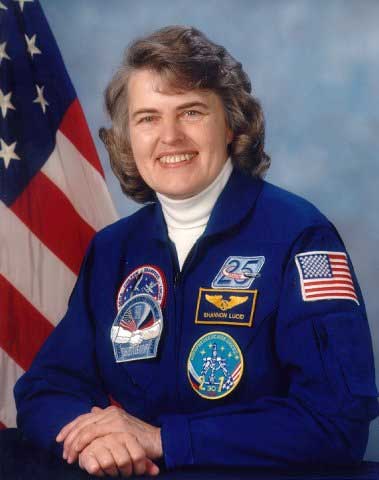
Shannon Matilda Wells Lucid (born January 14, 1943) is an American biochemist and retired NASA astronaut. She has flown in space five times, including a prolonged mission aboard the Russian space station Mir in 1996, and is the only American woman to have stayed on Mir. From 1996 to 2007, Lucid held the record for the longest duration spent in space by an American and by a woman. She was awarded the Congressional Space Medal of Honor in December 1996, making her the tenth person and the first woman to be accorded the honor.
Lucid is a graduate of the University of Oklahoma, where she earned a bachelor's degree in chemistry in 1963, a master's degree in biochemistry in 1970, and a PhD in biochemistry in 1973. She was a laboratory technician at the Oklahoma Medical Research Foundation from 1964 to 1966, a research chemist at Kerr-McGee from 1966 to 1968, and a research associate at the Oklahoma Medical Research Foundation from 1973 to 1978.
In 1978, Lucid was recruited by NASA for astronaut training with NASA Astronaut Group 8, the first class of astronauts to include women. She flew in space five times: on STS-51-G, STS-34, STS-43, STS-58, and her mission to Mir, for which Lucid traveled to the space station on Space Shuttle Atlantis with STS-76 and returned six months later with STS-79. She was the NASA Chief Scientist from 2002 to 2003 and a capsule communicator (CAPCOM) at Mission Control for numerous Space Shuttle missions, including STS-135, the final mission of the Space Shuttle program. Lucid announced her retirement from NASA in 2012.
Shannon Matilda Wells was born in Shanghai, Republic of China, on January 14, 1943, the daughter of Joseph Oscar Wells, a Baptist missionary, and his wife Myrtle, a missionary nurse. Due to America's ongoing war with Japan, when she was six weeks old, the family was detained by the Japanese, who had occupied Shanghai at the time. The three of them were imprisoned in an internment camp but were released during a prisoner exchange later that year. They returned to the United States on the Swedish ocean liner MS Gripsholm and stayed in the US until the end of the war.
After the war ended, the family returned to China but decided to leave again after the Chinese Communist Revolution in 1949. They moved to Lubbock, Texas, and then settled in Bethany, Oklahoma, the family's original hometown, where Wells graduated from Bethany High School in 1960. She was fascinated by stories of the American frontier and wanted to become an explorer. She concluded that she had been born too late for this, but discovered the works of Robert Goddard, the American rocket scientist, and decided that she could become a space explorer. Wells sold her bicycle to buy a telescope so she could look at the stars, and began building her own rockets. Shortly after graduating from high school, Wells earned her private pilot's license with instrument and multi-engine ratings and bought a preowned Piper PA-16 Clipper that she used to fly her father to revival meetings. She applied for jobs as a commercial pilot, but was rejected, as women were not yet accepted for training as commercial pilots in the United States.
Wells attended Wheaton College in Illinois, where she majored in chemistry. She then transferred to the University of Oklahoma, where she earned her bachelor's degree in chemistry in 1963. She was a teaching assistant in the University of Oklahoma's Department of Chemistry from 1963 to 1964 and a senior laboratory technician at the Oklahoma Medical Research Foundation in Oklahoma City, from 1964 to 1966. She then became a research chemist at Kerr-McGee, an oil company there. At Kerr-McGee she met Michael F. Lucid, a fellow research chemist. They married in 1967, and their first child, Kawai Dawn, was born in 1968.
Afterward, Lucid left Kerr-McGee and returned to the University of Oklahoma as graduate assistant in the Department of Biochemistry and Molecular Biology, where she pursued a master's degree in biochemistry. She sat for her final examinations two days after the birth of her second daughter, Shandara Michelle, in 1970. She went on to earn her PhD in biochemistry in 1973, writing her thesis on the Effect of Cholera Toxin on Phosphorylation and Kinase Activity of Intestinal Epithelial Cells and Their Brush Borders under the supervision of A. Chadwick Cox. She then returned to the Oklahoma Medical Research Foundation as a research associate. A third child, Michael Kermit, was born in 1975.
On July 8, 1976, the National Aeronautics and Space Administration (NASA) issued a call for applications for at least 15 pilot candidates and 15 mission specialist candidates. For the first time, new selections would be considered astronaut candidates rather than fully-fledged astronauts until they finished training and evaluation, which was expected to take two years. The enactment of the Equal Employment Opportunity Act of 1972 reinforced the promise of the Civil Rights Act of 1964 to address the persistent and entrenched employment discrimination against women, African Americans and minority groups in American society. While they had never been explicitly precluded from becoming NASA astronauts, none had ever been selected either. This time, minorities and women were encouraged to apply. Lucid's was one of the first of 8,079 applications received.
Shannon Lucid
Shannon Matilda Wells Lucid (born January 14, 1943) is an American biochemist and retired NASA astronaut. She has flown in space five times, including a prolonged mission aboard the Russian space station Mir in 1996, and is the only American woman to have stayed on Mir. From 1996 to 2007, Lucid held the record for the longest duration spent in space by an American and by a woman. She was awarded the Congressional Space Medal of Honor in December 1996, making her the tenth person and the first woman to be accorded the honor.
Lucid is a graduate of the University of Oklahoma, where she earned a bachelor's degree in chemistry in 1963, a master's degree in biochemistry in 1970, and a PhD in biochemistry in 1973. She was a laboratory technician at the Oklahoma Medical Research Foundation from 1964 to 1966, a research chemist at Kerr-McGee from 1966 to 1968, and a research associate at the Oklahoma Medical Research Foundation from 1973 to 1978.
In 1978, Lucid was recruited by NASA for astronaut training with NASA Astronaut Group 8, the first class of astronauts to include women. She flew in space five times: on STS-51-G, STS-34, STS-43, STS-58, and her mission to Mir, for which Lucid traveled to the space station on Space Shuttle Atlantis with STS-76 and returned six months later with STS-79. She was the NASA Chief Scientist from 2002 to 2003 and a capsule communicator (CAPCOM) at Mission Control for numerous Space Shuttle missions, including STS-135, the final mission of the Space Shuttle program. Lucid announced her retirement from NASA in 2012.
Shannon Matilda Wells was born in Shanghai, Republic of China, on January 14, 1943, the daughter of Joseph Oscar Wells, a Baptist missionary, and his wife Myrtle, a missionary nurse. Due to America's ongoing war with Japan, when she was six weeks old, the family was detained by the Japanese, who had occupied Shanghai at the time. The three of them were imprisoned in an internment camp but were released during a prisoner exchange later that year. They returned to the United States on the Swedish ocean liner MS Gripsholm and stayed in the US until the end of the war.
After the war ended, the family returned to China but decided to leave again after the Chinese Communist Revolution in 1949. They moved to Lubbock, Texas, and then settled in Bethany, Oklahoma, the family's original hometown, where Wells graduated from Bethany High School in 1960. She was fascinated by stories of the American frontier and wanted to become an explorer. She concluded that she had been born too late for this, but discovered the works of Robert Goddard, the American rocket scientist, and decided that she could become a space explorer. Wells sold her bicycle to buy a telescope so she could look at the stars, and began building her own rockets. Shortly after graduating from high school, Wells earned her private pilot's license with instrument and multi-engine ratings and bought a preowned Piper PA-16 Clipper that she used to fly her father to revival meetings. She applied for jobs as a commercial pilot, but was rejected, as women were not yet accepted for training as commercial pilots in the United States.
Wells attended Wheaton College in Illinois, where she majored in chemistry. She then transferred to the University of Oklahoma, where she earned her bachelor's degree in chemistry in 1963. She was a teaching assistant in the University of Oklahoma's Department of Chemistry from 1963 to 1964 and a senior laboratory technician at the Oklahoma Medical Research Foundation in Oklahoma City, from 1964 to 1966. She then became a research chemist at Kerr-McGee, an oil company there. At Kerr-McGee she met Michael F. Lucid, a fellow research chemist. They married in 1967, and their first child, Kawai Dawn, was born in 1968.
Afterward, Lucid left Kerr-McGee and returned to the University of Oklahoma as graduate assistant in the Department of Biochemistry and Molecular Biology, where she pursued a master's degree in biochemistry. She sat for her final examinations two days after the birth of her second daughter, Shandara Michelle, in 1970. She went on to earn her PhD in biochemistry in 1973, writing her thesis on the Effect of Cholera Toxin on Phosphorylation and Kinase Activity of Intestinal Epithelial Cells and Their Brush Borders under the supervision of A. Chadwick Cox. She then returned to the Oklahoma Medical Research Foundation as a research associate. A third child, Michael Kermit, was born in 1975.
On July 8, 1976, the National Aeronautics and Space Administration (NASA) issued a call for applications for at least 15 pilot candidates and 15 mission specialist candidates. For the first time, new selections would be considered astronaut candidates rather than fully-fledged astronauts until they finished training and evaluation, which was expected to take two years. The enactment of the Equal Employment Opportunity Act of 1972 reinforced the promise of the Civil Rights Act of 1964 to address the persistent and entrenched employment discrimination against women, African Americans and minority groups in American society. While they had never been explicitly precluded from becoming NASA astronauts, none had ever been selected either. This time, minorities and women were encouraged to apply. Lucid's was one of the first of 8,079 applications received.
Recent media
Recent media