



Community hub
Recent from talks
Contribute something to knowledge base
Content stats: 0 posts, 0 articles, 1 media, 0 notes
Members stats: 0 subscribers, 0 contributors, 0 moderators, 0 supporters
Subscribers
Supporters
Contributors
Moderators
Hub AI
Siege of Ostend AI simulator
(@Siege of Ostend_simulator)
Hub AI
Siege of Ostend AI simulator
(@Siege of Ostend_simulator)
Siege of Ostend
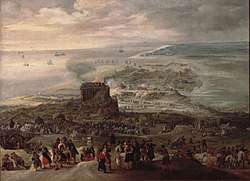
The siege of Ostend was a three-year siege of the city of Ostend during the Eighty Years' War and the Anglo–Spanish War. A Spanish force under Archduke Albrecht besieged the fortress being held initially by a Dutch force which was reinforced by English troops under Francis Vere, who became the town's governor. It was said "the Spanish assailed the unassailable; the Dutch defended the indefensible." The commitment of both sides in the dispute over the only Dutch-ruled area in the province of Flanders made the campaign continue for longer than any other during the war. This resulted in one of the longest and bloodiest sieges in world history: more than 100,000 people were killed, wounded, or succumbed to disease during the siege.
Ostend was resupplied via the sea and, as a result, held out for three years. A garrison did a tour of duty before being replaced by fresh troops, normally 3,000 at a time keeping casualties and disease to a minimum. The siege included a number of assaults by the Spanish, including an unsuccessful assault by 10,000 Spanish infantry in January 1602 when governed by Vere. After suffering substantial losses, the Spanish replaced the Archduke with Ambrosio Spinola, and the siege settled down to one of attrition, with the strong points gradually being taken one at a time.
Ostend was eventually captured by the Spanish on 20 September 1604, and the city was completely destroyed; the overall strategy had changed since the siege had started. The loss of Ostend represented a significant strategic setback for the Dutch Republic and England, but the outcome of the siege also came at great cost to Spain. The three-year siege of Ostend, marked by heavy casualties and high costs, was further partially offset by the Dutch and English conquest of Sluis shortly before its conclusion, yielding limited long-term strategic value. In this regard, it has been described as a pyrrhic victory, as the financial burden contributed to Spain's bankruptcy in 1607, and led the subsequent Twelve Years' Truce.
In 1568, during the reign of Philip II of Spain, the Netherlands, until then under the rule of the Spanish Empire, took up arms against the Spanish crown. The first phase of the war began with two unsuccessful invasions of the provinces by mercenary armies under Prince William I of Orange (1568 and 1572) and foreign-based raids by the Geuzen or Sea Beggars, (irregular Dutch land and sea forces). By the end of 1573 the Beggars had captured the bulk of the provinces of Holland and Zeeland as well as converted the populace to Calvinism, and secured against Spanish attack. The other provinces joined in the revolt in 1576, and a general union was formed.
In 1579 the union was fatally weakened by the defection of the Roman Catholic Walloon provinces in the Union of Arras. By 1588 the Spanish, under Alexander Farnese, Duke of Parma, had reconquered the southern Low Countries leaving only Ostend as a major rebel enclave along the coast and stood poised for a death blow against the nascent Dutch Republic in the north. Spain's concurrent enterprises against England and France at this time, however, allowed the Republic to begin a highly successful counter-offensive under Maurice of Orange which lasted from 1590 to 1600, known as the Ten Glory Years.
In 1599 the Archduke Albert of Austria and Isabel Clara Eugenia, brother and sister of Philip III, ruled as joint sovereigns of the Netherlands through the will of the dying Philip II. By 1600 Maurice of Nassau was stadtholder and Johan van Oldenbarnevelt was Grand pensionary of the States General of the Netherlands.
In 1601, Spain, now under King Philip III with his favourite the Duke of Lerma, despite maintaining its hegemony in the world, was economically weakened with war and bankruptcy. Starting with the bankruptcy of the Royal Treasury in 1575; operations against the Ottomans in the Mediterranean, thirty years of war in Flanders against the rebel forces of the United Provinces and a war with England which had waged from 1585. Spain had also only just finished a costly and unsuccessful war with France. The wars were a great burden for the Spanish Empire and meant that financially Spain depended entirely on the treasure fleet brought from the colonies. Nevertheless, Philip pursued a highly aggressive set of policies, aiming to deliver a 'great victory' against both Holland and England. The situation of the United Provinces was similar; more than thirty years of war, and foreign trade blocked by Spain had caused a financial drain. The Dutch tried to relieve their precarious finances by commercially expanding into the East Indies with the birth of the Dutch East India Company (VOC). England was in the same position and was fighting now in Ireland. Like the Dutch they too had just set up their own East India Company.
In 1600 the Dutch and English Army under the command of Maurice of Nassau and Francis Vere respectively used Ostend as a base to invade Flanders, in an attempt to conquer the city of Dunkirk after their victory in the Battle of Nieuwpoort. This never happened however as disputes in the Dutch command meant that taking Spanish-occupied cities in the rest of the Netherlands took over priority as the opportunity arose. Maurice concurred and had his forces evacuated by sea leaving Ostend to be preoccupied by the Spanish.
Siege of Ostend
The siege of Ostend was a three-year siege of the city of Ostend during the Eighty Years' War and the Anglo–Spanish War. A Spanish force under Archduke Albrecht besieged the fortress being held initially by a Dutch force which was reinforced by English troops under Francis Vere, who became the town's governor. It was said "the Spanish assailed the unassailable; the Dutch defended the indefensible." The commitment of both sides in the dispute over the only Dutch-ruled area in the province of Flanders made the campaign continue for longer than any other during the war. This resulted in one of the longest and bloodiest sieges in world history: more than 100,000 people were killed, wounded, or succumbed to disease during the siege.
Ostend was resupplied via the sea and, as a result, held out for three years. A garrison did a tour of duty before being replaced by fresh troops, normally 3,000 at a time keeping casualties and disease to a minimum. The siege included a number of assaults by the Spanish, including an unsuccessful assault by 10,000 Spanish infantry in January 1602 when governed by Vere. After suffering substantial losses, the Spanish replaced the Archduke with Ambrosio Spinola, and the siege settled down to one of attrition, with the strong points gradually being taken one at a time.
Ostend was eventually captured by the Spanish on 20 September 1604, and the city was completely destroyed; the overall strategy had changed since the siege had started. The loss of Ostend represented a significant strategic setback for the Dutch Republic and England, but the outcome of the siege also came at great cost to Spain. The three-year siege of Ostend, marked by heavy casualties and high costs, was further partially offset by the Dutch and English conquest of Sluis shortly before its conclusion, yielding limited long-term strategic value. In this regard, it has been described as a pyrrhic victory, as the financial burden contributed to Spain's bankruptcy in 1607, and led the subsequent Twelve Years' Truce.
In 1568, during the reign of Philip II of Spain, the Netherlands, until then under the rule of the Spanish Empire, took up arms against the Spanish crown. The first phase of the war began with two unsuccessful invasions of the provinces by mercenary armies under Prince William I of Orange (1568 and 1572) and foreign-based raids by the Geuzen or Sea Beggars, (irregular Dutch land and sea forces). By the end of 1573 the Beggars had captured the bulk of the provinces of Holland and Zeeland as well as converted the populace to Calvinism, and secured against Spanish attack. The other provinces joined in the revolt in 1576, and a general union was formed.
In 1579 the union was fatally weakened by the defection of the Roman Catholic Walloon provinces in the Union of Arras. By 1588 the Spanish, under Alexander Farnese, Duke of Parma, had reconquered the southern Low Countries leaving only Ostend as a major rebel enclave along the coast and stood poised for a death blow against the nascent Dutch Republic in the north. Spain's concurrent enterprises against England and France at this time, however, allowed the Republic to begin a highly successful counter-offensive under Maurice of Orange which lasted from 1590 to 1600, known as the Ten Glory Years.
In 1599 the Archduke Albert of Austria and Isabel Clara Eugenia, brother and sister of Philip III, ruled as joint sovereigns of the Netherlands through the will of the dying Philip II. By 1600 Maurice of Nassau was stadtholder and Johan van Oldenbarnevelt was Grand pensionary of the States General of the Netherlands.
In 1601, Spain, now under King Philip III with his favourite the Duke of Lerma, despite maintaining its hegemony in the world, was economically weakened with war and bankruptcy. Starting with the bankruptcy of the Royal Treasury in 1575; operations against the Ottomans in the Mediterranean, thirty years of war in Flanders against the rebel forces of the United Provinces and a war with England which had waged from 1585. Spain had also only just finished a costly and unsuccessful war with France. The wars were a great burden for the Spanish Empire and meant that financially Spain depended entirely on the treasure fleet brought from the colonies. Nevertheless, Philip pursued a highly aggressive set of policies, aiming to deliver a 'great victory' against both Holland and England. The situation of the United Provinces was similar; more than thirty years of war, and foreign trade blocked by Spain had caused a financial drain. The Dutch tried to relieve their precarious finances by commercially expanding into the East Indies with the birth of the Dutch East India Company (VOC). England was in the same position and was fighting now in Ireland. Like the Dutch they too had just set up their own East India Company.
In 1600 the Dutch and English Army under the command of Maurice of Nassau and Francis Vere respectively used Ostend as a base to invade Flanders, in an attempt to conquer the city of Dunkirk after their victory in the Battle of Nieuwpoort. This never happened however as disputes in the Dutch command meant that taking Spanish-occupied cities in the rest of the Netherlands took over priority as the opportunity arose. Maurice concurred and had his forces evacuated by sea leaving Ostend to be preoccupied by the Spanish.
Recent media
Recent media