Hubbry Logo
Slot canyonSlot canyonMain
Open search
Slot canyon
Community hub
Slot canyon
logo
8 pages, 0 posts
0 subscribers
Be the first to start a discussion here.
Slot canyon
Slot canyon
from Wikipedia
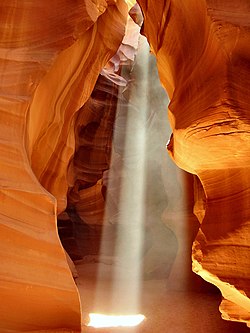
A beam of sunlight in Upper Antelope Canyon

A slot canyon is a long, narrow channel or drainageway with sheer rock walls that are typically eroded into either sandstone or other sedimentary rock. A slot canyon has depth-to-width ratios that typically exceed 10:1 over most of its length and can approach 100:1. The term is especially used in the semiarid southwestern United States and particularly the Colorado Plateau. Slot canyons are subject to flash flooding and commonly contain unique ecological communities that are distinct from the adjacent, drier uplands.[1] Some slot canyons can measure less than 1 metre (3 ft) across at the top but drop more than 30 metres (100 ft) to the floor of the canyon.

Many slot canyons are formed in sandstone and limestone rock, although slot canyons in other rock types such as granite and basalt are possible. Even in sandstone and limestone, only a very small number of streams will form slot canyons due to a combination of the particular characteristics of the rock and regional rainfall.

Around the world

[edit]

Slot canyons are found in many parts of the world, predominantly in areas with low rainfall. Some of the best-known slot canyons are to be found in the Southwestern United States. Other significant areas include the Sierra de Guara in northern Spain, the Pyrenees on the border of France and Spain, and the Blue Mountains in New South Wales, Australia.

Knox Gorge, Karijini National Park

Australia

[edit]

The largest known area of slot canyons in Australia (containing over 900) is in the Blue Mountains, west of Sydney. They occur in a narrow band of sandstone that runs roughly 30 kilometres (19 mi) from east to west, and about 100 kilometres (62 mi) from south to north. The majority of these canyons are in the Wollemi Wilderness, and are difficult to access. Many canyons within the Wollemi Wilderness have yet to be explored by humans. A small number are regularly visited by canyoners on weekends in summer with those closest to Katoomba being the most frequently visited. The Grand Canyon, near Blackheath, has a tourist track along its rim, but requires abseiling (rappelling) or swimming to visit fully.

Sandstone slot canyons can also be found in a few more remote parts of Australia, including Karijini National Park and the Bungle Bungles in Purnululu National Park, both in Western Australia, and Carnarvon Gorge in Queensland.

Annie's Canyon, located in San Diego, California
Wire Pass leading into Buckskin Gulch, Utah

United States

[edit]

Southern Utah has the densest population of slot canyons in the world with over one thousand slot canyons in the desert lands south of Interstate 70.[2] Utah's slot canyons are found in Zion National Park at The Narrows, along Canyonlands National Park's Joint Trail, throughout Capitol Reef National Park, within the San Rafael Swell and the Grand Staircase–Escalante National Monument, especially along the Escalante River drainage including Coyote Gulch. Many more slot canyons are located on public Bureau of Land Management and state-owned lands in southern Utah, in areas surrounding the aforementioned parks and monuments. Buckskin Gulch—one of the longest slot canyons in the world—begins in southern Utah and continues into northern Arizona within the Paria Canyon-Vermilion Cliffs Wilderness.

Northern Arizona also has a high concentration of slot canyons including Antelope Canyon and Secret Canyon, which are two of the most famous slot canyons located near Page on land owned by the Navajo Nation. Slot canyons are also located in the valley between U.S. Route 89 and the Vermilion Cliffs in Arizona, and can be seen as one descends into the valley on U.S. 89, but these are on the Navajo reservation and are closed to the public.

In New Mexico, Kasha-Katuwe Tent Rocks National Monument's Slot Canyon Trail is unique as it was carved into tuff (volcanic ash). Many more can be found elsewhere on the Pajarito Plateau in the tuff cliffs between the potreros. There are also large concentrations in the basalt mesas surrounding Mt. Taylor, northwest of Grants, and also near Brimhall Nizhoni. The Plaza Blanca Slot Canyon in the white cliffs of the Abiquiu Formation near the town of Abiquiu was the inspiration of some of Georgia O'Keeffe's paintings.

In California, several slot canyons are located within Death Valley National Park.

Lower Antelope Canyon, Arizona

Europe

[edit]

There are a number of slot canyons in Spain, especially in the arid foothills of the Pyrenees, such as on the Balcez river.[3] There is an extensive tourism industry built around canyoning in this region. In Czechia, there is a spectacular slot canyon in the Teplice Mountains[4] called Little Siberia due to the microclimate, which is several degrees colder than the surrounding area. The canyons in Teplice are surrounded by pillar-like rock formations which resemble various animals and were the site where The Chronicles of Narnia[5] were filmed.

Hazards

[edit]

Slot canyons can have hazards such as falling rocks, unsteady terrain, narrow slots, slippery surfaces, blockages, steep descents and ascents, potholes, whirlpools (siphons), cold water, duckunders, long swims, fast flowing water, and flash floods.[6] The consequences of falling victim to these hazards can be exacerbated by difficulties or dangers for rescue teams accessing canyons or canyon regions.[7][8]

Notable incidents have occurred in slot canyons due to hazardous water conditions, particularly dangerous flash flooding caused by local as well as distant storms. Hikers should not enter slot canyons if there is any sign of rain in the surrounding area.[9] In many slot canyons, it can be miles before a safe exit or rescue is possible.

Fatalities have occurred in Australia's Blue Mountains due to flash flooding or hazardous water conditions. Drowning deaths have been recorded in Claustral Canyon, Bowen Creek North Canyon, Empress Canyon, Arethusa Canyon and Wollangambe Canyon.[6] On the 31st of January 1982, three people died in Claustral Canyon due to a flash flood.[10]

On August 12, 1997, eleven tourists, seven from France, one from the United Kingdom, one from Sweden and two from the United States, were killed in Lower Antelope Canyon by a flash flood.[11][12] Very little rain fell at the site that day, but an earlier thunderstorm had dumped a large amount of water into the canyon basin, seven miles upstream. The lone survivor of the flood was tour guide Francisco "Poncho" Quintana, who had prior swift-water training. At the time, the ladder system consisted of amateur-built wood ladders that were swept away by the flash flood. Today, ladder systems have been bolted in place, and deployable cargo nets are installed at the top of the canyon. A NOAA Weather Radio from the National Weather Service and an alarm horn are stationed at the fee booth.[13]

On July 15, 2021, a Michigan woman died in a flash flood that swept through a slot canyon in Grand Canyon National Park. She was a customer with a commercial rafting group that camped overnight about a quarter of a mile from a slot canyon. Five other people with serious injuries were airlifted from the canyon as a result of the same flash flood.[14]

[edit]

References

[edit]
[edit]
Revisions and contributorsEdit on WikipediaRead on Wikipedia
from Grokipedia
A slot canyon is a narrow, deep gorge with steep, nearly vertical walls, formed primarily by the erosive action of flash floods and water flow through joints in sedimentary rock, such as sandstone, over millions of years. These canyons are typically much deeper than they are wide, often only a few feet across at the bottom, and are most commonly found in arid regions where infrequent but intense rainfall leads to powerful water surges that carve through the rock. Slot canyons are predominantly located in the southwestern United States, particularly within the Colorado Plateau, where they erode into formations like the Jurassic Navajo Sandstone, creating dramatic landscapes in areas such as Zion National Park, Glen Canyon National Recreation Area, and Grand Staircase-Escalante National Monument. Notable examples include Buckskin Gulch, the longest and deepest slot canyon in the United States at over 13 miles long and up to 500 feet deep, and Antelope Canyon near Page, Arizona, renowned for its sculpted, wave-like walls illuminated by shafts of sunlight. The Narrows in Zion National Park exemplifies a river-carved slot canyon, where the Virgin River has incised deeply into the Navajo Sandstone, forming a corridor sometimes only 20 feet wide. While visually striking and popular for hiking and photography, slot canyons pose significant hazards due to their narrow confines and the region's arid climate, which belies the risk of sudden flash floods from distant thunderstorms; these events can transform a dry channel into a deadly torrent within minutes, as evidenced by fatalities in places like Antelope Canyon. Visitors must check weather conditions, avoid travel during rain, and be prepared for obstacles like dry falls and chockstones, emphasizing the need for guided tours in permitted areas.

Definition and Characteristics

Definition

A slot canyon is defined as a long, narrow, deep channel or incised drainageway characterized by sheer, vertical rock walls that are at least 10 times deeper than they are wide, typically carved into sedimentary rocks such as sandstone. These formations result from intense erosional forces acting on relatively soft, layered rock, creating serpentine passages that can extend for miles while maintaining extreme narrowness. The defining aspect is the disproportionate depth-to-width ratio, often exceeding 10:1 and sometimes reaching 100:1, which distinguishes them as highly confined geological features. Slot canyons differ markedly from other narrow valleys like box canyons, which typically feature broader floors and are enclosed on three sides, making them less constricted and more accessible for purposes such as livestock containment. In contrast, slot canyons are so narrow—often less than 3 to 20 feet wide—that a person can frequently touch both walls with outstretched arms, emphasizing their slot-like constriction. They also stand apart from shallower slot-like gorges, where the depth rarely exceeds the width by more than 10 times, resulting in less vertical enclosure and more gradual slopes. The term "slot canyon" gained popularity in the 20th century to specifically denote these narrow features prevalent in the semiarid Southwest , particularly on the . These early accounts highlighted the challenging, vertigo-inducing nature of the formations, laying groundwork for later recognition without using the modern terminology.

Physical Features

Slot canyons exhibit distinctive morphological traits that set them apart from broader canyon systems, characterized by their extreme narrowness and depth relative to width. These features typically include sheer, vertical walls that rise dramatically, often creating a corridor-like passage where the is visible only as a thin sliver overhead. The walls are frequently smooth and polished due to prolonged water abrasion, displaying sculpted surfaces with vertical grooves known as flutes and rounded depressions called potholes that collect or water. In areas with persistent moisture, such as near seeps, hanging gardens of ferns, mosses, and other vegetation may cling to ledges and alcoves along the walls, adding patches of green to the otherwise arid rock faces. The dimensions of slot canyons vary but emphasize their elongated, constricted form, with depth-to-width ratios commonly exceeding 10:1 and sometimes reaching 100:1 over much of their length. Depths range from tens to several hundred feet, while widths can narrow to mere inches or feet at points, forcing explorers to navigate sideways. Lengths extend from short segments of a few hundred yards to several miles, featuring meandering paths that twist through the rock, punctuated by overhangs where the walls curve inward and pour-offs—steep drops that form temporary waterfalls during rare flows. Most slot canyons form in sedimentary rocks, predominantly cross-bedded sandstone such as the Navajo Sandstone prevalent in the American Southwest, though limestone and rarer basalt occurrences exist elsewhere. This composition yields vibrant hues, including reds, pinks, and whites derived from iron oxides and other minerals within the rock layers, which create swirling patterns and color bands on the walls. Internally, slot canyons often follow dry riverbeds strewn with boulders transported by past flash floods, leading to narrow passages occasionally blocked by chokestones—large rocks wedged across the slot. Differential erosion can produce additional elements like natural arches or bridges spanning the channel, enhancing the labyrinthine quality of the terrain.

Formation

Geological Processes

Slot canyons are sculpted primarily through vertical incision by episodic flash floods, which carve deep, narrow channels into sedimentary rocks like sandstone or limestone. This erosive action often begins by exploiting pre-existing joints or fractures in the sedimentary rock, which channel the water and initiate downcutting. These rare, high-magnitude events deliver powerful flows that downcut the bedrock, creating steep walls with depth-to-width ratios typically exceeding 10:1. As water funnels into the developing slots, it accelerates dramatically, amplifying its erosive force through hydraulic action, where the force exerted is governed by F=m×aF = m \times a (mass times acceleration), allowing it to overcome the resistance of massive bedrock. The erosive is further intensified by the of sediments, such as and gravel, which the floods carry like to polish and undulate the canyon walls through abrasion-dominated fluvial . Laboratory models confirm that sediment-laden flows generate intricate wall morphologies, with back-eddy currents and velocity filaments contributing to both vertical deepening and lateral sculpting. Development progresses in distinct stages: initial downcutting breaches resistant to expose softer underlying layers, followed by that propagates the slot upstream and laterally undercuts the walls, resulting in minimal widening confined to the base. This produces the characteristic narrow, sinuous profiles. Formation occurs over geological timescales of 1 to 10 million years, with rates accelerated in post-uplift phases such as the on the , where tectonic gradients fluvial incision and .

Environmental Conditions

Slot canyons primarily develop in arid or semi-arid environments characterized by infrequent but intense rainfall events, such as monsoonal storms, which generate high-magnitude, low-frequency flash floods essential for their erosive formation. These climatic conditions limit continuous while concentrating erosive power during sudden deluges, often in regions like the where annual is low but seasonal thunderstorms can produce rapid water surges. Topographically, slot canyons require uplifted plateaus or mesas featuring horizontal layers of sedimentary rock, which promote focused drainage patterns within fault-controlled valleys that channel water efficiently. Lithologically, they form in soft, homogeneous sedimentary rocks such as sandstone, which exhibit low permeability and allow for vertical incision without widespread lateral spreading; these are often capped by harder overlying layers that concentrate erosion downward by resisting broader weathering. Tectonic influences, particularly regional uplift like that from the , steepen gradients across these landscapes, thereby enhancing and accelerating incision rates in susceptible materials. Steeper slopes correlate with faster downcutting, as increased differences amplify the energy available for flood-driven without altering the underlying arid hydrological regime.

Global Distribution

United States

The United States hosts the world's highest concentration of slot canyons, with over 1,000 documented in the Colorado Plateau region spanning Utah, Arizona, Nevada, and New Mexico, primarily carved into Mesozoic-era sandstones such as the Navajo Sandstone. This arid, elevated physiographic province, covering about 140,000 square miles, features these narrow incisions due to its unique tectonic stability amid surrounding mountain-building events. Prominent examples include Antelope Canyon in Arizona, renowned for its dramatic light beams filtering through the narrow openings, which illuminate the smooth, undulating sandstone walls. Located on Navajo Nation land near Page, access requires guided tours and permits from tribal authorities. In Utah's Zion National Park, The Narrows stretches 16 miles along the Virgin River, offering a immersive hike through towering walls that narrow to mere feet wide in places. Buckskin Gulch, straddling the Utah-Arizona border, holds the distinction as the longest continuous slot canyon at over 16 miles, with depths exceeding 500 feet and sections so slim hikers must sidle sideways. Public entry to many such sites is managed through national parks like Zion and Grand Staircase-Escalante National Monument, or tribal lands, where regulations preserve fragile ecosystems and ensure visitor safety amid flash flood vulnerabilities. The geological framework of these canyons is linked to the uplift of the Colorado Plateau, which began around 70 million years ago and continues today at rates of about 0.3 millimeters per year, exposing layered sandstones to erosive forces. Early European-American exploration of the region, including slot canyons, occurred during John Wesley Powell's 1869 expedition down the Green and Colorado Rivers, which produced the first detailed maps of the Plateau's rugged terrain. Popularity among visitors surged in the 1990s, driven by striking photographic depictions that highlighted the canyons' ethereal beauty and intricate formations.

Australia

Slot canyons in Australia are primarily concentrated in the eastern and southern regions, with the Blue Mountains in New South Wales hosting the largest known area of these formations, characterized by their deep, narrow incisions into sandstone plateaus amid temperate eucalypt forests. These canyons, such as Claustral and Empress Falls, form striking contrasts to the arid Southwest American examples, emerging instead in a landscape shaped by episodic heavy rainfall and steep gradients that channel water into powerful erosive flows. Further south, the Flinders Ranges in South Australia feature slot-like gorges, including Alligator Gorge, where towering quartzite and sandstone walls create tight passages deepened by ancient fluvial action. On Kangaroo Island, smaller slot features, like the narrow access passage to Stokes Bay, highlight localized erosion in coastal sedimentary layers, though these are less extensive than mainland counterparts. Geologically, Australian slot canyons have developed in rocks spanning the Paleozoic to Mesozoic eras, with the Blue Mountains' Hawkesbury Sandstone—dating to the Triassic period around 230 million years ago—exhibiting vertical cliffs and slots incised over millions of years by river systems responding to tectonic uplift and climatic shifts. In the Flinders Ranges, formations in Proterozoic and Cambrian strata, over 500 million years old, reflect arid cycles and ancient river incisions that have carved deeper slots relative to their widths, often exceeding 100 meters in depth within spans under a kilometer. These processes mirror broader erosional origins but are uniquely influenced by Australia's Gondwanan heritage, where prolonged weathering in semi-arid to wetter margins has produced fewer but more vertically pronounced features compared to horizontal plateau erosion elsewhere. Documented slot canyons number over 900 in the Blue Mountains alone, typically shorter than 5 miles (8 km) but notable for their aspect ratios—depths often 10 to 20 times the width, as seen in Blue Gum Creek slots and Chambers Gorge narrows. Examples like Genowlan Canyon, at 7.2 km, represent longer traversals, yet most are compact, under 3 km, emphasizing verticality over length. Access to these sites is largely confined to national parks, including the Greater Blue Mountains Area—a UNESCO World Heritage site since 2000—and Ikara-Flinders Ranges National Park, where regulated trails and permits preserve fragile ecosystems. European exploration began in the early 1800s, with naturalist George Caley documenting Claustral Canyon in 1804 as part of attempts to cross the Blue Mountains barrier. Indigenous Australian peoples, including the Darug and Gundungurra in the Blue Mountains and Adnyamathanha in the Flinders Ranges, have held knowledge of these landscapes for tens of thousands of years, incorporating them into cultural narratives and resource use long predating colonial records. Modern canyoneering surged post-World War II, with systematic mapping in the 1960s revealing previously inaccessible slots.

Europe

Slot canyons are relatively rare in Europe compared to arid regions like the American Southwest, primarily due to the continent's temperate and humid climate, which favors broader gorges over the narrow, deeply incised channels typical of flash-flood dominated environments. In the Alpine orogenic belts, however, examples occur in soluble rocks such as Cretaceous limestones, where repeated stream incision and glacial influences have carved slot-like features. These formations are often shorter, typically 1-3 miles in length, and integrated into larger gorge systems, shaped by a combination of glacial meltwater during Ice Ages and episodic Mediterranean storms. In Italy's Dolomites, slot canyons appear in limestone karst landscapes, with the Bletterbach Canyon serving as a prominent example. This 8-kilometer-long gorge, part of the UNESCO World Heritage Dolomites, reaches depths of up to 400 meters and narrows significantly along its path, eroded by the Bletterbach stream into Permian volcanic rocks overlain by Triassic limestones since the last Ice Age around 18,000 years ago. France's Verdon Gorge features narrow slot sections like La Fernée, a striking canyon in Cretaceous limestone karst where sheer walls funnel into turquoise pools, formed through fluvial erosion in the Provençal Alps. In the United Kingdom, the Yorkshire Dales host sandstone and limestone slots such as Gordale Scar, a dramatic ravine with overhanging cliffs exceeding 100 meters in height, carved by glacial meltwater torrents along the Middle Craven Fault during successive Ice Ages. European slot canyons, numbering around 50 documented sites, are generally less extensive than their global counterparts, often blending into broader hydrological systems rather than forming isolated networks. Exploration of these features dates back centuries, with sites like Gordale Scar inspiring artists and writers since the 18th century, though systematic documentation began in the 19th century through geological surveys. Modern interest surged in the 1980s with the professionalization of canyoneering in France and Spain, leading to guided descents and safety protocols that popularized access to these challenging terrains. Flash flood risks persist in these wetter climates, necessitating cautious navigation.

Other Regions

In the Middle East, slot canyons are prominent in the arid landscapes shaped by tectonic activity along the Dead Sea Rift. Jordan's Wadi Mujib, located within the Mujib Biosphere Reserve, features narrow limestone slots incised by seasonal flash floods, with passages as tight as a few meters wide and depths exceeding 100 meters in places. These formations result from the uplift and erosion of Cretaceous limestone layers, creating dramatic riverine gorges that narrow into slot-like channels. In Israel, the Negev Desert hosts sandstone slot features, such as those in Red Canyon near Eilat, where colorful sandstone walls form sinuous, narrow passages up to 20 meters deep, sculpted by infrequent but intense rainfall. Similar sandstone slots appear in Ada Canyon, offering short descents into constricted channels amid the desert's volcanic and sedimentary rocks. Slot canyons in Asia remain rare and often integrated into broader landform complexes. In China, the Danxia landforms of Guizhou Province, particularly around Chishui, include incised sandstone canyons with slot-like ravines formed in fractured Cretaceous and Jurassic red beds, featuring steep walls and narrow valleys up to several kilometers long. These share erosional traits with classic slot canyons, driven by differential weathering in humid subtropical conditions. In India, the Western Ghats exhibit exceptional examples in the Deccan Traps basalts, such as the Sandan Slot Canyon near Samrad village in Maharashtra, a 2-30 meter wide and up to 100 meter deep feature developed through dyke excavation and slope failures in compound lava flows. Emerging reports highlight slot canyons in South America, particularly in quartzite terrains. Brazil's Chapada Diamantina region in Bahia State includes narrow quartzite gorges with slot characteristics, such as those along the plateaus' escarpments, where erosion has carved tight passages amid ancient Precambrian rocks. In Chile's Atacama Desert, slot canyons appear in the arid Andean foothills, as seen in routes like those of the Atacama Crossing, featuring sandstone slots with sheer walls and seasonal water flows that accentuate their narrow, winding profiles. Globally, slot canyons outside the United States, Australia, and Europe number fewer than 200 documented sites, frequently misclassified as simple gorges due to their subtlety in non-sandstone substrates. Scientific recognition of these features in the Middle East, Asia, and South America largely emerged in the 2000s through targeted geomorphic surveys, with detailed studies like that of India's Sandan Canyon published in 2020.

Recreation and Exploration

Activities

Slot canyons attract visitors for non-technical day hikes and photography, offering accessible trails through narrow, sculpted passages that require no specialized equipment. In sites like Antelope Canyon, guided tours facilitate exploration on flat or gently sloping terrain, allowing participants to walk at a leisurely pace while capturing the canyon's swirling sandstone formations. Photography enthusiasts particularly value the dramatic light shafts, known as "beams," where sunlight pierces the narrow openings to illuminate the interior walls, creating ethereal effects most prominent around midday from March to October. Commercial guided tours operate extensively in U.S. national parks and tribal lands, such as those managed by the Navajo Nation, with fees typically ranging from $75 to $120 per person (as of 2025) and reservations required in advance. These tours, led by certified Navajo guides, transport visitors via shuttle or truck to the trailhead and last 1 to 2 hours on average, though the full experience including check-in often spans 2 to 4 hours. Popular destinations like Antelope Canyon drew over 1 million visitors in 2019, contributing significantly to local tourism economies. Cultural elements enrich these outings, as Navajo guides share indigenous stories and legends tied to the canyons' spiritual significance during the walks. Visitors are encouraged to respect sacred sites by adhering to photography ethics, such as prohibiting tripods to maintain tour flow and preserve the natural and cultural integrity of the area. The optimal seasons for these activities are spring and fall, when dry conditions and moderate temperatures—ranging from 50°F to 80°F—minimize discomfort and reduce flash flood risks compared to summer monsoons. Participants should monitor weather forecasts, as sudden storms can pose dangers even in non-technical settings. Similar non-technical guided tours and photography opportunities exist internationally, such as in Europe's Verdon Gorge in France or Australia's Kangaroo Creek in the Blue Mountains, where visitors explore slot-like canyons under regulated access to highlight geological features and local ecosystems.

Technical Canyoneering

Technical canyoneering refers to the advanced practice of descending slot canyons that demand specialized skills, ropes, and anchors to navigate steep, narrow, and often wet terrain beyond simple hiking. These descents typically involve multi-hour or multi-day trips through remote areas, where participants must manage complex obstacles like vertical drops and constricted passages that require precise body control and teamwork. Unlike casual exploration, technical canyoneering emphasizes self-reliance and proficiency in rope-based systems to ensure safe progression downstream. Core techniques include rappelling down pour-offs, where participants use dynamic or static ropes up to 200 feet long to descend sheer walls or waterfalls, often in wet conditions that demand waterproof knots and guided pulls. Stemming allows traversal of narrow slots by applying oppositional pressure with hands and feet against opposing walls, distributing body weight to bridge gaps too wide for straddling but too tight for walking. Downclimbing wet sections involves controlled lowering using friction, handholds, and stemming to manage slippery rock faces and avoid falls in flowing water. The narrow features of slot canyons amplify these physical challenges, requiring endurance and technique to prevent exhaustion or injury. Essential equipment comprises a climbing harness for secure rope attachment, a certified helmet to protect against falling debris, a full-body wetsuit for insulation in cold, submerged environments, and a personal anchor system (PAS) for clipping into anchors during rests or transitions. Additional items like locking carabiners, descenders, and prusik cords facilitate safe rappels and self-rescues. Training through reputable organizations, such as the American Canyoneering Association (ACA), is crucial to master these tools and techniques, with courses focusing on anchor building, rope management, and emergency protocols. Routes are classified using standardized systems like the ACA Canyon Rating System, which combines technical difficulty (1-4 scale, where 3 indicates intermediate rappels and exposed climbing), water exposure (A-D, with B for wading and swimming), time commitment (I-VI, where V denotes 1.5-2 days), and risk factors; for instance, a 3B V rating signifies a multi-day route (V) with intermediate technical demands (3) and wading/swimming (B) in dry-to-wet slots. Neon Canyon in Utah exemplifies this, rated 3B III with multiple rappels up to 120 feet, demanding a full day or more for experienced groups. The practice originated in Europe during the 1970s, evolving from caving and climbing traditions, and gained popularity in the United States in the 1990s through Utah's slot canyon networks, where pioneers like Rich Carlson established guiding services and formalized safety standards. The ACA, founded in 1999, has since become central to the community by providing certification, rating systems, and resources that promote ethical exploration. Adherence to leave-no-trace principles is mandatory, including packing out all waste (especially human waste using wag bags in constrained terrain), using durable surfaces like rock and sand, and removing all gear to preserve fragile ecosystems. Technical canyoneering is also popular in other regions, such as guided descents in the French Alps or Australia's rugged gorges, where international associations adapt similar rating systems and safety protocols to local terrains.

Hazards and Safety

Primary Risks

Slot canyons pose significant natural hazards due to their narrow, steep-walled geometry, which amplifies the dangers of environmental forces. The primary risk is flash flooding, where sudden surges of water from thunderstorms occurring miles away can rapidly fill the canyon. These floods can rise 20 to 50 feet within minutes, carrying debris that causes blunt force trauma and drowning. A tragic example occurred on August 12, 1997, in Lower Antelope Canyon, Arizona, when a flash flood swept through a group of tourists, killing 11 people despite no rain falling directly in the canyon. More recently, flash floods in Utah slot canyons caused at least four deaths in 2024, underscoring the ongoing lethality of these events. Hypothermia and physical injuries represent another critical threat, particularly when cold, fast-moving enters the canyon. Even in mild air temperatures, immersion in accelerates loss, leading to , while slippery surfaces increase the likelihood of slips and falls. The of slot canyons hinders quick evacuation, and features like chokestones—large rocks wedged in narrow passages—can trap individuals, exacerbating injury risks from impacts or prolonged exposure. Rockfalls and dehydration further compound the dangers. The soft sandstone formations common in slot canyons are prone to instability, with loose rocks dislodging and falling without warning, potentially causing severe injuries or fatalities. In the arid Southwest environments where most slot canyons occur, extreme heat exceeding 100°F (38°C) combined with limited shade and water sources can lead to dehydration and heat exhaustion, especially during prolonged exploration. Flash floods are the leading cause of fatalities in slot canyons. These statistics underscore the lethal potential of slot canyons, where multiple fatalities often occur in single events due to the rapid onset of hazards.

Safety Measures

Safety in slot canyons requires meticulous preparation and adherence to established protocols to mitigate the inherent risks of these narrow, remote environments. Weather monitoring is paramount, as flash floods can arise from precipitation far upstream; canyoneers should check forecasts from the (NOAA) at least 24-48 hours in advance and continuously during the trip, avoiding entry if rain is predicted anywhere in the upstream watershed, which can extend over a large surrounding area (tens to of miles depending on the ). Signs of impending floods, such as rising water levels or , necessitate immediate movement to higher ground. Group protocols emphasize collective responsibility and redundancy. Solo travel is strongly discouraged due to the isolation and potential for injury; groups of at least two, ideally 2-10 members, should travel together to enable mutual aid. Essential gear includes satellite messengers like Garmin inReach devices for communication in areas without cell service, comprehensive first-aid kits stocked for trauma and hypothermia, and detailed maps or GPS with pre-planned escape routes to higher terrain. For technical routes involving prolonged water exposure, wetsuits or drysuits are mandatory to prevent hypothermia, even in warm weather, as water temperatures remain consistently cold. Permits and informed planning are regulatory safeguards in managed areas. In U.S. national parks like Zion, permits are required for technical slot canyons and are allocated through a lottery system via Recreation.gov, limiting group sizes and dates to control impacts and ensure safety. Applications for the daily lottery open two days prior, with seasonal lotteries for popular routes like the Subway. For route intelligence, apps such as Canyoneer or resources on Ropewiki provide offline beta on conditions, hazards, and navigation, aiding in skill-matched selection. Hiring certified guides is recommended for novices, as they adhere to standards from organizations like the American Canyoneering Association. Emergency response in slot canyons is complicated by remoteness and difficult terrain, often requiring self-rescue capabilities before external help arrives. Training in techniques like pack tosses—where weighted packs attached to a rope are thrown across deep potholes to enable crossing or retrieval—is essential for overcoming obstacles without advanced rigging. Evacuations can take hours or days due to narrow access, so groups must carry redundant communication tools and know basic medical responses, such as warming hypothermic victims with dry clothing and body heat. In Zion, contact park rangers at 435-772-3256 for assistance, but self-sufficiency remains the primary defense.

Conservation and Protection

Environmental Impacts

Human activities, particularly tourism, pose significant threats to the delicate ecosystems of slot canyons through physical erosion. Foot traffic from hikers and guided tours widens paths and crushes fragile cryptobiotic soil crusts, which are communities of cyanobacteria, lichens, and mosses that stabilize desert soils and prevent wind and water erosion. These crusts bind soil particles into a protective layer, absorbing water to reduce runoff and fixing nitrogen essential for plant growth, but trampling exposes bare soil, accelerating erosion and leading to long-term habitat degradation that can take centuries to recover. In arid slot canyon environments, such as those in Glen Canyon, this disturbance reduces soil stability and nutrient availability, diminishing biodiversity by limiting the establishment of native vegetation and associated species. Pollution from tourist activities further harms slot canyon ecosystems, with litter and chemical runoff contaminating sensitive microhabitats. Additionally, desert varnish, a thin microbial film of manganese-oxidizing bacteria coating canyon walls, serves as an indicator of atmospheric pollution. In high-traffic slot canyon areas, tourism generates waste, including plastic debris and organic refuse, exacerbating soil and water contamination in an environment with limited natural flushing mechanisms. Over-visitation disrupts wildlife in slot canyons, fragmenting habitats and altering behaviors through noise and artificial light. Constant human noise from tours elevates ambient sound levels, reducing foraging efficiency for bats and causing birds to alter vocalizations or avoid nesting sites, while reptiles may experience heightened stress in confined spaces. Artificial lights from flash photography or headlamps in these naturally dark environments disorient nocturnal species like bats, which rely on echolocation and starlight for navigation, and mislead migratory birds, increasing collision risks and disrupting circadian rhythms. Climate change, driven by human greenhouse gas emissions, intensifies environmental pressures on slot canyons by increasing the frequency and intensity of flash floods that sculpt and erode formations. Warmer atmospheres hold more moisture, leading to heavier precipitation events that scour canyon walls and alter hydrological patterns more severely than in pre-industrial times. Projections indicate robust increases in extreme precipitation across North America, with rainfall erosivity potentially rising by around 39% by 2050 under moderate emissions scenarios, exacerbating flood risks in arid southwest regions where slot canyons predominate. These changes not only reshape geological features but also stress biotic communities, such as hanging gardens and microbial crusts, by promoting more frequent scouring and sediment displacement.

Management Efforts

Management efforts for slot canyons are primarily coordinated by federal agencies such as the National Park Service (NPS) and the Bureau of Land Management (BLM), along with tribal authorities like the Navajo Nation, to balance public access with environmental preservation. These efforts focus on regulating visitation to minimize human-induced erosion, habitat disruption, and cultural site damage in fragile sandstone formations. In Zion National Park, which features prominent slot canyons like The Narrows and The Subway, the NPS requires permits for all technical canyoneering activities to control group sizes and ensure compliance with regulations that protect wilderness areas spanning over 124,400 acres. Similarly, the BLM mandates permits for accessing slot canyons in areas like Paria Canyon and Buckskin Gulch, limiting overnight use to a total of 20 people per day across all trailheads, with a maximum group size of 10, to prevent overcrowding and trail degradation. Access restrictions often include mandatory guided tours and time limits to mitigate tourism impacts. For Antelope Canyon on Navajo lands, all visits to Upper, Lower, and Canyon X require licensed guides, with a strict two-hour limit per group in Upper Antelope Canyon implemented since 2011 to reduce foot traffic erosion on the smooth sandstone walls. The Navajo Nation Parks and Recreation also prohibits photography and filming permits in high-visitation areas like Upper and Lower Antelope Canyon to curb congestion and preserve the site's natural and cultural integrity, including sacred elements like Rainbow Bridge. In Grand Staircase-Escalante National Monument, managed by the BLM, the approved 2025 Resource Management Plan emphasizes protecting slot canyons through habitat restoration, fossil monitoring, and restrictions on off-trail travel to safeguard geological features formed over millions of years. Broader conservation strategies incorporate Leave No Trace principles, flash flood monitoring, and collaborative restoration projects. Agencies like the NPS enforce practices such as packing out waste and avoiding vegetation trampling in Zion's slot canyons to maintain ecological balance. The BLM's efforts in southern Utah include trail maintenance and erosion barriers in high-use slot canyon areas to counteract accelerated wear from visitor traffic, as outlined in monument management plans. Tribal and federal partnerships also support education programs on flash flood risks and sustainable tourism, ensuring long-term viability of these unique landscapes while funding conservation through permit fees.

References

Add your contribution
Related Hubs
User Avatar
No comments yet.