Hubbry Logo
Northeast African cheetahNortheast African cheetahMain
Open search
Northeast African cheetah
Community hub
Northeast African cheetah
logo
8 pages, 0 posts
0 subscribers
Be the first to start a discussion here.
Contribute something
Northeast African cheetah
from Wikipedia

Northeast African cheetah
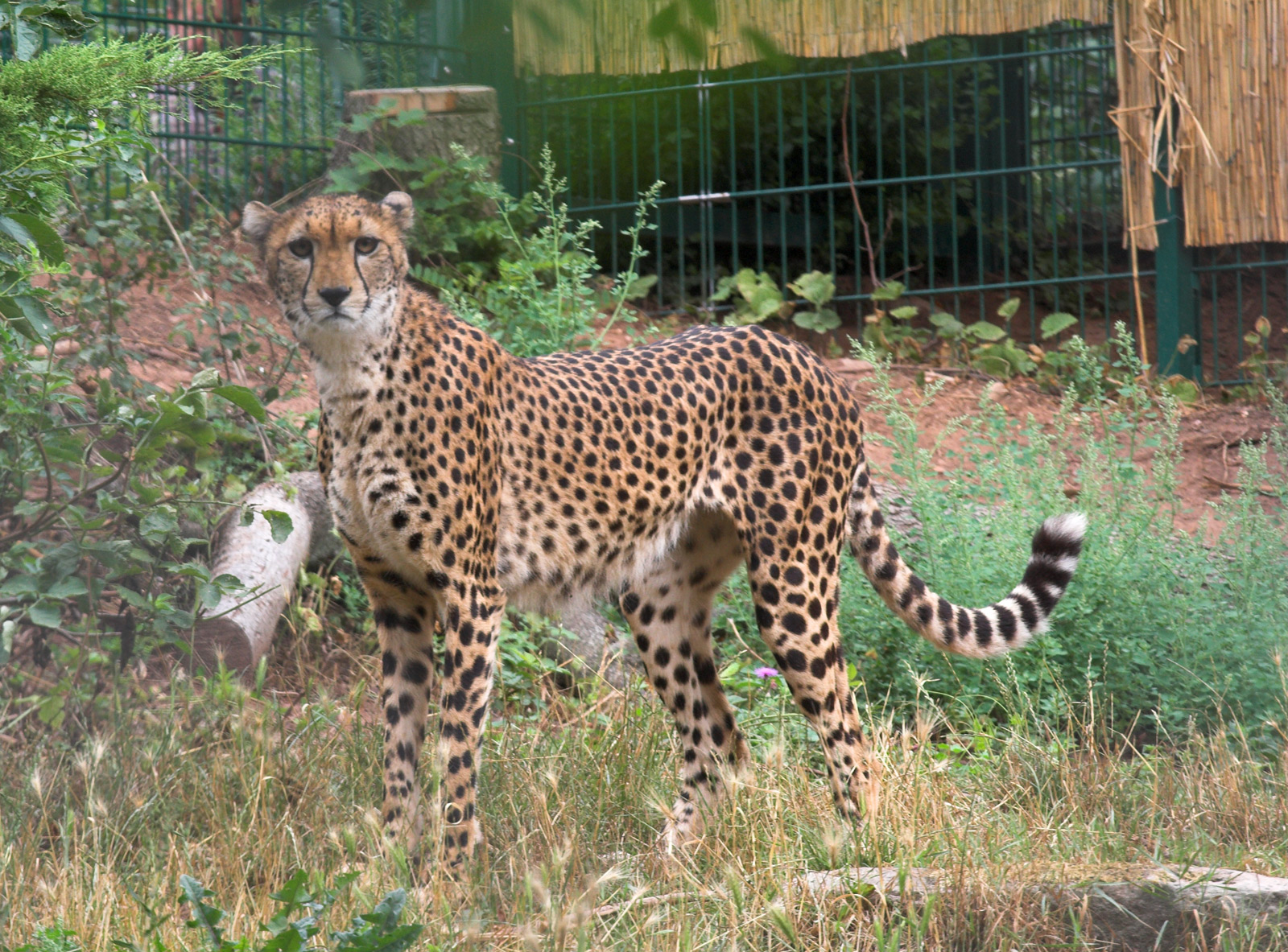
A female cheetah in Zoo Landau, Germany
Scientific classification Edit this classification
Kingdom: Animalia
Phylum: Chordata
Class: Mammalia
Order: Carnivora
Family: Felidae
Genus: Acinonyx
Species:
Subspecies:
A. j. soemmeringii[1]
Trinomial name
Acinonyx jubatus soemmeringii[1]
(Fitzinger, 1855)
A. j. soemmeringii range (brown)
Synonyms

A. j. megabalica (Heuglin), 1863
A. j. wagneri (Hilzheimer), 1913

The Northeast African cheetah (Acinonyx jubatus soemmeringii) is a cheetah subspecies occurring in Northeast Africa. Contemporary records are known in South Sudan, Uganda, and Ethiopia, but population status in Eritrea, Djibouti, Somalia, Kenya, and Sudan is unknown.[2]

It was first described under the scientific name Cynailurus soemmeringii by the Austrian zoologist Leopold Fitzinger in 1855 on the basis of a specimen from Sudan's Bayuda Desert brought to the Tiergarten Schönbrunn in Vienna.[3] It is also known as the Sudan cheetah.[4]

In the 1970s, the cheetah population in Ethiopia, Sudan and Somalia was roughly estimated at 1,150 to 4,500 individuals.[5] In 2024, it was estimated that 533 individuals live inside protected areas in this region; the number of individuals living outside protected areas is unknown.[2]

This subspecies is more closely related to the Southern African cheetah than to Saharan cheetah populations. Results of a phylogeographic analysis indicate that the two subspecies diverged between 16,000 and 72,000 years ago.[6]

Taxonomy

[edit]
An illustration of cheetahs from Fahhad, Abyssania by Alfred Edmund Brehm, 1895

Cynailurus soemmeringii was the scientific name proposed by Leopold Fitzinger in 1855, when he described a live male cheetah brought by Theodor von Heuglin from Sudan's Bayuda Desert in Kordofan to Tiergarten Schönbrunn in Vienna. The name honoured Samuel Thomas von Soemmerring.[3]

Following Fitzinger's description, other naturalists and zoologists described cheetahs from other parts of Northeast Africa that today are considered synonyms of A. j. soemmeringii:[1]

  • Felis megabalica was proposed by Theodor von Heuglin in 1863 who described a cheetah skin purchased at the western bank of Bahr-el-Abiad. Heuglin stated that it was brought from further inland. The scientific name consists of the Greek roots mega (much) and "balios" (spotted).[7]
  • Acinonyx wagneri proposed by Max Hilzheimer in 1913 was a cheetah specimen from Kordofan in Sudan. Hilzheimer named it in honour of Johann Andreas Wagner.[8]

Evolution

[edit]

For a phylogeographic study, 95 cheetah samples were used, such as feces from wild cheetahs collected in Iran, tissue samples from captive and confiscated cheetahs, hair and bone samples from museum specimens. Study results revealed that the Northeast African cheetah and the Southern African cheetah are genetically different from each other and from the Asiatic cheetah. The Northeast African cheetah probably diverged from the Southern African cheetah between 32,200 and 244,000 years ago. Therefore, it was proposed that it deserves a subspecific status.[6]

Physical characteristics

[edit]
At Whipsnade Zoo, Bedfordshire

Like its relative to the south in East Africa, the Northeast African cheetah is fairly large. Physically, it most resembles the East African cheetah; it has a densely ochraceous spotted coat with relatively thick and coarse fur in comparison to its relatives from eastern and northwestern Africa. The belly of the Northeast African cheetah is distinctly white while its breast and throat can have some black spots similar to the eastern subspecies. However, it is the darkest in fur color. This cheetah has the most widespread and separated black dorsal spots, but smaller than that of the East African cheetah's.[9][10] In contrast to the East African cheetah, the Northeast African cheetah has no spots on the hind feet, although some among the Chadian population have spotted hind legs.[4] This cheetah has distinct white patches around its eyes but the facial spotting can vary from very dense to relatively thin. The Northeast African cheetah has been seen with both white and black tipped tails, although certain cheetahs' tails are white tipped. This subspecies' tail is also notably thick.

This subspecies has the largest head size, but sometimes can get relatively smaller. However, it does not have mustache markings. The tear marks of this cheetah are highly inconsistent, but they are frequently thickest at the mouth corners, unlike those of the other four subspecies. This cheetah is the only subspecies not being reported to show a rare color variation. However, despite having the darkest fur color, certain cheetahs' fur color can be pale yellow or almost white as well. In cold climates, such as in Whipsnade Zoo, Northeast African cheetahs are the only African subspecies that can develop fluffy winter fur coats, although they are less developed than that of the Asiatic cheetah's.[11]

Distribution and habitat

[edit]

The Northeast African cheetah is regionally extinct in Eritrea and Djibouti. In 2007, the estimated total Northeast African cheetah population approximated 950 individuals. In Ethiopia, this subspecies is resident in Omo, Gambella, Aledeghi, Mago, and Yangudi Rassa National Parks, and in Borena Zone, Ogaden, Afar and the neighbouring Blen-Afar Regions. In South Sudan, populations are known in Boma, Southern, Radom and Badingilo National Parks.[2][12]

It inhabits wide open lands, grasslands, semi-arid areas, and other open habitats where prey is abundant such as in the East Sudanian Savanna. It is rarely seen in northern regions of Sudan. Wild cheetahs have been spotted in An Nil al Azraq in southeastern Sudan.[citation needed]

Ecology and behavior

[edit]

Hunting and diet

[edit]
Northeast African cheetah

The cheetahs are carnivorous and mostly feed on herbivorous animals, such as Grant's gazelles, Cape hares, guineafowls and large animals like hartebeests, plains zebras and Barbary ostriches on few occasions. The Soemmerring's gazelles are the most preferable prey. However, lack of Soemmerring's gazelles in the Northeast African cheetah's region caused near extinction in Sudan.

Enemies and competitors

[edit]

Like other subspecies, they are threatened and outranked by larger predators in their area, such as lions,[13] leopards, spotted hyenas and wild dogs, as they can kill cheetahs and steal their carcasses. The cheetahs would surrender their meals to spotted and striped hyenas. Cheetahs are known to be unable to defend themselves against these predators. However, coalitions of male adult cheetahs can chase predators away. Additionally, a single cheetah can chase jackals, golden wolves and a lone wild dog away.

Threats

[edit]

The Northeast African cheetah is threatened by poaching, illegal wildlife trade, hunting, habitat loss, and lack of prey. There is an increasing rate of Northeast African cheetah cubs mostly from Somaliland being smuggled to Saudi Arabia, the United Arab Emirates and Yemen.[2] Between 1972 and 2007, land-use changed considerably in Ethiopia's Afar Region. The extent of cultivated land increased by more than 700%, whereas woodland and grassland decreased by about 90%. The main cause for the reduction of woodland cover is firewood collection and charcoal production for sale, and use of wood for construction of houses.[14]

The cheetah is highly threatened by the illegal pet trade from Somaliland. Cheetah cubs are sold on the black market for over $10,000 but rescuing a single cub costs more than three times that much. Most captive cheetah cubs are thought to die before export from Africa.[15][16]

Conservation

[edit]
At the Djibouti Cheetah Refuge

Ethiopian Wildlife Conservation

[edit]

The cheetah, together with the African wild dog, is considered emblematic of Ethiopia.[17] A conservation project for wild animals started first in 2006 after "real lack of awareness in Ethiopia about the treatment of animals".[18] The conservation goal is to ensure the increasing populations of cheetahs and other threatened wild animals in Ethiopia.[19] The Ethiopian Wildlife Conservation Authority has confiscated cheetah cubs from wildlife trade in Ethiopia, many of which have been rehomed by Born Free, at their wildlife sanctuary Ensessa Kotteh.[20]

Semi-captive breeding program

[edit]

There is a reproduction programme for the cheetah at the Djibouti Cheetah Refuge in Djibouti City, which first started in 2004.[21] The Djibouti Cheetah Refuge (also known as DECAN Cheetah Refuge) was first constructed in 2002 and the initial phase was opened a year later.[22]

Rewilding project in Arabia

[edit]
Cheetahs in Sir Bani Yas, the UAE

There is also a rewilding project from the Breeding Centre for Endangered Arabian Wildlife for cheetahs breeding in wildlife parks and those in captivity in the Middle-East, such as in the Arabian Wildlife Park from Sir Bani Yas, the Al-Ain Zoo and Sharjah's Arabian Wildlife Centre from the United Arab Emirates.[23][24]

Asiatic cheetahs once lived in the Arabian Peninsula until they became regionally extinct everywhere in the wild of the Middle-East in the early 1970s. The rewilding project officially started in 2008, when four captive-born Northeast African cheetahs had been reintroduced into the wild of Sir Bani Yas Island to roam free and maintain natural balance. The cheetahs are taught to breed, to survive and feed on sand and mountain gazelle on their own, then their offspring would successfully learn those instincts from their parents.[25]

Cheetahs are known to be difficult to breed and therefore, the survival rate of cheetah cubs is low both in the wild and in captivity. However, the project has been successful so far. In April 2010, the first four cheetah cubs had been born on the island from a successfully rewilded Northeast African cheetah mother named 'Safira'. According to conservation team, the cubs' mother had done an impressive job in taking care of her children. The cubs are recognized to be the first wild-born cheetahs in Arabia in 40 years.[26][27][28][29]

The Al-Wabra Wildlife Preservation (AWWP) from Qatar, Al-Dhaid Wildlife Centre from Sharjah, the Nakelee Wildlife Centre and the Wadi Al-Safa Wildlife Centre from Dubai are also part of the international breeding programme to help save the rare cheetah population which are breeding in captivity. The breeding programmes of the Middle-East are aiming to release the cheetah into the wild of Africa. There are currently 23 adults and 7 cubs in Wadi Al-Safa.[30][31]

In captivity

[edit]
Cheetahs in Chester Zoo
Two cheetah cubs in Chester Zoo

There are breeding programs from Europe and the Middle East for the cheetah, such as the European Endangered Species Programme (EEP) which is reserved for European Association of Zoos and Aquaria (EAZA). The breeding programs have been successful.[32] The captive breeding projects for the Northeast African cheetah first started in the Middle East, after several years of populations of cheetahs decreasing due to cubs being used for commercial purposes.[18] Then European zoos started afterwards once the captive-born Northeast African cheetahs from the Arabian peninsula were sent to Zoological collections of Europe in Netherlands and Germany.

Cheetahs are known to be difficult to breed, especially in captivity. The Northeast African cheetah has been breeding in captivity for many years in Arabian zoos, such as Al Ain Zoo and Arabian wildlife centers from Qatar, Sharjah and Dubai. The cheetahs breeding in European zoos are found at Zoo Landau and Tierpark Berlin from Germany, the Chester Zoo, Bristol Zoo, Whipsnade Zoo and Marwell Zoo from the United Kingdom, Zoo de Cerza, Parc zoologique de Bordeaux Pessac and La Palmyre Zoo from France, the Plzeň Zoo from the Czech Republic, Zoo Santo Inácio from Portugal, the DierenPark Amersfoort and Beekse Bergen Safari Park from Netherlands. The Fota Wildlife Park from Ireland, which bred hundreds of South African cheetahs, has bred its first Northern cheetah in 2013.[33]

The first captive breeding projects for the Northeast African cheetah started in Sheikh Butti Al-Maktoum's Wildlife Centre in early 1994, then followed by the Sharjah's Arabian Breeding Centre in late 2002 and Wadi Al Safa Wildlife Centre in 2003, until captive-bred Northeast African cheetahs from the Middle East were sent to two European zoos, Zoo Landau and Beekse Bergen Safari Park. La Palmyre Zoo would receive the cheetahs 6 months later as well.[citation needed]

Tamed cheetahs

[edit]
Egyptian chariot, accompanied by a cheetah and slave
A tribesman bringing a cheetah and ebony as tribute to the King of Thebes (c. 1700 B.C.)

Both continents of Africa and Asia had 100,000 cheetahs in the 19th century. Cheetahs were once numerous in north, central and in the Horn of Africa. They ranged in Egypt and Libya in northern Africa, from Somalia to Niger in northeastern and central Africa. The Ancient Egyptians often kept tamed (not truly domesticated) cheetahs and raised them as pets, and also trained them for hunting alongside humans. Tamed cheetahs were taken to open hunting fields in low-sided carts or by horseback, hooded and blindfolded, and kept on leashes. When the prey was near enough, the cheetahs would be released to go after it.

This was the Egyptian tradition that was later passed on to the ancient Persians and brought to India, where the practice with Asiatic cheetahs was continued by Indian princes into the 12th century.

See also

[edit]

References

[edit]
[edit]
Revisions and contributorsEdit on WikipediaRead on Wikipedia
from Grokipedia
The Northeast African cheetah (Acinonyx jubatus soemmeringii) is a subspecies of the cheetah, distinguished by its tawny coat covered in solid black spots, semi-non-retractable claws, and exceptional sprinting ability reaching speeds up to 100 km/h in short bursts, adapted for hunting in open terrains. Native to the Horn of Africa, it inhabits arid savannas, dry shrublands, semi-deserts, and grasslands across fragmented landscapes. With an estimated population of 260–590 mature individuals as of 2023, this subspecies was uplisted to Endangered on the IUCN Red List in 2023, reflecting a severe ongoing decline driven by multiple anthropogenic pressures. Primarily distributed in Ethiopia, Sudan, South Sudan, and northern Somalia, the Northeast African cheetah has been regionally extirpated from Eritrea and Djibouti due to historical habitat fragmentation and persecution. Its range overlaps with the East Sudanian Savanna ecoregion, where low prey densities and vast home ranges for males make survival challenging in increasingly human-dominated landscapes. Genetic studies confirm its distinctiveness from other African cheetah subspecies, with low genetic diversity exacerbating vulnerability to inbreeding and disease. The primary threats include the rampant illegal , with over 480 cubs trafficked through between 2010 and 2019, mainly destined for the pet markets in Gulf countries like and the UAE. loss from agricultural expansion, by , and infrastructure development has reduced available territory in key areas, while retaliatory killings by pastoralists due to predation further diminish numbers. Prey base depletion, including species like gazelles and , compounds these issues, as require abundant medium-sized ungulates to sustain their energy-intensive . Conservation initiatives, led by organizations such as the Cheetah Conservation Fund, emphasize strengthening against trafficking, establishing transboundary protected areas, and community-based programs to mitigate human-wildlife conflict. Genetic monitoring and efforts, including international transfers like those to zoos in and , aim to bolster populations and preserve . Without urgent intervention, this iconic predator risks functional extinction in the wild within the next decade.

Taxonomy and systematics

Subspecies classification

The Northeast African cheetah is formally classified as the subspecies Acinonyx jubatus soemmeringii (Fitzinger, 1855), honoring the German anatomist Samuel Thomas von Sömmering and based on a specimen collected from the steppes of the Kababish in Sudan's Bayuda Desert and housed in Vienna's Tiergarten Schönbrunn. This subspecies is recognized as one of four extant subspecies, alongside the (A. j. venaticus), (A. j. hecki), and Southern and (A. j. jubatus). The current classification follows the 2017 revision by the IUCN Cat Specialist Group (Kitchener et al.), recognizing four based on genetic, morphological, and geographic evidence. Subspecies status is determined by criteria including morphological variations such as lighter coat coloration and smaller body size relative to southern populations, geographic isolation across distinct ecoregions, and genetic markers from that indicate regional divergence. Its historical range encompasses , primarily , , , , and , where populations were once distributed across semi-arid savannas and deserts. Also referred to as the Sudan cheetah, the taxonomic framework for A. j. soemmeringii has seen revisions since its initial description, with early 20th-century classifications by zoologists like Max Hilzheimer refining subspecies boundaries based on regional specimens.

Genetic distinctiveness

The Northeast African (Acinonyx jubatus soemmeringii) exhibits low , characteristic of all due to historical population bottlenecks approximately 10,000–12,000 years ago, which drastically reduced overall to 0.1–4% of that observed in other felids. Despite this uniformity, A. j. soemmeringii possesses unique (mtDNA) haplotypes, including a diagnostic 3 bp deletion in the MT-ND5 gene and specific nucleotide substitutions in the control region (e.g., positions 16473: C and 16865: T), distinguishing it from other . These molecular markers provide the primary genetic basis for its recognition as a distinct . Genetic analyses from 2017 to 2023, including whole-genome sequencing of 58 , reveal that A. j. soemmeringii maintains genome-wide heterozygosity levels around 0.00040 (range: 0.00029–0.00050), comparable to other African but markedly lower than in outbred felids like the domestic (0.24). Phylogenetic assessments using FST metrics indicate a closer genetic relationship to the Southern African cheetah (A. j. jubatus, FST = 0.285) than to the Northwest African (A. j. hecki, FST = 0.384) or Asiatic (A. j. venaticus, FST = 0.438) , with the lowest differentiation from East African cheetahs (previously classified as A. j. raineyi in some studies, FST = 0.219). Limited among underscores their isolation, emphasizing the need for targeted conservation to preserve these divergent lineages. High levels of homozygosity (averaging 95% across cheetah genomes) in A. j. soemmeringii contribute to , manifesting as reduced fertility and elevated cub mortality. Male cheetahs typically exhibit poor , with 70–90% structurally abnormal spermatozoa—substantially higher than the 10–30% abnormality rates in outbred felid populations—leading to lower conception rates and litter sizes. Cub survival is further compromised, with inbreeding-linked mortality rates 30–40% higher than in less inbred carnivores, increasing vulnerability to environmental stressors and . These risks highlight the urgency of genetic management strategies, such as translocations, to mitigate further diversity loss in this subspecies. Genetic profiling plays a crucial role in efforts for A. j. soemmeringii, particularly in the , a major trafficking hotspot. A 190 bp mtDNA mini-barcode targeting the control region enables rapid identification from degraded samples, such as skins or meat in illegal trade. Complementing this, short (STR) loci—such as those developed for felids (e.g., FCA005, FCA008, FCA045)—facilitate individual identification and parentage verification, aiding by linking poached specimens to source populations. For instance, analysis of 55 confiscated cheetahs in (2016–2019) confirmed all as A. j. soemmeringii using these markers, supporting uplisting recommendations for enhanced protection.

Evolutionary history

Fossil record

The fossil record of the cheetah genus Acinonyx, to which the Northeast African cheetah (A. j. soemmeringii) belongs, originates in during the late . Early remains of Acinonyx sp. have been recovered from in , dated to approximately 3.6 million years ago, marking one of the oldest known occurrences of the genus in and suggesting an initial radiation in open woodland and environments of the region. During the and , primitive cheetahs such as Acinonyx aicha represented key ancestral forms, with fossils documented from North African sites including Ahl al Oughlam in , dated to around 2.5 million years ago. These specimens exhibit larger body sizes—up to twice that of modern cheetahs—and robust cranial features adapted for pursuing prey in expansive savannas, indicating the lineage's adaptation to Northeast Africa's paleo-habitats. The giant cheetah , closely related, is known from European and African sites. Pleistocene fossils of sp. from East African sites date to the Pleistocene and demonstrate the historical presence of cheetah-like felids in . These remains show morphological similarities to modern forms but with evidence of greater size variation suited to the era's fluctuating climates. The genus experienced range contractions following post-glacial warming around 12,000 years ago, linked to and megafaunal extinctions, after which larger ancestral forms disappeared from the record by the middle Pleistocene.

Phylogenetic relationships

The Puma lineage, which includes the genus Acinonyx, the puma (Puma concolor), and jaguarundi (Herpailurus yagouaroundi), diverged from other felids approximately 8–10 million years ago during the late Miocene. Within this lineage, Acinonyx split from its closest relatives around 6.7–7 million years ago. This divergence is supported by molecular clock analyses of mitochondrial DNA (mtDNA) and nuclear genomes, reflecting adaptations to open habitats in Eurasia and Africa. The single extant species Acinonyx jubatus emerged through a severe approximately 100,000–200,000 years ago, followed by a secondary bottleneck around 10,000–12,000 years ago at the end of the Pleistocene, drastically reducing across all populations. This event is evidenced by whole-genome sequencing showing near-identical alleles at many loci and low heterozygosity (∼0.1–0.2% divergence in mitogenomes). Within A. jubatus, the Northeast African cheetah (A. j. soemmeringii) shares a close phylogenetic relationship with Southern African cheetahs (A. j. jubatus), diverging approximately 30,000–70,000 years ago based on mtDNA estimates, while exhibiting a deeper split from the (A. j. venaticus) around 100,000–140,000 years ago. Phylogenetic trees constructed from mtDNA (e.g., and control region sequences) and nuclear genome-wide SNPs position A. j. soemmeringii as basal to the East and African clades, with strong bootstrap support (74–90%) for its distinction from Asiatic lineages. These patterns are corroborated by 2020 genome-wide analyses and 2022 studies revealing unique haplogroups, including a 3-bp deletion in the ND5 specific to soemmeringii. This shared ancestry with Southern African populations explains morphological and behavioral similarities, such as comparable body size and sprint adaptations, but underscores the effects of geographic isolation in , leading to subtle genetic substructuring and heightened to local threats. Fossil evidence supports these divergences through mid-Pleistocene records of in .

Description

Physical features

The Northeast African cheetah ( jubatus soemmeringii) exhibits a slender, aerodynamic build adapted for high-speed pursuits, with adults measuring 121–145 cm in head-body length and possessing a of 60–90 cm. Body weight typically ranges from 40–60 kg, with males averaging 10–20% heavier than females and displaying broader heads, reflecting marked in size and cranial morphology. Both sexes feature prominent black tear marks extending from the inner corners of the eyes to the mouth, which reduce sun glare for improved visibility during daylight activity. The subspecies is characterized by a short, coarse coat of tawny or ochraceous hue, densely covered in solid black spots measuring approximately 2–3 cm in diameter, which provide camouflage in arid grasslands. Unlike some other cheetah subspecies, the Northeast African variant shows a relatively thick and coarse fur texture with a whiter belly and fewer spots on the throat and chest. Key morphological adaptations enhance sprint performance, including enlarged nasal passages and sinuses that facilitate rapid oxygen intake during short bursts of activity. Semi-retractable claws, which remain partially extended like running cleats, offer superior traction on loose substrates. Large, forward-facing eyes support acute binocular vision for depth perception and prey tracking at distance. Long, slender legs combined with a highly flexible spine allow for extended strides, enabling acceleration to speeds up to 100 km/h in bursts of 20–30 seconds. Overall, this subspecies tends to have a smaller body size compared to southern African populations, though core adaptations remain consistent.

Differences from other subspecies

The Northeast African cheetah (Acinonyx jubatus soemmeringii) exhibits subtle morphological variations compared to other subspecies, particularly in body size and coat characteristics. Adults typically weigh 40–60 kg, making them generally smaller than the Southern African cheetah (A. j. jubatus), with males often exceeding 60 kg, while their maximum size is similar to that of the (A. j. venaticus), which reaches up to 54 kg. These dimensions contribute to a robust build suited for open environments, with relatively long legs proportional to body size that facilitate high-speed pursuits, distinguishing them from the more slender-legged Asiatic form. In terms of coat and markings, the Northeast African cheetah possesses a densely ochraceous, spotted pelage with thick and coarse fur, which is thicker than that observed in southern populations, potentially aiding adaptation to the cooler highland areas of . This contrasts with the (A. j. hecki), whose shorter, nearly features faded spots transitioning from along the spine to light brown on the limbs, providing less dense camouflage in arid Saharan habitats. The spots on the Northeast African cheetah are solid , larger, and more uniformly distributed than the paler, less defined patterns in the Northwest African subspecies. Regarding health traits, Northeast African cheetahs show a lower incidence of genetic defects such as kinked tails—reported at around 19% in Southern African populations—due to relatively higher in wild northeastern groups.

Distribution and habitat

Historical range

The Northeast African (Acinonyx jubatus soemmeringii), also known as the Sudan , historically inhabited a broad expanse across Northeast , including , , , , , , and Egypt's Valley region. This distribution reflected adaptation to diverse habitats including savannas, semi-arid grasslands, and fringes during periods of more favorable . Archaeological and artistic evidence underscores the longstanding presence of the subspecies in the region. Depictions in ancient Egyptian tombs, dating back approximately 6,000 years to around 4000 BCE, portray cheetahs as valued hunting companions alongside pharaohs and nobles, often leashed and participating in pursuits of gazelles and other ungulates in the Nile Valley landscape. These records, including tomb paintings from sites like Beni Hasan and the Middle Kingdom era, highlight the cheetah's integration into human society and its ecological role as a predator in a once species-rich ecosystem resembling the modern Serengeti. Further historical accounts from the 19th century document sightings in Eritrea and Djibouti, confirming the subspecies' occurrence in the Horn of Africa amid European exploration and colonial records. The subspecies remained relatively widespread through the late 19th and early 20th centuries, but significant range contraction occurred thereafter, driven primarily by human-induced factors. Overhunting for skins, trophies, and as pests targeting livestock led to rapid declines, particularly in northern areas; by the mid-20th century, the cheetah had been extirpated from most of Egypt, including the northern Western Desert, with prey species like gazelles nearly eliminated through uncontrolled poaching. This loss was exacerbated in peripheral regions like Djibouti and Eritrea, where habitat conversion and conflict further isolated populations. Prior to anthropogenic pressures, the historical range likely expanded during wetter phases of the Pleistocene epoch, when increased rainfall supported broader grasslands and prey availability across , facilitating dispersal from refugia in eastern and southern regions. Subsequent post-Pleistocene, combined with expanding human settlements, , and , initiated long-term fragmentation, setting the stage for 20th-century extirpations.

Current range and habitat preferences

The Northeast African cheetah (Acinonyx jubatus soemmeringii) occupies a highly fragmented contemporary range, a sharp decline from its historical distribution across much of , with viable populations primarily persisting in and . Confirmed presence includes 's Omo National Park, Bale Mountains National Park, Yangudi Rassa National Park, and Gambella National Park, as well as 's Boma National Park; confirmed presence in (including ), with possible scattered individuals in ; regionally extirpated from . In , a stable population of approximately 96 individuals was estimated as of late 2024. The overall occupied area spans approximately 50,000–100,000 km², divided into fewer than 10 isolated subpopulations, many in transboundary regions. Recent surveys have bolstered evidence of ongoing occupancy, including 2024 camera trap efforts in Ethiopia's Somali Regional State, which revealed a previously undocumented . in Somaliland's Geed Deeble area also verified wild individuals in 2024, highlighting connectivity across the landscape. This subspecies favors open savannas, expansive grasslands, and semi-arid scrublands, typically at elevations up to 2,500 m, where prey abundance supports its sprint-based . It shows a particular affinity for landscapes with 20–50% woody or tree cover, providing essential opportunities without overly dense that could impede pursuits.

Behavior and ecology

Social structure and reproduction

The Northeast African cheetah (Acinonyx jubatus soemmeringii) displays a largely solitary , with adult females typically living independently except during the period of raising dependent cubs. Males, in contrast, often form transient coalitions consisting of 2-3 related brothers, which collaborate to defend territories and enhance access to opportunities. These coalitions provide a over solitary males in territorial disputes and mate guarding, though cooperation during hunting remains limited. The species exhibits a polygynous , in which males mate with multiple females without forming lasting pair bonds. Females are polyestrous and induced ovulators, entering estrus approximately every 2-3 months if not pregnant, with receptivity lasting 1-3 days marked by behaviors such as increased vocalization and marking. lasts 90-95 days, after which females give birth to litters averaging 3-5 cubs, though sizes range from 1-8. Male coalitions maintain territories up to 800 km² in the arid habitats of , roaming widely to intercept females in estrus. Females reach and begin breeding at 2-3 years of age, with males achieving physiological maturity around the same time but often delayed socially until establishing territories. Births occur year-round. is low, with annual litter success rates of approximately 20-30% due to high cub mortality exceeding 70%, primarily from predation by larger carnivores during the first few months. Mothers provide intensive , teaching skills over 13-20 months, after which cubs disperse at 1.5-2 years of age; male cubs may join or form coalitions, while females establish solitary ranges.

Hunting, diet, and daily activity

The Northeast African (Acinonyx jubatus soemmeringii) primarily hunts during the day, relying on keen eyesight to spot prey from distances up to several kilometers before within 60-100 meters and initiating a high-speed chase. These pursuits involve explosive bursts of speed reaching 60-100 km/h over short distances of 200-500 meters, during which the uses its flexible spine, semi-retractable claws, and long tail for acceleration, maneuverability, and balance to trip and suffocate the prey by biting the throat. Hunting success rates for these chases average 40-50%, higher for smaller or vulnerable prey but limited by the inability to sustain top speeds beyond brief intervals or defend kills against larger carnivores. Male coalitions occasionally hunt cooperatively, enabling them to target slightly larger prey through coordinated tactics. The diet of the Northeast African cheetah consists mainly of small- to medium-sized ungulates weighing under 40 kg, which form 70-80% of their intake, including (Nanger soemmerringii), dik-diks (Madoqua spp.), gerenuks (Litocranius walleri), and smaller mammals like hares; birds such as guineafowl and occasionally larger species like young or oryx are also consumed. This preference reflects adaptations for pursuing agile, open-country herbivores in the subspecies' arid and semi-arid habitats. Cheetahs opportunistically scavenge carcasses when hunting yields are low, though fresh kills are prioritized to meet their high-energy needs. An adult requires about 3-5 kg of meat daily, often gorging after a successful hunt before resting. Activity patterns vary with environmental conditions: in the hot lowlands of and , the shifts to crepuscular or partly nocturnal behavior to avoid peak heat, with hunting peaks and , while in cooler , it remains predominantly diurnal. Daily movements typically cover 10-20 km as individuals patrol territories, scan for prey from elevated vantage points like mounds, and rest in shaded areas during midday. This rhythm supports frequent foraging, as the 's elevated demands multiple small meals weekly, and it derives nearly all hydration from prey fluids, rarely drinking free-standing water.

Predators, competitors, and interactions

The Northeast African (Acinonyx jubatus soemmeringii) experiences predation primarily from larger carnivores, with lions ( leo) and spotted ( crocuta) responsible for significant cub losses in overlapping habitats. These predators account for approximately 20-30% of cub mortality, contributing to overall rates exceeding 70% in the first two months of life due to direct attacks. Rare instances of adult predation by leopards ( pardus) occur, typically during vulnerable periods such as post-hunt recovery. Competitors for resources include lions, spotted hyenas, and African wild dogs (Lycaon pictus), which engage in by stealing kills at rates up to 50% in shared ranges, forcing cheetahs to expend extra energy on additional hunts. Leopards exhibit niche overlap with s on smaller prey species, intensifying competition in fragmented habitats. Ecological interactions involve mutualistic associations with vultures, which aid in carcass detection and indirectly benefit cheetah foraging by signaling potential scavenging opportunities during times of low hunt success. As an apex predator, the Northeast African cheetah exerts top-down control on medium-sized herbivore populations, such as gazelles and hares, thereby promoting savanna biodiversity through regulated grazing and vegetation dynamics. In regions where lion and hyena densities are low or extirpated—common across much of the subspecies' range—these interactions are reduced, allowing higher cheetah persistence despite other pressures.

Conservation status

Population estimates

The Northeast African cheetah (Acinonyx jubatus soemmeringii) is estimated to number 260–590 mature individuals across its range as of assessments in 2017 and 2021. As of 2025, fewer than 500 individuals are estimated to remain in the wild. This figure reflects a continued decline, primarily confined to fragmented habitats in , , , and adjacent regions. Population surveys for this subspecies rely on noninvasive methods tailored to its elusive nature and low densities, including camera trapping to capture individuals for identification, spoor tracking to estimate presence and movement, and genetic sampling from scat or hair for confirming subspecies identity and relatedness. For instance, camera traps deployed in potential habitats allow for density calculations using capture-recapture models, while genetic analysis of confiscated specimens has verified the subspecies' involvement in illegal trade. Recent efforts in Ethiopia (2023–2025) have combined these techniques to map distributions, revealing low encounter rates consistent with sparse populations. Since 2010, the subspecies has experienced ongoing decline driven by fragmentation and other pressures, raising concerns for local extinctions such as in Somalia where sightings are now rare. The Northeast African cheetah (Acinonyx jubatus soemmeringii) is classified as Endangered on the IUCN Red List, an uplisting from Vulnerable that occurred in 2023. This status reflects a population of an estimated 260–590 mature individuals undergoing continued decline, qualifying under IUCN criterion C2a(i) for small, restricted populations with observed reductions. The 2023 assessment was informed by recent genetic analyses and field surveys demonstrating high levels of isolation and trade-related pressures, marking a shift from the evaluation under the broader species assessment. Earlier subspecies-specific evaluations date back to , when it was initially assessed as Critically Endangered based on limited distribution data, though subsequent reviews adjusted the categorization amid ongoing uncertainties in population estimates. Population trends indicate a persistent downward trajectory; models suggest potential stabilization or slight recovery if habitat corridors are established to reduce fragmentation. In the global context, this subspecies-specific Endangered listing contrasts with the overall (A. jubatus) classification as Vulnerable, highlighting regional vulnerabilities within a species-level assessment that encompasses multiple across and .

Threats

Habitat loss and fragmentation

The Northeast African cheetah's habitat has undergone significant degradation due to and pastoralism, which have converted substantial portions of ecosystems in the since 1990. Pastoral activities, including by , further degrade vegetation cover and , reducing the availability of suitable terrain for the across Ethiopia, Sudan, and Somalia. Habitat fragmentation has isolated cheetah populations into small patches often smaller than 1,000 km², severely limiting and elevating risks. In , expanding road networks bisect traditional ranges, creating barriers that hinder dispersal and increase vulnerability to localized declines. These fragmented areas fail to support viable group sizes, as cheetahs require expansive connected landscapes exceeding 10,000 km² for sustainable populations. Climate change exacerbates these pressures through recurrent droughts that diminish prey availability in affected regions, compelling cheetahs to range farther and heighten encounters with human-modified landscapes. In Sudan, ongoing desertification has progressively shrunk viable savanna areas, transforming marginal habitats into arid zones unsuitable for the subspecies' prey species like gazelles and impalas. A notable case is the region in eastern , where land use changes driven by resource competition have resulted in significant degradation, primarily through conversion to croplands and settlements. This degradation has isolated remaining cheetah subpopulations, contributing to broader declines in the subspecies.

Poaching, trade, and human conflict

poses a severe threat to the Northeast African cheetah (Acinonyx jubatus soemmeringii), with individuals targeted primarily for their skins, bones used in , and live cubs captured for the illegal pet . In the , which encompasses the subspecies' core range, poachers exploit the cheetahs' solitary nature and low densities to target adults for pelts and skeletal elements believed to possess medicinal properties in certain cultural practices. Estimates indicate that hundreds of cheetahs are poached annually from this region, contributing significantly to declines, with data from 2020 to 2024 showing an average of over 500 live individuals involved in trafficking incidents alone, marking a 43% increase from prior years. Documented includes at least 1,884 incidents involving around 4,000 live cheetahs from 2010 to 2021, underscoring the scale of the threat. The illegal trade in Northeast African s is heavily centered in , serving as a major transit hub for cubs destined for the market in the , driven by demand for status symbols among wealthy buyers. Seizures have increased in recent years, with over 20 cubs rescued in in 2025 alone (including 10 in August and 11 in October), though actual trafficking volumes are likely much higher given that only about 10% of shipments are intercepted due to and limited enforcement. These cubs, often orphaned and smuggled via routes to and the , suffer high mortality rates during transport, exacerbating the subspecies' vulnerability. Human-cheetah conflicts further compound mortality, particularly through retaliatory killings by pastoralist herders in areas like , where cheetahs occasionally prey on small such as and calves in fragmented fringe habitats. In , surveys indicate that 68% of pastoralists reported a cheetah attack on in the last year, with 83% finding it acceptable to kill a cheetah in response, highlighting tolerance for reprisals amid overlapping grazing lands. Recent incidents underscore ongoing challenges, including the of 10 cheetah cubs in 2025 and 11 more in October 2025 from traffickers in , highlighting persistent enforcement gaps exacerbated by regional civil unrest and poverty.

Conservation efforts

Protected areas and national initiatives

In Ethiopia, key protected areas for the Northeast African include , Mago National Park, and Omo National Park, which together encompass diverse and riverine habitats supporting cheetah populations. These parks, along with Gambella National Park, cover substantial terrain vital for cheetah movement and prey availability. In , Dinder National Park serves as a primary reserve, preserving and ecosystems where cheetahs are occasionally recorded amid broader . South Sudan's Badingilo National Park provides essential in its expansive wooded floodplains, with recent sightings confirming cheetah presence in the Boma-Badingilo . Collectively, these areas span roughly 20,000 km², offering core refuges despite fragmented distributions. As of 2024, approximately 533 individuals are estimated to live within protected areas in the region, though the number outside is unknown. Ethiopia's National Action Plan for the Conservation of and , developed in 2010 and guiding efforts through the 2020s, emphasizes patrols and to safeguard cheetah subpopulations. In , conservation within aligns with broader wildlife protection frameworks, including patrols to mitigate threats in this tentative site. implements its 2010 National Action Plan, focusing on enforcement in parks like Badingilo to address and pressures. Community scouting programs in 's Gambella region, initiated following the 2024 partnership agreement with , engage locals in monitoring and conflict mitigation, fostering coexistence between cheetahs and pastoralists. These initiatives promote awareness and rapid response to incidents, contributing to reduced human-wildlife conflicts in the area. Transboundary efforts between and target shared borders in southern regions, aiming to secure migratory corridors for cheetahs through joint patrols and planning. Protected areas offer core refuges despite fragmented distributions and ongoing challenges like encroachment from and settlements.

Captive breeding and reintroduction programs

programs for the Northeast African cheetah (Acinonyx jubatus soemmeringii) are essential for maintaining and bolstering wild populations, with efforts coordinated through regional zoo associations. Institutions such as participate in the European Association of Zoos and Aquaria (EAZA) breeding program, which focuses on managed pairings to enhance viability amid ongoing threats like habitat loss and illegal trade. Similarly, in November 2025, received two young male Northeast African cheetahs, brothers Kendi and Tafari, from Yorkshire Wildlife Park as part of an international conservation initiative; the siblings, aged about 18 months, are intended for pairing with genetically compatible females to establish a sustainable ex-situ population. These programs adhere to guidelines similar to those of the Association of Zoos and Aquariums (AZA) for , emphasizing genetic management to counteract low diversity from historical bottlenecks. Early successes date to the in Middle Eastern facilities, where initial efforts produced viable litters, though overall numbers remain limited due to the ' rarity. Breeding challenges persist, including irregular female estrus cycles influenced by environmental factors and behavioral incompatibilities between individuals. Cub survival in captivity is generally low, improved from wild rates but hampered by health issues tied to , such as poor sperm quality and neonatal vulnerabilities. Reintroduction efforts leverage captive-bred stock to restore historical ranges, particularly in the Arabian Peninsula where the subspecies once thrived. In the United Arab Emirates, a rewilding project initiated in 2008 has successfully released four captive-born Northeast African cheetahs into the semi-wild environment of Sir Bani Yas Island, with ongoing monitoring to assess adaptation. More recently, Saudi Arabia launched a national cheetah reintroduction program in 2025, informed by the discovery of seven naturally mummified cheetahs (dated up to 4,000 years old) and skeletal remains in northern caves, confirming the subspecies' ancient presence in arid habitats. Genomic analysis of the mummies revealed genetic affinities with Northeast African lineages, supporting the use of captive individuals from this stock for rewilding to avoid sourcing from critically low wild populations. Post-release tracking employs GPS collars to monitor survival and dispersal, achieving high initial retention rates in pilot phases, though long-term success depends on habitat security and prey availability. These initiatives tie directly to wild Northeast African cheetah strongholds in Ethiopia and South Sudan by supplementing gene flow and reducing pressure on remnant groups estimated at under 500 individuals.

International collaboration and research

International collaboration plays a pivotal role in Northeast African conservation, with organizations like the Cheetah Conservation Fund (CCF) and the IUCN Species Survival Commission (SSC) Cat Specialist Group leading efforts to address threats through shared expertise and resources. CCF, headquartered in but active across cheetah range states, coordinates global initiatives including anti-trafficking operations and genetic research, while the IUCN SSC Cat Specialist Group provides assessments and policy recommendations to guide international action. A significant milestone was the 2023 genetic study by CCF researchers, which analyzed 55 confiscated cheetahs in and confirmed their origin as the Northeast African ( jubatus soemmeringii), estimating that 4,184 individuals were trafficked between 2010 and 2019. This evidence supported an expert appeal to the IUCN, leading to the ' uplisting from Vulnerable to Endangered on the Red List in December 2023, highlighting the severe impact of illegal trade on an estimated population of 260–590 mature individuals. Ongoing from 2023 to 2025, including CCF-led studies on trade routes and , continues to link to population declines, informing enforcement strategies across the . Transboundary collaborations enhance these efforts, such as EU-funded projects building capacity for protection in , where trained community observers have facilitated arrests of traffickers and rescues of confiscated cubs. The U.S. Fish and Wildlife Service (USFWS) has awarded over $3.6 million in grants since 2022 to partners like CCF, the African Wildlife Foundation, and for anti-trafficking initiatives in the , including judicial training, genetic sampling, and regional databases to curb live exports. These partnerships also support a brief reference to bolstering programs through shared veterinary and genetic protocols. Key outcomes include the Regional Conservation Strategy for and in Eastern Africa, developed through IUCN-SSC workshops in 2007 and guiding collaborative actions on connectivity and monitoring, with updates integrated into broader frameworks like the 2025–2027 SAFE Cheetah Plan. Capacity-building initiatives in , involving CCF and the local Ministry of Environment and Climate Change, have enabled multiple rescues, such as the 2025 confiscation of ten cubs from illegal networks, fostering local expertise in rehabilitation and .

References

Add your contribution
Related Hubs
Contribute something
User Avatar
No comments yet.