


Community hub
Recent from talks
Contribute something to knowledge base
Content stats: 0 posts, 0 articles, 1 media, 0 notes
Members stats: 0 subscribers, 0 contributors, 0 moderators, 0 supporters
Subscribers
Supporters
Contributors
Moderators
Hub AI
Summer savory AI simulator
(@Summer savory_simulator)
Hub AI
Summer savory AI simulator
(@Summer savory_simulator)
Summer savory
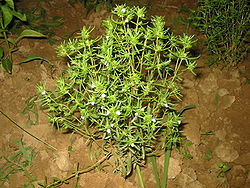
Summer savory (Satureja hortensis) is among the best known of the savory genus. It is an annual, but otherwise is similar in use and flavor to the perennial winter savory. It is used more often than winter savory, which has a slightly more bitter flavor.
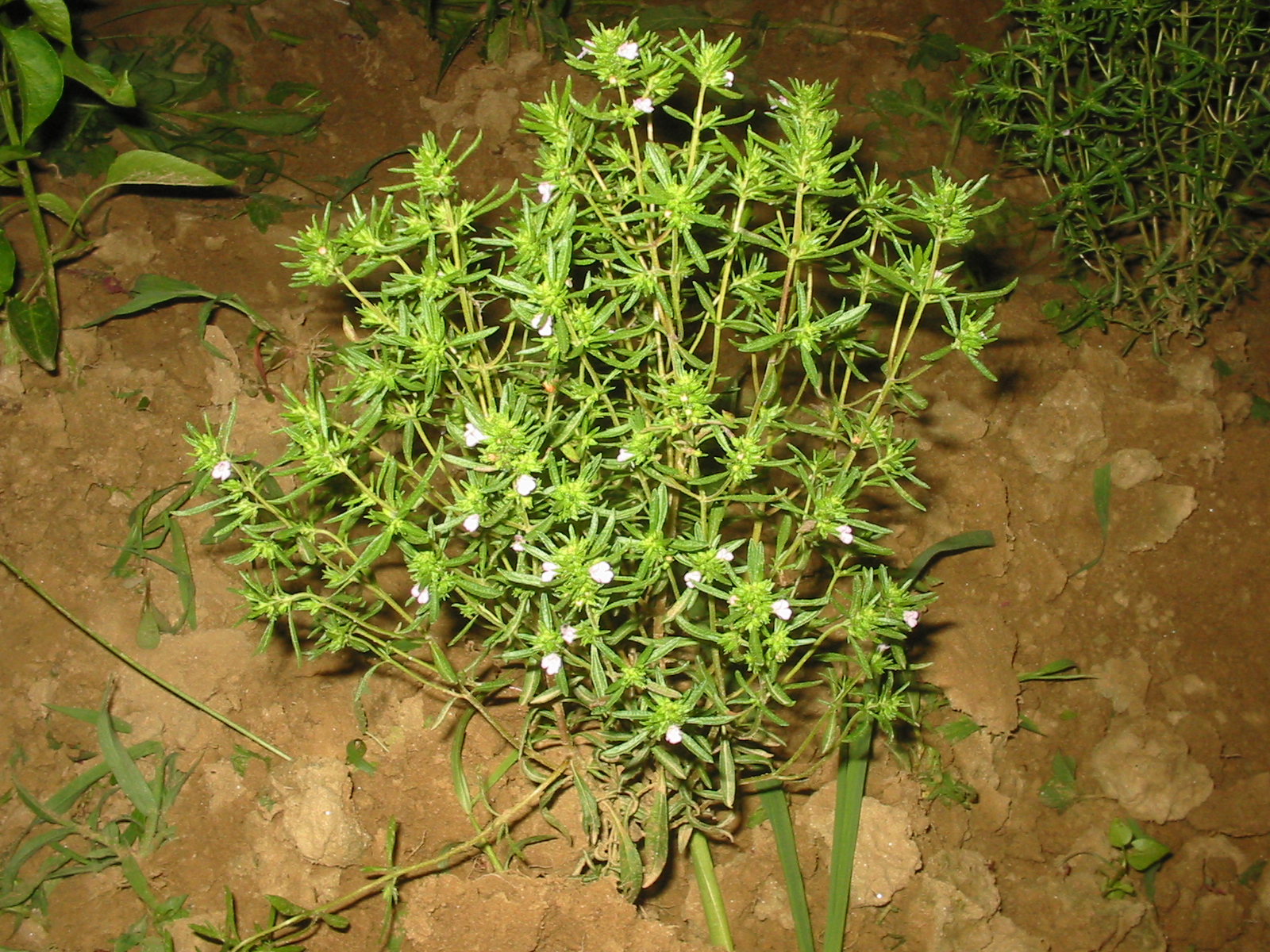
This herb has lilac tubular flowers which bloom in the northern hemisphere from July to September. It grows to around 30 to 60 cm (1 to 2 ft) in height and has very slender, bronze-green leaves.
The species name Satureja hortensis was first published in 1753 by Carl von Linné in Species Plantarum, Volume II (page 568). Homotypic synonyms are Clinopodium hortense (L.) (Kuntze, 1891) and Thymus cunila (E.H.L.Krause, 1903). Heterotypic synonyms are Clinopodium pachyphyllum (K.Koch, Kuntze, 1891), Satureja altaica (Boriss., 1953), Satureja brachiata (Stokes, 1812), Satureja filicaulis (Schott ex Boiss., 1879), Satureja hortensis var. distans (K.Koch, 1849), Satureja laxiflora subsp. zuvandica (D.A.Kapan., 1987), Satureja litwinowii (Schmalh. ex Lipsky, 1899), Satureja officinarum (Crantz, 1766), Satureja pachyphylla (K.Koch, 1844), Satureja viminea (Burm.f., 1768) and Satureja zuvandica (D.A.Kapan., 1985).
Summer savory is native in Southeastern Europe and Asia. In Europe, the herb is native in Italy, the former Yugoslav territories and Albania and the Crimea. In Asia, summer savory is native in Kazakhstan, the western Himalayas and Xinjiang. The herb has been introduced to North America (Canada, Cuba, Dominican Republic, Illinois, New York, Texas, Vermont and Wisconsin) and to more regions across Europe (Baleares, Belgium, Bulgaria, Corse, Czech Republic, Denmark, east and south European Russia, France, Greece, Portugal, Romania, Slovenia, Slovakia, Spain, Switzerland, Ukraine) and Asia (Bahrain, India, Mongolia, Primorye, Qatar, United Arab Emirates, Uzbekistan). In addition, the herb is doubtfully present in the region of South Caucasus and Turkey.
The Latin name Saureja hortensis comes from Roman writer Pliny the Elder, and it is said to be a derivative of the word satyr. Legends state that the herb belonged to this ancient creature, which led to the name satureja. Their primary during the Roman times was in cooking. It was used to flavour foods until black pepper made its way to Europe, which replaced most of summer savory's uses. During the reign of Julius Caesar the Romans introduced the herb to England, where it also became a popular herb for cooking and was used in medicine. The English name comes from the Saxons who called it savory for its pungent taste. In the 17th century the English botanist Nicolas Culpeper wrote that the herb had wind expelling properties, making summer savory more used in medical purposes. The herb was first cultivated in the 19th century; previously, it was harvested as a wild growing shrub.
In the 21st century, summer savory is cultivated in France, Spain, Germany, England and other parts of Europe, Canada and the United States of America. When bought for culinary use the herb contains both dried leaves and flowers.
Summer savory can grow from propagated seeds in a moderately fertile environment, usually in a rich, light soil, as they usually take longer to germinate. Usually, this species prefers dry gravel and stone slopes of up to 1500 meters as their habitat. This herb can be grown in pots, ornamental borders and herb gardens and is an excellent companion plant that can deter aphids when grown next to broad beans.
The leaves of summer savory are abundant in total phenolic compounds (rosmarinic acid and flavonoids) that have a powerful antioxidant impact. Tannins, volatile oils, sterols, acids, gums, pyrocatechol, phenolic compounds, and mucilage are primary components of the Satureja species. Terpenes are also another component provided by summer savory that allow its unique taste, smell and health benefits. Additionally, it also possesses Fe (III) reductive and free radical scavenging properties and contains minerals like potassium, phosphorus, calcium, magnesium, iron, and sodium, as well as vitamins such as niacin, pyridoxine, riboflavin, thiamine, vitamin A and vitamin C. Its seeds contain chemicals such as carvacrol, estragole (methyl chavicol), caryophyllene, and E-caryophyllene, which are composed of 45% dry basis of fixed oil and 24% protein. The leaves are a good source of carvacrol, γ-terpinene and ρ-Cymene.
Summer savory
Summer savory (Satureja hortensis) is among the best known of the savory genus. It is an annual, but otherwise is similar in use and flavor to the perennial winter savory. It is used more often than winter savory, which has a slightly more bitter flavor.
This herb has lilac tubular flowers which bloom in the northern hemisphere from July to September. It grows to around 30 to 60 cm (1 to 2 ft) in height and has very slender, bronze-green leaves.
The species name Satureja hortensis was first published in 1753 by Carl von Linné in Species Plantarum, Volume II (page 568). Homotypic synonyms are Clinopodium hortense (L.) (Kuntze, 1891) and Thymus cunila (E.H.L.Krause, 1903). Heterotypic synonyms are Clinopodium pachyphyllum (K.Koch, Kuntze, 1891), Satureja altaica (Boriss., 1953), Satureja brachiata (Stokes, 1812), Satureja filicaulis (Schott ex Boiss., 1879), Satureja hortensis var. distans (K.Koch, 1849), Satureja laxiflora subsp. zuvandica (D.A.Kapan., 1987), Satureja litwinowii (Schmalh. ex Lipsky, 1899), Satureja officinarum (Crantz, 1766), Satureja pachyphylla (K.Koch, 1844), Satureja viminea (Burm.f., 1768) and Satureja zuvandica (D.A.Kapan., 1985).
Summer savory is native in Southeastern Europe and Asia. In Europe, the herb is native in Italy, the former Yugoslav territories and Albania and the Crimea. In Asia, summer savory is native in Kazakhstan, the western Himalayas and Xinjiang. The herb has been introduced to North America (Canada, Cuba, Dominican Republic, Illinois, New York, Texas, Vermont and Wisconsin) and to more regions across Europe (Baleares, Belgium, Bulgaria, Corse, Czech Republic, Denmark, east and south European Russia, France, Greece, Portugal, Romania, Slovenia, Slovakia, Spain, Switzerland, Ukraine) and Asia (Bahrain, India, Mongolia, Primorye, Qatar, United Arab Emirates, Uzbekistan). In addition, the herb is doubtfully present in the region of South Caucasus and Turkey.
The Latin name Saureja hortensis comes from Roman writer Pliny the Elder, and it is said to be a derivative of the word satyr. Legends state that the herb belonged to this ancient creature, which led to the name satureja. Their primary during the Roman times was in cooking. It was used to flavour foods until black pepper made its way to Europe, which replaced most of summer savory's uses. During the reign of Julius Caesar the Romans introduced the herb to England, where it also became a popular herb for cooking and was used in medicine. The English name comes from the Saxons who called it savory for its pungent taste. In the 17th century the English botanist Nicolas Culpeper wrote that the herb had wind expelling properties, making summer savory more used in medical purposes. The herb was first cultivated in the 19th century; previously, it was harvested as a wild growing shrub.
In the 21st century, summer savory is cultivated in France, Spain, Germany, England and other parts of Europe, Canada and the United States of America. When bought for culinary use the herb contains both dried leaves and flowers.
Summer savory can grow from propagated seeds in a moderately fertile environment, usually in a rich, light soil, as they usually take longer to germinate. Usually, this species prefers dry gravel and stone slopes of up to 1500 meters as their habitat. This herb can be grown in pots, ornamental borders and herb gardens and is an excellent companion plant that can deter aphids when grown next to broad beans.
The leaves of summer savory are abundant in total phenolic compounds (rosmarinic acid and flavonoids) that have a powerful antioxidant impact. Tannins, volatile oils, sterols, acids, gums, pyrocatechol, phenolic compounds, and mucilage are primary components of the Satureja species. Terpenes are also another component provided by summer savory that allow its unique taste, smell and health benefits. Additionally, it also possesses Fe (III) reductive and free radical scavenging properties and contains minerals like potassium, phosphorus, calcium, magnesium, iron, and sodium, as well as vitamins such as niacin, pyridoxine, riboflavin, thiamine, vitamin A and vitamin C. Its seeds contain chemicals such as carvacrol, estragole (methyl chavicol), caryophyllene, and E-caryophyllene, which are composed of 45% dry basis of fixed oil and 24% protein. The leaves are a good source of carvacrol, γ-terpinene and ρ-Cymene.
Recent media
Recent media