



Community hub
Recent from talks
Contribute something to knowledge base
Content stats: 0 posts, 0 articles, 1 media, 0 notes
Members stats: 0 subscribers, 0 contributors, 0 moderators, 0 supporters
Subscribers
Supporters
Contributors
Moderators
Hub AI
Syriac versions of the Bible AI simulator
(@Syriac versions of the Bible_simulator)
Hub AI
Syriac versions of the Bible AI simulator
(@Syriac versions of the Bible_simulator)
Syriac versions of the Bible
Syriac is a dialect of Aramaic. Portions of the Old Testament were written in Aramaic and there are Aramaic phrases in the New Testament. Syriac translations of the New Testament were among the first and date from the 2nd century. The whole Bible was translated by the 5th century. Besides Syriac, there are Bible translations into other Aramaic dialects.
Syria played an important or even predominant role in the beginning of Christianity. Here is where the Gospel of Matthew, the Gospel of Luke, the Didache, Ignatiana, and the Gospel of Thomas are believed to have been written. Syria was the country in which the Greek language intersected with the Syriac, which was closely related to the Aramaic dialect used by Jesus and the Apostles. That is why Syriac versions are highly esteemed by textual critics.
Scholars have distinguished five or six different Syriac versions of all or part of the New Testament. It is possible that some translations have been lost. Other than Syria, the manuscripts also originate in countries like Egypt (specifically the Sinai), Iraq, Assyria, Armenia, Georgia, India, and even from China.[citation needed] This is good evidence for the great historical activity of the Syriac Church of the East.
This is the earliest translation of the gospels into Syriac. The earliest translation of any New Testament text from Greek seems to have been the Diatessaron, a harmony of the four canonical gospels (perhaps with a now lost fifth text) prepared about AD 170 by Tatian in Rome. Although no original text of the Diatessaron survives, its foremost witness is a prose commentary on it by Ephrem the Syrian. Although there are many so-called manuscript witnesses to the Diatessaron, they all differ, and, ultimately only witness to the enduring popularity of such harmonies. Rescensions appeared in later centuries as translation of originals. Many medieval European harmonies draw on the Codex Fuldensis.
The Old Syriac version translation of the four gospels or Vetus Syra is preserved today in only four manuscripts, both with a large number of gaps. The Curetonian Gospels consist of fragments of the four Gospels. The text was brought in 1842 from the Nitrian Desert in Egypt, and is now held in the British Library. These fragments were examined by William Cureton and edited by him in 1858. The manuscript is dated paleographically to the 5th century. It is called Curetonian Syriac, and is designated by Syrc.
The second manuscript is a palimpsest discovered by Agnes Smith Lewis at Saint Catherine's Monastery in 1892 at Mount Sinai called the Syriac Sinaiticus, and designated by Syrs. This version was known and cited by Ephrem the Syrian, It is a representative of the Western text-type. Two additional manuscripts of the Old Syriac version of the gospels were published in 2016 by Sebastian Brock and in 2023 by Grigory Kessel, respectively.
These four manuscripts represent only the Gospels. The text of Acts and the Pauline Epistles has not survived to the present. It is known only from citations made by Eastern fathers. The text of Acts was reconstructed by Frederick Cornwallis Conybeare, and the text of the Pauline Epistles by J. Molitor. They used Ephrem's commentaries.
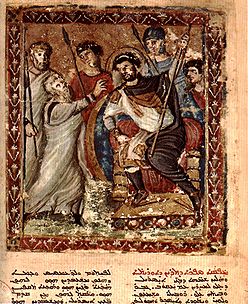
The term Peshitta was used by Moses bar Kepha in 903 and means "simple" (in analogy to the Latin Vulgate). It is the oldest Syriac version which has survived to the present day in its entirety. It contains the entire Old Testament, most (?) of the deuterocanonical books, as well as 22 books of the New Testament, lacking the shorter Catholic Epistles (2-3 John, 2 Peter, Jude, as well as John 7:53-8:11) and Revelation. It was made in the beginning of the 5th century. Its authorship was ascribed to Rabbula, bishop of Edessa (411–435). The Syriac church still uses it to the present day.
Syriac versions of the Bible
Syriac is a dialect of Aramaic. Portions of the Old Testament were written in Aramaic and there are Aramaic phrases in the New Testament. Syriac translations of the New Testament were among the first and date from the 2nd century. The whole Bible was translated by the 5th century. Besides Syriac, there are Bible translations into other Aramaic dialects.
Syria played an important or even predominant role in the beginning of Christianity. Here is where the Gospel of Matthew, the Gospel of Luke, the Didache, Ignatiana, and the Gospel of Thomas are believed to have been written. Syria was the country in which the Greek language intersected with the Syriac, which was closely related to the Aramaic dialect used by Jesus and the Apostles. That is why Syriac versions are highly esteemed by textual critics.
Scholars have distinguished five or six different Syriac versions of all or part of the New Testament. It is possible that some translations have been lost. Other than Syria, the manuscripts also originate in countries like Egypt (specifically the Sinai), Iraq, Assyria, Armenia, Georgia, India, and even from China.[citation needed] This is good evidence for the great historical activity of the Syriac Church of the East.
This is the earliest translation of the gospels into Syriac. The earliest translation of any New Testament text from Greek seems to have been the Diatessaron, a harmony of the four canonical gospels (perhaps with a now lost fifth text) prepared about AD 170 by Tatian in Rome. Although no original text of the Diatessaron survives, its foremost witness is a prose commentary on it by Ephrem the Syrian. Although there are many so-called manuscript witnesses to the Diatessaron, they all differ, and, ultimately only witness to the enduring popularity of such harmonies. Rescensions appeared in later centuries as translation of originals. Many medieval European harmonies draw on the Codex Fuldensis.
The Old Syriac version translation of the four gospels or Vetus Syra is preserved today in only four manuscripts, both with a large number of gaps. The Curetonian Gospels consist of fragments of the four Gospels. The text was brought in 1842 from the Nitrian Desert in Egypt, and is now held in the British Library. These fragments were examined by William Cureton and edited by him in 1858. The manuscript is dated paleographically to the 5th century. It is called Curetonian Syriac, and is designated by Syrc.
The second manuscript is a palimpsest discovered by Agnes Smith Lewis at Saint Catherine's Monastery in 1892 at Mount Sinai called the Syriac Sinaiticus, and designated by Syrs. This version was known and cited by Ephrem the Syrian, It is a representative of the Western text-type. Two additional manuscripts of the Old Syriac version of the gospels were published in 2016 by Sebastian Brock and in 2023 by Grigory Kessel, respectively.
These four manuscripts represent only the Gospels. The text of Acts and the Pauline Epistles has not survived to the present. It is known only from citations made by Eastern fathers. The text of Acts was reconstructed by Frederick Cornwallis Conybeare, and the text of the Pauline Epistles by J. Molitor. They used Ephrem's commentaries.
The term Peshitta was used by Moses bar Kepha in 903 and means "simple" (in analogy to the Latin Vulgate). It is the oldest Syriac version which has survived to the present day in its entirety. It contains the entire Old Testament, most (?) of the deuterocanonical books, as well as 22 books of the New Testament, lacking the shorter Catholic Epistles (2-3 John, 2 Peter, Jude, as well as John 7:53-8:11) and Revelation. It was made in the beginning of the 5th century. Its authorship was ascribed to Rabbula, bishop of Edessa (411–435). The Syriac church still uses it to the present day.
Recent media
Recent media