


Community hub
Recent from talks
Contribute something
Nothing was collected or created yet.
Type 72Z
View on Wikipedia
Key Information


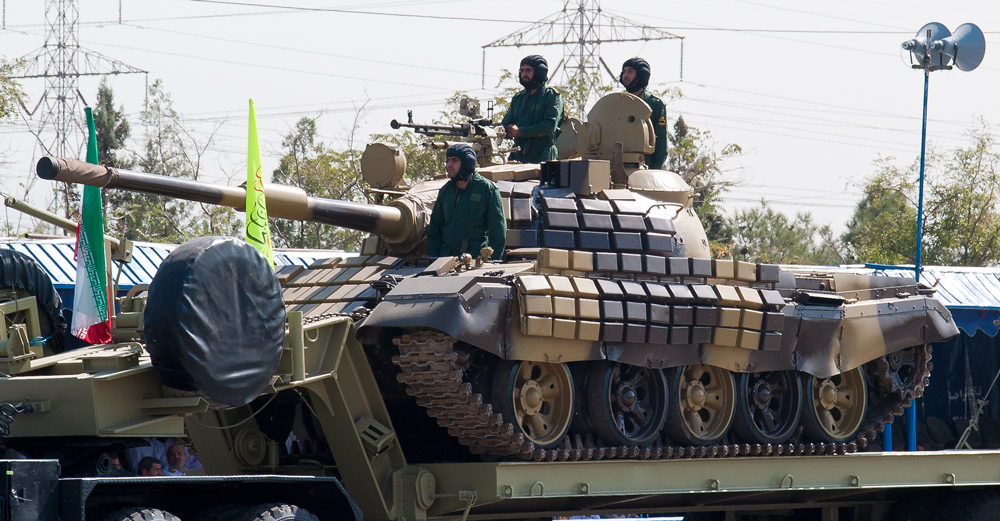
The Type 72Z tank (also known as the T-72Z and the Safir-74,[5] and the Al-Zubair I in Sudan)[4] is a highly modernized version of the Type 59 and T-54/T-55 tanks,[5] with upgrades carried out by the Iranian Defense Industries Organization.[3]
The tank is not to be confused with an Iraqi modernization also known as T-72Z, said to carry a 125 mm gun.[6]
History
[edit]![[icon]](https://en.wikipedia.org/wiki/File:Wiki_letter_w_cropped.svg) | This section needs expansion. You can help by adding to it. (June 2017) |
The Type 72Z was first announced by the Islamic Revolutionary Guard Corps in 1996.[5] The upgrades to the Type 59 and T-54/T-55 tanks were carried out by the Vehicle Industries Group of the Defence Industries Organization, in order to extend the service life of tanks already in use with the Iranian army.[3]
Upgrades
[edit]The 100mm gun of the T-55/Type 59 was replaced with an Iranian-produced derivative of the 105mm M68 gun, capable of firing 9M117 Bastion anti-tank guided missiles as well as NATO standard ammunition.[3][4][7] The Slovenian Fotona Electronic Fire Control System (EFCS-3-55) was added, with automatic and manual gun stabilizers, a laser rangefinder, second-generation night sights, a ballistic computer, and an independent viewer and target designation system for the commander.[3][4][5] Electric smoke grenade dischargers were also added to provide concealment on top of the existing ability to create a smoke screen by injecting diesel fuel into the left exhaust outlet.[3][4][8]
Explosive reactive armor (ERA) developed by the Shahid Kolah Dooz Industrial Complex can be fitted to the Type 72Z, providing protection against projectiles and napalm-type weapons. Side track skirts similar to those on the Type 59 were added to T-54/T-55 tanks upgraded with ERA. [3]
The engine was replaced with a Ukrainian 780 hp V46-6 diesel engine,[4][5] together with the SPAT-1200 transmission system.[3] Air conditioning, power steering and a fire suppression system are also believed to have been installed.[8]
Variants
[edit]- Safir-74 - Iranian T-54/T-55 tanks which have gone through similar upgrades.[5] Safir means "messenger" in Persian.[9]
- Al-Zubair I - Sudanese variant of the Type 72Z manufactured by the Military Industry Corporation,[10] with the engine upgraded with a supercharger.[11]
Operators
[edit]


Non-state operators
[edit]
See also
[edit]References
[edit]- ^ Brahy, Jérôme. "Sudanese Army continues to deploy Iranian-made T-72Z main battle tanks in the ongoing civil war". armyrecognition.com. Retrieved 11 April 2025.
- ^ a b c Galen Wright (15 March 2011) Iranian Military Capability 2011 - Ground Forces
- ^ a b c d e f g h i Pike, John. "T-72Z Safir-74". Globalsecurity.org. Retrieved 26 June 2017.
- ^ a b c d e f g h i Pike, John; Sherman, Robert (18 June 1999). "Type 59". fas.org. Federation of American Scientists Military Analysis Network. Retrieved 25 June 2017.
- ^ a b c d e f g "Safir-74 / Type 72Z T-72Z main battle tank". armyrecognition.com. Army Recognition. 19 November 2011. Retrieved 4 July 2017.
- ^ "JED The Military Equipment Directory". Archived from the original on 10 October 2008. Retrieved 30 September 2008.
- ^ "Type 59 Main Battle Tank". Inetres.com. Retrieved 26 June 2017.
- ^ a b "DIO T-72Z (T-55) Main Battle Tank (MBT)". Militaryfactory.com. Retrieved 26 June 2017.
- ^ Cordesman, Anthony H. Iran's Military Forces in Transition: Conventional Threats and Weapons of Mass Destruction. p. 133.
- ^ "Safir-74 - Tank Encyclopedia". Tanks-encyclopedia.com. Retrieved 26 June 2017.
- ^ "Al-Zubair-I Main Battle Tank DAA02". Military Industry Corporation. Archived from the original on 17 July 2017. Retrieved 8 November 2017.
- ^ "Iran Memproduksi Senjata dan Peralatan Militer Canggih untuk Pasar Dalam dan Luar Negeri". Artileri.org. Retrieved 26 June 2017.
- ^ "Iran's Expanding Sphere of Influence: Iranian T-72 Tanks in Iraq". 13 March 2015.

 | This article related to the Iranian armed forces is a stub. You can help Wikipedia by expanding it. |


| Main battle |
|
|---|---|
| Light / medium | |
| Prototypes, experimentals | |
Background: History of the tank, Tank classification | |
Type 72Z
View on GrokipediaDevelopment and History
Origins from T-54/55 and Type 59 Tanks
The Type 72Z, also designated T-72Z or Safir-74, traces its origins to Iran's efforts to refurbish its fleet of obsolescent Soviet T-54 and T-55 main battle tanks, alongside Chinese Type 59 models, which formed the backbone of its armored forces during and after the Iran-Iraq War (1980–1988). The T-54 and T-55 series, introduced by the Soviet Union in the late 1940s and 1950s, featured a 100 mm rifled gun, sloped composite armor, and a torsion bar suspension system, but by the 1990s, these tanks suffered from outdated fire control, limited mobility, and vulnerability to modern anti-tank weapons. The Type 59, entering production in China in 1959 under license, replicated the T-54A design with minor adaptations, including a similar 100 mm D-10T gun and 520 horsepower V-12 diesel engine, producing over 10,000 units for export and domestic use.[6][7][2] Iran's acquisition of these platforms included purchases of approximately 200 Type 59 tanks from China via a $1.6 billion arms deal signed in March 1985, supplemented by captures of hundreds of Iraqi T-54s and T-55s during the war, bolstering its inventory amid Western arms embargoes. These vehicles, while numerous and reliable in basic operations, required extensive upgrades to counter evolving threats from Iraqi T-72s and Western-equipped forces. The modernization initiative, launched under Iran's Defense Industries Organization (DIO) and executed by the Shahid Kolah Dooz Industrial Complex, a subsidiary of the DIO's Tank Modernization Industries, aimed to retrofit existing hulls and turrets rather than design a new tank, preserving logistical compatibility while incorporating locally produced or reverse-engineered components.[8][9][2] Initial prototypes of the Type 72Z emerged in 1996, demonstrated with the Islamic Revolutionary Guard Corps, marking the program's shift from conceptual upgrades to operational testing on captured T-54/55 chassis and imported Type 59s. This approach extended the tanks' viability into the 21st century, with an estimated 400 units eventually upgraded, though production emphasized incremental enhancements over radical redesign to address resource constraints in Iran's sanctioned defense sector.[2][9][10]Iranian Modernization Initiative (1990s–2000s)
In the aftermath of the Iran-Iraq War (1980–1988), Iran possessed substantial inventories of Soviet T-54/55 and Chinese Type 59 main battle tanks, many acquired pre-revolution or captured from Iraq, but international arms embargoes imposed by Western nations and the United Nations restricted access to modern equipment.[5] To address obsolescence and enhance self-reliance, Iranian authorities initiated a domestic modernization program in the early 1990s, designating the upgraded variant as Type 72Z—derived from the Persian solar calendar year 1372 (corresponding to 1993–1994).[11] The program was publicly announced in late 1996 by the Islamic Revolutionary Guard Corps (IRGC), marking a key effort in Iran's defense indigenization strategy amid ongoing sanctions.[3] The upgrade initiative was spearheaded by the Defense Industries Organization (DIO), with primary development at the Shahid Kolah Dooz Industrial Complex, a DIO subsidiary specializing in armored vehicle refurbishment, and supported by the Vehicle Industries Group (VIG).[11] [3] Its core objective was to extend the operational lifespan of approximately 400 surplus T-54/55 and Type 59 tanks through cost-effective enhancements in firepower, mobility, protection, and fire control, transforming second-generation tanks into configurations competitive with contemporary threats without requiring full replacement.[11] This approach leveraged reverse-engineered foreign components, including a Ukrainian-origin V-46-6 diesel engine producing 780 horsepower and Slovenian EFCS-3 fire-control systems, reflecting Iran's pragmatic adaptation of available technology despite limited access to advanced Western systems.[3] Throughout the 2000s, the Type 72Z program progressed into serial production and integration within the Iranian Army's armored brigades, with ongoing refinements to address performance gaps identified in exercises and simulations.[3] By the mid-2000s, the upgrades had been applied to a significant portion of eligible chassis, bolstering Iran's ground forces amid persistent isolation from global arms markets, though exact production figures remain classified.[5] The initiative exemplified Iran's emphasis on incremental improvements over radical redesigns, prioritizing reliability and logistical compatibility with existing fleets.[11]Recent Production and Export Developments
Iran has maintained ongoing production and upgrade programs for the Type 72Z tank into the 2020s, focusing on enhancing older T-54/55 and Type 59 chassis within its inventory. In August 2020, Iranian defense officials unveiled continued production of the Type 72Z as part of broader army tank modernization efforts, incorporating improvements to firepower, protection, and mobility derived from domestic engineering.[12] These efforts reflect Iran's strategy of sustaining legacy platforms amid sanctions limiting access to newer designs, with upgrades emphasizing cost-effective retrofits over full replacements.[13] The primary export development for the Type 72Z, marketed as Safir-74, occurred in 2006 when Iran supplied an undisclosed number of units and conversion kits to Sudan under a joint production agreement.[14] Sudan subsequently localized production of the variant, designated Al-Zubair I, enabling independent upgrades and maintenance.[15] No major new export contracts have been publicly confirmed since, though the design has supported Iranian-aligned forces in regional conflicts.[13] In Sudan, the Type 72Z has seen active deployment during the ongoing civil war, with verified footage from April 2025 showing Sudanese Armed Forces units operating the tanks against Rapid Support Forces in urban and open terrain engagements.[11] This sustained use underscores the variant's operational viability in asymmetric warfare, bolstered by Iranian technical support and local adaptations, despite vulnerabilities to modern anti-tank threats.[16] Iranian exports of the Type 72Z remain limited to select allies, prioritizing technology transfer over large-scale sales amid international restrictions.[15]Design and Technical Specifications
Armament and Fire Control Systems
The Type 72Z features a 105 mm rifled main gun, an Iranian derivative of the American M68, installed in place of the original 100 mm D-10T rifled gun found on T-54/55 or Type 59 chassis.[5][2] This upgrade allows compatibility with Western-style 105 mm ammunition, including armor-piercing fin-stabilized discarding sabot (APFSDS) rounds for improved penetration against modern armored threats.[5] Secondary armament includes a 7.62 mm PKT coaxial machine gun mounted to the left of the main gun and a 12.7 mm DShK anti-aircraft machine gun on the commander's cupola for suppressive fire and defense against low-flying aircraft.[1] The fire control system incorporates the Slovenian Fotona EFCS-3-55 computerized suite, which integrates ballistic computation, gun stabilization, and target tracking to enable accurate first-round hits on stationary and moving targets, including firing while the tank is in motion.[3][2] This system is paired with an ND-YAG laser rangefinder capable of measuring distances up to 10 km and supports night operations through second-generation image intensifiers.[17] The EFCS-3-55 enhances overall engagement effectiveness by automating lead calculations and compensating for environmental factors like wind and temperature.[3]Protection and Armor Upgrades
The Type 72Z, also known as Safir-74, retains the original cast steel armor of the T-54/55 and Type 59 base tanks, providing baseline protection equivalent to approximately 200-250 mm against kinetic energy penetrators on the glacis plate.[5] To enhance survivability, Iranian engineers added explosive reactive armor (ERA) packages developed domestically by the Shahid Kolah Dooz Industrial Complex, consisting of about 60 ERA blocks applied to the hull front glacis, upper side skirts, turret front, and turret sides.[18][19] This ERA configuration features a single layer on most surfaces, with double-layered ERA on critical areas such as the turret for improved resistance against shaped charge warheads and some kinetic threats.[9] The ERA system incorporates a composite layer designed to defeat both chemical energy (CE) munitions like high-explosive anti-tank rounds and kinetic energy (KE) projectiles by disrupting incoming threats through explosive reaction.[5][1] Additional passive measures include an anti-spall liner installed inside the crew compartment to reduce fragmentation effects from penetrations.[20] These upgrades, implemented as part of Iran's mid-1990s modernization program, aim to extend the operational life of legacy tanks against contemporary anti-tank guided missiles and rocket-propelled grenades prevalent in regional conflicts, though the overall protection remains inferior to third-generation Western or Russian main battle tanks without advanced spaced or multi-layer composites.[7] No verified integration of active protection systems like hard-kill interceptors has been documented for the Type 72Z platform.[2]Mobility and Powertrain Enhancements
The Type 72Z features a significantly upgraded powertrain derived from the original Type 59 and T-54/55 designs, which originally employed a V-54 series 12-cylinder diesel engine producing approximately 520 horsepower. Iranian modernizations replaced this with a Ukrainian-sourced V-46-6 V-12 liquid-cooled, supercharged diesel engine rated at 780 horsepower, integrated into a modular power pack that includes the engine, SPAT-1200 automatic transmission, cooling systems, brakes, and hydraulics.[3][5][2] This upgrade yields a power-to-weight ratio of 19.5 horsepower per ton, enhancing acceleration and overall mobility compared to the baseline tanks' roughly 14-15 hp/ton.[17] The new power pack design unifies internal systems for simplified field repairs and reduced maintenance times, with Iranian sources emphasizing improved reliability in desert conditions prevalent in operational theaters.[5] The SPAT-1200 transmission provides smoother gear shifts and better torque distribution, contributing to a top road speed of approximately 65 km/h, an increase from the original models' 50 km/h limit.[2] Suspension and track components retain the torsion bar system of the progenitors but benefit from the higher engine output, enabling sustained cross-country performance without major redesigns to the chassis. These enhancements extend operational range and maneuverability, though independent assessments note limitations in fuel efficiency due to the engine's Soviet-era roots adapted for heavier loads.[3][5]Electronics and Crew Systems
The Type 72Z incorporates the Slovenian Fotona EFCS-3 computerized fire control system, which integrates a digital ballistic computer, automatic and manual gun stabilizers, and supports firing on stationary or moving targets from stationary or moving platforms.[3][1] This system achieves a hit probability exceeding 80% under optimal conditions by processing inputs from multiple sensors.[3] Key optical and sensing components include a gunner's day sight with 10x magnification and 6° field of view, paired with a second-generation image intensifier night sight offering 7x magnification and the same field of view, enabling target tracking during night engagements without illumination.[3] The Nd:YAG laser rangefinder provides a maximum detection range of 10 km with ±5° accuracy, complemented by sensors for gun elevation, meteorological data via a roof-mounted mast, and powder temperature to refine ballistic solutions for 105 mm ammunition types such as APDS, HEAT, HESH, and APFSDS, as well as the coaxial 7.62 mm machine gun.[3][17] Crew accommodations retain the standard four-person layout of commander, gunner, loader, and driver inherited from T-54/55 designs, with interfaces including the gunner's control block, commander's panel, and remote displays within the EFCS-3 for situational awareness and target designation.[3][1] Communication is facilitated by the VRC-222 radio set, interoperable with VRC-122 and R-173 systems, while collective NBC protection and individual night vision devices enhance crew survivability and operational tempo in contested environments.[17][1]Variants
Safir-74 Configuration
The Safir-74 represents the Iranian modernization configuration applied specifically to T-54/T-55 main battle tanks, distinguishing it from the Type 72Z upgrade package developed for Type 59 chassis. Initiated by Iran's Defense Industries Organization (DIO) and Vehicle Industries Group in the mid-1990s, following the acquisition of captured Iraqi T-54/55s during the Iran-Iraq War (1980–1988), the program aimed to enhance firepower, mobility, and protection on an estimated 190 such vehicles in Iranian service. Unveiled publicly in 1996 by the Islamic Revolutionary Guard Corps, the Safir-74 ("Messenger 74" in Persian) incorporates locally produced components and imported subsystems to extend the operational life of these Soviet-era designs without full replacement.[1][18] Key upgrades focus on replacing the original 100 mm rifled gun with a 105 mm L7/M68-derived rifled main gun (designated HM-49L), compatible with Iranian-manufactured ammunition for improved penetration and accuracy at longer ranges. The main armament is supplemented by a coaxial 7.62 mm machine gun and a 12.7 mm DShK anti-aircraft machine gun, with provisions for smoke grenade launchers. Fire control enhancements include the Slovenian EFCS-3 (or EFPC-3-55) system, featuring a laser rangefinder effective to 10,000 m with ±5° accuracy, ballistic computer for firing on the move against stationary or moving targets, and integration of night vision equipment. These modifications enable stabilized aiming and first-hit probability superior to baseline T-54/55 systems, though reliant on foreign-sourced optics and electronics subject to sanctions constraints.[9][1][18] Protection features layered defenses beyond the original rolled homogeneous armor (20–203 mm thickness): Iranian-developed explosive reactive armor (ERA) blocks cover 60–65% of the turret front and 70–80% of the hull front, combining composite layers for kinetic energy (KE) and chemical energy (CE) projectile defeat, with a total ERA mass of approximately 1,191 kg (416 kg turret, 281 kg hull front, 494 kg hull sides). Additional welded add-on armor plates augment hull and turret sides, while NBC filtration and automatic fire suppression systems address crew survivability. Mobility improvements stem from a modular powerpack with the Ukrainian-sourced V-46-6 V-12 diesel engine producing 780 hp, paired to an upgraded transmission and torsion bar suspension, yielding a top road speed of 65 km/h and operational range of 510 km. The four-man crew (commander, gunner, loader, driver) benefits from these enhancements, though the loader-operated turret limits firing rates compared to autoloader-equipped contemporaries.[9][1][18]| Specification | Details |
|---|---|
| Weight | 36,000 kg[1][18] |
| Dimensions (L x W x H) | 6.45 m x 3.37 m x 2.40 m[1][18] |
| Crew | 4[1][18] |
| Main Gun | 105 mm rifled (HM-49L)[9][18] |
| Engine | V-46-6 diesel, 780 hp[1][18] |
| Max Speed | 65 km/h[1][18] |
| Range | 510 km[1][18] |