Hubbry Logo
TalbinaTalbinaMain
Open search
Talbina
Community hub
Talbina
logo
8 pages, 0 posts
0 subscribers
Be the first to start a discussion here.
Talbina
Talbina
from Wikipedia
Talbina
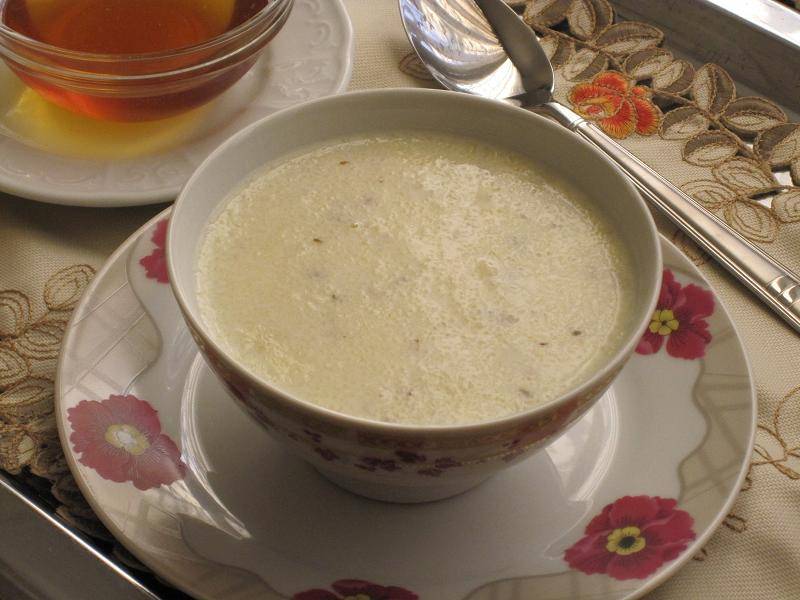
A bowl of talbina
TypePorridge
Place of originArabian Peninsula
Region or stateMiddle East
Serving temperatureHot
Main ingredientsMilk, barley and honey
  •   Media: Talbina

Talbina is a porridge made from barley flour, formed by adding milk and honey to the dried barley powder. The name comes from the Arabic word laban meaning milk, because of its resemblance to milk, as it is soft and white.[1]

Nutrition

[edit]

Barley is a good source of insoluble and soluble dietary fiber. The soluble fiber portion contains the richest source of beta-glucans compared to any other grain; these can aid immune function. Barley also contains B vitamins, iron, magnesium, zinc, phosphorus, and copper, and is one of the richest sources of chromium, which is important in maintaining blood glucose levels. Talbina, particularly its barley and honey components, is rich in antioxidants and contains a high concentration of tocols and tocotrienols, oils that help reduce the risk of cancer and heart disease.[2]. Barley has been cited as a possible food to increase tryptophan, and thus serotonin in the body.[3]

Cultural significance

[edit]

Ibn Sina, in his 11th-century work The Canon of Medicine, wrote of the healing effects of barley water, soup and broth for fevers.[4]

Religious significance

[edit]

Islam

[edit]

It was recommended by Muhammad and is generally considered "prophetic medicine".[5]

A hadith concerning it says: 'A'isha the wife of Allah's Apostle said: "When there was any bereavement in her family the women gathered there for condolence and they departed except the members of the family and some selected persons. She asked to prepare talbina in a small couldron and it was cooked and then tharid was prepared and it was poured over talbina, then she said: Eat it, for I heard Allah's Messenger (may peace be upon him) as saying: Talbina gives comfort to the aggrieved heart and it lessens grief."[6]

See also

[edit]

References

[edit]
[edit]
Revisions and contributorsEdit on WikipediaRead on Wikipedia
from Grokipedia
Talbina is a traditional , prepared by cooking ground with and often sweetened with , known for its creamy texture derived from the word "laban" meaning . This ancient food originates from Islamic , where it was recommended by the Prophet Muhammad (PBUH) as a nourishing remedy to soothe the heart, alleviate sorrow, and provide comfort to the ill, as described in a narrated by : “The Talbinah brings rest to the patient’s heart and makes it active, relieving some of his sorrow and grief.” Historically, Talbina has been a staple in culinary traditions for centuries, valued not only as a simple but also for its therapeutic potential, formalized in Islamic texts around the CE. Its preparation typically involves simmering in to achieve a thick consistency. Talbina is rich in β-glucans, (such as and from , cobalamin from ), minerals, and from its primary components, contributing to its nutritional value and role as a food in cultural and wellness contexts.

Overview and Preparation

Etymology and Description

Talbina derives its name from the word "laban," meaning or , owing to the dish's soft, milky-white, and -like consistency when prepared. Talbina is a comforting originating from the , particularly associated with ancient Saudi Arabian traditions dating back at least 1,400 years. It is primarily composed of finely ground that is cooked to achieve a creamy, smooth texture, resulting in a simple and digestible form. As a wholesome historically linked to nourishment for both body and soul, Talbina is typically consumed warm and holds in Islamic tradition as a food.

Traditional Recipe

Talbina is traditionally prepared using made from ground roasted grains, combined with or in leaner versions, and sweetened with . The core ingredients emphasize simplicity, with the barley providing the base for the porridge's texture and the milk contributing to its creamy consistency. The preparation begins with lightly roasting barley grains to enhance flavor and digestibility before grinding them into fine flour. To make the porridge, 2-3 tablespoons of this barley flour are boiled in 1-2 cups of milk over low heat for 5-10 minutes, stirring continuously until the mixture thickens into a smooth consistency. Once thickened, 1 teaspoon of honey is stirred in to taste, adjusting for sweetness. The talbina is then served warm, optionally garnished with chopped dates or poured over tharid, a dish of barley bread soaked in broth, to complete the traditional serving. This method draws from descriptions in Prophetic traditions, where talbina was cooked briefly in a pot to preserve its nourishing qualities and promote ease of , as practiced by in times of . In Islamic hadiths, it is noted for its comforting role in soothing the heart.

Variations and Adaptations

Talbina's core preparation from and allows for numerous adaptations that incorporate additional ingredients to enhance nutritional value, texture, and flavor while preserving its soothing qualities. Common additions include chopped nuts such as almonds, walnuts, and pistachios; dried fruits like dates and apricots; and seeds including and sunflower seeds, which provide crunch and added nutrients. Berries or may also be stirred in for natural sweetness and antioxidants in contemporary recipes. To accommodate dietary preferences, liquid bases can be varied beyond traditional ; plant-based options like or create vegan versions, while water yields a lighter broth suitable for those seeking lower calories. In some regional and research-driven practices, Talbina is fermented by incorporating , enhancing its content and potential gut health benefits. Serving adaptations reflect Talbina's versatility as a comforting dish: it can be enjoyed as a thick porridge, a thinned to promote relaxation, or even thickened further into a hearty for meals. Recipes typically serve 1-2 portions, with cooking times extending to 10-15 minutes when incorporating extras like nuts or fruits to ensure even integration. Regional tweaks highlight cultural influences, such as sweeter iterations in South Asian Muslim communities that emphasize or for a dessert-like appeal, often paired with dates. In Middle Eastern preparations, spices like or are commonly added for warmth and aroma, sometimes alongside for subtle flavor elevation.

Historical and Religious Context

Ancient Origins of Barley Porridge

Barley (Hordeum vulgare), one of the earliest domesticated crops, originated in the Fertile Crescent of the ancient Near East, where archaeological evidence from sites such as Abu Hureyra in modern-day Syria indicates its early cultivation around 11,000 BCE, with domestication by ca. 9,000 BCE. This domestication marked a pivotal shift from wild foraging to systematic agriculture, enabling the production of surplus grains that supported early sedentary communities. In Mesopotamian societies, barley served as a dietary staple, ground into flour for breads or boiled into porridges that formed the basis of daily meals, often complemented by beer brewed from the same grain. Similarly, in ancient Egypt, barley alongside emmer wheat underpinned the food economy, with porridges and coarse breads consumed widely by laborers and elites alike, as evidenced by tomb depictions and grain storage records from the Old Kingdom period (c. 2686–2181 BCE). Beyond nutrition, preparations held medicinal value in ancient civilizations. The , an Egyptian medical text dated to approximately 1550 BCE, prescribes —prepared by boiling and straining the grain—to alleviate digestive obstructions and related ailments, such as blockages causing abdominal discomfort (formula Eb. 205). This reflects barley's perceived soothing properties on the , a theme echoed in later traditions. In the , gruels evolved as practical foods among nomadic tribes predating , transitioning from coarse, boiled preparations suited to pastoral mobility to finer-ground versions for easier consumption during travel. These gruels, often mixed with water or dates, drew from broader Near Eastern influences and were staples in diets, as noted in ancient Arabian literature highlighting 's role in sustenance and minor remedies. This pre-Islamic adaptation laid groundwork for later refinements in the region.

Prophetic Tradition in Islam

In Islamic tradition, Talbina holds a prominent place as a recommended food for providing solace during times of emotional distress, as narrated in a well-known from , the wife of the Prophet (peace be upon him). According to (5417), related that whenever she felt sad or ill, or when one of her relatives or close friends passed away, she would instruct that a pot of Talbina be prepared by cooking in until it thickened, then poured over (a dish of bread and meat). She would urge the grieving women to consume it, recounting the Prophet's words: "The Talbina soothes the heart of the patient and relieves some of his sadness." This narration underscores Talbina's role in addressing both physical nourishment and emotional healing, emphasizing its gentle, comforting nature even in moments of reluctance. Within the framework of Tibb al-Nabawi, or , Talbina is classified as a food— one endorsed by the Prophet's example and teachings—particularly for alleviating bereavement, illness, and stress. The renowned scholar Ibn al-Qayyim al-Jawziyya, in his seminal work Al-Tibb al-Nabawi (The ), describes Talbina as a soothing derived from ground that relaxes the heart of the afflicted, invigorates it, and eases sorrow and grief while providing essential nourishment to the body. He highlights its preparation as a simple , often recommended for the sick and elderly to restore balance and promote recovery without burdening the system. This aligns with the holistic approach of , which integrates dietary practices to support spiritual and physical well-being. Talbina's integration into Islamic practices reflects its emphasis on holistic wellness, often served during mourning periods to comfort the bereaved, as exemplified by Aisha's custom of preparing it for those experiencing loss. In observance of Ramadan, it is commonly consumed at suhoor (the pre-dawn meal) for its sustaining and calming effects on the soul, aiding in maintaining emotional resilience during fasting. These applications embody the Prophetic tradition's focus on foods that nurture the heart alongside the body, fostering inner peace amid life's trials.

Nutritional Profile

Key Components

Talbina's nutritional profile is primarily derived from its core ingredients: , milk, and honey. serves as the base, providing a rich source of complex carbohydrates with a low to medium (25-55), which contributes to steady energy release. Per 100 grams, it contains about 10.1 grams of total , including both insoluble fiber and soluble beta-glucans (typically 4-7 grams), which support digestive health. It is also a good source of , including (0.64 mg) and niacin (4.6 mg), as well as minerals such as iron (2.68 mg), magnesium (96 mg), (2.0 mg), (297 mg), and (0.50 mg). Additionally, offers antioxidants like , which exhibit cholesterol-lowering potential. Values may vary by barley variety and processing method. The addition of milk enhances the dish's protein content and mineral profile while improving the absorption of certain barley-derived nutrients. A standard cup (244 grams) of whole cow's provides 6-8 grams of high-quality protein, along with calcium (approximately 300 mg) and (if fortified, about 2.5 mcg), which aids in bone health and may boost the of minerals like magnesium and from the . If the milk is fermented prior to preparation, it can introduce , further supporting gut health, though traditional Talbina recipes typically use fresh for a creamy texture. Honey, used as a natural sweetener in small amounts (typically 1 teaspoon or 7 grams), adds minimal calories (about 21) but contributes natural sugars, trace enzymes, and antioxidants such as , which complement the barley's without significantly altering the overall macronutrient balance. This addition primarily improves while providing subtle benefits. In a typical 1-cup serving of Talbina (prepared with roughly 50 grams of , 200 ml of , and 1 teaspoon of ), the overall nutritional composition approximates 200-300 calories, 40 grams of carbohydrates (predominantly low-glycemic from ), 12 grams of protein (from and ), and 5 grams of fat (mostly from ), emphasizing its whole-grain benefits like sustained energy and intake. These values can vary slightly based on ingredient proportions, but they highlight Talbina's role as a nutrient-dense, comforting food aligned with traditional recipes.

Health Benefits

Talbina has demonstrated potential benefits for , particularly in alleviating symptoms of depression and anxiety. A randomized involving elderly individuals in facilities found that daily consumption of Talbina for four weeks significantly reduced depressive symptoms, stress levels, and mood disturbances compared to a control group. In animal models, Talbina exhibited antidepressant-like effects in rats subjected to experimental depression, modulating neurotransmitters by restoring serotonin and levels to near-normal concentrations. The physical health advantages of Talbina stem from its key components, such as beta-glucans and , which contribute to improved metabolic and digestive function. Beta-glucans in have been shown to lower total and blood glucose levels, thereby reducing the risk of and potentially cancer through enhanced and glycemic control. The soluble content supports digestive health by promoting regular bowel movements and fosters immune function by modulating and enhancing anti-inflammatory responses in the intestinal environment. Additionally, the combination of from and in Talbina preparation boosts serotonin production, which may improve quality by facilitating relaxation and regulating the sleep-wake cycle. Beyond these effects, Talbina possesses properties attributed to its antioxidants, which help mitigate and in the body. When prepared with fermented , it may offer benefits, supporting gut health and immune modulation through beneficial bacteria. Overall, Talbina serves as a that aids in anxiety relief and promotes emotional well-being, as evidenced by its nutrient profile and therapeutic impacts.

Cultural and Modern Significance

Traditional Uses in Muslim Societies

In Muslim societies, Talbina has historically been prepared and served in ritual contexts to provide emotional solace during times of grief and mourning, as recommended in Prophetic tradition. Following the death of a family member, it is customarily cooked and offered to the bereaved, often alongside (a bread-based dish), to soothe the heart and alleviate sorrow, a practice attributed to , the wife of the Prophet Muhammad, who would instruct its preparation for such occasions. This ritual extends to supporting those recovering from illness, where Talbina serves as a gentle, nourishing remedy to restore comfort and vitality, commonly administered in Middle Eastern and South Asian households during periods of convalescence, including postpartum care for new mothers. Socially, Talbina plays a role in fostering community bonds and providing comfort within family and close-knit groups. It is shared among women gathering after a bereavement, limited to relatives and trusted friends, symbolizing collective compassion and emotional support in Islamic households. In Arab cultures, it is traditionally used to relieve general sadness and stress, acting as a comforting staple for the elderly or those facing hardship. During communal events such as iftars in Ramadan, or as a simple suhoor meal before dawn, Talbina is served to promote well-being and unity, embodying holistic healing through shared nourishment. Regionally, Talbina remains a homemade staple prepared with recipes in places like and , where is simmered with milk and honey to create a soft that underscores traditions of care and . In households, it is valued as a daily , often made fresh to honor its historical significance. Similarly, in Pakistani families, it is crafted using local ingredients and passed down through generations, reinforcing its role as a symbol of compassionate healing in everyday Islamic life.

Contemporary Applications and Research

In recent years, Talbina has gained traction as a within global wellness trends, particularly for its potential benefits, with commercial products such as pre-mixed packets becoming widely available in Muslim-majority countries like and through online platforms including Amazon, Noon, and iHerb. These instant powders, often flavored with or , cater to modern consumers seeking convenient, nutrient-dense options, including vegan adaptations using plant-based milks, though barley's content requires caution for those with sensitivities. Innovative applications, such as Talbina-flavored produced by companies like Saweeg in Al-Madinah, illustrate its integration into contemporary food products beyond traditional forms. Scientific research has investigated Talbina's therapeutic potential, with a 2017 review discussing its effects on depression, including reference to reduced symptoms in elderly participants after three weeks of consumption in a randomized crossover , attributing benefits to its bioactive compounds like polyphenols, , and minerals. Another 2021 narrative review highlighted Talbina's antidepressant-like properties through serotonin-boosting mechanisms, supported by its vitamins, , and magnesium, which enhance mood in stressed individuals. Clinical trials have also explored its role in anxiety reduction and improvement; for instance, a 2013 in Malaysian facilities found significant decreases in stress and total mood disturbance scores among elderly residents after three weeks of Talbina intake, though anxiety scores showed no notable change, prompting calls for larger s (RCTs) to validate these outcomes across diverse populations, including non-Muslims. As of November 2025, no large-scale RCTs beyond these have been published. Globally, Talbina is being adapted into Western diets as a barley-based alternative to , valued for its comforting role in supporting amid rising interest in functional foods. In elderly care programs, particularly in , it has been incorporated into institutional meals to alleviate stress and improve mood, as evidenced by the aforementioned trial in facilities. Research on variants, such as Talbina fortified with like Lactobacillus gasseri and L. reuteri, suggests enhanced biopreservation and potential gut-brain axis benefits for anxiety and sleep, with experts advocating for additional RCTs to assess efficacy in broader therapeutic contexts.

References

Add your contribution
Related Hubs
User Avatar
No comments yet.