

Tarja Halonen
View on Wikipedia
Tarja Kaarina Halonen[a] (born 24 December 1943) is a Finnish politician who served as the president of Finland, and the first and to date only woman to hold the position in Finland, from 2000 to 2012. She first rose to prominence as a lawyer with the Central Organisation of Finnish Trade Unions (SAK), and as the prime minister's parliamentary secretary (1974–1975) and a member of the City Council of Helsinki (1977–1996). Halonen was a Social Democratic Party member of parliament from 1979 until her election to the presidency in 2000.[3] She also served as a minister at the Ministry of Social Affairs and Health from 1987 to 1990, as Minister of Justice from 1990 to 1991, and as Minister for Foreign Affairs from 1995 to 2000.
Key Information


Halonen was an extremely popular president, with her approval ratings reaching a peak of 88 percent in December 2003. She was re-elected in 2006, defeating National Coalition Party candidate Sauli Niinistö in the second round by 51% to 48%. Ineligible to run in the 2012 presidential elections because of term limits, Halonen left office on 1 March 2012 and was succeeded by Niinistö.
Widely known for her interest in human rights issues, Halonen served as the chairperson of the Finnish LGBT rights organization Seta in the 1980s, and she actively participated in the discussion of issues such as women's rights and the problems of globalization during her presidency. In 2006, she was mentioned by various commentators as a potential candidate for the United Nations Secretary-General selection, but she denied an interest at that time, stating that she wanted to finish her term as president before thinking about other career options.[4][5] In 2009, Forbes named her among the 100 most powerful women in the world.[6]
Halonen is a member of the Council of Women World Leaders, an international network of current and former women presidents and prime ministers whose mission is to mobilize the highest-level women leaders globally for collective action on issues of critical importance to women and equitable development.
Since the death of Martti Ahtisaari in 2023, Halonen is currently the oldest living former president of Finland.[7]
Early life and career
[edit]
Tarja Halonen was born on 24 December 1943 in the district of Kallio, which at the time was a traditional working-class area in central Helsinki. Her mother Lyyli Elina Loimola was a set-dresser and her father Vieno Olavi Halonen worked as a welder. Halonen's parents married at the beginning of World War II and Tarja was born a few years later. Vieno Halonen was at the frontline during the Continuation War and Lyyli Halonen was working in a shoe factory when their daughter was born.[8] When Halonen was two years old, her father Vieno Halonen went to the kiosk to buy a magazine and no longer returned home to his family. Halonen has not commented much on the incident since, but Halonen's parents officially divorced in 1948. Vieno Halonen was an award-winning soldier who fought in the 26th Infantry Regiment, so-called Ace Regiment. Vieno Halonen was wounded three times during the war and after the war he was awarded first, second and fourth class Order of the Cross of Liberty medals. In later interviews, Tarja Halonen has said that she has met her father only a few times.[9]
After the divorce, in 1950, Lyyli Halonen married her new husband Thure Forss, who worked as an electrician and was very active in the working-class community. Both Halonen's mother and her stepfather influenced her world view extensively. Halonen later said that her mother was a true survivor, always an extremely active and resilient person who valued good, honest and modest hardworking people.[8] When she entered politics, Halonen stated that these are also the qualities and attributes she respects in people.
In 1950 she began her studies in Kallio Elementary school from where she later moved to Kallio Gymnasium and finally finished her matriculation examination in 1962. She began to study Art History in the University of Helsinki in 1962 but in autumn 1963 she changed her studies to law, and obtained her Master of Laws degree in 1968 specializing in criminal law.[8]
She began to work as a lawyer, already before obtaining her degree, in a credit surveillance company Luotonvalvonta oy in 1967. After working there for a few years, she was hired by the National Union of University Students in Finland to work as a Social Affairs and General Secretary from 1969 to 1970. Her work in the Union spurred her interest in politics, and in 1970 she obtained a post as a lawyer in the Central Organisation of Finnish Trade Unions, being the first female ever to work as a lawyer in the Union.[8]
Political career: 1970–2000
[edit]
Trade unionist
[edit]In 1971, Halonen joined the Social Democratic Party which had close ties with the trade unions in which she worked as a lawyer from 1970 to 1974.
In early 1970, she was elected to represent Central Organisation of Finnish Trade Unions in a committee that called for the recognition of East Germany.[10] Later she became the Vice-President of the committee, which lobbied then-President Urho Kekkonen.[10][11] During the presidential elections of 2006 she was criticized by rivals for this. She responded that the committee was formed by members from many different political parties including conservative parties. In 1973, Finland recognized both East Germany and West Germany as sovereign states.[12]
First elections
[edit]In 1974, Prime Minister Kalevi Sorsa appointed Halonen as his parliamentary secretary.[13] Sorsa later said that he wanted his parliamentary secretary to have good ties with the trade unions of Finland and have skills in jurisprudence.[citation needed]
Working in Parliament made Halonen more interested in politics and she decided to take part in the municipal elections of 1976. She was elected to the City Council of Helsinki, a position she held continuously for five terms from 1977 to 1996.[13][14] Additionally in 1979, she was elected into Parliament as a representative of the Helsinki constituency. She served five full terms and less than a year of her sixth term in Parliament until her inauguration as president in 2000.[15] In Parliament, her first formal post was as the chairman of the Social Committee, which she held from 1984 to 1987.
Ministerial career
[edit]In 1987, Halonen was appointed Minister of Social Affairs and Health by Prime Minister Harri Holkeri. Halonen held the position until 1990. In addition to this, she served as Minister for Nordic Cooperation from 1989 to 1991, the same year in which she was also appointed the chairman of the International Solidarity Foundation, a post she relinquished in 2000.
From 1990 to 1991, she served as Minister of Justice, and from 1995 until her election to the presidency, she served as the Minister of Foreign Affairs in the Lipponen I Cabinet.[16]
Presidential campaign
[edit]2000 presidential campaign
[edit] | This section of a biography of a living person does not include any references or sources. (November 2024) |
Halonen announced in 1999 that she wished to stand as a candidate for president in the 2000 presidential elections. In the preliminary elections of the Social Democrats, Halonen ran against Pertti Paasio, a member of the European Parliament and former party chairman, and Jacob Söderman, the European Ombudsman. The incumbent, Martti Ahtisaari, refused to run in party preliminaries and thus announced that he would not run for a second term. Halonen won the preliminaries by a landslide, getting 7,800 out of 12,800 votes.
Halonen was a surprising candidate as she did not represent many traditional values: she was known as a left-wing social democratic party member, who lived in a domestic partnership, was a single parent and had resigned from the national church. Despite starting from fourth place in the presidential election polls, in the first round of the elections, Halonen received the most votes, 40.0%. Her nearest opponent, former prime minister Esko Aho of the Centre Party, received 34.4% of votes.
Since neither of the two candidates got over 50% of the votes, a second round was held. In the second round, Halonen narrowly defeated her opponent with 51.6% against 48.4%, thus becoming Finland's first female head of state. Her first term began on 1 March 2000.
2006 presidential campaign
[edit]

On 20 May 2005, Halonen held a press conference in Mäntyniemi where she announced her willingness to run for a second term. Officially, this was the desired answer for the SDP delegation that had visited her two days earlier. In addition to her own party's support, the leader of the Left Alliance, Suvi-Anne Siimes, gave her support for Halonen's future campaign.
SAK openly lobbied for her re-election. It used its members' money on mudslinging campaigns on behalf of Halonen. In those flyers, "Niinistö is presented as the horror of worker, whereas SAK-supported Halonen is like a worker's dream". Halonen said she approved of the flyers.[17]
A study analyzed newspaper articles and concluded that the main newspaper Helsingin Sanomat produced almost exclusively positive tone stories about Halonen and much more negative tone articles about candidates Niinistö, Vanhanen and Hautala.[18]
American talk show host Conan O'Brien made recurring jokes about Halonen on his show, Late Night with Conan O'Brien, because of his own resemblance to her.[19] He endorsed Halonen and produced humorous mock campaign ads and attack ads against her opponents. He went as far as visiting Finland and meeting Halonen.[19]
On 19 November 2005, the SDP's party council meeting was held; praised as "the president of the whole nation", she was unanimously chosen as the presidential candidate. Shortly thereafter, the party council of the Left Alliance gave the party's official support to Halonen.
Halonen's received 46% of the first round vote in the election. Sauli Niinistö (of the National Coalition Party) was second with 24%. They faced each other in a runoff on 29 January 2006, where Halonen was re-elected with 51.8% of the vote against Mr. Niinistö's 48.2%. The re-election was a close call. She led in the advance voting, but she eventually received fewer votes on the actual voting day than Mr. Niinistö did.
Presidency
[edit]First term: 2000–2006
[edit]


After her narrow election victory in the first election, Halonen's approval ratings rose and reached a peak of 88% in December 2003.
In a 2001 interview Halonen said that she was worried about the Russian response if NATO approved membership bids by Baltic countries.[20] Latvian president Vaira Vike-Freiberga asked what she meant and whether Halonen is actively opposing NATO membership of Baltic countries.[21]
In the Iraqgate scandal, Halonen's advisor Martti Manninen leaked confidential documents to the Centre Party leader Anneli Jäätteenmäki, who had become prime minister. The revelations led to the resignation of Jäätteenmäki.[22]
Halonen has opposed the use of landmines in Finnish military doctrine.[23]
Halonen has defended cluster bombs and did not sign a treaty which would have banned Finland from using these kinds of weapons.[24]
Second term: 2006–2012
[edit]


.jpg)
In 2008, Halonen nominated SDP-affiliated Ritva Viljanen for a second term in the Ministry of the Interior. The government had nominated Ilkka Laitinen. Over the course of the previous 50 years, the president had only once chosen to not obey the government's consensus, leading to Halonen thusly being accused of cronyism.[25][26]
In September 2008, Halonen was perceived as insulting Estonia by saying that the Estonians suffer from a "post-Soviet stress condition". President of Estonia Toomas Hendrik Ilves commented on the issue, saying that "Estonia has never condemned, and will not condemn the foreign affairs decisions of another EU country. It will also not assess the psychiatric state of other EU countries".[27][28] In 2009, Halonen rejected calls to apologize for Finland's attitude towards Estonian independence from the Soviet Union in 1991.[29]
At the end of her second term Halonen's presidency and economic views received harsh criticism from Björn Wahlroos, the chairman of the two largest banks in Finland.[30]
Political views
[edit]Early in her political career Halonen represented the far-left wing of the SDP. She publicly opposed the proposed free trade agreement of the European Economic Community in 1973, by signing a petition along with 500 other prominent social democrats and socialists. Otherwise she was loyal[citation needed] to President Kekkonen's foreign policy, which was founded on Finnish neutrality and good relations with the Soviet Union. Markku Salomaa's 2021 book Tarza – Pasifistin odysseia voimapolitiikan maailmassa states that Chancellor Angela Merkel had a very negative attitude towards Halonen, precisely because of her pro-Soviet and far-left wing world of ideas.[31] Since 2004, rumors have been circulating on Internet that Halonen gave a May Day speech at Hakaniemi Market Square in 1976 and hoped that Finland would join the Soviet Union, saying: "Finland would be blessed to join the Soviet Union by peaceful means. At the same time, we would get rid of the yoke of capitalism, because capitalism will die in 20 years. Finland, together with the Soviet Union, could be a pioneer towards a communist society."[32] In an interview with STT, Halonen herself has completely rejected the gossip, saying: "I have not given any May Day speech in Hakaniemi in 1976, nor can the text be found in the Informant. And if a Social Democrat SAK lawyer had given such a May Day speech in the 1970s, the employment relationship would have been rather short."[33]
Throughout her political career, Halonen has described herself as a supporter of "international solidarity".[34][35][36] She describes herself as a "relative pacifist", meaning that she does not support unilateral disarmament. She has strongly defended the President's role as the commander in chief of the military.[37] She opposed NATO membership during her tenure. Following the 2022 Russian invasion of Ukraine, when Finnish public opinion had turned, and the Parliament had debated the issue and decided, in favor of submitting an application for NATO membership, Halonen also voiced her support on Twitter, calling the move "a necessary measure in the changed security situation in Europe".[35][38] Her strong stands on these issues have characterised her presidential term and shaped Finnish foreign policy, in part in cooperation with the like-minded former Minister of Foreign Affairs, Erkki Tuomioja.
Halonen has publicly supported the involvement of the Central Organisation of Finnish Trade Unions (SAK) in politics.[39]
The Constitution of Finland and Halonen's decision to take part in some European Union meetings with the prime minister has created the so-called "problem of two dinner plates" in Finland. Since most other countries only have their prime ministers representing them, it was also decided in Finland that the task is reserved for the Prime Minister in most cases.[40][41]
On 20 March 2013, Halonen publicly voiced her support for same-sex marriage.[42]
Personal life
[edit]
Halonen says her interests include art history, the theatre and swimming. She says she speaks Finnish, Swedish, and English, and is studying Estonian. Halonen had two cats during her presidential term. After they died, she was given a Neva Masquerade cat in 2013 by Russian prime minister Dmitry Medvedev.[43]
On 26 August 2000, Halonen married her longtime partner, Dr. Pentti Arajärvi, in a civil ceremony at her official residence, Mäntyniemi, after a relationship of more than fifteen years. Halonen's adult daughter Anna, and Arajärvi's adult son Esko, acted as witnesses.[44] Both children are from previous relationships.
She promotes Finland in her personal accoutrements, such as wearing a Moomin watch.[45]
In the 1960s, she left the Evangelical Lutheran Church of Finland, to which the majority of Finns belong, to protest against its policy of taxing church members and its stance against female priests. The church has since accepted women as priests, and Halonen has stated that she has no personal reason not to return to the church but refrains from doing so in order not to give a signal that might be misinterpreted.[46] In the 1990s, Halonen acted as the chairman of Suomen setlementtiliitto, a Christian social work organization. After her presidential term, Halonen rejoined the Evangelical-Lutheran Church. According to her statements, she had previously refrained from it as it might have been considered an attempt to garner political support.[47] Since then, Halonen has even preached publicly in a divine service of her home parish of Kallio.[48] This is a privilege that the parish priest may grant only in exceptional cases to persons known for their Christian conviction.[49]
In 1980–1981 Halonen served as the chairman of Seta, the main LGBT rights organization in Finland.[50]
Positions
[edit]- Member of the Social Democratic Party 1971–2000
- Vice-President of the GDR Recognition Committee 1972–1973
- Prime Minister's Parliamentary Secretary 1974–1975
- Member of Helsinki City Council 1977–1996
- Member of Parliament (Helsinki constituency) 1979–2000
- Member of the Parliamentary Social Affairs Committee 1979–1986 (chair 1985–1986)
- Deputy member of the Parliamentary Commerce Committee 1979–1982
- Presidential elector 1979–1986
- Member of the Parliamentary Trustees of the Social Insurance Institution of Finland 1980–1984
- Deputy member, Parliamentary Foreign Affairs Committee 1982–1986
- Minister of Social Affairs and Health 1987–1990
- Minister of Nordic Cooperation 1989–1991
- Minister of Justice 1990–1991
- Member and vice chair of the Parliamentary Legal Affairs Committee 1991–1995
- Chairperson of the National Advisory Board on Romani Affairs 1993–1995
- Member of the Parliamentary Grand Committee 1993–1995 (chair 1995)
- Minister of Foreign Affairs 1995–2000
- President of Finland 2000–2012
Criticism
[edit]Halonen was criticized for her view that the COVID-19 pandemic was handled better in countries with female leaders.[51]

Former Estonian president Toomas Hendrik Ilves[52] and Finnish author Sofi Oksanen[53] have strongly criticized Halonen for perceived unwillingness to publicly condemn Russia’s hostilities in the past. Notably, after the 2008 Russian invasion of Georgia, Halonen referred to Ilves' concerns as "post-Soviet stress".
Honours and awards
[edit]
| Coat of Arms of Tarja Halonen | |
|---|---|
 | |
| Armiger | Tarja Halonen |
| Adopted | 2001 |
| Motto | "Yhteisen kansan puolesta"("For a united nation") |
Honours
[edit]National honours
[edit]- Grand Cross and former Grand Master of the Order of the Cross of Liberty
- Grand Cross with Collar and former Grand Master of the Order of the White Rose
- Grand Cross and former Grand Master of the Order of the Lion
Foreign honours
[edit] Austria: Grand Star of the Order of Honour for Services to the Republic of Austria[54]
 Belgium: Knight Grand Cordon of the Order of Leopold I[55]
 Brazil: Grand Collar of the Order of the Southern Cross
 Chile: Collar of the Order of Merit
 Croatia: Recipient of the Grand Order of King Tomislav[notes 1]
 Denmark:
- Knight of the Order of the Elephant[56][57][58]
- Grand Cross of the Order of Dannebrog
 Estonia:
- Collar of the Order of the Cross of Terra Mariana[59]
- Collar of the Order of the White Star[60][61]
 France: Grand Cross of the Order of the Legion of Honour
 Germany: Grand Cross Special Class of the Order of Merit of the Federal Republic of Germany[62]
 Greece:
- Grand Cross of the Order of the Redeemer
- Grand Cross of the Order of Honour
 Iceland: Grand Cross with Collar of the Order of the Falcon[63]
 Italy: Knight Grand Cross with Collar of the Order of Merit of the Italian Republic
 Japan: Grand Cordon with Collar of the Order of the Chrysanthemum
 Kazakhstan: Collar of the Order of the Golden Eagle[64]
 Latvia: Commander Grand Cross with Chain of the Order of the Three Stars
 Liberia: Grand Cross of the Order of the Pioneers of Liberia[65]
 Lithuania: Grand Cross with Chain of the Order of Vytautas the Great[66]
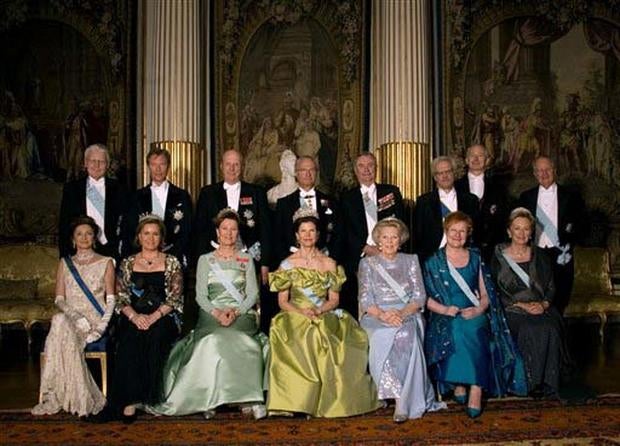
 Luxembourg: Knight of the Order of the Gold Lion of the House of Nassau[67][68]
 Netherlands: Grand Cross of the Order of the House of Orange
 Norway: Grand Cross with Collar of the Order of St. Olav[69]
 Qatar: Collar of the Order of Merit
 Poland: Grand Cross of the Order of the White Eagle
 Portugal: Collar of the Order of Prince Henry
 Romania: Collar of the Order of the Star of Romania
 Russia: Recipient of the Medal of Pushkin[70]
 Saudi Arabia: First Class of the Order of Abdulaziz al Saud
 Senegal: Grand Cross of the Order of the Lion
 Slovakia: First Class of the Order of the White Double Cross[71]
 Slovenia: Member of the Decoration for Exceptional Merits[72][73]
 Spain: Dame Grand Cross of the Order of Isabella the Catholic[74]
 Sweden:
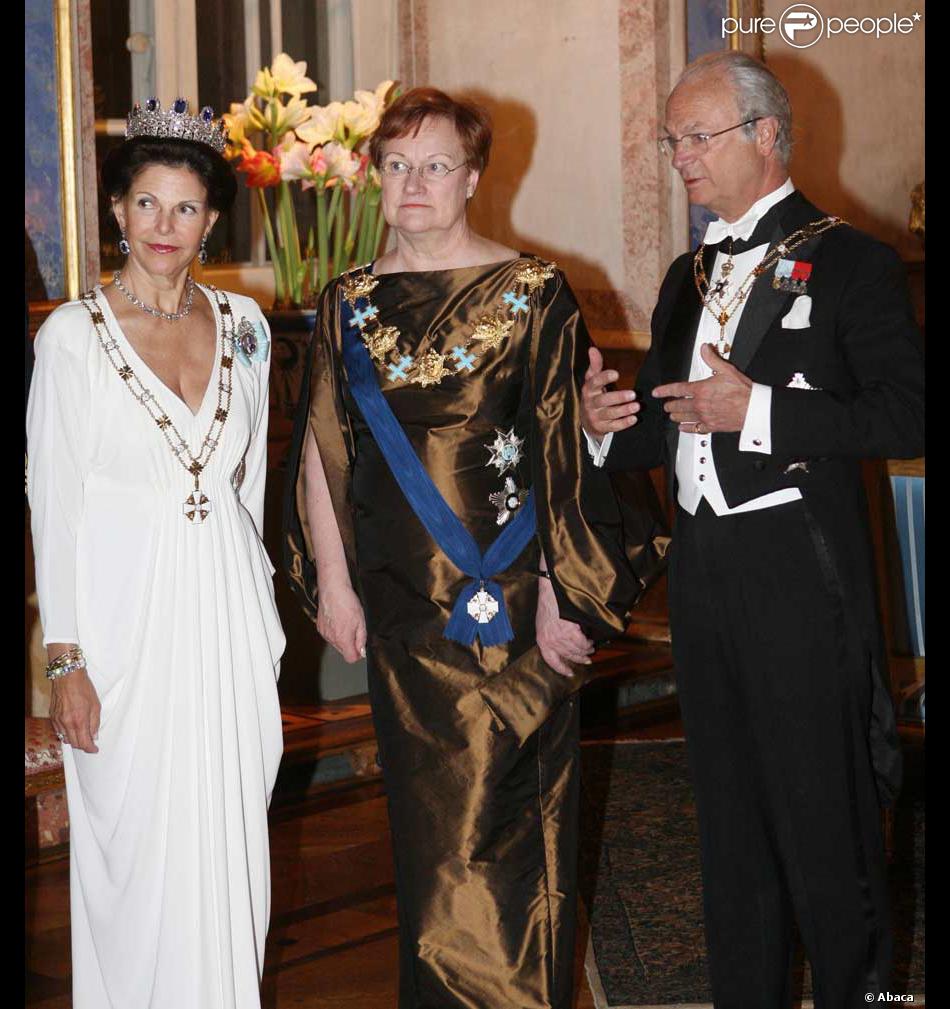
- Member with Collar of the Royal Order of the Seraphim[75][76]
- Member Grand Cross of the Royal Order of the Polar Star


Awards
[edit]- Canada: 2014 Fray International Sustainability Award given by FLOGEN Star Outreach [77]
Honorary Degrees
[edit]- University of Helsinki, Faculty of Philosophy, 2010[78]
- Kazan (Volga region) Federal University, 2010[79]
- Theatre Academy Helsinki, 2009[80]
- Umeå University, Sweden, 2009[81]
- University of Minnesota Duluth, 2008[82]
- Helsinki University of Technology, 2008 [83]
- Yerevan State University, 2005
- University of Tartu, 2004[83]
- University of Bluefields, 2004[83]
- University of Turku, 2003[83]
- Finlandia University, 2003{[83]
- Chinese Academy of Forestry, 2002[83]
- Eötvös Loránd University, 2002[citation needed]
- University of Kent, 2002[83]
- Ewha Womans University, 2002[83]
- Helsinki School of Economics, 2001[83]
- University of Helsinki, Faculty of Law, 2000[83]
In popular culture
[edit]A long-running joke, which stems from the recurring segment "Conan O'Brien Hates My Homeland", is that American talk show host Conan O'Brien resembles Tarja Halonen. After joking about this for several months (which led to his endorsement of her campaign), O'Brien travelled to Finland, appeared on several television shows and met President Halonen.[84] The trip was filmed and aired as a special.[85]
Halonen also appears as an animated character in the political satire TV series The Autocrats.[86][87][88]
See also
[edit]References
[edit]- ^ "Council of State – Ministers of Justice". Valtioneuvosto.fi. Archived from the original on 28 December 2017. Retrieved 27 December 2017.
- ^ Eduskunta – edustajamatrikkeli Archived 23 May 2013 at the Wayback Machine
- ^ Skard, Torild (2014) "Finland's three national leaders" in Women of power – half a century of female presidents and prime ministers worldwide, Bristol: Policy Press, ISBN 978-1-44731-578-0
- ^ "Candidates". United Nations. 2006.
- ^ "The Next United Nations Secretary-General: Time for a Woman". Equality Now. November 2005. Archived from the original on 25 November 2007. Retrieved 24 November 2007.
- ^ "The 100 Most Powerful Women". Forbes.com. 19 August 2009.
- ^ Salo, Sanna: Tältä näytti Ahtisaaren viimeinen yhteiskuva presidenttien kanssa, Iltalehti 16 October 2023. Accessed on 13 November 2023.
- ^ a b c d "Halonen, Tarja (1943 - )". The National Biography of Finland (in Finnish). Retrieved 2 April 2022.
- ^ Hannu Lehtilä (2005). Tarja Halonen, yksi meistä (in Finnish). Otava. p. 19. ISBN 951-1-19792-4.
- ^ a b Halonen toimi DDR:n hyväksi luultua aktiivisemmin at the Wayback Machine (archived 15 September 2007) from the original Aamulehti
- ^ "HS – Sisäänkirjautuminen". 13 February 2013. Retrieved 28 May 2018.
{{cite web}}: CS1 maint: deprecated archival service (link) - ^ Professor says allegations of President Halonen’s GDR activism are untrue Helsingin Sanomat, 13 September 2007 "Helsingin Sanomat - International Edition - Home". Archived from the original on 22 October 2012. Retrieved 26 July 2017.
{{cite web}}: CS1 maint: bot: original URL status unknown (link) - ^ a b "Tarja K Halonen". Archives of Women's Political Communication. Retrieved 28 May 2025.
- ^ "Tarja Halonen Will Address at ECLAC the Social Dimension of the 2030 Agenda for Sustainable Development | Economic Commission for Latin America and the Caribbean". www.cepal.org. 7 September 2023. Retrieved 28 May 2025.
- ^ "Tarja Halonen | World Leaders Forum". worldleaders.columbia.edu. Retrieved 28 May 2025.
- ^ "Ministry for Foreign Affairs of Finland – Ministers of Foreign Affairs". Valtioneuvosto.fi. Archived from the original on 14 February 2012. Retrieved 30 January 2018.
- ^ "Niinistö kiistää SAK:n syytökset". Archived from the original on 12 June 2011. Retrieved 21 June 2009.
- ^ Halonen, Halonen, Halonen – Onko presidentti valtamedian erityissuosiossa?. City
- ^ a b "Conan O'Brien meets with Finnish leader". USA Today. Associated Press. 14 February 2006. Archived from the original on 4 March 2006. Retrieved 20 March 2024.
- ^ Halonen: Baltian maiden liittyminen Natoon epäilyttää. MTV3. 8 April 2001
- ^ Halosen Nato-lausunnoista kohu. MTV3. 7 May 2001
- ^ Book on Iraq leak scandal: Manninen leaked secret documents out of job frustration Archived 20 October 2012 at the Wayback Machine
- ^ Halonen criticised as global do-gooder; PM Vanhanen comes to President’s defence Archived 20 October 2012 at the Wayback Machine
- ^ "Halonen puolustaa rypälepommeja: "Suomella ei ole mahdollisuuksia"". 31 October 2008. Retrieved 28 May 2018.
- ^ Halonen nimitti Viljasen sisäministeriön kansliapäälliköksi Archived 20 October 2012 at the Wayback Machine
- ^ "Uutiset – Ilta-Sanomat". Ilta-Sanomat. Archived from the original on 16 August 2008. Retrieved 28 May 2018.
- ^ Halonen suututti virolaiset Archived 18 February 2012 at the Wayback Machine
- ^ Yle: Halosen lausunto kuohuttaa Virossa Archived 16 July 2011 at the Wayback Machine
- ^ Tarja Halonen: "En lämpene kollektiivisille anteeksipyynnöille". Suomen Kuvalehti
- ^ Ahtiainen, Ilkka; Blåfield, Antti (12 February 2012). "Björn Wahlroos – a portrait of a capitalist". HS.fi International Edition. Sanoma. Archived from the original on 19 February 2012. Retrieved 19 February 2012.
- ^ IL: Kirjapaljastus: Angela Merkel karsasti Tarja Halosta – ”Ei olisi halunnut edes kätellä” (in Finnish)
- ^ Kuivalainen, Jaakko (17 January 2006). "Haloshuhu leviää tekstiviestinä ja nettikeskusteluissa". Ilta-Sanomat (in Finnish). Retrieved 1 April 2022.
- ^ "Halonen torjuu väitteet 1970-luvun vappupuheestaan". Turun Sanomat (in Finnish). 17 January 2006. Retrieved 1 April 2022.
- ^ "Halonen". Suomen presidentit. Retrieved 26 December 2022.
- ^ a b martpork (26 September 2022). "Finland Turned to NATO Membership with Lightning Speed". ICDS. Retrieved 26 December 2022.
- ^ "Gunel Isakova: the years under 30 are a time to invest in yourself - EU NEIGHBOURS east". euneighbourseast.eu. 29 April 2022. Retrieved 26 December 2022.
- ^ Anna Perho (2005): Tarja Halonen – ensimmäinen nainen Archived 18 October 2009 at the Wayback Machine City-lehti 24/2005
- ^ "Tarja Halonen on Twitter: "Valtiojohdon eli presidentin ja hallituksen sekä eduskunnan työ yhdessä kansalaismielipiteen kanssa luo turvallisen pohjan hakea Nato-jäsenyyttä. Se on tarpeellinen toimenpide Euroopan muuttuneessa turvallisuustilanteessa." / Twitter". 17 May 2022. Archived from the original on 17 May 2022. Retrieved 26 December 2022.
- ^ "Archived". Archived from the original on 3 February 2016. Retrieved 20 April 2023.
- ^ Forsberg, Tuomas (2001). "One foreign policy or two?" (PDF). Retrieved 3 September 2021.
- ^ Finland's Halonen plays down dark clouds over two-plate policy. Helsinki Times
- ^ "Halonen vetosi tasa-arvoisen avioliittolain puolesta" (in Finnish). MTV3. Suomen Tietotoimisto. 20 March 2013. Retrieved 26 March 2013.
- ^ Ilta-Sanomat (2013). "Halosen kissa sai nimekseen Meggi: Se on kiltti ja utelias". Retrieved 7 August 2017.
- ^ "The President of the Republic of Finland: Press Releases and News". www.presidentti.fi. Retrieved 15 April 2020.
- ^ Cord, David J. (2012). Mohamed 2.0. Helsingfors: Schildts & Söderströms. p. 155. ISBN 978-951-52-2898-7.
- ^ Interview of Halonen in Kotimaa 12 February 2005. Archived 30 October 2007 at the Wayback Machine On the official webpage of the president. Retrieved 10 October 2007. (in Finnish)
- ^ HS: Näistä syistä Halonen erosi kirkosta – ja tämän takia hän liittyi takaisin. Iltalehti 2 March 2013. Retrieved 2016-02-03. (in Finnish)
- ^ Presidentti Tarja Halonen saarnasi työttömyydestä Kalliossa. Yle 28 November 2013. Retrieved from 2016-02-17. (in Finnish)
- ^ Kirkkojärjestys, Ch 2, Section 6. (The by-law of the Evangelical Lutheran Church of Finland). Finlex. Retrieved 17 February 2016. (in Finnish)
- ^ "Tarja Halonen & SETA". helsinki.fi. Retrieved 28 May 2018.
- ^ "Ex-President Halonen faces criticism for coronavirus-related radio remark". www.helsinkitimes.fi. 10 August 2020. Retrieved 10 August 2020.
- ^ "Ex-President of Estonia continues to plunder Finnish Soviet era politicians: now in turn Halonen". 28 March 2022.
- ^ "Author Sofi Oksanen is shocked by Tarja Halonen's views about the Soviet Union and the Baltics". 31 March 2022.
- ^ "Reply to a parliamentary question about the Decoration of Honour" (PDF) (in German). p. 1923. Retrieved 13 January 2013.
- ^ "Belgiums Queen Paola and King Albert II Surround Finlands Royalty". Alamy Stock Photo. Retrieved 3 September 2021.
- ^ "Modtagere af danske dekorationer". kongehuset.dk (in Danish). 12 December 2017. Archived from the original on 12 May 2019. Retrieved 5 May 2019.
- ^ "Danish Prince Consort Henrik Delivers a Speech Marking 40th". Gettyimages. Archived from the original on 28 April 2018. Retrieved 3 September 2021.
- ^ "Archived copy". Archived from the original on 8 October 2016. Retrieved 8 January 2017.
{{cite web}}: CS1 maint: archived copy as title (link) - ^ Estonian Presidency Website, Tarja Halonen
- ^ Estonian Presidency Website, Tarja Halonen
- ^ Estonian Presidency Website, Tarja Halonen
- ^ "Archived copy". Archived from the original on 8 January 2017. Retrieved 8 January 2017.
{{cite web}}: CS1 maint: archived copy as title (link) - ^ Icelandese Presidency Website Archived 5 July 2013 at the Wayback Machine
- ^ "Елбасы Финляндияның жоғары ордендерімен марапатталды". ontustik.gov.kz (in Kazakh). 25 March 2009. Archived from the original on 20 December 2014. Retrieved 20 December 2014.
- ^ "Archived copy". Archived from the original on 8 January 2017. Retrieved 8 January 2017.
{{cite web}}: CS1 maint: archived copy as title (link) - ^ Lithuanian Presidency Archived 19 April 2014 at the Wayback Machine, Lithuanian Orders searching form
- ^ "Finnish President Tarja Halonen Toast with Grand Duchess Maria". Alamy Stock Photo. Retrieved 3 September 2021.
- ^ "Grand Duke Henri of Luxembourg, Finnish President Tarja Halonen". Alamy Stock Photo. Retrieved 3 September 2021.
- ^ "The Wedding Party of Norway's Crown Prince Haakon and His Newlywed". Alamy Stock Photo. Retrieved 3 September 2021.
- ^ "Kremlin". 30 November 2007.
- ^ Slovak republic website, State honours Archived 13 April 2016 at the Wayback Machine : 1st Class received in 2005 (click on "Holders of the Order of the 1st Class White Double Cross" to see the holders' table)
- ^ "President of the Republic of Slovenia > Slovenian President on a state visit to Finland". www2.gov.si. Retrieved 28 May 2018.
- ^ Archive 2007–2012
- ^ "Boletín Oficial del EStado" (PDF). Archived from the original (PDF) on 20 December 2014.
- ^ CBS News 1 May 2006
- ^ La Reine Silvia de Suede Pure People
- ^ "Tarja Halonen winner of the Fray Award".
- ^ "Honorary doctors | University of Helsinki". www.helsinki.fi. Retrieved 9 May 2024.
- ^ "KFU Honorary Doctors and Professors\Global cooperation - Kazan (Volga region) Federal University". kpfu.ru. Retrieved 9 May 2024.
- ^ "Conferment ceremony traditions at Uniarts Helsinki". Uniarts Helsinki. 15 May 2023. Retrieved 9 May 2024.
- ^ "Finland's president Tarja Halonen named honorary doctor at Umeå University". www.umu.se. Retrieved 9 May 2024.
- ^ "Tarja K. Halonen | University Awards & Honors". uawards.umn.edu. Retrieved 9 May 2024.
- ^ a b c d e f g h i j "Presentation | President Tarja Halonen".
- ^ "Conan O'Brien meets with Finnish leader". USA Today. Associated Press. 14 February 2006. Retrieved 9 April 2013.
- ^ Barish, Mike (26 January 2010). "5 places Conan should go on vacation". CNN. Retrieved 26 January 2010.
- ^ YLE: Itse valtiaat nauroi 2000-luvun poliitikoille – nämä hahmot olivat Suomen huipputehtävissä 20 vuotta sitten (in Finnish)
- ^ IS: Suomalaisia poliitikkoja ärsyttänyt sensuroimaton Itse valtiaat -sarja alkaa alusta – presidentti Tarja Halonen kutsui tekijät Linnaan (in Finnish)
- ^ IS: Tarja Halonen pohti uudelleen Itse Valtialta (in Finnish)
Notes
[edit]- ^ Finnish pronunciation: [ˈtɑrjɑ (ˈkɑːrinɑ) ˈhɑlonen] ⓘ
- ^ For outstanding contribution to the development of a full, good and friendly between the Republic of Croatia and the Republic of Finland – 7 April 2009.
External links
[edit]

- Halonen, Tarja Kaarina
- Tarja Halonen & Seta
- Social-democratic party of Finland
- Tarja Halonen in The Presidents of Finland


Tarja Halonen
View on GrokipediaEarly Life and Education
Childhood and Family Background
Tarja Kaarina Halonen was born on December 24, 1943, in Helsinki, Finland, to Vieno Olavi Halonen, a welder, and Lyyli Elina Loimola, who worked as a set dresser.[4][5] Her parents married during World War II.[5] Halonen grew up in the working-class district of Kallio in Helsinki, an area known for its modest living conditions and strong community ties among laborers.[6] As the only child in her family, she experienced a typical proletarian upbringing shaped by post-war economic challenges and her parents' blue-collar professions.[7] This environment instilled in her an early awareness of social inequalities, influencing her later political commitments, though specific childhood anecdotes remain sparsely documented in primary sources.[2]Academic and Professional Training
Tarja Halonen enrolled in the Faculty of Law at the University of Helsinki in 1963 and completed her studies in 1968, obtaining a Master of Laws degree.[8][9][1]During her university years, she held positions in the National Union of Finnish Students, including social affairs secretary and international secretary, which honed her organizational and advocacy skills.[10]
This legal education equipped her for entry into professional legal work, where the Master of Laws qualification in Finland enables practice as a lawyer without additional formal bar examinations.[9][11]
Pre-Political Career
Legal Practice and Trade Union Involvement
After completing her studies at the University of Helsinki, Tarja Halonen began her professional career as the social affairs secretary for the National Union of Finnish Students from 1969 to 1970.[2] In 1970, she joined the Central Organisation of Finnish Trade Unions (SAK) as a lawyer, becoming the first woman in that role at the organization.[1] [12] She maintained this position through much of her subsequent political career, focusing on labor law, workers' rights, and collective bargaining agreements.[2] [13] Halonen's legal work at SAK involved representing trade union interests in disputes, advocating for fair labor practices, and contributing to policy development on employment conditions.[7] Her involvement reflected her family's background in trade union activism, as both parents were active in labor movements, which influenced her early commitment to social democratic principles of worker protection.[12] This period established her expertise in Finnish labor legislation, laying the groundwork for her later parliamentary and ministerial roles in social affairs and justice.[2]Human Rights and Activism Roles
Halonen served as president of the Finnish section of Amnesty International during the 1970s, actively advocating for human rights through campaigns focused on civil liberties and political prisoners.[14] This role marked an early commitment to international human rights standards, predating her entry into formal political positions.[14] In parallel with her legal work at the Central Organization of Finnish Trade Unions (SAK) from 1970 onward, Halonen's activism emphasized social equality and labor rights, which intersected with broader human rights concerns such as fair treatment and non-discrimination in employment.[15] Her involvement in these areas reflected a focus on empirical protections for vulnerable workers, grounded in Finland's post-war social democratic framework rather than abstract ideological pursuits.[12] These pre-political engagements established Halonen's reputation for prioritizing evidence-based advocacy over partisan narratives, though sources from establishment media should be scrutinized for potential alignment with prevailing left-leaning institutional biases in human rights discourse.[16]Rise in Politics
Initial Electoral Successes
Halonen entered elected politics in 1977 when she was elected to the Helsinki City Council as a candidate of the Social Democratic Party (SDP), securing one of five consecutive terms she would hold until 1996.[2] This victory represented her first major electoral success, building on her prior involvement in trade union and activist circles within the SDP, which had nominated her for the municipal contest.[17] Her consistent re-elections to the council demonstrated growing local support in Helsinki, where she focused on social welfare and equality issues aligned with SDP priorities.[2] Two years later, in the 1979 parliamentary elections, Halonen achieved national prominence by winning a seat in the Eduskunta (Finnish Parliament) from the Helsinki constituency, again representing the SDP.[2] She retained this parliamentary position through four subsequent re-elections until resigning in 2000 upon assuming the presidency, reflecting sustained voter backing amid Finland's proportional representation system.[17] These early triumphs positioned her for higher roles, including ministerial appointments, within the SDP-dominated coalition governments of the era.[10]Parliamentary Service and Ministerial Positions
Halonen was first elected to the Finnish Parliament (Eduskunta) in 1979 as a candidate of the Social Democratic Party (SDP) and served continuously as a member of parliament until her election to the presidency in 2000, spanning five consecutive terms.[1] During her parliamentary tenure, she focused on social policy, human rights, and foreign affairs issues, including serving as chair of the Parliamentary Grand Committee, which handles security and foreign policy matters.[1] Her service reflected the SDP's emphasis on welfare state expansion and labor rights, consistent with her prior involvement in trade unions.[18] In 1987, Halonen was appointed Minister of Social Affairs and Health in the Holkeri Cabinet, a position she held until 1990, overseeing policies on healthcare funding, pension reforms, and family support amid Finland's economic challenges in the late 1980s.[1] She continued in government as Minister of Justice from 1990 to 1991 under the same cabinet, managing legal reforms including updates to family law and Nordic cooperation frameworks.[18] These roles positioned her as a key figure in balancing fiscal restraint with social protections during a period of rising unemployment.[17] Halonen returned to cabinet in 1995 as Minister for Foreign Affairs in the Lipponen I government, serving from April 13, 1995, to April 15, 1999, and then continuing in the Lipponen II government until February 25, 2000.[19] In this capacity, she advanced Finland's integration into the European Union following its 1995 accession, negotiated security policy reports to parliament, and maintained Finland's traditional policy of military non-alignment while fostering ties with Nordic neighbors and the Baltic states.[18] Her ministerial experience in foreign affairs directly informed her subsequent presidential bid, emphasizing pragmatic diplomacy over ideological shifts.[17]Presidential Campaigns
2000 Election
Tarja Halonen, serving as Minister for Foreign Affairs since 1995 and the nominee of the Social Democratic Party, entered the 2000 Finnish presidential election as a leading contender for continuity in national leadership following the tenure of Martti Ahtisaari.[20] The election, conducted under direct popular vote as established in 1994, featured ten candidates in the first round held on 16 January 2000, requiring a majority for outright victory or a runoff between the top two.[21] In the initial ballot, Halonen secured 1,224,431 votes, representing 40.0% of the total cast, the highest share among contenders and sufficient to advance her to the second round against Esko Aho, the Centre Party candidate and former prime minister from 1991 to 1995, who placed second.[22][23] Other notable participants included Riitta Uosukainen of the National Coalition Party and Elisabeth Rehn of the Swedish People's Party, but none exceeded the threshold to proceed. Voter turnout exceeded 80%, reflecting strong public engagement in the contest over Finland's foreign policy orientation and economic stability amid European integration.[24] The runoff on 6 February 2000 pitted Halonen's emphasis on social equity and balanced relations with Russia and the European Union against Aho's platform favoring rural interests and market-oriented reforms. Halonen prevailed with 1,744,834 votes, or 51.6% of the total, defeating Aho by a margin of approximately 3.1 percentage points in one of the closest presidential races in Finnish history.[25][26] This outcome marked her as Finland's first female president, sworn in on 1 March 2000 for a six-year term, amid constitutional reforms that same year curtailing presidential authority in favor of parliamentary oversight.[24] Halonen's support was particularly robust among women voters and urban constituencies, underscoring gendered and regional divides in the electorate.[22]2006 Re-Election
The 2006 Finnish presidential election took place in two rounds on January 15 and January 29, with incumbent President Tarja Halonen of the Social Democratic Party seeking a second six-year term.[27] Ten candidates participated in the first round, including Halonen, Sauli Niinistö of the National Coalition Party, Matti Vanhanen of the Centre Party, Heidi Hautala of the Green League, and Eva Biaudet of the Swedish People's Party.[28] Halonen secured the highest share of votes at 46.3 percent, falling short of the absolute majority required for outright victory, while Niinistö received 24.1 percent, advancing both to the runoff; the remaining candidates, including Vanhanen with 18.6 percent, were eliminated.[29][30] Voter turnout in the first round stood at approximately 81 percent among Finland's 4.27 million eligible voters, including those abroad.[28] The runoff campaign highlighted contrasts between Halonen's emphasis on continuity in foreign policy non-alignment, social welfare priorities, and cautious engagement with the European Union, and Niinistö's platform favoring stronger economic liberalism, enhanced national security measures, and a more proactive stance toward NATO cooperation without full membership.[31] Halonen maintained strong support among female voters, trade union members, and left-leaning demographics, while Niinistö consolidated conservative, business-oriented, and male voter bases, reflecting underlying societal divisions over Finland's post-Cold War positioning amid growing Russian influence concerns.[32] In the second round, Halonen prevailed with 51.7 percent of the votes (1,630,945) against Niinistö's 48.3 percent (1,534,118), marking the narrowest margin in Finnish presidential history under the direct election system.[33] Turnout rose slightly to 83.9 percent, driven by heightened polarization.[34] The result affirmed Halonen's mandate despite criticisms from opponents regarding perceived overly conciliatory Russia policies and domestic activist involvements, underscoring public preference for stability in executive continuity over shifts toward more assertive conservatism.[32] Niinistö conceded promptly, congratulating Halonen on her re-election as the first female president to secure a second term.[33]Presidency
First Term: 2000–2006
Tarja Halonen assumed the presidency of Finland on March 1, 2000, becoming the country's first female head of state.[2] Her inauguration coincided with the entry into force of a revised constitution that curtailed the president's authority in domestic governance, transferring significant prerogatives—such as government formation and legislative vetoes—to the prime minister and parliament, while concentrating the president's role on foreign, security, and defense policy in coordination with the government.[35] This shift aligned with broader parliamentary strengthening, reducing the semi-presidential system's prior emphasis on unilateral presidential discretion.[36] In foreign policy, Halonen upheld Finland's longstanding military non-alignment and pragmatic bilateralism, particularly emphasizing stable relations with neighboring Russia amid shared border and economic ties.[37] She hosted Russian President Vladimir Putin during his state visit to Helsinki on September 2–3, 2001, where discussions covered bilateral trade, border security, and regional stability in the Baltic area, reinforcing Finland's policy of "practical realism" toward Moscow without formal alliances.[38] Halonen consistently opposed Finnish accession to NATO, arguing it was unnecessary given Europe's evolving security landscape and Finland's capable defense forces, a stance rooted in historical neutrality and caution toward great-power blocs.[39] This position drew criticism from pro-Atlanticist circles but aligned with public sentiment favoring EU-centric security cooperation over transatlantic military commitments.[40] Halonen actively supported European Union enlargement and deeper integration, viewing it as essential for stability and economic prosperity. In a 2001 address, she advocated for an "expanding and evolving" EU based on solidarity and collective rules, highlighting Finland's stake in incorporating Central and Eastern European states to prevent geopolitical vacuums.[41] Her administration coordinated with the government during Finland's preparations for the eurozone's expansion and contributed to EU foreign policy dialogues, including on humanitarian law and civilian protection.[42] Engagements with Western leaders, such as meetings with U.S. Deputy Secretary of Defense Paul Wolfowitz in 2002, underscored Finland's transatlantic dialogue while prioritizing EU frameworks over NATO structures.[43] Domestically, Halonen's influence was ceremonial and indirect, limited by the constitutional reforms to matters like appointing officials and pardons, with policy execution deferred to the parliamentary majority. She maintained high public approval, often exceeding 80 percent, attributed to her accessible style and emphasis on consensus amid economic stability and welfare continuity.[44] Her term saw no major internal crises, focusing instead on national unity and subtle advocacy for social equity through public addresses, though without direct legislative leverage. As her first term concluded, Finland assumed the EU presidency in July 2006, a milestone Halonen helped steer toward priorities like constitutional treaty promotion and transatlantic relations.[45] She secured re-election in January 2006 with 51.7 percent of the vote in the runoff against National Coalition Party challenger Sauli Niinistö.[44]Second Term: 2006–2012
Tarja Halonen secured re-election as President of Finland in the second round of the 2006 presidential election held on January 29, defeating National Coalition Party candidate Sauli Niinistö.[46] Her victory, with turnout exceeding 80 percent among eligible voters, extended her mandate until March 1, 2012, amid a campaign emphasizing continuity in foreign policy and national consensus.[47] During the second half of 2006, Finland assumed the presidency of the Council of the European Union from July 1 to December 31, with Halonen playing a prominent role in advancing common foreign and security policy initiatives, including dialogue on energy security and relations with Russia.[34] She maintained Finland's policy of military non-alignment, consistently opposing membership in NATO on grounds that it would compromise national independence and regional stability without enhancing security.[48] Halonen argued that deepened cooperation with NATO could occur short of full accession, aligning with public sentiment favoring neutrality.[49] Halonen prioritized pragmatic engagement with Russia, conducting multiple high-level meetings with Presidents Vladimir Putin and Dmitry Medvedev to foster bilateral economic ties, border cooperation, and cultural exchanges, such as discussions on Finno-Ugric peoples.[50] [51] In June 2006, she met Putin in St. Petersburg to address neighboring area cooperation, while subsequent visits reinforced trade growth and mutual interests amid Europe's energy dependencies.[52] These efforts reflected her view of Russia as a constructive partner in European development, consistent with broader Western policies at the time.[48] In transatlantic relations, Halonen hosted U.S. Vice President Joe Biden in Helsinki in 2011 for talks on global security and Arctic issues, and engaged with President Barack Obama during multilateral forums.[53] She also undertook working visits to regions like the Middle East in 2010, focusing on peace processes and Palestinian statehood, building on prior engagements.[54] Domestically, her influence remained limited to security matters, though she highlighted robust economic growth and social cohesion in addresses, such as the 2007 New Year's speech noting Finland's rapid expansion amid global challenges.[55] By the term's conclusion, Halonen's approval ratings remained high, though some critiques emerged regarding her emphasis on consensus over bold economic reforms.[2]Major Achievements and Policy Impacts
Halonen's presidency, spanning March 1, 2000, to March 1, 2012, represented a landmark in Finnish history as the first held by a woman, facilitating greater visibility for gender equality in national leadership.[2] Her re-election in January 2006 extended her term, reflecting sustained public support amid stable governance during a period of economic expansion prior to the global financial crisis.[56] Domestically, her influence emphasized social cohesion; in her 2009 New Year address, she highlighted the imperative of social responsibility amid economic downturns, advocating investments in education and lifelong learning to mitigate unemployment and support aging populations.[57] Internationally, Halonen co-chaired the International Labour Organization's World Commission on the Social Dimension of Globalization from 2002 to 2004, producing a report that promoted "decent work" agendas, fairer trade policies, and protections against inequality exacerbated by market liberalization, shaping subsequent global labor dialogues.[2] [58] This effort earned her the International Silver Rose Award in 2005 for advancing social justice in globalization processes.[59] She also pressed for embedding labor rights within European Union frameworks, influencing treaty negotiations to prioritize workers' protections over purely economic liberalization.[16] During Finland's EU Presidency in the latter half of 2006, Halonen underscored the need for Union-wide solidarity and cooperative reforms, contributing to advancements in references to gender equality, indigenous rights, and ethical globalization in EU outcomes.[60] [61] Her administration aligned with progress toward UN Millennium Development Goals, including poverty alleviation and enhanced North-South dialogues on women's empowerment, though she later acknowledged persistent domestic poverty challenges like lengthening food aid lines amid the eurozone crisis.[62] [63] These stances reinforced Finland's commitment to welfare-oriented policies, with indirect effects on sustaining high social mobility rankings through advocacy for inclusive growth models.[64]Foreign Policy Positions
Neutrality and Russia Relations
Tarja Halonen maintained Finland's policy of military non-alignment during her presidency, prioritizing pragmatic relations with Russia due to the countries' 1,340-kilometer shared border and historical context.[65] This approach echoed the Paasikivi-Kekkonen doctrine, focusing on dialogue to avoid provocation while safeguarding national interests.[39] She cultivated cooperative ties through frequent high-level engagements, including Russian President Vladimir Putin's state visit to Finland on September 2–3, 2001, where discussions emphasized economic partnership and regional stability.[66] Bilateral trade volume expanded substantially over her tenure, rising from approximately €10 billion in 2000 to over €20 billion by 2011, underpinned by agreements on energy, forestry, and transport.[67] Halonen firmly opposed Finnish NATO membership, arguing it would undermine neutrality and complicate relations with Moscow without addressing tangible threats, as Russia was not perceived as an imminent danger during her era.[49] In 2002, during talks with Swedish Prime Minister Göran Persson, she stated that on NATO, "the boys can stay outside," signaling Finland's preference for non-alignment over alliance integration.[68] She advocated security via EU mechanisms and bilateral channels, warning that NATO accession could provoke unnecessary tensions.[69] Her administration's optimism about Russia's European integration fostered initiatives like the EU-Russia partnership summits, though she later acknowledged in 2022 that such expectations proved overly hopeful amid Russia's actions in Ukraine.[70] Halonen's stance drew criticism for perceived leniency toward Russia, including comments attributing Baltic states' wariness to "post-Soviet trauma" in 2015.[71] Despite this, relations remained functional, with reciprocal visits such as her state trip to Russia in 2006 and Dmitry Medvedev's to Finland in 2010.[72][73]European Union Engagement and NATO Opposition
Tarja Halonen actively supported Finland's deepened integration within the European Union during her presidency, viewing EU membership as a means to influence everyday societal aspects through economic and political cooperation.[74] In a 2001 address, she advocated for an expanding EU based on enhanced cooperation under collectively agreed rules, expressing optimism for future enlargements including Poland.[75] She emphasized the EU's role in addressing global challenges, such as through active participation in UN peacekeeping operations.[42] Halonen called for greater unity in EU foreign policy to strengthen the bloc's global influence. In 2006, she stated that the EU should present a more cohesive front on international issues.[76] During Finland's first decade in the EU, as highlighted in her 2005 speech, she underscored the benefits of membership while noting ongoing integration challenges alongside NATO's enlargement.[77] In contrast, Halonen consistently opposed Finland's accession to NATO, maintaining the country's policy of military non-alignment to preserve strategic flexibility, particularly in relations with Russia.[14] She argued against debating NATO membership during her tenure, stating in early 2006 that no such discussion was necessary for the next six years or longer, reflecting broad public sentiment at the time.[48] In NATO-related speeches, such as her 2003 address, she stressed avoiding duplicated military structures between the EU and NATO while affirming their independent roles, without endorsing Finnish membership.[78] Her stance prioritized Finland's neutral positioning over alliance commitments, a position she later reflected on as key to balancing eastern and western ties.[79]Domestic Policy Views
Social Justice and Equality Initiatives
Halonen's commitment to social justice manifested early in her career through advocacy for labor rights and equality for sexual minorities. As a lawyer for the Central Organisation of Finnish Trade Unions starting in 1970, she focused on workers' protections and fair employment practices.[17] In the late 1970s and 1980s, she served as chairperson of SETA, Finland's national organization for sexual minorities, advancing legal recognition and anti-discrimination measures for lesbian, gay, and bisexual individuals at a time when homosexuality had only recently been decriminalized in 1971.[80] [81] During her tenure as Minister of Social Affairs and Health from 1987 to 1990, Halonen oversaw policies aimed at bolstering the welfare state, including efforts to reconcile work and family life and promote equal pay for equal work across public and private sectors.[82] [83] These initiatives aligned with Finland's existing framework under the 1986 Equality Act, which she supported through amendments emphasizing gender quotas in decision-making bodies by 1995.[84] Her social democratic perspective prioritized universal access to health and social services to mitigate inequalities, though implementation relied on parliamentary processes rather than direct executive action. As president from 2000 to 2012, Halonen endorsed domestic advancements in equality, including the signing of the Act on Registered Partnerships in November 2001, which took effect in March 2002 and granted same-sex couples rights akin to marriage in areas such as inheritance and taxation.[85] [86] This legislation, passed by a center-left coalition government, reflected her long-standing support for minority rights, extending protections to an estimated several hundred partnerships annually until its phase-out with same-sex marriage in 2017. She also highlighted persistent challenges in minority integration, such as for the Roma community, advocating against discrimination and for improved socio-economic opportunities in public addresses.[87] [80] Her presidency symbolized progress in gender equality, as Finland maintained high rankings in global indices, though wage gaps and underrepresentation in certain sectors remained.[88]Economic and Trade Stances
Halonen has consistently advocated for the Nordic welfare state model, which integrates market economy dynamism with robust social responsibility, including comprehensive public services in education, health, and employment to mitigate economic downturns.[89] In her 2009 New Year's address, she emphasized that active economic policies must be underpinned by effective social, educational, and employment measures to foster shared responsibility amid global financial challenges.[90] She highlighted the need for green recovery strategies post-2008 crisis, viewing economic difficulties as an "eye opener" for prioritizing sustainable and inclusive growth over unchecked market forces.[91] On globalization, Halonen acknowledged its role in generating economic growth and welfare but criticized its failure to reduce social inequalities, calling for reforms to ensure equitable benefits through international cooperation.[92] As co-chair of the International Labour Organization's World Commission on the Social Dimension of Globalization, she argued that economic policies must address employment and social protections alongside growth, rejecting a purely market-driven approach.[93] In a 2010 United Nations address, she stressed that development requires "green, equitable and inclusive" growth that creates jobs and reduces poverty, particularly in developing nations.[94] More recently, in June 2025, she endorsed a letter from former leaders urging global economic reforms to combat rising inequality exacerbated by uneven globalization effects.[95] Regarding trade, Halonen supported free trade agreements when paired with social safeguards, stating in 2006 that free trade and competition, combined with appropriate social measures, can enhance welfare, while expressing disappointment over stalled Doha Round progress on development issues.[96] At the 2007 WTO Public Forum, she asserted that free trade should drive both economic expansion and job creation, but required harnessing globalization to include fair labor standards and poverty reduction.[97] Finland, under her presidency, pursued bilateral deals like the 2006 EU-Chile Association Agreement, which she praised for boosting trade and cooperation through its free trade provisions benefiting businesses.[98] She differentiated free trade from fair trade, advocating for the latter to incorporate social dimensions, as in her 2002 Johannesburg commitments.[99] Early in her career, Halonen opposed the 1973 European Economic Community free trade proposal, reflecting her initial far-left Social Democratic Party alignment, though her later positions evolved toward qualified endorsement of liberalized trade within multilateral frameworks. Finland actively backed comprehensive regional and bilateral pacts as a free-trading nation during her tenure.[100]Post-Presidency Activities
International Advocacy and Roles
Following her presidency, Tarja Halonen maintained active involvement in international organizations focused on gender equality, sustainable development, and conflict mediation. She continued as a member of the Council of Women World Leaders after chairing it from 2009 to 2014, contributing to networks aimed at advancing women's leadership and policy influence globally.[101][102] Halonen emphasized empowerment of women as central to poverty eradication and sustainable progress, drawing from her prior roles in UN commissions on globalization and health equity.[103] In environmental and sustainability advocacy, Halonen served as Land Ambassador (also termed Drylands Ambassador) for the United Nations Convention to Combat Desertification (UNCCD) since 2013, promoting land restoration and resilience in arid regions.[101][103] She joined the Leadership Council of the Sustainable Development Solutions Network in 2014, mobilizing expertise for practical implementations of the UN Sustainable Development Goals, particularly in climate action and equity.[101][104] Additional roles included membership in the Club of Rome since 2014, focusing on systemic challenges like resource limits and governance, and the Earth Day Network board since 2016, supporting annual global environmental mobilization efforts.[101][105] On peace and mediation, Halonen was appointed in 2017 to the UN Secretary-General's High-Level Advisory Board on Mediation, providing non-binding counsel on conflict prevention and resolution processes worldwide.[106][101] She chaired the Lancet-SIGHT Commission on peaceful societies through health equity and gender equality from 2019 to 2023, linking public health disparities to societal stability.[101] Halonen also held positions such as UN Global Champion for Disaster Risk Reduction since 2015 and co-chair (alternate) of the High-Level Advisory Group for the Every Woman Every Child initiative from 2016 to 2021, advocating integrated approaches to maternal health and crisis response.[101] Halonen's advisory engagements extended to specialized boards, including the Harvard Kennedy School's Arctic Initiative International Advisory Board since 2020, addressing governance in polar regions amid climate change, and the Empress Theophano Prize Advisory Board since 2020, recognizing cross-cultural dialogue.[101] In 2024, she joined the UN Women Leaders Network, reinforcing commitments to intergenerational feminist leadership and peacebuilding.[101] These roles underscored her consistent prioritization of evidence-based policies over ideological framing, with participation in forums like 2023 UN events on women's land rights to counter gender-based resource inequities.[107][101]Recent Engagements and Statements (2012–2025)
Following her presidency, Tarja Halonen established the TH Global Sustainability Foundation in 2012 to advance sustainable development initiatives, emphasizing human rights, gender equality, and social justice.[3] She has maintained close collaboration with the United Nations and the Finnish Ministry for Foreign Affairs, continuing advocacy on global issues such as democracy and civil society.[3] In environmental advocacy, Halonen delivered a video speech on May 31, 2021, at the 9th Nevsky International Ecological Conference in Helsinki, stressing the need for international cooperation to address sustainability challenges amid the COVID-19 pandemic.[108] On January 25, 2021, she issued a statement supporting the criminalization of ecocide under international law, declaring that "Stopping Ecocide through international criminal law is essential for the survival of our cultures and planet."[109] Halonen has focused on women's and minority rights, speaking on March 27, 2019, at the International Roma Women’s Conference in Helsinki about advancing Roma rights.[108] On September 20, 2021, she joined global women leaders in urging protection for Afghan women and girls' rights following the Taliban resurgence.[110] In December 2023, she highlighted the need for special attention to girls in conflict-affected countries to empower them during crises.[111] Regarding Russia, Halonen reflected on March 31, 2022, that her earlier optimism about Russia's integration into European development had been excessive.[70] She strongly condemned Russia's 2022 invasion of Ukraine on December 23, 2023, advocating unified support for Ukraine.[48] In August 2025, she described Vladimir Putin as "a different man" in assessing his priorities during the ongoing Ukraine conflict.[112] Halonen participated in peace and security efforts, including a digital address on April 15, 2020, at Kastelholm’s Talks on Peace promoting Sustainable Development Goals, and leading a Club de Madrid mission from May 3-6, 2022.[108][113] She attended the state funeral of Namibia’s former President Sam Nujoma in Windhoek from February 28 to March 1, 2025.[108] On September 25, 2025, she emphasized collective responsibility for achieving the UN Sustainable Development Goals via social media.[114]Personal Life
Family and Partnerships
Tarja Halonen was born on December 24, 1943, in Helsinki's working-class Kallio district to Vieno Olavi Halonen, a welder, and Lyyli Elina Loimola Halonen, a set-dresser in the film industry; her parents married during World War II.[4][5] Halonen has one daughter, Anna Elina Halonen (born November 25, 1978), from her earlier relationship with Kari Pekkonen, who died in 2017.[115][7] From the late 1980s, Halonen cohabited with Pentti Arajärvi, a doctor of law and former trade union official, without marriage for over 15 years, which drew some international commentary but aligned with common urban Finnish practices.[6][116] On August 26, 2000, shortly after her presidential inauguration, they wed in a civil ceremony attended by family; Halonen's daughter Anna and Arajärvi's adult son Esko from his prior relationship served as witnesses.[5][117] The couple has no children together, and Arajärvi has one son.[118][119]Public Image and Lifestyle
Halonen cultivated a public image as an approachable and straightforward leader, often described as Finland's "people's president" for her independent style that contrasted with more formal predecessors.[116] Her presidency emphasized professional competence over personal charisma, helping to normalize female leadership without relying on traditional gender stereotypes.[120] This persona contributed to sustained high approval ratings, peaking at 88% in December 2003 and remaining near 80% by the end of her term in 2012.[121][122] Post-presidency, Halonen's image has aligned with advocacy for social equality and minority rights, including her past role as chair of SETA, Finland's national LGBT organization, and support for same-sex marriage reforms.[123][16] She has been recognized for advancing women's roles in peacebuilding and gender equality, though critics note her positions reflect a consistent left-leaning perspective shaped by her Social Democratic background.[124] Her participation in events like Helsinki Pride in June 2025 reinforces perceptions of her as a progressive figure committed to inclusivity.[125] In terms of lifestyle, Halonen has maintained a modest existence rooted in her working-class upbringing, eschewing ostentation even during her presidency when her annual salary was approximately €140,000.[126] This approach extended to public demonstrations of empathy, such as her 2017 appearance in a Salvation Army fundraising campaign where she posed as a homeless person to highlight poverty issues in Finland.[127] Her long-term partnership with Pentti Arajärvi, formalized in marriage shortly before assuming office, exemplified a private yet stable personal life without children, which she integrated into her public narrative of equality and non-traditional family structures.[128] Halonen has publicly addressed societal challenges like loneliness across age groups, drawing from observations of Finnish life in a "cold, harsh, and remote" environment.[129][130]Controversies and Criticisms
Foreign Policy Critiques
Halonen's adherence to Finland's policy of military non-alignment drew criticism for delaying potential NATO integration during a period of increasing Russian assertiveness.[39] As president from 2000 to 2012, she actively opposed NATO membership, arguing it conflicted with Finland's tradition of neutrality and could provoke unnecessary tensions with Russia.[79] [131] Critics, including security analysts, contended this stance represented a missed opportunity to bolster defenses, especially as Vladimir Putin's leadership from 2000 onward shifted Russian foreign policy toward greater authoritarianism and expansionism.[39] Her administration's close engagement with Russia, including multiple summits with Putin—such as the 2001 Helsinki meeting—faced retrospective scrutiny following Russia's 2022 invasion of Ukraine.[112] Halonen prioritized pragmatic dialogue and economic ties, reflecting Finland's geographic vulnerabilities and historical caution toward its eastern neighbor.[48] However, opponents argued this approach underestimated Putin's long-term intentions, fostering a perception of Finnish acquiescence that complicated post-2014 security debates.[112] Halonen later condemned the invasion and affirmed Finland's support for Ukraine, but acknowledged the personal criticism she received for earlier cordial relations.[48] [112] Specific remarks on neighboring states amplified foreign policy critiques. In 2008, Halonen stated that Estonia remained influenced by post-Soviet trauma, straining bilateral ties and prompting backlash from Estonian officials who viewed it as dismissive of their sovereignty struggles.[71] Similarly, in early 2022, she compared Baltic aspirations for NATO membership to Soviet-era occupations, a statement she later apologized for as poorly phrased, recognizing the distinct historical contexts of voluntary alliance versus forced annexation.[132] These incidents underscored perceptions of Halonen's worldview as overly conciliatory toward Russia at the expense of regional solidarity.[71] Halonen's broader anti-militarism, rooted in her early advocacy for unilateral disarmament, was faulted for injecting ideological preferences into security decisions.[14] [131] Detractors claimed this philosophy, evident in her reluctance to endorse force in international crises, weakened Finland's deterrence posture amid evolving threats.[14] Despite these rebukes, defenders of her record emphasize that Finland's pre-2022 non-alignment preserved stability without direct confrontation, aligning with empirical outcomes of low conflict incidence during her tenure.[48]Domestic and Personal Controversies
During her presidency, Halonen's advisor Martti Manninen was involved in the 2003 Iraqgate scandal, in which he leaked classified Foreign Ministry documents regarding Finland's stance on the Iraq War to then-Prime Minister Anneli Jäätteenmäki of the Centre Party. The leak contributed to Jäätteenmäki's resignation after she referenced the information in parliamentary debates, prompting accusations of improper handling of sensitive material from the President's office. Halonen dismissed Manninen immediately following the revelations, though a later account in a 2023 book about Jäätteenmäki indicated Halonen had conveyed thanks via Manninen for not implicating her directly in the matter.[133][134] Halonen faced domestic criticism over her economic policies, particularly from business leaders who viewed her as adhering to outdated socialist principles amid shifting voter preferences toward market-oriented reforms. In a 2012 interview, Björn Wahlroos, chairman of major Finnish banks Sampo and Nordea, described Halonen's political line and presidential attitude as misaligned with parliamentary election outcomes, arguing that her emphasis on traditional Social Democratic welfare expansion ignored fiscal realities and public demands for restraint during economic challenges. This critique highlighted tensions between her labor union background and the neoliberal shifts in Finnish politics post-2000s.[135] On a personal level, Halonen's unmarried cohabitation with partner Pentti Arajärvi prior to their 2000 marriage and her role as a single mother in the 1980s drew commentary from international observers, who portrayed it as unconventional for a head of state, though it elicited little domestic backlash in secular, urban Finland. She issued several pardons to conscientious objectors refusing mandatory military or civilian service, including one in 2009 and a total of seven by the end of her term, decisions that sparked debate among defense advocates concerned about undermining conscription obligations in a nation reliant on universal service.[136][137]Honors, Awards, and Recognition
National Honors
Upon assuming the presidency on 1 March 2000, Tarja Halonen became the Grand Master of Finland's three official state orders: the Order of the Cross of Liberty, the Order of the White Rose of Finland, and the Order of the Lion of Finland, positions held by all Finnish presidents during their terms.[138][139] As Grand Master until 1 March 2012, she exercised sole authority to confer decorations from these orders, marking her as Finland's first female holder of the role.[140] Halonen received the Grand Cross with Collar of the Order of the White Rose of Finland, the nation's highest merit decoration, reserved exclusively for the president and symbolizing supreme national service.[141] She also holds the Grand Cross of the Order of the Cross of Liberty, Finland's foremost order for distinguished wartime or peacetime contributions to defense and security, worn by presidents at official state functions.[142] These honors, retained for life by former presidents, reflect the constitutional prestige of the office rather than discrete personal awards.[138]International Awards and Degrees
Tarja Halonen has been awarded numerous honorary degrees by foreign universities, primarily recognizing her diplomatic efforts, advocacy for social justice, and role in fostering bilateral relations. These include a Doctor of Laws from the University of Minnesota Duluth on July 25, 2008, during a state visit emphasizing Finnish-American ties.[143] Similarly, Finlandia University conferred an honorary doctorate upon her in 2008, highlighting shared cultural heritage between Finland and Finnish-American communities.[144] The University of Tartu in Estonia granted her an honorary doctorate in 2006, acknowledging her support for regional stability and Nordic-Baltic cooperation.[145] Additional international honorary degrees include one from Umeå University in Sweden on June 25, 2009, for her work on gender equality and environmental policy.[146] Kazan Federal University in Russia awarded her an honorary degree in 2010, reflecting her engagement in Eurasian dialogues.[145] Halonen holds a total of approximately 17 honorary degrees from universities worldwide, though the majority are from Finnish institutions.[147] Beyond degrees, she has received international awards such as the Silver Rose Award from the European anti-poverty network Solidar in 2006, for co-chairing the World Commission on the Social Dimension of Globalization and promoting fair globalization.[59] In 2009, the Danish government presented her with the Millennium Torch in Copenhagen, honoring her contributions to sustainable development and Nordic cooperation.[148] Russia awarded her the Pushkin Medal in 2015 for advancing the Russian language and cultural exchanges internationally.[149]| Institution | Degree/Award | Year | Citation |
|---|---|---|---|
| University of Tartu, Estonia | Honorary Doctorate | 2006 | [145] |
| Solidar (Europe) | Silver Rose Award | 2006 | [59] |
| University of Minnesota Duluth, USA | Doctor of Laws | 2008 | [143] |
| Finlandia University, USA | Honorary Doctorate | 2008 | [144] |
| Umeå University, Sweden | Honorary Doctorate | 2009 | [146] |
| Danish Government | Millennium Torch | 2009 | [148] |
| Kazan Federal University, Russia | Honorary Degree | 2010 | [145] |
| Russia | Pushkin Medal | 2015 | [149] |