Hubbry Logo
Task Force 121Task Force 121Main
Open search
Task Force 121
Community hub
Task Force 121
logo
8 pages, 0 posts
0 subscribers
Be the first to start a discussion here.
Task Force 121
Task Force 121
from Wikipedia

Task Force 121
TF121
Active2003 – 2006
CountryUnited States United States of America
TypeUnited States Department of Defense special operations task force
RoleMulti-service force for apprehension of high-value targets
Part ofUnited States Army
Delta Force
75th Ranger Regiment
160th Special Operations Aviation Regiment
1st Squadron, 1st Cavalry Regiment
United States Navy
Naval Special Warfare Development Group (SEAL Team Six)
United States Air Force
Special Operations Command
Pararescue
Special Operations Weather Team (SOWT)
Aviation Tactics Evaluation Group (AvTEG)
Joint Communications Unit
Central Intelligence Agency
Special Activities Division
Engagements
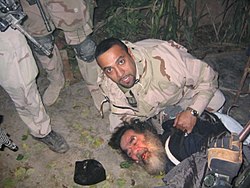
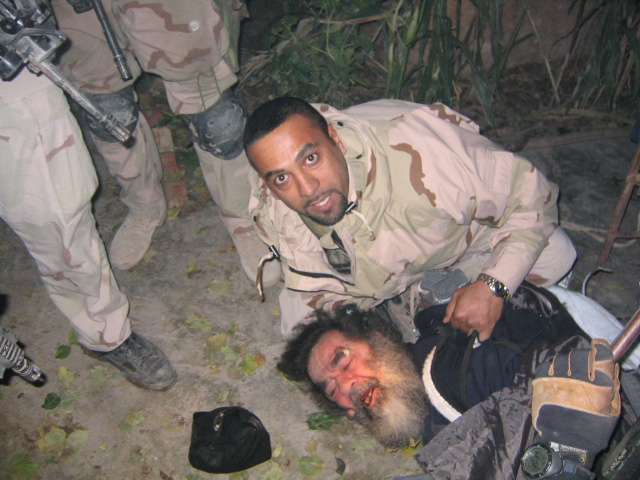
Samir, an Iraqi-American military interpreter of Task Force 121, helped find Saddam Hussein by pulling him out of hideaway in December 2003.
House of Uday and Qusay Hussein in Mosul, Iraq destroyed by members of Task Force 121 in July 2003

Task Force 121 was a United States Department of Defense special operations task force. TF121 was a multi-service force from Joint Special Operations Command, made up of operators from the U.S. Army's Delta Force, 75th Ranger Regiment, and 160th Special Operations Aviation Regiment, the U.S. Navy's SEAL Team Six, the CIA's Special Activities Division, U.S. Air Force Combat Controllers, Pararescuemen, Tactical Air Control Party operators, and Special Operations Weather Technicians, the Aviation Tactics Evaluation Group (AvTEG), and the Joint Communications Unit. Two companies of armor from the U.S. Army 4th Infantry Division and later two cavalry troops from 1/1 Cav 1st Armored Division provided armor support.

History

[edit]

TF121 was a combination of the now defunct Task Force 5 and Task Force 20, which operated in Afghanistan and Iraq respectively. Acting on the apparent logistic redundancy of keeping two separate task force teams for Iraq and Afghanistan, General John Abizaid decided to combine both teams into a single streamlined force, forming the TF121.[1] The force was approximately 1,500 soldiers with its own support capabilities.[2]

Task Force 20's primary goal was to capture or kill "High-value targets" (HVTs), such as Iraqi Mujahideen leaders and former Ba'ath party regime members and leaders. Task Force 20 operators were directly involved in the 4-hour firefight between 101st Airborne soldiers and Saddam Hussein's sons, Uday and Qusay Hussein. The two sons were killed in the shootout. The apprehending of the most wanted man in Iraq, Saddam Hussein, in Operation Red Dawn directly involved Task Force 121 operators and members of the Army's 4th Infantry Division.[3][4]

Task Force 20 was also involved in what the US military calls a tragic accident on 27 July 2003. At least three Iraqis were killed in western Baghdad's Mansour district, when US soldiers from Task Force 20 opened fire on cars that overshot a military cordon. The drivers apparently had missed the cordon when they turned into the area from an unblocked side street.[5]

Mission

[edit]

TF121's primary mission was the apprehension of High Value Targets and was organized in such a way that it has a close relationship with intelligence personnel and has timely and unhindered access to any relevant data gathered by intelligence assets in the area. Such an option is invaluable to any Special Operations team, and especially so to one whose primary mission is hunting elusive fugitives whose hideouts change frequently and randomly.[6]

Many TF121 groups were assigned Special Operations CIRA (Communications Intelligence Reconnaissance and Action) personnel with expertise in relevant fields. These operators work closely with the intelligence agencies tied to TF121 and work to pinpoint and identify HVTs aggressively.

Achievements

[edit]

On 21 July 2003, Saddam's sons Uday and Qusay were killed in a firefight with TF20 operators and soldiers from 101st Airborne. On 13 December 2003, Operation Red Dawn netted HVT #1, Saddam Hussein. After intelligence narrowed down the target to two possible locations, TF121 coordinated the raid with 600 soldiers from the 4th Infantry Division's 1st Brigade Combat Team and Golf Troop 10th Cavalry Regiment (Reconnaissance troop), 4th Brigade, 1st Armored Division.

Detainee abuse

[edit]

According to an internal army investigation leaked to the Washington Post, Task Force 121 was responsible for the illegal abuse of detainees in secret interrogation facilities in Iraq.[7] In 2006, after the unit had changed its name to Task Force 6-26, a Human Rights Watch report recorded evidence of continued abuse, including beatings and waterboarding.[8]

Cultural references

[edit]

See also

[edit]

References

[edit]
Revisions and contributorsEdit on WikipediaRead on Wikipedia
from Grokipedia
Task Force 121 was a joint special operations task force formed in 2003 under the to conduct high-risk missions targeting high-value individuals in , including former regime leaders and insurgent commanders. Comprising elite units such as Army operators, Navy SEALs, and CIA personnel, the task force emphasized rapid response to leads for capture or lethal action against priority threats. Its operations integrated conventional forces when necessary, as demonstrated in the July 2003 raid that resulted in the deaths of 's sons, Uday and Qusay, in . The task force's defining achievement came during Operation Red Dawn on December 13, 2003, when, in coordination with the 4th Infantry Division, it located and captured hiding in an underground crawlspace near after interrogating associates and acting on informant tips. This success disrupted Ba'athist networks and boosted coalition momentum, though subsequent evolutions of the unit, such as , faced scrutiny over detainee treatment practices amid broader challenges. Task Force 121 exemplified interagency fusion for time-sensitive targeting, prioritizing empirical intelligence validation over bureaucratic constraints to neutralize threats efficiently.

Formation and Organization

Origins and Establishment

Task Force 121 was established in the summer of 2003 by the under the , as a specialized unit focused on the capture or elimination of high-value targets (HVTs) in following the U.S.-led invasion in March of that year. The formation addressed the need for a dedicated manhunting force amid the intensifying and the ongoing pursuit of former Iraqi president , who had evaded capture since the fall of on April 9, 2003. It emerged from the merger of two prior JSOC task forces: , which had operated in since the invasion's early phases targeting regime leadership, and Task Force 5, previously active in for similar HVT operations. This consolidation aimed to streamline command, intelligence sharing, and operational tempo under a unified structure, drawing on lessons from fragmented efforts in the initial post-invasion period. The task force's creation was driven by directives from U.S. Central Command (CENTCOM) and JSOC leadership, including then-Commander Lt. Gen. Dell Dailey, to prioritize and regime remnant disruption through direct-action raids. Operational from its inception, Task Force 121 conducted its first documented actions by July 2003, including raids in western that resulted in the deaths of at least three Iraqis linked to insurgent activities. Headquartered initially at (BIAP), the unit integrated joint elements with CIA operatives, forming a hybrid military-intelligence entity capable of rapid-response missions supported by advanced and networks. This establishment reflected JSOC's evolution toward persistent, intelligence-driven task forces tailored to environments, with an emphasis on interagency coordination to overcome stovepiped challenges observed in earlier operations.

Composition and Command Structure

Task Force 121 consisted of a multi-service contingent drawn from the (JSOC), primarily featuring assault teams from the U.S. Army's 1st Special Forces Operational Detachment-Delta () and the Navy's Naval Special Warfare Development Group (DEVGRU). Additional operational support came from the Army's for direct action raids and the CIA's paramilitary operatives for intelligence integration and targeting. The core "shooters and door kickers" numbered fewer than 40 elite operators, augmented by broader intelligence and aviation assets, including the Army's 160th Special Operations Aviation Regiment for insertion and extraction. Command authority rested with U.S. Air Force Lyle Koenig, a veteran helicopter pilot who oversaw the task force's manhunt operations. As a temporary JSOC entity under U.S. Command (SOCOM), Task Force 121 reported through JSOC channels to higher Department of Defense leadership, including direct strategic input from of Defense and Under-Secretary Stephen Cambone. This structure emphasized rapid, compartmented decision-making, with tactical control decentralized to squadron-level commanders from and DEVGRU for raid execution, while intelligence fusion cells prioritized tracking.

Mission and Operations

Primary Objectives

Task Force 121, a (JSOC) unit established in mid-2003, was primarily tasked with conducting raids to capture or kill high-value targets (HVTs) associated with the former Iraqi regime and emerging insurgent networks. This focus stemmed from the need to disrupt Ba'athist leadership remnants and al-Qaeda-linked figures fueling post-invasion instability, prioritizing rapid exploitation of intelligence for time-sensitive operations. The task force integrated elite elements such as operators and intelligence analysts to execute these missions, emphasizing precision strikes over broader efforts. A core objective was the pursuit of Saddam Hussein himself, designated as the highest-priority HVT, through operations like the interrogation of captured associates to generate actionable leads on his location. Beyond Hussein, the unit targeted other senior figures, including his sons Uday and Qusay (killed in July 2003 prior to full TF 121 activation) and key insurgent commanders, aiming to decapitate command structures and deter foreign fighter influxes. These efforts relied on close collaboration with CIA paramilitary teams and signals intelligence to validate targets, ensuring operations aligned with strategic goals of stabilizing Iraq by neutralizing threats capable of orchestrating widespread resistance. The task force's mandate extended to intelligence-driven post-raids, where captured materials informed subsequent HVT hunts, though this was subordinate to the kinetic capture/kill imperative. By prioritizing HVT elimination, TF 121 sought to degrade insurgent operational tempo, as evidenced by its role in operations yielding over high-value detainees in its early phases, though success metrics were classified and debated in terms of long-term impact on violence levels.

Key Operations and Tactics

Task Force 121 conducted intelligence-driven raids focused on capturing or killing high-value targets (HVTs), emphasizing speed in response to time-sensitive (HUMINT) tips to disrupt insurgent networks. These operations integrated elite units with CIA elements, utilizing network analysis, detainee interrogations, and link diagrams to map target associations and predict movements. Tactics involved night assaults, cordon-and-search procedures with conventional forces providing outer perimeters, and assault teams from units like executing close-quarters breaches, often supported by aviation assets for insertion and extraction. A prominent early operation was the July 22, 2003, raid in targeting Saddam Hussein's sons, Uday and Qusay, along with associates. Task Force 121 operators, numbering about eight from elements, joined approximately 40 infantrymen from the to assault a residential compound after receiving a walk-in tip about their presence; the ensuing four-hour firefight required the use of TOW anti-tank missiles to breach fortified positions, resulting in the deaths of Uday, Qusay, their 14-year-old brother , and a . This action demonstrated TF 121's integration of precision with conventional firepower to neutralize heavily armed HVTs in urban settings. The task force's most notable success culminated in Operation Red Dawn on December 13, 2003, aimed at capturing near . Drawing from interrogations of captured associates like Basim Latif and Muhammad Ibrahim Omar al-Muslit, who provided location details after yielding under questioning, TF 121 coordinated with the 4th Infantry Division's 1st for simultaneous raids on two sites dubbed Wolverine 1 and Wolverine 2. Approximately 600 personnel participated, with special operators securing a farmhouse perimeter and discovering Hussein hiding in a rudimentary underground "" stocked with $750,000 in cash, weapons, and fake identities; he surrendered without resistance upon emergence. This operation exemplified TF 121's reliance on iterative HUMINT cycles—raiding one associate to gain leads on the next—to dismantle the target's support structure over months of persistent effort. Beyond these, TF 121 executed hundreds of raids against Ba'athist leaders and figures, prioritizing kill-or-capture missions to degrade command hierarchies, though specific outcomes for many remain classified. Challenges included false leads and target evasion, as seen in at least a dozen prior unsuccessful attempts on himself, underscoring the high operational tempo and adaptability required in fluid environments.

Achievements and Impact

Successful High-Value Target Captures

Task Force 121 achieved its most prominent success on December 13, 2003, during Operation Red Dawn, when elements of the task force, in coordination with the U.S. Army's 1st Brigade Combat Team, 4th Infantry Division, captured former Iraqi President near his hometown of . Acting on intelligence derived from interrogations of captured associates, including a tip from an named Basim, the joint force raided two sites dubbed Wolverine 1 and Wolverine 2 on a farm southeast of along the River. Hussein was discovered unarmed and hiding in an underground "" stocked with $750,000 in cash, two Kalashnikov rifles, and a , but no means of immediate beyond the hole's lid. The capture followed months of persistent raids and gathering by Task Force 121, which had been specifically tasked with high-value since its in mid-2003. Interrogators attached to the task force, such as Army Specialist Eric Maddox, extracted critical leads from low-level detainees, including the location of Hussein's security chief, Ibrahim al-Mosul, whose apprehension earlier that day provided the final coordinates. Upon extraction from the hole, Hussein identified himself as "Saddam Hussein, " and offered to negotiate, but was detained without resistance. This operation demonstrated the task force's integration of tactics with conventional support, resulting in the apprehension of Number One after nine months of evasion. While Task Force 121 conducted hundreds of raids leading to the capture of numerous insurgent leaders and Ba'athist officials, the seizure of stood as the unit's defining achievement in neutralizing regime remnants. These operations disrupted command structures and yielded intelligence on broader networks, though specific details on other individual high-value captures remain classified or less publicly documented. The task force's focus on rapid-response raids based on tips enabled the live apprehension of targets prioritized for over elimination.

Contributions to Broader War Efforts

Task Force 121 conducted hundreds of raids across following its establishment in the summer of , targeting Saddam 's inner circle, Baathist loyalists, and suspected facilitators of resistance activities, which collectively degraded the organizational cohesion of early post-invasion insurgent elements. These operations extended beyond the primary hunt for , yielding captures of mid-level operatives whose interrogations produced actionable intelligence on financing channels and safe houses used by Baathist networks. This intelligence was funneled into joint fusion cells shared with conventional U.S. Army divisions and coalition partners, informing larger-scale sweeps and airstrikes that pressured insurgent logistics in central , particularly around and . By eliminating key commanders and disrupting command-and-control links, Task Force 121's efforts created operational vacuums that hindered coordinated Baathist reprisals, allowing conventional forces to consolidate gains in urban sectors with reduced high-level threats. The task force's interagency structure, incorporating CIA assets, further amplified these contributions by cross-verifying with signals intercepts, enhancing the overall tempo of targeting.

Controversies

Detainee Interrogation Practices

Task Force 121, later redesignated as and Task Force 145, maintained a detention and facility at near from mid-2003 onward, where high-value detainees captured during raids were held for questioning prior to transfer or release. there employed techniques including isolation in darkened cells, through constant noise or light, exposure to extreme temperatures, forced stress positions, and verbal , which were reportedly authorized by task force commanders to extract on insurgent networks. These methods drew from broader U.S. military and CIA doctrines adapted for contexts, but their application at escalated into documented physical abuses such as hooding, stripping detainees naked, and threats involving military dogs or mock executions, as recounted by multiple U.S. soldiers involved in or witnessing operations. A so-called "black room" within the facility served as a primary site for aggressive interrogations, where detainees faced prolonged sensory manipulation and physical coercion despite internal warnings as early as August 2003 from investigator Lt. Col. Anthony Shaffer and intelligence officer Col. Stuart Herrington, who highlighted risks of unreliable intelligence and legal violations under the . By December 2003, a confidential report to senior generals in explicitly noted Task Force 121 members abusing detainees through beatings and unauthorized techniques, yet operations continued without immediate reform until external scrutiny intensified post-Abu Ghraib in 2004. Soldier testimonies, including those from personnel, described these practices as routine for high-value targets, with some abuses linked to frustration over intelligence failures, though task force leadership denied systematic while acknowledging isolated excesses. Oversight failures compounded the issues, as the joint JSOC-CIA structure of Task Force 121 allowed for limited external monitoring, with detainees sometimes classified as "ghost" prisoners to evade standard logging and Red Cross access, a practice corroborated in declassified Army documents. While proponents argued such methods yielded actionable intelligence—evidenced by captures like Saddam Hussein's in December 2003—critics, including analyses of soldier accounts, contended they violated U.S. law, including the Detainee Treatment Act of 2005, and produced coerced confessions of dubious reliability, potentially fueling insurgency recruitment. Investigations by the Army's later confirmed patterns of abuse at special operations sites like , leading to reprimands but no widespread prosecutions of senior officers.

Allegations of Abuse and Oversight Failures

Task Force 121, operating a detention facility at near from mid-2003 onward, faced allegations of systematic detainee including beatings, , stress positions, , and threats with unmuzzled dogs. A December 2003 confidential report by U.S. Army Col. Stuart Herrington, an expert, warned commanders that TF121 personnel were routinely mistreating high-value detainees, including through physical assaults and withholding medical care, while deliberately excluding them from official records to evade oversight. These practices persisted into 2004 despite the scandal, with soldiers from supporting units reporting that TF121 interrogators justified harsh methods as necessary for extracting intelligence on insurgents, often under the motto "no blood, no foul" to minimize visible injuries. Oversight failures compounded the issues, as TF121's integration of military and CIA elements created parallel chains of command that bypassed standard Army regulations and Red Cross inspections. Documents released via Act requests revealed that TF121 members threatened U.S. agents and translators who witnessed abuses, warning them of reprisals for reporting incidents, which deterred internal . British personnel attached to the joint U.S.-U.K. iteration of TF121 at later testified to similar conditions, including mock executions and prolonged , but claimed their reports were ignored by higher commands prioritizing operational secrecy over accountability. A 2006 Human Rights Watch compilation of soldier accounts indicated that senior officers, informed as early as November 2003 of detainee deaths linked to task force custody, failed to impose corrective measures, allowing abuses to continue amid the insurgency's escalation. Military investigations, such as a 2004 Army Inspector General review, acknowledged lapses in detainee tracking and interrogation protocols within TF121's orbit but attributed them to decentralized authority rather than deliberate policy, leading to limited prosecutions confined to low-level personnel. Critics, including Amnesty International, argued that the task force's "high-value target" focus incentivized unchecked aggression, with a 2006 memo citing U.S. officials' calls to "rein in" TF121's detainee handling absent effective congressional or doctrinal constraints. These allegations, drawn from declassified memos, eyewitness testimonies, and journalistic probes, highlight tensions between expedited counterterrorism and legal standards, though defenders maintained such methods yielded actionable intelligence amid existential threats.

Legacy

Evolution and Doctrinal Influence

Task Force 121, initially established in the summer of 2003 as a (JSOC) entity combining elements of , , and specialized intelligence units, marked a departure from prior task forces like by centralizing intelligence collection and direct-action capabilities under a single command structure dedicated to (HVT) manhunts. This evolution was driven by the need to counter elusive threats in following the conventional phase of the , with the task force achieving its foundational success in the December 13, 2003, near through iterative raids informed by and signals intercepts. Post-capture, TF 121 persisted and expanded its mandate beyond , incorporating broader counterterrorism operations against networks across the region, adapting to insurgent tactics by integrating aviation assets like the 160th Special Operations Aviation Regiment for rapid insertion and extraction. The task force's operational model influenced JSOC doctrine by prioritizing the fusion of real-time intelligence with raids, embodying a "find, fix, finish" cycle that emphasized persistent surveillance, network analysis, and precision strikes over broader area sweeps. This approach, refined under leaders like William McRaven—who commanded TF 121 elements in —demonstrated the efficacy of dedicated manhunting units in disrupting leadership structures, as evidenced by the systematic degradation of in Iraq's command cadre through repeated HVT eliminations. Such tactics informed subsequent doctrinal updates in joint publications on , including enhanced emphasis on intelligence-special operations integration and scalable task forces for , setting precedents for operations like the 2011 raid on . TF 121's legacy extended to institutional changes within U.S. Special Operations Command, where its success validated the expansion of JSOC's role in strategic counterterrorism, leading to increased funding and training focused on urban counterinsurgency and cross-border pursuits by the mid-2000s. However, this doctrinal shift also highlighted tensions between rapid operational tempo and oversight, influencing post-Iraq reforms in rules of engagement and interrogation protocols to balance effectiveness with accountability. The task force's methods, while not formally codified in a single manual, permeated special operations training pipelines, fostering a generation of operators versed in data-driven targeting that remains central to contemporary counterterrorism doctrine.

Cultural and Media Depictions

Task Force 121, owing to the classified nature of its operations, has received minimal portrayal in mainstream films, television series, or novels, with depictions largely confined to histories and analyses rather than dramatized fiction. The unit's role in raids during the is referenced in works such as Sean Naylor's Relentless Strike: The Secret History of (2015), which details JSOC task forces including TF121 without , drawing on declassified documents and interviews with participants. Similarly, accounts of Operation Red Dawn, TF121's successful on December 13, 2003, appear in books like Jerry Green's A Night with Saddam (2023), providing firsthand narratives from involved personnel but emphasizing tactical execution over narrative embellishment. The most direct fictionalized media representation is the 2005 first-person shooter video game Combat: Task Force 121 (released as America's Secret Operations in ), developed by Groove Games and published for PC, , and PlayStation 2. In the game, players assume the role of TF121 operatives—comprising Navy SEALs, Green Berets, Army Rangers, and USMC Recon—engaged in missions to thwart terrorist threats and capture high-value targets, explicitly referencing the unit's real-world involvement in Saddam Hussein's apprehension. Featuring 10 single-player campaigns across environments like urban and , the title aimed to simulate elite but garnered criticism for repetitive , simplistic AI, and lack of environmental interaction, earning a score of 44/100. No major Hollywood films or scripted TV productions have centered on TF121, reflecting the broader media focus on more publicized JSOC elements like the bin Laden raid.

References

Add your contribution
Related Hubs
User Avatar
No comments yet.