
Recent from talks
Three Principles of the People
Knowledge base stats:
Talk channels stats:
Members stats:
Three Principles of the People
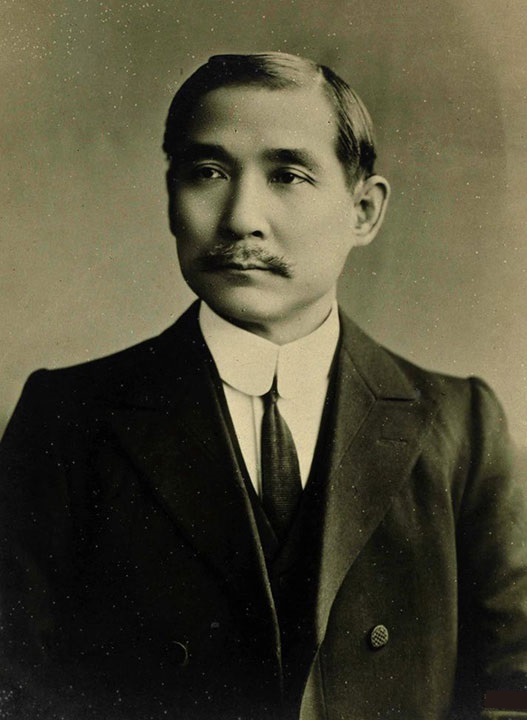
The Three Principles of the People (Chinese: 三民主義; pinyin: Sānmín Zhǔyì), also known as the Three People's Principles, San-min Doctrine, San Min Chu-i, or Tridemism is a political philosophy developed by Sun Yat-sen as part of a philosophy to improve China during the Republican Era and later in Taiwan during the Dang Guo era. The three principles are often translated into and summarized as nationalism, democracy, and the livelihood of the people (or welfarism). This philosophy has been claimed as the cornerstone of the nation's policy as carried by the Kuomintang; the principles also appear in the first line of the national anthem of the Republic of China.
When the Revive China Society was formed in 1894, Sun only had two principles: nationalism and democracy. He picked up the third idea, welfare, during his three-year trip to Europe from 1896 to 1898. He announced all three ideas in the spring of 1905, during another trip to Europe. Sun made the first speech of his life on the "Three Principles of the People" in Brussels. He was able to organize the Revive China Society in many European cities. There were about 30 members in the Brussels branch at the time, 20 in Berlin, and 10 in Paris. After the Tongmenghui was formed, Sun published an editorial in Min Bao (民報). This was the first time the ideas were expressed in writing. Later on, in the anniversary issue of Min Bao, his long speech of the Three Principles was printed, and the editors of the newspaper discussed the issue of people's livelihood.
The ideology is said to be heavily influenced by Sun's experiences in the United States and contains elements of the American progressive movement and the thought championed by Abraham Lincoln. Sun credited a line from Lincoln's Gettysburg Address, "government of the people, by the people, for the people", as an inspiration for the Three Principles. Sun's Three Principles of the People are inter-connected as the guideline for China's modernization development as stretched by Hu Hanmin.
Because "Mínzú" or "People" describes a nation rather than a group of persons united by a purpose, the 'Principle of Mínzú' (Chinese: 民族主義; pinyin: Mínzú Zhǔyì) is commonly rendered as "nationalism".
Sun saw the Chinese Nation as under threat of annihilation by the imperialist powers. To reverse the trajectory of such decline, China needed to become nationally independent both externally and internally.
Internally, national independence meant independence from the Qing Manchus who ruled China for centuries. Sun thought that the Han Chinese people were a people without their own nation and thus strove for national revolution against Qing authorities.
Externally, national independence meant independence from imperialist foreign powers. Sun believed China to be threatened by imperialism in three ways: by economic oppression, by political aggression, and by slow population growth. Economically, Sun held the mercantilist position that China was being economically exploited by unbalanced trade and tariffs. Politically, he looked toward the unequal treaties signed by China as the reason of China's decline. Sun envisioned a future China that was strong and capable of fighting imperialists and standing on the same stage as western powers.
Although Sun initially believed in a form of Han nationalism to oppose the rule of the Qing dynasty, he later came to accept Liang Qichao’s multi-ethnic nationalist idea of a unified Chinese nation. To achieve "national independence", Sun believed that China must first develop a "China-nationalism," Zhonghua Minzu, as opposed to an mono-ethnic nationalism. Sun developed the principles of Five Races Under One Union to unite the five major ethnic groups of China—Han, Mongols, Tibetans, Manchus, and the Muslims (such as the Uyghurs)—under one "Chinese Nation". This principle is symbolized by the Five Color Flag of the First Republic of China (1911–1928). He believed that China must develop a "national consciousness" so as to unite the Chinese people in the face of imperialist aggression. He argued that "minzu", which can be translated as "people", "nationality", or "race", was defined by sharing common blood, livelihood, religion, language, and customs. Sun also believed in a form of interculturalism that assimilated ethnic minorities into the dominant Han culture by a process of naturalization, rather than through brute force.
Hub AI
Three Principles of the People AI simulator
(@Three Principles of the People_simulator)
Three Principles of the People
The Three Principles of the People (Chinese: 三民主義; pinyin: Sānmín Zhǔyì), also known as the Three People's Principles, San-min Doctrine, San Min Chu-i, or Tridemism is a political philosophy developed by Sun Yat-sen as part of a philosophy to improve China during the Republican Era and later in Taiwan during the Dang Guo era. The three principles are often translated into and summarized as nationalism, democracy, and the livelihood of the people (or welfarism). This philosophy has been claimed as the cornerstone of the nation's policy as carried by the Kuomintang; the principles also appear in the first line of the national anthem of the Republic of China.
When the Revive China Society was formed in 1894, Sun only had two principles: nationalism and democracy. He picked up the third idea, welfare, during his three-year trip to Europe from 1896 to 1898. He announced all three ideas in the spring of 1905, during another trip to Europe. Sun made the first speech of his life on the "Three Principles of the People" in Brussels. He was able to organize the Revive China Society in many European cities. There were about 30 members in the Brussels branch at the time, 20 in Berlin, and 10 in Paris. After the Tongmenghui was formed, Sun published an editorial in Min Bao (民報). This was the first time the ideas were expressed in writing. Later on, in the anniversary issue of Min Bao, his long speech of the Three Principles was printed, and the editors of the newspaper discussed the issue of people's livelihood.
The ideology is said to be heavily influenced by Sun's experiences in the United States and contains elements of the American progressive movement and the thought championed by Abraham Lincoln. Sun credited a line from Lincoln's Gettysburg Address, "government of the people, by the people, for the people", as an inspiration for the Three Principles. Sun's Three Principles of the People are inter-connected as the guideline for China's modernization development as stretched by Hu Hanmin.
Because "Mínzú" or "People" describes a nation rather than a group of persons united by a purpose, the 'Principle of Mínzú' (Chinese: 民族主義; pinyin: Mínzú Zhǔyì) is commonly rendered as "nationalism".
Sun saw the Chinese Nation as under threat of annihilation by the imperialist powers. To reverse the trajectory of such decline, China needed to become nationally independent both externally and internally.
Internally, national independence meant independence from the Qing Manchus who ruled China for centuries. Sun thought that the Han Chinese people were a people without their own nation and thus strove for national revolution against Qing authorities.
Externally, national independence meant independence from imperialist foreign powers. Sun believed China to be threatened by imperialism in three ways: by economic oppression, by political aggression, and by slow population growth. Economically, Sun held the mercantilist position that China was being economically exploited by unbalanced trade and tariffs. Politically, he looked toward the unequal treaties signed by China as the reason of China's decline. Sun envisioned a future China that was strong and capable of fighting imperialists and standing on the same stage as western powers.
Although Sun initially believed in a form of Han nationalism to oppose the rule of the Qing dynasty, he later came to accept Liang Qichao’s multi-ethnic nationalist idea of a unified Chinese nation. To achieve "national independence", Sun believed that China must first develop a "China-nationalism," Zhonghua Minzu, as opposed to an mono-ethnic nationalism. Sun developed the principles of Five Races Under One Union to unite the five major ethnic groups of China—Han, Mongols, Tibetans, Manchus, and the Muslims (such as the Uyghurs)—under one "Chinese Nation". This principle is symbolized by the Five Color Flag of the First Republic of China (1911–1928). He believed that China must develop a "national consciousness" so as to unite the Chinese people in the face of imperialist aggression. He argued that "minzu", which can be translated as "people", "nationality", or "race", was defined by sharing common blood, livelihood, religion, language, and customs. Sun also believed in a form of interculturalism that assimilated ethnic minorities into the dominant Han culture by a process of naturalization, rather than through brute force.
Recent media