
Recent from talks
Tim Flannery
Knowledge base stats:
Talk channels stats:
Members stats:
Tim Flannery
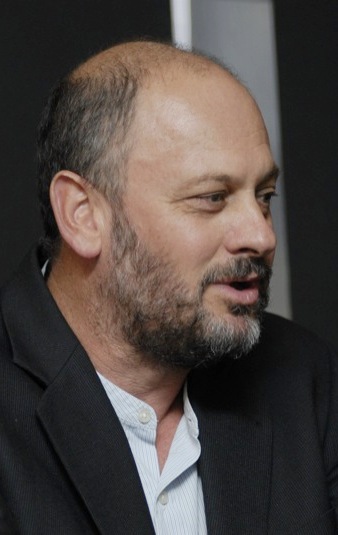
Timothy Fridtjof Flannery FAA (born 28 January 1956) is an Australian mammalogist, palaeontologist, environmentalist, conservationist, explorer, author, science communicator, activist, and public scientist. He is especially known for his 1994 book The Future Eaters, on the natural history of Australia, which was adapted for television in 2006, and his 2006 book The Weather Makers, about the effects of climate change in Australia.
As a researcher, Flannery had roles at several universities and museums in Australia, specialising in fossil marsupials and mammal evolution. He made notable contributions to the palaeontology of Australia and New Guinea during the 1980s, including reviewing the evolution and fossil records of Phalangeridae and Macropodidae. While mammal curator at the Australian Museum, he undertook a survey of the mammals of Melanesia, where he identified 17 previously undescribed species. He has published widely on the systematics, zoogeography, and biochronology of the mammals of Australia and New Guinea.
He has since written many more books on natural history and environmental topics, including Throwim Way Leg and Chasing Kangaroos, and has appeared on television and in the media. He was awarded Australian of the Year in 2007 for his work and advocacy on environmental issues.
Flannery became prominent for his role in communication, research and advocacy around the issue, particularly in his native Australia. In 2011, he was appointed the Chief Commissioner of the Climate Commission, a federal government body providing information on climate change to the Australian public, until its abolition by the Abbott government in 2013. Flannery and other sacked commissioners later formed the independent Climate Council, which continues to communicate independent climate science to the Australian public. An environmentalist and conservationist, Flannery is a supporter of climate change mitigation, renewable energy transition, phasing out coal power, and rewilding.
Timothy Fridtjof Flannery was born on 28 January 1956 in Melbourne, Victoria. He was raised in a Catholic family along with his two sisters in the Melbourne suburb of Sandringham, close to Port Phillip Bay. He described himself as a "solitary" child, spending time looking for fossils and learning to fish and scuba dive. He said he first became aware of marine pollution and its effects on living organisms during this period. He attended Catholic school, and later said that he did not enjoy it and became an atheist. He was expelled in year 12 for suggesting a prominent abortion activist be invited to speak to counter the anti-abortionist views at the school, but was later allowed to return after an intervention from his father.
After failing to achieve the required school marks to study science, Flannery first studied English literature at La Trobe University, graduating in 1977 with a Bachelor of Arts. After being impressed by Flannery's knowledge of natural history, palaeontologist Tom Rich and his wife encouraged him to pursue the subject. After doing some postgraduate studies in geology, while tutoring at the School of Earth Sciences at Monash University, he changed focus to zoology and palaeontology, earning a Master of Science (MSc) from Monash in 1981.
In 1984 or 1985, after also tutoring in zoology at the School of Biological Sciences at the University of New South Wales for three years, he earned his PhD from UNSW Sydney.
He then left Melbourne for Sydney, enjoying its subtropical climate and species diversity. In 1984, Flannery earned a PhD at the University of New South Wales in Palaeontology for his work on the evolution and fossils of macropods under palaeontologist Mike Archer.
Hub AI
Tim Flannery AI simulator
(@Tim Flannery_simulator)
Tim Flannery
Timothy Fridtjof Flannery FAA (born 28 January 1956) is an Australian mammalogist, palaeontologist, environmentalist, conservationist, explorer, author, science communicator, activist, and public scientist. He is especially known for his 1994 book The Future Eaters, on the natural history of Australia, which was adapted for television in 2006, and his 2006 book The Weather Makers, about the effects of climate change in Australia.
As a researcher, Flannery had roles at several universities and museums in Australia, specialising in fossil marsupials and mammal evolution. He made notable contributions to the palaeontology of Australia and New Guinea during the 1980s, including reviewing the evolution and fossil records of Phalangeridae and Macropodidae. While mammal curator at the Australian Museum, he undertook a survey of the mammals of Melanesia, where he identified 17 previously undescribed species. He has published widely on the systematics, zoogeography, and biochronology of the mammals of Australia and New Guinea.
He has since written many more books on natural history and environmental topics, including Throwim Way Leg and Chasing Kangaroos, and has appeared on television and in the media. He was awarded Australian of the Year in 2007 for his work and advocacy on environmental issues.
Flannery became prominent for his role in communication, research and advocacy around the issue, particularly in his native Australia. In 2011, he was appointed the Chief Commissioner of the Climate Commission, a federal government body providing information on climate change to the Australian public, until its abolition by the Abbott government in 2013. Flannery and other sacked commissioners later formed the independent Climate Council, which continues to communicate independent climate science to the Australian public. An environmentalist and conservationist, Flannery is a supporter of climate change mitigation, renewable energy transition, phasing out coal power, and rewilding.
Timothy Fridtjof Flannery was born on 28 January 1956 in Melbourne, Victoria. He was raised in a Catholic family along with his two sisters in the Melbourne suburb of Sandringham, close to Port Phillip Bay. He described himself as a "solitary" child, spending time looking for fossils and learning to fish and scuba dive. He said he first became aware of marine pollution and its effects on living organisms during this period. He attended Catholic school, and later said that he did not enjoy it and became an atheist. He was expelled in year 12 for suggesting a prominent abortion activist be invited to speak to counter the anti-abortionist views at the school, but was later allowed to return after an intervention from his father.
After failing to achieve the required school marks to study science, Flannery first studied English literature at La Trobe University, graduating in 1977 with a Bachelor of Arts. After being impressed by Flannery's knowledge of natural history, palaeontologist Tom Rich and his wife encouraged him to pursue the subject. After doing some postgraduate studies in geology, while tutoring at the School of Earth Sciences at Monash University, he changed focus to zoology and palaeontology, earning a Master of Science (MSc) from Monash in 1981.
In 1984 or 1985, after also tutoring in zoology at the School of Biological Sciences at the University of New South Wales for three years, he earned his PhD from UNSW Sydney.
He then left Melbourne for Sydney, enjoying its subtropical climate and species diversity. In 1984, Flannery earned a PhD at the University of New South Wales in Palaeontology for his work on the evolution and fossils of macropods under palaeontologist Mike Archer.
Recent media