Hubbry Logo
TomorrowWorldTomorrowWorldMain
Open search
TomorrowWorld
Community hub
TomorrowWorld
logo
8 pages, 0 posts
0 subscribers
Be the first to start a discussion here.
TomorrowWorld
TomorrowWorld
from Wikipedia

TomorrowWorld
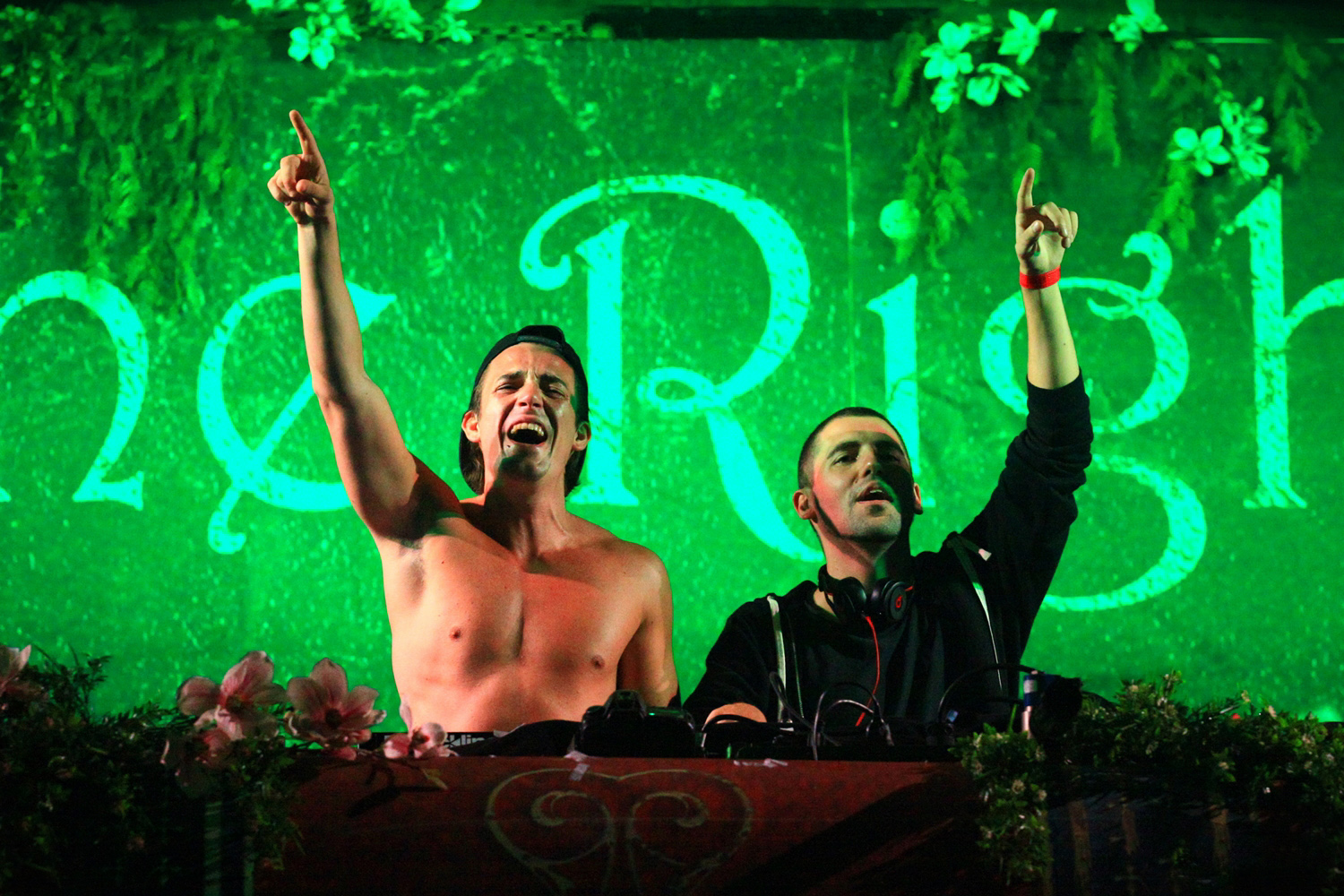
Clockwise from top left:
Axwell, Dimitri Vegas & Like Mike, W&W, Nicky Romero at TomorrowWorld 2013
GenreEDM
LocationsChattahoochee Hills, Georgia
Years active2013–2015
Organised byID&T
WebsiteOfficial site

TomorrowWorld was an electronic music festival, held in the Atlanta metropolitan area within the town of Chattahoochee Hills, Georgia. Held from 2013 to 2015, the festival was a spinoff of the Belgian festival Tomorrowland. The festival was owned by LiveStyle, Inc. (formerly known as SFX Entertainment, Inc.) and organized and produced by EDM promoter ID&T, a wholly owned subsidiary of LiveStyle. In its inaugural year, TomorrowWorld received a nomination for Best Music Event at the International Dance Music Awards.[1] The festival did not return in 2016 due to the bankruptcy of the SFX entertainment and also the backlash event organizers received due to weather-related and logistical issues during the 2015 edition.[2]

History

[edit]

2013

[edit]
"The Book of Wisdom", used as the Tomorrowland 2012 theme, was used again for TomorrowWorld 2013

In March 2013, Barnette Group, ID&T and SFX Entertainment announced that it would start holding an American spin-off of Tomorrowland, known as TomorrowWorld.[3] The festival is held at Chattahoochee Hills, near Atlanta, Georgia.[4] The site was specifically chosen due to its resemblance to Boom, Belgium, where Tomorrowland is traditionally held. To symbolize TomorrowWorld as the "next chapter" of the Tomorrowland festival franchise, the inaugural edition would re-use the "Book of Wisdom" main stage design that was used for the previous Tomorrowland in 2012.[5]

Given TomorrowWorld was the first EDM event following two deaths at New York's Electric Zoo Festival, ticket sales were slower than expected overall. Adding the unconventional location and a higher age restriction of 21, industry insiders feared a potential flop. Nevertheless, TomorrowWorld had a successful inaugural edition without incidents.[6] During the final week of September of that year, over 140,000 people gathered at Chattahoochee Hills, near Atlanta, Georgia to listen to the likes of Armin van Buuren, Tiësto, Hardwell and more than 300 other EDM artists performing on eight different stages.[7] Nearly 30,000 individuals stayed on site at the TomorrowWorld campground, known as Dreamville.[8]

One of the indoor stages at the festival

2014

[edit]

The second edition of TomorrowWorld happened in September 2014, and brought a larger crowd with 150,000 attendees.[9] An innovation was employing only cashless transactions, done by the same radio-frequency identification wristbands that served as entry tickets.[10]

The first two editions of Tomorrowworld were billed as a Chattahoochee Hills event, despite being held just outside the city limits. On April 1, 2015, the City of Chattahoochee Hills annexed 4,920 acres of land, including the property that hosts Tomorrowworld. This meant that the festival would then be held inside the Chattahoochee Hills city limits. In addition to annexing the Tomorrowworld property, the Chattahoochee Hills City Council also unanimously approved a land use permit allowing for the event to be held until 2025. Carl Bouckaert, the owner of the land where Tomorrowworld is held, asked the City Council to approve his land use permit as a part of the annexation petition.[11]

2015

[edit]

The third edition of TomorrowWorld was held on the weekend of September 25, 2015. The event was marred by inclement weather; rain showers resulted in muddy terrain at the festival grounds, and entrance roadways to the grounds becoming unusable. On Saturday, due to the road conditions, organizers restricted shuttle service for attendees travelling back to Atlanta; those who were not outright stranded without shelter at the grounds overnight were required to hike miles towards areas where taxicab and Uber drivers offered rides back to Atlanta at high prices. The following morning, festival organizers announced that the remainder of the festival would only be open to those who had camped on-site, and that refunds would be issued to those who were affected by the transport issues or had bought tickets for day 3.[12][13]

Discontinuation

[edit]

The fate of the 2016 edition was left in question due to the February 2016 bankruptcy filing of SFX, as well as the weather issues experienced in 2015.[14][15] On March 2, 2016, SFX officially announced that TomorrowWorld 2016 had been cancelled.[2][16]

Edition's summary

[edit]
Year Dates Attendance Theme
2013 27, 28, 29 September 140,000 The Book of Wisdom
2014 26, 27, 28 September 150,000 The Arising of Life
2015 25, 26, 27 September 150,000 The Key to Happiness

Economic impact

[edit]

A study commissioned by TomorrowWorld organizers concluded that the festival had an economic impact on the metro Atlanta area equivalent to the $70 million generated for the city during the 2013 NCAA Final Four.[17] Independent research firm Beacon Economics reported in its study that visiting attendees' direct expenditures added $28.7 million into the local economy across areas such as lodging, restaurants, sight-seeing, etc. An estimated $4.3 million in tax revenues went to state and local governments as a result of event-related spending for TomorrowWorld 2013. This would be the equivalent of hiring 80 full-time school teachers for one year at a salary of $53,000. Labor income for workers in metro Atlanta and the greater state of Georgia increased by $34 million thanks to the direct and indirect work needed to support the influx of people and increased business from the event. TomorrowWorld employed the equivalent of 749 annual full-time jobs.

The second edition was also a financial success. SFX's profits were $10 million higher compared to the first TomorrowWorld,[18] allowing the company to recover from net losses during the second quarter of 2014.[9]

Awards and nominations

[edit]
Year Awards Category Result Ref.
2014 International Dance Music Awards Best Music Event Nominated [19]

See also

[edit]

References

[edit]
[edit]
Revisions and contributorsEdit on WikipediaRead on Wikipedia
from Grokipedia
TomorrowWorld was an annual electronic dance music (EDM) festival held from 2013 to 2015 in Chattahoochee Hills, Georgia, serving as the North American edition of the Belgian Tomorrowland festival. The event transformed an 8,000-acre rural site into an immersive wonderland with elaborate stage designs, pyrotechnics, and themed areas inspired by fairy tales and fantasy, attracting electronic music enthusiasts from around the world. Organized by the creators of Tomorrowland—brothers Manu and Michiel Beers—the festival aimed to replicate the Belgian event's magical atmosphere while adapting to the U.S. market, including options for camping, gourmet food offerings, and interactive art installations. It featured multiple stages hosting top-tier DJs and producers such as , , , and , with lineups spanning , , , and genres. The inaugural 2013 edition drew approximately 140,000 attendees from more than 75 countries, generating an estimated $85 million in economic impact for Georgia ($70 million for the region). Subsequent years saw attendance stabilize around 150,000 to 160,000, solidifying TomorrowWorld as a major fixture on the global EDM circuit. The festival's production emphasized and community, with features like eco-friendly initiatives and a minimum age of 21 to ensure a mature environment. However, the 2015 edition faced significant challenges, including that led to early closure and medical emergencies, prompting organizers to cancel plans for 2016 amid financial difficulties tied to parent company SFX Entertainment (later rebranded as LiveStyle). Despite its short run, TomorrowWorld left a lasting legacy in expanding EDM's popularity in the United States and influencing subsequent festivals with its blend of spectacle and artistry.

Background and Organization

Origins and Development

TomorrowWorld originated as an extension of the renowned Belgian (EDM) festival Tomorrowland, with Dutch promoter beginning conceptual planning following the March 2013 announcement to bring a similar event to the amid the rapid growth of EDM's popularity in . This expansion was motivated by Tomorrowland's established global brand, which had drawn international acclaim since its inception in 2005, and the opportunity to capitalize on surging demand for large-scale EDM gatherings in the U.S., where festivals like were attracting massive crowds. , known for producing immersive, themed experiences, envisioned TomorrowWorld as a direct adaptation to introduce European-style festival production to American audiences. The selection of the Atlanta metropolitan area, specifically the rural town of Chattahoochee Hills in Georgia, was driven by several key factors including its proximity to Hartsfield-Jackson for easy accessibility, the availability of expansive private land on an 8,000-acre former horse farm owned by Belgian expatriate Carl Bouckaert—who proactively reached out to offering the property—and the region's emerging music scene. The site's pastoral landscape, featuring rolling hills and open fields, closely mirrored the scenic countryside of , where Tomorrowland is held, making it an ideal fit for replicating the festival's immersive environment. After evaluating nearly 100 potential locations across the U.S., chose Chattahoochee Hills. Initial announcements for TomorrowWorld came in March 2013, confirming the event's debut for September 27–29 at the selected site, with an expected attendance of 140,000 over the three days. The festival's inaugural theme, "The : Chapter Two," was revealed in August 2013, emphasizing a narrative-driven experience with fairy-tale elements and a central main stage designed as an ancient book. Planning involved significant challenges, including securing local permits for a large-scale outdoor event on private land and adapting Tomorrowland's European model—characterized by intricate theming and on-site villages—to U.S. regulatory and logistical requirements, such as enhanced transportation infrastructure for attendees from across the country. These efforts required coordination with Georgia authorities to manage the event's 350-acre footprint and ensure compliance with American safety and environmental standards.

Ownership and Key Organizers

TomorrowWorld was established by , a prominent Dutch event production company, in collaboration with SFX Entertainment, a U.S.-based firm founded by entrepreneur aimed at capitalizing on the growing (EDM) sector. , known for its expertise in large-scale EDM events such as Tomorrowland since 2005, brought creative and operational know-how to the project, while SFX provided the financial and market expansion resources for a North American debut. This partnership leveraged ID&T's established production model to adapt the festival format for the U.S. audience. The festival's 2013 launch occurred under SFX's ownership after the company acquired a 75% stake in for approximately $102 million in March 2013, with full ownership completed by October of that year. Key figures included Duncan Stutterheim, co-founder and creative director who oversaw the event's artistic vision drawing from his role in pioneering global EDM spectacles, and , SFX's CEO, who drove the strategic push to consolidate and monetize EDM festivals across the U.S. SFX's aggressive acquisition strategy positioned TomorrowWorld as a flagship event in its portfolio of North American EDM properties. SFX supported the festival's development through significant financial backing, including its October 2013 that raised $260 million and valued the company at over $1 billion, with proceeds earmarked for expanding U.S.-based EDM events like TomorrowWorld. Following SFX's Chapter 11 filing in February 2016, the company restructured and rebranded as LiveStyle, Inc. in December 2016 under new CEO Randy Phillips, but TomorrowWorld was not revived under this entity.

Festival Format and Features

Venue and Infrastructure

TomorrowWorld was held at Bouckaert Farm, an expansive 8,000-acre rural property in , located approximately 30 miles southwest of . This secluded, forested farmland was selected for its vast open spaces, natural beauty along the , and isolation from urban areas, providing an immersive setting for large-scale events while preserving the area's tranquility. The site's rolling pastures, woodlands, and riverfront terrain offered a picturesque yet challenging environment, with temporary infrastructure erected to support festival operations without permanent alterations. The festival utilized roughly 350 to 500 acres of the property for its core grounds, including performance areas, pathways, and support facilities, allowing for expansive layouts across wooded and open terrain. Dreamville, the on-site camping village, spanned additional acreage and accommodated up to 30,000 campers per weekend, featuring designated zones for tents, options, and communal areas with basic utilities like showers and laundry services. Transportation logistics included shuttle services from , downtown hotels, and other regional points, as well as on-site parking for approximately 20,000 vehicles to manage influxes of up to 150,000 attendees over the three-day event. Security measures were bolstered after the inaugural 2013 edition, incorporating advanced , all-female guard teams in later years, and enhanced perimeter to handle the site's remote location and high attendance. Key amenities focused on attendee convenience and safety, with the introduction of cashless RFID wristbands in enabling seamless payments, entry scanning, and locker access across the grounds. Multiple medical tents staffed by professionals provided on-site care, reporting low incident rates such as only 17 transports from 140,000 attendees in one edition. Food vendors offered diverse options, from to staples, while installations—ranging from interactive sculptures to thematic displays—enhanced the immersive atmosphere without permanent fixtures. To address the rural, forested setting, all infrastructure relied on temporary structures, including over 80 shipping containers imported from for stages and enclosures, ensuring minimal through full disassembly post-event. In response to severe weather challenges like the 2015 storms, organizers adapted by adding mud mitigation paths and contingency shuttles, though logistical strains highlighted the site's vulnerability to heavy rain.

Stages, Production, and Themes

TomorrowWorld featured a core lineup of stages that anchored its immersive experience, with the Main Stage serving as the central hub capable of accommodating up to 80,000 attendees and incorporating extensive , massive LED screens for synchronized visuals, and elaborate structural designs spanning over 400 feet wide and 100 feet tall. The Freedom Stage emphasized and genres, providing a dedicated space for deeper, rhythmic sets amid atmospheric lighting and crowd-focused production elements. Complementing these were the Epic Fantasy Stage, which explored and progressive sounds through fantastical decor and uplifting builds, and the Bass Stage, highlighting and heavier bass-driven subgenres with intense drops and subwoofer-heavy audio setups. The festival's production drew directly from the high standards of its Belgian counterpart, Tomorrowland, with entire stage structures imported and adapted for the U.S. editions, including fairy-tale-inspired aesthetics, confetti cannons during peak moments, and precisely timed integrated with performer sets. Organized by , the production emphasized theatrical immersion, utilizing custom LED walls, fog machines, and laser shows to create narrative-driven environments across up to 12 stages, though early editions operated with 7 to 9. This scale supported over 300 artists annually, prioritizing (EDM) subgenres such as , , and , with representative examples including trance anthems on the Epic Fantasy Stage and bass-heavy drops on dedicated platforms. Each edition revolved around an evolving thematic narrative to enhance the festival's storytelling, such as the 2013 "The Book of Wisdom," portraying a journey of enlightenment through book-themed installations and wisdom-seeking motifs on the Main Stage. In 2014, "The Arising of Life" introduced volcanic imagery with erupting pyrotechnics symbolizing rebirth, while the 2015 "The Key to Happiness" focused on unlocking joy via Renaissance-inspired animations and interactive elements like mirrored frames and forested canopies across stages. Unique features extended the experience beyond the main grounds, including the Dreamville camping area, a self-contained village offering accommodations for thousands in a community-oriented setup branded under the "People of Tomorrow" ethos, complete with installations and communal spaces for pre- and post-festival gatherings. Headliners like exemplified the focus on the Main Stage, tying into the thematic immersion.

Editions

2013 Edition

The inaugural edition of TomorrowWorld took place from September 27 to 29, 2013, at the 500-acre Bouckaert Farm site in Chattahoochee Hills, Georgia, drawing an attendance of 140,000 over the three days. This event marked the first U.S. adaptation of the Belgian Tomorrowland festival, organized by ID&T in partnership with SFX Entertainment, and featured a diverse lineup spanning electronic dance music genres. The festival's scale and international appeal were evident, with attendees from over 75 countries contributing to a vibrant, global atmosphere. The 2013 theme, "The Book of Wisdom: Chapter Two," drew inspiration from the previous year's Tomorrowland motif, incorporating book-inspired sets and immersive storytelling elements across the venue. The debut of the Main Stage spectacle was a highlight, featuring a massive structure with LED projections, , and a dramatic reveal that unfolded over a ridge, creating a sense of discovery for arriving crowds. Production quality was lauded for its elaborate designs, including the Beach Stage with expansive LED screens and the stage shaped like a , all set against the rural landscape of rolling hills and suspended bridges. This thematic approach emphasized fantasy and unity, aligning with the festival's goal of transporting attendees to a magical . Key events included performances by over 200 artists, with headliners such as , , and closing out the main stage on respective days, alongside acts like , , and . The festival introduced Dreamville, a dedicated area that successfully accommodated nearly 30,000 attendees in a tent-city setup complete with shops, food vendors, and 24-hour security, fostering a communal pre- and post-festival experience. Additional features like "The Gathering" pre-party for campers enhanced the multi-day immersion. Reception was overwhelmingly positive, with reviewers praising the high production values, inclusive vibe, and that set it apart from typical U.S. EDM events, often comparing it to a "Disney-like" wonderland. Attendees highlighted the mature, 21+ crowd dynamic, which resulted in minimal incidents—only 17 medical cases and no fatalities among the 140,000 participants. Minor logistical challenges, such as on access roads and a lengthy walk from certain Dreamville entrances, were noted but did not detract from the overall success. This edition represented a pivotal milestone for SFX Entertainment's expansion into the EDM festival space, showcasing their acquisition of and validating the U.S. market potential for premium electronic music events. The buzz generated, including sold-out tickets and widespread media coverage, paved the way for future iterations and solidified TomorrowWorld's reputation as a landmark debut.

2014 Edition

The second edition of TomorrowWorld took place from September 26 to 28, 2014, at the Bouckaert Farm in , attracting 160,000 attendees over the three days. This marked a significant increase from the inaugural 2013 event, which drew 140,000 visitors, reflecting the festival's growing popularity in its sophomore year. The 2014 edition adopted the theme "The Arising of Life," which emphasized themes of renewal and emergence, building on the narrative style introduced in the previous year's "." Production enhancements included the debut of a cashless using RFID wristbands, powered by Intellitix's IntelliPay technology, allowing attendees to preload funds via the festival's or app for seamless transactions at over 340 point-of-sale locations and 70 top-up stations. This innovation aimed to reduce wait times and improve overall efficiency, marking a step toward more streamlined operations compared to the event. Key highlights included an expanded lineup of nearly 300 artists across eight themed stages, with headliners such as , , and leading performances that drew massive crowds to the Volcano Mainstage. Other notable acts included , , , and , contributing to a diverse program that spanned subgenres. Logistical improvements, such as enhanced shuttle services to accommodate the larger crowd, helped mitigate transportation challenges experienced in the debut year, with additional routes and capacity added to support attendees from all 50 U.S. states and over 75 countries. The event received praise for its operational maturity, with reviewers noting smoother crowd flow and fewer bottlenecks than in 2013, solidifying TomorrowWorld's reputation as a premier U.S. festival. International attendance surged, with participants from more than 75 nations enhancing the global atmosphere, though minor weather fluctuations occurred without causing significant disruptions. Financially, parent company SFX Entertainment reported an eight-figure profitability swing—approximately $10 million higher than the 2013 edition—driven by ticket sales, sponsorships, and ancillary revenue, underscoring the festival's commercial viability.

2015 Edition

The third and final edition of TomorrowWorld occurred from September 25 to 27, 2015, drawing an estimated 150,000 attendees over the three days to the Chattahoochee Hills site south of , Georgia. This steady attendance figure matched the previous year's total, reflecting sustained interest in the event despite emerging logistical strains. The festival maintained its immersive format, with production elements emphasizing elaborate stage designs and thematic storytelling to create a fantastical atmosphere for enthusiasts from around the world. Adopting the theme "The Key to Happiness," the 2015 production incorporated key and unlocking motifs throughout its visual and structural elements, including a steampunk-inspired Main Stage that evoked a sense of discovery and enlightenment. This drew from the Belgian Tomorrowland's 2014 staging and aimed to symbolize personal and collective joy amid the music. Headliners such as , , and anchored the programming, delivering high-energy sets that showcased and big-room influences central to the EDM scene. The full lineup featured approximately 300 artists across seven stages, spanning genres from and to bass-heavy , with notable performances by acts like , , and that highlighted the festival's diverse curation. The event continued to utilize the RFID wristband system from prior years for seamless cashless payments and entry, enhancing operational flow where possible. A pivotal challenge arose on the third day, when persistent turned access roads into impassable mud, restricting entry to on-site campers only and preventing thousands of day-pass holders from attending. Organizers responded by issuing full refunds for Sunday single-day tickets, parking passes, and partial reimbursements for multi-day passes affected by the closures, acknowledging the weather's impact on the experience. Despite these disruptions, the programming proceeded for those inside, with sets adapting to the conditions and maintaining the festival's energetic vibe. Reception to the edition was mixed, with widespread praise for the caliber of performances—reviewers lauded standout sets like Ferry Corsten's emotional showcase and Bassnectar's immersive bass drops as highlights that captured the essence of EDM's communal spirit. However, growing complaints focused on the mud-slicked and restricted access, which exacerbated fatigue and frustration for many attendees navigating the 8,000-acre site. These issues underscored operational vulnerabilities, yet the strong musical lineup helped sustain positive sentiment among core fans. As the last edition before the festival's discontinuation, TomorrowWorld 2015 illuminated key weaknesses in the U.S. outdoor EDM festival model, particularly its susceptibility to unpredictable and the challenges of scaling large-scale events in rural settings. The event's ability to deliver memorable artistry amid adversity marked it as a bittersweet capstone to the series, influencing discussions on resilience in the genre's live presentation.

Discontinuation and Controversies

Cancellation Announcement and Reasons

On March 2, 2016, TomorrowWorld organizers announced through and their official website that the would not occur in 2016, citing the "current environment" as the reason for the suspension. This decision followed months of speculation amid financial turmoil at parent company SFX Entertainment. The primary driver was SFX Entertainment's filing for Chapter 11 bankruptcy protection on February 1, 2016, which aimed to restructure over $300 million in debt accumulated through aggressive overexpansion in the sector. SFX had rapidly acquired promoters and festivals, including in 2013, but faced mounting losses that strained operations across its portfolio. Contributing factors included backlash from the 2015 edition, which drew approximately 160,000 attendees but generated significant negative publicity that eroded sponsor confidence. The event contributed to a $52 million loss for SFX in its third fiscal quarter of 2015 alone, exacerbated by high operational costs without commensurate financial returns. In the aftermath, SFX emerged from bankruptcy in December 2016 as LiveStyle, Inc., after reducing its debt by approximately $400 million through asset sales and restructuring. Producer ID&T, a key subsidiary, shifted its primary focus back to the flagship Tomorrowland festival in Belgium, prioritizing its established European operations. No revival of TomorrowWorld occurred in the United States under its original name by 2025, despite earlier extensions of its Georgia permitting to that year which remained unfulfilled.

Weather and Logistical Issues

The 2015 edition of TomorrowWorld encountered severe challenges when heavy rains struck the Chattahoochee Hills site on September 26 and 27, leading to widespread flooding, thick mud accumulation, and the closure of access roads. These conditions stranded thousands of attendees without adequate transportation options, forcing many to sleep in the mud or seek shelter on police vehicles overnight. Logistical shortcomings exacerbated the crisis, including insufficient shuttle services that failed to navigate the flooded terrain and restricted entry on the festival's final day to only on-site campers, leaving day visitors unable to access the event. In response, organizers offered full refunds to day ticket holders unable to access the festival on the final day. This decision sparked chaos at the gates, with reports of near-riots among frustrated crowds and overwhelmed emergency services responding to multiple distress calls. Attendees faced significant health risks, including injuries from slips and falls in the treacherous mud, as well as cases of from prolonged exposure to cold, wet conditions without proper shelter or aid. Criticism focused on inadequate site preparation for Georgia's humid climate, such as insufficient drainage and gravel paths to mitigate flooding on the 8,000-acre wooded venue. The incident drew parallels to other U.S. EDM festival failures, like the 2014 Electric Zoo in New York, where similar poor weather planning led to a full-day cancellation and attendee stranding. These events underscored the dangers of hosting large-scale camping festivals in regions prone to sudden heavy rains, prompting industry-wide discussions on enhanced contingency for weather-related disruptions.

Impact and Legacy

Economic Effects

The inaugural 2013 edition of TomorrowWorld generated an economic impact of $85.1 million on the Georgia economy, including $70 million directly benefiting the area. Attendees' direct expenditures contributed $28.7 million in spending on lodging, restaurants, and sightseeing, while the event supported the equivalent of 749 full-time jobs and produced $4.3 million in state and local tax revenues. These figures stemmed from surveys of approximately 22.5% of attendees who extended their stays in the region beyond the festival dates. The 2014 edition amplified these effects, contributing $93.9 million to Georgia's economy, with $71.8 million impacting the region and $4.7 million in taxes. Combined with 2013, the first two years yielded $173 million in total economic activity and $30.5 million in labor income for Atlanta-area workers. Driven by increasing attendance from approximately 140,000 in 2013 to 150,000–160,000 in subsequent years, the provided substantial benefits to Chattahoochee Hills and surrounding areas through heightened , with festivalgoers filling hotels, restaurants, and vendor stalls, often extending visits for additional regional exploration. Collaborations with the Georgia Department of helped promote the event as a tourism draw, enhancing visibility for Atlanta's hospitality sector. However, the 2015 edition faced significant challenges from , leading to refunds for affected attendees whose access was limited; no formal economic impact study was conducted for that year due to the disruptions. These issues, alongside logistical challenges, exacerbated SFX Entertainment's financial strains, contributing to the company's Chapter 11 bankruptcy filing in February 2016. These impacts were assessed through independent economic studies commissioned by event organizers and supported by the , utilizing attendee surveys and input-output models from firms like .

Cultural Influence and Awards

TomorrowWorld played a pivotal role in mainstreaming in the , particularly in the area, by establishing the region as a key hub for the genre during the early 2010s. As the first major U.S. adaptation of the renowned Belgian festival Tomorrowland, it drew tens of thousands of attendees annually to , blending European production values with local appeal and fostering a vibrant EDM scene that extended beyond coastal hotspots like or . The festival cultivated a dedicated global community known as the "People of Tomorrow," which emphasized unity and shared experiences through immersive themes and storytelling. This community grew to over one million followers, primarily via the official TomorrowWorld account, where fans connected year-round despite the event's short lifespan. TomorrowWorld's influence extended to inspiring broader U.S. adaptations of European-style festivals, contributing to EDM's explosive growth in the by showcasing international headliners and high-production spectacles that elevated the genre's cultural status. Events like this helped propel artists such as to prominence during the era's big-room house peak, with the festival serving as a "beacon for EDM" where DJs delivered standout performances. As of November 2025, TomorrowWorld had not seen a direct revival under its original branding, but its legacy influenced subsequent U.S. EDM initiatives, including Insomniac's collaboration with Tomorrowland on the immersive experience at in , marking a symbolic return of the festival's parent brand to American audiences. Official aftermovies from the 2013–2015 editions, available on platforms like , continue to preserve its magical atmosphere and thematic narratives for fans. In terms of formal recognition, TomorrowWorld earned a nomination for Best Music Event at the 2014 International Dance Music Awards, highlighting its innovative production and rapid ascent in the global festival landscape. Industry publications like praised its elaborate staging and aesthetic dynamics, which blended fairy-tale elements with cutting-edge EDM visuals to create a unique appeal for diverse international crowds. The festival also advanced broader cultural impacts within EDM by promoting attendee diversity through inclusive programming that attracted a mix of local Southern fans and global visitors, while incorporating early environmental efforts such as waste reduction programs to minimize its footprint.

References

Add your contribution
Related Hubs
User Avatar
No comments yet.