Hubbry Logo
search
logo
2168824

Tractography

logo
Community Hub0 Subscribers
Read side by side
from Wikipedia

Tractography
Tractography of human brain
Purposeused to visually represent nerve tracts

In neuroscience, tractography is a 3D modeling technique used to visually represent nerve tracts using data collected by diffusion MRI.[1] It uses special techniques of magnetic resonance imaging (MRI) and computer-based diffusion MRI. The results are presented in two- and three-dimensional images called tractograms.[2]

In addition to the long tracts that connect the brain to the rest of the body, there are complicated neural circuits formed by short connections among different cortical and subcortical regions. The existence of these tracts and circuits has been revealed by histochemistry and biological techniques on post-mortem specimens. Nerve tracts are not identifiable by direct exam, CT, or MRI scans. This difficulty explains the paucity of their description in neuroanatomy atlases and the poor understanding of their functions.

The most advanced tractography algorithm can produce 90% of the ground truth bundles, but it still contains a substantial amount of invalid results.[3]

MRI technique

[edit]
DTI of the brachial plexus - see https://doi.org/10.3389/fsurg.2020.00019 for more information
Tractographic reconstruction of neural connections by diffusion tensor imaging (DTI)
MRI tractography of the human subthalamic nucleus

Tractography is performed using data from diffusion MRI. The free water diffusion is termed "isotropic" diffusion. If the water diffuses in a medium with barriers, the diffusion will be uneven, which is termed anisotropic diffusion. In such a case, the relative mobility of the molecules from the origin has a shape different from a sphere. This shape is often modeled as an ellipsoid, and the technique is then called diffusion tensor imaging.[4] Barriers can be many things: cell membranes, axons, myelin, etc.; but in white matter the principal barrier is the myelin sheath of axons. Bundles of axons provide a barrier to perpendicular diffusion and a path for parallel diffusion along the orientation of the fibers.

Anisotropic diffusion is expected to be increased in areas of high mature axonal order. Conditions where the myelin or the structure of the axon are disrupted, such as trauma,[5] tumors, and inflammation reduce anisotropy, as the barriers are affected by destruction or disorganization.

Anisotropy is measured in several ways. One way is by a ratio called fractional anisotropy (FA). An FA of 0 corresponds to a perfect sphere, whereas 1 is an ideal linear diffusion. Few regions have FA larger than 0.90. The number gives information about how aspherical the diffusion is but says nothing of the direction.

Each anisotropy is linked to an orientation of the predominant axis (predominant direction of the diffusion). Post-processing programs are able to extract this directional information.

This additional information is difficult to represent on 2D grey-scaled images. To overcome this problem, a color code is introduced. Basic colors can tell the observer how the fibers are oriented in a 3D coordinate system, this is termed an "anisotropic map". The software could encode the colors in this way:

  • Red indicates directions in the X axis: right to left or left to right.
  • Green indicates directions in the Y axis: posterior to anterior or from anterior to posterior.
  • Blue indicates directions in the Z axis: inferior to superior or vice versa.

The technique is unable to discriminate the "positive" or "negative" direction in the same axis.

Mathematics

[edit]

Using diffusion tensor MRI, one can measure the apparent diffusion coefficient at each voxel in the image, and after multilinear regression across multiple images, the whole diffusion tensor can be reconstructed.[1]

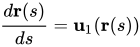
Suppose there is a fiber tract of interest in the sample. Following the Frenet–Serret formulas, we can formulate the space-path of the fiber tract as a parameterized curve:

where is the tangent vector of the curve. The reconstructed diffusion tensor can be treated as a matrix, and we can compute its eigenvalues and eigenvectors . By equating the eigenvector corresponding to the largest eigenvalue with the direction of the curve:

we can solve for given the data for . This can be done using numerical integration, e.g., using Runge–Kutta, and by interpolating the principal eigenvectors.

See also

[edit]

References

[edit]
Revisions and contributorsEdit on WikipediaRead on Wikipedia
from Grokipedia
Tractography is a noninvasive three-dimensional reconstruction technique that utilizes diffusion magnetic resonance imaging (dMRI) to map and visualize white matter fiber tracts in the brain by tracking the preferential diffusion of water molecules along axonal pathways.[1] This method relies on the anisotropic nature of water diffusion in organized tissues like white matter, where molecules move more freely parallel to fiber orientations than perpendicular to them, enabling the estimation of fiber directions from diffusion-weighted data.[2] Primarily based on diffusion tensor imaging (DTI), tractography employs algorithms such as deterministic (e.g., fiber assignment by continuous tracking) or probabilistic tracking to generate streamline representations of neural connections.[1] The technique emerged in the late 1990s, building on the foundational development of dMRI in 1984–1985 by Denis Le Bihan, who introduced methods to measure water diffusion in vivo for clinical applications like tumor characterization.[3] Key advancements in the 1990s included the formulation of DTI by Le Bihan, Peter Basser, and colleagues at the National Institutes of Health, which modeled diffusion as an ellipsoid to quantify anisotropy metrics like fractional anisotropy (FA).[3] Early tractography implementations, such as those using principal eigenvector tracking, allowed for the first in vivo depictions of major tracts like the corticospinal tract, revolutionizing the study of brain connectivity without invasive procedures.[1] In clinical practice, tractography is indispensable for presurgical planning in neurosurgery, where it delineates critical white matter pathways adjacent to tumors or lesions to minimize postoperative deficits, achieving high sensitivity (90–98%) and specificity (85–100%) when validated against direct electrical stimulation.[2] It also supports research into neurological disorders, including stroke, traumatic brain injury, and neurodevelopmental conditions, by quantifying tract integrity and connectivity alterations.[1] Despite these strengths, challenges persist, such as inaccuracies in regions with crossing fibers or partial volume effects, which advanced models like constrained spherical deconvolution aim to address through improved resolution and robustness.[2]

Introduction

Definition and Overview

Tractography is a non-invasive three-dimensional reconstruction technique that utilizes diffusion magnetic resonance imaging (MRI) to infer the orientations and trajectories of white matter fiber tracts in the brain and other neural tissues based on the anisotropy of water diffusion.[4] This method was pioneered through early demonstrations of axonal projection tracking using high-resolution diffusion MRI, enabling the visualization of neural pathways in vivo.[5] At its core, tractography relies on the principle that water molecules diffuse preferentially along the direction of axonal fibers due to the structural barriers posed by myelin sheaths and axonal membranes, which restrict diffusion perpendicular to the fiber orientation.[4] This directional bias allows for the estimation of local fiber orientations, facilitating either deterministic tracking, which follows a single presumed pathway, or probabilistic tracking, which accounts for uncertainty by sampling multiple possible fiber trajectories to generate connectivity probabilities.[4] The basic workflow of tractography begins with the acquisition of diffusion-weighted images (DWIs), which capture the MRI signal sensitized to water diffusion across multiple gradient directions.[4] Fiber orientations are then estimated at each voxel using models that interpret the diffusion data, followed by streamline integration algorithms that propagate curves from seed points—user-defined starting locations within regions of interest—to trace fiber bundles until termination criteria are met, such as a drop in fractional anisotropy below a predefined threshold indicating low fiber coherence.[4] The resulting output, known as a tractogram, is a collection of these reconstructed streamlines representing the estimated white matter pathways.[4]

Historical Development

The foundations of tractography were laid in the 1980s with the pioneering work on diffusion magnetic resonance imaging (MRI) by Denis Le Bihan, who in 1985 introduced the technique to measure water molecule diffusion in vivo using the Stejskal-Tanner pulsed gradient sequence. This innovation enabled the visualization of microscopic water motion influenced by tissue microstructure, particularly in white matter, setting the stage for later tract mapping.[6] Building on this, the 1990s saw significant advancements, including Peter Basser's introduction of diffusion tensor imaging (DTI) in 1994, which modeled diffusion as a symmetric tensor to quantify anisotropy in oriented tissues like nerve fibers.[7] Basser's work, conducted at the National Institutes of Health, provided a mathematical framework for inferring fiber orientations from diffusion data, transforming diffusion MRI from a qualitative tool into a quantitative one essential for tractography.[6] The emergence of tractography occurred in the late 1990s and early 2000s, with the first algorithms for reconstructing fiber pathways from DTI data. In 1999, Thomas Conturo and colleagues developed one of the initial fiber tracking methods, using streamline propagation to trace neuronal pathways noninvasively in living human brains, demonstrating connections like the corticospinal tract.[8] This deterministic approach marked a breakthrough in visualizing white matter anatomy without invasive procedures. Key figures such as Van J. Wedeen contributed foundational insights around 2000 by highlighting fiber crossings in human brain imaging, revealing limitations of single-tensor models and motivating higher-resolution techniques. Subsequent milestones in the mid-2000s addressed these limitations, particularly the challenge of crossing fibers. In 2003, Timothy Behrens and team introduced probabilistic tractography, incorporating uncertainty propagation to generate probability distributions of fiber paths, improving reliability over deterministic methods like Conturo's.[9] Around the same period, high angular resolution diffusion imaging (HARDI) emerged, with David S. Tuch's 2002 proposal enabling better resolution of multiple fiber orientations through denser sampling of diffusion directions.[10] These developments, spanning 2004-2007, included refinements like Q-ball imaging by David Tuch in 2004, further advancing beyond DTI for complex fiber architectures.[11] In the 2010s, tractography evolved with a pronounced shift toward stochastic and probabilistic methods, enhancing robustness in clinical and research settings, while integration into software tools like FSL and TrackVis facilitated broader adoption.[6] By the 2020s, these techniques became standard in preoperative planning, with recent 2025 updates incorporating AI enhancements for real-time tractography, such as hybrid models that reduce false positives and improve pathway detection during brain surgery.[12] This progression underscores contributions from pioneers like Le Bihan and Basser, whose early innovations continue to underpin modern neuroimaging.[6]

Underlying Principles

Diffusion-Weighted Imaging Fundamentals

Diffusion-weighted imaging (DWI) relies on the physics of molecular diffusion, primarily the random Brownian motion of water molecules driven by thermal energy, which is restricted by cellular structures such as membranes and organelles in biological tissues.[13] In free media, this motion is isotropic, but in structured environments like brain tissue, barriers impede diffusion, leading to measurable variations in water molecule displacement. The apparent diffusion coefficient (ADC) quantifies this average diffusion rate within a voxel, providing a scalar measure of water mobility that decreases in regions of high cellular density or restricted environments, such as tumors or ischemic tissue.[14] DWI acquisition in MRI employs the Stejskal-Tanner pulsed gradient spin-echo sequence, which sensitizes the signal to diffusion by applying pairs of gradient pulses around the 180° refocusing pulse to encode directional motion. The strength of diffusion weighting is controlled by the b-value, defined as $ b = \gamma^2 \delta^2 (\Delta - \delta/3) G^2 $, where γ\gamma is the gyromagnetic ratio, δ\delta is the gradient pulse duration, Δ\Delta is the diffusion time, and GG is the gradient amplitude; typical clinical b-values range from 0 (non-weighted reference) to 1000 s/mm² for standard DWI. To capture directional preferences, multiple gradient directions are acquired, with 30–60 directions commonly used for diffusion tensor imaging (DTI) to adequately sample the diffusion tensor.[15] In white matter, diffusion exhibits anisotropy due to aligned axonal bundles, quantified by the fractional anisotropy (FA), a rotationally invariant scalar derived from the diffusion tensor that measures the degree of directional preference, ranging from 0 (perfectly isotropic diffusion) to 1 (completely restricted to one direction).[15] Higher FA values (typically 0.4–0.9) indicate coherent fiber tracts, reflecting microstructural integrity influenced by myelination and axon density.[16] DWI data preprocessing is essential to mitigate artifacts, including eddy current correction, which addresses distortions from induced currents in conductive structures during rapid gradient switching, often using affine registration to a b=0 reference or advanced models like Gaussian processes in tools such as FSL's eddy.[17] Motion compensation aligns volumes via slice-to-volume or between-volume registration to counteract subject movement and physiological effects like cardiac pulsation, while skull stripping removes non-brain tissue using thresholding or deep learning-based segmentation tailored to DWI contrast for improved downstream analysis reliability.[17] Spatial resolution in DWI typically employs 2–3 mm isotropic voxels on clinical scanners to balance signal-to-noise ratio and scan time, though higher resolutions (e.g., sub-millimeter ex vivo) reveal finer details.[18] Partial volume effects arise when voxels encompass multiple tissue compartments or crossing fibers, leading to biased diffusion estimates as the signal averages contributions from disparate orientations, particularly challenging in regions with fiber crossings where even increased resolution uncovers more such configurations without fully resolving them.[18]

White Matter Tract Visualization

White matter tract visualization in tractography involves reconstructing and rendering fiber pathways from diffusion-weighted imaging (DWI) data, leveraging measures of diffusion anisotropy to infer fiber orientations. This process bridges raw diffusion signals to interpretable anatomical maps, enabling the depiction of axonal bundles in three dimensions. Deterministic tracking paradigms propagate streamlines from seed points by following the principal diffusion direction, such as the eigenvector associated with the largest eigenvalue in diffusion tensor imaging, producing a single trajectory per seed to model coherent fiber bundles. In contrast, probabilistic paradigms account for uncertainty in fiber orientation by sampling multiple possible pathways, often using Monte Carlo methods or Bayesian estimation to generate distributions of trajectories that reflect noise, partial voluming, or crossing fibers.[19] These approaches differ in their handling of ambiguity: deterministic methods, like the Fiber Assignment by Continuous Tracking (FACT) algorithm, offer computational efficiency but may fail in regions of low anisotropy or fiber crossing, while probabilistic methods provide richer uncertainty quantification at the cost of increased processing time.[20] Seeding strategies dictate the initiation of tracking and influence the completeness of reconstructed tracts. Whole-brain seeding distributes seed points across the entire white matter or gray-white matter interface, facilitating comprehensive mapping of all major pathways but generating large datasets prone to false positives.[20] ROI-based seeding confines starts to predefined regions of interest, such as the corpus callosum for interhemispheric connections, to target specific bundles and reduce extraneous streamlines.[21] Waypoint seeding extends this by requiring streamlines to pass through sequential ROIs, enhancing specificity for complex tracts like the arcuate fasciculus that traverse multiple anatomical waypoints. These strategies can be combined with termination criteria, such as low fractional anisotropy thresholds or gray matter endpoints, to refine outputs.[20] Visualization techniques transform reconstructed streamlines into intuitive representations for analysis. Common methods include rendering tracts as bundles of 3D streamlines, which can be interactively explored in software like TrackVis or MRtrix3 to assess bundle coherence and volume.[20] Color-coding by principal diffusion direction standardizes interpretation, with red typically denoting left-right orientations (e.g., corpus callosum fibers), green for anterior-posterior, and blue for superior-inferior, overlaid on fractional anisotropy maps to highlight tract density.[21] Alternative formats encompass connectivity matrices, where edge weights represent streamline counts between ROIs for network visualization, or volume renders that depict probabilistic densities as voxel-wise heatmaps. For enhanced context, tractograms are frequently integrated with anatomical T1- or T2-weighted images, allowing precise localization relative to gray matter structures and aiding in surgical planning or group comparisons.[20] Interpreting tractographic outputs focuses on probabilistic and connectivity metrics to infer structural integrity. Tract probability maps, derived from probabilistic tracking, quantify the likelihood of fiber presence at each voxel by aggregating sampled pathway densities, often thresholded to delineate reliable bundles.[19] Endpoint connectivity analysis tallies streamline terminations in target regions, enabling construction of structural connectomes that reveal whole-brain network topology and inter-regional coupling. These interpretations prioritize endpoint density over mere streamline count to mitigate biases from seeding density, providing a foundation for downstream analyses in neuroscience.[20]

Mathematical and Computational Methods

Diffusion Tensor Imaging Model

The diffusion tensor imaging (DTI) model represents water diffusion within biological tissues as an ellipsoid, characterized by a second-order symmetric tensor $ \mathbf{D} $, a 3×3 matrix that captures the directional dependence of diffusion. This model assumes that the displacement of water molecules follows a Gaussian distribution, allowing the diffusion process to be fully described by the six independent elements of $ \mathbf{D} $. In DTI, the signal attenuation due to diffusion in the presence of applied magnetic field gradients is given by the Stejskal-Tanner equation extended to anisotropic media:
S=S0exp(bgTDg), S = S_0 \exp(-b \mathbf{g}^T \mathbf{D} \mathbf{g}),
where $ S $ is the observed signal intensity, $ S_0 $ is the signal without diffusion weighting, $ b $ is the b-value representing the strength and duration of the diffusion-sensitizing gradients, $ \mathbf{g} $ is the unit vector along the gradient direction, and $ \mathbf{g}^T \mathbf{D} \mathbf{g} $ quantifies the apparent diffusion coefficient in that direction.[22] To interpret the tensor, eigenvalue decomposition is performed: $ \mathbf{D} = \mathbf{V} \boldsymbol{\Lambda} \mathbf{V}^T $, where $ \boldsymbol{\Lambda} = \operatorname{diag}(\lambda_1, \lambda_2, \lambda_3) $ contains the eigenvalues ($ \lambda_1 \geq \lambda_2 \geq \lambda_3 \geq 0 $) representing the magnitudes of diffusion along the principal axes, and the columns of $ \mathbf{V} $ are the corresponding eigenvectors. The eigenvector associated with $ \lambda_1 $, the largest eigenvalue, indicates the principal diffusion direction (PDD), presumed to align with the dominant fiber orientation within the voxel. A key scalar metric derived from the eigenvalues is the fractional anisotropy (FA), which measures the degree of diffusion anisotropy normalized to its magnitude:
FA=32(λ1μ)2+(λ2μ)2+(λ3μ)2λ12+λ22+λ32, \text{FA} = \sqrt{\frac{3}{2} \cdot \frac{(\lambda_1 - \mu)^2 + (\lambda_2 - \mu)^2 + (\lambda_3 - \mu)^2}{\lambda_1^2 + \lambda_2^2 + \lambda_3^2}},
where $ \mu = (\lambda_1 + \lambda_2 + \lambda_3)/3 $ is the mean diffusivity; FA ranges from 0 (isotropic diffusion) to 1 (highly anisotropic diffusion).[22] The DTI model relies on two primary assumptions: that diffusion is Gaussian and that each voxel contains a single, coherently oriented fiber population. These hold reasonably well in highly aligned white matter regions but fail in areas with crossing or kissing fibers, where multiple orientations cause the tensor to average the directions, reducing FA and misaligning the PDD with any single fiber tract. To estimate $ \mathbf{D} ,measurementsareacquiredalongatleastsixnoncollineargradientdirections,andthetensorelementsarefittedusingordinaryleastsquaresminimizationonthelinearizedformofthesignalequation(, measurements are acquired along at least six non-collinear gradient directions, and the tensor elements are fitted using ordinary least-squares minimization on the linearized form of the signal equation ( \ln(S/S_0) = -b \mathbf{g}^T \mathbf{D} \mathbf{g} $), ensuring rotational invariance and robustness to noise.[22] In basic tractography, the DTI model enables deterministic fiber tracking by integrating streamlines forward and backward from seed points along the PDD (principal eigenvector) at each step, typically with a fixed step size of 0.5–1 mm to approximate voxel resolution. Tracking continues until a stopping criterion is met, such as FA dropping below 0.2, indicating entry into gray matter or regions of low anisotropy where fiber directionality is unreliable. Higher-order models address complex fiber configurations but extend beyond the single-tensor framework.[23]

Advanced Tractography Algorithms

Advanced tractography algorithms extend beyond the limitations of diffusion tensor imaging (DTI) by incorporating multi-compartment models to account for intravoxel fiber crossings and partial volume effects, enabling more accurate reconstruction of complex white matter architectures.[24] One seminal approach is the ball-and-stick model, which represents diffusion as a combination of isotropic compartments (balls) for extracellular space and anisotropic sticks for aligned fibers, with parameters estimated using Bayesian inference to model multiple fiber orientations within a voxel.[24] This model facilitates the estimation of orientation distribution functions (ODFs) through techniques like spherical deconvolution, which deconvolves the diffusion signal to recover fiber orientations without assuming Gaussian diffusion. High angular resolution diffusion imaging (HARDI) further advances fiber orientation estimation by acquiring data at higher b-values and more directions, allowing model-free reconstructions such as Q-ball imaging, which uses spherical harmonics to approximate the ODF from the diffusion signal via Funk-Radon transform inversion.[25] Building on this, constrained spherical deconvolution (CSD) imposes non-negativity constraints on the ODF to resolve multiple intra-voxel fiber orientations, particularly in regions of crossing fibers, by estimating a response function from single-fiber voxels and applying it across the brain. These methods improve angular resolution, enabling tractography to detect up to three or more distinct fiber populations per voxel, which is critical for accurately mapping pathways like the superior longitudinal fasciculus where fibers intersect. Probabilistic tractography enhances determinism-based methods by incorporating uncertainty in fiber orientations through Monte Carlo sampling, propagating pathways as probability distributions rather than single streamlines to generate connectivity maps between regions of interest (ROIs).[26] This approach samples from voxel-wise orientation probability density functions, yielding metrics such as connection probability, which quantifies the likelihood of pathways linking seed and target ROIs, and has demonstrated superior sensitivity in detecting weak or indirect connections compared to deterministic tracking.[26] For instance, in thalamo-cortical projections, probabilistic methods reveal broader connectivity distributions that align better with known anatomy.[26] In the 2020s, machine learning integrations, particularly deep neural networks, have accelerated fiber orientation distribution (FOD) estimation by learning mappings from diffusion signals to ODFs, often using convolutional architectures to achieve super-resolution and reduce computational demands of traditional spherical deconvolution. Frameworks like FOD-Net employ residual networks for angular super-resolution of FODs from low-angular-resolution data, cutting processing time by orders of magnitude while preserving tractography accuracy in downstream applications.[27] Recent advancements as of 2025 include deep reinforcement learning frameworks like Track-to-Learn for end-to-end tractography and hybrid methods such as HyTract, which integrate neural networks with path search algorithms for improved neurosurgical planning.[28][29] These data-driven methods generalize across datasets, mitigating biases in response function estimation and enabling real-time processing for clinical workflows.[30] Global optimization techniques address local propagation errors in tractography by formulating the entire bundle reconstruction as an energy minimization problem, incorporating anatomical priors to enforce plausibility such as streamline lengths and avoidance of gray matter endpoints.[31] Methods like embedded anatomical priors in global tractography models use Markov random fields to regularize streamline paths, ensuring they remain within white matter masks and connect cortical regions, which has been shown to increase bundle coherence and reduce false positives in reconstructions of major tracts like the corpus callosum.[31] This holistic approach outperforms local stepwise tracking in capturing long-range fibers with sharp turns, providing more reliable connectivity estimates.[32]

Applications

Clinical Diagnostics

Tractography plays a crucial role in neurosurgical planning by enabling preoperative mapping of eloquent white matter tracts, such as the corticospinal tract (CST), to minimize damage during tumor resection. This technique allows surgeons to visualize and avoid critical pathways, improving surgical precision and patient outcomes. Studies have shown that integrating tractography with intraoperative subcortical stimulation verifies tract locations, with deterministic methods providing reliable core tract delineation while probabilistic approaches capture peripheral fibers more comprehensively. Hybrid deterministic-probabilistic algorithms further enhance accuracy, achieving high concordance with intraoperative findings in tumor-adjacent CST mapping, thereby reducing postoperative motor deficits.[2] In neurological disorders, tractography assesses white matter integrity by quantifying microstructural changes. In multiple sclerosis (MS), it reveals reduced fractional anisotropy (FA) values within lesions, indicating demyelination and axonal loss, compared to normal-appearing white matter. For traumatic brain injury (TBI), tractography demonstrates disrupted connectivity in major networks, such as the thalamocortical pathways, correlating with cognitive impairments and showing decreased tract density. In stroke, it highlights hemispheric asymmetries in tracts like the arcuate fasciculus, where affected sides exhibit lower fiber counts and altered FA, aiding in prognosis and rehabilitation planning. Pediatric applications of tractography focus on congenital malformations, particularly agenesis of the corpus callosum (AgCC), where it visualizes aberrant fiber bundles like Probst bundles and rerouted interhemispheric connections. This imaging guides interventions by delineating altered connectivity patterns, which occur in approximately 1 in 4,000 births, and supports surgical or therapeutic decisions to address associated neurodevelopmental issues.[33] Quantitative metrics from tractography, including tract volume, length, and mean FA, provide diagnostic thresholds for tissue damage. Reduced mean FA and tract volumes indicate significant axonal injury and connectivity loss in disorders like MS and TBI. These metrics enable objective assessment, with tract length measurements helping track progression in longitudinal studies. As of 2023, the U.S. Food and Drug Administration (FDA) has cleared tractography-integrated software tools for clinical use in neurosurgical workflows, such as Imeka's Advanced Neuro Diagnostic Imaging (ANDI). As of 2025, advancements include enhanced integration with intraoperative MRI (ioMRI), allowing real-time tract updates during surgery and reducing neurologic deficit risks by approximately 55% in resective procedures, based on a meta-analysis of 629 patients.[34][35]

Neuroscientific Research

Tractography has significantly advanced connectomics by enabling the mapping of large-scale white matter networks in the human brain. The Human Connectome Project (HCP), launched in the early 2010s, utilized whole-brain tractography on high-angular resolution diffusion imaging (HARDI) data from over 1,100 healthy young adults to construct detailed structural brain atlases, revealing the probabilistic trajectories and connectivity patterns of major fiber bundles such as the corpus callosum and cingulum. These efforts have produced population-averaged connectomes that quantify inter-regional connectivity, facilitating the study of network topology and hubs in typical brain organization. Tractometry analyses of HCP data further profile the microstructural properties along these tracts, such as fractional anisotropy (FA) and mean diffusivity, to identify normative variations in white matter integrity across individuals. In neuroscientific research, tractography has elucidated functional correlations between white matter tract properties and cognitive processes. For instance, the integrity of the arcuate fasciculus, a key dorsal language pathway connecting frontal and temporal regions, has been linked to language abilities, with higher FA values in this tract associated with better performance in verbal fluency and repetition tasks in healthy adults. Probabilistic tractography studies demonstrate that disruptions in arcuate fasciculus connectivity correlate with deficits in phonological processing and semantic retrieval, underscoring its role in integrating sensory and motor aspects of speech. These findings highlight how tract-specific metrics from diffusion tensor imaging (DTI) can predict individual differences in linguistic cognition beyond gray matter influences. Validation of tractography in animal models has benchmarked its accuracy against invasive histological methods. In rodents, comparisons between ex vivo DTI-based tractography and histological axonal tracing reveal that deterministic algorithms accurately reconstruct major pathways like the corpus callosum and optic tract, with fiber orientation distributions aligning closely with histological measurements in healthy rat brains. Semi-automated tractography segmentation in adult rats achieves substantial overlap with myelin-stained sections for pathways such as the anterior commissure and fimbria, confirming its utility for non-invasive mapping while noting limitations in resolving crossing fibers. These rodent studies provide ground truth for refining human tractography protocols, demonstrating concordance in tract volume and directionality under controlled conditions.[36] Population studies using tractography have revealed substantial variability in white matter tract anatomy and microstructure across demographic and genetic factors. In the HCP cohort, genetic analyses identify heritable components explaining up to 40% of variance in connectome edges, with polygenic influences shaping tract-specific FA in association fibers like the superior longitudinal fasciculus. Sex differences emerge in volumetric and microstructural profiles, where females exhibit higher FA in language-related tracts such as the arcuate fasciculus, while males show greater variability in commissural pathways, based on tractography of over 700 subjects. Aging-related changes are pronounced, with longitudinal tractography showing a 5-10% decline in FA within association fibers like the uncinate fasciculus from young adulthood to late life, attributed to demyelination and axonal loss in large-scale population cohorts.[37] Emerging trends as of 2025 leverage tractography to investigate altered brain connectivity in psychiatric disorders, particularly schizophrenia. Diffusion-based tractography reveals disrupted white matter integrity in the default mode network (DMN), with reduced streamline density between medial prefrontal and posterior cingulate regions in first-episode patients compared to controls. Probabilistic tractography studies in schizophrenia cohorts demonstrate weakened structural connectivity within DMN hubs, correlating with positive symptoms and cognitive disorganization, as evidenced by lower generalized FA in these tracts across multisite datasets. These findings integrate tractography with functional imaging to model dysconnectivity in psychiatric connectomes, advancing non-clinical insights into network pathophysiology. By 2025, AI integrations have further improved tract visualization in such studies.[34]

Limitations and Advances

Technical Challenges

Tractography algorithms frequently generate false positives by overestimating the presence of fiber tracts in regions of low fractional anisotropy, such as the superficial U-fibers near the cortex, where isotropic diffusion signals lead to erroneous streamline propagation.[38] Conversely, false negatives occur in areas with complex fiber configurations, like kissing or crossing fibers, where standard deterministic methods fail to resolve multiple orientations within a voxel, resulting in under-detection of valid connections.[39] These errors contribute to unreliable tractograms, with studies showing that even advanced algorithms produce invalid bundles in up to 80-90% of cases in simulated datasets.[40] Artifacts further compromise tractography accuracy, notably gyral bias, where streamlines unrealistically bend toward gyral crowns rather than following sulcal banks due to partial volume averaging and orientation estimation errors at the white-gray matter interface.[41] Partial volume effects exacerbate this by blurring fiber orientations in voxels contaminated by gray matter or cerebrospinal fluid, introducing spurious peaks in orientation distribution functions and distorting tract trajectories, particularly in boundary regions affecting 35-50% of white matter voxels.[42] Such artifacts lead to overestimation of connectivity at cortical gyri by factors up to 12 times compared to sulci.[41] Resolution limitations in clinical diffusion MRI prevent the resolution of sub-millimeter fiber bundles, as typical voxel sizes of 1.5-2 mm isotropic cannot capture fine-scale structures like thin or fanning tracts.[43] Signal-to-noise ratio (SNR) issues compound this, with lower SNR at 1.5 T scanners causing greater orientation errors and overestimation of fiber populations compared to 3 T or 7 T systems, where SNR improvements enable marginally better but still insufficient detail for sub-voxel accuracy.[43] Validating tractography remains challenging due to the absence of in vivo ground truth, relying instead on ex vivo phantoms or histological comparisons that reveal typically 70-90% overlap between reconstructed tracts and autopsy-verified pathways, highlighting persistent discrepancies in sensitivity and specificity.[44] These validation gaps underscore the technique's limitations in mirroring true anatomical connectivity.[45] Probabilistic tractography methods, while aiming to account for uncertainty, impose high computational demands, requiring substantial memory (often exceeding 8 GB per subject) and processing times of several hours for whole-brain reconstructions on standard hardware due to the need for multiple streamline samplings.[46] This resource intensity limits scalability in large-scale studies.[47]

Validation and Future Directions

Validation of tractography relies on multiple approaches to assess the accuracy of reconstructed white matter pathways against ground truth. Physical and digital phantoms simulate known fiber geometries to evaluate algorithmic performance; for instance, the ISMRM 2015 Tractography Challenge phantom has become a standard benchmark, revealing sensitivities and specificities varying by method, with constrained spherical deconvolution (CSD) outperforming diffusion tensor imaging (DTI) in complex crossings. Animal models using tracers like manganese or biotinylated dextran amine provide in vivo comparisons, as demonstrated in ex vivo macaque studies where probabilistic tractography achieved up to 80% overlap with traced pathways. Histological validation in postmortem human tissue further confirms tract endpoints and orientations, with studies reporting 70-90% agreement for major tracts like the corpus callosum when aligning diffusion-weighted MRI (dMRI) with light microscopy.[48][49][50][51] Despite these methods, validation faces significant challenges due to tractography's inherent limitations. False positives arise from erroneous connections in regions of crossing fibers or partial volume effects, while false negatives occur in low-anisotropy areas, leading to incomplete reconstructions; quantitative metrics like the Jaccard index show moderate overlap with histological data for cortical terminations. Reproducibility is hindered by variability in region-of-interest placement and acquisition protocols, with interrater reliability coefficients as low as 0.3 for clinical applications. Additionally, intraoperative brain shift and pathological alterations in diseased tissue further degrade preoperative tractography accuracy, necessitating multimodal corroboration.[38][52][53] Future directions in tractography emphasize enhancing validation rigor and clinical utility through technological and methodological advances. Integration of ultra-high-field MRI (≥7T) promises improved resolution for finer fiber details, potentially reducing partial voluming errors. Machine learning techniques, including deep learning for noise reduction and automated segmentation, are poised to boost reproducibility and accuracy, as evidenced by preliminary studies showing enhanced tract detection in low-quality data. Multimodal fusion with functional MRI or intraoperative imaging will address polarity and endpoint ambiguities, while standardized protocols and open datasets facilitate broader benchmarking. Ongoing research also explores advanced models like multi-compartment approaches to better capture microstructural features, aiming for more reliable in vivo connectomics. As of 2025, ongoing trials, such as those integrating AI for automated fiber segmentation, and techniques like differential tractography for tracking tissue degeneration, are further advancing precision in connectomics and neurosurgical applications.[52][54][55][53][56][57]

References

User Avatar
No comments yet.