Hubbry Logo
IsotropyIsotropyMain
Open search
Isotropy
Community hub
Isotropy
logo
8 pages, 0 posts
0 subscribers
Be the first to start a discussion here.
Contribute something
Isotropy
Isotropy
from Wikipedia
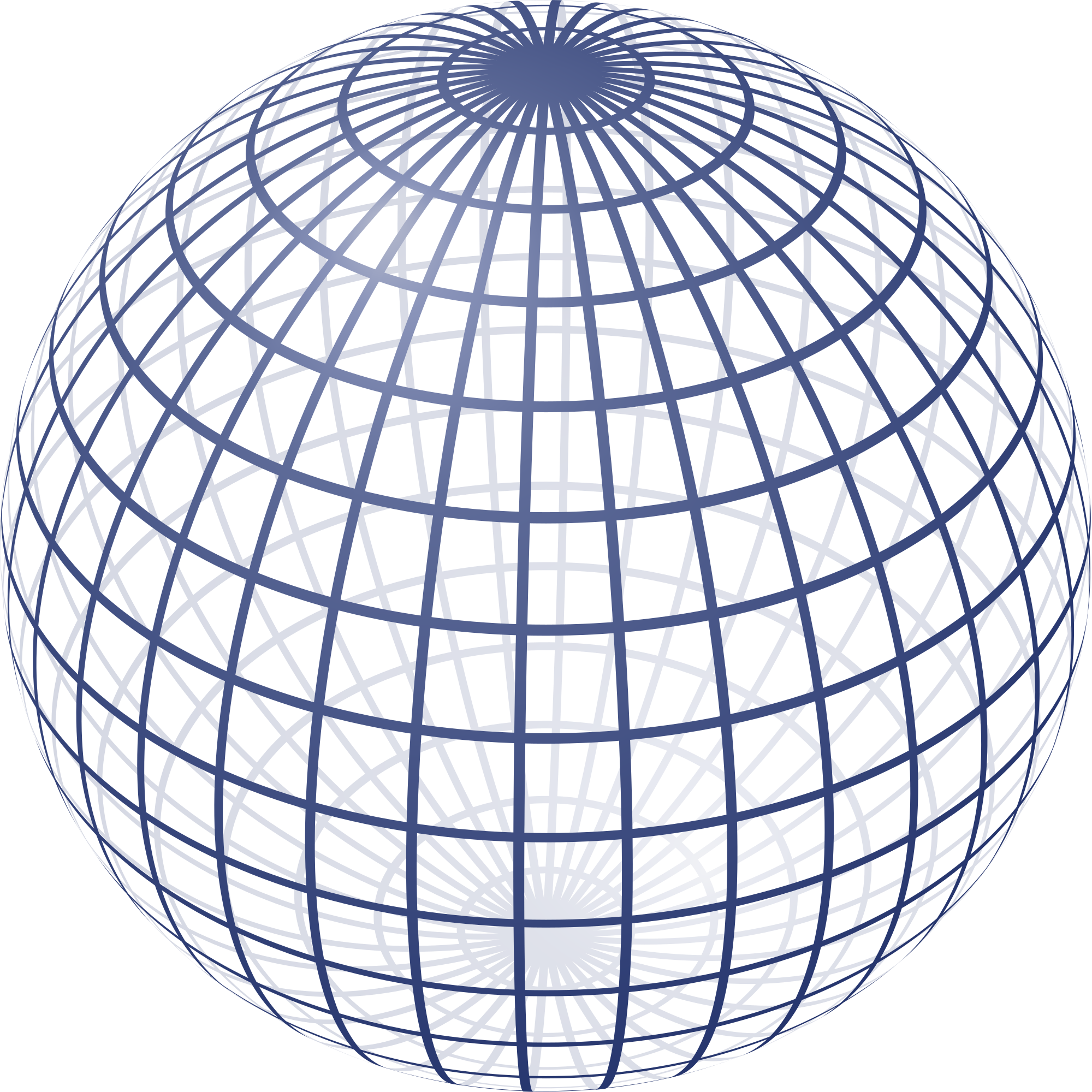
A sphere is isotropic

In physics and geometry, isotropy (from Ancient Greek ἴσος (ísos) 'equal' and τρόπος (trópos) 'turn, way') is uniformity in all orientations. Precise definitions depend on the subject area. Exceptions, or inequalities, are frequently indicated by the prefix a- or an-, hence anisotropy. Anisotropy is also used to describe situations where properties vary systematically, dependent on direction. Isotropic radiation has the same intensity regardless of the direction of measurement, and an isotropic field exerts the same action regardless of how the test particle is oriented.

Mathematics

[edit]

Within mathematics, isotropy has a few different meanings:

Isotropic manifolds
A manifold is isotropic if the geometry on the manifold is the same regardless of direction. A similar concept is homogeneity.
Isotropic quadratic form
A quadratic form q is said to be isotropic if there is a non-zero vector v such that q(v) = 0; such a v is an isotropic vector or null vector. In complex geometry, a line through the origin in the direction of an isotropic vector is an isotropic line.
Isotropic coordinates
Isotropic coordinates are coordinates on an isotropic chart for Lorentzian manifolds.
Isotropy group
An isotropy group is the group of isomorphisms from any object to itself in a groupoid.[dubiousdiscuss][1] An isotropy representation is a representation of an isotropy group.
Isotropic position
A probability distribution over a vector space is in isotropic position if its covariance matrix is the identity.
Isotropic vector field
The vector field generated by a point source is said to be isotropic if, for any spherical neighborhood centered at the point source, the magnitude of the vector determined by any point on the sphere is invariant under a change in direction. For an example, starlight appears to be isotropic.

Physics

[edit]
Quantum mechanics or particle physics
When a spinless particle (or even an unpolarized particle with spin) decays, the resulting decay distribution must be isotropic in the rest frame of the decaying particle - regardless of the detailed physics of the decay. This follows from rotational invariance of the Hamiltonian, which in turn is guaranteed for a spherically symmetric potential.
Gases
The kinetic theory of gases also exemplifies isotropy. It is assumed that the molecules move in random directions and as a consequence, there is an equal probability of a molecule moving in any direction. Thus when there are many molecules in the gas, with high probability there will be very similar numbers moving in one direction as any other, demonstrating approximate isotropy.
Fluid dynamics
Fluid flow is isotropic if there is no directional preference (e.g. in fully developed 3D turbulence). An example of anisotropy is in flows with a background density as gravity works in only one direction. The apparent surface separating two differing isotropic fluids would be referred to as an isotrope.
Thermal expansion
A solid is said to be isotropic if the expansion of solid is equal in all directions when thermal energy is provided to the solid.
Electromagnetics
An isotropic medium is one such that the permittivity, ε, and permeability, μ, of the medium are uniform in all directions of the medium, the simplest instance being free space.
Optics
Optical isotropy means having the same optical properties in all directions. The individual reflectance or transmittance of the domains is averaged for micro-heterogeneous samples if the macroscopic reflectance or transmittance is to be calculated. This can be verified simply by investigating, for example, a polycrystalline material under a polarizing microscope having the polarizers crossed: If the crystallites are larger than the resolution limit, they will be visible.
Cosmology
The cosmological principle, which underpins much of modern cosmology (including the Big Bang theory of the evolution of the observable universe), assumes that the universe is both isotropic and homogeneous, meaning that the universe has no preferred location (is the same everywhere) and has no preferred direction.[2] Observations[which?] made in 2006 suggest that, on distance-scales much larger than galaxies, galaxy clusters are "Great" features, but small compared to so-called multiverse scenarios.[citation needed]

Materials science

[edit]
This sand grain made of volcanic glass is isotropic, and thus stays extinct when rotated between polarization filters on a petrographic microscope

In the study of mechanical properties of materials, "isotropic" means having identical values of a property in all directions. This definition is also used in geology and mineralogy. Glass and metals are examples of isotropic materials.[3] Common anisotropic materials include wood (because its material properties are different parallel to and perpendicular to the grain) and layered rocks such as slate.

Isotropic materials are useful since they are easier to shape, and their behavior is easier to predict. Anisotropic materials can be tailored to the forces an object is expected to experience. For example, the fibers in carbon fiber materials and rebars in reinforced concrete are oriented to withstand tension.

In industrial processes, such as etching steps, "isotropic" means that the process proceeds at the same rate, regardless of direction. Simple chemical reaction and removal of a substrate by an acid, a solvent or a reactive gas is often very close to isotropic. Conversely, "anisotropic" means that the attack rate of the substrate is higher in a certain direction. Anisotropic etch processes, where vertical etch-rate is high but lateral etch-rate is very small, are essential processes in microfabrication of integrated circuits and MEMS devices.

Antenna (radio)

[edit]

An isotropic antenna is an idealized "radiating element" used as a reference; an antenna that broadcasts power equally (calculated by the Poynting vector) in all directions. The gain of an arbitrary antenna is usually reported in decibels relative to an isotropic antenna, and is expressed as dBi or dB(i).

In cells (a.k.a. muscle fibers), the term "isotropic" refers to the light bands (I bands) that contribute to the striated pattern of the cells.

While it is well established that the skin provides an ideal site for the administration of local and systemic drugs, it presents a formidable barrier to the permeation of most substances.[4] Recently, isotropic formulations have been used extensively in dermatology for drug delivery.[5]

Computer science

[edit]
Imaging
A volume such as a computed tomography is said to have isotropic voxel spacing when the space between any two adjacent voxels is the same along each axis x, y, z. E.g., voxel spacing is isotropic if the center of voxel (i, j, k) is 1.38 mm from that of (i+1, j, k), 1.38 mm from that of (i, j+1, k) and 1.38 mm from that of (i, j, k+1) for all indices i, j, k.[6]

Other sciences

[edit]
Economics and geography
An isotropic region is a region that has the same properties everywhere. Such a region is a construction needed in many types of models.

See also

[edit]

References

[edit]
Revisions and contributorsEdit on WikipediaRead on Wikipedia
from Grokipedia
Isotropy is the property exhibited by a , , or where properties or behavior remain uniform and independent of direction or orientation. In scientific contexts, this uniformity implies that measurements of characteristics such as , elasticity, or yield the same results regardless of the spatial direction in which they are taken. The concept contrasts with , where directional dependence exists, and is fundamental to assumptions in various fields of physics. In cosmology, isotropy forms a core part of the , which posits that the appears the same in all directions on large scales, with no preferred orientations observable in the radiation. This large-scale isotropy supports models of an expanding, homogeneous described by the Friedmann-Lemaître-Robertson-Walker metric in . Observations, such as those from the Planck , confirm this directional uniformity to within one part in 100,000, underscoring the 's near-isotropic structure despite small-scale variations. In and , isotropic materials, such as many metals and glasses in polycrystalline form, display identical mechanical, , and in every direction, simplifying design and analysis in applications like and . This contrasts with anisotropic materials like wood or crystals, where properties vary with grain or lattice orientation. In , isotropic fluids are fully characterized by scalar quantities like and , as their response to stress is direction-independent.

Definition and Fundamentals

Core Concept

Isotropy refers to the property of a , object, or exhibiting uniformity in all directions, meaning that physical or mathematical measurements yield identical results regardless of the orientation from which they are observed. This directional independence applies broadly to spaces, materials, functions, and probability distributions, where no preferred axis or orientation influences the outcome. The term "isotropy" derives from the Greek words isos (equal) and tropos (turn or direction), reflecting its connotation of sameness across orientations. It entered in the late , with the earliest recorded use in 1888 by Rayleigh in discussions of wave propagation. Representative examples include the of a uniform sphere, where the appearance and dynamics remain unchanged under arbitrary reorientation, and scalar fields—such as a constant —lacking any inherent directional bias. In contrast to isotropy, anisotropy involves direction-dependent properties, leading to varied behaviors in physical systems. The following table illustrates this distinction using light propagation as a simple example:
AspectIsotropic BehaviorAnisotropic Behavior
Light SpeedSame velocity in all directions (e.g., in )Varies by direction or polarization (e.g., in crystals)
Refractive IndexUniform regardless of propagation angleDepends on orientation ()
Example SystemAir or isotropic liquidsCertain crystals like

Historical Development

The concept of isotropy, denoting uniformity in all directions, traces its philosophical roots to cosmology, particularly 's model of the heavens as described in his treatise (circa 350 BCE). posited a geocentric where the celestial realm consisted of uniform, eternal circular motions driven by , aether, which moved without change or corruption due to its inherent in time and simple, unimpeded rotation around the Earth's center. This idea of uniform heavenly spheres influenced early cosmological thought by emphasizing directional consistency in celestial phenomena, though it incorporated a preferred center that precluded full spatial isotropy as understood today. In the , the mathematical formalization of isotropy advanced through developments in and . introduced quaternions in 1843 as a four-dimensional extension of complex numbers, enabling the representation of rotations in , which inherently assumes isotropic properties for vector transformations without preferred directions. This framework laid groundwork for handling uniform directional behaviors in physical systems. Concurrently, in 1850, Auguste Bravais classified the 14 possible three-dimensional lattices in , distinguishing isotropic structures like the cubic lattice—where physical properties such as optical remain uniform in all directions—from anisotropic ones, providing a systematic basis for understanding in material sciences. The 20th century saw isotropy integrated into foundational physical theories, particularly through Albert Einstein's , finalized in 1915. Einstein's field equations describe curvature due to mass-energy, implicitly relying on local isotropy in inertial frames, which underpins the of homogeneity and uniformity on large scales, later explicitly applied in his 1917 cosmological models. In the 1920s, as emerged, debates arose over potential violations of spatial symmetries, including parity (mirror isotropy), with Eugene Wigner's 1927 introduction of parity as a conserved quantum symmetry sparking discussions on whether atomic spectra and particle interactions upheld directional uniformity, though true violations were not confirmed until the . A pivotal empirical confirmation of large-scale isotropy came in the 1960s with the discovery of the (CMB) radiation. In 1965, Arno Penzias and Robert Wilson serendipitously detected this uniform microwave glow filling the universe, interpreted as relic radiation from the approximately 380,000 years after its onset, with a temperature of about 2.7 K. Observations revealed the CMB's remarkable isotropy, uniform to within 1 part in 100,000 across the sky after accounting for our motion relative to it.

Mathematics

Isotropic Spaces and Functions

In mathematics, an isotropic vector space is a finite-dimensional normed vector space whose group of linear isometries acts transitively on the unit sphere, or equivalently, the norm is induced by an inner product that remains unchanged under orthogonal transformations. This invariance implies that the space has no preferred directions, making it suitable for modeling uniform geometric structures. A canonical example is the Euclidean space Rn\mathbb{R}^n equipped with the standard inner product x,y=xy=i=1nxiyi\langle x, y \rangle = x \cdot y = \sum_{i=1}^n x_i y_i, where for any orthogonal transformation RO(n)R \in O(n), Rx,Ry=x,y\langle Rx, Ry \rangle = \langle x, y \rangle. Such spaces are precisely the Euclidean spaces, as the isotropy condition forces the norm to be quadratic and rotationally symmetric. An isotropic function is a scalar-valued function f:RnRf: \mathbb{R}^n \to \mathbb{R} that satisfies f(Rx)=f(x)f(Rx) = f(x) for all rotations RSO(n)R \in SO(n) and all xRnx \in \mathbb{R}^n. This rotational invariance ensures that the function depends only on the magnitude of xx or other rotationally symmetric invariants, such as x2\|x\|^2. Examples include the Euclidean norm f(x)=xf(x) = \|x\| and quadratic forms like f(x)=xxf(x) = x \cdot x, both of which yield the same value after rotation. Isotropic functions form the basis for describing direction-independent quantities in higher-dimensional analysis. Isotropic tensors are multilinear maps or arrays that remain unchanged under orthogonal transformations, meaning if TT is represented by components Ti1ikT_{i_1 \dots i_k}, then Ti1ik=Ri1j1RikjkTj1jk=Ti1ikT'_{i_1 \dots i_k} = R_{i_1 j_1} \cdots R_{i_k j_k} T_{j_1 \dots j_k} = T_{i_1 \dots i_k} for all RO(n)R \in O(n). In three dimensions, the Kronecker delta δij\delta_{ij} (defined as 1 if i=ji=j and 0 otherwise) is the fundamental isotropic second-order tensor, as it satisfies δij=RikRjlδkl=RikRjk=(RRT)ij=δij\delta'_{ij} = R_{i k} R_{j l} \delta_{kl} = R_{i k} R_{j k} = (R R^T)_{ij} = \delta_{ij}. Similarly, the Levi-Civita symbol εijk\varepsilon_{ijk} (the totally antisymmetric tensor with ε123=1\varepsilon_{123} = 1) serves as the isotropic third-order tensor in R3\mathbb{R}^3, preserving its form under proper rotations since εijk=det(R)RiaRjbRkcεabc=εijk\varepsilon'_{ijk} = \det(R) R_{i a} R_{j b} R_{k c} \varepsilon_{abc} = \varepsilon_{ijk} for RSO(3)R \in SO(3). For a second-order tensor TijT_{ij} in three-dimensional Euclidean space to be isotropic, it must satisfy Tij=RikRjlTkl=TijT'_{ij} = R_{i k} R_{j l} T_{kl} = T_{ij} for all RO(3)R \in O(3). To derive that Tij=λδijT_{ij} = \lambda \delta_{ij} for some scalar λ\lambda, consider the action of specific rotations. First, the trace invariance under any RR implies tr(T)=λ1\operatorname{tr}(T) = \lambda_1 is constant, where λ1=Tkk\lambda_1 = T_{kk}. Applying a 180° rotation about the x-axis yields T11=T22=T33T_{11} = T_{22} = T_{33} by cycling indices, so all diagonal elements equal λ1/3\lambda_1 / 3. Off-diagonal elements vanish under 90° rotations: for instance, a rotation in the yz-plane sets T12=T12T_{12} = -T_{12}, forcing T12=0T_{12} = 0, and similarly for others. Thus, only the scalar multiple of the identity tensor δij\delta_{ij} satisfies the condition. This result generalizes to higher even ranks using combinations of Kronecker deltas, underscoring the role of isotropic tensors in preserving symmetry in abstract mathematical structures.

Symmetry Groups and Invariance

In mathematical models exhibiting isotropy, the underlying symmetry is captured by the special orthogonal group SO(3) in three dimensions, which parametrizes all orientation-preserving rotations around the origin. The irreducible representations (irreps) of SO(3) are infinite-dimensional when acting on function spaces but finite-dimensional when restricted to appropriate subspaces, labeled by non-negative integers \ell (the quantum number), each with dimension 2+12\ell + 1. For isotropic systems, such as the three-dimensional , the configuration space decomposes into a direct sum of these irreps, where the energy eigenspaces for principal quantum number NN span representations with =N,N2,,0\ell = N, N-2, \dots, 0 or 11 (depending on parity), enabling the expansion of wavefunctions in YmY_{\ell m} that transform covariantly under rotations. This group-theoretic structure enforces isotropy by requiring observables and operators to be invariant or transform according to specific irreps, ensuring no preferred direction in the system. For instance, in the isotropic , the Hamiltonian commutes with the SO(3) generators, leading to degeneracy patterns that reflect the multiplicity of irreps within each . Isotropy also manifests through invariance principles, where continuous symmetries of the Lagrangian or action yield conserved quantities via . Specifically, rotational invariance under SO(3) implies the conservation of total L\mathbf{L}, as the variation of the action under infinitesimal rotations δxj=ϵjklθlxk\delta x^j = \epsilon^{jkl} \theta^l x^k vanishes, generating a whose spatial integral is L=d3xx×P(x)\mathbf{L} = \int d^3x \, \mathbf{x} \times \mathbf{P}(x), with P\mathbf{P} the momentum density. This link is foundational in classical and , where isotropy of space directly corresponds to the of the laws of physics, preserving L\mathbf{L} for isolated systems. In higher dimensions, isotropy generalizes to the O(n), encompassing all linear transformations preserving the Euclidean norm, including reflections, while SO(n) restricts to proper rotations. Continuous positive definite functions invariant under O(n) on Rn\mathbb{R}^n (or the infinite-dimensional analog) characterize isotropic kernels, expressible via expansions in C^λ(n)(x/x,y/y)\hat{C}_\lambda^{(n)}(\langle \mathbf{x}/\|\mathbf{x}\|, \mathbf{y}/\|\mathbf{y}\| \rangle) with radial dependencies, where λ=(n2)/2\lambda = (n-2)/2. Applications include random walks on isotropic lattices, where transition probabilities are O(n)-invariant, leading to symmetric processes; for example, in d=1,2,3d=1,2,3, with coin dimension matching the lattice classify isotropic evolutions that preserve rotational invariance without preferred directions. A key classification result concerns isotropic polynomials, which are scalar-valued polynomials invariant under the rotation group. Under SO(3), such homogeneous polynomials exist only in even degrees, as the trivial representation appears in the of the space of degree-kk polynomials solely for even kk; they are generated by powers of the quadratic invariant x2+y2+z2x^2 + y^2 + z^2, forming the ring C[r2]\mathbb{C}[r^2]. In higher dimensions, O(n-invariants similarly restrict to even degrees for certain tensor representations, reflecting the parity-even nature required for full orthogonal invariance.

Physics

Classical and Electromagnetic Applications

In , isotropy is exemplified by force fields that exhibit rotational invariance, meaning the force magnitude and direction depend solely on the radial distance from a central point, independent of orientation. This property simplifies the to an equivalent one-body problem using the μ=m1m2m1+m2\mu = \frac{m_1 m_2}{m_1 + m_2}, where the relative motion follows a central potential U(r)U(r). Such invariance under rotations, a direct consequence of spatial isotropy, conserves L=μr×r˙\vec{L} = \mu \vec{r} \times \dot{\vec{r}}
Add your contribution
Related Hubs
Contribute something
User Avatar
No comments yet.