Hubbry Logo
TronchettoTronchettoMain
Open search
Tronchetto
Community hub
Tronchetto
logo
8 pages, 0 posts
0 subscribers
Be the first to start a discussion here.
Tronchetto
Tronchetto
from Wikipedia

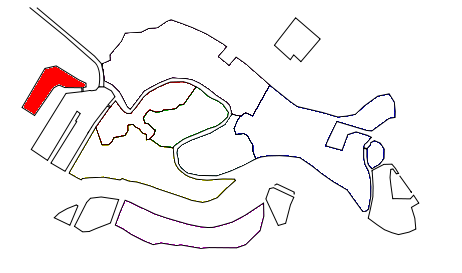
Tronchetto (also known as Isola nuova, meaning "New island") is an artificial island in the Venetian Lagoon, northern Italy, located at the westernmost tip of the main Venice island.

Key Information

The island was created in the 1960s, and now is used as a car park for tourists, who cannot bring their vehicles into the city.[1] The Venice People Mover connects Tronchetto with Piazzale Roma, the main Venice bus station, which lies at the edge of the city center.

[edit]

References

[edit]
Revisions and contributorsEdit on WikipediaRead on Wikipedia
from Grokipedia
Tronchetto is an artificial island in the , , situated at the westernmost tip of the main island. Constructed in the , it was developed to address the growing influx of vehicular traffic by providing dedicated parking facilities, thereby preventing cars from entering the car-free historic center of . The island functions primarily as a logistical hub, featuring one of Europe's largest multi-level parking garages with approximately 4,500 spaces for cars, buses, campers, and other vehicles, along with outdoor lots and charging stations. It is connected to the mainland via the bridge and to central by the automated system, which provides a quick three-minute link to Piazzale Roma, as well as waterbus services and . Additionally, Tronchetto hosts the Venice Passenger Shipping Terminal (TERMINALE PASSEGGERI), a major cruise port that accommodates large vessels and serves as a key entry point for tourists arriving by sea. Beyond transportation, the island supports other infrastructure, including the Tronchetto wholesale , strategically located within for efficient distribution to . Recent developments include the Hampton by Hilton Venice Isola Nuova, a 324-room that opened in spring 2025, enhancing its role as a modern gateway to the city. Despite its utilitarian design, Tronchetto offers scenic views of and serves as a serene contrast to 's bustling core, though it remains largely industrial in character.

Geography and Location

Physical Characteristics

Tronchetto is an formed through within the , situated at the coordinates 45°26′26″N 12°18′18″E. This man-made landmass occupies a strategic position at the westernmost tip of Venice's historic main island, adjacent to Piazzale Roma. Its formation involved the strategic deposition of materials to expand usable land in environment, distinguishing it from the natural sedimentary islands that characterize much of the surrounding . The spans an approximate surface area of 0.18 square kilometers, providing a compact yet significant extension of Venice's urban footprint. Primarily composed of compacted and dredged sediments sourced from bed, Tronchetto's substrate reflects the adaptations typical of 20th-century reclamation projects in this dynamic coastal system. These materials, including silts and clays from nearby channels, have been consolidated to form a base, though the island remains vulnerable to the physical stresses of its aquatic setting. Environmentally, Tronchetto is deeply integrated with the Venetian Lagoon's hydrological regime, experiencing regular exposure to tidal fluctuations that range from several centimeters to over a meter during high-water events known as . Surrounding waterways, including the canal to the and broader lagoon channels, facilitate water exchange and sediment transport around the island, contributing to its ongoing interaction with the . This positioning enhances its connectivity to the lagoon's tidal currents while exposing it to variations and potential from wave action.

Administrative and Historical Context

Tronchetto forms part of the Municipality of Venice, located in the region and within the , . As an integral component of the city's administrative framework, it falls under the governance structures that manage Venice's unique lagoon-based urban system. The island is also referred to as "Isola Nuova," or "New Island," a name that underscores its status as a contemporary artificial landmass, distinct from the historic natural islands that constitute much of 's core. This nomenclature highlights its role in modern extensions of the Venetian territory, separating it from the medieval and Renaissance-era sestiere that define the city's traditional fabric. Administratively, Tronchetto is integrated into Venice's sestiere system, specifically aligned with the Santa Croce district, which encompasses the northwestern approaches to the historic center, including key entry points like Piazzale Roma. The conceptual origins of Tronchetto trace back to early 20th-century initiatives led by engineer Eugenio Miozzi, who served as chief engineer for the Municipality of from 1931 to 1954. During this period, Miozzi proposed the development of artificial islands in as part of broader expansion strategies to alleviate pressures in the overcrowded historic center and accommodate growing infrastructure needs. These plans reflected 's evolving urban challenges, including the need to balance preservation of the lagoon ecosystem with expansion to support population and economic growth, positioning Tronchetto as a forward-thinking solution within the city's long history of hydraulic and territorial adaptation.

History

Planning and Construction

Tronchetto's planning was initiated in the early 1960s as part of Venice's broader efforts to address the escalating influx of and private vehicles straining the city's . This response to mid-20th-century transportation challenges aimed to preserve the historic center while accommodating modern mobility needs. The project was designed by engineer Eugenio Miozzi, who served as chief engineer for the Municipality of until 1954 and conceptualized the island's extension through techniques. These involved sediments from the surrounding lagoon and nearby canals, then filling the enclosed area to form a solid foundation, building on earlier post-war perimeter works started in 1958. Construction spanned from 1963 to 1967, utilizing industrial methods such as compacted fill and reinforced structures to create a resilient platform amid the lagoon's tidal fluctuations and soft sediments. Oversight by the Municipality of ensured integration with existing transport links like the . From its inception, Tronchetto was envisioned as an external hub for vehicle storage and transfer, specifically to bar automobiles from 's car-free historic core and promote sustainable access via water or elevated transport.

Post-Construction Development

Following the initial construction of Tronchetto in the as an dedicated to vehicle parking to preserve Venice's historic center from car traffic, the site underwent iterative modifications to address escalating demands. During the and , parking facilities were expanded through the addition of multi-level structures to increase capacity beyond the original open lots, enabling better accommodation of rising tourist vehicles, while basic infrastructure, including stops, was established to facilitate onward water transport to the city center. The 1990s brought significant enhancements for integration, with the construction of dedicated terminal buildings, such as single-storey facilities for smaller vessels, hydrofoils, and catamarans, alongside the 1997 founding of Venezia Terminal Passeggeri S.p.A. by the Port Authority to oversee and expand passenger operations at the site. In , the —an automated elevated shuttle system—was opened, providing a direct rail link from Tronchetto's parking areas to Piazzale Roma and the Marittima cruise terminals, enhancing connectivity without requiring changes to the island's foundational layout. In early 2025, the Venice Isola Nuova hotel, featuring 324 rooms, opened on the island, marking a significant expansion of accommodation facilities and further establishing Tronchetto as a key entry point for visitors. To counter environmental challenges like , minor reinforcements have been implemented on Tronchetto, including structural bolstering of parking and terminal areas, supported by the broader flood barrier system operational since 2020 that protects the entire from high tides.

Infrastructure and Facilities

Parking System

Tronchetto functions primarily as a multi-story accommodating approximately 4,500 , including cars, motorcycles, camper vans, minibuses, vans, and buses, tailored for both daily and long-term needs of tourists arriving by car. The facility, operational since the late following the construction of the in that decade, provides a critical solution for storage outside Venice's historic center, where cars are prohibited. As of 2025, daily rates stand at €29 for 24 hours or part thereof, with incremental hourly fees up to that cap, encompassing and via 110 cameras and constant staff supervision. The garage's structure relies on piled foundations to mitigate risks inherent to the , featuring multiple levels interconnected by ramps for efficient vehicle circulation. Payment integration includes six automatic machines accepting cash or credit/debit cards, with fees settled before vehicle retrieval to streamline operations. Accessibility features comprise 33 dedicated spaces for disabled visitors and five elevators serving all levels. From the garage, visitors can access the monorail for a quick connection to Piazzale Roma and onward transport. Tronchetto serves as a key entry point for visitors arriving by car, providing seamless access to various transportation options that connect it to central and beyond. The primary link is the , an automated elevated shuttle train spanning 0.9 km with three stations: Tronchetto, the Marittima cruise terminal, and Piazzale Roma. Opened in April 2010, it operates with a capacity of 3,000 passengers per hour, facilitating efficient movement for commuters and tourists alike. A single ticket costs €1.50 and is valid for the entire route, purchasable at multilingual ticket machines or via compatible ACTV passes. Ferry services further enhance connectivity, with ACTV operating lines from a dedicated stop at Tronchetto. Notably, line 17 provides a direct vehicle-carrying route to Lido di Venezia, running every 50 minutes from approximately 5:00 a.m. to 11:20 p.m., allowing cars and passengers to cross without intermediate stops. Additional ACTV lines extend service to other lagoon islands, integrating with the broader water bus network for onward travel. For cruise passengers, walking paths and supplementary shuttles link Tronchetto directly to nearby piers at the Marittima terminal, with the offering the most convenient covered option over short distances. At Piazzale Roma, reached via the , visitors can transfer to regional buses for mainland access, including routes to and other destinations in .

Role in Venice

Tourism and Accessibility

Tronchetto serves as the primary parking and drop-off point for motorists visiting , accommodating vehicles for the city's approximately 5.9 million annual tourist arrivals and thereby alleviating in the car-free historic center. This role is essential for managing the influx of day-trippers and overnight guests arriving by car from the mainland, with the facility's 4,000-plus spaces enabling seamless transitions to pedestrian and water-based exploration of city. In 2025, expanded its day-tripper access fee to €10 (doubled from 2024) and applied it on nearly twice as many peak dates, affecting motorists parking at Tronchetto who must comply with the fee for entry into the historic center. The 324-room Venice Isola Nuova hotel opened in the first quarter of 2025, further establishing Tronchetto as a modern entry point for tourists with convenient access to the city center. Accessibility is prioritized at Tronchetto to ensure inclusivity for all visitors, including those with mobility challenges. The multi-level parking garage includes five elevators providing access to street level and 33 reserved spaces for disabled vehicles. The connected system features elevators at its stations, making it fully compatible with wheelchairs and allowing easy transfers to Piazzale Roma without barriers. Multilingual signage throughout the area supports navigation for international tourists, with instructions available in languages such as English, German, French, and Spanish. In peak summer months, when visitor volumes surge, Tronchetto maintains 24-hour operations with strategies for overflow management, such as advance online reservations to prevent bottlenecks and ensure space availability even on high-demand days. Tronchetto contributes to by design, as parking here encourages subsequent reliance on options like the and vaporettos, reducing private vehicle penetration into Venice's sensitive urban core and supporting environmental preservation efforts.

Urban Planning Significance

Tronchetto exemplifies 20th-century lagoon engineering efforts to integrate modernization with the preservation of Venice's World Heritage status, as the was constructed in the through to serve as a peripheral hub without encroaching on the historic core. This approach allowed for development, such as facilities, while maintaining the lagoon's delicate balance and the city's medieval urban fabric, reflecting broader strategies to adapt to growth pressures. In Venice's traffic diversion plans, Tronchetto plays a pivotal role by providing capacity for approximately 4,000 vehicles in its facilities, thereby preventing direct vehicular access to the car-free historic and reducing congestion on the bridge. This diversion supports the city's limited-traffic zone policies, channeling commuters and tourists to and connections, which helps sustain the pedestrian-oriented layout essential to Venice's cultural identity. Environmental considerations surrounding Tronchetto's creation have sparked ongoing debates regarding and ecology, as the reclamation process involved filling marshy areas, contributing to localized land settling and alterations in tidal flows that affect sediment dynamics and . Critics highlight how such interventions exacerbate the 's vulnerability to sea-level rise, potentially impacting habitats for like clams and , though proponents argue it minimized broader ecological disruption compared to mainland expansion. Looking to future prospects, Tronchetto holds potential for expansions including enhanced electric vehicle charging infrastructure, aligning with Italy's 2025 sustainability goals under the National Recovery and Resilience Plan to promote low-emission mobility and reduce urban pollution. Master planning proposals envision repurposing underutilized areas with green networks and features, such as photovoltaic panels, to further integrate while supporting Venice's management.

References

Add your contribution
Related Hubs
User Avatar
No comments yet.