


Community hub
Recent from talks
Contribute something
Nothing was collected or created yet.
Ty Conklin
View on Wikipedia
Ty Curtis Conklin (born March 30, 1976) is an American former professional ice hockey goaltender. Throughout his National Hockey League (NHL) career, he played for the Edmonton Oilers, Columbus Blue Jackets, Buffalo Sabres, Pittsburgh Penguins, St. Louis Blues and two stints with the Detroit Red Wings.
Key Information


Born[1] in Phoenix, Arizona, Conklin grew up in Anchorage, Alaska, and was an early recruit of the now-famed Minnesota hockey prep school Shattuck-St. Mary's. He later played under Don Granato for the Green Bay Gamblers of the United States Hockey League (USHL) before attending the University of New Hampshire and playing for the Wildcats under long-tenured coach Dick Umile.
A self-described "late-bloomer" and "shorter kid" at age 18,[2] while spending his draft-eligible years (to age 20) remaining off the radar of professional scouts – first as a post-graduate at Shattuck, and then in his first year in Green Bay – Conklin went unclaimed by any team in the NHL's Entry Draft.
Subsequently, he went on to earn numerous goaltending awards and accolades in both the USHL and NCAA, however Conklin claims he never thought of becoming a professional until his junior year (his second playing) at University of New Hampshire.[3]
Professional career
[edit]Edmonton Oilers (2001–2006)
[edit]Before making his professional debut, Conklin spent two seasons playing for the Green Bay Gamblers of the United States Hockey League, followed by three seasons playing hockey with the University of New Hampshire's team, the Wildcats (before Conklin could join the Wildcats, he was forced to take a year off because NCAA regulations dictated he do so due to a Division I program transfer).[4] With the completion of his career at the University of New Hampshire in the spring of 2001, Conklin signed a professional contract as an undrafted free agent with the Edmonton Oilers. He spent the bulk of his first two seasons with the Hamilton Bulldogs, the then-shared American Hockey League (AHL) affiliate for the Oilers and Montreal Canadiens, and led the Bulldogs to within one win of a Calder Cup championship in 2003. He set an AHL record for most saves in a game with 83 (in a quadruple overtime, 134:56 minute 2–1 win over the Houston Aeros in Game 2 of the 2003 Calder Cup Final)[5] in what was then the longest game in AHL history. In the 2003–04 season, he played as back-up to Tommy Salo, effectively becoming the starter when Salo was lost to injury, and then as the joint starter with Jussi Markkanen following Salo's trade to the Colorado Avalanche. During the NHL lockout he played for Wolfsburg in the Deutsche Eishockey Liga (DEL), the German elite league.
With the conclusion of the lockout, Conklin entered the new season as Edmonton's probable starting goaltender, backed up by Markkanen. Given the prevalent idea that either goaltender could assume the starting job, local media began using the nickname "Conkkanen" to describe Edmonton's starting goaltender. However, during the 2005–06 season, both goaltenders proved to be inconsistent, with Conklin's performance additionally hampered by injury and no longer considered NHL-caliber,[6] prompting the Oilers to waive Conklin in early February and general manager Kevin Lowe to acquire a new starter, Dwayne Roloson, from the Minnesota Wild at the trade deadline.
2006 Stanley Cup Finals
[edit]Despite having played one game for the Oilers between March and June, Conklin was on the bench in Game 1 of the 2006 Stanley Cup Finals in Raleigh, against the Carolina Hurricanes. Roloson then suffered what would prove to be a series-ending knee injury late in the third period with the game tied 4–4, and Conklin was suddenly called into play. Edmonton had led by three goals at one point before allowing Carolina to then score four unanswered and take the lead before the Oilers managed to tie the game. With just over 30 seconds of time remaining in regulation, he attempted to play the puck behind the net but gave it away and allowed Hurricanes forward Rod Brind'Amour to score the winning goal unopposed, into an empty net.[7]
It also served as his first and at the time, only, experience in the NHL post-season; Jussi Markkanen played all subsequent six games of the series at head coach Craig MacTavish's discretion; not meant as a punishment or a reflection of Conklin's play, MacTavish explained, but, "...I can't be in a situation that I was in during the course of the year where you are going back between 1 and 1-A, and never give them the opportunity to get confident in the net. If he struggles, he will continue to play. If he plays well, he will continue to play."[8] Canadian national television analyst and former NHL goaltender Kelly Hrudey was less diplomatic than MacTavish: "Not even a question – Markkanen. And I gain no satisfaction in saying that."
"Let's not turn that play into some monumental thing", Conklin said at the time. However, the extraordinarily bad timing and subsequent massive public focus on the indelible miscue did nothing to improve his reputation, already severely diminished by a poor regular season.[9]
"I do really feel horribly for Ty Conklin", Hrudey said. "It's such a traumatic thing that he's gone through and the way in which he let in that goal last night after the season that he's had. It's going to be a real challenge, if you ask me, for him to continue a National Hockey League career. It's going to be tough."
Conklin did not return to the ice again as an Oiler, as the team option on his contract for the 2006–07 NHL season was subsequently declined.[10] "Obviously I needed a change of scenery", he said. "I kicked myself a lot after it happened, but you can't change things, so you just have to deal with it and move on."[11]
Columbus Blue Jackets / Buffalo Sabres (2006–2007)
[edit]Following the start of free agency on July 1, Conklin was signed as an unrestricted free agent (UFA) by the Columbus Blue Jackets, on July 6. He was expected to compete for the Blue Jackets' backup goaltending position, however head coach Gerard Gallant opted to go with internationally experienced Fredrik Norrena. Conklin was subsequently waived and sent to the Jackets' AHL affiliate, the Syracuse Crunch. An injury to Blue Jackets' starter Pascal Leclaire prompted the team to recall him to the NHL on December 11, 2006.
On February 27, 2007, Conklin was acquired by the Buffalo Sabres in a trade for a fifth-round pick in the 2007 NHL entry draft.[12] In his first start with the Sabres, Conklin made a then-career high 42 saves in a win over the Florida Panthers.
Pittsburgh Penguins (2007–2008)
[edit]
W 5–4 (SO)
On July 19, 2007, Conklin was signed as a UFA by the Pittsburgh Penguins to a $500,000, one-year, two-way contract (that would pay him $100,000 in the AHL, exempting him from re-entry waivers).[13] After being assigned to Wilkes-Barre/Scranton of the AHL on September 22, he was recalled by Pittsburgh on an emergency basis on December 6, when starting goaltender Marc-André Fleury suffered a high ankle sprain. His first appearance on December 11 in Philadelphia was noted and extremely unprepossessing, as he relieved Dany Sabourin in the third period of an ugly game with the division rival Philadelphia Flyers and promptly earned a 9.00 goals against average (GAA) by allowing the final three goals in an 8–2 blowout loss.
(from ESPN.com Weekly NHL Power Rankings)[dead link]
...is it really running up the score when Ty Conklin comes in to replace your starting netminder?
Note to Penguins: seek goaltending help.
After winning five of their past six games, including the Winter Classic, the Penguins move up our list. Ty Conklin. Who knew?
Again, we ask, Ty Conklin? Who knew ... really? Seven straight starts, seven straight wins, including two shutouts.
Although initially expected to remain Sabourin's backup, Conklin instead became a sensation as Pittsburgh's de facto starting goaltender, winning his first nine starts from December 20, playing all but one game in the month of January. (Coincidentally, he was the first player to wear #35 for the Penguins since franchise goaltender Tom Barrasso, whose 12-year tenure with the team ended in 2000.)
Before Fleury's return as a starter on March 2, 2008, Conklin compiled a record of 17–6–5, earning the nickname "Conkblock" (derived by keeping a person away from a goal, or preventing someone from scoring) by posting career numbers (such as a 50-save win over the New York Islanders at Nassau Coliseum on February 26, despite being outshot 52–21)[14] and leading the NHL in save percentage.
Despite Conklin's later protests that "[t]he kid has way too much talent, athleticism, and ability to not be a great goalie", and "I had nothing to do with it",[15] Fleury's noticeably improved play upon return was also partially attributed to the competition and mentoring his presence provided, as Penguins goaltending coach Gilles Meloche attested in May,[16]
...he's a good vet; he's a good pro, and you know, he's gonna take just as much credit – if I do take any credit, Ty Conklin's going to take the credit for working with Marc-Andre...in the room, between periods...they communicate really well, and I think Marc-Andre's really taken advantage of that.
Conklin helped the team to not only sustain, but advance their position in the standings during Fleury's extended injury. He was considered by his teammates to have played a role equal to that of Hart Memorial Trophy nominee Evgeni Malkin in the success of the 2007–08 Pittsburgh Penguins season,[17] and was the team's candidate for the Bill Masterton Memorial Trophy, "given annually to the player who best exemplifies the qualities of perseverance, sportsmanship, and dedication to ice hockey.
Conklin played in 33 games for the Penguins, finishing with a personal record of 18–8–5 and a save percentage of .923, second overall in the NHL, and a single-season franchise record. Though he did not play, he served as Fleury's backup in all 20 of the team's playoff games, as Pittsburgh reached the 2008 Stanley Cup Finals, losing to the Detroit Red Wings four games to two.
Due to the existence of the salary cap, the fact Pittsburgh had both Fleury and Sabourin under one-way contracts for 2008–09, and the likelihood of his ability to earn a major increase in both playing time and salary (the 50% raise that eventually came from the Red Wings, who guaranteed him 30 games, was seen as a bargain) with his 2007–08 performance, despite Conklin's significant and memorable contribution to the team, the Penguins did not renew his contract, and decided to allow him to reach unrestricted free agency once more on July 1.
Detroit Red Wings (2008–2009)
[edit]
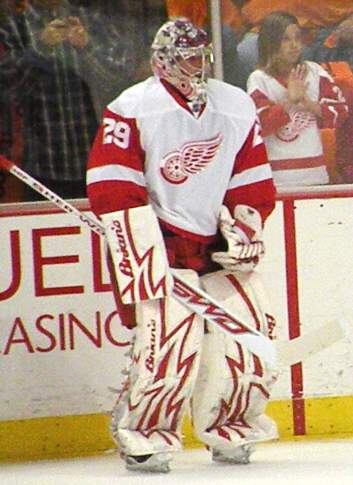
On July 1, 2008, Conklin signed a one-year, one-way deal as a UFA with the Detroit Red Wings, worth $750,000.[18] Along with Conklin, former Penguin Marián Hossa also signed a one-year contract with Detroit, joining the team that had just defeated them in the Stanley Cup Finals less than a month earlier. In order to meet his new teammates and familiarize himself, Conklin was one of only six Red Wings to participate in the first optional skate before training camp.[19]
Detroit head coach Mike Babcock expressed a desire to play Conklin in every third game in order to relieve starter Chris Osgood.[20] Conklin made his first start with Detroit on the road, against the Carolina Hurricanes on October 13, where he made 27 saves in a 3–1 Red Wings victory and was named the first star of the game.[20][21] On November 17, 2008, Conklin made his debut at Detroit's Joe Louis Arena against the Edmonton Oilers, posting his fifth career shutout as the Red Wings won 4–0.[22]
Due to a sub-par regular-season performance from Osgood, Conklin essentially served in an equal-time platoon situation, playing in 40 games and winning 25 to Osgood's 26, his best NHL season, in that regard, to date. Despite significantly outplaying Osgood for the vast majority of the regular season, being credited by his fellow netminder and others for stabilizing the team's goaltending situation, allowing Detroit to capture another Central Division title and the second playoff seed in the Western Conference, Osgood played all but 20 minutes in the playoffs, largely on the strength of his playoff experience.
Conklin received his second taste of NHL playoff experience in Game 4 of the Western Conference Finals against the Chicago Blackhawks, where he substituted for a dehydrated Osgood in the third period and played 20 scoreless minutes. The Red Wings reached the 2009 Stanley Cup Finals, losing a rematch to Conklin's former team, the Pittsburgh Penguins, in seven games.
It was announced in the 2009 off-season Conklin would not be offered a new contract for the 2009–10 season due to salary cap constraints, with the Wings instead opting to promote longtime prospect Jimmy Howard from the AHL.[23]
St. Louis Blues (2009–2011)
[edit]On July 1, 2009, Conklin signed a two-year deal worth an average of US$1.3 million per year with the St. Louis Blues, who made him an immediate offer following the start of free agency at noon.
"It's a young team, a pretty exciting team, an up-and-coming team, and one that played as well as anyone in the second half of the [2008–09] season," Conklin said. "Obviously, financially it's a lot better, a step up from what I've made the last couple years...I know the great season [Blues goaltender Chris] Mason had last year. I don't think they're signing me to play 10 games. Hopefully, I'll challenge for some ice time."[24]
Conklin made his debut with the Blues overseas, on October 3, facing his former team, the Red Wings, at Sweden's Globe Arena, in the second game of the doubleheader of NHL Premiere 2009 Stockholm. After allowing two goals in the first 2:08, he ended with 30 saves on 33 shots as the Blues won 5–3, with his performance publicly contrasted to the widely criticized one of Jimmy Howard, his replacement on Detroit's roster, at the other end.
Conklin's first North American game with the Blues (also his first win and first shutout) came on October 17 away against the Anaheim Ducks, a 5–0 win. Conklin made 26 saves to earn St. Louis's first win since returning from Sweden, the second star of the game, and his 11th career shutout. Conklin did not record any of his ten wins during the 2009–10 NHL season at the Scottrade Center, home of the Blues. On February 26, 2011, Conklin was placed on waivers by St. Louis.[25]
Detroit Red Wings (2011–2012) and retirement
[edit]On July 20, 2011, Conklin signed a one-year contract worth $750,000 to return to the Detroit Red Wings as the backup to Jimmy Howard. Detroit assigned Conklin to its AHL affiliate, the Grand Rapids Griffins, on February 21, 2012.[26] He later re-joined the Red Wings and finished his final season with a 5–6–1 record, combined with a .884 save percentage and 3.28 GAA.
On July 12, 2013, the Blues hired Conklin as their goaltender development coach, effectively signaling his retirement from playing professional hockey.
International play
[edit]| Medal record | ||
|---|---|---|
Representing  United States United States
| ||
| Ice hockey | ||
| World Championships | ||
 |
2004 Czech Republic | |
Conklin played for the United States at the IIHF World Championship in the spring of 2004, 2005 and 2011. In the 2004 event, the Americans won a surprising bronze medal. Following an upset of the host Czechs and a shutout, 1–0 shootout victory over Slovakia in the bronze medal game, Conklin was selected as the tournament's best goaltender.
Following the 2011 season, Conklin returned to play for the United States at the 2011 IIHF World Championship in Slovakia, with his best performance coming on May 6 against Canada in a 4–3 shootout loss in the qualifying round. Conklin was named player of the game after making 48 saves. The U.S. reached the tournament's quarter-finals, but lost to the Czech Republic, 4–0.
Achievements
[edit]NHL outdoor games
[edit]Conklin participated in each of the first three NHL regular-season games outdoors, the most of any NHL player — even though on each occasion he was not his team's starting goaltender even a month prior to the game. Moreover, he appeared on a different team for each occasion. "I count myself very lucky", he said of the opportunity. "There's not a guy in this league who wouldn't like to play in these games."[27]
- He was the goaltender for the Edmonton Oilers when they lost to the Montreal Canadiens by a score of 4–3, in the Heritage Classic at Edmonton's Commonwealth Stadium, on November 22, 2003.
- He was the goaltender for the Pittsburgh Penguins in their 2–1 shootout victory over the Buffalo Sabres in the AMP Energy NHL Winter Classic at Ralph Wilson Stadium, near Buffalo, on January 1, 2008. He posted a shutout when the Penguins hosted the Sabres two days prior.
- He was in goal for the Detroit Red Wings' 6–4 victory over the Chicago Blackhawks at Chicago's Wrigley Field in the 2009 NHL Winter Classic on New Year's Day. After allowing three goals in the first period, he shut out the Blackhawks for nearly forty minutes, before yielding a goal with ten seconds left in the game. The game was part of a home-and-home series, and Conklin posted a 4–0 shutout when Detroit hosted the Blackhawks two days earlier. Conklin got the start at Wrigley while starter Chris Osgood recovered from a groin injury.[27]
Records
[edit]- Left the University of New Hampshire holding eight goaltending records[28]
- Played and won the longest game in AHL history, May 30–31, 2003 (surpassed by Game 5, East Division Semifinals, Albany vs. Philadelphia, 5OT, April 24–25, 2008)
- Holds the Penguins record for single season save percentage, .923 (2007–08) (surpassed Tom Barrasso, .922 (1997–98))
Awards
[edit]
- Nominee for the Masterton Trophy, Pittsburgh Penguins, 2008
- Top ten finalist for the Hobey Baker Award (best male ice hockey player, U.S. college hockey) 2000, 2001
- Co-winner of the Walter Brown Award (with Brian Gionta) (New England's outstanding American-born college player), 2001
- Hockey East Goaltending Leader Award (lowest goals against average), 2001
- Co-winner, Hockey East Player of the Year (with Mike Mottau), 2000
Honors
[edit]- Best goaltender, 2004 Men's World Ice Hockey Championships (Directorate Award)[29]
- Named captain of the UNH Wildcats, October 5, 2000
- Elected by his teammates, he was the first goaltender to captain the Wildcats since 1961
- Two-time regular-season champion (Anderson Cup), USHL, 1996, 1997
- USHL playoff championship (Clark Cup), 1996
- USHL First All-Star Team, 1996
Personal
[edit]Conklin is the son of Robert and Beth Conklin. Although his Phoenix birth possibly makes him the first Arizona-born ice hockey player to play regularly in the NHL, Conklin spent his entire childhood in Alaska, attending West Anchorage High School[30] until he was recruited by Shattuck-St. Mary's, a boarding school in Faribault, Minnesota. He is the first Alaskan goaltender to reach the NHL. His younger brother Brice used him for shooting practice in their basement (a reversal of the usual positions for siblings) and went on to play defense for Shattuck and for Harvard University.[31] His brother Sid also played at Shattuck as a goaltender.[32]
Conklin is married with three children. The family resides in central Maine during the off-season.[33][34]
Career statistics
[edit]Regular season and playoffs
[edit]| Regular season | Playoffs | |||||||||||||||||||||
|---|---|---|---|---|---|---|---|---|---|---|---|---|---|---|---|---|---|---|---|---|---|---|
| Season | Team | League | GP | W | L | T | OTL | MIN | GA | SO | GAA | SV% | GP | W | L | MIN | GA | SO | GAA | SV% | ||
| 1992–93 | Shattuck–Saint Mary's | HS–Prep | — | — | — | — | — | — | — | — | — | — | — | — | — | — | — | — | — | — | ||
| 1993–94 | Shattuck–Saint Mary's | HS–Prep | — | — | — | — | — | — | — | — | — | — | — | — | — | — | — | — | — | — | ||
| 1995–96 | Green Bay Gamblers | USHL | 30 | — | — | — | — | 1,727 | 82 | 1 | 2.85 | — | — | — | — | — | — | — | — | — | ||
| 1996–97 | Green Bay Gamblers | USHL | 30 | 19 | 7 | 1 | — | 1,609 | 86 | 1 | 3.21 | .908 | 17 | 8 | 9 | 980 | 56 | 1 | 3.43 | .913 | ||
| 1998–99 | University of New Hampshire | HE | 22 | 18 | 3 | 1 | — | 1,338 | 41 | 0 | 1.84 | .923 | — | — | — | — | — | — | — | — | ||
| 1999–00 | University of New Hampshire | HE | 37 | 22 | 8 | 6 | — | 2,194 | 91 | 2 | 2.49 | .908 | — | — | — | — | — | — | — | — | ||
| 2000–01 | University of New Hampshire | HE | 34 | 17 | 12 | 5 | — | 2,048 | 70 | 5 | 2.05 | .920 | — | — | — | — | — | — | — | — | ||
| 2001–02 | Edmonton Oilers | NHL | 4 | 2 | 0 | 0 | — | 148 | 4 | 0 | 1.62 | .939 | — | — | — | — | — | — | — | — | ||
| 2001–02 | Hamilton Bulldogs | AHL | 37 | 13 | 12 | 8 | — | 2,043 | 89 | 1 | 2.61 | .916 | 7 | 4 | 2 | 416 | 18 | 0 | 2.60 | .917 | ||
| 2002–03 | Hamilton Bulldogs | AHL | 38 | 19 | 13 | 3 | — | 2,140 | 91 | 4 | 2.55 | .914 | 17 | 9 | 6 | 1,024 | 38 | 1 | 2.23 | .933 | ||
| 2003–04 | Edmonton Oilers | NHL | 38 | 17 | 14 | 4 | — | 2,086 | 84 | 1 | 2.42 | .912 | — | — | — | — | — | — | — | — | ||
| 2004–05 | EHC Wolfsburg Grizzly Adams | DEL | 11 | — | — | — | — | 623 | 31 | 0 | 2.99 | .920 | 7 | — | — | 414 | 11 | 2 | 1.59 | .946 | ||
| 2005–06 | Edmonton Oilers | NHL | 18 | 8 | 5 | — | 1 | 922 | 43 | 1 | 2.80 | .880 | 1 | 0 | 1 | 6 | 1 | 0 | 10.00 | .667 | ||
| 2005–06 | Hamilton Bulldogs | AHL | 3 | 1 | 2 | — | 0 | 152 | 8 | 0 | 3.17 | .907 | — | — | — | — | — | — | — | — | ||
| 2005–06 | Hartford Wolf Pack | AHL | 2 | 1 | 0 | — | 1 | 130 | 5 | 0 | 2.31 | .932 | — | — | — | — | — | — | — | — | ||
| 2006–07 | Syracuse Crunch | AHL | 19 | 3 | 12 | — | 3 | 1,085 | 60 | 0 | 3.32 | .902 | — | — | — | — | — | — | — | — | ||
| 2006–07 | Columbus Blue Jackets | NHL | 11 | 2 | 3 | — | 2 | 491 | 27 | 0 | 3.30 | .871 | — | — | — | — | — | — | — | — | ||
| 2006–07 | Buffalo Sabres | NHL | 5 | 1 | 2 | — | 0 | 227 | 13 | 0 | 3.44 | .892 | — | — | — | — | — | — | — | — | ||
| 2007–08 | Wilkes–Barre/Scranton Penguins | AHL | 18 | 11 | 7 | — | 0 | 1,058 | 39 | 2 | 2.21 | .919 | — | — | — | — | — | — | — | — | ||
| 2007–08 | Pittsburgh Penguins | NHL | 33 | 18 | 8 | — | 5 | 1,866 | 78 | 2 | 2.51 | .923 | — | — | — | — | — | — | — | — | ||
| 2008–09 | Detroit Red Wings | NHL | 40 | 25 | 11 | — | 2 | 2,246 | 94 | 6 | 2.51 | .909 | 1 | 0 | 0 | 20 | 0 | 0 | 0.00 | 1.000 | ||
| 2009–10 | St. Louis Blues | NHL | 26 | 10 | 10 | — | 2 | 1,451 | 60 | 4 | 2.48 | .921 | — | — | — | — | — | — | — | — | ||
| 2010–11 | St. Louis Blues | NHL | 25 | 8 | 8 | — | 4 | 1,285 | 69 | 2 | 3.22 | .881 | — | — | — | — | — | — | — | — | ||
| 2011–12 | Detroit Red Wings | NHL | 15 | 5 | 6 | — | 1 | 805 | 44 | 1 | 3.28 | .884 | — | — | — | — | — | — | — | — | ||
| 2011–12 | Grand Rapids Griffins | AHL | 12 | 8 | 4 | — | 0 | 725 | 29 | 0 | 2.40 | .915 | — | — | — | — | — | — | — | — | ||
| NHL totals | 215 | 96 | 67 | 4 | 19 | 11,527 | 516 | 17 | 2.69 | .906 | 2 | 0 | 1 | 26 | 1 | 0 | 2.31 | .917 | ||||
International
[edit]| Year | Team | Event | GP | W | L | T | MIN | GA | SO | GAA | SV% | |
|---|---|---|---|---|---|---|---|---|---|---|---|---|
| 2004 | United States | WC | 5 | 4 | 0 | 1 | 280 | 10 | 1 | 2.14 | .934 | |
| 2004 | United States | WCH | DNP | — | — | — | — | — | — | — | — | |
| 2005 | United States | WC | 3 | 1 | 0 | 2 | 180 | 6 | 0 | 2.00 | .885 | |
| 2011 | United States | WC | 4 | 1 | 3 | – | 216 | 14 | 0 | 3.89 | .892 | |
| Senior totals | 12 | 6 | 3 | 3 | 676 | 30 | 1 | 2.66 | .912 | |||
References
[edit]- ^ a b Oilers: Q&A with Ty Conklin - Hockey's Future
- ^ Dye, Dave (2009-01-10). "Wings' Conklin knows how to fly". The Detroit News.
- ^ Rutherford, Jeremy (September 21, 2009). "Conklin believes St. Louis Blues are the right fit". St. Louis Post-Dispatch. Archived from the original on October 26, 2009. Retrieved October 17, 2009.
- ^ 2009–10 St. Louis Blues Official Team Yearbook
- ^ AHL Game Report Summary, 5/30/2003
- ^ "Oilers place Conklin on waivers". CBC Sports. February 6, 2007. Retrieved May 10, 2009.
- ^ Wharnsby, Tim (June 2, 2006). "Edmonton gives up three-goal lead; Roloson injured and out for series". The Globe and Mail. Archived from the original on April 16, 2008. Retrieved May 10, 2009.
- ^ "NHL Stanley Cup Finals: Oilers v Hurricanes". ASAP Sports, Inc. June 7, 2006. Retrieved May 10, 2009.
- ^ "Burnside: Can the next Oilers goalie achieve the improbable?". June 6, 2006.
- ^ "Free-Agent Feeding time". The Edmonton Journal. June 28, 2006. Retrieved May 10, 2009.
- ^ Goldstein, Wes (January 10, 2008). "Two years after humiliating Cup loss, Ty wins again and again ..." CBS Sports. Archived from the original on May 24, 2011. Retrieved May 10, 2009.
- ^ "Sabres deal Biron to Flyers, get Conklin".
- ^ "Penguins sign goaltender Ty Conklin".
- ^ "Official Pittsburgh Penguins Website | Pittsburgh Penguins". www.nhl.com.
- ^ "Welcome".
- ^ Gilles Meloche, 'Live at the Stanley Cup Final from Cobo Hall' , May 23, 2008
- ^ "Pittsburgh Penguins backup netminder Ty Conklin helped save season", Canadian Press; May 13, 2008
- ^ "Signing tracker".
- ^ "Official Detroit Red Wings Website | Detroit Red Wings". www.nhl.com.
- ^ a b "Detroit Local News - Michigan News - Breaking News - detroitnews.com". The Detroit News.
- ^ "Detroit Red Wings - Carolina Hurricanes - October 13th, 2008".
- ^ "Unknown". Archived from the original on August 20, 2014.
- ^ "Conklin out, Howard in as Red Wings backup goalie". Archived from the original on July 2, 2009.
- ^ "ADN".
- ^ "NHL Recap - St. Louis Blues at Anaheim Ducks - Oct 17, 2009 - CBSSports.com". www.cbssports.com. Archived from the original on October 11, 2012.
- ^ "CONKLIN ASSIGNED TO GRAND RAPIDS". Grand Rapids Griffins. Retrieved February 24, 2012.
- ^ a b "Yahoo | Mail, Weather, Search, Politics, News, Finance, Sports & Videos". www.yahoo.com.
- ^ "University of New Hampshire Athletics - Official Athletics Website".
- ^ ""The best...of the tournament"". Archived from the original on June 11, 2011.
- ^ "JuneauEmpire.com: Sports: Anchorage goalie helps Team USA strike bronze 05/10/04". www.juneauempire.com. Archived from the original on September 2, 2004.
- ^ "Official Site of the National Hockey League | NHL.com". www.nhl.com.
- ^ "Fort William Canadiens Midget 'AA': News". www.eteamz.com. Archived from the original on September 27, 2011.
- ^ "- Detroit Red Wings Hockey - MLive.com". www.mlive.com. Archived from the original on April 3, 2012.
- ^ "Red Wings return home looking for sharper play". November 17, 2008.
External links
[edit]- Biographical information and career statistics from NHL.com, or Eliteprospects.com, or Hockey-Reference.com, or The Internet Hockey Database
- Biography at HockeyGoalies
Ty Conklin
View on GrokipediaEarly life and amateur career
Upbringing and education
Ty Conklin was born on March 30, 1976, in Phoenix, Arizona, but his family relocated to Anchorage, Alaska, shortly thereafter, where he grew up and developed a passion for hockey amid the state's rugged outdoor environment.[1][3] In his early years, Conklin's introduction to the sport came through playing on frozen ponds and outdoor rinks, a common practice in Alaska that honed his resilience as a young goaltender.[3] He became the first goaltender from Alaska to reach the National Hockey League, marking a significant milestone for the state's hockey community.[3] Conklin attended West Anchorage High School, where he balanced academics with emerging hockey talent before gaining early recruitment to the prestigious Shattuck-St. Mary's prep school in Faribault, Minnesota, as one of the program's initial standout prospects from Alaska.[9][10] He graduated from Shattuck-St. Mary's in 1994, benefiting from its rigorous hockey development system that prepared him for higher levels of competition.[10] From a hockey-oriented family, Conklin's younger brother Brice also excelled in the sport, playing as a forward for Harvard University during the late 1990s.[11] This familial support contributed to Ty's drive, with the brothers sharing practice sessions that sharpened his skills from a young age. Following Shattuck-St. Mary's, Conklin naturally progressed to junior hockey leagues.Junior hockey
Conklin honed his goaltending skills at Shattuck-St. Mary's prep school before joining the Green Bay Gamblers of the United States Hockey League (USHL) for the 1995–96 season.[12] In his debut junior campaign, Conklin earned a spot on the USHL First All-Star Team and contributed significantly to the Gamblers' Clark Cup playoff championship, as the team overcame deficits in the postseason to claim the title.[12] The 1996–97 season marked Conklin's breakout year, where he appeared in 30 regular-season games for the Gamblers, recording 19 wins, a 3.21 goals-against average (GAA), a .908 save percentage, and one shutout while helping the team secure the Anderson Cup as regular-season champions.[6][12] In total, Conklin amassed 27 wins across the regular season and playoffs that year.[12] During the 1997 Clark Cup playoffs, Conklin started 17 games, posting 8 wins, a 3.43 GAA, and a .913 save percentage as the Gamblers advanced to the finals before falling in a four-game sweep to the Lincoln Stars.[6] Despite his standout junior performances, Conklin remained undrafted in the NHL Entry Draft, positioning him for a college career at the University of New Hampshire.[13]College career
University of New Hampshire
Ty Conklin played for the University of New Hampshire Wildcats men's ice hockey team from 1998 to 2001, appearing in 93 games over three seasons with an overall record of 57–23–12, a 2.18 goals-against average (GAA), .915 save percentage, and seven shutouts.[6][14] A pivotal moment came during the 1998–99 season, when he served as the starting goaltender for UNH's run to the NCAA Championship game, where the Wildcats fell 3–2 in overtime to Maine despite his 28 saves in the final.[6]College achievements
During his tenure at the University of New Hampshire, Ty Conklin earned numerous individual accolades, highlighting his status as one of the top goaltenders in NCAA men's ice hockey.[2] He was a two-time finalist for the Hobey Baker Memorial Award, recognizing the top player in NCAA men's ice hockey, in both the 1999–2000 and 2000–01 seasons.[15] Additionally, Conklin was selected to the AHCA East First All-American Team in 1999–2000 and 2000–01, an honor voted on by the American Hockey Coaches Association for outstanding performers in the eastern region.[16][17] Within the Hockey East Conference, he received First All-Star Team recognition in 1999–2000 and 2000–01, reflecting his consistent excellence among league goaltenders. Conklin's impact was further underscored by his conference honors, including co-winner of the Hockey East Player of the Year award in 1999–2000 alongside Boston College's Mike Mottau, and sole recipient in 2000–01.[18] These awards came on the heels of strong statistical performances, such as leading the conference with a .930 save percentage in league play during the 2000–01 season.[19] Upon graduating, Conklin held multiple University of New Hampshire program records for goaltenders, including career goals against average (2.18), wins (57), games played (93), and save percentage (.915).[14][20]Professional career
Edmonton Oilers (2001–2006)
Following his successful college career at the University of New Hampshire, where he earned Hobey Baker Award finalist honors, Ty Conklin signed a three-year entry-level contract as an undrafted free agent with the Edmonton Oilers on April 18, 2001.[21] He made his NHL debut on October 16, 2001, against the Toronto Maple Leafs, appearing in four games during the 2001–02 season as a backup to Tommy Salo, posting a 2–0–0 record with a 1.63 goals-against average (GAA).[22] Conklin spent the majority of his first two professional seasons developing in the American Hockey League (AHL) with the Hamilton Bulldogs, Edmonton's affiliate, where he recorded a 20–15–5 mark and 2.52 GAA in 45 games during 2001–02, followed by a 25–16–4 record and 2.20 GAA in 50 games in 2002–03.[13] Conklin's AHL tenure peaked during the 2003 Calder Cup playoffs, where he backstopped Hamilton to the finals against the Houston Aeros. In Game 2 of the series on May 31, 2003, he set an AHL record with 83 saves in a quadruple-overtime 2–1 victory, the longest game in league history at 134:56, though the Bulldogs ultimately fell in seven games.[23] Returning to the NHL in 2003–04, Conklin emerged as a key contributor for Edmonton amid injuries to Salo, playing 38 games with a 17–14–4 record, 2.42 GAA, and .912 save percentage, including his first career shutout on February 28, 2004, against the Calgary Flames.[13] During the 2004–05 NHL lockout, Conklin played for Grizzly Adams Wolfsburg of the Deutsche Eishockey Liga (DEL), appearing in 11 games with a 2.99 GAA and .920 save percentage.[24] In the 2005–06 season, Conklin appeared in 18 games for the Oilers, serving primarily as backup to Dwayne Roloson with an 8–5–1 record, 2.80 GAA, and .880 save percentage.[13] Over his five seasons with Edmonton, he played 60 NHL games, compiling a 27–19–5 record and 2.43 GAA.[13] Conklin's most notable moment came in the 2006 Stanley Cup playoffs, where the eighth-seeded Oilers advanced to the finals against the Carolina Hurricanes. In Game 1 on June 5, 2006, Roloson suffered a knee injury early in the third period with Edmonton leading 4–3; Conklin entered in relief with 5:36 remaining, facing three shots and allowing the game-winning goal by Rod Brind'Amour at 19:28 after a turnover behind the net, resulting in a 5–4 loss in regulation.[25] He did not appear in subsequent games as the Oilers lost the series in seven.[26]Columbus Blue Jackets and Buffalo Sabres (2006–2007)
Following his departure from the Edmonton Oilers as an unrestricted free agent after the 2005–06 season, Conklin signed a one-year contract with the Columbus Blue Jackets on July 7, 2006.[27] In the 2006–07 season, Conklin appeared in 11 games for Columbus, recording a 2–3–2 mark with a 3.30 goals-against average (GAA) and .871 save percentage.[28] His performance was inconsistent, leading to a demotion to the American Hockey League's Syracuse Crunch in late September after struggling in preseason.[29] On February 27, 2007, the Blue Jackets traded Conklin to the Buffalo Sabres in exchange for a fifth-round pick in the 2007 NHL Entry Draft.[30] With Buffalo, he played in five games down the stretch, posting a 1–2–0 record, 3.43 GAA, and .892 save percentage as the team pursued a deep playoff run.[31] A highlight came in his first start for the Sabres on March 15, 2007, when Conklin made a career-high 42 saves to secure a 5–3 victory over the Florida Panthers, helping end Buffalo's four-game losing streak.[32] Overall, Conklin's 2006–07 campaign was transitional and challenging, as he adapted to two new organizations amid limited ice time and team instability.[1]Pittsburgh Penguins (2007–2008)
On July 19, 2007, Conklin signed a one-year, two-way contract with the Pittsburgh Penguins as an unrestricted free agent.[6] During the 2007–08 regular season, Conklin emerged as the primary starter for the Penguins, appearing in 33 games and posting an 18–8–5 record with a 2.51 goals-against average and .923 save percentage.[13] His .923 save percentage set a single-season franchise record for goaltenders appearing in at least 30 games.[33] Conklin recorded two shutouts, including a 2–0 victory over the Buffalo Sabres on December 29, 2007, and a 3–0 win against the Florida Panthers on January 5, 2008.[34] A highlight of Conklin's season came in the inaugural NHL Winter Classic on January 1, 2008, where he started against the Sabres at Ralph Wilson Stadium and made 36 saves through regulation and overtime, plus all three shootout attempts, to secure a 2–1 victory.[35] This performance marked his first outdoor NHL game since starting for the Edmonton Oilers in the 2003 Heritage Classic. In the playoffs, Conklin served as the backup goaltender to Marc-André Fleury as the Penguins advanced to the Stanley Cup Finals, where they lost to the Detroit Red Wings in six games; he did not appear in any postseason contests.[13]Detroit Red Wings first stint (2008–2009)
On July 1, 2008, Conklin signed a one-year contract worth $750,000 with the Detroit Red Wings to serve as the backup goaltender to Chris Osgood, following his strong playoff performance with the Pittsburgh Penguins that helped propel them to the Stanley Cup Final.[36] His arrival bolstered Detroit's depth in net after they won the 2008 Stanley Cup, providing a reliable veteran option amid the team's pursuit of a repeat championship. During the 2008–09 regular season, Conklin appeared in 40 games for the Red Wings, posting a 25–11–2 record with a 2.51 goals-against average, .909 save percentage, and two shutouts while sharing duties with Osgood.[1] One of his notable starts came on January 1, 2009, in the NHL Winter Classic at Wrigley Field against the Chicago Blackhawks, where he made 33 saves on 37 shots in a 6–4 victory, marking his third career outdoor NHL game and contributing to Detroit's strong road performance in the event.[37] Conklin's steady play helped the Red Wings finish first in the Central Division with 112 points and advance deep into the playoffs.[38] In the 2009 Stanley Cup playoffs, Conklin served as Osgood's backup, appearing in one relief game in Game 4 of the Western Conference Finals against the Chicago Blackhawks, where he stopped all 9 shots faced in 20 minutes.[1] Although he did not play in the Stanley Cup Final, where Osgood led Detroit to a seven-game loss to the Pittsburgh Penguins, Conklin was part of the team that reached the championship series. His contributions underscored his role as a dependable reserve during Detroit's postseason run.[38]St. Louis Blues (2009–2011)
On July 1, 2009, Ty Conklin signed a two-year contract with the St. Louis Blues worth $2.6 million, positioning him as a reliable backup goaltender to complement incumbent starter Chris Mason. Bringing veteran poise from his role in the Detroit Red Wings' 2008 Stanley Cup championship, Conklin provided stability during a transitional period for the franchise, which was rebuilding under new general manager Doug Armstrong following several disappointing seasons. In the 2009–10 season, amid a midseason coaching change when head coach Andy Murray was fired on January 2, 2010, and replaced by interim coach Davis Payne, Conklin appeared in 26 games, recording a 10–10–2 mark with a 2.48 goals-against average (GAA) and .921 save percentage, including four shutouts that contributed to the Blues' late push for a playoff spot despite finishing ninth in the Western Conference.[39] The 2010–11 season brought further shifts in the Blues' goaltending tandem when the team acquired Jaroslav Halak from the Montreal Canadiens on June 17, 2010, in exchange for prospects Lars Eller and Ian Schultz, installing Halak as the primary starter and relegating Conklin to a shared backup role. Conklin played in 25 games that year, posting an 8–8–4 record with a 3.22 GAA and .881 save percentage, including two shutouts, as the Blues improved to a 43–27–12 finish and returned to the playoffs for the first time since 2009. His performances, such as a 29-save shutout against the New York Rangers on November 6, 2010, highlighted his contributions during a season of defensive restructuring under Payne, who was named permanent head coach.[40][41] Over his two seasons with St. Louis, Conklin appeared in 51 games, compiling an 18–18–6 record with a career GAA of approximately 2.83 in Blues colors, offering consistent depth amid the team's evolving roster and coaching dynamics. Following the expiration of his contract after the 2010–11 playoffs, Conklin became an unrestricted free agent on July 1, 2011, and departed the organization.[6]Detroit Red Wings second stint (2011–2012)
On July 20, 2011, Conklin signed a one-year contract worth $750,000 with the Detroit Red Wings to serve as the backup goaltender to Jimmy Howard, marking his return to the organization following two seasons with the St. Louis Blues.[42][43] Conklin appeared in 15 games during the 2011–12 regular season, posting a 5–6–1 record with a 3.28 goals-against average (GAA) and .884 save percentage, primarily in relief roles early in the season before earning more starts in January.[44] His performance included a shutout in his debut on October 8 against the Colorado Avalanche, where he stopped all 29 shots in a 3–0 victory, but he struggled in subsequent outings, including allowing seven goals in a loss to the Washington Capitals on October 22.[44][45] Conklin's role diminished after a poor relief appearance on February 4, 2012, against the Edmonton Oilers, where he allowed three goals on nine shots in just 20 minutes, leading to the Red Wings placing him on waivers on February 20.[46] No team claimed him, and he was assigned to the Grand Rapids Griffins of the American Hockey League (AHL) on February 21, where he recorded an 8–4–0 mark with a 2.40 GAA over 12 games.[47] He was recalled on an emergency basis on March 20 after Howard suffered a groin injury, returning to the NHL lineup and going 2–1–1 in four games, including wins against the Carolina Hurricanes and Columbus Blue Jackets.[48] His final NHL appearance came on March 28, 2012, in a 4–3 loss to the Columbus Blue Jackets, where he made 27 saves on 31 shots.[44][49] Following the 2011–12 season, Conklin did not receive another NHL contract and did not play professionally in 2012–13. On July 12, 2013, the St. Louis Blues hired him as their goaltender development coach, effectively announcing his retirement from playing after a 12-year professional career that included 215 NHL games with a 96–67–21 record, 17 shutouts, and a 2.69 GAA.[7][13]International play
2004 and 2005 IIHF World Championships
Ty Conklin made his international debut for the United States at the 2004 IIHF World Championship, held in Prague and Ostrava, Czech Republic, where he appeared in five games as the primary goaltender. He posted a 4-0-1 record with a 2.14 goals-against average (GAA) and a .934 save percentage, including one shutout, contributing significantly to Team USA's surprising bronze medal finish—their first since the 1956 Winter Olympics/World Championship silver medal.[50][6] Conklin's standout performance earned him the IIHF Directorate Award for Best Goaltender, recognizing his pivotal role in the tournament.[51] The following year, amid the ongoing NHL lockout that made numerous professional players available, Conklin returned to represent Team USA at the 2005 IIHF World Championship in Innsbruck, Austria, and Vienna, Austria, appearing in three games with a 1-0-2 record, a 2.00 GAA, and an .885 save percentage.[52][6] These appearances highlighted his early international reliability, though the team struggled overall and finished in eighth place. Conklin's selection for both tournaments underscored the credibility he had built in the NHL with the Edmonton Oilers.2011 IIHF World Championship
After a six-year absence from international competition since the 2005 IIHF World Championship, Ty Conklin was selected to the United States roster for the 2011 IIHF World Championship held in Slovakia, serving as a veteran goaltender at age 35 to provide stability in net alongside Al Montoya.[6][53] Conklin's experience from prior tournaments, including earning a bronze medal in 2004, positioned him as a key figure for the team aiming to build on recent international efforts.[6] Conklin started all four of his appearances during the preliminary round and playoffs, recording a 1-0-1-2 mark with a 3.89 goals-against average and .892 save percentage.[54] His standout effort came in a 4-3 shootout loss to Canada on May 5, where he made 49 saves and was named the U.S. Player of the Game for keeping the team competitive.[55] Overall, the goaltending tandem helped the U.S. secure three wins in seven games to advance from Group F.[54] The United States reached the quarterfinals but were eliminated with a 4-0 shutout loss to the Czech Republic on May 11, a game in which Conklin started and faced 31 shots.[56] This tournament marked Conklin's final international appearance before retiring from professional hockey following the 2011–12 NHL season.[6]2004 World Cup of Hockey
Conklin was selected to the United States roster for the 2004 World Cup of Hockey but did not appear in any games.[57]Coaching career
St. Louis Blues
Following his retirement from professional hockey, Ty Conklin was hired by the St. Louis Blues as their Goaltending Development Coach on July 12, 2013, a move that effectively marked the end of his playing career.[7][58] In this role, he focused on mentoring young goaltenders within the organization, drawing on his prior experience as a Blues player from 2009 to 2011 to provide insider knowledge of the team's systems and culture. Conklin served in the position for four seasons, from 2013 to 2017, during which he worked closely with key prospects including Jake Allen and Jordan Binnington.[59][60] He collaborated with Binnington while the latter developed in the American Hockey League with the Chicago Wolves, emphasizing consistency and mental preparation.[61][62] Although Conklin departed the organization in 2017, his developmental work laid foundational contributions to the Blues' goaltending pipeline, indirectly supporting their 2019 Stanley Cup victory, where Binnington emerged as the playoff starter and Conn Smythe Trophy winner.[59][61]University of New Hampshire
In 2019, Ty Conklin returned to the University of New Hampshire, his alma mater, as a volunteer assistant and goaltending development coach for the men's ice hockey program during the 2019–20 season.[8] This initial volunteer role allowed him to contribute his professional expertise to the Wildcats' goaltending staff while reconnecting with the program where he had starred as a player from 1997 to 2001.[63] Conklin continued in the assistant and goaltending development coach role through at least the 2022–23 season, focusing on developing the team's goaltenders through technical training, game preparation, and performance analysis.[63] He leveraged his deep ties to UNH—where he set multiple records and earned All-American honors as a player—to mentor student-athletes. He departed the program prior to the 2025–26 season.[8][63] Conklin's transition to college coaching at UNH followed his role as a goaltending development coach with the St. Louis Blues, providing a bridge from NHL professional experience to collegiate instruction.[64]Achievements
College honors
During his time at the University of New Hampshire (UNH), Ty Conklin earned numerous accolades for his goaltending performance, establishing himself as one of the top players in college hockey. In 2001, he was named a finalist for the Hobey Baker Award, recognizing the best player in NCAA men's ice hockey.[15] He also received AHCA East First-Team All-American honors that year, following a Second-Team selection in 2000.[17][16] Within the Hockey East Conference, Conklin was selected to the First All-Star Team in both 2000 and 2001. He shared Hockey East Player of the Year honors in 2000 with Boston College's Mike Mottau.[65] In 2001, he co-won the Walter Brown Award with Brian Gionta. Conklin's contributions extended to UNH's postseason success, including starting as goaltender in the team's run to the 1999 NCAA championship final as a sophomore. Upon graduating in 2001, he left as the Wildcats' career leader in goals-against average at 2.18, among other goaltending records.[66] He was inducted into the UNH Athletics Hall of Fame in 2008.[2]Professional records and awards
Conklin set an American Hockey League (AHL) record for the most saves in a single playoff game, stopping 83 shots during a quadruple-overtime victory for the Hamilton Bulldogs over the Houston Aeros in Game 2 of the 2003 Calder Cup Finals.[67] In the National Hockey League (NHL), Conklin established a single-season franchise record for the Pittsburgh Penguins with a .923 save percentage during the 2007–08 season, achieved over 33 games while serving as a key backup goaltender.[68] He also appeared in two Stanley Cup Finals as a backup: with the Edmonton Oilers in 2006, where he started Game 1 but allowed a game-winning goal in overtime during a 4–3 loss to the Carolina Hurricanes, and with the Penguins in 2008, contributing to their Eastern Conference championship run before a Finals defeat to the Detroit Red Wings. Conklin started in two NHL outdoor games, making 36 saves in a 2–1 shootout victory for the Penguins against the Buffalo Sabres at the inaugural 2008 NHL Winter Classic at Ralph Wilson Stadium.[35] The following year, he started for the Red Wings in the 2009 NHL Winter Classic at Wrigley Field, recording 43 saves in a 6–4 win over the Chicago Blackhawks.[69] Internationally, Conklin earned the IIHF Directorate Award for Best Goaltender at the 2004 Men's Ice Hockey World Championship, posting a 4–0–1 record, 2.14 goals-against average, and .934 save percentage to help the United States secure a bronze medal.[51]Personal life
Family
Ty Conklin is married to Erika Conklin, with whom he has three children; their youngest, son Nash, was born on November 15, 2008, weighing 7 pounds, 12 ounces.[70] The couple's first child, a daughter, was born around 2005, followed by a son in 2007.[71] Erika has been a steadfast supporter throughout Conklin's professional career, adapting to the demands of his hockey schedule while encouraging his pursuits.[72] Conklin's family played a key role in his development as a hockey player, rooted in their life in Anchorage, Alaska, where his grandfather Robert Conklin built a backyard ice rink that served as a training ground for local children, including Ty.[73] This family support extended through his NHL travels, providing stability amid relocations across teams like the Edmonton Oilers and Detroit Red Wings.[74] Conklin has a younger brother, Brice Conklin, born in 1977, who followed in the family tradition by playing defense for Harvard University's hockey team from 1996 to 1999, appearing in 57 games and recording 13 points.[75][76]Residence and interests
Ty Conklin resides in Rye, New Hampshire, and has maintained an off-season home in central Maine.[77][74] Raised in Anchorage, Alaska, Conklin embraces outdoor pursuits reflective of his heritage, including hunting, fishing, and piloting a Super Cub aircraft at low altitudes over Maine's landscapes.[74] After retiring from professional play following the 2011–12 season, Conklin has prioritized family time while engaging in hockey analysis through his role as goaltending development coach at the University of New Hampshire from 2019 to 2024, underscoring his continued dedication to the sport.[13][8][78] He has also developed an interest in golf, competing in local New Hampshire tournaments.[77]Career statistics
Regular season and playoffs
Conklin appeared in 215 regular season games over nine NHL seasons with six teams, posting an overall record of 96 wins, 67 losses, and 21 ties or overtime losses, with a 2.69 goals-against average (GAA), .906 save percentage (SV%), and 17 shutouts.[13][6]NHL Regular Season
| Season | Team | GP | W | L | OTL | Min | GA | GAA | SA | SV | SV% | SO |
|---|---|---|---|---|---|---|---|---|---|---|---|---|
| 2001-02 | Edmonton Oilers | 4 | 2 | 0 | 0 | 147:32 | 4 | 1.63 | 66 | 62 | .939 | 0 |
| 2003-04 | Edmonton Oilers | 38 | 17 | 14 | 4 | 2085:48 | 84 | 2.42 | 959 | 875 | .912 | 1 |
| 2005-06 | Edmonton Oilers | 18 | 8 | 5 | 1 | 922:18 | 43 | 2.80 | 359 | 316 | .880 | 1 |
| 2006-07 | Columbus Blue Jackets | 11 | 2 | 3 | 2 | 491:00 | 27 | 3.30 | 215 | 188 | .874 | 0 |
| 2006-07 | Buffalo Sabres | 5 | 1 | 2 | 0 | 227:36 | 13 | 3.43 | 120 | 107 | .892 | 0 |
| 2007-08 | Pittsburgh Penguins | 33 | 18 | 8 | 5 | 1865:33 | 78 | 2.51 | 1013 | 935 | .923 | 2 |
| 2008-09 | Detroit Red Wings | 40 | 25 | 11 | 2 | 2246:02 | 94 | 2.51 | 1033 | 939 | .909 | 6 |
| 2009-10 | St. Louis Blues | 26 | 10 | 10 | 2 | 1451:11 | 60 | 2.48 | 764 | 704 | .921 | 4 |
| 2010-11 | St. Louis Blues | 25 | 8 | 8 | 4 | 1285:27 | 69 | 3.22 | 582 | 513 | .881 | 2 |
| 2011-12 | Detroit Red Wings | 15 | 5 | 6 | 1 | 804:34 | 44 | 3.28 | 378 | 334 | .884 | 1 |
| Career | 215 | 96 | 67 | 21 | 11527:01 | 516 | 2.69 | 5484 | 4968 | .906 | 17 |
NHL Playoffs
Conklin appeared in two playoff games across two postseasons, recording no wins against one loss, a 2.38 GAA, .917 SV%, and no shutouts.[13][6]| Year | Team | GP | W | L | Min | GA | GAA | SA | SV | SV% | SO |
|---|---|---|---|---|---|---|---|---|---|---|---|
| 2005-06 | Edmonton Oilers | 1 | 0 | 1 | 5:36 | 1 | 10.71 | 3 | 2 | .667 | 0 |
| 2008-09 | Detroit Red Wings | 1 | 0 | 0 | 19:36 | 0 | 0.00 | 9 | 9 | 1.000 | 0 |
| Career | 2 | 0 | 1 | 25:12 | 1 | 2.38 | 12 | 11 | .917 | 0 |
AHL Regular Season Highlights
In the American Hockey League (AHL), Conklin played 129 games over parts of seven seasons with five teams, achieving a record of 56 wins, 50 losses, and 15 ties or overtime losses, along with a 2.63 GAA, .914 SV%, and 7 shutouts.[6][24]| Team | GP | W | L | T/OTL | GAA | SV% | SO |
|---|---|---|---|---|---|---|---|
| Hamilton Bulldogs (2001-03, 2005-06) | 78 | 33 | 27 | 11 | 2.59 | .915 | 5 |
| Hartford Wolf Pack (2005-06) | 2 | 1 | 0 | 1 | 2.31 | .932 | 0 |
| Syracuse Crunch (2006-07) | 19 | 3 | 12 | 3 | 3.32 | .902 | 0 |
| Wilkes-Barre/Scranton Penguins (2007-08) | 18 | 11 | 7 | 0 | 2.21 | .919 | 2 |
| Grand Rapids Griffins (2011-12) | 12 | 8 | 4 | 0 | 2.40 | .915 | 0 |
| Career Total | 129 | 56 | 50 | 15 | 2.63 | .914 | 7 |
International
Conklin represented the United States in three IIHF World Championships, appearing in 12 games across the tournaments in 2004, 2005, and 2011.[79] His international career highlighted his role as a reliable backup goaltender selected from NHL rosters, contributing to Team USA's efforts in these events.[51] In the 2004 IIHF World Championship held in the Czech Republic, Conklin played a pivotal role for the bronze-medal-winning American team, starting five games and earning the Directorate Award as the tournament's top goaltender for his strong performance. The United States secured third place, marking their first medal at the event since 1962.[51] Conklin returned for the 2005 tournament in Austria and the 2011 edition in Slovakia, providing depth in goal but without further medal contention for the team.[6] The following table summarizes Conklin's goaltending statistics from his IIHF World Championship appearances:| Year | Games Played (GP) | Goals Against Average (GAA) | Save Percentage (SV%) |
|---|---|---|---|
| 2004 | 5 | 2.14 | .934 |
| 2005 | 3 | 2.00 | .885 |
| 2011 | 4 | 3.89 | .892 |
| Total | 12 | 2.66 | .910 |