Hubbry Logo
UDraw GameTabletUDraw GameTabletMain
Open search
UDraw GameTablet
Community hub
UDraw GameTablet
logo
8 pages, 0 posts
0 subscribers
Be the first to start a discussion here.
UDraw GameTablet
UDraw GameTablet
from Wikipedia

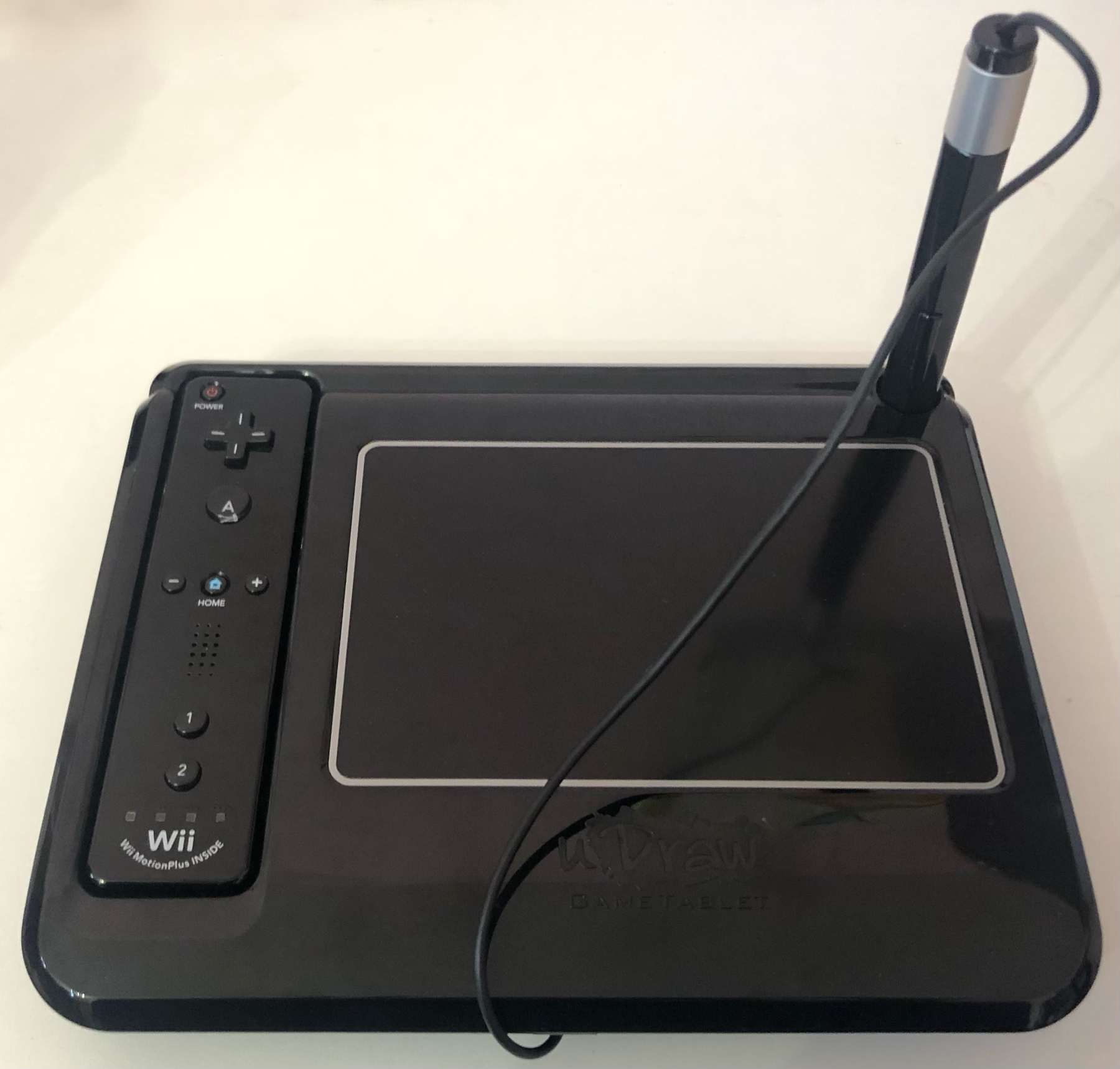
The uDraw GameTablet for the Wii

The uDraw GameTablet is a gaming graphics tablet released by THQ for the Wii in 2010, and for the PlayStation 3 and Xbox 360 in 2011. It has a pressure-sensitive stylus which allows users to draw and view their creations on screen. The tablet is motion-sensitive through either the Wii Remote or internal accelerometers, which lets users tilt and roll the tablet for various changes in gameplay.

The initial white version of the device was introduced exclusively for the Wii on November 14, 2010. Subsequently, black-colored versions for the PlayStation 3, Xbox 360 and Wii were released a year later on November 15, 2011. The Wii uDraw GameTablet is bundled with an art-based video game, uDraw Studio, while the uDraw GameTablet for the PlayStation 3 and Xbox 360 comes with uDraw Studio: Instant Artist. Additional titles include uDraw Pictionary, Disney Princess: Enchanting Storybooks, Marvel Super Hero Squad: Comic Combat, The Penguins of Madagascar: Dr. Blowhole Returns – Again!, SpongeBob SquigglePants and Dood's Big Adventure.

The initial release of the device for the Wii met with some success, but THQ's expanded release of the uDraw for the PlayStation 3 and Xbox 360 has been described as a "disaster". THQ's Chief Financial Officer described 1.4 million unsold units as the primary reason for a revenue shortfall of around $100 million.[1]

THQ discontinued production of the tablet in early February 2012. "THQ has no future commitments or plans to manufacture uDraw hardware," the company told investors. "THQ's strategy is to focus on its premium core and fighting franchises and to expand its digital revenues." Following the eventual collapse of THQ in December 2012, former company president Jason Rubin described the uDraw as one of the "massive mistakes" which had led to the company's demise.[2]

Development

[edit]

The uDraw GameTablet was developed by THQ as a gaming accessory for the Wii. It was the first drawing device for the seventh generation consoles.[citation needed] After the release of Drawn to Life: The Next Chapter for the Nintendo Wii, THQ began development on the uDraw, then called the "Drawn To Life Pal" in reference to the Drawn to Life series.[3] Original plans were to use the tablet for a licensed Drawn to Life game in the same vein as Drawn to Life: SpongeBob SquarePants Edition, though no other licensed Drawn to Life games were ever released and the uDraw was never made compatible with any game in the series.

The original uDraw GameTablet has a 4 by 6-inch drawing surface on which users can create free-form drawings and artwork, as well as play games designed specifically for the uDraw GameTablet, using an attached pressure-sensitive stylus pen. The stylus also has a dualfunction seesaw button that emulates the C and Z buttons on the Wii Nunchuk. The Wii Remote docks in the Wii's uDraw GameTablet, which draws power directly from the Wii Remote’s battery. The uDraw GameTablet also takes advantage of the Wii Remote’s motion sensors and tilt movement options, allowing users to control their characters by moving and directing them throughout levels of the game.[4]

uDraw promotion at E3 2011

The PlayStation 3 and Xbox 360 versions have a different design in comparison to the original Wii version, including horizontal stylus holders instead of the original's vertical holder, and buttons and directional pads similar to the ones found on the DualShock 3 and Xbox 360 Controllers. Likewise, the PlayStation and Xbox versions use internal accelerometers, although PlayStation-makers Sony have previously released its own motion-sensitive controller, the PlayStation Move, which is not used alongside the uDraw GameTablet. Additionally, the uDraw GameTablet for these consoles feature high definition input, with pinch-and-stretch and rotation features.[5]

The PlayStation 3 and Xbox 360 versions were only produced for 4 months. THQ abandoned uDraw completely during February 2012 to focus on its core adult gaming audience and to regain a profit.

uDraw Studio Instant Artist

[edit]

The uDraw GameTablet is bundled with uDraw Studio Instant Artist. Previously, the uDraw GameTablet came with uDraw Studio (developed by Pipeworks Software). Both allow users to draw, color, paint and create works of art. Players can use the available tools and features to draw, paint and color simple shapes, or experiment with different painting styles, layers and shading under three different modes of play: Art School, Art Play, and Art Camp. Art School offers interactive tutorials with Remmy, the game's 3D animated host, while Art Play allows for freestyle painting and drawing, and Art Camp offers a variety of art activities. uDraw Studio Instant Artist has art education materials to help players learn how to draw and paint.

The game comes with a library of more than 300 stamps with rotation and animation features, and various post-processing effects, including black-and-white, sepia and neon. Because of the versatility of the game, players can create any kind of art they want and get precise painting options through zooming, pinching or stretching their artwork on the tablet. Sliders and toggles adjust brush size, paint drop-off and opacity.

Features on uDraw Studio Instant Artist include:

  • Painting – Paint or draw using 19 media options, including paint splat and tilt-control painting.
  • Three modes of play – Art School, Art Play and Art Camp.
  • Art tutorials guided by 3D animated host Remmy.
  • Toolbox – Change color palettes, brushes, canvases and pens on-screen.
  • Replay – Watch the creation of art stroke-by-stroke at normal, 8x and 9x speeds.
  • Gallery – Go through previous art works or replay and augment the art already created.
  • Save and Share – Upload artwork online to save, share and print directly from the console.
  • Touch-sensitive controls – Pinch and stretch gestures with the Xbox 360 and PlayStation 3.

Games

[edit]

The following Wii games require the uDraw Game Tablet:

Title Developer Publisher Bundled Release date N. America Release date Europe Release date Australia
uDraw Studio Pipeworks Software THQ Yes November 14, 2010 March 4, 2011 February 24, 2011[6]
Pictionary Page 44 Studios THQ Some November 14, 2010 March 4, 2011 February 24, 2011
Dood's Big Adventure THQ Digital Studios Phoenix THQ Some November 14, 2010 March 4, 2011 February 24, 2011
SpongeBob SquigglePants WayForward Technologies THQ Some April 12, 2011 April 15, 2011 April 14, 2011
Kung Fu Panda 2 Griptonite Games THQ N/A May 24, 2011 June 10, 2011 June 16, 2011
The Penguins of Madagascar: Dr. Blowhole Returns - Again! Griptonite Games THQ N/A September 6, 2011 September 16, 2011 N/A
Disney Princess: Enchanting Storybooks Disney Interactive Studios, Page 44 Studios THQ Some November 1, 2011 November 18, 2011 November 17, 2011
Marvel Super Hero Squad: Comic Combat Griptonite Games THQ N/A November 15, 2011 November 18, 2011 November 17, 2011
uDraw Studio: Instant Artist Pipeworks Software THQ Yes November 15, 2011 November 18, 2011 November 17, 2011
Disney Animator[7] Disney Interactive Studios THQ No Cancelled (planned for release in March 2012) N/A N/A

Reception

[edit]

The uDraw GameTablet hardware and video games have generally received positive reviews. In August 2010 at the announcement of uDraw, analysts predicted that uDraw could "sell up to one million units",[8] with the potential to be a sleeper hit during the 2010 holiday season.[9] THQ also showcased uDraw at GamesCom 2010 and reviewers noted that the clean user interface and simple design "makes it accessible to the widest audience possible".[citation needed]

Joystiq said that the GameTablet's "simple mostly-white design makes it a perfect companion for the Wii", noting that the replay function is a cool feature: "In the hands of a capable artist, this will undoubtedly make for some mesmerizing videos."[10] USA Today said that "navigating with the stylus feels easy", and both the tablet and stylus handled coloring and stroke move well.[11] Digital Spy reviewed the new uDraw GameTablet for the Xbox 360 and PlayStation 3: "the range of functionality makes it a good option for families and the casual market."[12] In contrast, Calum Wilson Austin of The Sydney Morning Herald gave the Tablet a 3/10, saying, "While this peripheral might entertain children, anyone else will be better served with a pen and a blank piece of paper."[13]

See also

[edit]

References

[edit]
[edit]
Revisions and contributorsEdit on WikipediaRead on Wikipedia
from Grokipedia
The uDraw GameTablet is a graphics tablet peripheral developed and published by for use with video game consoles, enabling players to draw, paint, and interact with compatible titles via a pressure-sensitive on a 4-by-6-inch surface. It was initially released for the on November 14, 2010, bundled with the creative software uDraw Studio, and expanded to the and on November 15, 2011, with a redesigned version lacking the but adding dedicated buttons and a for navigation. The device supports tilt-and-roll motion controls derived from the Wii version's integration with the , while the console variants leverage high-definition output for detailed artwork sharing via as files, printable or transferable to PCs. On the Wii, it was priced at $69.99 for the bundle, emphasizing family-oriented creativity with tools like brushes, stamps, and tutorials in uDraw Studio; the PS3 and Xbox 360 editions, targeted at a broader audience, retailed similarly but incorporated more precise stylus pressure sensitivity (256 levels) and multiplayer modes. Several games were developed to showcase the tablet, including uDraw Studio: Instant Artist for artistic creation, Pictionary: Ultimate Edition for drawing-based guessing, and uDraw: Marvel Super Hero Squad for interactive adventures, though only a limited library—around five to seven titles—emerged across platforms. The Wii launch received praise for fostering creativity and solid build quality, earning scores around 7-8/10 from critics for its intuitive tools despite minor imprecision in the stylus. However, the console versions faced criticism for limited game support and dated graphics in bundled software, averaging 5-6/10, and became a notable commercial disappointment for THQ, with over 1.4 million unsold units contributing to $100 million in losses, layoffs of 30 developers, and the company's eventual bankruptcy in 2012.

Hardware Design

Wii Version

The uDraw GameTablet for the is equipped with a pressure-sensitive drawing surface measuring 4 by 6 inches, enabling users to produce varied brush strokes and line thicknesses by applying different levels of with . This design supports intuitive digital artwork creation directly on the tablet, which then mirrors inputs to the television screen via the connected console. The tethered itself is ergonomically shaped for comfortable handling during extended sessions and incorporates pressure sensitivity to enhance drawing precision. The incorporates two buttons that replicate the functionality of the C and Z buttons found on the Nunchuk, allowing for seamless control of game actions or drawing tools without needing to reach for the remote. Complementing the stylus are two integrated buttons that replicate the functionality of the C and Z buttons found on the Wii Nunchuk, allowing for seamless control of game actions or drawing tools without needing to reach for the remote. The tablet draws power directly from the docked 's batteries, eliminating the need for separate wiring, while also leveraging the Remote's built-in accelerometers for tilt-based motion sensitivity and its capabilities for accurate cursor tracking on screen. This integration ensures responsive performance, with the slotting securely into a dedicated holder on the tablet's side. Compatibility with the Wii requires a standard Wii Remote, which connects to the tablet via a short cable plugged into the Remote's expansion port; this setup positions the tablet as a direct peripheral attachment, akin to the Nunchuk, without necessitating additional controllers. Launched in on November 14, 2010, the device features a white exterior to align with the 's color scheme and includes the uDraw Studio software bundle, providing immediate access to modes, color palettes, and export options for user creations.

PS3 and Xbox 360 Versions

The PS3 and versions of the uDraw GameTablet represented an adaptation of the original Wii design, tailored for high-definition consoles with enhanced input capabilities. These models featured a 4-by-6-inch pressure-sensitive drawing surface and supported high-definition output, allowing users to create, play, and share artwork at up to 2000x1600 resolution. These versions also feature dedicated controller buttons and a integrated into the tablet for navigation and gameplay control, without requiring a separate controller. A key upgrade was the addition of multitouch functionality, which enabled intuitive gestures including pinch-to-zoom, stretch, and rotation for precise control over artwork and navigation. Internal accelerometers provided motion sensitivity independent of console controllers, supporting tilt and roll interactions in games without relying on external peripherals. Connectivity was handled through a wireless USB dongle inserted into the console for data transmission, while the tablet itself was powered by three AA batteries. The devices adopted a sleek to match the aesthetics of the PS3 and Xbox 360. They launched in on November 15, 2011, bundled with the companion software uDraw Studio: Instant Artist, which included updated tutorials and an intuitive interface for artistic creation. Production of the PS3 and versions proved short-lived, with announcing discontinuation of the uDraw hardware line on February 2, 2012—less than three months after release—due to disappointing sales, which highlighted the expedited adaptation from the model.

Development History

Origins and Inspiration

The uDraw GameTablet originated from THQ's game series, where developers sought to address the challenges of with traditional controllers during gameplay in titles like Drawn to Life: The Next Chapter. Initially conceptualized as the "Drawn To Life Pal," the project aimed to create a dedicated drawing peripheral that would enable more precise and intuitive artistic input, transforming the console into a versatile art tool beyond standard motion controls. This collaboration focused on integrating stylus-based input with console hardware, allowing for variable line thickness and shading based on applied pressure, which marked a significant advancement in accessible digital art peripherals for home gaming systems. The device was publicly announced at Gamescom 2010 in August, positioning it as an innovative accessory to revitalize family-oriented gaming experiences. Industry analyst Michael Pachter of Wedbush Morgan predicted strong market potential, estimating sales of 1 million units within THQ's fiscal year, driven by its appeal to creative play and potential for bundled software. The emphasis remained on fostering family-friendly drawing sessions, with features like collaborative modes and tutorial tools to encourage shared artistic activities.

Production Timeline

The uDraw GameTablet for the was announced by on August 17, 2010, as an innovative drawing peripheral set for holiday release that year. Production ramped up following the announcement, leading to the device's North American launch on November 14, 2010, bundled with uDraw Studio software developed by Pipeworks Software. The peripheral saw international expansion with its Australian release on February 24, 2011, and European debut on March 4, 2011. Following the Wii's success, shifted focus to adapting the uDraw for high-definition consoles, announcing versions for and on May 3, 2011, during its fiscal results call. These iterations featured a redesigned black chassis with integrated console controls and capabilities, developed in collaboration with studios including Pipeworks Software for uDraw Studio: Instant Artist and Page 44 Studios for titles like uDraw Pictionary. The updated hardware was showcased at in June 2011, highlighting its compatibility with HD gaming. Both versions launched simultaneously on November 15, 2011. By early 2012, amid underwhelming sales of the console expansions, announced the discontinuation of uDraw hardware production on February 2, 2012, as part of a broader to prioritize core franchises. This decision effectively ended manufacturing and support for the peripheral across all platforms.

Supported Games

Wii-Compatible Titles

The uDraw GameTablet for launched with uDraw Studio as its core bundled title, a comprehensive art creation software that provided users with drawing tools for freehand sketching, coloring, and , alongside features allowing simple flipbook-style sequences and sharing options to export artwork via SD cards or in-game galleries. Developed by , the game supported multiple pressure levels and tilt controls to simulate brush strokes and shading, enabling creations ranging from basic doodles to detailed illustrations suitable for all skill levels. Several other titles were developed or adapted to leverage the uDraw GameTablet's capabilities on , integrating drawing mechanics into party, adventure, and licensed games to emphasize creative input alongside traditional gameplay. (2010), a digital adaptation of the classic , required players to sketch clues on the tablet for teammates to guess, featuring over 3,000 prompts across adult and junior categories, a 3D game board, and new modes like Shape It Up and Rotation Frustration for varied drawing challenges. Dood's Big Adventure (2010) transformed the tablet into a physics-based control tool, where players drew paths, tilted the device to roll a customizable character named Dood, and navigated 60 levels across four modes including Pen Panic and Bubble Trouble to overcome obstacles. SpongeBob SquigglePants (2011) incorporated uDraw functionality into its platforming and mini-game structure, allowing players to draw power-ups, paint environments, and apply SpongeBob-themed stamps during levels inspired by the , blending artistic customization with action sequences. In (2011), the tablet enabled stylus-based combat as Po, where drawing scribbles unleashed attacks, tilting directed movements, and problem-solving puzzles integrated with creative gestures to progress through story missions. : Dr. Blowhole Returns – Again! (2011) utilized the device for 30 mini-games within three episodic adventures, requiring players to draw gadgets, trace paths for penguin maneuvers, and interact with environments to thwart the villain's plans. Disney Princess: Enchanting Storybooks (2011) focused on interactive storytelling, where users wielded the stylus as a "magic brush" to color scenes, complete puzzles, and illustrate pages featuring princesses like Ariel and Belle, across over ten art activities to advance narrative books. Marvel Super Hero Squad: Comic Combat (2011) embedded drawing into side-scrolling brawls, letting players sketch attacks, solve panel-based puzzles, and create panels with 10 heroes across six issues battling villains like . uDraw Studio: Instant Artist (2011) served as a follow-up to the core title, introducing guided tracing templates, art lessons, and coloring book-style activities to teach drawing techniques while maintaining compatibility across platforms. These Wii-compatible titles exemplified integration by using the tablet's pressure-sensitive for precise control in drawing-based puzzles, weapon creation in action sequences, and environmental manipulation, often combining it with tilt for hybrid motion-drawing experiences that encouraged creativity in non-art-focused genres.

PS3 and Xbox 360 Titles

The PS3 and versions of the uDraw GameTablet supported a limited library of titles optimized for its surface and high-definition output, enabling gestures like pinch-to-zoom and rotation for more precise drawing and interactions. These adaptations distinguished the console ports from the Wii's motion-based design, focusing on enhanced creative tools and family-oriented drawing mechanics. The primary bundled title, uDraw Studio: Instant Artist, released in November 2011 by developer Pipeworks Software and publisher , served as the flagship software for the peripheral. It offered advanced artistic features including multiple brush types such as paints, crayons, and chalk, along with stamps, effects, and backdrops for creating detailed illustrations in high definition, with options to print or share artwork. Users could export creations in HD resolution, leveraging the consoles' capabilities for vibrant, full-screen editing sessions. Expansions for uDraw Studio provided additional content like new themes and tools, extending the core drawing experience. Shared titles across platforms included Pictionary: Ultimate Edition, developed by Page 44 Studios and released in November 2011, which integrated the tablet's multitouch for gesture-based drawing in party-style clue-guessing modes. The game featured over 3,000 clues, customizable pieces, and HD visuals, emphasizing quick sketches and collaborative play for up to four teams. Other notable releases were Marvel Super Hero Squad: Comic Combat by Griptonite Games, where players drew "glyphs" to summon heroes and effects in comic-book battles. These titles highlighted the peripheral's multitouch integration, allowing fluid stylus input for gameplay elements like object manipulation and creative customization. Several projects were announced but ultimately cancelled amid THQ's financial troubles and the uDraw's discontinuation in February 2012. Disney Animator, a licensed title developed by THQ in collaboration with Disney Interactive Studios, was slated for a March 2012 release and promised advanced animation tools tailored to the tablet's capabilities, but it never materialized.

Reception and Legacy

Critical Reviews

The uDraw GameTablet received mixed reviews from critics, who generally praised its innovative approach to bringing drawing mechanics to console gaming but criticized its technical limitations and limited software support. On the Wii version, reviewers highlighted the device's sturdy construction and family-friendly appeal, noting its potential to engage users of through intuitive stylus-based interactions. For instance, the pressure-sensitive stylus and motion controls were commended for enabling natural experiences, such as varying line thickness based on applied and tilt-based effects in compatible titles. Critics appreciated the tablet's accessibility for casual and family use, with awarding it 7.8 out of 10 for inspiring creativity in children via a variety of tools and the ability to export artwork to PCs. The was seen as innovative, integrating controller functions like a and buttons alongside the drawing surface, making it suitable for both artistic and light gaming sessions. However, some noted the plastic-on-plastic drawing surface felt unpleasant and imprecise, lacking the smoothness of professional tablets. The PS3 and ports drew more criticism for feeling underdeveloped compared to the Wii original, with reviewers pointing to a flimsy build quality and fragile stylus cable that suggested a rushed . gave the PS3 version 3 out of 5, praising its responsive touchscreen and motion sensitivity for beginner art lessons and mini-games but faulting the basic tools and occasional upload glitches to online sharing features. Aggregate scores for supporting software like uDraw Studio: Instant Artist on these platforms averaged 54 out of 100 on , reflecting concerns over imprecise controls and a lack of depth for older users. Reviews of the bundled uDraw Studio software emphasized its strengths in fostering through simple, accessible modes that allowed users to progress from basic doodles to more detailed works, earning a average of 71 out of 100 on . Critics valued the variety of brushes, effects, and sharing options but found the overall experience simplistic, better suited for young children than serious artists, with some tools feeling underdeveloped.

Commercial Performance

The uDraw GameTablet initially achieved moderate success on the Nintendo Wii, with shipping approximately 1.7 million units by early 2011. However, the company projected strong demand for the high-definition versions on and , shipping around one million units to retailers in late 2011 in anticipation of holiday sales. These expectations proved overly optimistic, as actual sales fell far short, leaving over 1.4 million units unsold in warehouses by early 2012 and resulting in a shortfall of approximately $100 million for 's fiscal third quarter. THQ discontinued production of the uDraw hardware and related software in February 2012, citing the poor performance of the PS3 and versions as a key factor. Internally, the expansion to these platforms was regarded as a ; former executive had opposed the project due to the lack of a compelling application and mismatched audience, while San Diego studio head David White described it as a "solution in search of a problem" without sufficient supporting games. This miscalculation exacerbated 's mounting financial difficulties, including layoffs in the family-focused division and a shift away from peripheral-driven titles. The uDraw's commercial underperformance played a significant role in THQ's broader woes, contributing to the company's Chapter 11 bankruptcy filing in December 2012. president later attributed the firm's collapse in part to "incredible losses attached to uDraw" and other pre-existing errors, which drained resources and forced a refocus on core franchises like UFC and . Despite generally positive reviews for the hardware itself, the product's underscored the risks of overextending into unproven segments, ultimately leading to 's asset in early 2013.

References

Add your contribution
Related Hubs
User Avatar
No comments yet.