Hubbry Logo
Vibrating-sample magnetometerVibrating-sample magnetometerMain
Open search
Vibrating-sample magnetometer
Community hub
Vibrating-sample magnetometer
logo
8 pages, 0 posts
0 subscribers
Be the first to start a discussion here.
Vibrating-sample magnetometer
from Wikipedia
VSM schematic
VSM setup

A vibrating-sample magnetometer (VSM) (also referred to as a Foner magnetometer/oscillation magnetometer) is a scientific instrument that measures magnetic properties based on Faraday’s Law of Induction. Simon Foner at MIT Lincoln Laboratory invented VSM in 1955 and reported it in 1959.[1] Also it was mentioned by G.W. Van Oosterhout[2] and by P.J Flanders in 1956.[3] A sample is first placed in a constant magnetic field and if the sample is magnetic it will align its magnetization with the external field. The magnetic dipole moment of the sample creates a magnetic field that changes as a function of time as the sample is moved up and down. This is typically done through the use of a piezoelectric material. The alternating magnetic field induces an electric field in the pickup coils of the VSM.[4] The current is proportional to the magnetization of the sample - the greater the induced current, the greater the magnetization. As a result, typically a hysteresis curve will be recorded[5] and from there the magnetic properties of the sample can be deduced.

The idea of vibrating sample came from D. O. Smith's[6] vibrating-coil magnetometer.

Typical VSM overview

[edit]

Parts of a typical VSM setup

[edit]
Simplified VSM schematic
  • Actively cooled electromagnet/power supply
  • Amplifier
  • Control Chassis
  • Meter
  • Computer interface
  • Sensor coils
  • Vibration exciter with sample holder
  • Hall probe (optional)

Sample Operating Procedure:[4]

[edit]
  1. Mounting the sample in the sample holder
  2. Turning on the VSM system
  3. Run the computer software to initialize the system
  4. Calibrate the system
  5. Optimize the system for M[4]
  6. Calibrate the Lock-In Amplifier
  7. Take measurements and record data

Conditions for VSM to be effective

[edit]
  1. Magnetic field must be strong enough to fully saturate the samples (or else inaccurate measurements will be taken)
  2. Magnetic field must be uniform across the sample space (otherwise the addition of field gradients[5][7] will induce force that alter the vibration once again leading to inaccurate results

Importance of pick-up coils

[edit]

These allow the VSM to maximize the induced signal, reduce the noise, give a wide saddle point, minimize the volume in between the sample and electromagnet to achieve a more uniform magnetic field at the sample space.[5] The configuration of the coils can vary depending on the type of material being studied.[5]

Relation to Physics

[edit]

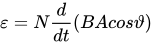
The VSM relies on Faraday's law of induction, with the detection of the emf given by ,[7] where N is the number of wire turns, A is the area, and the angle between the normal of the coil and the B field. However, N and A are often unnecessary if the VSM is properly calibrated.[7] By varying the strength of the electromagnet through computer software, the external field is sweeped from high to low and back to high.[7] Typically this is automated through a computer process and a cycle of data is printed out. The electromagnet is typically attached to a rotating base[7] so as to allow the measurements be taken as a function of angle. The external field is applied parallel to the sample length[7] and the aforementioned cycle prints out a hysteresis loop. Then using known magnetization of the calibration material and wire volume the high field voltage signal can be converted into emu units - useful for analysis.[7]

Advantages and Disadvantages

[edit]

The precision and accuracy of VSM's are quite high even among other magnetometers and can be on the order of ~ emu.[5] VSM's further allow for a sample to be tested at varying angles with respect to its magnetization letting researchers minimize the effects of external influences.[8] However, VSM's are not well suited for determining the magnetization loop due to the demagnetizing effects incurred by the sample.[8] VSM's further suffer from temperature dependence and cannot be used on fragile samples that cannot undergo acceleration (from the vibration).[5][7][8]

See also

[edit]

References

[edit]
Revisions and contributorsEdit on WikipediaRead on Wikipedia
from Grokipedia
A vibrating-sample magnetometer (VSM) is a used to measure the and other magnetic properties of materials by placing a sample in a uniform , vibrating it at a fixed (typically around 40–85 Hz), and detecting the alternating voltage induced in stationary pickup coils via , where the induced signal is directly proportional to the sample's . This technique allows for precise characterization of as a function of applied strength (up to several tesla), temperature (from cryogenic to high temperatures), and time, making it essential for studying ferromagnetic, ferrimagnetic, paramagnetic, and diamagnetic behaviors in solids. Invented in 1955 by Simon Foner at and first publicly described in 1959, the VSM revolutionized magnetic measurements by offering high sensitivity (down to 10⁻⁶ ) and versatility compared to earlier methods like ballistic magnetometers, enabling rapid and automated data acquisition without demagnetizing the sample. Key components include an or for generating the uniform field, a mechanism (often piezoelectric), dual pickup coils for signal detection, a to extract the signal at the , and modern systems integrate computer control for hysteresis loop plotting and parameter extraction like and . Widely applied in , the VSM is used to evaluate thin films, nanoparticles, permanent magnets, and spintronic devices, such as analyzing antiferromagnetic-to-ferromagnetic transitions in FeRh or in amorphous alloys, with corrections for substrate effects and demagnetization factors to ensure accurate absolute moment determination. Its advantages include room-temperature operation for basic setups, compatibility with cryogenic or high-temperature environments, and the ability to measure samples in various orientations, though it requires careful sample positioning to minimize errors from field inhomogeneities.

Introduction and History

Overview

A (VSM) is a designed to measure key magnetic properties of materials, including , , , and , by subjecting a sample to a controlled within a uniform . This technique enables precise characterization of how materials respond to applied , making it invaluable in research for studying ferromagnetic, ferrimagnetic, and other magnetically responsive substances. At its core, the VSM operates by attaching the sample to a vibrating rod that oscillates perpendicular to a uniform , causing the sample's to generate a changing flux that induces a proportional voltage in nearby detection coils. This induced voltage, governed by , directly correlates with the sample's , allowing for accurate quantification without requiring complex sample geometries. Typical outputs from VSM measurements include magnetization curves, which plot versus applied field, and hysteresis loops that reveal the material's magnetic history and stability. These data provide insights into parameters like saturation and loop squareness, essential for evaluating material performance in applications. Invented in the mid-1950s, the VSM emerged as a versatile tool for high-sensitivity measurements, offering advantages in speed and adaptability over earlier methods.

Development and Key Milestones

The vibrating-sample magnetometer (VSM) was invented by Simon Foner at the in 1955 as a means to measure s through sample in a uniform field. This innovation drew inspiration from D. O. Smith's vibrating-coil magnetometer, developed in the mid-1950s, which used coil to detect magnetization but shifted the dynamic element to the sample itself for greater sensitivity and simplicity. Independently, G. W. Van Oosterhout and P. J. Flanders described similar vibrating-sample approaches in 1956, contributing to early conceptual parallels without direct collaboration. Foner's initial brief appeared in 1956, outlining the basic setup and signal detection via induced voltage in pickup coils. Foner's seminal 1959 publication in Review of Scientific Instruments detailed a versatile and sensitive VSM design, incorporating improvements in coil geometry and calibration that positioned the instrument as a standard tool for precision magnetic . This work emphasized absolute measurements of magnetic properties across orientations and fields, enabling routine applications in materials . By the , VSMs saw widespread adoption, particularly in studies, where they facilitated measurements in high fields and low temperatures; commercial systems from manufacturers like Princeton Applied Research became available, accelerating lab integration. Subsequent advancements focused on enhancing sensitivity and versatility. In , Foner introduced a very low-frequency VSM, reducing rates to minimize in high-dc fields while maintaining differential sensitivity. Building on this, 1982 developments incorporated flux-integration techniques, where induced voltages are integrated over cycles to boost signal-to- ratios, particularly for small samples or weak moments; these methods, refined through the , improved detection limits without cryogenic cooling for the electronics. Integration with cryostats for temperature-dependent measurements advanced in the for helium-based systems but gained broader commercial traction in the through modular designs like those in Quantum Design's Measurement System, enabling automated sweeps from millikelvin to high temperatures. Modern VSM evolution includes digital enhancements for , with lock-in amplification and computer-controlled introduced in the 1990s to streamline loop and susceptibility measurements. These progressed to fully integrated software for real-time analysis and remote operation by the , reducing manual intervention and enabling high-throughput experiments in commercial platforms. More recent advancements as of 2025 include enhanced sensitivity models from Lake Shore Cryotronics (2020), compact and portable systems from NanoMagnetics Instruments (2021), and ongoing trends toward miniaturization for on-site applications.

Operating Principle

Fundamental Physics

The fundamental physics of the vibrating-sample magnetometer (VSM) relies on key concepts from and , providing the basis for measuring a sample's magnetic properties. In ferromagnetic materials, describes the nonlinear relationship between M\mathbf{M} and applied H\mathbf{H}, characterized by a loop that exhibits (residual magnetization after field removal) and (field required to demagnetize the sample). This behavior arises from the formation of magnetic domains—regions of aligned atomic magnetic moments that minimize the material's magnetostatic energy through domain wall motion and rotation under applied fields. Demagnetization factors NN, which depend on sample geometry (e.g., N=1/3N = 1/3 for a ), introduce an internal field opposing M\mathbf{M}, given by Hi=HNM\mathbf{H}_i = \mathbf{H} - N \mathbf{M}, affecting the measured response and necessitating shape corrections for accurate VSM applicability. Central to VSM measurements is the magnetic moment m\mathbf{m} of the sample, defined as m=MV\mathbf{m} = \mathbf{M} V, where VV is the sample volume. In a uniform applied field H\mathbf{H}, the sample's magnetization aligns such that m\mathbf{m} is parallel to H\mathbf{H}, producing a dipole field that can be detected externally; this uniformity ensures m\mathbf{m} remains constant during vibration, independent of minor positional variations. For effective VSM operation, the field must be highly uniform to minimize errors from gradients, which could otherwise induce spurious signals or distort the alignment of m\mathbf{m}. The detection principle stems from Faraday's law of electromagnetic induction, which states that the induced electromotive force (emf) E\mathcal{E} in a coil is E=dΦBdt\mathcal{E} = -\frac{d\Phi_B}{dt}, where ΦB\Phi_B is the magnetic flux through the coil. In a VSM, the magnetized sample acts as an oscillating magnetic dipole when vibrated perpendicular to H\mathbf{H}, creating a time-varying flux ΦB(t)\Phi_B(t) proportional to m\mathbf{m} and the vibration parameters (amplitude and frequency). This results in an AC voltage signal directly proportional to m\mathbf{m}, enabling precise quantification of magnetization without sensitivity to static field changes or sample shape irregularities.

Signal Generation and Detection

In a vibrating-sample magnetometer, the sample is mechanically oscillated at low frequencies, typically in the range of 10 to 100 Hz, along a direction perpendicular to the applied uniform H\mathbf{H}. This vibration causes the sample's moment m\mathbf{m} to move periodically, generating a time-varying magnetic dipole field around the sample. The oscillating dipole field alternates at the same frequency as the vibration, producing a small but measurable change in through nearby pickup coils, which are typically arranged as a pair symmetrically around the sample and connected in series opposition to cancel uniform field contributions. The induced in the pickup coils arises from the time derivative of this changing , in accordance with Faraday's law of . For a simplified model treating the sample as a point , the amplitude of the induced signal voltage is proportional to μ0mωaG\mu_0 m \omega a G, where μ0\mu_0 is the permeability of free space, m=mm = |\mathbf{m}| is the magnitude of the , ω\omega is the of vibration, aa is the vibration amplitude, and GG is a geometrical factor depending on the coil configuration and sample-coil distance rr (typically involving a dependence such as 1/r31/r^3 or 1/r41/r^4). This expression derives from the approximation of the gradient and assumes small vibration amplitudes where the flux variation is linear with displacement; more precise calculations account for coil geometry and sample shape through of the flux. Detection of the weak induced signal, often on the order of , requires phase-sensitive techniques to distinguish it from and amplifier offsets. Lock-in amplification is commonly employed, where the raw signal from the pickup coils is multiplied by a reference synchronized to the driver—typically a sinusoidal signal at the exact and phase of the mechanical oscillation. This process yields a DC output proportional to the in-phase component of the signal at the , effectively filtering out uncorrelated noise and improving the by orders of magnitude. The reference is generated from the driver's position sensor or piezoelectric transducer to ensure precise phase locking. Analysis of the detected signal often involves Fourier decomposition to isolate specific frequency components. The amplitude of the first harmonic, at the fundamental vibration frequency, is directly proportional to the sample's and is used for standard moment measurements. Higher harmonics, appearing at integer multiples of the , arise from nonlinearities in the magnetic response, such as those due to sample shape imperfections, eddy currents, or higher-order field interactions, and can be analyzed to characterize effects like magnetic or domain dynamics.

System Components

Main Hardware Elements

The primary source of the uniform magnetic field HH in a vibrating-sample magnetometer (VSM) is an or , with pole pieces designed to ensure field homogeneity over the sample region. In the seminal design, a electromagnet generates fields up to 0.8 T (8 kG) in an air gap of approximately 5 cm, allowing precise control via a stable current supply. Superconducting magnets, often using NbTi coils, extend this capability to 5 T or higher while maintaining low noise, particularly at fields above 1 T. The assembly drives sinusoidal of the sample to the applied field, inducing a measurable signal in the detection system. It typically employs a mechanical driver, such as a , operating at frequencies of 50–100 Hz with peak-to-peak amplitudes of 0.1–1 mm to balance signal strength and mechanical stability. The sample is attached to a lightweight, non-magnetic rod (e.g., plastic or , 20–80 cm long) or tube, which transmits the motion while minimizing unwanted eddy currents or field distortions. Piezoelectric actuators serve as alternatives in compact modern setups for finer control and reduced . Pickup coils, arranged in pairs (e.g., Helmholtz or configurations), capture the alternating from the vibrating sample's dipole moment, producing a voltage proportional to the . These stationary coils, often wound with fine wire (e.g., 2000–5000 turns of 35–48 AWG), achieve sensitivities of 10610^{-6} emu or better, with series-opposing wiring to cancel common-mode from the environment. Typical dimensions include inner diameters of 5–15 mm and separations of 2–10 mm between coil centers, optimizing detection of small samples (volumes <1 mm³). Supporting electronics process the weak induced signals and control system operation. A lock-in amplifier tunes to the vibration frequency, amplifying the in-phase component while rejecting broadband noise, often achieving signal-to-noise ratios sufficient for 10910^{-9} emu resolution with 1 s integration times. Magnet power supplies deliver stable currents (e.g., up to 1 kW for electromagnets), and analog-to-digital converters digitize outputs for real-time analysis, integrated via interfaces like GPIB for automated control. Contemporary VSMs incorporate cryostats for temperature-dependent measurements, enclosing the sample, vibration assembly, and pickup coils in a vacuum-insulated Dewar filled with or to access ranges from 4 to 300 . Rotation stages, mounted on the sample rod, enable vectorial characterization by orienting the sample at variable angles to the field, supporting studies of in thin films or nanoparticles.

Calibration and Setup

Calibration of a vibrating-sample magnetometer (VSM) is essential to ensure accurate measurement of the sample's by accounting for instrumental offsets, determining sensitivity factors, and verifying the magnetic field environment. This process involves several preparatory steps, including zero-field measurements, sensitivity scaling with standard samples, field uniformity assessments, and techniques to minimize . These procedures are typically performed before sample insertion and periodically during operation to maintain reliability. Zero-field calibration begins by operating the VSM without a sample to measure background signals, such as from the sample holder or residual fields in the . These baseline readings are subtracted from subsequent measurements to isolate the sample's contribution and reduce noise. For instance, empty holder scans at zero applied field reveal slight , which is corrected by averaging multiple cycles. Temperature stabilization to within ±0.1°C is also critical during this step to avoid thermal drifts affecting the baseline. Sensitivity calibration determines the moment-to-voltage conversion factor by using standard samples with known , such as a spherical sample with a saturation of approximately 485 /cm³ at . The sphere, typically 2-5 mm in diameter and ground to within 0.1% , is vibrated in a known field, and the induced voltage is compared to its certified moment to compute the constant. Alternatively, standards (e.g., 0.25 g with 0.013 at 1 T and 298 ) are used in modern systems for their low moment and high purity, ensuring accuracy within 1%. This step verifies the system's response across the expected measurement range. Field uniformity checks involve mapping the applied HH using a Hall probe positioned at the sample location to confirm homogeneity within the detection coils, typically required to be better than 0.1% over the sample volume for precise measurements. The probe scans along the field axis and directions to identify gradients that could distort the moment signal. Alignment of the axis is then verified to ensure it is to HH, achieved by adjusting the sample rod and coilset within 0.010 inches for maximum signal amplitude while minimizing . This perpendicularity is crucial, as deviations can introduce errors up to several percent in the measured moment. Noise reduction is accomplished through multiple strategies to achieve sensitivities down to 10710^{-7} emu or better. External magnetic fields are shielded using mu-metal enclosures around the coils and sample area, while mechanical vibrations are isolated via spring-suspended platforms with resonant frequencies below 5 Hz or rubber damping mats. Phase locking employs synchronous detection with a lock-in amplifier tuned to the vibration frequency (e.g., 40-100 Hz), filtering out asynchronous noise and enhancing signal-to-noise ratios by orders of magnitude. Additionally, eddy current shielding in the magnet pole caps minimizes image effects from the vibrating sample, reducing artifacts to less than 0.2%. These combined measures ensure stable, low-noise operation across a wide range of fields and temperatures.

Measurement Process

Sample Handling and Preparation

Samples suitable for vibrating-sample magnetometer (VSM) measurements include powders, thin films, single crystals, and liquids, with typical volumes limited to less than 1 cm³ to ensure the sample approximates a point dipole and minimizes demagnetization errors. Powders are often measured in the range of 1-10 mg using dedicated holders, while thin films and single crystals are mounted as intact pieces with dimensions up to 5 mm in length for accurate signal detection. Liquid samples require encapsulation to prevent spillage and maintain stability, typically using small glass capsules or straws that fit within the holder constraints. Mounting techniques prioritize non-magnetic materials to avoid background signals, with samples glued or taped to paddles, half-tubes, or adapters provided by instrument manufacturers. Common adhesives include GE 7031 varnish for low-temperature stability, Duco cement for room-temperature curing, or Superglue for quick bonding, while tape is favored for its low (approximately 10⁻⁶ emu) and thermal range from 1.8 to 400 . For liquids and air-sensitive powders, encapsulation in sealed or epoxy pellets prepared in a glove box ensures integrity. Anisotropic materials, such as single crystals, require precise orientation control using alignment fixtures, angular braces (e.g., at 22.5°, 45°, or 60°), or in-situ application of a 5 T at 340 to align magnetic domains before measurement. To minimize artifacts, cylindrical sample shapes with aspect ratios greater than 5:1 are preferred to reduce shape-induced demagnetization effects, as these geometries yield more uniform internal fields compared to spheres or plates. Contamination from holders or mounting materials must be avoided by selecting low-impurity components and testing them separately; for instance, excessive glue or tape can introduce signals up to 10⁻⁶ emu, comparable to weak samples. Samples should be cleaned with non-magnetic solvents and handled with tools to prevent dust or ferromagnetic debris adhesion. For variable-temperature studies, preparation involves selecting thermally stable mounting materials and following cooling or heating protocols to protect the sample. Glues and tapes are cured at temperatures up to 340 if the sample permits, ensuring adhesion without degradation. The instrument chamber is warmed to 300 and set to zero field before sample insertion, with extended purging (approximately 10 minutes) recommended for measurements below 270 to remove contaminants and achieve . This setup minimizes thermal gradients and ensures reproducible positioning within ±0.5 mm for accurate temperature readings at the sample site.

Data Collection and Analysis

In the data collection process for a vibrating-sample magnetometer (VSM), a HH is applied to the sample using an or , typically swept from negative to positive values to probe the full behavior. The sample is mounted on a rod and vibrated perpendicular to the field direction at a fixed , often around 40 Hz with a peak of 2 mm, inducing a voltage in stationary pickup coils proportional to the sample's . involves recording this voltage as a function of HH, with field sweeps conducted at rates ranging from 4 to 700 Oe/s depending on the system and material to balance speed and accuracy, ensuring continuous streaming for efficient measurement. Data processing begins with converting the raw voltage signal to magnetic moment using a calibration factor derived from a standard reference material, such as a pure nickel sphere with known saturation magnetization. This calibration accounts for the coil geometry and system sensitivity, yielding the sample's moment mm in electromagnetic units (emu), often with an accuracy of better than 1%. The processed data is then plotted as magnetization MM (normalized by sample volume) versus applied field HH, generating hysteresis loops that reveal the material's magnetic response. Modern software, such as MultiVu, automates this conversion, plotting, and export of data in formats like CSV for further analysis. Error analysis is essential to ensure reliable results, addressing sources such as instrumental drift, which can introduce variations up to 0.1% and is mitigated by interpolating constants before and after measurements, and , typically on the order of 10610^{-6} emu with 1-second averaging, reduced through lock-in amplification and background . Software tools facilitate fitting of the loop to extract parameters like saturation MsM_s (the maximum MM value) and HcH_c (the reverse field at zero magnetization), using least-squares methods while accounting for demagnetization factors and sample shape. Total measurement errors are generally kept below 0.5% through precise sample positioning and environmental isolation. Key output metrics from VSM data include the saturation moment, representing the total aligned at high fields, and χ\chi, derived from the initial slope of the MM- HH curve in the linear regime. For anisotropic materials, angular dependence measurements—obtained by rotating the sample relative to HH—allow determination of tensor properties, such as the full magnetization tensor, by acquiring multiple loops at varying angles. These metrics provide quantitative insights into material behavior without requiring exhaustive numerical listings, focusing on representative values like MsM_s in emu/cm³ or HcH_c in Oe.

Applications

In Magnetic Materials Characterization

The vibrating-sample magnetometer (VSM) is widely employed to characterize bulk magnetic properties of materials through loop analysis, which reveals key parameters such as , , and loop squareness, particularly for permanent magnets. In this process, the VSM measures the M as a function of applied H to generate M(H) loops, often focusing on the second quadrant demagnetization to evaluate performance under reverse fields. (H_c), the field required to reduce magnetization to zero, is determined from the intersection of the M(H) loop with the H-axis, while (M_r or B_r) represents the residual after field removal. Loop squareness, indicating the ratio of remanence to saturation (M_r/M_s), assesses the material's ability to retain , with values near 0.5–1.0 desirable for high-performance magnets; for example, in Sm₂Co₁₇ permanent magnets, loop squareness is evaluated via the of the B(H) demagnetization . VSM also enables the study of temperature dependence of magnetic properties, crucial for understanding phase transitions in ferromagnets and ferrimagnets. By measuring magnetization M(T) curves under controlled heating and fixed fields (e.g., up to 1.5 T), the (T_C)—the point where vanishes—is identified at the inflection of the saturation magnetization curve (d²M_s/dT² = 0), often using incremental temperature steps of 1–3°C for precision. This method applies to both ferromagnetic materials like metallic alloys and ferrimagnetic oxides, where T_C shifts slightly above the true value due to applied fields (e.g., 10–15°C for fields around 1 T). For instance, in basaltic samples containing , VSM-derived T_C values range from 571–574°C, providing insights into thermal stability. Representative examples of VSM characterization include rare-earth alloys such as NdFeB permanent magnets, where hysteresis loops yield saturation magnetization M_s up to ~1.2 × 10^6 A/m, around 1188 kA/m, and of 0.96 T, highlighting their suitability for high-field applications. In oxide materials like nickel ferrites (NiFe₂O₄), VSM measures soft magnetic behavior with low (<100 Oe) and M_s values of ~3–5 × 10^5 A/m from loops, useful for cores. Magnetic composites, such as field-structured with ferrite particles, are analyzed for anisotropic properties, showing enhanced ratios (up to 0.8) compared to isotropic counterparts due to particle alignment. Quantitative metrics from VSM typically cover field ranges of <1 T for soft magnets (e.g., ferrites) and up to 3 T for hard magnets (e.g., NdFeB), with M_s detectable up to 10^6 A/m for bulk samples.

Advanced and Specialized Uses

Vector vibrating sample magnetometers (vector VSMs) enable multi-axis measurements to determine the full tensor, particularly useful for s and nanostructures where anisotropic magnetic behaviors dominate. These systems rotate the sample relative to the applied field to independently measure longitudinal and transverse components with high sensitivity, achieving resolutions better than 10^{-6} and fields up to 2 T across temperatures from 4.2 to 340 . For instance, in a 60-nm-thick , vector VSMs have quantified torque curves and angular dependencies, revealing magnetostrictive responses critical for device applications. Similarly, studies on DyFe_2 s (4000 Å thick) have used vector VSMs to identify easy directions, demonstrating their role in resolving vectorial in epitaxial nanostructures. Integration of VSMs with diamond anvil cells (DACs) facilitates high-temperature and high-pressure studies, simulating extreme geophysical conditions such as those in Earth's interior. Vibrating coil magnetometers based on VSM principles measure in micrometer-sized samples under pressures up to 10 GPa and temperatures exceeding 300 , minimizing background signals from the nonmagnetic cell components. This setup has been applied to iron phases, probing transitions relevant to planetary and core dynamics. Temperature control in these hybrid systems often relies on resistive heating elements compatible with cryogenic VSM environments. In and biomedical applications, VSMs characterize superparamagnetic particles for sizing and vector analysis in systems. By fitting loops from particle suspensions in solid matrices, VSMs determine magnetic diameters while confirming zero essential for non-aggregating biomedical vectors, with sensitivities down to 10^{-7} emu supporting polydisperse samples. For anticancer drug-loaded magnetic microspheres, VSMs verify superparamagnetic saturation moments (e.g., around 50 emu/g), ensuring targeted delivery under external fields without residual magnetism. These measurements guide functionalization for and MRI contrast enhancement. Time-resolved magnetization studies, often using pump-probe methodologies and complemented by static VSM measurements, investigate dynamic processes in materials. These optical setups capture spin-transfer torque effects in current-perpendicular nanopillars by resolving reversal mechanisms on nanosecond scales. In van der Waals magnets, time-resolved magneto-optical (TR-MOKE) measurements, validated by VSM, reveal sub-THz spin precession frequencies up to 351 GHz at low temperatures, informing ultrafast spintronic device design.

Performance Characteristics

Advantages

The vibrating-sample magnetometer (VSM) exhibits high sensitivity, capable of detecting magnetic moments as low as 10610^{-6} , which enables precise of small samples such as thin films or nanoparticles. This level of sensitivity arises from the phase-sensitive detection technique, allowing reliable measurements even for weak magnetic signals with noise floors below 10710^{-7} in modern systems. VSM offers substantial versatility in experimental conditions, operating effectively at without the need for cryogenic cooling of the detection coils, unlike superconducting quantum interference device () magnetometers. It supports measurements across a wide range of applied (up to 14 T or more) and temperatures (from cryogenic levels like 1.8 K to high temperatures exceeding 1000 K), facilitating angular-dependent studies of in various orientations. This flexibility makes VSM suitable for diverse sample geometries, including powders, liquids, and bulk materials, while maintaining uniform field exposure. The instrument's speed and ease of use stem from its automated at frequencies around 87 Hz, enabling full loop sweeps in minutes, which streamlines routine characterizations. Measurements are non-destructive for most samples, preserving material integrity during repeated testing under varying conditions. In terms of cost-effectiveness, VSM systems are simpler to implement and maintain than cryogenic alternatives like SQUIDs, providing a more affordable option for routine magnetic measurements in laboratories without compromising essential performance. Custom or commercial VSM setups often achieve high sensitivity at a fraction of the operational cost associated with requirements.

Limitations and Challenges

One major limitation of the vibrating-sample magnetometer (VSM) arises from demagnetization effects, which are particularly pronounced for samples with non-ellipsoidal geometries, such as cylinders, prisms, or irregular shapes, leading to non-uniform internal fields and distortions in measured magnetization curves. These errors stem from the sample's shape influencing the local demagnetizing field, which opposes the applied field and varies across the sample volume. Corrections are typically applied using demagnetizing factors (N), calculated numerically via finite element methods or empirical formulas tailored to the geometry and material susceptibility, enabling accurate adjustment of the magnetization versus applied field (M(H)) data with relative errors below 0.2% for simple shapes. Magnetic field constraints represent another key challenge, with standard electromagnet-based VSM systems typically limited to fields below 4 T due to practical constraints like coil heating and power requirements, restricting measurements of high-coercivity materials without superconducting enhancements. At higher fields, even within these limits, field inhomogeneity introduces spurious signals from induced ac magnetization during sample vibration, especially in conductive or superconducting samples, where the error can exceed the primary dc signal and requires compensation via higher-order solenoids. Temperature measurements in VSM are constrained by the instrument's maximum operating range, generally up to approximately 1000 K, beyond which sample holders and vibration mechanisms degrade due to material limits. of the sample, holder, or drive rod during elevated-temperature operation can alter the vibration and position, introducing sensitivity losses and positioning errors that affect signal and phase. For fluid or powder samples, artifacts from sedimentation in liquids or inconsistent packing density in powders can significantly distort results, as particle settling shifts the effective sample center by up to several millimeters, violating the point-dipole approximation and reducing measured moments by 5–10%. In powders, loose packing densities below 5.5 g/cm³ lead to particle rotation and magnetostatic interactions, causing hysteresis loop distortions, while careful preparation techniques, such as uniform compaction, are essential to mitigate these issues.

References

Add your contribution
Related Hubs
User Avatar
No comments yet.