
Recent from talks
Vibrio anguillarum
Knowledge base stats:
Talk channels stats:
Members stats:
Vibrio anguillarum
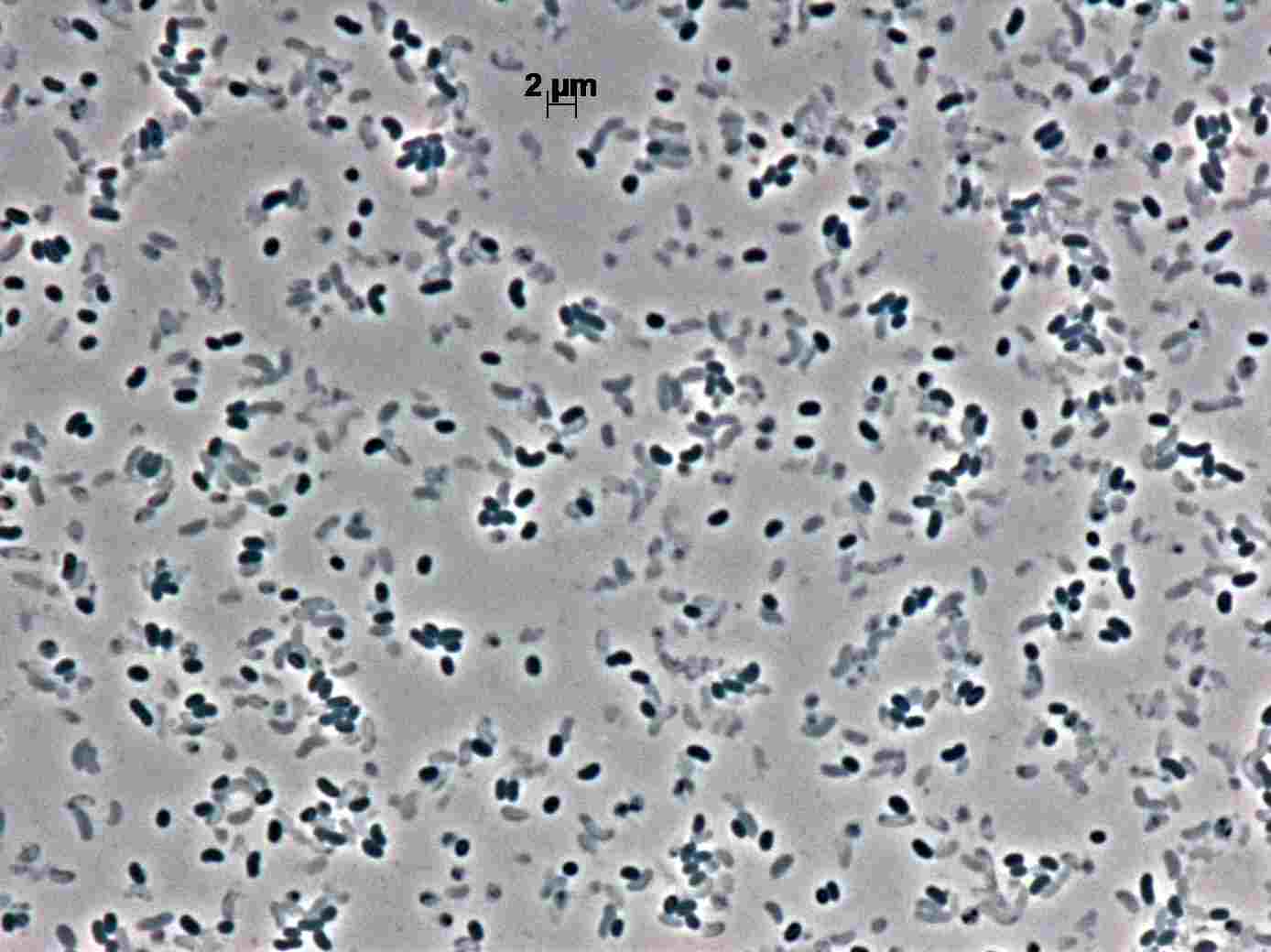
Vibrio anguillarum is a species of prokaryote that belongs to the family Vibrionaceae, genus Vibrio. V. anguillarum is typically 0.5 - 1 μm in diameter and 1 - 3 μm in length. It is a gram-negative, comma-shaped rod bacterium that is commonly found in seawater and brackish waters. It is polarly flagellated, non-spore-forming, halophilic, and facultatively anaerobic. V. anguillarum has the ability to form biofilms. V. anguillarum is pathogenic to various fish species, crustaceans, and mollusks.
Vibrio anguillarum can grow at temperatures as low as 5 °C but peaks at 37 °C, and favors saline and slightly basic water for growth. V. anguillarum was shown to be penicillin-resistant when tested with Rosco Neo-sensitabs System against antibiotics novobiocin and penicillin. In lab cultures, colonies get up to 1mm after 24 hours of incubation and 4-5mm after a week of incubation. Young colonies appear yellow and turn brown as they get older. When grown in broth, growth starts in the upper part of the test tube and reaches the bottom over two days. Cultures start as lightly turbid but develop into films and deposits in later stages.
The discovery and understanding of Vibrio anguillarum has evolved over time through the contributions of various researchers.
In 1893, Canestrini made pioneering observations on epizootics among migrating eels (Anguilla vulgaris), noting their association with a bacterium he termed Bacillus anguillarum. Canestrini meticulously documented the clinical signs exhibited by infected eels, laying the groundwork for further investigations into the pathogenic nature of this bacterium.
Expanding upon Canestrini's work, Bergman's description in 1909 provided a comprehensive account of Vibrio anguillarum as the etiological agent responsible for the 'Red Pest of eels' in the Baltic Sea. Bergman's observations detailed the clinical manifestations of the disease in infected eels, explaining the pathological changes associated with V. anguillarum infection. His work not only confirmed the pathogenicity of this bacterium but also underscored its significance as a major threat to aquatic organisms in marine environments.
Research by Gunnar Holt provided crucial insights into the emergence of Vibrio anguillarum as a pathogen in Norwegian coastal waters. Until 1964, V. anguillarum had not been associated with fish disease in Norway. However, Holt documented epizootic outbreaks of vibriosis in rainbow trout reared in seawater, causing substantial mortality in affected populations. Holt's investigations revealed a range of disease manifestations associated with vibriosis, including sudden mortality and varied pathological findings upon necropsy. These findings highlighted the severity and diversity of symptoms observed in affected fish populations, emphasizing the need for further research into disease prevention and control strategies.
In addition to basic, saline water, Vibrio anguillarum can grow on MacConkey agar and TCBS agar. Larsen (1983) tested the hemolysis of V. anguillarum by measuring growth in an agar base with 5% citrated calf blood; hemolysis was observed just beneath the colonies and in a semitransparent zone surrounding the colonies.
In general, different Vibrio anguillarum strains respond similarly to various biochemical tests. Larsen (1983) tested V. anguillarum fermentation of various carbohydrates and glycosides. Most V. anguillarum strains were found to be able to ferment glucose, fructose, galactose, mannitol, mannose, maltose, sucrose, trehalose, dextrin, glycogen, chitin and ONPG. No fermentation reactions were found in xylose, adonitol, dulcitol, rhamnose, inositol, melezitose, raffinose, and inulin. Only a few V. anguillarum strains were found to ferment lactose, melibiose, aesculin, and salicin.
Hub AI
Vibrio anguillarum AI simulator
(@Vibrio anguillarum_simulator)
Vibrio anguillarum
Vibrio anguillarum is a species of prokaryote that belongs to the family Vibrionaceae, genus Vibrio. V. anguillarum is typically 0.5 - 1 μm in diameter and 1 - 3 μm in length. It is a gram-negative, comma-shaped rod bacterium that is commonly found in seawater and brackish waters. It is polarly flagellated, non-spore-forming, halophilic, and facultatively anaerobic. V. anguillarum has the ability to form biofilms. V. anguillarum is pathogenic to various fish species, crustaceans, and mollusks.
Vibrio anguillarum can grow at temperatures as low as 5 °C but peaks at 37 °C, and favors saline and slightly basic water for growth. V. anguillarum was shown to be penicillin-resistant when tested with Rosco Neo-sensitabs System against antibiotics novobiocin and penicillin. In lab cultures, colonies get up to 1mm after 24 hours of incubation and 4-5mm after a week of incubation. Young colonies appear yellow and turn brown as they get older. When grown in broth, growth starts in the upper part of the test tube and reaches the bottom over two days. Cultures start as lightly turbid but develop into films and deposits in later stages.
The discovery and understanding of Vibrio anguillarum has evolved over time through the contributions of various researchers.
In 1893, Canestrini made pioneering observations on epizootics among migrating eels (Anguilla vulgaris), noting their association with a bacterium he termed Bacillus anguillarum. Canestrini meticulously documented the clinical signs exhibited by infected eels, laying the groundwork for further investigations into the pathogenic nature of this bacterium.
Expanding upon Canestrini's work, Bergman's description in 1909 provided a comprehensive account of Vibrio anguillarum as the etiological agent responsible for the 'Red Pest of eels' in the Baltic Sea. Bergman's observations detailed the clinical manifestations of the disease in infected eels, explaining the pathological changes associated with V. anguillarum infection. His work not only confirmed the pathogenicity of this bacterium but also underscored its significance as a major threat to aquatic organisms in marine environments.
Research by Gunnar Holt provided crucial insights into the emergence of Vibrio anguillarum as a pathogen in Norwegian coastal waters. Until 1964, V. anguillarum had not been associated with fish disease in Norway. However, Holt documented epizootic outbreaks of vibriosis in rainbow trout reared in seawater, causing substantial mortality in affected populations. Holt's investigations revealed a range of disease manifestations associated with vibriosis, including sudden mortality and varied pathological findings upon necropsy. These findings highlighted the severity and diversity of symptoms observed in affected fish populations, emphasizing the need for further research into disease prevention and control strategies.
In addition to basic, saline water, Vibrio anguillarum can grow on MacConkey agar and TCBS agar. Larsen (1983) tested the hemolysis of V. anguillarum by measuring growth in an agar base with 5% citrated calf blood; hemolysis was observed just beneath the colonies and in a semitransparent zone surrounding the colonies.
In general, different Vibrio anguillarum strains respond similarly to various biochemical tests. Larsen (1983) tested V. anguillarum fermentation of various carbohydrates and glycosides. Most V. anguillarum strains were found to be able to ferment glucose, fructose, galactose, mannitol, mannose, maltose, sucrose, trehalose, dextrin, glycogen, chitin and ONPG. No fermentation reactions were found in xylose, adonitol, dulcitol, rhamnose, inositol, melezitose, raffinose, and inulin. Only a few V. anguillarum strains were found to ferment lactose, melibiose, aesculin, and salicin.
Recent media