Hubbry Logo
EpizooticEpizooticMain
Open search
Epizootic
Community hub
Epizootic
logo
8 pages, 0 posts
0 subscribers
Be the first to start a discussion here.
Epizootic
Epizootic
from Wikipedia
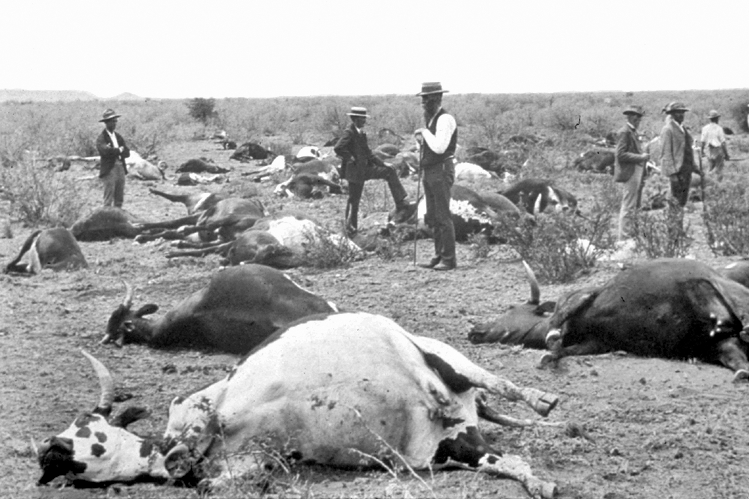
Rinderpest outbreak in South Africa, 1896

In epizoology, an epizootic (or epizoötic, from Greek: epi- "upon" + zoon "animal") is a disease event in a nonhuman animal population analogous to an epidemic in humans. An epizootic disease (or epizooty) may occur in a specific locale (an "outbreak"), more generally (an "epizootic"), or become widespread ("panzootic"). High population density is a major contributing factor to epizootics. The aquaculture industry is sometimes plagued by disease because of the large number of fish confined to a small area.

Defining and declaring an epizootic can be subjective; health authorities evaluate the number of new cases in a given animal population during a given period, and estimate a rate of spread that substantially exceeds what they might expect based on recent experience (i.e. a sharp elevation in the incidence rate). Because the judgement is based on what is "expected" or thought normal, a few cases of a very rare disease (like a transmissible spongiform encephalopathy outbreak in a cervid population) might be classified as an "epizootic", while many cases of a common disease (like lymphocystis in esocids) would not.

Common diseases that occur at a constant but relatively high rate in the population class as "enzootic" (compare the epidemiological meaning of "endemic" for human diseases). An example of an enzootic disease would be the influenza virus in some bird populations[1] or, at a lower incidence, the Type IVb strain of viral hemorrhagic septicemia in certain Atlantic fish populations.[2][3]

An example of an epizootic was the 1990 outbreak of Newcastle disease virus in double-crested cormorant colonies on the Great Lakes that resulted in the death of some 10,000 birds.[4][5]

See also

[edit]

References

[edit]
Revisions and contributorsEdit on WikipediaRead on Wikipedia
from Grokipedia
An epizootic is an outbreak of disease in an animal population corresponding to an unusually high incidence of cases within a defined region or group, analogous to an epidemic in humans. In veterinary medicine, epizootics are distinguished from enzootics, which represent a baseline level of disease maintained at a relatively constant, predictable rate in a specific animal population or geographic area. These outbreaks can affect wildlife, livestock, or companion animals and are typically caused by infectious agents such as viruses, bacteria, or parasites, often exacerbated by factors like environmental changes, animal movement, or vector activity. Epizootics pose significant risks, including economic losses in agriculture—estimated at up to USD 28 billion annually from diseases like foot-and-mouth disease—and disruptions to biodiversity through mass mortality in wild species. Monitoring and control of epizootics are critical components of global animal health strategies, coordinated by organizations such as the (WOAH), which designates certain diseases as notifiable to facilitate international reporting and response. Some epizootics have zoonotic potential, where pathogens spill over to humans, as seen in outbreaks of highly pathogenic (HPAI) in that have led to sporadic human infections. Historical examples include the 1872 North American epizootic of , which killed thousands of horses and halted transportation across the continent, underscoring the societal impacts of such events. When epizootics extend globally, they may be termed panzootics, affecting multiple species across continents, as with the ongoing panzootic of H5N1 since 2020, including detections in mammals such as and marine mammals as of 2025.

Definition and Etymology

Definition

An epizootic is defined as an outbreak of disease in an animal population characterized by a sudden and rapid increase in the incidence of cases, affecting many animals of one or more species within a given region or population, and exceeding the normal expected levels. This phenomenon is analogous to an epidemic in human populations, representing an unstable relationship between the pathogen and the host population that leads to widespread temporary prevalence. The occurrence of an epizootic typically involves the of new or unusually high numbers of cases over a short period, often in wild or domestic animals, and impacts a significant proportion of the affected , such as a notable within a herd, flock, or group. Criteria for identifying an epizootic include a measurable rise above baseline rates, determined through data that tracks incidence against historical norms for that and locale. Unlike sporadic cases, which are isolated incidents occurring infrequently and without pattern, an epizootic emphasizes the collective outbreak nature, where the disease spreads rapidly and affects multiple individuals simultaneously, necessitating heightened veterinary response. This contrasts with enzootic diseases, which maintain a constant, predictable presence in a population at lower levels.

Etymology

The term "epizootic" originates from the prefix epi-, meaning "upon" or "among," combined with zōon, meaning "animal," to denote a disease affecting animals in a manner similar to an in s. This etymological structure reflects its role as the veterinary counterpart to human epidemiological terminology. The word was first coined in French as épizootique around , modeled directly on épidémique to describe widespread animal diseases, with the noun form épizootie appearing shortly thereafter. It entered English usage the same year, borrowed from the French, amid recurring plagues in that highlighted the need for a specific descriptor for animal outbreaks. These early applications often referenced catastrophic events like epizootics devastating herds across the continent in the . By the , the term evolved from a broad, descriptive label for any significant animal into a precise epidemiological concept, defined by criteria such as incidence exceeding endemic baselines in a given animal population. This refinement paralleled advances in veterinary science, including the founding of the Office International des Épizooties in to coordinate global responses to such events. The analogy to "" underscores its foundational linguistic and conceptual ties to health terminology.

Terminology and Classification

In veterinary , an enzootic disease is one that is continuously maintained at a stable, predictable level within an animal population in a specific geographic area, often without requiring external introductions to sustain transmission. For instance, low-pathogenic viruses are enzootic in wild populations, serving as a natural reservoir for the . In contrast, an epizootic represents a sudden increase in incidence that exceeds this enzootic baseline, leading to widespread outbreaks among animals in the affected region. This transition from enzootic stability to epizootic explosiveness highlights how environmental or host factors can disrupt equilibrium in animal dynamics. These terms parallel human epidemiological concepts, where an endemic maintains constant presence in a population, an denotes a sharp rise in cases above expected levels, and a describes an spreading across multiple countries or continents. Similarly, in animals, a panzootic extends epizootic spread to a global scale across multiple . Additional related terms include sporadic, which describes isolated or irregular occurrences of disease cases without sustained transmission in animal populations, and hyperendemic, referring to an enzootic condition where infection rates remain persistently high within the host group.

Types of Outbreaks

Epizootics are classified primarily by their geographic and temporal scales to assess severity, spread, and needs, them from the enzootic baseline of constant low-level presence in a . This helps veterinarians and officials evaluate the scope of outbreaks beyond routine endemic conditions. epizootics represent the smallest scale, confined to a specific site such as a single , , or , with limited transmission and short duration often resolving within days to weeks through isolation or treatment. These incidents typically involve a small number of animals and do not extend beyond immediate boundaries, allowing for rapid containment by local veterinary practitioners. Epizootics can occur on various scales, including regional or national levels, affecting multiple populations or herds across broader areas, with sustained incidence over weeks to months that significantly exceeds the enzootic baseline. Characterized by rapid increases in cases due to factors like animal movement or vector activity, they demand coordinated regional responses to prevent further escalation. Panzootics extend to continental or global scales, impacting multiple countries and over extended periods, analogous to pandemics in their widespread and persistent . These large-scale events involve transboundary spread, often requiring international collaboration for and control. Temporally, epizootics are categorized as acute, featuring rapid onset and high incidence over a short timeframe, or chronic, marked by prolonged elevation above baseline levels without immediate resolution. Acute forms prioritize immediate intervention to curb explosive growth, while chronic ones focus on sustained monitoring to mitigate ongoing impacts.

Causes and Transmission

Infectious Agents

Epizootics are primarily driven by infectious agents that rapidly spread among animal populations, leading to widespread outbreaks. These pathogens exploit animal densities, mobility, and environmental conditions to achieve high transmission rates, often resulting in significant morbidity and mortality. The most common agents are viruses and , though parasites and fungi also contribute, particularly in specific host groups like or species. Viral agents are frequent causes of epizootics due to their high contagiousness and ability to mutate, facilitating across . The (FMDV), a , affects cloven-hoofed animals such as , sheep, and pigs, causing vesicular lesions, fever, and lameness that impair mobility and feeding. subtypes, notably highly pathogenic H5N1, target poultry and wild birds, inducing respiratory distress, neurological symptoms, and high fatality rates exceeding 90% in infected flocks. In aquatic environments, rhabdoviruses like the virus (VHSV) devastate finfish populations, including salmonids and other freshwater , by damaging vascular tissues and causing hemorrhaging and . Bacterial agents contribute to epizootics through spore-forming resilience or chronic infections that persist in herds. , the causative agent of , forms durable spores that contaminate soil and infect grazing herbivores via ingestion or skin abrasions, leading to rapid septicemia and sudden deaths in livestock like and wildlife. , responsible for brucellosis in livestock such as and , invade reproductive tissues, causing abortions, infertility, and shedding in and uterine fluids, thereby sustaining transmission within herds. Parasitic and fungal agents, while less dominant in epizootics, can trigger devastating outbreaks in vulnerable ecosystems. Protozoan parasites like Trypanosoma vivax and T. congolense cause nagana in across , leading to anemia, weight loss, and reduced productivity through bloodstream invasion. Fungal pathogens, such as , drive in amphibians, disrupting skin electrolyte balance and causing in species like frogs and salamanders worldwide. Transmission modes vary by agent but commonly involve direct contact, aerosols, or fomites, with incubation periods influencing outbreak speed. Many viruses, including FMDV and H5N1, spread via respiratory droplets, saliva, or feces, with incubation times of 2-14 days allowing subclinical spread. VHSV transmits waterborne through infected tissues or contaminated water, with incubation of 1-2 weeks at optimal temperatures. Bacterial agents like B. anthracis rely on environmental spores for indirect transmission via grazing, with incubation of 1-7 days, while spreads through direct contact with aborted materials or venereally, incubating over weeks to months. Parasitic requires vector bites from tsetse flies, with variable incubation from days to weeks, and fungal B. dendrobatidis disseminates via aquatic zoospores or direct skin contact, incubating 18-70 days before lethality.

Risk Factors

High in animal populations significantly elevates the risk of epizootic outbreaks by facilitating rapid among susceptible hosts. In systems such as facilities and feedlots, overcrowding creates ideal conditions for close contact, allowing diseases to spread quickly through direct transmission or shared environments. Similarly, natural aggregations like migratory flocks can amplify risks during seasonal movements, where dense concentrations increase exposure opportunities. Environmental changes further exacerbate epizootic vulnerability by altering host susceptibility and dynamics. Climate shifts, including rising temperatures, can expand vector ranges and enhance replication rates, as seen in warming aquatic environments that promote fish diseases. Habitat loss and , often driven by and , reduce and force into closer proximity with domestic animals, heightening spillover risks. These factors collectively weaken natural barriers to disease emergence, making ecosystems more prone to widespread outbreaks. Anthropogenic activities, particularly and animal transport, introduce to naive populations and undermine efforts. Global movement of and , often without adequate , bypasses geographical barriers and seeds new outbreaks in distant regions. Poor practices in transport and markets compound this by enabling undetected dissemination through contaminated vehicles or handlers. Such human-mediated pathways have been linked to the rapid of epizootics, independent of specific infectious agents. Host factors like , , and genetic uniformity in domesticated species diminish immune responses and amplify outbreak severity. from or handling impairs immune function, making animals more susceptible to . weakens overall resilience, altering virulence and host defenses during epizootics. In selectively bred , reduced limits adaptive immunity, allowing pathogens to exploit uniform vulnerabilities across herds or flocks.

Historical and Contemporary Examples

Historical Outbreaks

One of the most devastating historical epizootics was , a highly contagious affecting and other ruminants, which ravaged and during the 18th and 19th centuries. Originating in , the disease spread across via and military campaigns, causing widespread mortality rates approaching 100% in infected herds and leading to the death of millions of . In , introduced in the late through colonial routes, rinderpest triggered massive famines by decimating essential for and transportation, profoundly impacting human societies dependent on these animals. These outbreaks highlighted the role of international movement in disease propagation and spurred early veterinary interventions, culminating in the global eradication of rinderpest in 2011 through coordinated vaccination campaigns led by the (FAO) and the (WOAH). A particularly severe instance was the 1896 rinderpest epizootic in , part of the broader 1890s African pandemic, which devastated both domestic and wild populations. The virus, introduced via infected cattle from trade expeditions, killed 80–90% of cattle across , including over 5.2 million in southern Africa south of the , and decimating wild populations, with up to 95% mortality in species like buffalo and in affected regions. This mass die-off altered ecosystems dramatically, as the loss of megaherbivores reduced grazing pressure, leading to shifts in vegetation from grasslands to bushlands and disrupting nutrient cycles and . The event underscored the interconnectedness of domestic animal health and , influencing later policies on disease management in African savannas. In during the early , (also known as hog cholera) caused recurrent waves of outbreaks among pig populations, exacerbated by ineffective or poorly implemented strategies and unrestricted animal . First reliably reported in in 1862 and spreading across the continent, the disease persisted as an endemic threat, with mortality rates up to 100% in unvaccinated herds during peak episodes in the and . These outbreaks strained agricultural economies and prompted advancements in , including the development of attenuated vaccines in the , though inconsistent application delayed control until comprehensive eradication programs in the mid-20th century. Newcastle disease, a paramyxovirus affecting , emerged as a global epizootic in the 1920s and 1940s, originating in and rapidly spreading worldwide through international bird trade. First identified in , , in 1926 and named after an outbreak in , England, in the same year, the disease caused high mortality—often exceeding 90% in unvaccinated flocks—during major waves in , , and by the 1940s. These events devastated the expanding poultry industry, killing millions of birds and revealing vulnerabilities in global supply chains, which led to the widespread adoption of from the 1950s onward.

Recent Epizootics

Recent epizootics have been exacerbated by , including intensified in and animal products, as well as the long-distance dispersal facilitated by migratory , leading to rapid transcontinental spread of pathogens. These outbreaks highlight emerging threats to both and domesticated animal populations, with significant implications for and in an interconnected world. The African swine fever (ASF) epizootic, caused by a highly contagious , emerged in in August 2018 and rapidly spread across , , and beyond through the movement of infected pigs, pork products, and fomites via global trade networks. By 2019, the disease had reached , , , and , while simultaneous incursions occurred in starting from Georgia in 2007 but intensifying post-2018 with cases in , , and other nations. The outbreak has resulted in the death or of approximately 225 million pigs in alone, representing nearly 25% of the global pig population at the time, with total global losses exceeding hundreds of millions of animals due to the disease's near-100% in domestic pigs. As of November 2025, ASF remains endemic in multiple Asian countries, with ongoing outbreaks reported in commercial farms, underscoring the challenges of containment in densely populated regions. This epizootic has been amplified by small-scale farming practices and inadequate , facilitating spillover from wild boars to domestic herds across borders. Highly pathogenic (HPAI) subtype H5N1 has caused recurrent waves of epizootics in and birds since the early 2000s, with enabling its persistence and expansion through migratory flyways and international trade. Originating from in the late 1990s, the virus spread to , , and the by 2005, resulting in the of hundreds of millions of domestic birds worldwide to curb outbreaks in commercial flocks. From 2020 to 2025, a highly adapted 2.3.4.4b variant has driven panzootics, infecting waterfowl and raptors that act as reservoirs, facilitating continent-spanning transmission via migration routes such as the East Asian-Australasian . In the United States alone, over 100 million birds have been affected since 2022, with spillover to mammals including marine mammals and , illustrating the virus's evolving host range amid global connectivity. By November 2025, the outbreak has spilled over to over 1,000 U.S. herds and resulted in 13 human infections, underscoring its expanding host range. These epizootics have persisted into the , with seasonal surges in populations exacerbating risks to industries across hemispheres. In the 1990s, an epizootic of virulent Newcastle disease virus affected double-crested cormorants (Phalacrocorax auritus) across , with significant mortality in U.S. colonies highlighting localized vulnerabilities amid expanding populations. The 1992 outbreak, part of a broader event, resulted in over 20,000 cormorant deaths continent-wide, including approximately 10,000 in nesting sites where mortality rates ranged from less than 1% to 37% in affected colonies. This paramyxovirus strain, likely introduced via international bird trade or migration, caused neurological symptoms and high fatality in subadult birds, contributing to temporary population declines in the region. The event underscored emerging threats from endemic pathogens in expanding colonial , with evidence persisting in subsequent years. Epizootic ulcerative (EUS), a severe mycotic granulomatosis primarily caused by the Aphanomyces invadans and often compounded by secondary bacterial infections, has afflicted freshwater and brackishwater fish in and since the , posing ongoing risks to and wild stocks through shared waterways. First documented in in 1972 and spreading to by the mid-1980s via natural water flows and possibly human-mediated fish movements, EUS outbreaks peaked seasonally during cooler months, causing ulcerative lesions and mass mortalities in species like snakeheads and catfishes. In endemic areas such as , , and , the disease has led to substantial economic losses in small-scale , with epizootics decimating up to 50% of pond stocks in affected farms and impacting across river basins. Recognized as a by the , EUS continues to emerge in new regions, including parts of and , driven by environmental stressors like flooding that facilitate dissemination.

Consequences

Ecological Effects

Epizootics often trigger severe population declines in affected animal species, initiating cascading effects across ecosystems. For instance, the epizootic in the late 19th and early 20th centuries decimated populations in the , reducing wildebeest numbers to below 250,000 individuals and suppressing populations of other ungulates like buffalo. This scarcity allowed unchecked vegetation growth, with grass biomass accumulating to high levels that fueled intense and frequent wildfires, thereby inhibiting tree recruitment and maintaining open landscapes. Such cascades alter primary productivity and nutrient cycling, as reduced grazing pressure shifts energy flow from herbivores to detrital pathways, potentially diminishing over time. Biodiversity loss represents a profound ecological consequence of epizootics, particularly in vulnerable taxa with limited dispersal or small population sizes. The chytridiomycosis panzootic, driven by the fungus (Bd), has caused the decline of at least 501 worldwide, with 90 presumed , primarily among range-restricted anurans in the and . These losses heighten extinction risks for remaining populations by eroding and disrupting symbiotic relationships, such as those between amphibians and microbial communities that regulate skin defenses. In montane stream habitats, where Bd thrives, epizootics have eliminated like stream-breeding frogs, leading to shifts in algal overgrowth and invertebrate assemblages due to lost herbivory and predation. Epizootics can induce trophic imbalances by decimating predator or consumer populations, thereby releasing prey or basal resources from control. (WNV) epizootics in have caused significant mortality in 47% of examined bird species, including insectivores, resulting in elevated abundances and unchecked herbivory on . For example, declines in insectivorous birds like warblers and flycatchers reduce predation pressure on herbivorous insects, leading to increased defoliation in forests and agricultural edges in affected areas. This disruption propagates upward, as surviving predators face food shortages, and downward, altering composition through selective browsing. Long-term recovery from epizootics varies with resilience, often contrasting natural rebound mechanisms against persistent structural changes. In the , eradication in the enabled recovery, but the ensuing —marked by a irruption to over 1 million individuals—permanently reduced frequency and increased tree cover, altering composition for decades. For amphibians impacted by , only 12% of declined species show population stabilization or recovery, with many communities exhibiting lasting shifts toward Bd-tolerant taxa and reduced . These outcomes highlight how epizootics can lock ecosystems into alternative stable states, where evolutionary adaptations like host resistance emerge slowly, if at all, amid ongoing pressure.

Economic and Zoonotic Impacts

Epizootics impose substantial economic burdens on the and sectors through direct losses from animal mortality, , and reduced productivity. For instance, the African swine fever (ASF) outbreak in from 2018 to 2020 resulted in total economic losses estimated at US$111.2 billion, equivalent to 0.78% of the country's during that period. In , diseases contribute to annual global costs of approximately US$6 billion (as of 2014 estimates), encompassing mortality, treatment, and lost production in farmed fish and operations. These losses disproportionately affect smallholder farmers and emerging commercial producers, exacerbating food insecurity in affected regions. Trade disruptions from epizootics further amplify economic impacts by triggering quarantines and export bans that halt international markets. The (FMD), for example, causes annual global losses ranging from US$6.5 billion to US$21 billion in endemic areas, with outbreaks leading to widespread slaughter and suspended , as seen in historical events that disrupted supply chains across and . In a hypothetical large-scale FMD outbreak in , direct economic impacts could reach US$80 billion over a decade, including foregone export revenues and costs from control measures. Such interruptions not only reduce incomes but also inflate global prices, affecting consumers worldwide. Many epizootics carry zoonotic potential, posing risks to health through direct contact, consumption of infected products, or vector transmission. For instance, the ongoing highly pathogenic (HPAI) H5N1 outbreaks since 2022 have led to over US$3 billion in losses to the poultry industry as of 2025, alongside more than 70 infections. (RVF), a mosquito-borne , affects ruminants and spills over to humans via bites or handling of infected animals, causing severe febrile illness and occasionally hemorrhagic fever with high mortality rates in outbreaks. Similarly, highly pathogenic (HPAI) H5N1 transmits to humans primarily through exposure to infected or contaminated environments, resulting in severe , though person-to-person spread remains rare and the overall public risk is low. These zoonoses underscore the need for integrated to prevent cross-species jumps. The approach addresses these interconnected risks by promoting collaboration across human, animal, and environmental health sectors to enhance pandemic preparedness and mitigate epizootic spillovers. This framework emphasizes interdisciplinary efforts to monitor zoonotic diseases at their animal origins, enabling early detection and coordinated responses that protect while reducing economic fallout from outbreaks.

Prevention and Management

Surveillance Systems

Surveillance systems for epizootics are essential for early detection and tracking of outbreaks in animal populations, enabling timely interventions to limit spread. At the international level, the (WOAH), formerly known as the OIE, establishes reporting standards through its World Animal Health Information System (WAHIS), which serves as a global platform for member countries to submit official data on notifiable diseases, including epizootics. This system facilitates real-time sharing of epidemiological information to support international trade and biosecurity. Complementing WAHIS, the Global Early Warning System (GLEWS+), a collaborative initiative between WOAH, the (FAO), and the (WHO), integrates data from human, animal, and environmental sources to provide early alerts for major animal diseases with zoonotic potential. Nationally, programs in key regions exemplify structured monitoring efforts. In the United States, the U.S. Department of Agriculture's Animal and Plant Health Inspection Service (USDA APHIS) oversees the National Animal Health Surveillance system, which targets livestock and poultry to detect foreign animal diseases and monitor endemic ones through coordinated sampling and reporting. For wildlife, the U.S. Geological Survey (USGS) and USDA's Wildlife Services implement surveillance via the National Wildlife Disease Program, focusing on pathogens in wild populations that could spill over to domestic animals. In the European Union, Regulation (EU) 2016/429, known as the Animal Health Law, mandates member states to establish surveillance for listed transmissible diseases, including epizootics, with the European Food Safety Authority (EFSA) coordinating multi-annual programs for priority zoonotic pathogens in animals and the environment. These national frameworks align with WOAH standards to ensure harmonized data collection across borders. Surveillance methods combine passive and active approaches to capture epizootic signals comprehensively. Passive reporting relies on alerts from stakeholders, such as farmers notifying veterinarians of unusual morbidity or mortality in livestock, which triggers immediate investigations and is a cornerstone for rapid outbreak detection in resource-limited settings. Active surveillance involves proactive sampling, including serological tests to detect antibodies in animal populations, allowing for the identification of subclinical infections and estimation of disease prevalence without waiting for clinical signs. For wildlife, tracking techniques like bird banding enable longitudinal monitoring; for instance, banding migratory waterfowl facilitates sample collection for avian influenza surveillance, revealing transmission pathways across ecosystems. As of 2025, technological advances, including genomic sequencing and data analytics, continue to enhance capabilities by improving the detection and tracking of emerging pathogens in animal populations.

Control Measures

Control measures for epizootics focus on rapid containment to limit spread and facilitate eradication, employing a combination of isolation, depopulation, immunization, and preventive practices. involves isolating affected animals and restricting movement in infected areas to prevent further transmission, as implemented in highly pathogenic (HPAI) outbreaks where positive flocks are required to self-quarantine until virus shedding ceases. , or stamping-out, serves as a primary eradication method by humanely depopulating infected and potentially exposed populations, with over 240 million culled worldwide by December 2006 in response to H5N1 HPAI under World Organisation for Animal Health (WOAH) standards. This approach, while ethically challenging, has proven effective in regions like the during the 2014–2015 HPAI outbreak, where coordinated culling achieved control. Vaccination programs target specific pathogens to build immunity and reduce outbreak severity, often species-specific to domestic animals. The rinderpest vaccine, developed by Walter Plowright in the 1950s and refined through cell culture techniques, enabled the Global Rinderpest Eradication Programme (GREP) led by the (FAO), culminating in the disease's global eradication declared in 2011. For HPAI, vaccines compliant with WOAH standards, such as those using differentiating infected from vaccinated animals (DIVA) tests, have been deployed in high-risk areas like to curb morbidity and shedding, though their use requires regulatory approval. In wildlife, vaccination faces significant challenges, including logistical difficulties in delivery to inaccessible populations, imperfect immunity leading to waning protection or evolutionary selection for virulence, and risks of undermining if coverage is incomplete. Biosecurity protocols emphasize on-farm and operational practices to minimize introduction and spread of pathogens. Farm hygiene routines, such as routine cleaning, disinfection of facilities, and immediate removal of spilled feed, reduce environmental contamination and vector attraction. Movement restrictions include maintaining closed herds, quarantining new introductions, and prohibiting re-entry of animals without thorough cleaning of transport vehicles and equipment to prevent mechanical transmission. Vector control targets insects like ticks through structural barriers, regular mowing to limit habitats, and insecticide applications, thereby interrupting arthropod-borne epizootics. International coordination ensures harmonized responses to transboundary epizootics, guided by WOAH standards that promote cross-border collaboration, movement controls, and zoning to manage outbreaks like African swine fever (ASF) and peste des petits ruminants (PPR). WOAH's Global Framework for Progressive Control of Transboundary Animal Diseases, in partnership with FAO, supports regional initiatives such as the Pan-African Programme for PPR Eradication launched in February 2025 with €8 million in initial funding for vaccination and sanitary measures. These efforts, including the bank delivering over 29 million doses since 2012, facilitate emergency responses and equitable access to resources as of 2025.

References

Add your contribution
Related Hubs
User Avatar
No comments yet.