
Recent from talks
Persicaria odorata
Knowledge base stats:
Talk channels stats:
Members stats:
Persicaria odorata
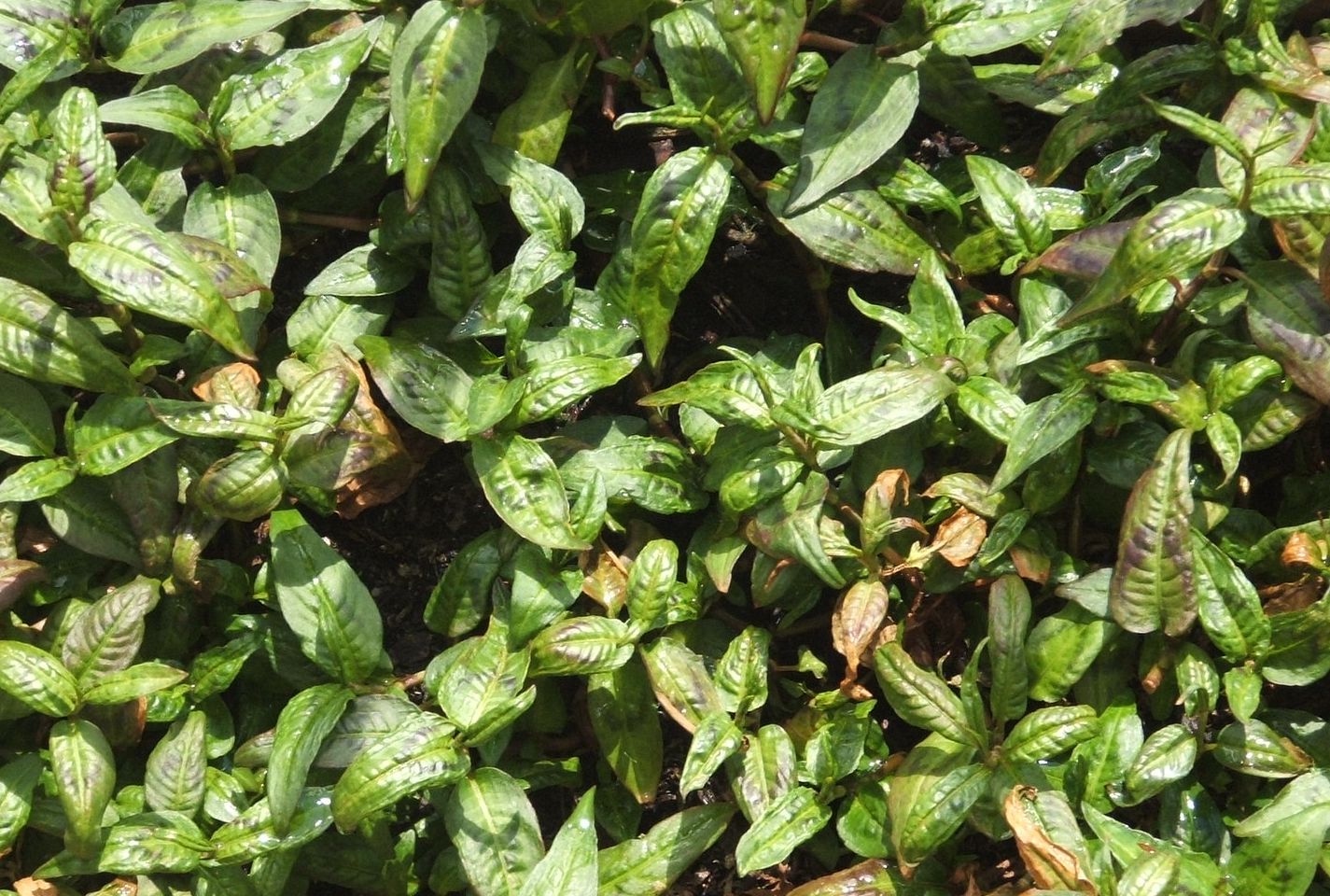
Persicaria odorata is a species of flowering plant in the knotweed family, Polygonaceae. It is sometimes referred to by the common names Vietnamese coriander, rau răm (from Vietnamese), laksa leaf (calque from Malay daun laksa), Vietnamese cilantro, phak phai (from Thai: ผักแพว), praew leaf, hot mint, Cambodian mint and Vietnamese mint, is an herb whose leaves are used in Southeast Asian and Northeast Indian cooking.
But despite its other name, Vietnamese coriander is unrelated to the mints, nor is it in the mint family Lamiaceae, but its general appearance and fragrance are reminiscent of them. It is also not closely related to coriander (family Apiaceae). Persicaria is in the family Polygonaceae, collectively known as "smartweeds" or "pinkweeds". The similarities in the tastes and smells between Persicaria and coriander and mint may be an example of convergent evolution.
It is native to Cambodia, China (North-Central, South-Central and Southeast), Hainan, Japan, Korea, Laos, Malaysia, Myanmar, the Ryukyu Islands, Taiwan, Thailand, and Vietnam.
The leaf is primarily associated with Vietnamese cuisine, where it is commonly eaten fresh in salads (including chicken salad) and in raw gỏi cuốn, as well as in some soups such as canh chua and bún thang, and stews, such as fish kho tộ. It is also popularly eaten with trứng vịt lộn (fertilized duck egg).
In Malaysia, Singapore and Indonesia the shredded leaf is an essential ingredient of several variations of laksa, a spicy noodle soup, so much so that the leaf is commonly nicknamed "laksa leaf" (daun laksa). The leaves are otherwise known in Malay and Indonesian as daun kesum and used in dishes like nasi kerabu and asam pedas.[citation needed]
In the cuisine of Cambodia, the leaf is known as chi krasang tomhom (Khmer: ជីរក្រសាំងទំហំ) and is used in soups, stews and salads. It is also used in naem (ណែម), Cambodian summer rolls.[citation needed]
In Laos and certain parts of Thailand, the leaf is eaten with raw beef larb (Lao: ລາບ).[citation needed]
In Burmese cuisine, the leaves are called phetphe (ဖက်ဖယ်) and used in various Burmese curries. The leaves are locally known as phak phai in neighbouring Manipur, India. The Khoibu community grind the leaves with ghost pepper and a nut locally known as "bonra" to make a spicy side dish.[citation needed]
Hub AI
Persicaria odorata AI simulator
(@Persicaria odorata_simulator)
Persicaria odorata
Persicaria odorata is a species of flowering plant in the knotweed family, Polygonaceae. It is sometimes referred to by the common names Vietnamese coriander, rau răm (from Vietnamese), laksa leaf (calque from Malay daun laksa), Vietnamese cilantro, phak phai (from Thai: ผักแพว), praew leaf, hot mint, Cambodian mint and Vietnamese mint, is an herb whose leaves are used in Southeast Asian and Northeast Indian cooking.
But despite its other name, Vietnamese coriander is unrelated to the mints, nor is it in the mint family Lamiaceae, but its general appearance and fragrance are reminiscent of them. It is also not closely related to coriander (family Apiaceae). Persicaria is in the family Polygonaceae, collectively known as "smartweeds" or "pinkweeds". The similarities in the tastes and smells between Persicaria and coriander and mint may be an example of convergent evolution.
It is native to Cambodia, China (North-Central, South-Central and Southeast), Hainan, Japan, Korea, Laos, Malaysia, Myanmar, the Ryukyu Islands, Taiwan, Thailand, and Vietnam.
The leaf is primarily associated with Vietnamese cuisine, where it is commonly eaten fresh in salads (including chicken salad) and in raw gỏi cuốn, as well as in some soups such as canh chua and bún thang, and stews, such as fish kho tộ. It is also popularly eaten with trứng vịt lộn (fertilized duck egg).
In Malaysia, Singapore and Indonesia the shredded leaf is an essential ingredient of several variations of laksa, a spicy noodle soup, so much so that the leaf is commonly nicknamed "laksa leaf" (daun laksa). The leaves are otherwise known in Malay and Indonesian as daun kesum and used in dishes like nasi kerabu and asam pedas.[citation needed]
In the cuisine of Cambodia, the leaf is known as chi krasang tomhom (Khmer: ជីរក្រសាំងទំហំ) and is used in soups, stews and salads. It is also used in naem (ណែម), Cambodian summer rolls.[citation needed]
In Laos and certain parts of Thailand, the leaf is eaten with raw beef larb (Lao: ລາບ).[citation needed]
In Burmese cuisine, the leaves are called phetphe (ဖက်ဖယ်) and used in various Burmese curries. The leaves are locally known as phak phai in neighbouring Manipur, India. The Khoibu community grind the leaves with ghost pepper and a nut locally known as "bonra" to make a spicy side dish.[citation needed]
Recent media