Hubbry Logo
Canh chuaCanh chuaMain
Open search
Canh chua
Community hub
Canh chua
logo
8 pages, 0 posts
0 subscribers
Be the first to start a discussion here.
Canh chua
Canh chua
from Wikipedia

Canh chua
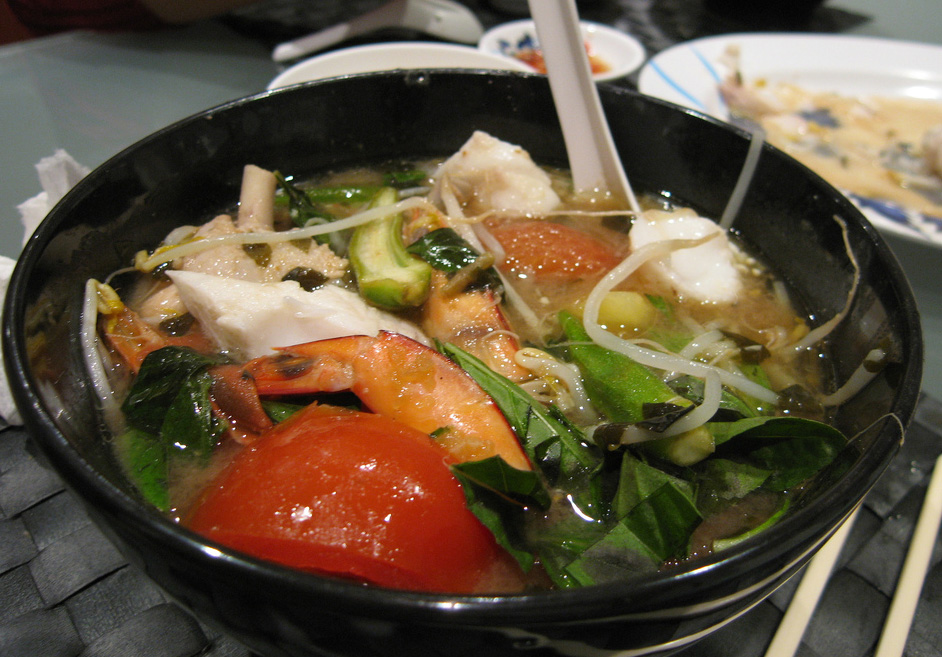
A bowl of Canh chua
TypeSoup
Place of originVietnam
Region or stateMekong Delta
Main ingredientsFish, pineapple, tomatoes, sometimes other vegetables, bean sprouts, tamarind-flavored broth
Similar dishesSamlor machu[1]

Canh chua (Vietnamese: [kaiŋ cuə], sour soup)[2] is a Vietnamese sour soup indigenous to the Mekong Delta region of Southern Vietnam (Central Vietnam also have their own canh chua). It is typically made with fish from the Mekong River Delta, pineapple, tomatoes (and sometimes also other vegetables such as ladyfingers (đậu bắp) or stems of giant elephant ears (dọc mùng)), and bean sprouts, in a tamarind-flavored broth. It is garnished with the lemony-scented herb ngò gai (Limnophila aromatica), caramelized garlic, and chopped scallions, as well as other herbs, according to the specific variety of canh chua; these other herbs may include rau răm (Vietnamese coriander), ngò om (long coriander), and rau quế (Thai basil). It can be served alone, with white rice, or with rice vermicelli. Variations can include prawns, squid, spare ribs, fish cakes and quail eggs.

The sour taste of the soup comes from tamarind, which is mixed with a small amount of hot water; the mixture is then stirred for a few moments to release all the essence, and the liquid (minus the tamarind seeds and other solids, which are discarded) is then added to the soup.

When made in style of a hot pot, canh chua is called lẩu canh chua.

Varieties

[edit]
  • Canh chua me - made with tamarind; includes most varieties of canh chua
    • Canh chua me đất or canh chua rau nhút - made with water mimosa (Neptunia oleracea)
  • Canh chua cá - made with fish
  • Canh chua tôm - made with shrimp
    • Canh chua tôm rau muống or canh chua rau muống nấu tôm - made with shrimp and water spinach (Ipomoea aquatica)
    • Canh chua thơm nấu tép or canh chua thơm nấu với tép - made with pineapple and small shrimp
  • Canh chua gà - made with chicken
  • Canh chua rau muống - made with water spinach (Ipomoea aquatica)
    • Canh chua tôm rau muống or canh chua rau muống nấu tôm - made with water spinach (Ipomoea aquatica) and shrimp
  • Canh chua chay - vegetarian
    • Canh chua đậu hũ - made with tofu
  • Canh chua măng - made with pickled bamboo shoots
  • Canh cải chua - made with pickled mustard greens
    • Canh cải chua thịt bằm - made with pickled mustard greens and ground pork
    • Canh cải chua sườn non - made with pickled mustard greens and baby back pork ribs
    • Canh cải chua cá - made with pickled mustard greens and fish
    • Canh cải chua ruột non or canh cải chua lòng heo - made with pickled mustard greens and pork intestines
    • Canh cải chua nấu với bắp bò - made with pickled mustard greens and beef shank
  • Canh chua Thái or canh chua Thái Lan - an adaptation of Thai tom yum

See also

[edit]

Notes

[edit]

See also

[edit]
Revisions and contributorsEdit on WikipediaRead on Wikipedia
from Grokipedia
Canh chua is a traditional Vietnamese sour originating from the region in , characterized by its tangy flavor derived from or other acidic ingredients like tomatoes and fruits, often balanced with subtle sweetness and savory elements from . Typically prepared with freshwater fish such as or snakehead, the soup incorporates a variety of vegetables including , bean sprouts, stems, and , along with distinctive herbs like (Limnophila aromatica) and , creating a light yet flavorful broth served alongside steamed as a staple in daily meals. Its name literally translates to "sour ," reflecting the cultural emphasis on sourness in to balance rich flavors. The dish's versatility allows for regional and personal variations, with northern versions favoring tomatoes and for sourness, while central adaptations may include pickled mustard greens or fermented , and southern originals relying heavily on paste. Proteins can range from and to vegetarian options like , adapting to availability and dietary preferences, though fish-based versions remain the most iconic. Historically, canh chua embodies the resourcefulness of Vietnamese culinary traditions, utilizing abundant local aquatic and resources from deltas, as seen in the use of indicator species like Colocasia gigantea (bac ha) stems, which have been integral to the soup's preparation for generations. In Vietnamese culture, canh chua holds significance as a symbol of southern warmth and familial comfort, often featured in household meals to promote of flavors—sweet, sour, salty, and —mirroring the balanced philosophy of in daily life. Among communities, it serves as a for cultural continuity, preserving ethnic identity through the transmission of traditional ingredients and preparation methods that connect immigrants to their heritage. This adaptability has ensured its enduring popularity, making it a beloved dish that highlights Vietnam's diverse and culinary ingenuity.

Origins and History

Regional Origins

Canh chua, a traditional Vietnamese sour , originated in the region of , where it was developed by local communities leveraging the area's abundant riverine resources. This fertile delta, with its extensive network of waterways and floodplains, provided the foundational elements for the dish, including such as snakehead and caught directly from the River system. The soup's creation embodies the adaptive culinary practices of these communities, who relied on the delta's natural bounty to craft balanced, flavorful meals that sustained daily life. The ecosystem of the profoundly shaped canh chua's composition, incorporating seasonal produce and aquatic plants that thrive in the region's humid, tropical environment. Key souring agents like and , alongside vegetables such as elephant ear stems (Colocasia gigantea) and flowers from , reflect the delta's , particularly during the annual flood season when these ingredients are harvested from waterways and fields. serve as the primary protein, highlighting the integral role of in local sustenance and the soup's harmony of sweet, sour, and savory profiles derived from these indigenous elements. Canh chua is deeply rooted in the folk traditions and riverine lifestyles of the Mekong Delta's pre-colonial inhabitants. These sources depict the soup as a staple in communal meals, utilizing readily available local and fauna to create a dish that nourished families amid the delta's cyclical floods and harvests. By the mid-20th century, recipes for variations like canh chua cá lóc were documented in Vietnamese cookbooks, preserving the tradition's emphasis on fresh, ecosystem-driven ingredients even as communities adapted to changing circumstances.

Historical Development

Canh chua emerged during the Nam tiến migrations, as Vietnamese from northern regions settled the beginning in the and continuing through the 18th and 19th centuries, adapting traditional soup-making techniques to the area's abundant and tropical produce. This period marked significant southward expansion, with Vietnamese communities establishing rice-based agriculture and utilizing local waterways for fishing, which shaped the dish's reliance on riverine proteins like snakehead or . The settlement transformed the delta from Khmer-dominated territories into a Vietnamese cultural hub, fostering culinary innovations that balanced sour, sweet, and savory flavors reflective of the region's fertile ecosystem. The incorporation of Southeast Asian souring agents, such as , into canh chua occurred through historical trade routes connecting with and , introducing Indian-influenced ingredients via Khmer and Thai intermediaries. , native to and valued for its tangy pulp, became a staple in southern Vietnamese soups, enhancing the dish's distinctive acidity alongside local fruits like . These exchanges, facilitated by riverine commerce in the basin, blended indigenous Vietnamese methods with regional flavors, distinguishing southern cuisine from northern styles. Following the 1975 , the Vietnamese diaspora played a crucial role in preserving and globalizing canh chua, with refugees and immigrants maintaining the recipe amid resettlement challenges in countries like the . This migration wave, involving over a million people, led to community cookbooks and shared meals that sustained cultural identity, adapting ingredients to new environments while honoring delta origins. The first documented U.S. recipes for canh chua appeared in Vietnamese-American publications during the 1980s, such as those in The Classic Cuisine of Vietnam (1986), marking its entry into mainstream American culinary literature.

Ingredients

Primary Protein and Vegetables

The primary protein in canh chua is typically , such as (ca basa or cá trê) or snakehead (ca lóc), sourced from the rivers of the , which provide a mild, flaky texture that absorbs the soup's flavors without overpowering them. These fish are prized for their freshness and regional availability, often cut into steaks or fillets to ensure even cooking and easy serving. Key vegetables form the structural base of the soup, contributing to its layered texture and preliminary balance of flavors before souring agents are added. Tomatoes, usually 2 medium-sized ones cut into wedges, offer natural acidity and vibrant to the broth. Pineapple chunks, about ½ to 1 cup from a fresh or canned , introduce subtle and juiciness that complements the overall profile. , sliced to about 2 cups, serves as a thickener due to its mucilaginous quality, while bean sprouts (1 cup of varieties) add a crisp, fresh crunch. Elephant ear stems (bac ha), peeled and sliced into 1-2 cups of diagonal pieces, provide a subtle earthy note and tender texture. In traditional recipes serving 4, proportions generally call for approximately 500-700 grams of paired with 200-300 grams of mixed per 1.5 liters of , ensuring the protein remains prominent while the vegetables integrate harmoniously. This ratio maintains the soup's light yet substantial character, with the sourness further enhanced by as detailed in flavorings.

Flavorings and Herbs

The primary souring agent in canh chua is tamarind, which can be used as paste, concentrate, or fresh pods soaked and strained to yield a tangy liquid that defines the soup's characteristic acidity. This tamarind base provides a fruity tartness that balances the overall profile, often prepared by diluting the paste in hot water before incorporating it into the broth. The sweet elements of canh chua derive primarily from the natural sugars in fresh chunks, which contribute both sweetness and additional subtle sour notes to complement the . This balance is sometimes augmented with or granulated sugar, added to taste for rounding out the flavors without overpowering the tang. Fish sauce provides essential saltiness and , typically 2-3 tablespoons added to the for seasoning. Unique elevate the aromatic quality of canh chua, with rice paddy herb (ngò om or ) being essential for its citrusy, cumin-like fragrance that adds a fresh, zesty layer. Cilantro and provide complementary herbaceous brightness, often chopped and stirred in toward the end of cooking or used as garnishes. For additional umami depth, fried —typically minced and crisped in oil—is a common finishing touch, drizzled over the soup to enhance savoriness.

Preparation

Basic Cooking Process

The preparation of canh chua begins with creating a flavorful stock. Start by rinsing bones and heads—typically from snakehead or —under cold water to remove any impurities, then place them in a pot with 6-8 cups of water. Bring to a boil, skim off any foam, and simmer gently for 20-30 minutes to extract a savory base rich in from the proteins. Optionally, sauté 2-3 minced cloves (and bruised lemongrass stalks if using) in 1 tablespoon of until fragrant, about 1 minute, and add to the for enhanced flavor. Next, strain the to remove solids and return it to the pot. Prepare tamarind water by soaking 2-3 tablespoons of pulp in hot water for 10 minutes, then straining to yield about 1 cup of tangy liquid; add this to the along with 1-2 tablespoons , salt, and a pinch of to balance the sourness. Introduce sequentially: first add sliced (about 1 cup) and simmer for 5 minutes to allow its natural slime to thicken the slightly, followed by chopped elephant ear stems or for texture, then wedges and chunks toward the end of the vegetable cooking time (total 10-15 minutes) to preserve their freshness and vibrant flavors. Finally, poach the fillets—cut into bite-sized pieces—in the for 5-7 minutes until they flake easily with a fork, ensuring the fish remains tender without overcooking. Remove from heat and stir in fresh such as rice paddy herb (ngò ôm), , and cilantro just before serving; this off-heat addition helps preserve the volatile aromatic compounds for optimal fragrance. Fresh ingredients sourced from river deltas enhance the soup's authentic taste profile.

Essential Techniques

Achieving the authentic flavor of canh chua relies on precise acidity balancing, where is added incrementally during cooking while frequently taste-testing to harmonize the sour notes with sweetness from and , ensuring neither dominates the profile. This adjustment is typically done after incorporating the tamarind base, with small additions of or to fine-tune the equilibrium based on personal preference and ingredient freshness. Proper vegetable handling is key to texture in canh chua; elephant ear stems should be peeled and sliced thinly, often on a bias into 0.5-inch pieces, to prevent toughness after cooking. Bean sprouts require brief blanching, ideally using the residual heat of the hot for no more than two minutes, to preserve their crispness and avoid sogginess. Broth clarification enhances the soup's visual appeal and purity; during the initial simmer, foam and impurities must be skimmed regularly—such as every 30 minutes or twice during fish cooking—to yield a clear, unclouded . Maintaining a low simmer throughout this process further prevents cloudiness from vigorous .

Varieties

Traditional Regional Variations

Canh chua exhibits distinct traditional variations across , shaped by local ecosystems, ingredient availability, and cultural exchanges. These differences highlight the soup's adaptability while preserving its core balance of sour, sweet, and savory flavors derived from , fruits, and freshwater proteins. In the , the archetypal version emphasizes riverine abundance, featuring as the primary protein alongside vegetables like stems for added starchiness and texture. River herbs such as ngo om (rice paddy herb) are essential, imparting a distinctive citrusy aroma when added toward the end of cooking to maintain their vibrancy. This style reflects the Delta's fertile waterways and everyday home cooking in rural areas. In (formerly Saigon), urban adaptations often feature shrimp as the primary protein, drawing from the city's markets for fresh seafood. is commonly used for sweetness to balance the tamarind's tartness. This version maintains the soup's refreshing qualities in a metropolitan setting. In , variations achieve sourness from , tomatoes, and fermented , resulting in a more intense profile compared to southern styles. Northern versions favor tomatoes and for sourness, with less reliance on tamarind, aligning with regional preferences for milder flavors. Along the Cambodian border in the , versions influenced by Khmer culinary traditions incorporate lemongrass for aromatic depth and for sourness. This adaptation draws from shared regional ingredients and historical exchanges in the area, resulting in a bolder, more herbaceous that underscores cross-border synergies.

Modern Adaptations

In recent years, vegetarian adaptations of canh chua have gained traction in urban areas of , particularly , where plant-based trends have transformed the city into a hub for such since the 2010s. These variants typically substitute or mushrooms for traditional proteins and use vegetable stock instead of fish-based broths to maintain the soup's signature tangy profile from while aligning with health and ethical preferences. Such modifications reflect broader shifts in Vietnamese dietary habits, driven by younger urban consumers embracing and wellness. Among Vietnamese diaspora communities in the United States, fusion versions of canh chua have emerged, incorporating ingredients like to evoke both tradition and local availability, as documented in post-2000 cookbooks. For instance, recipes feature heads or fillets poached in the sour broth, enhancing the dish's richness without deviating far from its roots. Some adaptations further blend in for a creamier texture, creating a hybrid that bridges Vietnamese flavors with Southeast Asian influences popular in American home cooking. Contemporary quick-prep methods have streamlined canh chua preparation for busy lifestyles, with adaptations reducing active cooking time to as little as one minute under low pressure after initial setup. These techniques, popularized through online recipes since the mid-2010s, make the dish accessible for weeknight meals without compromising its essential balance of sweet, sour, and savory elements.

Cultural Significance

Role in Vietnamese Cuisine

Canh chua holds a prominent place as a staple dish in southern , particularly in the region where its ingredients reflect local abundance of freshwater fish and tropical produce. This sour soup exemplifies the Vietnamese culinary emphasis on harmonious flavors, serving as a light, refreshing accompaniment to heavier rice-based meals. In line with broader Vietnamese dietary principles influenced by yin-yang , canh chua contributes to meal balance through its cooling sourness, derived from and , which counteracts the "hot" elements of fried or grilled dishes in hot, humid climates. The soup's tangy profile promotes digestive comfort and overall equilibrium, aligning with traditional views of food as medicine that nurtures the body's internal harmony. Nutritionally, canh chua offers a well-rounded profile, with such as or snakehead providing high levels of omega-3 fatty acids essential for heart health. The and bases supply significant for immune support and benefits, while vegetables like and bean sprouts add for gut health, making it a low-calorie yet nutrient-dense option. Through shared Indochinese cultural heritage, canh chua shares conceptual similarities with sour broths in neighboring Thai and Lao cuisines, such as , reflecting regional exchanges in flavor profiles and ingredients like across .

Serving Traditions

In southern Vietnamese households, canh chua is traditionally served hot in a large communal pot placed at the center of the table, allowing family members to ladle portions directly into individual bowls during multi-course meals. This shared presentation fosters a sense of togetherness, with the soup often accompanying steamed to balance its tangy flavors and provide a complete, nourishing meal. Common accompaniments enhance the dish's versatility and adjust its taste to personal preference, such as fresh lime wedges squeezed for added sourness and a side of dip for depth. It pairs seamlessly with steamed rice for everyday dining or for a lighter variation, creating a harmonious contrast between the soup's and starchy elements. During festive occasions, canh chua is commonly prepared during Tet (Lunar New Year) celebrations in . In the region, the soup reflects local abundance through its use of and seasonal produce, evoking the river's life-giving essence in communal feasts.

References

Add your contribution
Related Hubs
User Avatar
No comments yet.