Hubbry Logo
James Gordon LindsayJames Gordon LindsayMain
Open search
James Gordon Lindsay
Community hub
James Gordon Lindsay
logo
8 pages, 0 posts
0 subscribers
Be the first to start a discussion here.
James Gordon Lindsay
from Wikipedia

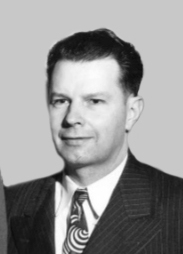
James Gordon Lindsay (June 18, 1906 – April 1, 1973) was a revivalist preacher, author, and founder of Christ for the Nations Institute in Dallas.

Key Information

Born in Zion, Illinois, Lindsay's parents were disciples of John Alexander Dowie, the father of healing revivalism in America. After the family moved to Portland, Oregon, the young boy was influenced by John G. Lake and converted to Pentecostalism by Charles Fox Parham. At the age of eighteen he began his ministry as a traveling evangelist, conducting meetings in Assembly of God, British Israelite churches and other Pentecostal groups. By 1940 he was organizing large convention meetings, including the 1940 Anglo-Saxon World Federation meetings in Vancouver.

In 1947 he began serving as campaign manager and publicist for William Branham, with whom he established Voice of Healing magazine in 1948. Lindsay gradually took over full management of the Voice of Healing association which helped launch and popularize the ministries of Oral Roberts, A. A. Allen, and dozens of other prominent evangelists. In 1971, Lindsay renamed the organization Christ For The Nations to reflect the growing missionary focus of the organization. He led the organization until his death.

Biography

[edit]
From left: Young Brown, Jack Moore, William Branham, Oral Roberts, Gordon Lindsay; photo taken at Kansas City in 1948

James Gordon Lindsay was born and raised in an atmosphere of healing and Pentecostal experience. He was born in Zion City, Illinois, on June 18, 1906. His parents were Thomas Lindsay and Effie (Ramsey) Lindsay. They were followers of John Alexander Dowie, a famous healing evangelist of the late 1800s who claimed to be the return of Elijah the Prophet and founded Zion as a religious commune. When the city went bankrupt, after the fall of Dowie, the Lindsay family moved to a Christian community led by Pisgah Finis E. Yoakum in California, and then to Portland, Oregon. Lindsay converted to Pentecostalism during a meeting led by Charles Fox Parham, an early leader of the Pentecostal movement in Topeka, Kansas. He then developed a relationship with John G. Lake, who had also been a follower of Dowie, and who was leading the Divine Healing Mission in Spokane, Washington and Portland, Oregon. During the 1920s, Lindsay traveled with Lake in mission campaigns in California and the southern states. Then he became a pastor of a Foursquare Gospel church in California before returning later to Oregon, where he married Freda Schimpf.[1]

Lindsay was involved with the British Israelite movement and was the organizer of the 1940 Anglo Saxon World Federation Convention held during March in Vancouver, Canada. Speakers at the event included Canadian minister Clem Davies, a KKK sympathizer and promoter of British Israelism.[2][3] When World War II broke out, Lindsay accepted a call to become pastor of a church in Ashland, Oregon in early 1940.

Voice of Healing

[edit]
April 1948 cover of Voice of Healing magazine

Lindsay first heard William Branham in a meeting in Sacramento during the authum of 1947 and, after meeting with him, they both agreed that Lindsay should act as Branham's campaign manager.[4] Later that year he resigned his pastoral position to become campaign manager for Branham. In order to promote the campaign, Lindsay started the "Voice of Healing" in Shreveport Louisiana in April 1948. Shreveport was home of Branham's prior campaign manager Jack Moore, who pastored a church in the city. A magazine of wide circulation, particularly in the southern US, the first issue listed William Branham as publisher, Gordon Lindsay as editor, Jack Moore as associate editor, and Anna Jeanne Moore as circulation editor.[5]

A few months later in July 1948, Branham announced he was stepping away from the revival circuit for a time.[6] The news came as quite a blow to Lindsay who had just begun the revival publication to cover Branham's meetings.[7] Coverage of other evangelists, such as Jack Coe, Oral Roberts, and A. A. Allen began to appear in the magazine as it circulated nationwide. The group sponsored the first convention of healing evangelists in Dallas, Texas during 1949 and began to function as a loose fellowship of ministers under the Voice of Healing banner. In 1950 a biography of Branham written by Lindsay ("William Branham: A Man Sent from God") was published.[8]

By October 1950, Branham was no longer the publisher but was listed as an associate editor. The masthead listed the following editors:

  • Gordon Lindsay - Editor
  • Jack Moore - Co-editor
  • Anna Jeanne Moore - Managing editor
  • F. F. Bosworth - Associate editor
  • Wilbur Ogilvie - Associate editor
  • William Branham - Associate editor
  • O.L. Jaggers - Associate editor
  • Harvey McAlister - Associate editor
  • T. L. Osborn - Associate editor
  • Dale Hanson - Associate editor
  • Gayle Jackson - Associate editor[9]

As the popularity of some of its members rose, they left the fellowship to establish their own organizations and publish their own literature. As a result of the popularity of the magazine, and Lindsay's status as a key organizer of revival meetings, Lindsay played a key role in the Healing Revival period.[10]

References

[edit]

Sources

[edit]
[edit]
Revisions and contributorsEdit on WikipediaRead on Wikipedia
from Grokipedia
James Gordon Lindsay (June 18, 1906 – April 1, 1973) was an American Pentecostal evangelist, author, and publisher instrumental in documenting and organizing the post-World War II healing revival. Born in Zion City, Illinois, to parents immersed in the healing ministry of , Lindsay began his own ministry as a traveling evangelist at age 18, pastoring churches and collaborating with figures like . In 1947, he became for William Branham's healing meetings, a role that led him to co-found The Voice of Healing magazine in 1948 to publicize Branham and other revivalists such as and , achieving circulations up to 30,000 by . Lindsay organized key conventions, including the first in in , fostering among independent evangelists, and authored over 200 books, including biographies that preserved revival accounts. Later, he established in in 1970, transitioning focus to global missionary training, where he died during a worship service. His efforts provided organizational stability to a fragmented movement, emphasizing scriptural healing and evangelism without formal denominational ties.

Early Life

Birth and Upbringing

James Gordon Lindsay was born on June 18, 1906, in Zion City, Illinois, a established by healer as a center for divine healing and Christian perfectionism. His parents, Thomas Lindsay and Effie Ramsey Lindsay, had joined Dowie's movement, drawn to its emphasis on and rejection of medical intervention. Following Dowie's death in 1907 and the ensuing financial collapse of Zion City, the Lindsay family relocated to , where Gordon grew up amid economic hardship. The move exposed him to a broader environment, but his early years retained the imprint of Zion's faith-based , fostering an initial familiarity with revivalist ideas centered on miraculous healing.

Initial Pentecostal Influences

James Gordon Lindsay was born in 1906 in Zion City, , a faith-healing community established by , which exposed him from infancy to an environment emphasizing divine healing and fervent spirituality. His family relocated multiple times due to financial hardships, eventually settling in , where he attended high school. Lindsay's conversion to occurred during high school in Portland, prompted by an evangelistic campaign conducted by , the figure credited with initiating modern Pentecostalism through the 1901 Topeka revival that highlighted glossolalia as evidence of Spirit baptism. Parham's Apostolic Faith Movement stressed holiness, divine healing, and , doctrines that aligned with Lindsay's emerging convictions and marked his shift from nominal Christianity to active Pentecostal faith. Following his conversion, Lindsay encountered the ministry of , a former resident of Zion City who founded the Divine Healing Institute in Spokane, Washington, in 1910 and extended similar missions to Portland. Lake's emphasis on aggressive for physical , demon expulsion, and apostolic-like demonstrations profoundly influenced Lindsay's views on Pentecostal power, fostering a commitment to supernatural intervention in everyday life rather than mere doctrinal adherence. These encounters with Parham and Lake provided Lindsay's foundational framework for ministry, blending evangelistic zeal with expectations of miraculous signs.

Ministerial Beginnings

Ordination and Early Preaching

Lindsay underwent conversion to during a revival meeting led by Charles Parham, a pioneer of the movement. Shortly thereafter, while still in his youth, he joined healing and evangelistic campaigns organized by , traveling through California and southern states to conduct services emphasizing divine healing and Pentecostal experiences. At approximately age eighteen, around 1924, Lindsay initiated his independent ministerial efforts by pastoring small congregations in Avenal and . These roles marked his entry into regular preaching, where he delivered sermons on Pentecostal themes in local assemblies. Over the subsequent eighteen years, he transitioned to itinerant evangelism, crisscrossing the to hold revival meetings in independent Pentecostal churches, building experience in organizing and promoting healing-focused services. No formal ordination ceremony or credentialing date for Lindsay appears in primary accounts of his early career; his activities aligned with the decentralized common in early 20th-century , where traveling preachers often operated under loose affiliations with networks like those influenced by Lake's Apostolic Faith Mission. His preaching emphasized , , and eschatological urgency, reflecting the fervor of the interwar Pentecostal revival circuits.

Entry into Revival Circuits

In the early 1930s, Lindsay began itinerant ministry by joining evangelist John G. Lake's healing and evangelistic campaigns, traveling extensively through and southern U.S. states to conduct revival meetings focused on Pentecostal experiences and divine healing. This marked his initial entry into broader revival circuits beyond local pastorates, where he preached in assemblies emphasizing spiritual gifts and . Following these travels, Lindsay pastored small churches in Avenal and , while continuing to hold independent revival meetings across the region for approximately 18 years, building a reputation for organizing and promoting Pentecostal outpourings. By the early 1940s, he relocated to , accepting a pastoral call in Ashland, from which he extended his revival work into northwestern circuits, preaching on themes of and baptism amid growing post-Depression Pentecostal networks. These efforts positioned him as a circuit bridging localized churches with itinerant , prior to his deeper involvement in the post-World War II revival wave.

Association with the Healing Revival

Partnership with William Branham

In the autumn of 1947, James Gordon Lindsay attended a meeting of William Branham in Sacramento, California, at the invitation of mutual associate Jack Moore, where he first encountered Branham's ministry of reported healings and discernment. Following discussions with Branham and Moore, Lindsay agreed to serve as Branham's campaign manager, resigning his pastoral position in Ashland, Oregon, to manage the evangelist's growing itinerary of revival meetings. Lindsay's responsibilities included organizing logistics for Branham's campaigns, which drew thousands to tents and auditoriums across the and later internationally, handling publicity through advertisements and reports, and coordinating with local churches and committees to secure venues and accommodations. His administrative expertise provided structure to Branham's otherwise spontaneous preaching style, enabling sustained momentum in the post-World War II from 1947 onward. In this capacity, Lindsay traveled extensively with Branham, witnessing and documenting events such as mass prayer lines where Branham claimed to identify ailments through insight. A key joint endeavor was the establishment of The Voice of Healing magazine in April 1948, initially focused on publicizing Branham's meetings with accounts of conversions and s, though it soon expanded to cover other evangelists. Lindsay edited and published the periodical, which reached a circulation of over 50,000 by the early 1950s, while Branham contributed endorsements and occasional articles. Under Lindsay's management, Branham participated in the first Voice of Healing convention in , , in December 1949, marking a collaborative effort to unite healing ministers. Lindsay further chronicled Branham's background and early ministry in the 1950 book William Branham: A Man Sent from God, co-authored in collaboration with Branham, which detailed purported visions and miracles from Branham's childhood through his commissioning. The partnership persisted into the mid-1950s, but waned as Branham reduced large-scale campaigns after 1950, favoring smaller doctrinal teachings amid personal visions directing a shift away from healing-focused revivals; by the 1950 Kansas City convention, Branham's absence highlighted diverging paths, though Lindsay continued promoting the broader revival through his publications.

Role in Organizing Campaigns

In 1947, James Gordon Lindsay resigned his pastoral position in , to become the campaign manager for William Branham, handling logistics, scheduling, and promotion for Branham's healing revival meetings across the . This role involved coordinating large-scale events that drew thousands, managing travel, and publicizing reported miracles to sustain momentum amid growing interest in Pentecostal healing ministries. To amplify the reach of these campaigns, Lindsay founded The Voice of Healing magazine in April 1948, initially dedicated to documenting and promoting Branham's ministry despite Branham's brief announcement of retirement that year. The publication quickly expanded to feature other evangelists, such as William Freeman, with whom Lindsay organized a series of meetings in 1948, emphasizing verified healings to build credibility and attendance. By March 1949, the magazine achieved a circulation of 30,000, serving as a central tool for coordinating itineraries and sharing best practices among independent revivalists. Lindsay's organizational efforts extended to convening the first Voice of Healing convention in , , in 1949, gathering Branham, Jack Moore, and other key figures to foster collaboration and standardize approaches to campaign management. A second convention followed in Kansas City in 1950, attracting approximately 1,000 attendees and leading to the formation of the Voice of Healing Association, which provided guidelines for ethical conduct, financial transparency, and logistical support in healing evangelism. Throughout the , he coordinated additional national and regional workshops on campaign operations, while the association's expenses for supporting evangelists reached $1,000 per day by 1956. As Branham reduced his involvement in the mid-1950s, Lindsay shifted focus to promoting a broader roster of ministers, including , , and , through the magazine and association networks. In 1956, he spearheaded the Winning the Nations Crusade, dispatching teams of ministers globally to extend the revival model internationally. These initiatives positioned Lindsay as a pivotal coordinator, often described as directing an "unruly orchestra" of charismatic leaders during the post-World War II healing revival's peak.

Voice of Healing

Founding of the Magazine and Association

In April 1948, James Gordon Lindsay published the inaugural issue of The Voice of Healing, a magazine initially established as the official organ of William Branham's evangelistic healing campaigns. Branham was listed as the publisher, while Lindsay served as editor, with assistance from figures such as Jack Moore. The publication, subtitled "An Inter-Evangelical Publication of the Branham Healing Campaigns," sought to document and promote reports of divine healing, testimonies, and scheduled meetings to support the burgeoning post-World War II healing revival movement. Lindsay's role as Branham's campaign manager since 1947 provided the impetus for this venture, aiming to disseminate information amid growing interest in Pentecostal healing ministries. The magazine quickly expanded beyond Branham's campaigns, featuring articles and advertisements from other evangelists and evolving into a central hub for the by chronicling events, theological defenses of healing, and logistical support for itinerant preachers. Its mission emphasized proclaiming the through evangelism and healing, reflecting Lindsay's conviction in a divine outpouring of miraculous gifts. Parallel to the magazine's launch, Lindsay and his wife Freda established the Voice of Healing ministry in 1948, which functioned as an organizational framework to coordinate and sustain the revival efforts. This entity formalized into a loose association of healing evangelists following the first Voice of convention in December 1949, convened by Lindsay, enabling collaborative promotion, resource sharing, and mutual endorsement among participants without rigid doctrinal uniformity. The association's structure supported the magazine's distribution and amplified its reach, distributing thousands of copies monthly by the early 1950s to foster unity in the fragmented Pentecostal revival scene.

Promotion of Healing Evangelists

Lindsay promoted healing evangelists principally via The Voice of Healing magazine, launched in April 1948 to publicize William Branham's ministry but rapidly broadening to support independent revivalists after Branham's 1948 health hiatus. The periodical detailed healing testimonies, crusade reports, and itineraries for ministers including , , , , , David Nunn, and , functioning as a promotional clearinghouse that coordinated schedules to avert overlaps and enhanced visibility. Circulation surged to nearly 30,000 monthly copies by March 1949, disseminating accounts that drew crowds to campaigns and solidified the post-World War II healing revival's momentum. Complementing publications, Lindsay convened the Voice of Healing Association's inaugural gathering in December 1949 in , , uniting Branham, Bosworth, Roberts, and others to promote doctrinal alignment and operational cooperation. The 1950 Kansas City convention drew about 1,000 participants beyond prominent evangelists, instituting ethical protocols for finances and conduct to sustain revival credibility. Lindsay's administrative efforts extended to workshops on , campaign logistics, and fund management, while the association listed nearly fifty associate evangelists by 1954, underscoring his pivotal role in amplifying their collective influence through the 1950s.

Doctrinal and Organizational Support

The Voice of Healing magazine and its associated network, under Lindsay's leadership, emphasized a doctrinal framework rooted in evangelical fundamentals and classical Pentecostal distinctives, prioritizing , salvation through repentance and faith in Christ, the , and the atoning work of Jesus that included provision for physical . This stance aligned with the post-World War II healing revival's focus on the restoration of New Testament miracles, including divine healing as an integral part of redemption, supported by scriptural references such as :4-5 and James 5:14-15, while affirming the baptism of the evidenced by and the ongoing operation of spiritual gifts like , discernment, and words of knowledge. Lindsay, as a credentialed minister, advocated for doctrinal balance, explicitly cautioning against "novel prophetic interpretations" and "dogmatic doctrinal assertions" that could fragment the movement, as outlined in his 1950 editorial promoting unity around scriptural essentials rather than peripheral debates. Organizationally, the Voice of Healing association facilitated doctrinal cohesion by issuing ministerial credentials to evangelists who adhered to these core tenets, coordinating campaign schedules to prevent territorial overlaps, and hosting annual conventions—such as the inaugural gathering in December 1949 and the 1950 Kansas City event with over 1,000 attendees—that included teaching sessions on , , and ethical ministry practices derived from biblical principles. These structures enabled a loose federation of independent revivalists, peaking with nearly 50 associate editors by 1954, without enforcing rigid denominational hierarchies, thereby supporting the proclamation of healing and evangelism as fulfillments of the while sidestepping controversies like or later esoteric teachings. Lindsay's publications within the magazine further reinforced this by documenting revival testimonies as empirical validations of doctrine, emphasizing causal links between faith-obedience and supernatural outcomes, and distributing teaching materials globally to equip believers in exercising spiritual gifts. This approach provided theological stability amid the revival's charismatic fervor, with Lindsay serving as its primary historian and apologist, producing works that contextualized the movement's doctrines within broader Pentecostal heritage while critiquing excesses to preserve credibility. By 1952, the magazine's circulation reached 100,000, amplifying these positions and fostering a network that extended efforts, underscoring not merely as isolated events but as integral to end-times and church restoration per Ephesians 4:11-12.

Writings and Publications

Key Books and Series

Lindsay's literary output was extensive, encompassing over 250 books and pamphlets on Pentecostal doctrines, divine healing, spiritual gifts, and the documentation of post-World War II revival phenomena, primarily published via his Voice of Healing imprint and later through Christ for the Nations. His writings emphasized scriptural , eyewitness accounts of miracles, and for ministers, often drawing from biblical precedents and observed supernatural events in campaigns he organized or chronicled. A pivotal early work was William Branham: A Man Sent from God (1950), a biographical account of evangelist William Branham's calling, South African tour (1946), and reported healings, incorporating photographs, testimonies, and newspaper clippings to substantiate claims of divine intervention. This book served as both promotional literature for Branham's ministry and a foundational text for understanding the healing revival's origins, reflecting Lindsay's role as Branham's initial campaign manager. Other significant standalone books included Prayer That Moves Mountains (1940s–1950s editions), which outlined and intercession as mechanisms for overcoming spiritual barriers, citing Old and examples; Gifts of the Spirit (c. ), a systematic exposition of 1 Corinthians 12–14 applied to contemporary ministry; and Why Christians Are Sick and How They May Get Well (c. ), advocating faith-based while critiquing unbelief and medical overreliance. These texts prioritized empirical observations from revival meetings over abstract theory, aligning with Lindsay's commitment to verifiable outcomes. Lindsay also produced editorial series compiling sermons and teachings from healing evangelists, such as the multi-volume John G. Lake Sermons on Dominion over Demons, Disease & Death (1960), which transcribed early 20th-century Pentecostal messages on authority over affliction, and similar collections from figures like Branham, emphasizing patterns of divine power across eras. Later, through Christ for the Nations, he developed the Bible Training Series, a modular set of doctrinal studies on topics like (Acts of the Early Church) and (Bible Days...Then & Forever), designed for ministerial education and distributed in bundled formats. These series preserved oral traditions of the movement, providing structured resources amid the revival's decentralized nature.

Documentation of Revival Events

James Gordon Lindsay extensively documented the post-World War II through serialized reports in the Voice of Healing magazine, which he established in May 1948 to chronicle evangelistic campaigns featuring divine healing. Monthly issues detailed specific meetings, including attendance numbers, reported miracles, and conversion statistics from events led by figures such as William Branham, , and . For example, a 1948 report described Branham's Kansas City campaign drawing thousands, with accounts of instantaneous healings witnessed by crowds. These magazine dispatches emphasized eyewitness testimonies and logistical details, such as venue capacities strained by overflow crowds—often exceeding 10,000 attendees per service—and organizational challenges in managing large-scale prayer lines. Lindsay's reporting extended to international efforts, covering Branham's 1950 South Africa tour where over 30,000 decisions for Christ were recorded across and meetings held between February and May. Beyond periodicals, Lindsay compiled event narratives into books like William Branham: A Man Sent from God (1950), a biographical account integrating campaign logs from 1946 onward, including precise dates such as Branham's June 1947 , meetings where hundreds reported healings from conditions like cancer and . He produced over 250 volumes of such historical and doctrinal works, preserving revival data against contemporary skepticism by prioritizing firsthand accounts over interpretive analysis. Lindsay's documentation also included pamphlets and serialized series on broader revival trends, such as Worldwide Evangelism through Healing and Miracles, which aggregated global campaign outcomes from the late 1940s to 1950s, noting patterns like sustained attendance growth in U.S. revivals averaging 5,000 nightly. This methodical record-keeping, drawn from on-site observations and collaborator inputs, formed a primary for Pentecostal historians, though reliant on self-reported data from participants.

Establishment of Christ for the Nations

Founding and Vision

In 1970, James Gordon Lindsay, alongside his wife Freda, established the (CFNI) in , , as an extension of their longstanding missionary and evangelistic efforts through the Voice of Healing ministry, which had originated in 1948. The institute commenced operations in September of that year with an initial enrollment of 50 students, functioning as a , Spirit-filled school offering training in and ministry skills. This initiative marked a shift toward formal education, building on Lindsay's decades of documenting and supporting post-World War II healing revivals, where he had coordinated campaigns and published accounts of reported supernatural healings by evangelists such as William Branham and . Lindsay's vision for CFNI centered on equipping a new generation of believers to fulfill the through global evangelism, emphasizing the demonstration of divine healing and miracles as integral to preaching the Gospel. Motivated by his observations of thousands reportedly healed during the and revivals—events he meticulously recorded in publications like The Voice of Healing magazine—he sought to institutionalize training that prepared students for missions, including the establishment of native churches and distribution programs he had pioneered earlier in the . The curriculum focused on worship, scriptural exposition, and hands-on ministry, aiming to produce "world changers" capable of replicating the revivalist model internationally, without denominational constraints to broaden appeal within charismatic and Pentecostal circles. This foundational approach reflected Lindsay's broader commitment to causal mechanisms in spiritual ministry, prioritizing empirical accounts of revival outcomes over abstract theology, though he maintained doctrinal alignment with Pentecostal emphases on the of the and . By the time of its launch, Lindsay had already sponsored international and correspondence courses, viewing the institute as a strategic escalation to sustain momentum from the healing movement into sustained global outreach. He passed away in 1973, shortly after overseeing the construction of the institute's facilities, leaving Freda to continue advancing its mission.

Expansion and Educational Focus

expanded rapidly under Gordon Lindsay's direction following its founding in July 1970 with an initial enrollment of 50 students in , . By 1973, the institution's growth required the construction of a new dedicated building to accommodate increasing student numbers and facilities for training. This development reflected Lindsay's vision to scale the school as a hub for equipping ministers amid the charismatic renewal movement. The educational focus emphasized and hands-on ministry preparation, beginning as a two-year school program that integrated scriptural study with real-world and church leadership skills. Courses prioritized Spirit-filled training, including teachings on divine , prophetic ministry, and global outreach, drawing from Lindsay's experience documenting post-World War II healing revivals. Students were prepared to plant churches and conduct missionary work internationally, aligning with the organization's mandate to fulfill the through indigenous leadership development. Lindsay's oversight extended the institute's reach by building on prior initiatives, such as the World Correspondence Course and 1961 Native Church Program, which provided foundational distance and on-site training models later formalized at CFNI. By the time of his death in April 1973 during a service in the newly completed building, the school was in its fourth year of operation, demonstrating sustained enrollment growth and infrastructural progress despite the brief timeframe. This phase laid the groundwork for CFNI's interdenominational charismatic emphasis, fostering alumni deployment to over 100 nations in subsequent decades.

Later Career and Death

Shift to Institutional Leadership

In the early 1960s, Lindsay played a pivotal role in institutionalizing aspects of the Pentecostal by co-founding the Full Gospel Fellowship of Churches and Ministers International. On September 18 and 19, 1962, he convened a convention at the Baker Hotel in , , bringing together independent ministers to establish a formal network emphasizing divine healing, doctrinal unity, and mutual support among churches and evangelists. This organization provided structure to the previously loose coalition of itinerant preachers, offering credentials, conventions, and cooperative missions while maintaining a focus on charismatic gifts. By the mid-1960s, as the post-war waned and the broader charismatic renewal emerged, Lindsay redirected efforts from ad hoc promotion toward enduring institutional frameworks. The Voice of Healing ministry, originally launched in 1948, underwent rebranding around 1967 to Christ for the Nations, evolving into a society that distributed literature, teaching tapes, and funds to support global native churches and evangelistic outreaches. This shift emphasized sustainable discipleship over transient campaigns, incorporating radio broadcasts and international conventions to train leaders. The culmination of this transition occurred in 1970, when Lindsay and his wife Freda established in as an interdenominational dedicated to equipping students for missionary work and ministry. The institute prioritized practical training in , , and charismatic theology, reflecting Lindsay's vision for perpetuating revival principles through education rather than relying solely on individual evangelists. He served as its initial director, overseeing early operations until his sudden death on April 1, 1973, during a chapel service at the facility. This institutional pivot marked a departure from Lindsay's earlier role as a coordinator of mobile revivals toward building permanent platforms for Pentecostal expansion.

Personal Life and Family

James Gordon Lindsay was born on June 18, 1906, in , to parents Thomas Lindsay and Effie Ramsey Lindsay, who were devoted followers of healer and immersed their family in an environment of and Pentecostal practices. The family later relocated, exposing Lindsay from youth to revivalist influences that shaped his lifelong commitment to documenting and promoting healing ministries. Lindsay married Freda Schimpf, with whom he co-pastored churches in their early years, including a congregation he founded in , before shifting focus to itinerant revival support in the 1940s. The couple raised three children: sons Gilbert Lindsay and Dennis Lindsay, and daughter Shira Sorko-Ram. Lindsay died suddenly on April 1, 1973, after which Freda Lindsay assumed leadership of their ministry organizations, sustaining and expanding their work until her death on March 26, 2010, at age 95. The family continued to operate , emphasizing global evangelism and training.

Legacy

Influence on Modern Pentecostalism

Lindsay's establishment of the Voice of Healing magazine in May provided a critical platform for documenting and disseminating accounts of the post-World War II , uniting independent evangelists such as William Branham, , and who operated outside traditional Pentecostal denominations. The publication reported specific instances of claimed s and mass conversions, such as those during Branham's 1947 campaigns in , where thousands attended tent meetings, thereby amplifying the revival's momentum and countering institutional resistance from groups like the , which viewed the phenomena with caution due to doctrinal concerns over new revelations. This periodical's influence extended to revitalizing Pentecostal emphases on divine healing and , with its content—circulating to subscribers across the U.S. and abroad—fueling a global expansion of and missionary efforts that introduced Pentecostal practices to regions like and by the early 1950s. Lindsay's editorial stance promoted scriptural precedents for while addressing criticisms, such as allegations of exaggeration, by prioritizing eyewitness testimonies, which helped legitimize the movement amid broader . Through his prolific authorship, including series like William Branham: A Man Sent from God (1950), Lindsay preserved revival narratives that shaped theological training and inspired later figures in the Charismatic Renewal of the 1960s-1970s, emphasizing experiential faith over denominational boundaries. The transition of Voice of Healing resources into , founded in 1970 in , , institutionalized this legacy by training over 30,000 students in Pentecostal doctrines, missions, and healing ministry by the 21st century, producing leaders who integrated revivalist zeal with structured evangelism. Lindsay's efforts thus bridged early 20th-century with its modern expressions, promoting causal links between reported supernatural events and church growth, as evidenced by the revival's role in increasing U.S. Pentecostal adherents from approximately 1 million in 1940 to over 5 million by 1970, while fostering indigenous churches worldwide through distributed literature and funds.

Achievements in Revival Documentation

James Gordon Lindsay's most notable achievement in revival documentation was founding The Voice of Healing magazine in 1948, initially to chronicle William Branham's healing campaigns. The publication rapidly expanded to encompass the post-World War II healing revival, featuring detailed reports of evangelistic meetings, testimonies of divine healings, biographies of ministers, and teachings on Pentecostal doctrines such as faith and the Holy Spirit's gifts. By March 1949, its monthly circulation approached 30,000 copies, providing a vital platform that connected 50 to 70 full-time healing evangelists across the United States and internationally. As editor and publisher, Lindsay compiled empirical accounts from revival events, preserving firsthand records of reported miracles, crowd sizes, and salvations that might otherwise have been lost to alone. The magazine's structured documentation fostered unity among fragmented independent ministries by standardizing reports and addressing doctrinal tensions, such as through conventions organized by Lindsay, including the inaugural Voice of Healing gathering in , , in December 1949. This archival role extended the revival's influence, contributing to Pentecostalism's global spread and the emergence of movements like the Latter Rain. Lindsay further advanced documentation through authorship of over 200 books on the , including William Branham: A Man Sent from God, which detailed Branham's early ministry, and biographies of historical figures like and . These works synthesized historical narratives, theological analyses, and evangelistic sketches, serving as enduring references that validated the movement's claims through compiled evidence from multiple sources. By prioritizing verifiable accounts over sensationalism, Lindsay's writings established a foundational historical record, enabling later scholars and practitioners to study causal patterns in reported phenomena.

Criticisms and Controversies

Lindsay's role in promoting the post-World War II healing revival through The Voice of Healing magazine attracted criticism from secular media and some denominational leaders for emphasizing unverified miracle claims and fostering a culture of that prioritized emotional experiences over doctrinal rigor. The revival's reports of mass healings were often dismissed as anecdotal or psychosomatic, with limited medical corroboration, contributing to broader toward Pentecostal practices during the era. To mitigate ethical lapses, Lindsay enforced accountability within the network of evangelists, requiring adherence to standards on finances and conduct; this culminated in the preemptive resignation of A.A. Allen in the late 1950s, whom Lindsay and associates viewed as engaging in excessive dramatics and sensationalism that undermined credibility. Critics within Pentecostal circles, such as Ern Baxter, leveled broader rebukes at revivalists—including those affiliated with Lindsay's platform—for carnal comparisons, competitive showmanship, and deviations from biblical humility, though Lindsay himself positioned The Voice of Healing as a unifying force avoiding divisive doctrines. A significant controversy arose from Lindsay's early collaboration with William Branham, whose ministry he publicized extensively until their 1953 split; Lindsay issued an ultimatum over Branham's evolving doctrines, including teachings on racial separation interpreted by contemporaries as aligning with white supremacist ideologies, such as the "" theory implying inherent inferiority of non-whites. This separation highlighted Lindsay's effort to distance from heterodox positions, but his prior endorsements had amplified Branham's influence, drawing retrospective criticism for lending legitimacy to a figure whose later claims of divine vindication and failed prophecies eroded trust in the broader revival. The Christ for the Nations Institute, co-founded by Lindsay in 1970 as an extension of his revival documentation efforts, has encountered modern controversies tied to its Pentecostal roots in the New Order of the Latter Rain movement, which some theologians critiqued for restorationist excesses and authoritarian prophetic emphases verging on heresy. More recently, the institute has been questioned for promoting Lindsay's teachings on "violent prayer"—intense spiritual warfare rhetoric—and indirect links to alumni or affiliates involved in political violence, including a 2025 case connecting it to an alleged Minnesota shooter who attended the school and absorbed its biblical worldview. These associations, occurring after Lindsay's 1973 death, reflect ongoing debates over the long-term implications of his emphasis on aggressive intercession and missions training.

References

Add your contribution
Related Hubs
User Avatar
No comments yet.