Hubbry Logo
Walter FreudWalter FreudMain
Open search
Walter Freud
Community hub
Walter Freud
logo
7 pages, 0 posts
0 subscribers
Be the first to start a discussion here.
Walter Freud
Walter Freud
from Wikipedia

Anton Walter Freud (3 April 1921 – 8 February 2004) was a chemical engineer and a member of the Royal Pioneer Corps and the British Special Operations Executive. He was a grandson of Sigmund Freud and escaped with him and other family members from Vienna after the Anschluss.

Key Information

Life

[edit]

Freud was born in Vienna in 1921. He was the first child of Sigmund Freud’s eldest son Jean-Martin (Martin), a lawyer, and his wife Ernestine Drucker. He was named after Anton von Freund, a colleague of his grandfather.

After leaving Vienna in March 1938,[1] Freud's parents separated, and he and his father went to Britain whilst his mother and sister Sophie went to Paris before emigrating to the USA.[2] While he was a student at Loughborough College, he and his father were interned as enemy aliens in May 1940. He was first held in a prison in Leicester and then on the Isle of Man. In July, he was deported to Australia aboard the HMT Dunera.

He was allowed to return to the United Kingdom in October 1941 due to a refinement in internment policy. He then joined the Royal Pioneer Corps in which he worked for eighteen months, before he was allowed to join the Special Operations Executive in 1943, due in part to his being a native German speaker. In April 1945 he parachuted into Styria in the Austrian Alps to help establish a British presence in advance of the approaching Red Army. Though he became separated from his comrades, he managed to bluff his way into the strategically important Zeltweg airfield. Posing as a representative of the advancing British Eighth Army, he convinced the Commandant to surrender it to the Allied forces.[3]

After the war ended, Freud was posted to the War Crimes Investigation Unit. He was the first person to interrogate Bruno Tesch, head of Tesch & Stabenow, the firm responsible for supplying much of the Zyklon B gas used in Nazi extermination camps, which led to his trial and execution for war crimes. He was also involved in the investigation of Alfried Krupp of Krupp Industries, subsequently indicted for the use of slave labor, and in the investigation of the murder of twenty Jewish children, the subject of medical experimentation by the Nazi doctor Kurt Heissmeyer, in the basement of the Bullenhuser Damm school in Hamburg. In January 1946 he was sent to Denmark to track down and investigate a suspected Nazi war criminal, Gustav Jepsen, subsequently tried and hanged for his crimes. It was in Copenhagen that he met his future wife, Annette Krarup, a Danish civil servant. They married in August 1947, Freud having left active service with the rank of Major in September 1946.[4]

After naturalising as a British subject in January 1947,[5] Freud returned to Loughborough, where he graduated with a degree in chemical engineering. He was hired by British Oxygen Corporation, then went to work for British Nylon Spinners in Pontypool. He was recruited by British Hydrocarbons based in London in 1957, which after a series of mergers became part of BP Chemicals, where he remained until his retirement at the age of 55 in 1977.[6]

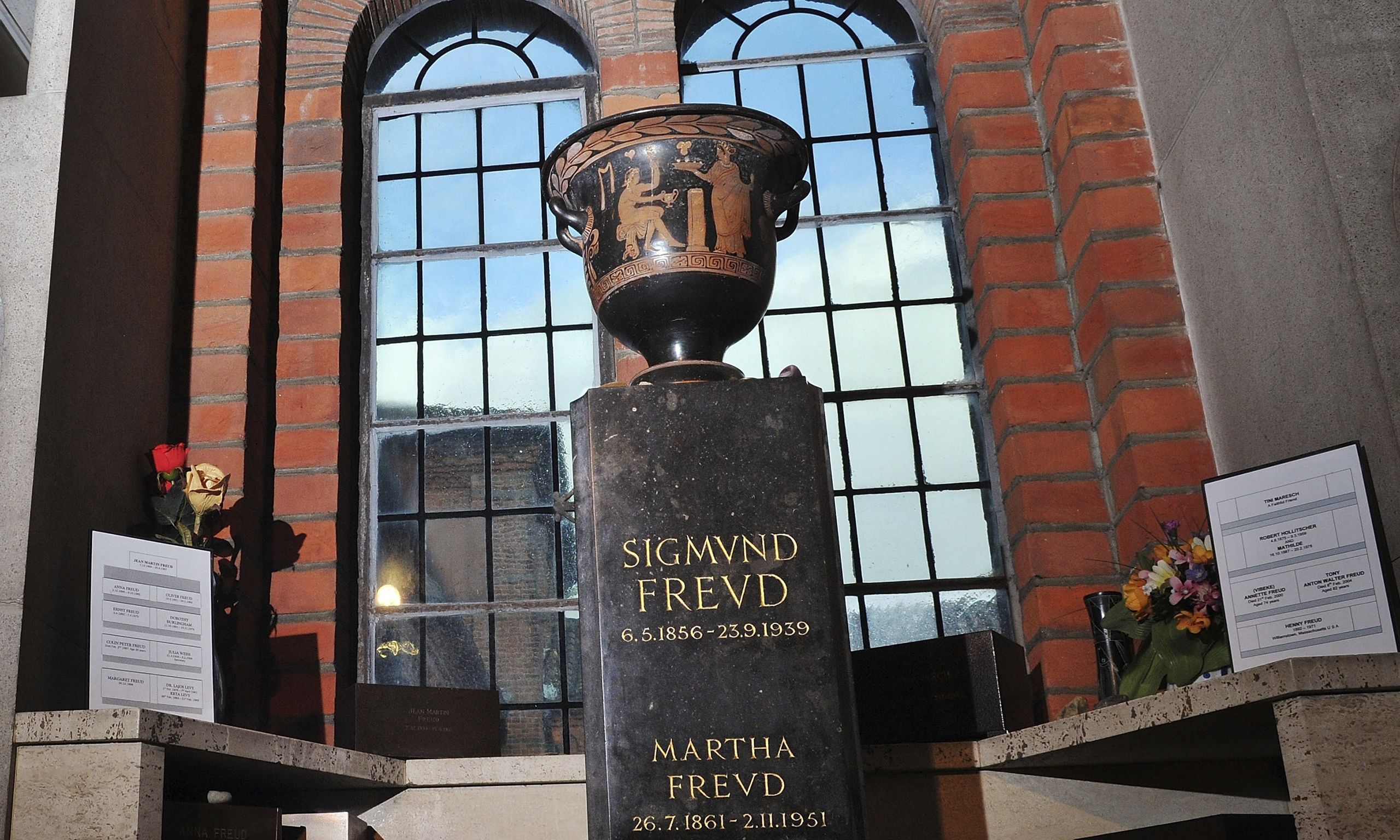
In 1994 he returned to Vienna for the first time since his enforced exile as a guest of the Austrian government, which marked his achievement in liberating the Zeltweg airfield by hosting a dinner in his honour.[7] His last residence in Britain was in Oxted, Surrey.[8] Walter Freud and his wife are buried in the "Freud Corner" at Golders Green Crematorium, London.[9]

In 2022 Spiegel TV produced a docu-drama based on Freud's work with the War Crimes Investigation Unit: Nazijäger – Reise in die Finsternis.[10]

See also

[edit]

References

[edit]
Revisions and contributorsEdit on WikipediaRead on Wikipedia
from Grokipedia
Anton Walter Freud (3 April 1921 – 8 February 2004) was an Austrian-born British chemical engineer and (SOE) operative during , renowned for his daring wartime exploits against Nazi forces and as the grandson of , the founder of . Born in to Martin Freud, Sigmund's eldest son, and Ernestine Drucker, Walter fled Nazi-occupied in 1938 following the , escaping alongside his grandfather and other family members to , where settled in . Upon arrival in Britain, Freud pursued studies in aeronautical at starting in , but his education was interrupted by the . He enlisted in the , initially serving with the Royal Pioneer Corps before transferring to the SOE, where he undertook high-risk intelligence operations, including bluffing interrogators and parachuting into occupied toward the war's end. His brief tenure in the SOE was marked by audacious deception tactics that enabled survival and mission success amid perilous conditions. , Freud transitioned to a career in while residing in , maintaining family ties to notable relatives including cousins and . His estate later prevailed in a 2005 lawsuit against Swiss banks over dormant Holocaust-era assets, recovering $168,000 linked to prewar family holdings. Freud died in , , at age 82.

Early Life and Education

Family Background and Childhood

Anton Walter Freud was born on April 3, 1921, in , , as the eldest child of Jean-Martin Freud, a lawyer and the firstborn son of , and Ernestine "Esti" Drucker. His younger sister, , was born in 1924. The family resided at Berggasse 19, the same address where maintained his home and practice, providing Walter with proximity to his grandfather's intellectual circle during his early years. As the grandson of the renowned psychoanalyst , Walter grew up in an affluent Jewish household amid Vienna's interwar professional class, where his father's legal career supported a comfortable lifestyle. Accounts describe his childhood as secure and unmarred by overt , though social interactions were largely confined to other Jewish families, reflecting the insular networks common among Vienna's assimilated Jewish at the time. Walter's early education began with private tuition, consistent with the preparatory practices for upper-middle-class children in early 20th-century before entry into formal schooling systems. This phase emphasized foundational academic skills in a home environment influenced by familial scholarly pursuits, though no records indicate direct involvement in his grandfather's psychoanalytic work beyond incidental exposure through household discussions.

Formal Education

Following a year of private tuition in Britain, Walter Freud enrolled at Loughborough College in September 1939 to study aeronautical engineering, coinciding with the outbreak of World War II. His coursework focused on the design and mechanics of aircraft, but progress was disrupted by internment as an enemy alien in 1940 and ensuing wartime commitments. After from in September 1946 and as a British citizen in 1947, Freud resumed studies at , pivoting to —a discipline aligned with expanding industrial needs in process industries. He completed the program, earning a degree that equipped him with expertise in chemical processes, reactor design, and materials handling, enabling practical contributions to manufacturing sectors. This transition exemplified a pragmatic adaptation to economic realities, prioritizing employability in Britain's recovering chemical sector over initial interests curtailed by conflict.

Emigration and World War II Service

Flight from Nazi Austria

Following the German with on March 12, 1938, Nazi authorities imposed immediate and severe restrictions on Jews, including asset freezes, forced Aryanization of property, and violent raids on Jewish homes, directly targeting the due to their Jewish heritage and Freud's international prominence. Freud's apartment at Berggasse 19 was searched by agents shortly after, with his sister-in-law subjected to physical assault, underscoring the regime's as the causal impetus for flight rather than generalized political upheaval. Securing exit required navigating bureaucratic and intervention by foreign contacts; Nazi Anton Sauerwald, assigned to oversee Freud's assets, facilitated permits without personal graft but amid broader demands for payments, including the Reichsfluchtsteuer (emigration tax) and levies totaling substantial sums equivalent to tens of thousands of pounds in contemporary value, funded partly by supporter Princess . Logistical hurdles compounded the peril: , weakened by and reliant on a prosthetic , endured arduous preparations, while the coordinated visas for approximately 24 members amid threats of concentration camp . Anton Walter Freud, aged 17 and son of Martin Freud (Sigmund's eldest son), departed as part of this extended group, with he and his father traveling separately from Walter's mother and sister—who initially fled to —before all reuniting in Britain. The core party, including , his wife , and daughter Anna, boarded a train from to on June 4, 1938, transiting through German territory under tension before crossing to , where arrived on June 6. Walter and Martin reached around the same period, evading the escalating pogroms and asset seizures that claimed other Freud relatives left behind. Upon settlement in Britain, the Austrian Jewish refugees, including Walter and Martin, initially benefited from guarantees but faced suspicion as "enemy aliens" after the 1940 fall of prompted mass policies; Walter was detained in May 1940 while studying, reflecting British wartime precautions against potential fifth columnists despite their anti-Nazi credentials. This episode highlighted the causal trade-offs of exile: escape from Nazi racial extermination yielded temporary security but exposed refugees to host-nation security measures grounded in geopolitical fears rather than individual threat assessment.

British Military Enlistment and Training

Following his release from in and return to in August 1941, Walter Freud enlisted in the British Army's , the primary unit available to enemy aliens at the time. As a Jewish from Nazi-occupied , Freud volunteered for service despite the inherent dangers, including potential recapture and execution if deployed behind enemy lines, reflecting the determination of many such exiles to contribute actively to the Allied against the regime that had persecuted their families. His initial posting involved labor-intensive tasks typical of the Corps, such as construction and logistics support, lasting approximately one and a half years. Freud's fluency in German, combined with his background as an Austrian , positioned him for recruitment into specialized intelligence roles, leading to his selection for the (SOE) around early 1943. Transitioning from the Pioneer Corps, he underwent rigorous SOE training designed to prepare agents for and in occupied , which Freud later described as both mentally and physically exacting. The initial phase, spanning the first two months, involved close scrutiny by instructors to assess recruits' resilience, aptitude for covert work, and psychological stability under stress, with elimination of unsuitable candidates based on performance in simulated operations and resistance exercises. This preparation capitalized on his linguistic and cultural knowledge of German-speaking regions, essential for infiltration missions, while underscoring the high attrition rates and mortal hazards faced by volunteers in such units.

Special Operations Executive Missions

In early 1945, Walter Freud, serving as a lieutenant in the (SOE), was selected for a high-risk insertion into Nazi-occupied to support Allied efforts amid the collapsing Eastern Front. His mission focused on disrupting German operations in the Austrian , where intelligence indicated preparations for a potential last-stand "" involving fortified defenses and guerrilla resistance against advancing Soviet forces. Freud parachuted into the Mur Valley region of southern , near Zeltweg airfield in Upper Styria, alongside colleague Hans Schweiger, departing from a base in during April 1945. The operation's primary objectives included sabotaging key , such as airfields, inciting local anti-Nazi resistance among Austrian civilians and deserters, and collecting actionable on Alpine fortifications to inform British and Allied planning ahead of the Army's approach. These tasks leveraged Freud's fluency in German and familiarity with Austrian , enabling him to pose as a local or displaced official to evade detection. During the mission, Freud demonstrated tactical ingenuity by bluffing his way past checkpoints and impersonating authority figures to extract information from and officers, thereby securing details on defensive preparations without immediate compromise. His efforts yielded intelligence on troop movements and fortification sites in the , contributing to SOE's broader assessment that the posed limited strategic threat due to resource shortages and low morale among German forces. Although sabotage attempts were constrained by the operation's brevity and small team size, Freud's actions facilitated minor disruptions to communications and in the drop zone, aligning with SOE's emphasis on to accelerate German capitulation in the region. The mission underscored Freud's personal bravery in operating deep behind enemy lines with minimal support, relying on ad hoc networks of sympathetic locals for sustenance and evasion, though its high-impact potential was curtailed by rapid enemy advances and subsequent events leading to his apprehension. Declassified SOE files, as referenced in postwar accounts, confirm the intelligence gathered proved valuable for Allied coordination, validating the insertion despite its short duration of weeks.

Capture, Interrogation, and Escape

In April 1945, as part of Operation Duncery, Anton Walter Freud parachuted from a base in into Nazi-occupied near Zeltweg in , with the objective of securing the local airfield for advancing Allied forces and encouraging anti-Nazi resistance among the population. Separated from his fellow agents upon landing off-target due to adverse conditions, Freud navigated independently toward the airfield, relying on his SOE training in deception, languages, and improvisation. Upon approaching the perimeter, Freud encountered suspicious German guards who detained him for questioning, suspecting his unauthorized presence amid the collapsing front lines. Employing feigned identity tactics drilled into him during SOE preparation, he impersonated a officer returning from a flight, bluffing his way past the interrogators by asserting authoritative command and exploiting the disarray in German ranks. This quick-witted evasion prevented escalation to formal custody or torture—fates that befell numerous other SOE operatives in earlier missions, such as those captured in and —allowing Freud to proceed unmolested. Freud then single-handedly assumed control of the airfield, arresting the German commander and securing the facility intact against potential or Soviet , which he explicitly aimed to forestall by coordinating with local elements. His actions demonstrated the of late-war operations, where psychological leverage and minimal force yielded strategic gains amid crumbling enemy cohesion. SOE evaluators later commended his "courageous conduct" for averting destruction of valuable . Following the mission's success, Freud crossed advancing Allied lines and returned to Britain shortly after VE Day on May 8, 1945, without sustaining injury.

Post-War Career

Transition to Chemical Engineering

Following demobilization from the in September 1946 at the rank of major, Walter Freud deliberately shifted his technical pursuits from pre-war aeronautical studies to , aligning with civilian opportunities in post-war Britain. In January 1947, after naturalizing as a British citizen, Freud returned to to enroll in its program, completing the degree in short order. This pivot enabled entry into industrial roles starting around 1947, with initial employment at technical firms focused on chemical processes, capitalizing on skills applicable to Britain's reconstruction-era demands for materials production and .

Professional Achievements in Industry

Anton Walter Freud began his industrial career at the British Oxygen Company (BOC) following his degree from , focusing on related to industrial gases such as oxygen production. His tenure at BOC marked the start of a trajectory involving technical roles in gas separation and purification technologies, leveraging skills honed during industrial expansion in Britain. Freud advanced through progressively responsible positions, contributing to operational efficiencies in large-scale chemical processing plants amid the economic recovery. Subsequently, Freud transitioned to British Nylon Spinners, where he applied expertise in polymer processing and synthetic fiber production, aiding the commercialization of technologies licensed from . Later, at BP Chemicals, he engaged in petrochemical developments, including advancements in hydrocarbon-based feedstocks for industrial applications, reflecting a career progression from gases to broader chemical manufacturing sectors. These roles underscored his proficiency in scaling chemical processes for commercial viability, though specific patents attributable to him remain undocumented in public records. Freud maintained enduring professional networks from his Loughborough alumni connections, which supported his industry standing and facilitated career mobility across firms. His contributions were characterized as solidly achieved, spanning over three decades until retirement in 1977, during which he navigated Britain's chemical sector through periods of technological innovation and market competition.

War Crimes Investigations

Following World War II, Anton Walter Freud served as an investigator for the Investigation Unit in northern Germany, operating primarily from and between 1945 and 1946. His German fluency, acquired as an Austrian émigré, and insights from prior missions enabled effective interrogation of suspects and collection of testimonial evidence from witnesses. Freud focused on documenting atrocities linked to concentration camps and industrial complicity in Nazi operations. A key contribution involved the of , managing director of , the firm responsible for supplying pesticide—used for gassing in camps—to SS authorities. Freud's evidence gathering supported Tesch's prosecution at the British military tribunal in , resulting in a conviction for war crimes and his execution by hanging on May 16, 1946. This case demonstrated the unit's pursuit of suppliers enabling , with Freud's role yielding direct evidentiary impact. Freud also contributed to investigations of Neuengamme concentration camp crimes, identifying perpetrators among SS guards and staff through witness testimonies and document analysis, which informed the 1946 Curiohaus Trial in Hamburg. Eleven defendants, including camp commandant Max Pauly, were convicted, with sentences ranging from death to imprisonment based on evidence of systematic killings, medical experiments, and forced labor. Concurrently, he reviewed wartime records of the Krupp industrial empire's use of slave labor, aiding broader accountability efforts against corporate enablers of Nazi forced labor programs. These activities underscored Freud's evidentiary work in facilitating prosecutions without reliance on post hoc narratives.

Personal Life and Family

Relationships and Siblings

Walter Freud had one younger sister, Sophie Miriam Freud (later Loewenstein), born on August 6, 1924, to their parents Jean-Martin Freud and Ernestine Drucker. The siblings shared a close connection to family history, jointly serving as witnesses to events such as the 1886 of their grandparents and Freud. Freud married Annette Krarup (1925–2000), a Danish woman, and the couple had three children: (born 1950), Caroline (born 1955), and Nicola (born 1957). Following , the family settled in , residing in , , where they maintained a stable, private existence. While preserving ties to the extended Freud lineage, Walter emphasized personal independence from the psychoanalytic prominence of his grandfather.

Later Years

Following his retirement from BP Chemicals in 1977 at age 55, Walter Freud settled in , , leading a private life marked by minimal public involvement. He maintained personal archives of wartime documents and artifacts, which he preserved meticulously and later donated as the Walter Freud Collection to the in 2004. Freud sustained affiliations with networks, stemming from his pre- and post-war studies in there, though he undertook no prominent lectures or roles post-retirement. Available records indicate a routine focused on family and personal reflection, without documented health issues or notable pursuits beyond archival stewardship.

References

Add your contribution
Related Hubs
User Avatar
No comments yet.