


Community hub
Recent from talks
Contribute something
Nothing was collected or created yet.
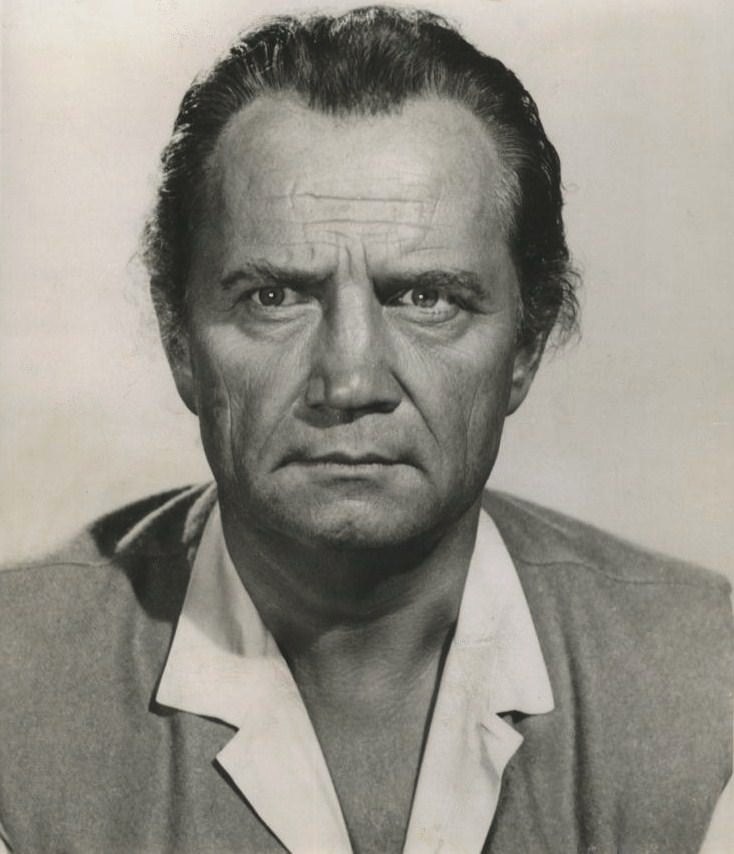
Walter Sande
View on Wikipedia | This article includes a list of general references, but it lacks sufficient corresponding inline citations. (March 2013) |
Walter Sande (July 9, 1906 – February 22, 1972)[1] was an American character actor, known for numerous supporting film and television roles.
Key Information


Films
[edit]Born in Denver, Colorado,[1] he was one of those stern, heavyset character actors in Hollywood no person could recognize by name. Sande showed an early interest in music as a youth and by his college years managed to start his own band. This led to a job as musical director for 20th Century-Fox's theater chain, which, in turn, led him to acting in films beginning in 1937. Usually providing atmospheric bits with no billing, he made an initial impression in serial cliffhangers as a third-string heavy with the popular The Green Hornet Strikes Again! and Sky Raiders.
His first top featured role, however, would come with The Iron Claw as Jack "Flash" Strong, a photographer who, uncharacteristically for Walter, served as a comic sidekick to our serial hero. Best of all would be his role in another serial as Red Pennington, the amusing sidekick to Don Winslow of the Navy. He repeated his role again in Don Winslow of the Coast Guard, the successful sequel.
The Pennington role would spark a long and steady career in movies, usually a step or two behind Hollywood's elite, in To Have and Have Not (prominently featured as the fisherman who tries to cheat Bogie), in Along Came Jones, The Blue Dahlia, Dark City and Bad Day at Black Rock, among hundreds of others. A regular authoritative presence in such classic sci-fi films as Red Planet Mars, The War of the Worlds and Invaders from Mars, he also had a recurring featured part in the 1940s Boston Blackie film series playing Detective Matthews alongside Chester Morris, former thief-turned-crime hero.
Television
[edit]A primary support player during the "Golden Age" of television, Sande worked on nearly every popular western and crime show available in the late 1940s and throughout the 1950s and 1960s, including Johnny Ringo. In 1949, he played Sheriff Taylor in the three-part The Lone Ranger television premiere, as he helped the masked man and Tonto capture the Butch Cavendish gang. He made 15 appearances on Dragnet, starring Jack Webb, usually portraying Chief of Detectives Thad Brown or some other high-ranking LAPD officer. In 1960, he made a guest appearance on Perry Mason as circus co-owner and murder victim Judson Curtis in "The Case of the Clumsy Clown." In 1965, he appeared in the Lost in Space episode "Return from Outer Space" as Sheriff Baxendale.
He had a regular series role on the syndicated The Adventures of Tugboat Annie as Captain Horatio Bullwinkle, Annie's rival, and a recurring one as Lars "Papa" Holstrum, on The Farmer's Daughter. He guest starred on the syndicated adventure series Rescue 8, starring Jim Davis and Lang Jeffries; in David Janssen's CBS crime drama Richard Diamond, Private Detective; on the ABC western series The Rebel, starring Nick Adams; on the CBS military sitcom/drama Hennesey with Jackie Cooper; on the ABC/Warner Brothers western series The Alaskans, starring Roger Moore, and in an episode of the NBC 1960s western series Redigo, starring Richard Egan, and in a 1966 episode of Lassie as store owner Tom of Pine Lake. In 1963 he appeared as Ralph Hayden on the TV western The Rifleman in the episode titled "The Guest." In 1970 he appeared as Graham on the TV western The Virginian in the episode titled "The Mysterious Mr. Tate."
Death
[edit]Sande died of a heart attack at O'Hare Airport in Chicago, Illinois in 1972, at the age of 65.
Selected filmography
[edit]Films
[edit]- The Goldwyn Follies (1938) as Westinghouse – Third Auditioning Singer (uncredited)
- Arson Gang Busters (1938) as Oscar
- Ladies in Distress (1938) as Duncan
- Smashing the Rackets (1938) as Hospital Interne (uncredited)
- Army Girl (1938) as Soldier (uncredited)
- Tenth Avenue Kid (1938) as Detective Faber
- Mr. Doodle Kicks Off (1938) as Himself – Student Band Leader (uncredited)
- The Mad Miss Manton (1938) as Jim – Investigator for Peter (uncredited)
- The Great Waltz (1938) as Revolutionary (uncredited)
- The Mysterious Miss X (1939) as Taxi Cab Driver (uncredited)
- The Great Man Votes (1939) as Radio Newscaster in Montage (uncredited)
- Blondie Meets the Boss (1939) as 2nd Mailman (uncredited)
- Missing Daughters (1939) as Snoop (uncredited)
- Good Girls Go to Paris (1939) as Railroad Ticket Agent (uncredited)
- The Man They Could Not Hang (1939) as Reporter at Typewriter (uncredited)
- Those High Grey Walls (1939) as Convict (uncredited)
- A Woman Is the Judge (1939) as Reporter (uncredited)
- Eternally Yours (1939) as Ralph, Gloria's Husband (uncredited)
- Scandal Sheet (1939) as Hurley
- Mr. Smith Goes to Washington (1939) as Newspaperman with Pipe (uncredited)
- Beware Spooks! (1939) as Policeman (uncredited)
- Sued for Libel (1939) as Court Clerk (uncredited)
- Blondie Brings Up Baby (1939) as Policeman (uncredited)
- The Amazing Mr. Williams (1939) as Police Stenographer (uncredited)
- Music in My Heart (1940) as Process Server (uncredited)
- Convicted Woman (1940) as Cop (uncredited)
- Millionaire Playboy (1940) as Worried Pedestrian (uncredited)
- Men Without Souls (1940) as First Reporter
- You Can't Fool Your Wife (1940) as Mr. Gillespie, Jr.
- Pop Always Pays (1940) as Insurance Investigator (uncredited)
- Angels Over Broadway (1940) as Lunch Wagon Counterman (uncredited)
- So You Won't Talk (1940) as Cop (uncredited)
- Sandy Gets Her Man (1940) as Fireman (uncredited)
- Arizona (1940) as Lieutenant Chapin (uncredited)
- Flight Command (1940) as Officer on Downed Seaplane (uncredited)
- The Green Hornet Strikes Again! (1940, Serial) as Thug Boss at Gold Star Warehouse (uncredited)
- Kitty Foyle (1940) as Trumpeter (uncredited)
- Meet Boston Blackie (1941) as Officer at Amusement Park (uncredited)
- Footsteps in the Dark (1941) as Sailor at Burlesque Theater (uncredited)
- Sky Raiders (1941, Serial) as Irene's Pilot-Henchman [Chs. 4–5] (uncredited)
- Citizen Kane (1941) as Reporter at Xanadu (uncredited)
- Adventure in Washington (1941) as Elevator Operator (uncredited)
- Blondie in Society (1941) as Pincus' Dog Handler (uncredited)
- Sweetheart of the Campus (1941) as Football Player (uncredited)
- Sergeant York (1941) as Sergeant on March (uncredited)
- Parachute Battalion (1941) as Medical Officer
- The Iron Claw (1941, serial) as Jack 'Flash' Strong
- Mystery Ship (1941) as Sailor (uncredited)
- Down in San Diego (1941) as Sergeant (uncredited)
- Navy Blues (1941) as Marine Military Policeman (uncredited)
- Great Guns (1941) as Blue Army Soldier Capturing Stan and Ollie (uncredited)
- Secrets of the Lone Wolf (1941) as Squad Car Officer (uncredited)
- Sing for Your Supper (1941) as Irv (uncredited)
- Confessions of Boston Blackie (1941) as Detective Mathews
- Sealed Lips (1942) as Investigator Gene Blake
- Freckles Comes Home (1942) as "Muggsy" Dolan, aka Jack Leach
- Don Winslow of the Navy (1942) as Lt. Red Pennington
- Blue, White and Perfect (1942) as Sailor Carson (uncredited)
- The Bugle Sounds (1942) as Headquarters Sergeant (uncredited)
- Jail House Blues (1942) as Fudge (uncredited)
- To the Shores of Tripoli (1942) as Pharmacist's Mate (uncredited)
- Two Yanks in Trinidad (1942) as Soldier (uncredited)
- Alias Boston Blackie (1942) as Detective Mathews
- Tramp, Tramp, Tramp! (1942) as Guard (uncredited)
- Who Is Hope Schuyler? (1942) as Chauffeur (uncredited)
- Sweetheart of the Fleet (1942) as Daffy Dill
- Tortilla Flat (1942) as Cannery Foreman (uncredited)
- Wings for the Eagle (1942) as Lockheed Worker Getting Parts (uncredited)
- Priorities on Parade (1942) as Bus Driver (uncredited)
- Timber (1942) as Sandy
- A-Haunting We Will Go (1942) as Expressman (uncredited)
- Berlin Correspondent (1942) as Red – Reporter (uncredited)
- Iceland (1942) as Marine (uncredited)
- The War Against Mrs. Hadley (1942) as War Department Desk Clerk (uncredited)
- My Sister Eileen (1942) as Jackson – Policeman (uncredited)
- Highways by Night (1942) as Lippy Hogan (uncredited)
- Boston Blackie Goes Hollywood (1942) as Detective Sergeant Mathews (uncredited)
- Commandos Strike at Dawn (1942) as Otto – German Soldier (uncredited)
- Air Force (1943) as Joe – Mechanic at Clark Field (uncredited)
- Reveille with Beverly (1943) as Pvt. Puckett aka Canvassback
- The Purple V (1943) as Otto Horner
- Salute for Three (1943) as Sailor (uncredited)
- After Midnight with Boston Blackie (1943) as Det. Sgt. Mathews (uncredited)
- Slightly Dangerous (1943) as Reporter (uncredited)
- He Hired the Boss (1943) as Marine (uncredited)
- Don Winslow of the Coast Guard (1943) as Lt. 'Red' Pennington
- Taxi, Mister (1943) as Police Detective (uncredited)
- They Came to Blow Up America (1943) as Coast Guard Desk Chief (uncredited)
- Corvette K-225 (1943) as Evans
- Son of Dracula (1943) as Mac, Deputy (uncredited)
- The Chance of a Lifetime (1943) as Detective Sgt. Matthews (uncredited)
- Gung Ho! (1943) as McBride
- A Guy Named Joe (1943) as Sande – Mess Sergeant (uncredited)
- This Is the Life (1944) as Joe (uncredited)
- Henry Aldrich's Little Secret (1944) as Newspaper Reporter (uncredited)
- I Love a Soldier (1944) as Sgt. Lionel 'Stiff' Banks
- The Singing Sheriff (1944) as Butch
- To Have and Have Not (1944) as Johnson
- Along Came Jones (1945) as Ira Waggoner
- What Next, Corporal Hargrove? (1945) as Maj. Kingby
- The Daltons Ride Again (1945) as Wilkins
- The Spider (1945) as Det. Lt. Walter Castle
- The Blue Dahlia (1946) as Heath
- No Leave, No Love (1946) as Sledgehammer
- Nocturne (1946) as Halberson
- The Red House (1947) as Don Brent (uncredited)
- The Woman on the Beach (1947) as Otto Wernecke
- Wild Harvest (1947) as Long
- Christmas Eve (1947) as Mario's Hood
- Killer McCoy (1947) as Bill Thorne
- The Prince of Thieves (1948) as Little John (uncredited)
- Perilous Waters (1948) as Franklin
- Half Past Midnight (1948) as Det. Lt. MacDonald
- Wallflower (1948) as Police Officer (uncredited)
- Blonde Ice (1948) as Hack Doyle
- Miss Mink of 1949 (1949) as Sean O'Mulvaney
- Bad Boy (1949) as Texas Oil Man (uncredited)
- Tucson (1949) as George Reeves
- Canadian Pacific (1949) as Mike Brannigan
- Rim of the Canyon (1949) as Jake Fargo
- Joe Palooka in the Counterpunch (1949) as Austin
- Strange Bargain (1949) as Sgt. Cord
- Dakota Lil (1950) as Butch Cassidy
- The Kid from Texas (1950) as Crowe
- A Woman of Distinction (1950) as Charlie – Motorcycle Cop (uncredited)
- 711 Ocean Drive (1950) as Auto Repair Mechanic (uncredited)
- Dark City (1950) as Swede
- The Du Pont Story (1950) as Tom Cooper
- Call Me Mister (1951) as Military Policeman #106 (uncredited)
- Payment on Demand (1951) as Swanson
- Rawhide (1951) as Flowers (uncredited)
- A Place in the Sun (1951) as Art Jansen – George's Attorney
- Fort Worth (1951) as Deputy Waller
- The Basketball Fix (1951) as Nat Becker
- Warpath (1951) as Sgt. Parker
- Tomorrow Is Another Day (1951) as Sheriff
- The Racket (1951) as Precinct Sgt. Jim Delaney
- Red Mountain (1951) as Benjie
- I Want You (1951) as Ned Iverson
- Mutiny (1952) as Mr. Stone, USN (uncredited)
- Red Planet Mars (1952) as Admiral Bill Carey
- The Duel at Silver Creek (1952) as Pete Fargo
- The Steel Trap (1952) as Customs Inspector
- Bomba and the Jungle Girl (1952) as Mr. Ward
- The Legend of the Lone Ranger (1952) as Sheriff Taylor
- The War of the Worlds (1953) as Sheriff Bogany (uncredited)
- Invaders from Mars (1953) as Police Desk Sgt. Finlay (uncredited)
- Powder River (1953) as Sam Harris
- The Great Sioux Uprising (1953) as Joe Baird
- The Kid from Left Field (1953) as Barnes
- A Blueprint for Murder (1953) as Dist. Atty. John J. Henderson (uncredited)
- Overland Pacific (1954) as Mr. Dennison
- Apache (1954) as Lt. Col. Beck
- Bad Day at Black Rock (1955) as Sam
- Wichita (1955) as Clint Wallace
- Texas Lady (1955) as Whit Sturdy
- Anything Goes (1956) as Alex Todd
- The Maverick Queen (1956) as Sheriff Wilson
- Canyon River (1956) as Maddox
- Gun Brothers (1956) as Yellowstone Kelly
- Drango (1957) as Dr. Blair
- The Iron Sheriff (1957) as Marshal Ellison
- Johnny Tremain (1957) as Paul Revere
- Last Train from Gun Hill (1959) as Sheriff Bartlett
- Oklahoma Territory (1960) as Marshal Pete Rosslyn
- Noose for a Gunman (1960) as Marshal Tom Evans
- The Gallant Hours (1960) as Capt. Horace Keys
- Sunrise at Campobello (1960) as Capt. Skinner
- The Quick Gun (1964) as Tom Morrison
- Young Dillinger (1965) as Judge
- I'll Take Sweden (1965) as Bjork
- The Navy vs. the Night Monsters (1966) as Dr. Arthur Beecham
- Death of a Gunfighter (1969) as Paul Hammond
- Cold Turkey (1971) as Tobacco Executive
Television
[edit]- Public Prosecutor (14 episodes, 1947–1951) as Lt. Evans
- The Lone Ranger (7 episodes, 1949-1952)
- Four Star Playhouse (4 episodes, 1952-1956)
- Zane Grey Theatre (7 episodes, 1956-1961)
- The Adventures of Tugboat Annie (26 episodes, 1957-1958) as Captain Horatio Bullwinkle
- Tales of Wells Fargo (3 episodes, 1957-1960)
- Wanted Dead or Alive (3 episodes, 1959-1960) - featured in 1 episode as Pat Garrett
- Laramie (5 episodes, 1959-1962))
- Maverick (S4 E29 "Substitute Gun") as Sheriff Coleman
- Death Valley Days (3 episodes, 1960-1965)
- Gunsmoke (7 episodes, 1961-1971)
- The Dick Powell Theatre (S1,E22 "The Legend," February 20, 1962) as Al Cooper
- Bonanza (4 episodes, 1962-1969)
- Lost in Space (S1,E15 "Return from Outer Space") as Sheriff George Baxendale
- That Girl (pilot episode, 1966) as Max Cochran - appeared a year later in a reworked version of the pilot episode
- Lassie (S12,E18 "The Town That Wouldn't Die," January 16, 1966) as store owner Tom
- The Wild Wild West (3 episodes, 1967) as Colonel Crockett
- Rango (S1,E9 "My Teepee Runneth Over," March 10, 1967) as Sheriff
- Bewitched (S4,E21 "Hippie Hippie Hooray," February 1, 1968) as Giddings
- The Doris Day Show (4 episodes, 1968-1971)
- Michael O'Hara the Fourth (1972, TV movie) as John Parsons (posthumously released)


References
[edit]- ^ a b Kotar, S.L.; Gessler, J.E. (December 2009). Riverboat: The Evolution of a Television Series, 1959-1961. BearManor Media. p. 126. ISBN 9781593935054 – via Google Books.
External links
[edit]
| International | |
|---|---|
| National | |
| People | |
| Other | |
Walter Sande
View on GrokipediaEarly life
Birth and family background
Walter Sande was born Joseph Thomas Sandvall on July 9, 1906, in Denver, Colorado.[8]Education and musical training
Sande spent much of his childhood studying music.[9] As a youth, he demonstrated a strong passion for music, which he continued to pursue into his college years.[8] During college, Sande organized and managed his own band, honing his musical skills through practical performance and leadership.[9]Career beginnings
Musical directorship
In the 1920s, following his relocation to Hollywood, Sande secured a position as musical director for the theater chain owned by Fox Film Corporation (later 20th Century-Fox). In this role, he oversaw live musical accompaniment for film screenings, a critical function during the silent movie era when theaters relied on orchestras or bands to provide synchronized scores that enhanced the dramatic impact of the visuals. His work involved selecting, arranging, and conducting music to match the pacing and mood of various productions, contributing to the immersive experience for audiences across multiple venues in the chain.[10] The advent of synchronized sound films in the late 1920s and early 1930s rendered live musical direction largely obsolete, as theaters transitioned to pre-recorded audio tracks. This technological shift ended Sande's tenure in musical directorship and opened the door to his acting career, with his first on-screen appearance in 1938's Tenth Avenue Kid, where he portrayed Detective Faber.[10]Transition to acting
Sande's role as a musical director for Fox Film Corporation's theater chain in the 1920s involved providing live orchestral accompaniment for silent films, a position that immersed him in the burgeoning motion picture industry.[9] This work positioned him in Hollywood during a pivotal era of technological change.[11] The advent of synchronized sound in films during the late 1920s and early 1930s gradually rendered live theater music obsolete, as pre-recorded scores became standard, diminishing the demand for on-site musical directors like Sande.[9] By the mid-1930s, facing professional redundancy, Sande shifted his focus to acting, leveraging his industry connections from the theater chain to secure initial opportunities in film.[11] His screen debut came in 1938 with the crime drama Tenth Avenue Kid, where he portrayed Detective Faber.[4] [12] Over the following years, Sande honed his craft through a series of small roles, frequently cast as heavies or authority figures, which helped establish him as a reliable character actor.[11] This transitional period culminated in more prominent supporting work by 1941, including his featured role as photographer Jack "Flash" Strong in the serial The Iron Claw.[9]Film career
Early film roles
Sande made his film debut in 1938 with an uncredited appearance as Westinghouse, a third auditioning singer, in George White's The Goldwyn Follies, a musical revue produced by Samuel Goldwyn that showcased emerging talent alongside stars like the Ritz Brothers and Adolphe Menjou. Shortly thereafter, he secured his first credited role as Oscar, a gang member, in the low-budget crime drama Arson Gang Busters, directed by Albert Herman for Screen Art Pictures, marking his entry into portrayals of tough, working-class characters. That same year, he appeared as Detective Faber in the Republic Pictures drama Tenth Avenue Kid, a story of police redemption involving a young orphan, further establishing his typecasting as law enforcement figures in B-movies.[12] Throughout 1938 and 1939, Sande continued in minor supporting roles across genres, often uncredited or in brief credited parts, such as a soldier in the war drama Army Girl and a hospital interne in the gangster film Smashing the Rackets, both released by RKO. These early assignments, typically in quickie productions, allowed him to build experience while working with established actors like Preston Foster and Edward Arnold, though his screen time remained limited to establishing shots or dialogue snippets. By 1940, Sande ventured into cliffhanger serials, debuting in the genre with an uncredited turn as a third-string heavy—a racketeer—in Universal's 15-chapter The Green Hornet Strikes Again!, opposite Warren Hull as the masked vigilante.[9] Sande's first significant featured role arrived in 1941 with The Iron Claw, a 15-chapter Republic serial where he played Jack "Flash" Strong, a wisecracking photographer sidekick to the lead investigator, providing comic relief amid the action-adventure plot involving a criminal syndicate.[13] This performance highlighted his versatility beyond heavies, earning praise for injecting humor into the high-stakes narrative. Building on this, he reprised a sidekick persona as Red Pennington, the bumbling but loyal naval officer companion to Don Winslow, in the 12-chapter Don Winslow of the Navy (1942) and its 13-chapter follow-up Don Winslow of the Coast Guard (1943), both Universal serials that capitalized on wartime patriotism and naval themes.[14] These serial roles, involving chases, fights, and espionage, solidified Sande's reputation in the chapterplay format, where his sturdy build and gruff delivery suited the demands of physical action sequences. Transitioning toward more mainstream features by the mid-1940s, Sande appeared in 1944's To Have and Have Not, Howard Hawks' romantic adventure set in Martinique, where he played the credited role of Johnson, a local fisherman aiding Humphrey Bogart's Harry Morgan in smuggling operations. The following year, he supported Gary Cooper and Loretta Young in the Western Along Came Jones, portraying a deputy in the satirical tale of mistaken identity and banditry. These assignments in higher-profile productions demonstrated Sande's growing reliability as a character actor, bridging his serial work with the broader Hollywood landscape while maintaining his niche in authoritative or rugged supporting parts.Notable supporting roles
Throughout his film career, Walter Sande excelled in supporting roles that capitalized on his robust build and gruff demeanor, frequently casting him as lawmen, military personnel, or working-class antagonists in high-profile productions from the 1940s to the 1950s. These performances added depth to ensemble casts in genres ranging from film noir to science fiction and Westerns, often providing comic relief or authoritative tension without overshadowing leads. His ability to embody reliable yet sometimes corrupt figures made him a go-to actor for studios like Paramount and RKO.[1] One of Sande's breakthrough supporting turns came in Howard Hawks' romantic adventure To Have and Have Not (1944), where he portrayed Johnson, a scheming fishing boat hand who attempts to double-cross Humphrey Bogart's cynical protagonist, Harry Morgan, during a smuggling operation in Martinique. This role in the Bogart-Bacall classic showcased Sande's knack for playing opportunistic toughs in tense, dialogue-driven scenes.[15] Similarly, in the Raymond Chandler-scripted film noir The Blue Dahlia (1946), Sande played Heath, a tough gangster working for the nightclub owner Corelli, adding tension to the mystery surrounding a husband's apparent murder of his wife and complicating the suspect's alibi. His portrayal contributed to the film's atmospheric suspense and earned praise for its procedural authenticity. Sande's versatility shone in science fiction epics, notably as Sheriff Bogany in George Pal's The War of the Worlds (1953), where he depicted a small-town lawman scrambling to maintain order amid the Martian invasion's chaos in Southern California, highlighting the film's themes of human vulnerability. In John Sturges' taut thriller Bad Day at Black Rock (1955), he appeared as Sam, the laconic cafe proprietor in a hostile desert town, offering subtle hints of complicity in the community's dark secrets while serving as a foil to Spencer Tracy's one-armed stranger. Another standout was his historical portrayal of Paul Revere in Walt Disney's Johnny Tremain (1957), a coming-of-age Revolutionary War drama, where Sande brought gravitas to the silversmith-patriot rallying colonists against British rule. These roles solidified Sande's reputation as a dependable pillar in Hollywood's golden age ensembles.[16][17]Television career
Debut in television
Walter Sande's debut in television occurred in 1951 with the crime drama series Public Prosecutor, where he portrayed the recurring role of Lieutenant Evans, a steadfast police investigator assisting District Attorney Stephen Allen in unraveling mysteries. Produced by Jerry Fairbanks Productions between 1947 and 1948, the series consisted of 26 half-hour episodes shot on 16mm film, making it the first dramatic program created exclusively for the medium—a pioneering effort during television's nascent years when most content was broadcast live. Although filmed earlier, the episodes did not air until September 1951 on the DuMont Television Network, repackaged within the anthology format of Crawford Mystery Theatre, where a panel discussed the cases after each screening. Sande's performance in this procedural noir-style show highlighted his reliable everyman quality, often appearing in uniform to deliver exposition or pursue suspects in dimly lit urban settings.[18][19] In Public Prosecutor, Sande appeared across 14 episodes, providing consistent support to leads John Howard as the prosecutor and Anne Gwynne as his assistant, Pat. His character, Lt. Evans, embodied the archetype of the no-nonsense lawman, frequently coordinating raids or interrogating witnesses in tales inspired by real courtroom dramas, such as "The Case of the Missing Bullets" and "The Case of the Comic-Strip Murder." This role not only introduced Sande to audiences in the post-World War II era but also aligned with his established screen persona from films, where he often played authority figures in B-movies and westerns. The series' filmic quality allowed for reusable footage and syndication potential, setting a template for future TV production that Sande would exploit in his subsequent career.[20][18] Sande's television entry via Public Prosecutor came at a pivotal moment for the industry, as networks like DuMont and NBC vied for programming amid the shift from radio dominance. Sponsored by Crawford Clothes, the show's 1951–1952 run on DuMont Thursdays at 9:30 p.m. ET exposed Sande to a growing viewership, though the network's limited reach compared to rivals meant modest initial impact. Nonetheless, the experience solidified his transition from cinema supporting parts to the small screen, where his gravelly voice and robust build proved ideal for the era's anthology and western genres that followed. No prior broadcast television credits for Sande appear in production records from the 1940s, confirming this as his professional debut in the medium.[19][18]Recurring series appearances
Walter Sande established a notable presence in early television through recurring roles that showcased his ability to portray authoritative and rugged characters, often in crime dramas and Westerns. In the Western genre, Sande made seven appearances on The Lone Ranger (1949–1957), frequently cast as sheriffs or town officials who allied with the masked hero against outlaws. These roles, spanning various episodes from the series' first season through 1952, highlighted his stern demeanor and reliability as a supporting figure in the fight for justice on the frontier. Sande also had a recurring role in the police procedural Dragnet (1951–1959), appearing in 15 episodes as Capt. Lohrman, a high-ranking LAPD officer, from 1953 to 1956.[21] Sande's television work expanded into comedy-drama with a regular role in the short-lived syndicated series The Adventures of Tugboat Annie (1957), portraying Capt. Horatio Bullwinkle, the rival tugboat captain to the titular character. As a key antagonist in the maritime-themed stories, his performance added tension and humor to the ensemble, appearing throughout the 39-episode run.[22] Later in his career, Sande returned to recurring family-oriented roles in The Farmer's Daughter (1963–1966), playing Lars "Papa" Holstrum, the patriarchal Swedish immigrant father of the protagonist Katy Holstrum. He featured in 11 episodes, providing comic relief and emotional depth to the political sitcom through his portrayal of a traditional, wisecracking parent navigating American life.[23]Personal life and death
Marriages and family
Walter Sande was married twice during his lifetime. His first marriage was to Verna E. Bates in 1928; the union ended in divorce, with the exact date unknown.[8] Sande's second marriage was to Edna Frances Shortell on April 28, 1938, and it lasted until his death in 1972.[8] The couple had one daughter together.[8] Edna Frances Shortell was the sister of actress Virginia O'Brien, as both were nieces of Ruby Bacon, wife of director Lloyd Bacon.[24]Circumstances of death
Walter Sande died on February 22, 1972, at the age of 65.[6] He suffered a fatal heart attack while at O'Hare International Airport in Chicago, Illinois.[6]Filmography
Selected films
Walter Sande appeared in more than 140 feature films over his four-decade career, frequently cast in uncredited or small supporting roles as tough, no-nonsense characters like cops, soldiers, and officials, contributing to the atmosphere of classic Hollywood genres including film noir, westerns, and science fiction.[1] His contributions to cinema are exemplified in these selected films, chosen for their cultural significance and his visible presence:| Year | Title | Role |
|---|---|---|
| 1941 | Citizen Kane | Reporter at Xanadu (uncredited) |
| 1944 | To Have and Have Not | Johnson |
| 1946 | The Blue Dahlia | Heath |
| 1951 | A Place in the Sun | Art Jansen (George's attorney) |
| 1952 | Red Planet Mars | Admiral Bill Carey |
| 1953 | The War of the Worlds | Sheriff Bogany (uncredited) |
| 1955 | Bad Day at Black Rock | Sam (cafe proprietor) |
| 1957 | Johnny Tremain | Paul Revere |
Selected television roles
Sande's television career featured him as a reliable character actor in over 150 episodes, often portraying authoritative figures such as lawmen, fathers, and military personnel in genres ranging from westerns to sitcoms during the medium's golden age.[1] His roles contributed to the ensemble dynamics of many iconic series, emphasizing his gravelly voice and sturdy presence.[9]Selected television roles
- The Adventures of Tugboat Annie (1957): Regular role as Capt. Horatio Bullwinkle, the competitive rival to the protagonist's tugboat operation in this maritime comedy series.
- Dragnet (1951–1959): Multiple guest appearances as police captains, including Capt. Lohrman and Captain Barnard, supporting the procedural investigations led by Jack Webb's Sgt. Joe Friday.
- The Lone Ranger (1949–1952): Appeared in seven episodes, frequently cast as sheriffs or town marshals upholding justice in the old West.
- Laramie (1959–1963): Recurring guest spots in several episodes, playing characters such as Jess Weardon, Sgt. Coffey, and various sheriffs in this Wyoming-based western.
- The Farmer's Daughter (1963–1966): Recurring role as Lars "Papa" Holstrum, the warm-hearted Swedish father of the lead character Katrin Holstrum (Inger Stevens), appearing in key family-oriented episodes of the sitcom.
- Bonanza (1959–1973): Four guest appearances across the years, including as Sheriff Wall in "The Decision" (1962) and other authority figures in the Cartwright family's adventures.
- Gunsmoke (1955–1975): Multiple episodes as characters like Caldwell and Cal Haines, contributing to the long-running western's depiction of frontier law and order.[26]
- 77 Sunset Strip (1958–1964): Guest roles in crime-solving episodes, leveraging his experience in detective procedurals.[9]