Hubbry Logo
Body cameraBody cameraMain
Open search
Body camera
Community hub
Body camera
logo
8 pages, 0 posts
0 subscribers
Be the first to start a discussion here.
Body camera
Body camera
from Wikipedia
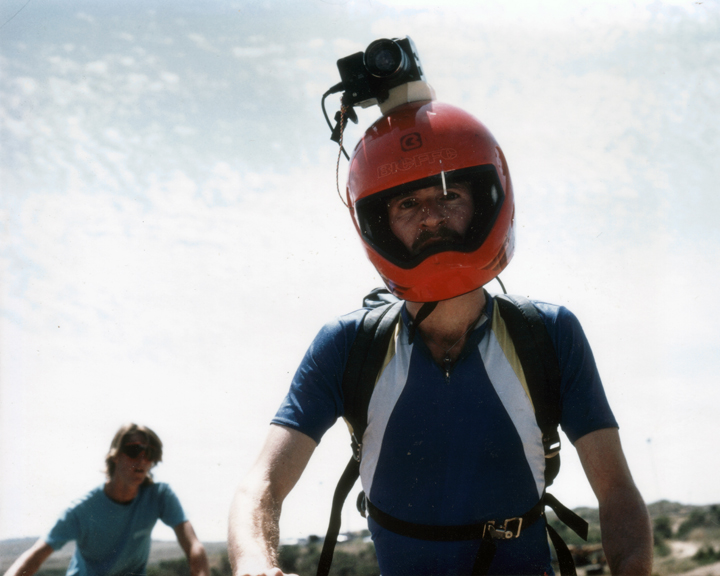
Biker wearing one of the first 'helmet cams' c. 1987
Skydiver with helmet camera
Reporter with a GoPro camera on helmet to live stream press conferences
Action-Cam with underwater housing

A body camera, bodycam, body-worn video (BWV), body-worn camera, or wearable camera is a wearable audio, video, or photographic recording system.

Body cameras have a range of uses and designs, of which the best-known use is as a police body camera. Other uses include action cameras for social and recreational (including cycling), within the world of commerce, in healthcare and medical use, in military use, journalism, citizen sousveillance, and covert surveillance. Action cameras are therefore typically compact, rugged, and waterproof at the surface level. They typically use CMOS image sensors,[1] and can take photos in burst mode and time-lapse mode as well as record high-definition video (as of 2019, mid-range to high-end action cameras can record 4K video at 60 fps). Slow-motion video recording at 120 or 240 fps is also a common feature.

Research on the impact of body-worn cameras for law enforcement shows mixed evidence as to their impact on the use of force by law enforcement and communities' trust in police. The publicized deaths of black Americans at the hands of police has been a large factor increasing support for body worn cameras by police personnel. For decades people have protested police by watching them stemming from long term unhappiness with the system, and social media has only bolstered this behavior from the public.[2]

Designs

[edit]
GoPro Hero 4 Silver Edition, one of the most recognizable action cameras

Body-worn cameras are often designed to be worn in one of three locations: on the torso, on or built into a helmet, and on or built into glasses. Some feature live streaming capabilities, such as GPS positioning, automatic offload to cloud storage, while others are based on local storage. Some body-worn cameras offer automatic activation of the cameras with the ability to adhere to that agency's specific body camera recording policies. The National Criminal Justice Technology Research, Test, and Evaluation Center has conducted market surveys on body-worn cameras to assist organizations in purchasing the best camera. The survey discusses device functionality, optics, audio, GPS, and several more categories. These cameras range in price from 200 dollars to 2,000 dollars.[3]

Applications

[edit]
A close up of a body camera not on a body
Navy parachute demonstration team member wearing a helmet cam on a jump

The camera is typically worn or mounted in such a way that it can shoot from the point of view of the shooter. Some examples of common places to mount an action camera are on a hat or helmet, on the chest, or on the handlebars of a bike or similar vehicle. They may also be mounted on a tripod or on a monopod for handheld use. An action camera is usually designed to require minimal interaction once recording has begun, as this allows continuous capture of the action without having to interact with the camera. A typical action camera records onto a microSD card, and has either a Micro-USB or a USB-C connector.

Action cameras are associated with outdoor sports, and, often attached to helmets, surfboards or handlebars, are an integral part of many extreme sports such as base jumping and wingsuit flying. Sometimes several cameras are used to capture specific perspectives, such as a helmet camera that sees the perspective of the actor in combination with a second camera attached to the environment of the rider, such as a board, wing, handlebar or wrist, that looks back onto the rider and records their reactions.

The category is commonly associated with the GoPro range of cameras, and many action cameras come with a GoPro mount adapter to take advantage of the accessories available for these cameras. However, there are many GoPro alternatives which are entering the market of action cameras in recent times.

Law enforcement

[edit]
Police body camera example
Australian Defence Force MP wearing Axon Body 3

Wearable cameras are used by police and other law enforcement organizations in countries around the world. The cameras are intended to improve interactions between officers and the public. The first generation of 'modern' police body cameras was introduced around 2005 in the United Kingdom, followed from 2014 onwards by large-scale implementation in the United States, mainly to increase transparency and police accountability. Following multiple cases of civil unrest surrounding the deaths of civilians under police supervision, a growing current of demands for a more thorough investigation process began to swell. Groups like Black Lives Matter were protesting and calling for action from the Obama administration. On December 18, 2014, the Obama administration cited "simmering distrust" between police and minorities as a reason to enact the president's task force on 21st-century policing as an executive order.[4] There are more than 1800 police departments in the United States, and by 2016 more than half of them were using BWC technology in some capacity.[5] Early studies showed positive results, but replications have led to mixed findings. Outcomes have been shown to differ depending on the local context and the guidelines regulating activation of the body cams. The most obvious effect of this technology would be increased transparency between the police force and the public, as the technology makes it much easier to collect evidence of misconduct whether that be on the part of the officer or the civilian.[6] Challenges include training, privacy, storage and the use of recordings further 'downstream' in the judicial system. The presence of body-worn cameras influences both parties present for an arrest, but the exact effects are currently inconclusive.[7] However, the presence of body-worn gives ease to the public which can improve relations between police and the public. Conclusive studies have not yet reached an explanation as to the concrete effects on the individuals, but it can be noted that the presence of body worn cameras has resulted in a decrease in civilian complaints.[6] Challenges include training, privacy, storage and the use of recordings further 'downstream' in the judicial system. A systematic review assessed the available evidence on the effect of body-worn cameras in law enforcement on police and citizen behavior. They found that body-worn cameras may not substantially impact officer or citizen behavior and that effects on use of force and arrest activities are inconsistent and non-significant. Research suggests no clear effects of body-worn cameras in terms of citizen behavior such as calls to police and resisting arrest.[8] Subsequent analysis of the research affirms these mixed findings and draws attention to how the design of many evaluations fails to account for local context or citizen perspectives.[9]

Body-worn cameras have become one of the biggest costs for townships, cities, and agencies for police, costing millions of dollars. The main reason for the growth of body-worn cameras is a direct result of the publicizing of events over the past decade, where Caucasian police officers have killed unarmed Black civilians. The family of Michael Brown, a black teenager killed by police, called for the use of BWCs by all police in the United States.[4] The task force assembled by the Obama administration recommended the use of BWCs on the local level in 2015; this was backed up by the Department of Justice.[4]

The main place where body-worn cameras have become more popular is in low-researched environments, because public protest was the main driving reason for BWC becoming so widespread.[10]

The use of body-worn cameras by police was not only a popular development in the United States, but also in England and Wales, where they are not a new discovery. The overall outcome and reactions to these cameras have been positive, but there has been little evidence on how BWCs have affected the actions and reactions of the police wearing them.[11]

Firefighting

[edit]
Firefighter with a GoPro camera

Firefighters use helmet cameras as a tool to assess fires and for communication and training purposes. Cameras in this occupation are often thermal cameras in order to be able to see in darkness and inside smoke-filled buildings. Augmented reality (AR) can be added to accentuate outlines of objects and people.[12]

Healthcare

[edit]

Body worn video has been suggested and explored in the medical field. Data recorded from wearable cameras can assist in medical research and limit error caused by inaccurate self-reporting of data.[13] It is speculated that under-reporting is common when conducting dietary and nutrition assessments.[14] Research suggests body worn video reduces under-reporting of intake during such assessments.[15] Cameras can be used as a memory prosthetic for conditions that affect the memory.[16] In 2013, Google Glass was used to assist in surgery by providing a mostly hands-free way to broadcast and receive consultation from another surgeon.[17] Body cameras were provided to hospital staff by the Cardiff and Vale Health Board in Wales, United Kingdom. The cameras were issued to reduce the likelihood of violent assaults against staff. According to the manager who provides support to staff who have been attacked, the cameras – and especially the audio recording – have been vital for successful prosecutions.[18]

Body cameras can be used to make an impact in the mental health world. There is currently only minimal evidence on the effects that body cameras have in a mental health setting in reference to violence within patients; the use of the technology points towards lower numbers of complaints from the public in law enforcement, though its efficacy in mental health settings is not clear.[19]

Military combat

[edit]
U.S. soldier in Afghanistan with a personal helmet camera, 2010

Body-worn cameras as well as helmet cameras are used in the military.[20] Video can either be stored locally, or streamed back to a command center or military outpost. A notable example is the raid on Osama Bin Laden's compound, where live video footage of the raid is believed to have been streamed to the White House.[21] In 2013, Royal Marine Alexander Blackman was convicted of murder for killing a captive Taliban insurgent; footage from the incident, recorded on a helmet camera, was used in Blackman's court-martial. The conviction was overturned in 2017 and reduced to manslaughter on the grounds of diminished responsibility, with Blackman being released from jail.[22][23] The helmet camera has been the focus of the Discovery Channel series Taking Fire about the 101st Airborne in the Korengal documenting their personal war footage.

Militancy

[edit]

The utilization of body cameras by militant groups represents a shift in the tactics of modern conflict and asymmetrical warfare, enabling such groups to amplify the impact of their operations. It can serve as a propaganda tool, a means of recruitment, and a method to maintain the narrative surrounding their actions.

In 2016, helmet camera footage was recovered from a dead Islamic State fighter in Iraq, offering a contrasting picture of chaos and panic in a battle with Kurdish Peshmerga.[24] There have also been various other helmet camera footage that were recovered from Islamic State fighters.

On October 7, 2023, Hamas and other Gazan militants used bodycams and helmet cameras during an attack on Israeli communities bordering the Gaza Strip. The videos released on social media, or captured by Israeli forces from the bodies of dead or captured militants, depicted severe acts of violence including murder, torture, decapitation, and kidnapping.[25][26]

Retail

[edit]

Body cameras may be worn by retail workers to deter against abusive or threatening behavior by customers.[27]

Retailers are looking for ways to solve issues when it comes to dealing with criminal behavior, while also making the staff feel safer and more comfortable when working.[28]

Privacy concerns

[edit]

Concerns over privacy have been raised over the use of this technology, most notably in the context of Google Glasses and policing. The advent of large-scale data collection, possibly in combination with facial recognition and other technologies capable of interpreting videos in bulk, means that all cameras, including body-worn cameras, could create a means of tracking people anywhere they go. In policing, critics have warned that each police officer could become a "roving surveillance camera".[29] Issues involving privacy concerns continue as new technologies are presented to law enforcement but the government has had ways of masking the technologies from the public and in some cases, even the police.[30] Police will interact with citizens during vulnerable moments,[31] such as in a hospital, or in a domestic violence situation. Concerns have also been raised that this algorithms not only infringe on privacy rights, but could also be ethnically biased.[32] The American Civil Liberties Union has suggested policies to balance citizen's rights with the desire for more transparency and accountability.[33]

History

[edit]

In 2014, worldwide action camera sales increased by 44 percent from the previous year and half of them have the capability to shoot Ultra High Definition at 4K resolution. Action camera sales have surpassed traditional camcorder and compact camera sales, and it is predicted that in 2019, action camera sales will surpass all types of cameras due to the sales of other camera types declining or stabilizing.[34]

By 2021, the Ultra HD category of the action camera market is expected to reach $3.3 billion. The Full HD category, meanwhile, is expected to reach $2.2 billion, with the surveillance/security industry driving growth.[35]

8ten action camera, low budget HD camera

In 2018, Sony launched a shock and waterproof camera with a 1" sensor in a body size similar to an action camera. However, Sony is not marketing it as an action camera; rather, as a video professional camera with the capability to shoot with up to 15 cameras at the same time.[36]

Product lines

[edit]

Besides the GoPro line, other models of action cams include the:

See also

[edit]

References

[edit]
[edit]
Revisions and contributorsEdit on WikipediaRead on Wikipedia
from Grokipedia
A body-worn camera (BWC) is a compact, wearable device attached to a officer's uniform or body, capable of recording audio and video footage from a first-person perspective to document interactions with the public, including traffic stops, arrests, sobriety tests, and interviews. Originating in experimental use by police in 2005 and accelerating in adoption across the in the mid-2010s amid demands for greater following incidents like the 2014 , BWCs have been implemented by approximately 47% of general-purpose agencies, rising to 80% among large departments, often supported by federal grants. Proponents argue that BWCs enhance transparency by providing objective evidence for court proceedings and internal reviews, while empirical analyses reveal inconsistent outcomes: some randomized trials report reductions in police use of force by up to 10% and citizen complaints by over 15%, yet comprehensive reviews of multiple studies indicate no statistically significant or uniform effects on violence or misconduct, with potential increases in reported force in certain implementations due to heightened awareness and documentation. Significant controversies persist regarding privacy erosion, as BWCs inadvertently capture bystanders, victims, and sensitive locations without consent, raising concerns over data storage, access, and potential misuse for ; inadequate policies on activation, retention, and facial recognition integration exacerbate risks of overreach despite accountability goals.

Technology and Design

Hardware Components and Form Factors

Body cameras incorporate core hardware components such as an for video capture, , for audio recording, rechargeable , and media like cards or embedded drives sufficient for 10-12 hours of continuous high-definition footage at standard resolutions. These elements enable reliable operation in dynamic environments, with batteries typically providing 8-15 hours of recording time depending on settings and usage. Mounting systems facilitate secure attachment to uniforms, including spring-loaded clips for chest placement, magnetic docks for quick deployment, and compatible vests or helmet mounts to maintain alignment with the wearer's perspective. Form factors have evolved from early bulky prototypes exceeding 300 grams to compact 2025 models under 200 grams, prioritizing minimal interference with physical tasks while ensuring ergonomic balance. Engineering for durability includes IP67 ingress protection ratings, allowing operation in dust-filled conditions and temporary immersion in water up to 1 meter for 30 minutes, alongside compliance with MIL-STD-810G standards for shock, , and extremes encountered in field use. Integrated sensors, such as GPS modules for geolocation tagging and accelerometers for detecting high-impact events to trigger automatic recording, enhance functionality without compromising the core form. Wireless interfaces, often or , support seamless data offloading to docking stations for charging and evidence management.

Core Features and Advancements

Body cameras typically feature video resolutions ranging from high definition to 4K ultra-high definition, enabling clear capture of details during incidents. Wide-angle or fisheye lenses with fields of view between 120 and 170 degrees provide comprehensive situational coverage from a first-person perspective, commonly causing barrel distortion with curved edges. The resulting footage often appears shaky from officer movement, grainy in low light due to small sensors, with dark vignettes from lens design or processing, and in a raw documentary style as unedited recordings. capabilities allow recording in low-light conditions, maintaining visibility equivalent to daylight for evidentiary purposes. Audio capture includes pre-event buffering, which records up to two minutes of audio and video prior to manual activation, ensuring context around trigger events is preserved. Post-activation recording continues until manually stopped or battery limits are reached, with automatic triggers like deployment in some models to initiate capture without officer intervention. Battery life in modern body cameras extends to 12 hours or more of continuous recording, supporting full patrol shifts even with supplementary features active. Post-2020 designs emphasize , reducing device weight to under 150 grams and integrating ergonomic clips to minimize physical burden on users. Data security protocols incorporate AES-256 for stored footage, preventing unauthorized access during transmission and storage. Chain-of-custody logging automatically timestamps uploads and tracks access, integrating with platforms for tamper-evident archiving that complies with evidentiary standards. Advancements as of 2025 include AI-driven auto-redaction tools that algorithmically detect and blur sensitive elements like faces or license plates, reducing manual review time. Real-time streaming over LTE networks enables remote monitoring, with low-latency transmission for during active operations.

History

Origins and Early Pilots

The development of body cameras for traced its roots to the adoption of dashboard-mounted video systems in police vehicles during the early , which captured interactions from a fixed perspective and laid groundwork for portable recording technologies. Early experiments with wearable cameras emerged in the late , such as trials by the Chesapeake Police Department, but these prototypes proved impractical due to excessive bulk, limited battery life, and poor video resolution that hindered field deployment. The first documented pilot program for body-worn cameras in policing occurred in 2005 with the Devon and Cornwall Constabulary in the , where officers tested head-mounted video systems primarily to document evidence during public encounters and reduce disputes over incident accounts. These initial devices, often helmet-attached, faced technical constraints including short recording durations of under an hour and low-resolution footage that struggled in varying light conditions, prompting refinements in design for better portability and durability. In the United States, early adoption remained sporadic through the , with focus shifting toward evidence collection in high-interaction scenarios prior to widespread policy changes. A landmark began in February 2012 with the Police Department in , equipping about half of its 54 patrol officers with body cameras on randomly assigned shifts over 18 months to assess impacts on behavior. The study, conducted with high-visibility HD cameras, documented a 59% reduction in use-of-force incidents and an 87% drop in citizen complaints against equipped officers compared to control shifts, attributing effects to the mere presence of recording. Early models in such tests continued to grapple with battery limitations restricting continuous use to 6-12 hours and video quality issues like narrow fields of view, which spurred advancements in lithium-ion power and sensor technology.

Expansion and Policy Drivers

The adoption of body-worn cameras by U.S. agencies accelerated following the 2014 unrest in , amid heightened scrutiny of police-citizen interactions. Prior to 2014, usage was limited, with approximately one-third of municipal departments implementing them by 2013. By 2016, nearly half of agencies had acquired the technology, reflecting a policy-driven push rather than purely technological maturation. Federal funding under the Obama administration catalyzed this expansion, with a December 2014 request for $263 million to support body camera purchases and training, followed by $20 million in May 2015 for pilot programs and over $23 million awarded to 73 agencies across 32 states by September 2015. These grants targeted departments in response to calls for accountability measures post-Ferguson, enabling over 50% agency adoption by 2020 in surveyed cohorts. According to (NIJ) data from surveys, 47% of general-purpose agencies had acquired body-worn cameras by the early 2020s, rising to 80% among large departments serving populations over 1 million. State-level mandates further propelled rollout, with at least five states enacting requirements by the early 2020s, including (2015), (2015), and later additions like , , and New York mandating usage during public interactions. The U.S. Department of Justice (DOJ) incorporated body camera requirements into consent decrees and settlements for departments facing pattern-or-practice investigations, such as those in (2017), (2019), and Ferguson (2016), conditioning reforms on widespread deployment to document encounters. This shifted implementation from voluntary pilots to obligatory programs, particularly in high-crime jurisdictions, where agencies weighed initial outlays of $1-2 million for mid-sized departments—covering hardware, docking stations, and storage—against projected returns from litigation reductions. Internationally, body cameras spread to dozens of countries by the mid-2020s, including the (piloted 2005, widespread by 2010s), , and , often mirroring U.S. responses to public incidents rather than uniform mandates. Cost-benefit analyses, such as those from the Police Executive Research Forum, highlight ROI through decreased civil claims; for instance, departments reported savings from fewer sustained complaints and expedited resolutions, offsetting annual storage costs estimated at $500-1,000 per officer. These drivers underscore a transition to standardized tools in response to evidentiary gaps in high-profile cases, independent of debated behavioral impacts.

Primary Applications

Law Enforcement Use

Body-worn cameras in are typically activated according to department policies that mandate recording during specific enforcement activities, such as traffic stops, arrests, pursuits, and other public interactions. Mandatory activation policies, as opposed to discretionary ones, correlate with higher compliance rates among officers. Eight U.S. states, including and , require statewide use of body-worn cameras by officers, often specifying activation protocols. Advanced models incorporate automatic activation triggers to ensure recording during critical incidents, such as unholstering a , activating vehicle emergency lights or sirens, sudden braking or , or detecting an prone via motion sensors. These features reduce reliance on manual activation and address compliance gaps. Integration with in-car camera systems enables simultaneous recording for multi-angle coverage, with body cameras triggering or syncing via proximity or signals within 30 feet. Officers receive training on protocols, , and policy adherence, with departments auditing footage to monitor compliance. Industry benchmarks indicate compliance rates of 83-85% in equipped agencies, influenced by stringency and officer involvement in program design. Deployment costs include $400-800 per unit for hardware, with annual expenses varying by department size and footage volume; for example, one mid-sized agency reported $20,000 yearly for storage. Real-time streaming capabilities, increasingly available in the 2020s, support remote monitoring during high-risk calls by transmitting live video and GPS data to dispatch.

Non-Law Enforcement Sectors

Body cameras in serve to document fire scenes for post-incident analysis and training, capturing real-time conditions that aid in tactical reviews and safety enhancements. Heat-resistant models, such as Fire Cam systems with anodized aluminum bodies and lenses enduring up to 482°C, are often helmet-mounted to withstand extreme environments during interior operations. These devices have been shown to minimize verbal and physical attacks on firefighters by altering through recording . In healthcare settings, body cameras address against staff, with UK NHS pilots demonstrating potential for assault reduction. A 2024 Rand Corporation evaluation of ambulance trials revealed that the vast majority of staff face threats of , negatively impacting , while cameras provide deterrence and evidentiary support. By August 2025, trials expanded to hospitals, equipping staff at two sites amid rising challenging behaviors, and February 2025 initiatives in hospitals aimed to curb escalating patient abuse through visible recording. Military adaptations include rugged helmet cameras for combat documentation, such as MOHOC systems designed for tactical operations with optimized form factors and interfaces to capture operational footage in high-risk environments. Retail and private security sectors employ body cameras for de-escalation and incident evidence, with discreet, lightweight designs like the fitting uniforms to encourage compliance without overt confrontation. introduced the Body Workforce Mini on September 29, 2025, a compact AI-enabled camera with bi-directional communication and real-time alerts tailored for frontline retail workers combating and . These tools deter aggression and provide objective records, contributing to safer interactions. Applications are emerging in , where body cameras on school resource officers or administrators capture unbiased footage of incidents to support and accountability, enhancing overall campus safety. Non-law enforcement body camera adoption has driven market expansion, with the global body-worn camera sector projected to grow from USD 8.2 billion in toward USD 28.2 billion by later years, fueled by demand in commercial and public safety roles beyond policing.

Empirical Evidence of Effectiveness

Effects on Officer Conduct and Use of Force

Meta-analyses of randomized controlled trials and quasi-experimental studies indicate mixed effects of body-worn cameras (BWCs) on use of force, with no statistically significant overall reduction observed across 12 studies encompassing over 9,000 incidents. The of use of force incidents was estimated at 0.93 (95% CI: 0.71-1.22), suggesting substantial uncertainty in broad impacts, though heterogeneity in results points to potential reductions of 10-20% in subsets of agencies with higher baseline rates of force, possibly due to heightened under recording. BWCs have been associated with modest increases in officer proactive activities, including non-traffic citations rising by approximately 6.4% and arrests in some contexts by 6-15%, reflecting sustained or enhanced rather than withdrawal. This pattern, drawn from multiple randomized trials, implies that cameras may foster caution in escalatory situations without inducing broad depolicing, countering concerns of passivity akin to hypothesized "Ferguson effects" on morale and activity. However, about 15% of studies report elevated risks of on officers, with one of 10 field trials finding a 15% average increase in assault rates during camera shifts, potentially linked to civilian awareness prompting more aggressive responses. Empirical causality for these officer conduct shifts derives primarily from over 30 pre/post-implementation comparisons and randomized designs, privileging experimental rigor over observational anecdotes to isolate BWC effects amid factors like policy activation rules.

Impacts on Civilian Complaints and Behavior

Studies examining the implementation of body-worn cameras have documented reductions in civilian complaints against police officers, with effects varying by and methodology. In the randomized controlled trial conducted from 2012 to 2013, citizen complaints dropped by 88% in the year following camera deployment compared to the prior year, from 24 to just one complaint. A 2021 meta-analysis of multiple studies reported an average reduction of 16.9% in complaints (95% : -28.2% to -3.8%), statistically significant at p=0.013, attributing this partly to civilians' awareness of recording deterring frivolous filings. However, comprehensive reviews, including a 2020 analysis of 70 empirical studies, indicate inconsistent or non-statistically significant effects across broader implementations, suggesting reductions may stem from fewer unfounded claims rather than universally improved interactions. Body camera footage has enabled departments to debunk false or exaggerated complaints, yielding substantial cost savings by averting settlements and litigation expenses. For instance, in jurisdictions like , officials report cameras protect against frivolous accusations by providing verifiable evidence, reducing the financial burden of unsubstantiated claims that previously cost departments millions annually in payouts. Similarly, Shasta County, California's sheriff noted in 2025 that footage serves as "video proof" to counter false allegations, minimizing lawsuit risks and promoting mutual accountability without biasing toward either party. Regarding civilian behavior, evidence points to modest shifts toward greater compliance during encounters, potentially reducing resistance and escalations. Early pilots, such as , observed decreased citizen resistance alongside complaint drops, implying recording fosters through perceived scrutiny. Meta-analyses confirm small overall effects on behaviors like non-compliance, though some detect slight increases in assaults on officers (e.g., 15.9% in one review, non-significant), possibly reflecting heightened civilian awareness prompting more aggressive responses under observation rather than baseline deterrence failure. Broader assessments through 2023 highlight no consistent changes in stop volumes or assault rates, but note improved evidence quality from recorded compliant interactions, aiding resolution without inflating non-traffic interventions.

Prosecutorial and Judicial Outcomes

A 2023 systematic review and of 12 experimental and quasi-experimental studies concluded that body-worn cameras (BWCs) positively influence prosecutorial outcomes, including higher rates of charging decisions and successful prosecutions, by providing verifiable visual that strengthens case files. This evidence often expedites resolutions, as prosecutors report that BWC clarifies events, reduces evidentiary disputes, and facilitates more efficient pretrial processing compared to reliance on reports or statements alone. In specific contexts, such as crimes against , BWC implementation has resulted in significantly higher conviction or adjudication-withheld rates, with one cluster-randomized study documenting an increased proportion of resolved cases leading to guilty outcomes. BWC footage frequently serves as a pivotal exhibit in trials, diminishing the influence of subjective eyewitness accounts prone to error or , though selective camera activation can introduce evidentiary gaps if policies permit . Prosecutors in surveyed jurisdictions indicate that such video enhances conviction likelihoods and may shift dynamics in plea negotiations by compelling defendants to confront irrefutable depictions of incidents, though aggregate data on volumes remains mixed and context-dependent. Overall, the net effect favors prosecutorial success in substantiated cases, as footage corroborates or refutes claims with temporal and contextual fidelity unavailable from traditional sources. In agencies adopting stringent BWC policies—such as mandatory during high-risk encounters—downstream judicial impacts include reduced police-involved homicides, with one analysis of adopting departments showing statistically significant declines in fatal citizen encounters after three years relative to non-adopters, particularly where baseline use-of-force levels were elevated. These outcomes underscore BWCs' role in bolstering through that informs judicial scrutiny, though incomplete footage disclosure remains a noted limitation requiring robust to maximize reliability.

Controversies and Debates

Privacy and Surveillance Concerns

Body-worn cameras primarily capture interactions in public spaces, such as streets and sidewalks, where legal doctrines recognize a limited expectation of compared to private residences or enclosed areas. Department policies consistently restrict activation in locations with heightened interests, including restrooms, locker rooms, or medical facilities, to prevent unwarranted intrusions. Concerns over mass persist due to the volume of footage generated, prompting retention policies that typically delete non-evidentiary recordings after 30 to 180 days, with longer holds only for incidents involving or complaints. Incidental recording of bystanders during public encounters raises theoretical risks of data breaches or misuse, though department audits and compliance reviews have identified no patterns of widespread abuse or unauthorized access as of 2022. Advocacy groups like the (EFF) highlight body cameras as contributors to pervasive street-level , arguing that aggregated footage enables retrospective tracking without warrants and amplifies risks when integrated with facial recognition technologies. These critiques, however, often lack empirical demonstration of causal privacy harms beyond public accountability gains, as cameras are visible, officer-activated, and subject to auditable protocols rather than enabling covert monitoring. Public opinion data counters narratives of broad privacy erosion, with surveys showing 89% to 93% support for body cameras among civilians when implemented with safeguards like retention limits and redaction options. Officers similarly endorse their use at rates exceeding 70% in national polls, provided policies address bystander notifications and data security. Limited empirical research on surveillance impacts underscores that policy mitigations, rather than inherent technological flaws, determine outcomes, with no studies establishing net privacy degradation from deployment.

Operational Limitations and Costs

Body-worn cameras impose significant financial burdens on agencies, encompassing hardware acquisition, , and particularly and management. Initial costs for cameras range from $600 to $1,200 per unit, with recurring annual expenses for licensing and updates adding hundreds of dollars per device. Storage demands escalate rapidly, as a single officer can generate up to 20 GB of footage monthly, leading to projections of billions of files nationwide if universally adopted, with some departments facing millions in yearly storage fees alone. Operational challenges further compound implementation hurdles, including inconsistent activation rates and technical failures. Compliance with activation policies varies widely, with some agencies reporting rates as low as 30% for required incidents, falling short of industry benchmarks of 83-85%. Battery limitations pose risks in the field, where short life spans—often insufficient for 10-12 hour shifts—result in power loss, evidentiary gaps, and reduced accountability during critical encounters. Policy variations across departments exacerbate inconsistent use, as differing rules on when to activate or review footage lead to uneven application and compliance issues. The volume of footage creates data overload for supervisors and prosecutors, straining review processes and necessitating AI tools for triage, though these introduce risks of inaccuracies. A 2024 analysis highlighted that police collect body camera video equivalent to 25 million feature films annually, much of it unreviewed, prompting adoption of AI for summarization—but such systems have demonstrated low accuracy in report generation, potentially propagating errors from input data like footage or statements. While officer discretion in muting or selective activation draws criticism for potential evasion, empirical audits indicate limited manipulation instances relative to the overall evidentiary benefits, underscoring the need for standardized protocols to mitigate these gaps without undermining utility.

Accountability Myths and Realities

Body camera footage does not equate to perfect transparency, as it captures only a narrow perspective that diverges from an officer's broader sensory input and . Cameras mounted on the chest or provide a fixed, forward-facing view limited by the device's angle and the officer's movements, often omitting peripheral threats, off-camera sounds, or the heightened stress responses that inform real-time decisions. In dynamic encounters, such as pursuits or armed confrontations, officers may prioritize central threats via —a physiological narrowing of focus—while footage fails to convey the full auditory cues, tactical , or multi-threat environment experienced by the officer. This disconnect has been documented in analyses of use-of-force incidents, where video evidence alone can mislead without contextual integration of officer perceptions. Contrary to claims emphasizing unilateral accountability for officers, empirical data reveals bidirectional benefits: footage corroborates in verified cases while substantially reducing false or unsubstantiated complaints against officers, thereby protecting both parties from baseless allegations. A Campbell of 30 studies concluded that body-worn cameras decrease citizen complaints by 16.6% on average, often by providing objective that resolves disputes faster and lowers use-of-force incidents. In the , 2018 analysis of recordings exonerated officers in 264 complaints—far outnumbering the 56 instances confirming violations—demonstrating footage's role in efficient adjudication. Similarly, body cameras have decreased investigation dismissals for insufficient by enabling fact-based outcomes, countering selective narratives that overlook these defensive applications. Assertions of systemic cover-ups, including deliberate withholding to evade scrutiny, lack broad evidentiary support, as aggregate data shows footage routinely aids probes into both officer and civilian conduct amid high-profile releases via legal channels. While departmental policies vary and access delays occur, Act requests have yielded body camera videos in numerous scrutinized cases, facilitating journalistic and despite procedural hurdles. Critiques highlighting "harder access" often discount these successes, such as instances where persistent demands exposed discrepancies in official accounts, underscoring the tool's practical utility over idealized infallibility. In litigation, this has translated to wins for justified actions alongside for abuses, as seen in departments where footage halved complaint volumes without evidence of widespread suppression.

Future Directions

Technological Innovations

Advancements in have integrated into body-worn cameras to enable automated tagging of events, real-time behavior analysis, and functionalities. In August 2025, introduced the Axon Assistant, an AI voice companion embedded in the Body 4 camera, providing officers with real-time language translation, policy guidance queries, and operational support during incidents. Similarly, launched the SVX device in April 2025, merging body camera capabilities with and AI Assist features, including voice-activated commands and AI-driven noise isolation to enhance audio clarity in dynamic environments. These AI prototypes demonstrate causal improvements by reducing manual review time through auto-generated metadata and predictive alerts, thereby increasing evidentiary utility without compromising core recording functions. Battery life extensions and 5G-enabled streaming represent key trajectories for operational resilience. The Body Workforce Mini, unveiled in September 2025, features a battery duration exceeding 12 hours, supporting prolonged shifts and reducing downtime for recharging in field prototypes. Integration with networks facilitates real-time video transmission to command centers, enabling remote monitoring and immediate supervisory input, as prototyped in wearable platforms with enhanced connectivity for applications. Such developments address empirical limitations in coverage by allowing seamless data offload, minimizing local storage burdens during extended operations. Emerging integrations with drone systems and body-worn networks aim to provide multi-angle comprehensive . Prototypes incorporating 5G-compatible body cameras with unmanned aerial vehicles enable synchronized feeds for broader , as explored in public safety ecosystems combining ground and aerial perspectives. efforts have progressed toward compact form factors, with devices like the Body Workforce Mini achieving smaller profiles without sacrificing video quality, paving the way for integration into smartwatch-like wearables in future iterations. These advancements are driven by innovations in video compression algorithms, such as those reducing bandwidth and storage needs by up to 50% while maintaining fidelity, and AI-based activation refinements that minimize false positives through . Adoption of body-worn cameras continues to be dominated by law enforcement agencies, with over 80% of large U.S. departments implementing them by 2020 and sustained high usage rates reported in 2024 surveys. growth, particularly in retail and firms, has accelerated since 2025, motivated by demands for verifiable incident documentation and in high-theft environments. Empirical analyses show that departments in high-crime jurisdictions with mandatory policies—requiring cameras to record all interactions—experience more pronounced declines in police-involved homicides and use-of-force incidents compared to those with discretionary opt-in protocols. In the U.S., frameworks vary by state: eight mandate statewide use for patrol officers, while others allow agency-level opt-ins, fostering debates over enforcement consistency and officer autonomy. Internationally, U.S. approaches prioritize evidentiary utility for , whereas EU nations impose tighter restrictions under GDPR, emphasizing data minimization and , which has tempered adoption rates in favor of safeguards. Recent regulatory evolutions include guidelines for AI-enhanced features in body cameras, such as automated and , with recommendations for national standards to address accuracy thresholds and . Funding allocations are increasingly tied to demonstrated returns, with agencies reporting offsets from litigation reductions—potentially saving millions in payouts—prompting resource shifts to programs with quantifiable outcome improvements. These cost-benefit dynamics, if validated by ongoing evaluations, support projections of expanded public-sector integration, including non-patrol roles, amid market forecasts anticipating doubled deployment scales by 2030.

References

Add your contribution
Related Hubs
User Avatar
No comments yet.