


Community hub
Recent from talks
Contribute something
Nothing was collected or created yet.
Peshmerga
View on Wikipedia


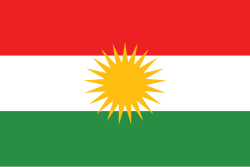
The Peshmerga (Kurdish: پێشمەرگه, romanized: Pêşmerge, lit. ''Those Who Face Death'')[27] are the internal security forces of the Kurdistan Region. According to the Constitution of Iraq, regional governments are responsible for "the establishment and organization of the internal security forces for the region such as police, security forces, and guards of the region."[28] Other Kurdish security institutions include the Zêrevanî (gendarmerie), Asayish (security and counterterrorism service), Parastin u Zanyarî (intelligence agency) and the region's Kurdish police force. The Peshmerga's history dates back to the 19th century, when they began as a tribal paramilitary border guard under the Ottoman Turks and the Safavid Iranians. By the 20th century, they had evolved into a disciplined and well-trained guerrilla force, and were institutionalized in the 21st century under the Kurdistan Regional Government (KRG).[29]
Formally, the Peshmerga are under the command of the Ministry of Peshmerga Affairs (MoPA) of the KRG. In practice, however, the Peshmerga's structure is largely divided and controlled separately by the two Iraqi Kurdish political parties: the Democratic Party of Kurdistan (KDP) and the Patriotic Union of Kurdistan (PUK). Unifying and integrating the Peshmerga under the MoPA has been on the Kurdistan Region's public agenda since 1992, with significant progress under a 2022 U.S.-KRG Memorandum of Understanding (MoU) aiming for full unification by 2026, though challenges like partisanship and external threats persist.[30][2][31]
Besides being the official name for the KRG's internal security forces, historically the word Peshmerga has also been used for a variety of Kurdish militias and armed groups, especially in Iranian Kurdistan. A few examples are the Peshmerga of the KDPI, PAK and Komala.[32]
Etymology
[edit]The word "Peshmerga" can be translated to "to stand in front of death",[33][34][35] and Valentine states it was first used by Qazi Muhammad in the short-lived Mahabad Republic (1946–47).[36] The word is understandable to Persian speakers.[37] Because, the name was also used to refer to an elite unit within the Sassanid Empire's military, specifically a sub-unit of the Pushtigban, called the Gyan-avspar.[38] These warriors were renowned for their unwavering loyalty and bravery, often serving as the last line of defense for the Sassanid kings.[39][40][41][42]
History
[edit]The Kurdish warrior tradition of rebellion has existed for thousands of years along with aspirations for independence. Early Kurdish warriors fought with and against the various Persian empires, the Ottoman Empire and the British Empire.[29][43]
Early Kurdish revolts
[edit]The Kurdish revolts of the early 20th century, such as the Sheikh Said rebellion, the rebellion of Xoybûn, and the uprisings led by Sheikh Mahmoud Barzanji, played an important role in the development of the modern Peshmerga. These events provided early experience in guerrilla and non-conventional warfare against state authorities and contributed to the spread of Kurdish nationalism among Kurdish fighters. They also strengthened the Barzani tribe, from which key leaders like Ahmed Barzani and Mustafa Barzani emerged.[44]
Building on the military experience gained during these uprisings, Mustafa Barzani later organized Kurdish forces in order to liberate Kurdistan. In 1943, he led approximately 2,000 Kurdish fighters in an uprising against the Iraqi Army and British forces, an event often regarded as a precursor to the modern Peshmerga forces that would later emerge, particularly during the period of the Republic of Mahabad.[44]
Mahabad Republic
[edit]During the brief existence of the self-declared Republic of Mahabad (1946–1947), a contingent led by Mustafa Barzani served as its official military force after Barzani crossed the Iraq–Iran border to support the establishment of the Kurdish state in Iranian Kurdistan.[45][46]
According to Kurdish lore, the leaders of Mahabad gathered to choose a name for their army. As the story goes, they struggled to find a suitable word for 'soldier.' A server, overhearing their discussion, suggested peshmerga, a slang term from his nearby village. The name was adopted, and the force was formally named the Peshmerga.[47] Furthermore, under president Qazi Muhammad’s orders, a committee of “hand-picked litterateurs and writers” also developed distinct Kurdish military terminology to define ranks and positions.[48]

The relative of Simko Shikak, Amr Khan Shikak, along with the tribal leader of Baneh, Hama Rashid, Khan Banei, and Zero Beg Herki, were appointed as Marshals of the Peshmerga army by the Minister of War, Mohammed Hossein Saif Qazi. Due to his extensive warfare experience Mustafa Barzani was appointed as Marshal and chief of staff[44] of the army. Officers maintained a professional appearance through their Soviet-style uniforms, further advised and organized by the Soviet military officer Captain Salahaddin Kazimov. The Soviets continued their influence by sending at least 60 Kurdish officers to Soviet Azerbaijan for additional military training. The Mahabad army consisted of about 70 officers, 40 non-commissioned officers, and 1,200 privates. As one of the senior leaders, Mustafa Barzani was responsible for appointing officers within the ranks.[48]
In order to protect the republic's sovereignty, the Peshmerga engaged in their first battle at Qahrawa, near the town of Saqqez. They ambushed an Iranian garrison, killing 21 soldiers, wounding 17, and capturing 40. By mid-May 1946 Kurdish forces numbered approximately 12,750 Peshmerga, but most Kurdish offensives were limited to minor skirmishes.[48]
After the withdrawal of Soviet support and the subsequent collapse of the republic, including the execution of its head of state, Qazi Muhammad, most Peshmerga forces, among them Barzani's force, retreated to Iraqi Kurdistan, where they re-emerged as guerrillas that continued to fight the Iranian and Iraqi governments throughout the remainder of the 20th century.[44][49]
Iraqi Kurdistan
[edit]
In Iraq, most of these Peshmerga fighters continued to be led by Mustafa Barzani and his newly established Kurdistan Democratic Party (KDP).[46] The first major war fought by the Peshmerga in Iraqi Kurdistan was the First Iraqi–Kurdish War, lasting from 1961 until 1970, in which Barzani and his forces fought for independence. The war resulted in the signing of the Iraqi–Kurdish Autonomy Agreement. Kurdish autonomy had failed to be implemented by 1974, which led to the Second Iraqi–Kurdish War in 1975. Jalal Talabani, a leading member of the KDP, left the same year to revitalize the resistance and founded the Patriotic Union of Kurdistan (PUK). This event created the baseline for the political discontent between the KDP and PUK that divides Peshmerga forces and much of Kurdish society to this day.[50][51]

After Mustafa Barzani's death in 1979, his son Masoud Barzani took over his position.[46] As tension increased between the KDP and PUK, most Peshmerga forces fought to keep Iraqi Kurdistan under their own party's control, whilst also fighting off the Iraqi Army's incursions. Following the First Gulf War and the 1991 uprisings (Raperîn), and subsequent official autonomy for the Kurdistan Region, the Kurdish Civil War broke out, a conflict between the rivaling KDP and PUK parties, in which Peshmerga forces were used to fight against each other.[52] The civil war officially ended in September 1998 when Barzani and Talabani signed the Washington Agreement establishing a formal peace treaty.[53] In the agreement, the parties agreed to share oil revenue and power, deny the use of Iraqi Kurdistan to the Kurdistan Workers' Party (PKK), and to not allow Iraqi troops into the Kurdish regions. By then, around 5,000 Peshmerga and civilians had been killed on both sides, and many more had been evicted for being on the "wrong side".[54]
2003 invasion of Iraq
[edit]
In the years after, tensions remained high, but both parties came closer to each other, and in 2003 both of them, jointly took part in the overthrowing of the Baathist regime as part of the Iraq War and the broader Global War on Terror.[55] The CIA and other US special forces, who arrived in Iraq in early 2002, conducted unconventinal warfare operations with the Peshmerga against Ansal al-Islam terrorists and organized the Peshmerga to form a 'northern Front' against Saddam Hussein's troops.[56] As the U.S. bombing campaign and subsequent invasion of Iraq began, Peshmerga forces, operating alongside U.S. Special Forces, advanced beyond the Kurdistan Region and took control of large areas that were widely regarded as Kurdish but had previously been outside Kurdish control. These areas included Sinjar, Tuz Khurmatu, Khanaqin, and Kirkuk.[57] The Peshmerga played a key role in helping the United States on the mission to capture Iraqi president Saddam Hussein.[58][59]
After the overthrowing, the Peshmerga were politically recognized and obtained a special legal position. This improvement came from the Coalition Provisional Authority (CPA) with issuing orders that recognized the Peshmerga and exempted them from disbandment.[60] However, the decision was preceded by disagreements between Kurdish leader Masoud Barzani and the U.S. Administrator of Iraq, Paul Bremer, who regarded the continued existence of the Peshmerga as a "red line" in the formation of the new Iraqi state. Barzani rejected calls for disbandment, reportedly telling Bremer to "be a man and come to Kurdistan to disband [the] Peshmerga." Bremer subsequently abandoned his efforts to disband the Peshmerga.[61] In August 2003, parts of the Peshmerga were assigned to border security and oil pipeline protection, while others trained with coalition troops. Peshmerga units collaborated closely with U.S. forces on patrols, interrogations, and security missions. At one point, the Peshmerga made up 30% of the new Iraqi Army.[60]
In 2004, CTG Kurdistan, an elite special forces unit within the Peshmerga, captured Saudi-born Pakistani terrorist Hassan Ghul, who was operating for al-Qaeda in Iraq. Ghul was turned over to American intelligence officers shortly afterwards, which eventually led to the killing of Osama bin Laden in a covert American military operation in Pakistan in 2011.[62][63][64]
Legal status of the Peshmerga
[edit]Article 117 of the new 2005 Iraqi Constitution allowed federal regions (such as the Kurdistan Region) to establish their own internal security services; that is, the “police, security forces and guards of the region”. The Peshmerga are legally recognized as one of these permissible regional internal security forces.[65]
In 2006, a major conference in Erbil, involving the KRG, Iraqi Government, and Multinational Forces in Iraq, further clarified the Peshmerga's role: defending the Kurdistan Region, supporting federal security efforts, fighting terrorism, and preserving constitutional institutions. This situation remained stable and helped the Peshmerga to reorganise and train its troops in military academies in the Zakho-Duhok area and Qalachulan-Sulaymaniyah area.[60][66]
2014 War against the Islamic State
[edit]In 2014, the Peshmerga and Iraqi Armed Forces withdrew from the Nineveh Plains, which was said by the locals as being a contributing factor of the quick Islamic State victory in the invasion, and the widespread massacre of Yazidis, who were rendered defenseless.[67] After the retreat and with the capital Erbil, only being 30-minutes away from ISIS' threat, the Peshmerga fought back and recaptured wast territories of the Kirkuk, Nineveh and Diyala Governorates. Special Forces of the Peshmerga were also involved in joint special operations with the U.S. during the war, like in the Hawija prison raid. According to Myles B. Caggins III, the Senior Spokesperson for the Global Coalition to Defeat ISIS at the time, the Peshmerga made the "ultimate sacrifice" in the War Against the Islamic State with over 1,300 Peshmerga fighters being killed, and upwards of 8,000 being wounded.[68] As stated by a report of the German Federal Office for Migration and Refugees, the Peshmerga are seen by locals as heroes due to their involvement in the fight against ISIS.[69] In the fall of 2017, however, the Peshmerga suffered a major defeat at the hands of the Iraqi armed forces and lost vast territories due to the 2017 Iraqi–Kurdish conflict.[70]
Post-2017 reforms and advancements
[edit]Following the defeat of ISIS in 2017, Peshmerga reforms focused on unification and modernization. In September 2022, the U.S. and KRG renewed a MoU to create a unified, nonpartisan force under MoPA command by 2026, including disbanding partisan Units 70 and 80, establishing two Area Commands and 11 light infantry divisions, and achieving a planned strength of 138,000.[2] By mid-2025, four divisions were operational, biometric enrollment exceeded 85%, and unification entered its final phase, with completion expected by year-end.[71][72] Advancements included the 2025 'Peshmerga Medical Force Readiness Initiative' and proposals for air defense systems.[73][74] Continued Coalition support via CTEF provided stipends, vehicles, and equipment.[2] However, progress has been slowed by KDP-PUK division, ISIS' threat, and disputes with the central government in Baghdad.[75]
Structure
[edit]Party affiliations
[edit]The Peshmerga are mostly divided among forces loyal to the Kurdistan Democratic Party (KDP) and those loyal to the Patriotic Union of Kurdistan (PUK),[76] while other, minor Kurdish parties such as the Kurdistan Socialist Democratic Party also have their own small Peshmerga units.[77] The Islamic Movement of Kurdistan also had its own Peshmerga unit, which became an official Peshmerga branch during the Iran-Iraq war, and was disarmed in 2003.[78] In daily life and the media, Peshmerga are referred to as Peshmerga i parti (KDP) or Peshmerga i yaketi (PUK) – i.e., KDP peshmerga or PUK Peshmerga.[79] The KDP and PUK do not disclose information about the composition of their forces with government or media.[76] Thus there is no reliable number of how many Peshmerga fighters exist.[76] Media outlets have speculated that there are between 150,000 and 200,000 Peshmerga, but this number is highly disputed.[80][81] The Peshmerga are divided into a KDP-governed "yellow" zone covering Dohuk Governorate and Erbil Governorate and a PUK-governed "green" zone covering Sulaymaniyah Governorate and Halabja Governorate.[82][76][30] Each zone has its own branch of Peshmerga with their own governing institutions that do not coordinate with the other branch.[30][83]
Unification efforts
[edit]As a result of the split nature of the Peshmerga forces, there is no central command center in charge of the entire force, and Peshmerga units instead follow separate military hierarchies depending on political allegiance.[84] Multiple unification and depoliticizing efforts of the Peshmerga have been made since 1992. Many deadlines have been missed,[30] reforms have been watered down,[76] and most of the Peshmerga are still under the influence and command of the KDP and the PUK.
Ministry of Peshmerga Affairs
[edit]After gaining autonomy in 1991 the Kurdistan Region created its own proto-defence ministry: The Ministry of Peshmerga Affairs (MoPA). The Ministry was established to professionalize, unify, and centralize command of the party-affiliated Peshmerga forces, but in its early years it lacked real authority, something that became evident during the Kurdish civil war. Following the end of the civil war the KDP and PUK agreed to the re-establishment of the unified Ministry of Peshmerga Affairs, which was favoured by the overall KRG Unification Agreement, and formally took place in 2006. In January 2010, the MoPA created the first, to itself subordinate, integrated Peshmerga brigade, called a Regional Guard Brigade (RGB). Three more RGBs were formed in March of the same year. Mario Fumerton and Wladimir van Wilgenburg commented, "The KDP’s temporary alliance with Saddam Hussein to expel the PUK from Erbil in 1996 is still remembered as a grave betrayal; conversely, many KDP members recall being driven out of other territories by the PUK. In part for these reasons, each side keeps a portion of its own forces under direct party control as a final guarantee to maintain the balance of power."[85][86][87]
In 2016 and 2017, following the events of the Iraqi Civil War, the United States and several European nations pressured the PUK and KDP to set up more mixed brigades as a condition for aid and funding. The PUK and KDP united 12 to 14 brigades under the RGB, which were then placed under the command of the Ministry of Peshmerga Affairs.[76] The Netherlands, the US, the UK, and Germany form the Multi-National Advisory Group (MNAG) that supports the project to establish a "modern, effective, affordable, and accountable Peshmerga."[88] In addition, to support reform efforts, the United Kingdom appointed a Special Defence Adviser to the MoPA.[89]
In 2022, the KDP's 1st Support Force and the PUK's 2nd Support Force were integrated into the MoPA, a move described by Col. Todd Burroughs, deputy director of the US-led coalition's Military Advisor Group North, as a 'significant step in the Peshmerga reform process.'[88][90]
2022 Memorandum of understanding
[edit]A major step towards unification was reached in 2022, when a four-year memorandum of understanding (MoU) between the US Department of Defense and Ministry of Peshmerga Affairs was signed, outlining conditions and timelines for integration into MoPA, effective until September 2026.[68][2]
By 2025, unification was in its final phase, with 10 additional brigades formed, two command regions planned, and salary payments digitialized via the 'MyAccount' system.[91][2] An Inspector General Report for Operation Inherent Resolve report noted progress in establishing four divisions, but highlighted delays in the development of Area Commands and persistent partisanship.[2] As of Q2 2025, 28 Regional Guard Brigades were unified, 4 divisions operational, biometric enrollment exceeded 85%, and a four-year budget was submitted for a 138,000-strong force. Salary digitization via 'MyAccount' was nearing completion.[2][92]
Future outlook
[edit]In spite of all reforms, officers partially still continue to report to and take orders from their party leaders who also control the deployment of forces loyal to them and appoint front-line and sector commanders.[30] Critical reforms stalled include the full incorporation of Units 80 and 70, and additional division HQs, amid U.S. frustration over partisanship.[2][93] Peshmerga officials repeatedly affirm that full unification will be completed by 2026, if not sooner and U.S. officials stress that they will continue supporting unifying efforts.[94][95]
Combat Forces
[edit]Both the KDP and the PUK Peshmerga rely heavily on irregulars in times of conflict to increase their ranks.[96] However, both maintain several professional military brigades. The Peshmerga forces are described as a secular force with a Muslim majority and smaller Assyrian, Chaldean Catholic, Yazidi, Shabak and Kaka'i units.[65][97][98][99][100] Though some units are composed of minorities, they are not segregated and serve in regular infantry divisions too.[101] In 2016 the MoPA intended to create a military division for the Arabs and Turkmen of Kirkuk Province, but financial difficulties halted the project.[102] Most minority units have been formed, when the Peshmerga took over the disputed territories in the War against the Islamic State.[103]
The following units are affiliated with or have been identified within the Peshmerga force:
| Force | Estimated size | Command | Description |
|---|---|---|---|
| MoPA-affiliated units | |||
 Regional Guard Brigades (RGB)[30][76][104] Regional Guard Brigades (RGB)[30][76][104] |
73,000 (as of 2025, with 28 unified brigades)[2][105][106] | Şoreş Îsmaîl | MoPA's main force. Supposedly apolitical.[107] |
| 1st Support Forces Command[108] | 10,000 combined with the 2nd Support Forces.[90] | Lt. Gen. Sihad Barzani | Transferred to MoPA from KDP in 2022. Focuses on support roles, including artillery and officer training. |
 2nd Support Forces Command[108] 2nd Support Forces Command[108]
|
10,000 combined with the 1st Support Forces.[90] | Maj. Gen. Mariwan Muhammed Amin | Transferred to the MoPA from PUK in 2022. Focuses on support roles. |
| KDP-affiliated units | |||
 80 Unit[30][76][104] 80 Unit[30][76][104] |
50,000–60,000 | Najat Ali Salih | KDP. In process of integration into MoPA by 2026.[2][109] |
 Zeravani[30] Zeravani[30] |
51,000–120,000 active personnel and 250,000 reservists[29][110] | Masoud Barzani | KDP's militarized police force. |
 Gulan Special Forces[111][112] Gulan Special Forces[111][112]
|
6,000 (2016)[113] | Mansour Barzani | Special forces commanded by Mansour Barzani. |
 Peshmerga Roj[104] Peshmerga Roj[104]
|
3,000–6,000 fighters | Ibrahim Biro and Brig. Gen. Mohammed Rejeb Dehdo | Military wing of the ENKS. Consists of Kurds from Syria. Located in the KRG, Pro-KDP and takes orders from Masoud Barzani. |
 Counter Terrorism Department (Kurdistan Region)[114] Counter Terrorism Department (Kurdistan Region)[114]
|
N/A | N/A | Counterterrorism unit part of the Kurdistan Region Security Council. |
| Barzan Forces[115][116][117] | N/A | N/A | Brigade formation, consisting of men recruited from the Barzani clan. Its also known as Barzan Army. |
| Halo Special Forces[118] | N/A | Rawan Barzani | N/A |
| Black Tiger Battalion[119] | N/A | Sirwan Barzani | Formed to confront the Islamic State in 2014 under Sirwan Barzani, who carries the nickname 'Black Tiger'. |
 Presidential Guard (Kurdistan Region)[30] Presidential Guard (Kurdistan Region)[30] |
N/A | Nechirvan Barzani | Military unit tasked with protecting the President of Kurdistan Region. |
| PUK-affiliated units | |||
 70 Unit[30][76][104] 70 Unit[30][76][104] |
50,000–60,000 | Sheikh Jaafar Sheikh Mustafa | PUK. In process of integration into MoPA by 2026.[2][109] |
 Defense and Emergency Forces (DEF)[120][121] Defense and Emergency Forces (DEF)[120][121] |
32,000[121] | N/A | PUK's equivalent of KDP's Zeravani. They are also known as Black Forces. |
 CTG Special Forces[30] CTG Special Forces[30] |
5,000[122] | Wehab Helebcî | One of the most elite Special Forces unit in Iraq. |
| Hezekani Kosrat Rasul[30] | 2,000–3,000 | Kosrat Rasul Ali | Kosrat Rasul Ali's personal protection brigade, one of the last remaining units to defend during the Kirkuk crisis.[123] |
| Kurdistan Commando Forces[124] | 500–10,000 | Diyar Omar | Well-equipped Special Operations Commando unit.[125] |
 Golden Force[126][127] Golden Force[126][127]
|
N/A | Barham Sheikh Mohammed | Sub-unit of the Kurdistan Commando Forces. |
| Presidential Peshmerga Brigade[30] | N/A | Hero Ibrahim Ahmed
(Jalal Talabani formerly) |
A unit which was stationed in Baghdad during the presidency of Jalal Talabani.[66] |
| Minority units | |||
 Êzîdxan Protection Force or "Yazidi Peshmerga"[128] Êzîdxan Protection Force or "Yazidi Peshmerga"[128] |
7,000[129]–8,000[130]–10,000[104] | Haydar Shesho and Qasim Shesho | Pro-KDP. Yazidi Democratic Party. Incorporated into MoPA.[131] |
| Jazeera Brigade[103][104] | 2,000 | Brig. Gen. Bolond Hussayn | Brigade of Ethnic-Arabs from Zummar and Rabia. Affiliated with the MoPA. Formed by the KDP. |
| Battalion of the Assyrian Democratic Movement[132][133] | ~ 360 (1993), ~ 2,000 (2014) | William Ishaya (formerly) | Neutral between the KDP and PUK. Affiliated with the MoPA. Military wing of the Assyrian Democratic Movement. |
| Nineveh Plain Guard Forces (NPGF) or "Christian Peshmerga"[104][134][135] | 1,500–2,500 | Sarkis Aghajan Mamendo (unconfirmed) | Pro-KDP. Affiliated with the MoPA. Chaldean Syriac Assyrian Popular Council. |
| Shabak Battalion[100] | ~ 1,000 | Col. Mahmood Shabak | Battalion made up of the Shabak minority. |
| Kaka'i Battalion[136][137] | ~ 680 (August 2015) | Nezar and Adel Kakai | Battalion made up of the Kaka'i religious minority. Affiliated with the MoPA. |
| Tiger Guards[138][139] | ~ 600 (March 2015) | N/A | Christian brigade under the authority of the KRG.[138] |
| Nineveh Plains Force (NPF)[104][135] | ~ 500 (July 2015) | Romeo Hakari | Pro-KDP. Affiliated with the MoPA. Bet-Nahrain Democratic Party. |
| Dwekh Nawsha[104][133] | ~ 100–250 | Lt. Col. Odisho | Pro-KDP. Military wing of the Assyrian Patriotic Party. Not as clearly acting as official sub-units of Kurdish forces as the NPGF or NPF. |
| Asayish (security force) | |||
 KDP Asayish KDP Asayish |
Unknown | Barzan Qassab | KDP. Affiliated with the Ministry of Interior. |
 PUK Asayish PUK Asayish |
Unknown | N/A | PUK. Affiliated with the Ministry of Interior. |
| PUK Asayish SWAT units | Unknown | N/A | PUK. |
| Others | |||
| KDPS Peshmerga[140] | 3,000 | N/A | Peshmerga force of the Kurdistan Social Democratic Party. |
Specialized Units
[edit]The Peshmerga Media Cell is one of the specialized units of the MoPA. Established in January 2022, it was created to professionalize the force's information and media operations. The unit acts as the official channel for statements on Peshmerga activities, with responsibilities that include safeguarding operational security, protecting journalists reporting from conflict zones, and ensuring the dissemination of accurate information to local and international audiences.[141] It has also received support from international coalition advisers in developing media and information management practices.[142]
2025 Order of Battle (MoPA)
[edit]Units reporting to the Ministry of Peshmerga Affairs:
 Regional Guard Brigades[143]
- 1st Support Forces Command
 2nd Support Forces Command
- 1st Mortar Battalion (Unit 955)[152]
- 2nd Mortar Battalion (Unit 515)[153]
- Field Artillery Battalion (Unit 121)
- Women's Artillery Battery[154]
- 107mm MLRS Artillery Battalion (Unit 101)[155]
- 1st 122mm MLRS Artillery Battalion (Unit 106)[156]
- 2nd 122mm MLRS Artillery Battalion (Unit 757)[157]
- 105mm Artillery Battalion (Unit 118)[158]
- Defence and Tasks Regiment (Unit 103)[159]
- Armored Battalion (Unit 104)[160]
- Transportation and Logistics Battalion (Unit 105)[161]
- Combat Engineering Battalion (Unit 545)[162]
- Mechanised Infantry Battalion (Unit 616)[163]
- Tank Battalion (Unit 617)[164][165]
- 1st AA Artillery Battalion (Unit 888)[152]
- Special Forces Unit[166]
- Tactical Company[167]
It is planned that by the end of 2026, the Regional Guard Brigades will make up 11 Peshmerga divisions in total.[143][168]
Peshmerga in the Iraqi Army
[edit]Due to limited funding and the vast size of the Peshmerga forces, the KRG planned to downsize its forces from large numbers of low-quality forces to a smaller but much more effective and well-trained force.[169] Consequently, in 2009, the KRG and Baghdad engaged in discussions about incorporating parts of the Peshmerga forces into the Iraqi Army in what would be the 15th and 16th Iraqi Army divisions.[170][171] However, after increasing tension between Erbil and Baghdad regarding the disputed areas, the transfer was largely put on hold. Some Peshmerga were already transferred but reportedly deserted again, and there are allegations that former Peshmerga forces remained loyal to the KRG rather than their Iraqi chain of command; regardless, thousands of members of the 80 Unit of KDP and the 70 Unit of PUK are based in Baghdad and cooperate well with other Iraqi forces.[172][173][174]
The Presidential Peshmerga Brigade of the PUK was stationed in Baghdad and paid by the Iraqi government during the presidency of Jalal Talabani.[66]
Ranks
[edit]The Peshmerga, despite wearing a variety of uniform types, consistently maintain proper standards of dress. This includes the correct display of rank insignia for both enlisted personnel and commissioned officers, as well as the proper wear of headgear. In addition, they have designated ceremonial and duty uniforms that project a highly professional appearance.[175]
Officers can be promoted by the President of the Kurdistan Region for outstanding military and civil achievements.[176]
Inventory and capabilities
[edit]
Peshmerga forces largely rely on old arms captured from battles. The Peshmerga captured large stockpiles of weapons during the 1991 Iraqi uprisings.[177] Several stockpiles of weapons were captured from the old Iraqi Army during the 2003 U.S. invasion of Iraq, in which Peshmerga forces were active. Following the retreat of the new Iraqi Army during the June 2014 Islamic State offensive, Peshmerga forces reportedly again managed to get hold of weapons left behind by the Iraqis.[178] Since August 2014, Peshmerga forces have also captured weapons from the Islamic State.[179]

The Peshmerga arsenal is limited and confined by restrictions because the Kurdish Region has to purchase arms through the Iraqi government. Due to disputes between the KRG and the Iraqi government, arms flows from Baghdad to Kurdistan Region have been almost nonexistent, as Baghdad fears Kurdish aspirations for independence.[180][181][76] After the Islamic State offensive of August 2014, multiple governments armed the Peshmerga with light arms, night-vision devices, and ammunition.[182][183] However, Kurdish officials and Peshmerga stressed that they were not receiving enough and Baghdad was blocking arms from reaching the KRG, emphasizing the need for weapons to be sent directly and not through Baghdad.[184][185] Despite this, the United States has maintained that the government of Iraq is responsible for the security of Iraqi Kurdistan and that Baghdad must approve all military aid.[76] As of 2025, continued CTEF support provided vehicles, heavy equipment, small arms, ammunition, and non-lethal aid, with proposals for air defenses in the 2024 NDAA.[2][186]
The Peshmerga lack a proper medical corps and communication units.[76] This became apparent during the Islamic State offensive in 2014 where the Peshmerga found itself lacking ambulances and frontline field hospitals, forcing wounded fighters to walk back to safety.[76] There is also a lack of communication tools, as Peshmerga commanders are forced to use civilian cellphones to communicate with each other.[76] Under the guidance of the US-led coalition the Peshmerga started to standardize it's weapons systems, replacing Soviet-era weapons with NATO firearms.[76] In 2015, for the first time, Peshmerga soldiers received urban warfare and military intelligence training from foreign trainers of the CJTF–OIR.[187] Some Peshmerga of the MoPA have also been trained by American private military contractors like DynCorp.[188] By 2025, advancements included the Peshmerga Medical Force Readiness Initiative to address field hospital shortages.[189]
Issues
[edit]Peshmerga has been accused of corruption, partisanship, nepotism and fraud.[190][191][192][193] The Peshmerga was accused of listing "ghost employees" who do not exist or do not show up for work, but receive salaries. Those setting up the scam split the salary with these employees.[76]
In addition the KDP and PUK have used the Peshmerga to exert a monopoly on the use of force within their zones.[76] In 2011 KDP Peshmerga fired on anti-government protesters in Sulaymaniyah, and the PUK later used its own security forces to break up these protests,[30] leading to criticism from all of the opposition parties in the Kurdistan Region Parliament. In 2014 the KDP used its Peshmerga forces to stop delegates from the Gorran Movement to enter Erbil and attend parliament.[76]
Outside of Kurdistan Region the Peshmerga has been criticized for using force to exert control of local Arab, Yazidi and Assyrian communities, particularly during the Iraqi Civil War.[194]
concerns about persistent partisanship remain.[2] In 2025, U.S. reports expressed frustration over stalled unification due to party lines, despite commitments.[93]
Role of women
[edit]Historic involvement
[edit]
Women have played a significant role in the Peshmerga since its foundation, compared to other Middle Eastern militaries. The Kurdish Zand tribe was known for allowing women in military roles.[29] During the Iraqi–Kurdish conflict the majority of women served within the Peshmerga in supporting roles such as building camps, taking care of the wounded, and carrying munitions and messages.[96] Several women brigades served on the front lines. The PUK started recruiting women during the Kurdish Civil War. Women were given a 45-day basic training, which included parade drills and basic marksmanship training with various rifles, mortars, and RPGs.[29]
Modern era
[edit]In the months leading up to the 2003 U.S. invasion of Iraq, the United States launched Operation Viking Hammer which dealt a huge blow to Islamic terrorist groups in Iraqi Kurdistan and uncovered a chemical weapons facility.[195][196][197][198][199] The PUK later confirmed that female Kurdish fighters had participated in the operation.[96]

In 2014 the Peshmerga had at least 600 women in their ranks.[200] The number of women increased significantly during the war against ISIS due to a shortage of manpower and the desire for revenge.[200] The Peshmerga have one entirely female brigade.[201] In the KDP, these Peshmerga women have been refused access to the frontline and are mostly used in logistics and management positions,[202] while PUK Peshmerga women are deployed on the front lines and are actively engaging in combat.[203][204][29] Women are paid the same as men.[200]
Famous female fighters
[edit]Margaret George Malik was an iconic Assyrian guerilla fighter who was given a leading position in important battles such as the Battle of Zawita Valley.[205][206][207] She was nicknamed "Joan of Arc of Kurdistan" for the courage she displayed in combat. In 1995 Colonel Nahida Rashid created the first women's Peshmerga unit. Other well known female Peshmergas are Hero Ibrahim Ahmad, Amineh Kakabaveh, Pakhshan Zangana, and Kafiya Suleiman.[208]
Gallery
[edit]-
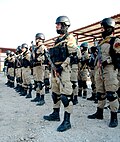 Peshmerga Special Forces gathered near the Syrian border in 2014
 -
 Peshmerga soldiers in ceremonial gear
 -
 Peshmerga Parade
 -
 Peshmerga meet Anti-IS Coalition advisors

.jpg)

.jpg)
References
[edit]- ^ "Hundreds of Christians join Peshmerga". Kurdistan24. February 19, 2016. Retrieved July 3, 2019.
- ^ a b c d e f g h i j k l m n o p q r s "Lead Inspector General Report on Operation Inherent Resolve Q2 FY2025" (PDF). U.S. Department of State Office of Inspector General. May 2025. pp. 49–50. Retrieved August 20, 2025.
The planned end strength for Peshmerga under the MoPA's command is 138,000.
- ^ "Peshmerga Ministry Nears Completion of Force Unification". Kurdistan24. August 2025. Retrieved August 20, 2025.
- ^ Multiple sources:
- "Iraq supplies Kurds with ammunition in unprecedented move, U.S. says". Reuters. August 9, 2014. Retrieved July 26, 2019.
- "MOD issues clarification on the howitzers allocated to Peshmerga". Iraqi News Agency. September 9, 2024.
- ^ a b c d e f g "The Status of Western Military Aid to Kurdish Peshmerga Forces". Jerusalem Center for Public Affairs. Retrieved July 3, 2019.
- ^ Pollard, Ruth (September 11, 2014). "Australian-supplied weapons have reached the Kurdish frontline". The Sydney Morning Herald. Retrieved July 3, 2019.
- ^ "Austria to provide Peshmerga with medical support". Archived from the original on July 26, 2019. Retrieved July 26, 2019.
- ^ "L'aide belge aux Peshmergas est prête à partir vers l'Irak". RTBF Info (in French). February 24, 2016. Retrieved July 3, 2019.
- ^ "България е изпратила на кюрдите в Ирак автомати и патрони за 6 млн. лева". Mediapool.bg (in Bulgarian). September 30, 2014. Retrieved July 3, 2019.
- ^ "Cyprus could send more light arms, ammunition to Kurdistan: FM". Kurdistan24. November 11, 2017. Retrieved July 3, 2019.
- ^ "Czech Rifles and Ammunition for the Peshmerga. Prague Supporting the Fight Against Daesh Again – Defence24.com". www.defence24.com (in Czech). January 27, 2016. Retrieved July 3, 2019.
- ^ "Forsvarsavisen 01" (PDF) (in Danish). Ministry of Defense. p. 3. Retrieved July 3, 2019.
- ^ a b Jan Joel Andersson and Florence Gaub (2015). "Adding fuel to the fire? Arming the Kurds" (PDF). Issue Alert. 37. Retrieved July 3, 2019.
- ^ "Finland increases military support to Kurdistan". Kurdistan24. September 16, 2016. Retrieved July 3, 2019.
- ^ "Greece to send ammunition to Iraqi Kurds". Archived from the original on September 22, 2015. Retrieved September 27, 2014.
- ^ "Assistant Head of DFR and Indian Ambassador discuss areas of cooperation". dfr.gov.krd. April 20, 2017. Archived from the original on June 17, 2020. Retrieved July 8, 2019.
- ^ a b Arash Reisinezhad (2018). The Shah of Iran, the Iraqi Kurds, and the Lebanese Shia. Springer. p. 115. ISBN 978-3319899473.
- ^ a b "Dutch and Norwegians train Peshmerga on basic soldier skills". www.centcom.mil. Retrieved July 3, 2019.
- ^ a b Guido Weiss (July 8, 2015). "Global Support for Peshmerga Forces". Kurdstrat. Archived from the original on January 3, 2018. Retrieved July 3, 2019.
- ^ Mosul, Martin Chulov near (October 20, 2016). "Kurdish forces vow no retreat until Nineveh plains are retaken from Isis". The Guardian. Retrieved July 3, 2019.
- ^ Hasan, H. A. (May 21, 2016). "Romania Pledges Continuous Support for Peshmerga". www.basnews.com. Retrieved July 3, 2019.
- ^ Litovkin, Nikolai (March 18, 2016). "Russia delivers first weapons supplies to Iraqi Kurds". Russia Beyond. Retrieved July 3, 2019.
- ^ "Inherent Resolve in northern Iraq". Archived from the original on June 17, 2020. Retrieved July 3, 2019.
- ^ "Sweden will continue support for Peshmerga forces in Kurdistan: Defense Minister". Kurdistan24. May 10, 2018. Retrieved July 3, 2019.
- ^ "New Pentagon Budget Request Shows Increased Support for Peshmerga". Kurdistan Chronicle. March 13, 2024. Retrieved August 20, 2025.
The 2025 Defense Budget Request includes a huge increase in support for the Ministry of Peshmerga Affairs.
- ^ a b The Mitrokhin archive. II : the KGB and the world. London: Penguin. 2014. ISBN 978-0141977980.
- ^ "Peshmerga and the Ongoing Fight against ISIS". March 27, 2016. Archived from the original on July 3, 2019. Retrieved July 31, 2018.
- ^ "Constitution of Iraq" (PDF).
- ^ a b c d e f Lortz, Michael G. (2005). Willing to Face Death: A History of Kurdish Military Forces – the Peshmerga – from the Ottoman Empire to Present-Day Iraq (MA thesis). Florida State University.
- ^ a b c d e f g h i j k l m n van Wilgenburg, Wladimir; Fumerton, Mario (December 16, 2015). "Kurdistan's Political Armies: The Challenge of Unifying the Peshmerga Forces" (PDF). Carnegie Middle East Center. Retrieved February 12, 2018.
- ^ "U.S. Voices Frustration Over Stalled Peshmerga Reform in Kurdistan". Peregraf. August 1, 2025. Retrieved August 20, 2025.
Despite formal commitments, Peshmerga units remain fragmented along party lines, with little meaningful progress toward true unification.
- ^ Smith, Crispin (2018). Independent Without Independence: The IraqiKurdish Peshmerga in International Law* (PDF) (Volume 59, Number 1 ed.). Harvard University. p. 248.
- ^ Stratton, Allegra (June 26, 2006). "Hero of the people". New Statesman. Retrieved February 14, 2015.
- ^ Koerner, Brendan (March 21, 2003). "What does the Kurdish word Peshmerga mean?". Slate.com. Retrieved October 18, 2016.
- ^ From the Kurdish pêş (پێش) "before" and merg مەرگ "death".
- ^ Valentine, Those Who Face Death, KDP, 2018.
- ^ Stilo, Donald (March 2008). Aspects of Iranian Linguistics. Cambridge Scholars Publishing. ISBN 9781443810135. Retrieved October 19, 2017.
- ^ "Gyan-Avspar – The Sassanids (Empire Divided) – Total War: Rome II". Royal Military Academy. Retrieved May 16, 2025.
- ^ Hughes, Ian (January 15, 2009). Belisarius: The Last Roman General. Pen and Sword. ISBN 978-1-84468-941-5.
- ^ Farrokh, Kaveh (July 13, 2005). Sassanian Elite Cavalry AD 224–642. Bloomsbury USA. p. 6. ISBN 978-1-84176-713-0.
- ^ "Russian Lead Miniatures.Heavy Armed Sassanid Knight. The Army of Gyan – Avspar P | #1758881952". Worthpoint. Retrieved May 16, 2025.
- ^ Aladić, Dubravko. Roman-Sassanian Conflict in the Third Century Campaigns of Shapur I and the Battle of Edessa.
- ^ S. R. Valentine, Peshmerga: Those Who Face Death, KDP, 2018, see the introduction and chapter one.
- ^ a b c d Khorsheed, Hussein M. (2020). THE ROLE OF SUBNATIONAL FORCES IN COMBATING TERRORISM DURING CIVIL WAR: THE CASE OF PESHMERGA OF KURDISTAN REGION-IRAQ AGAINST ISIS (2014–2017). Monterey, Canada: Naval Postgraduate School.
- ^ Abdulla, Mufid (June 12, 2011). "Mahabad – the first independent Kurdish republic". The Kurdistan Tribune. Archived from the original on May 28, 2016. Retrieved February 14, 2015.
- ^ a b c "President". Kurdistan Regional Government Representation in Spain. 2015. Archived from the original on July 30, 2014. Retrieved February 14, 2015.
- ^ Koerner, Brendan (March 21, 2003). "Are Kurdish Soldiers "Facing Death" or "Seeking Death"?". Slate. ISSN 1091-2339. Retrieved July 23, 2025.
- ^ a b c Waisy, Karwan Salih (July 15, 2015). "The Kurdish Peshmarga Force 1943–1975". Global Journal of Human-Social Science. 15 (D2). ISSN 2249-460X.
- ^ Meiselas, Susan (2008). Kurdistan: In the Shadow of History (2nd ed.). University of Chicago Press. ISBN 978-0-226-51928-9.
- ^ van Bruinessen, Martin (1986). "The Kurds between Iran and Iraq". MERIP Middle East Report (141): 14–27. doi:10.2307/3011925. ISSN 0888-0328. JSTOR 3011925.
- ^ "Getting Peshmerga Reform Right: Helping the Iraqi Kurds to Help Themselves in Post-ISIS Iraq – Foreign Policy Research Institute". www.fpri.org.
- ^ S. R. Valentine, Peshmerga: Those Who Face Death, KDP, 2018, chapter six.
- ^ Abdulrahman, Frman (February 23, 2012). "Never-ending mystery: what really happened to Kurdish civil war missing". niqash. Retrieved February 22, 2015.
- ^ McDermid, Charles (February 20, 2010). "New force emerges in Kirkuk". Asia Times Online. Archived from the original on February 22, 2010. Retrieved February 22, 2015.
- ^ Profile: Who are the Peshmerga? BBC News. Retrieved 19 December 2014.
- ^ Chivers, C. J. (March 24, 2003). "A Nation at War: Second Front; Allied Troops Are Flown Into Airfields In North Iraq". The New York Times. Retrieved July 8, 2021.
- ^ "Claims in Conflict: Reversing Ethnic Cleansing in Northern Iraq: V. The 2003 Iraq War and its Aftermath". www.hrw.org. Retrieved January 30, 2026.
- ^ Rai, Manish (October 6, 2014). "Kurdish Peshmerga Can Be a Game-changer in Iraq And Syria". Khaama Press. Retrieved February 14, 2015.
- ^ "Operation Red Dawn's eight-month hunt". The Sydney Morning Herald. December 15, 2003. Retrieved February 14, 2015.
- ^ a b c Khorsheed, Hussein M. (2020). THE ROLE OF SUBNATIONAL FORCES IN COMBATING TERRORISM DURING CIVIL WAR: THE CASE OF PESHMERGA OF KURDISTAN REGION-IRAQ AGAINST ISIS (2014–2017). Naval Postgraduate School Monterey, California. pp. 35–36.
- ^ "Barzani says he refused request by Bremer to disband Peshmerga in 2003". The Insight International. September 3, 2017. Retrieved January 30, 2026.
- ^ Ambinder, Marc (April 29, 2013). "How the CIA really caught Bin Laden's trail". The Week. Retrieved February 14, 2015.
- ^ Roston, Arom (January 9, 2014). "Cloak and Drone: The Strange Saga of an Al Qaeda Triple Agent". Vocativ. Archived from the original on June 25, 2019. Retrieved February 14, 2015.
- ^ Valentine, Peshmerga: Those who Face Death, 2018, chapter five.
- ^ a b Backgrounder: Literature Review of Local, Regional or Sub-State Defense Forces in Iraq (PDF). Global Public Policy Institute. 2017. pp. 3 and 22.
- ^ a b c Chapman, Dennis P. (2009). SECURITY FORCES OF THE KURDISTAN REGIONALGOVERNMENT (PDF). United States Army War College. pp. 130, 137, 138.
- ^ van den Toorn, Christine (August 17, 2014). "How the U.S.-Favored Kurds Abandoned the Yazidis when ISIS Attacked". Institute of Regional & International Studies. Archived from the original on June 27, 2020. Retrieved June 27, 2020.
- ^ a b Caggins, Myles B. (October 31, 2023). "Peshmerga Reforms: Navigating Challenges, Forging Unity – Foreign Policy Research Institute". Foreign Policy Research Institute. Retrieved July 22, 2025.
- ^ Länderreport 68 Irak – Die Autonome Region Kurdistan [Country Report 68: Iraq – The Kurdistan Autonomous Region] (PDF) (in German). Federal Office for Migration and Refugees. March 1, 2024. p. 16.
- ^ "Kurds defeated, displaced and divided after Iraq reclaims oil-rich Kirkuk". The Guardian.
- ^ "Peshmerga unification enters final phase, set for completion by year-end". Rudaw. July 1, 2025. Retrieved August 20, 2025.
- ^ "Peshmerga Ministry Advances Unification Process". Channel8. April 20, 2025. Retrieved August 20, 2025.
- ^ "The Kurdistan Region – Representation in the United States". KRG Representation in the US. 2025. Retrieved August 20, 2025.
- ^ "After the Coalition: Evaluating the Next Steps for Foreign Forces in Iraq and Syria". Newlines Institute. March 18, 2025. Retrieved August 20, 2025.
- ^ "US-led coalition support for Peshmerga to continue". Rudaw. August 10, 2025. Retrieved August 20, 2025.
- ^ a b c d e f g h i j k l m n o p q r Helfont, Samuel (March 1, 2017). "Getting Peshmerga Reform Right: Helping the Iraqi Kurds to Help Themselves in Post-ISIS Iraq". Foreign Policy Research Institute. 16: 13.
- ^ "Kaka Hama, head of Kurdish Socialist Party joins Mosul battle plan with force". Rudaw Media Network. October 16, 2016. Retrieved February 24, 2018.
- ^ Kurdish Islamists in Iraq from the Muslim Brotherhood to the So-Called Islamic State: Continuity or Departure?, Mohammed Shareef, 2015, pp. 25, ISBN 9786038032657
- ^ Andrew Cottey, Aziz Sardar (2021). The Iraqi Kurdish Peshmerga: military reform and nation-building in a divided polity. Defence Studies. p. 229.
- ^ "Over 150,000 enlisted as Peshmerga troops in Kurdistan Region, official data shows". Rudaw. April 3, 2017. Retrieved August 13, 2017.
- ^ Hawramy, Fazel (January 13, 2015). "Kurdish Peshmerga divisions hamper war effort". Al-monitor. Retrieved February 12, 2018.
- ^ Chapman, Dennis. Security Forces of Kurdistan Regional Government, US Army War College. 2009, p. 3.
- ^ S. R. Valentine, Peshmerga: Those Who Face Death, KDP, 2018, chapter 9.
- ^ "Lebanonwire.com – Kurdish Peshmerga Forces Have Room to Grow". lebanonwire.com. Archived from the original on January 13, 2015.
- ^ Fliervoet, Feike (2018). Fighting for Kurdistan?: Assessing the nature and functions of the Peshmerga in Iraq (PDF). Clingendael Institute. p. 14.
- ^ Fliervoet, Feike (March 1, 2018). "The evolution of the Peshmerga". Clingendael Institute. Retrieved August 17, 2025.
- ^ Borsari, Federico (July 17, 2019). "Institutionalisation of the Peshmerga: tipping the balance of Iraq's stability". Middle East Research Institute. Retrieved September 15, 2025.
- ^ a b "Peshmerga unit joining Ministry of Peshmerga receives ammunition". Kurdistan24. February 28, 2022. Retrieved September 15, 2025.
- ^ Aziz, Sardar; Cottey, Andrew (February 15, 2021). "The Iraqi Kurdish Peshmerga: military reform and nation-building in a divided polity". Defence Studies. 21 (2): 226–241. doi:10.1080/14702436.2021.1888644. hdl:10468/11579. ISSN 1470-2436.
- ^ a b c Palani, Kamaran (September 15, 2022). "Peshmerga Reform: High Stakes for the Future of Iraqi Kurdistan". ISPI. Retrieved September 15, 2025.
- ^ "Peshmerga Unification Nears, Digital Salaries Soon Fully Implemented". Basnews. August 19, 2025. Retrieved August 20, 2025.
- ^ "Coalition Advisors Look Ahead with Peshmerga 1st Support Forces Command". DVIDS. February 13, 2025. Retrieved August 20, 2025.
- ^ a b "U.S. Voices Frustration Over Stalled Peshmerga Reform". Peregraf. August 1, 2025. Retrieved August 20, 2025.
- ^ "KDP, PUK to unify Peshmerga forces in March in major bid to build national army". The New Region. January 30, 2025. Retrieved September 17, 2025.
- ^ Qadi, Ahora (May 21, 2025). "Peshmerga Minister: U.S. Support for Peshmerga Will Continue as Trust Deepens". Peshmerga Minister: U.S. Support for Peshmerga Will Continue as Trust Deepens. Retrieved September 17, 2025.
- ^ a b c Howard, Michael (November 26, 2002). "Revenge spurs women's army". The Guardian. Retrieved February 13, 2018.
- ^ Coles, Isabel (December 21, 2014). "Iraqi Kurds, Yazidis fight Islamic State for strategic town of Sinjar". Reuters. Retrieved March 20, 2015.
- ^ "Mosul Christians form army under Peshmerga direction". Rudaw. Retrieved March 20, 2015.
- ^ "PMF militants forcibly shave Kaka'i peshmerga member's moustache". The New Arab. July 25, 2022. Retrieved July 28, 2025.
- ^ a b "Peshmerga all-Shabak battalion ready to fight ISIS". Rudaw. November 11, 2015. Retrieved September 13, 2025.
- ^ "Kurdistan Forms New Unified Infantry Divisions of Peshmerga Forces, including Minorities". Kurdistan Chronicle. April 4, 2023. Retrieved September 15, 2025.
- ^ "Peshmerga Ministry to create brigade for Kirkuk Arabs, Turkmen". Kurdistan24. August 6, 2016. Retrieved July 23, 2025.
- ^ a b Gaston, Erica (October 24, 2017). "It's Too Early to Pop Champagne in Baghdad: The Micro-Politics of Territorial Control in Iraq". War on the Rocks. Retrieved July 23, 2025.
- ^ a b c d e f g h i "Who's Who: Quick Facts About Local and Sub-State Forces". Global Public Policy Institute. August 16, 2017. Retrieved July 24, 2025.
- ^ "Peshmerga carried out 7,516 operations against ISIS: Inspector General Report". Kurdistan24. May 4, 2022. Retrieved July 24, 2025.
- ^ "2.3. Kurdistan Regional Government (KRG) authorities | European Union Agency for Asylum". European Union Agency For Asylum. November 1, 2024. Retrieved July 22, 2025.
- ^ "New selection procedure ready for Peshmerga unification: Dutch Military Advisor". Kurdistan24. June 6, 2022. Retrieved July 21, 2025.
- ^ a b "Peshmerga carried out 7,516 operations against ISIS: Inspector General Report". Kurdistan24. May 4, 2022. Retrieved September 14, 2025.
- ^ a b "Peshmerga Ministry reforms launched to reunify PUK, KDP forces". Retrieved July 31, 2018.
- ^ Dortkardes, İhsan (July 20, 2007). "Barzani: Düzenli ordu yakında". Milliyet (in Kurdish). Archived from the original on January 29, 2011. Retrieved June 6, 2008.
- ^ "Peshmerga commander Mansour Barzani visits mother who lost 3 sons in ISIS attack". Kurdistan24. December 4, 2021. Retrieved September 16, 2025.
- ^ "Mansour Barzani, the second son of Masoud Barzani and commander of the KDP's Barzan and Gulan special forces, has met with Turkey's Defense Minister in Ankara". X (formerly Twitter). January 23, 2025. Archived from the original on January 27, 2025. Retrieved September 16, 2025.
- ^ "Kurdish president's son and grandson fight IS on front line, say 'ready to die'". Reuters Archive Licensing. November 4, 2016. Retrieved September 17, 2025.
- ^ "What is Kurdistan CT?". CTD via Facebook. September 27, 2020. Retrieved September 18, 2025.
- ^ Irak: Peschmerga in der KRG Region [Iraq: Peshmerga in the KRG region] (PDF) (in German). Schweizerische Flüchtlingshilfe. January 7, 2019. p. 7.
- ^ Evolution of US foreign policy in the Middle East (PDF). NSI. October 12, 2017. p. 19.
- ^ ""There's not even 1% chance that Kurdistan will have a national army," senior commanders". Kirkuknow. July 22, 2023. Retrieved September 18, 2025.
- ^ "'Today the Peshmerga Defends Its Rights with Its Vote,' Says Rawan Barzani". Kurdistan24. November 9, 2025. Retrieved November 17, 2025.
- ^ "Sirwan Barzani: ISIS is the enemy of the world, not just Peshmerga". Rudaw. January 19, 2017. Retrieved November 17, 2025.
- ^ Bakr, Mera Jasm (2021). The War at Home: The Need for Internal Security Sector Reform in Iraqi Kurdistan (PDF). Washington, DC: Middle East Institute.
- ^ a b "As the non-binding, U.S.-led initiative to unify Peshmerga forces enters its final year, PUK is quietly expanding its military strength with several new brigades, seemingly aiming to narrow the gap with KDP's forces". @KurdistanWatch. February 14, 2025. Retrieved September 14, 2025.
- ^ "kurdistanskyscrapers.com". kurdistanskyscrapers.com.
- ^ "Kosrat defends Kirkuk". Retrieved September 16, 2023.
- ^ "PUK President Highlights Importance of Cooperation Between Security Forces". PUK Media. August 13, 2025. Retrieved September 16, 2025.
- ^ "Kurdistan Commando Forces refute claims that their commander was martyred amid anti-IS operation". Esta Media Network. October 20, 2022. Retrieved September 16, 2025.
- ^ McCardle, Guy D. (March 1, 2024). "SOFREP Pic of the Day: Kurdish Peshmerga Golden Force". SOFREP. Retrieved September 17, 2025.
- ^ Aziz, Halsho (October 13, 2021). "Golden Force ready to respond to incidents in Kirkuk: commander". Esta Media Network. Retrieved September 17, 2025.
- ^ Baxtiyar Goran (March 9, 2017). "Haider Shesho: Ezidkhan Units take orders from President Barzani, Peshmerga Ministry". Kurdistan24.
- ^ IS-Terror in Shingal: Wer kämpft gegen wen? Ein Überblick, Ezidi Press. 12 October 2014
- ^ With the Islamic State gone from Sinjar, Kurdish groups battle for control, Al-Monitor. 27 March 2016
- ^ Editorial Staff (April 18, 2017). "Haider Shesho resigns from PUK, to form new Yazidi Democratic Party". Kurd Net – Ekurd.net Daily News. Retrieved June 21, 2021.
- ^ Alda, Benjamen (2024). A Century of Changing Perceptions of “Christian Militias” in Iraq (PDF). The Middle East Journal. pp. 403–404.
- ^ a b "Iraq's Christian paramilitaries split in IS fight – Al-Monitor: the Pulse of the Middle East". Al-Monitor. October 30, 2014. Archived from the original on March 4, 2016. Retrieved July 27, 2025.
- ^ "Confidence- and Security-Building Measures in the Nineveh Plains". The Washington Institute.
- ^ a b "Confidence- and Security-Building Measures in the Nineveh Plains | The Washington Institute". www.washingtoninstitute.org. July 14, 2017. Retrieved July 24, 2025.
- ^ "Battle-tested Kakai battalion begs to retake villages". Rûdaw. Archived from the original on August 17, 2016. Retrieved June 3, 2016.
- ^ "Iraq's Kakai minority joins fight against Islamic State". Al-Monitor. Archived from the original on August 6, 2016. Retrieved June 3, 2016.
- ^ a b "Iraq Christian Brigade To Battle ISIS: Anti-Islamic State 'Tiger Guards' Will Support Kurdish Fighters". International Business Times. March 13, 2015. Archived from the original on August 3, 2016. Retrieved June 3, 2016. Retrieved 3 June 2016.
- ^ "Iraq's first Christian brigade to battle ISIS". Al Arabiya. March 13, 2015. Archived from the original on March 22, 2016. Retrieved June 3, 2016. Retrieved 3 June 2016.
- ^ "How are non-Pêshmerga armed special forces used?". mezopotamyaajansi.net. April 28, 2022. Retrieved September 16, 2025.
- ^ "Ministry of Peshmerga and DMI officially launch Peshmerga Media Cell". Kurdistan Regional Government. January 25, 2022. Retrieved September 15, 2025.
- ^ "Peshmerga learn the power of Social Media". CENTCOM.mil. Retrieved September 15, 2025.
- ^ a b "Kurdistan moving to finalize unified national army". KurdishGlobe. March 10, 2025. Retrieved September 15, 2025.
- ^ Wilgenburg, Wladimir van (July 8, 2025). "Peshmerga Carry Out anti-ISIS Operation". Kurdistan Chronicle. Retrieved September 15, 2025.
- ^ "At MoPA #Duhok Infantry Training Center, an advanced Training Course has been accomplished, in which 228 Peshmergas of the #MoPA 21st Brigade of the 1st Infantry Division participated in this course & they conducted theoretical & practical training". MoPA via X. January 1, 2025. Retrieved September 15, 2025.
- ^ a b "Mohammed Ahmad Mustafa, a #Peshmerga from the MoPA 1st Battalion of the 4th Infantry Brigade while performing his military duty. due to an old landmine #explosion in Kani Mase district ,was martyred". MoPA via X. January 6, 2025. Retrieved September 15, 2025.
- ^ "1st Infantry Battalion Conducts Extensive Military Operation". Kurdistan Regional Government. August 2, 2024. Retrieved September 15, 2025.
- ^ a b "The KRG_MOPE Chief of Staff visited the 2nd Division, Kirkuk Training Base, 6th and 22nd Infantry Brigades, in order to be aware of the affairs, problems and needs of these military units". MoPA via X. September 10, 2023. Retrieved September 15, 2025.
- ^ "The Cmdr of the #MoPA 3rd Infantry Division welcomed the Commander of the #German Forces in the #KRI. The meeting addressed the division's progress & highlighted the cooperation & coordination of the German Forces in supporting the infantry #divisions, particularly for training". Ministry of Peshmerga via X. August 28, 2025. Retrieved September 15, 2025.
- ^ a b "With the presence of the MoPA Director of military movement, Intelligence, the GDMNA, Communications,Trainig, & the Dean of the Staff College, & the Cmdr of the Coalition Forces in the KRI, a special meeting was held to assess the capabilities of the 5th & 6th Infantry Divisions". Ministry of Peshmerga via X. September 15, 2025. Retrieved September 15, 2025.
- ^ "The Chief of Staff of the Ministry of #Peshmerga Affairs, accompanied by the Deputy Chief of Staff, several advisors, and Directors General of the Ministry, visited the #Duhok Infantry #Training Center in #Atrush and the 9th Infantry Division in #Zawita". Ministry of Peshmerga via X. September 13, 2025. Retrieved September 15, 2025.
- ^ a b "2SFC commander MG.Mariwan muhammed paid a field visit to unit (888) 1sf AAA battalion and unit (955) 1st mortar battalion of our command to inspect the units readinesses". 2SFC via X. May 23, 2023. Retrieved September 16, 2025.
- ^ "Annual live fire training of unit (515) 2nd mortar battalion of the 2nd support forces command". 2SFC via X. June 29, 2022. Retrieved September 16, 2025.
- ^ "After 2 months of training a womens artillery battery attached to unit (121) field artillery battalion successfuly conducted a live fire training excersise under the supervision of MG.Hawran deputy commander of 2SFC". 2SFC via X. January 18, 2023. Retrieved September 16, 2025.
- ^ "As a part of his daily inspection on the units of 2FC MG.Mariwan Muhammed commander of 2SFC visited unit (101) 107mm MLRS artillery battalion". 2SFC via X. May 15, 2023. Retrieved September 16, 2025.
- ^ "Under the supervision of MG.Mariwan, the 2SFC unit (106) 122mm rocket artillery battalion conducted a battery deplyment exercise (Garmian Torch)". 2SFC via X. November 23, 2022. Retrieved September 16, 2025.
- ^ "Pictured of the 2nd Katyusha Unit (757) during the annual firing". 2SFC via X. June 29, 2022. Retrieved September 16, 2025.
- ^ "Wednesday 22/6/2022 under the supervision of major general hawraman deputy commander of the 2nd support forces anual live fire training of unit 118 105mm artillery battalion with ak asault rifles was accomplished". 2SFC via X. June 22, 2022. Retrieved September 16, 2025.
- ^ "Annual live fire training of unit (103) defence and tasks regiment of the second support forces command". 2SFC via X. July 26, 2022. Retrieved September 16, 2025.
- ^ "2nd support forces unit (104) armored battalion training". 2SFC via X. June 28, 2022. Retrieved September 16, 2025.
- ^ "Folowing MG.Mariwans orders units of the 2nd support forces command continue training and conducting exercises according to the schedule .unit (105) transportation and logistics battalion successfully completed (Garmian Torch) excersice". 2SFC via X. December 24, 2022. Retrieved September 16, 2025.
- ^ "Ongoing training and exercises of the 3rd company of the combat engineering battalion (unit 545) of the 2nd S.F.C as part of peshmerga reform process". 2SFC via X. July 27, 2022. Retrieved September 16, 2025.
- ^ "A delegation from the staff college's 8th Staff officer class paid a field visit to 2SFC unit (616) mechanised infantry battalion under the supervision of BRG.Muhsin, deputy dean of the staff college". 2SFC via X. December 7, 2022. Retrieved September 16, 2025.
- ^ "MG.Mariwan, commander of 2SFC, visited the tank battalion to inspect the tanks and vehicles, as well as their battle readiness, and to listen to the soldiers. During the visit, MG.mariwan congratulated the battalion and wished them continued success". 2SFC via X. November 3, 2022. Retrieved September 16, 2025.
- ^ "Sunday 19/6/2022 unit 617,under the supervision of brigadier general sirwan amin head of staff of the 2nd support forces command and a number of commanders anual live fire training exercise of the tank battalion was successfully accomplished at the 2nd support forces firing range". 2SFC via X. June 20, 2022. Retrieved September 16, 2025.
- ^ "2SFC HQ special forces". 2SFC via X. May 23, 2023. Retrieved September 16, 2025.
- ^ "Ongoing training excersises of the 2SFC tactical company under the supervision of italian special forces instructors in Kurdistan region". 2SFC via X. March 29, 2023. Retrieved September 16, 2025.
- ^ "حەوتەمین خولی پیادەی هێزەکانی پشتیوانی یەک کۆتاییھات". www.ava.news (in Kurdish). AVA Media. January 31, 2025. Retrieved August 16, 2025.
- ^ Cordesman, Anthony H.; Mausner, Adam (2009). Withdrawal from Iraq. ISBN 9780892065530. Retrieved March 20, 2015.
- ^ Cordesman, Anthony H.; Mausner, Adam; Derby, Elena (2010). Iraq and the United States. ISBN 9780892065950. Retrieved March 20, 2015.
- ^ Chapman, Dennis. Security Forces of Kurdistan Regional Government, US Army War College. 2009, p. 112.
- ^ "Peshmerga, Iraqi Army form committees to start joint ops in disputed areas". Rudaw.
- ^ "1,000 Kurdish soldiers desert from Iraqi army". Hurriyet Daily News. June 13, 2013. Retrieved March 20, 2015.
- ^ "Iraq's army and Kurds will join forces to retake Mosul". PRI.
- ^ "Iraqi Kurdistan Regional Guard Forces (peshmerga)". GlobalSecurity.org. October 9, 2019. Retrieved September 15, 2025.
- ^ "President Nechirvan Barzani promotes ranks of Peshmerga Ministry officers". Gulan Media. February 8, 2024. Retrieved September 15, 2025.
- ^ "Iraqi Defense Ministry Asks KRG To Return Saddam-Era Weapons". Al-Monitor. June 28, 2013. Retrieved March 20, 2015.
- ^ Hugh Naylor (September 18, 2014). "As ISIL retreats, Iraqi Kurds gain new ammunition". The National. Retrieved March 20, 2015.
- ^ Richard Spencer, The Telegraph (October 3, 2014). "Kurdish forces captured an ISIS base after a two-day siege – but the ISIS fighters inside somehow slipped away". National Post. Retrieved March 20, 2015.
- ^ Hollie McKay. "Iraq's Peshmerga desperate for US arms in fight against ISIS". Fox News. Archived from the original on January 3, 2015. Retrieved March 20, 2015.
- ^ "Arms for Kurdish Peshmerga to affect military balance". Deutsche Welle. Retrieved March 20, 2015.
- ^ Nicholas Watt (August 14, 2014). "UK prepares to supply arms directly to Kurdish forces fighting Isis". The Guardian. Retrieved October 23, 2014.
- ^ "Seven western states join US to arm Iraqi Kurdistan: Pentagon". ekurd.net.
- ^ "Iraq's Kurds appeal for new U.S. arms to combat Islamic State". Washington Post. Retrieved March 20, 2015.
- ^ "Iraqi Kurds say West not providing enough arms to defeat Islamic State". Reuters. November 19, 2014. Retrieved March 20, 2015.
- ^ "After the Coalition: Evaluating the Next Steps". Newlines Institute. March 18, 2025. Retrieved August 20, 2025.
- ^ "Coalition helps Peshmerga muscle up on urban warfare". Rudaw. April 16, 2015. Retrieved April 17, 2015.
- ^ "Peshmerga forces receive combat vehicle and helicopter assault training". Kurdistan24. March 10, 2022. Retrieved September 15, 2025.
- ^ "The Kurdistan Region – Representation in the United States". KRG Representation in the US. April 2025. Retrieved August 20, 2025.
- ^ "The Peshmerga of Iraq". Aljazeera.com. March 1, 2008. Retrieved February 22, 2015.
- ^ "KRG and the 'godfathers': 2006 secret US cable on Wikileaks". The Kurdistan Tribune. May 8, 2014. Retrieved February 22, 2015.
- ^ Devigne, Jacqueline (2011). ""Iraqoncilable" Differences? The Political Nature of the Peshmerga" (PDF). NIMEP Insights. Retrieved February 22, 2015.
- ^ "PUK official warns Peshmerga will not take orders from anyone else: Iraqi Kurdistan". Retrieved March 20, 2015.
- ^ "Marked With An "X" | Iraqi Kurdish Forces' Destruction of Villages, Homes in Conflict with ISIS". Human Rights Watch. November 13, 2016. Retrieved April 24, 2018.
- ^ Plan of Attack, Bob Woodward, Simon and Schuster, 2004.
- ^ Tucker, Mike; Charles Faddis (2008). Operation Hotel California: The Clandestine War inside Iraq. The Lyons Press. ISBN 978-1-59921-366-8.
- ^ "An interview on public radio with the author". Archived from the original on September 30, 2011.
- ^ Chalk, Peter, Encyclopedia of Terrorism Volume 1, 2012, ABC-CLIO
- ^ "Ansar al-Islam". Federation of American Scientists. Retrieved August 8, 2012.
- ^ a b c "Meet the Kurdish women fighting the Islamic State". Telegraph. November 8, 2014. Archived from the original on January 12, 2022. Retrieved March 20, 2015.
- ^ Gruber-Sytchev, Verena (2020). The Social Construction of Military Unity and a Post-merger Integration of the Unified Peshmerga Forces in the Kurdistan Region of Iraq (PDF). King's College London. p. 8.
- ^ "No Frontline Deployment for Female Kurdish Troops". Rudaw. Retrieved March 20, 2015.
- ^ "KRG halts recruiting of female Peshmerga". Rudaw.
- ^ "Meet the female Peshmerga forces fighting IS". Al-Monitor. August 11, 2014.
- ^ Vindheim, Jan Bojer (2016). Kurdistan stiger fram. Kolofon Forlag. p. 71. ISBN 978-82-300-1494-3.
- ^ "Assyrians in Iraq, Vahram Petrosian" (PDF).
- ^ Sankey, Margaret D. (2018). Women and War in the 21st Century: A Country-by-Country Guide. ABC-CLIO. p. 172. ISBN 978-1-4408-5766-9.
- ^ Female Militarization and Women's Rights: A Case Study of thePeshmerga and YPJ. University of Central Florida. 2019. pp. 38, 43.
Further reading
[edit]- Simon Ross Valentine, Peshmerga: Those Who Face Death: The Kurdish Army, its History, Development, and the Fight against ISIS, Kindle Direct Publishing, 2018, 300pp. [ISBN missing]
- Chapman, Dennis P., Lieutenant Colonel USA, Security Forces of the Kurdistan Regional Government, Mohammed Najat, Costa Mesa, California: Mazda Publishers, 2011. ISSN 0026-3141 Reviewed by Michael M. Gunter in Middle East Affairs, Vol. 65, No. 3, Summer 2011.
External links
[edit] Media related to Kurdish Peshmerga at Wikimedia Commons
- Official MPA site at Kurdish Regional Government site Archived July 10, 2020, at the Wayback Machine

