Hubbry Logo
WokhaWokhaMain
Open search
Wokha
Community hub
Wokha
logo
8 pages, 0 posts
0 subscribers
Be the first to start a discussion here.
Wokha
Wokha
from Wikipedia

Wokha is a town and municipality in the Indian state of Nagaland. It is the headquarters of Wokha District and is located about 75 km north of the state capital, Kohima. Wokha literally means head count or census in the Lotha language. It has a population of 35,004[1] and is predominantly inhabited by the Lotha Nagas.

Key Information

History

[edit]

Wokha was made as the district headquarters of the Naga hills under Assam by the British in 1876. By 1878, the headquarters was shifted to Kohima, but Wokha remained a subdivision. Later in 1889, the subdivision was shifted to Mokokchung. After India's independence, Wokha became a sub division in 1957 under Naga Hills Tuensang Area, and remained so till she became a district in 1973.

Geography and climate

[edit]

Wokha is located at 26°06′N 94°16′E / 26.1°N 94.27°E / 26.1; 94.27[2] at an average elevation of 1,313 metres (4,793 feet). It has a warm temperate climate (classified as Cwa by Köppen and Geiger). The summer temperature of Wokha ranges from 16.1 °C to 32 °C. The winter temperature reaches a minimum of 2 °C. The average annual temperature in Wokha is 17.8 °C. The average annual rainfall is 1940 mm.

Demographics

[edit]
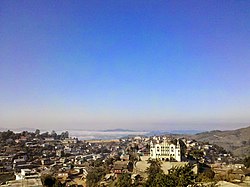
Part of Wokha Town

Wokha is the third largest town in Nagaland after Dimapur and Kohima. According to the 2011 census, the population is 35,004. Wokha has an average literacy rate of 96%; male literacy is 97%, while female literacy is 95%. In Wokha, 10.57% of the population is under 6 years of age. The majority of the population is Christian (at 92%), with notable minorities following Hinduism (5%) and Islam (2%).[1]

Lotha (also native language of the region) is the most widely used language, while Nagamese and English are also spoken.

Tourism

[edit]

Wokha's agglomeration consists of Wokha town, Longsa village, Wokha village and Vakhosung. Wokha is on the main route from Kohima to Mokokchung and was one of the earliest locations of the Assam Rifles. The Government of Nagaland constructed a tourist lodge in Wokha Town. The annual Amur falcon migration passes Doyang Dam, which is a 2-hour drive away.[3] It also hosts the oldest cricket tournament in North East India, The Winter Cricket Challenge.

Transportation

[edit]

The nearest railhead is Furkating Railway Station in Golaghat, Assam, and the nearest airport is Dimapur Airport (IATA: DMU, ICAO: VEMR). Taxis and buses are available from every district headquarters in Nagaland to Wokha. There is a helicopter service from Dimapur.

Myths

[edit]

Mount Tiyi is a hill which has supernatural legends associated with it. Most Nagas believe that this mountain is the abode of departed souls. According to local Lotha folklore, the mountain had an orchard that could only be found by the 'lucky ones.' Rhododendrons are common on Mount Tiyi.

References

[edit]
[edit]
Revisions and contributorsEdit on WikipediaRead on Wikipedia
from Grokipedia
Wokha is a in the mid-western part of , , renowned as the "" for its fertile valleys and agricultural abundance, primarily serving as the homeland of the tribe. Geographically, Wokha spans an area of 1,628 square kilometers, accounting for 9.82% of Nagaland's total landmass, and is situated at 26°06′N and 94°16′E. It is bounded by to the north, to the south, Zunheboto district to the east, and the state to the west, featuring diverse terrain including hills, rivers like the —the district's longest and most significant waterway—and productive alluvial soils. Historically, the name "Wokha" derives from the Lotha language, meaning "," reflecting its role as a traditional gathering point for headcounts during tribal migrations in the region. The district's administrative structure is divided into three ranges—Wokha (upper), Sanis (middle), and (lower)—overseen by a , with seven development blocks, 133 villages, and one in Wokha town, the district headquarters. Demographically, Wokha had a of 166,343 as per the 2011 (projected at 191,015 as of 2025), predominantly comprising the , with a rate of 87.69%. The economy is predominantly agrarian, with traditional farming as the mainstay for most rural households; key crops include from terraced fields in valleys like Baghty and Churung, alongside horticultural produce such as bananas, , passion fruits, plums, and ginger, supporting local markets and festivals like the Banana Festival (first held October 22–24, 2025). Notable features include the Doyang Hydro Electric Project, a major infrastructure site on the Doyang River that generates power for the region and attracts visitors for its scenic dam and riverside views. The district also preserves Lotha cultural heritage through like weaving and blacksmithy, and natural sites such as Mount Totsu, contributing to its appeal as a blend of ecological richness and tribal traditions.

Geography and Environment

Location and Topography

Wokha district is located in the mid-western part of state, northeastern , adjacent to the Sibsagar plains of . The district headquarters, Wokha town, lies at coordinates 26°06′N 94°16′E and sits at an elevation of 1,313 meters above . Encompassing an area of 1,628 square kilometers, Wokha constitutes approximately 9.82% of 's total geographical area of 16,579 square kilometers. The district is bounded on the north by Mokokchung district, on the east by Zunheboto district, on the south by Kohima district, and on the west by the state of Assam. Wokha town serves as the administrative center and is positioned about 75 kilometers north of Nagaland's capital, Kohima, along the primary Kohima-Mokokchung highway. Topographically, Wokha features predominantly hilly terrain characteristic of mid-western Nagaland, with ranges and ridges dissected by seasonal streams. The landscape is divided into three main ranges: the upper Wokha Range in the northeastern section, the middle Sanis Range, and the lower Bhandari Range extending toward the Assam plains, which includes fertile valleys such as Baghty and Churung. The highest point in the district is Mount Tiyi (also known as Tiyi Enung), reaching an elevation of 1,970 meters. The Doyang River, one of the district's most significant waterways and Nagaland's longest river, flows through the region, forming a prominent valley that shapes the local terrain.

Climate and Biodiversity

Wokha features a warm classified under the Köppen system as Cwa, characterized by a dry winter and a hot summer influenced by the . Temperatures typically range from a minimum of 2°C during winter to highs of 32°C in summer, with variations due to the 's elevation and topography creating localized microclimates. The region experiences substantial annual rainfall averaging between 2,000 and 2,500 mm, predominantly during the southwest season from June to September, which accounts for the majority of precipitation and supports the lush vegetation. This seasonal pattern contributes to a humid subtropical environment, with drier conditions prevailing from to . Wokha's is rich, encompassing diverse ecosystems shaped by its forested hills and rivers. The district hosts extensive forests, particularly on the slopes of Mount Tiyi, which serves as a key ecological feature and the only natural for these trees in the area; rhododendrons act as a , fostering associated and fauna through restoration efforts like sapling plantations to counter their rapid decline. The area is renowned for its avian diversity, including the migratory (Falco amurensis), which congregates in large numbers—up to 1 million birds annually—at the Doyang River reservoir during its southward migration, creating one of the world's most spectacular raptor gatherings. Endemic Naga wildlife, such as the (Hoolock hoolock), inhabits the district's forests, with populations recorded across Wokha's hilly terrains, highlighting its role in primate conservation amid broader Northeast Indian biodiversity hotspots. Conservation initiatives in Wokha have gained international recognition, particularly for protecting habitats at the site, where community-led efforts achieved zero starting in through awareness campaigns, protection squads, and preservation. These successes earned accolades such as the 2014 Balipara Foundation Award and the 2014 Earth Heroes Award for the Pangti village community, underscoring effective local-global partnerships in avian safeguarding during the 2010s.

History

Early History and Migration

The name "Wokha" originates from the language, where it derives from "wo," meaning the number of people, and "kha," meaning to , signifying a site where the population was enumerated during settlement. This etymology reflects oral traditions recounting how migrating ancestors paused at the location to conduct a head before establishing permanent villages, marking the culmination of their journey. The , also known as the Kyong people, trace their origins through oral histories to the hills along the Indo- border, with migrations occurring in waves from eastern regions, including areas in present-day and possibly further afield. These movements involved groups traveling westward through hilly terrains such as the ranges, eventually reaching the fertile valleys of . Upon arrival, the Lothas established early settlements along the River, drawn by its resources for fishing and agriculture, which supported their agrarian lifestyle and provided a strategic base for village formation. Pre-colonial Lotha society was organized into autonomous, clan-based villages (known as longchüm), each functioning as a self-sufficient unit governed by councils of elders and chiefs under customary laws. Clans, or jipo, formed the core social structure, with exogamous marriages ensuring alliances and taboos reinforcing group identity; villages were subdivided into yankho (wards) based on clan size. Central to village life was the morung or chumpo, a communal dormitory system that served as an educational and defensive institution, where young men learned warfare, crafts, and cultural values through hierarchical age groups. Early economic interactions included trade with the in , exchanging Lotha goods like salt, dried fish, , and ginger for essentials, which facilitated limited but vital contacts with plains communities. Archaeological evidence of ancient Lotha settlements in Wokha has been supplemented by recent findings, including radiocarbon dating from 2025 that dates the formation of Wokha village to around 1103 AD (with a range of 900–1265 AD), confirming early settlement timelines and supporting oral traditions. However, broader excavated sites remain few, yielding limited artifacts like pottery or beads due to the rugged terrain and historical reliance on oral preservation. Instead, oral histories, transmitted through folk narratives, songs, and genealogical chants, provide the primary record, detailing migrations from the Patkai hills and emphasizing communal rituals tied to river deities like Jupvuo of the Doyang for prosperity and safe passage. These traditions underscore the Lothas' deep connection to their landscape, where settlements evolved around natural features to sustain clan-based communities.

Colonial Period

The British colonial presence in Wokha began intensifying in the mid-19th century as part of broader efforts to secure the northeastern frontier of against Burmese influences and intertribal conflicts among Naga groups. Initial contacts occurred during surveys for road connections between and in the 1830s, but direct administration in the , including Wokha, was established in 1866 with the creation of the Naga Hills district under . By 1875, a targeted Wokha village following raids on British outposts, marking the start of military campaigns in the area during the Anglo-Naga wars of the . These operations subdued local resistance, with Wokha village formally occupied in 1876, when it was designated as the district headquarters to facilitate control over the eastern inhabited primarily by the Lotha Nagas. The Lotha tribes, known for their warrior traditions, mounted fierce opposition, including the killing of British political agent John Butler during a survey expedition near Wokha in 1875, which escalated tensions. Administratively, Wokha's role was short-lived as the headquarters shifted to in 1878 amid ongoing pacification efforts, reducing Wokha to a subdivision within the district. Further reorganization in 1889 moved the headquarters to , but Wokha retained its status as an administrative outpost, serving as a base for revenue collection and patrols into Lotha territories. This structure reflected British strategies to consolidate through a network of hill stations, balancing in accessible areas with indirect oversight in remote villages. The period saw the imposition of house taxes, levied per household as a of submission to British protection, which replaced traditional systems and generated revenue for colonial operations. Concurrently, a forced labor system, often termed the "coolie" regime, compelled Lotha villagers to provide porters, road workers, and support for military tours, leading to widespread resentment and economic strain. Lotha resistance peaked during the broader Naga uprisings of 1879–1880, with skirmishes in Wokha and surrounding areas as tribes refused tax payments and labor demands, viewing them as erosions of autonomy. These conflicts, intertwined with Angami Naga revolts like the Battle of Khonoma, involved ambushes on British convoys and blockades, forcing punitive responses that ultimately pacified the region by 1880 through blockades and negotiations. Infrastructure development accompanied these impositions, with early road construction from the 1860s linking Wokha and the Naga Hills to Assam's plains, primarily to safeguard tea trade routes from raids and enable troop movements. Built largely through conscripted Naga labor, these paths—such as extensions of the Dimapur-Kohima road—facilitated the flow of Assam tea to markets while integrating Wokha into the colonial economy, though at the cost of disrupting traditional trade networks.

Post-Independence Developments

Following India's independence, Wokha was established as a subdivision in 1957 under the newly formed -Tuensang Area (NHTA), an administrative unit combining the of and the Tuensang Frontier Division of the . This arrangement aimed to consolidate Naga-inhabited regions under central administration while addressing local aspirations for autonomy. With attaining statehood on December 1, 1963, as the 16th state of the Indian Union, Wokha continued as a subdivision under the new state structure, participating in its inaugural general elections in 1964 with five assembly constituencies. Wokha was elevated to full district status in December 1973, carved out from to enhance administrative efficiency and local governance in the Lotha Naga-dominated region. This reorganization coincided with broader state-level adjustments, including the creation of additional districts to manage growing administrative demands. During the to , the district's administration was significantly disrupted by the Naga insurgency, as militant activities led by groups like the (NNC) challenged state authority, resulting in military operations, curfews, and strained local governance across , including Wokha. Key peace efforts, such as the 1964 between the and the NNC's Federal Government of , provided temporary relief by establishing platforms for dialogue, though violations persisted and affected administrative stability in districts like Wokha. The 1975 Shillong Accord, signed by a faction of the NNC, marked a pivotal shift by committing signatories to accept the Indian Constitution and deposit arms, which reduced underground influence in parts of but also sparked internal divisions and the emergence of new groups like the NSCN, prolonging instability in areas including Wokha. In the post-2000 era, subsequent ceasefire agreements with NSCN factions, starting from 1997, facilitated gradual normalization of administration in Wokha by enabling political negotiations and reducing overt violence, allowing for better implementation of central government schemes and local development initiatives. Recent decades have seen efforts toward district reorganization in Nagaland, with Wokha's District Planning and Development Board discussing boundary adjustments and jurisdictional clarifications in 2023 to improve administrative efficiency amid evolving demographic and infrastructural needs. Under the Act East Policy, launched in 2014, Wokha has benefited from enhanced connectivity projects, including road upgrades linking the district to Myanmar borders and major economic corridors, fostering administrative integration with regional trade routes. By 2025, Wokha hosted its inaugural Banana Festival from October 22 to 24, organized under the One District One Product (ODOP) initiative to promote administrative support for local agricultural priorities and sustainable development.

Demographics

Population and Distribution

According to the , Wokha town had a of 35,004, serving as the district's primary urban center and ranking among the larger towns in , following , , Tuensang, and . The district as a whole recorded a total of 166,343, with an urban-rural split of approximately 21% urban (35,004 residents) and 79% rural (131,339 residents). The district experienced a modest decadal of 3.2% between 2001 (when the was 161,223) and 2011, reflecting broader trends of slow growth or stagnation in due to factors like migration and low rates. Based on state-level demographic projections, the of Wokha is estimated to reach approximately 49,000 by 2025, while the district is projected at around 191,000; this aligns with 's overall projected of approximately 2.27 million as of 2025. Population distribution in Wokha remains predominantly rural, with about 80% of residents living in villages spread across the district's 1,628 square kilometers. Key settlements include Wokha town as the administrative and commercial hub, alongside major villages such as Longsa and Pangti, which serve as important community centers in the rural landscape. The district-wide stands at about 102 persons per square kilometer, though it is notably lower in the hilly interiors owing to rugged terrain and patterns.

Languages, Religion, and Social Structure

The primary language spoken in Wokha is Lotha (also known as Kyong), a Sino-Tibetan language of the Tibeto-Burman branch, with nearly all residents (approximately 166,343 speakers as per the district's total population) identifying it as their mother tongue. Nagamese, a form of Assamese, serves as the across , facilitating communication among diverse Naga tribes in Wokha. English functions as the for administration, education, and inter-state interactions, reflecting its colonial legacy and constitutional status in the state. Christianity dominates the religious landscape of Wokha, with 95.13% of the (158,236 individuals) adhering to it as of the census, predominantly through Baptist denominations introduced via American missionary efforts in the late . Small minorities include at 3.37% (5,605 persons) and at 1.23% (2,043 persons), alongside negligible numbers of Buddhists, , and Jains. Traditional animist beliefs persist in trace forms among some communities, though largely supplanted by . Lotha Naga society in Wokha is organized around patrilineal clans, with descent, inheritance, and property traced through the male line, reflecting a patriarchal structure where major clans—such as Ngully, Ezong, Odyuo, Kikon, and Yanthan—form the basis of social identity and village . Villages are subdivided into khels (wards or subtribes), numbering over 20 across the district, each governed by councils of elders representing clan interests to resolve disputes and maintain order. These village councils, incorporating the dobashi system of appointed interpreters and mediators (originally formalized under British rule but rooted in traditional practices), handle and community decisions democratically. stands at 87.69% district-wide (90.81% for males and 84.48% for females), underscoring strong educational access influenced by missionary schools. The is near-equal at 968 females per 1,000 males, indicating balanced gender distribution compared to national averages. Youth education traditionally occurs through morungs, communal dormitories where unmarried young men and women learn tribal customs, warfare skills, , and social responsibilities, fostering cultural continuity alongside formal schooling.

Economy

Agriculture and Primary Sectors

Agriculture remains the backbone of Wokha district's , engaging approximately 68% of the working in primary activities such as crop cultivation, livestock rearing, , and fisheries. The district's agrarian landscape is characterized by traditional practices adapted to its hilly terrain, where or predominates, covering an average annual area of 13,900 hectares. This method involves clearing and burning vegetation on slopes for short-term farming cycles, followed by fallow periods for soil recovery, though shortening cycles have led to challenges like and reduced fertility. Efforts by the government, including subsidies for improved seeds and tools, are promoting a transition to more sustainable terrace farming to mitigate these issues and enhance productivity. Key crops in Wokha include staple cereals like paddy (both jhum and terrace/rainfed varieties), maize, and millets such as small millet and foxtail millet, which form the core of food security for rural households. Horticulture plays a growing role, with pineapple, banana, and citrus fruits like oranges being prominent; banana cultivation, spanning about 864 hectares and yielding over 11,500 metric tonnes annually, has been designated as the district's One District One Product (ODOP) initiative to boost commercial farming. Livestock rearing complements crop farming, with pigs and poultry being integral to mixed farming systems, as pigs constitute over 55% of Nagaland's livestock population and support local meat production and income diversification. Forestry contributes to livelihoods through timber extraction from pine-dominated forests mixed with and other , providing materials for and fuel while sustaining community-based . Fisheries, centered on the Doyang River and its reservoir, yield around 358 metric tonnes annually (as of 2022-23), supporting inland fishing communities with like common carp and enhancing protein availability. These primary sectors face ongoing pressures from , prompting interventions like subsidies and promotion to foster long-term .

Emerging Industries and Initiatives

In recent years, Wokha district has pursued economic diversification through the One District One Product (ODOP) scheme, designating banana cultivation as its flagship initiative to leverage the region's fertile soils and subtropical climate for commercial production. This program, launched to transition from subsistence farming to market-oriented , has expanded plantations across 864 hectares, yielding approximately 11,500 metric tonnes annually and positioning the district as a potential . The inaugural , held from October 22 to 24, 2025, at the public ground in Wokha town, showcased over 100 stalls featuring banana by-products, farming innovations, and export promotion strategies, drawing participation from more than 6,000 farmers to foster agri-business networks. A key highlight of the festival was the signing of Memorandums of Understanding (MoUs) between the Wokha district administration and three premier national research institutions: the Indian Council of Agricultural Research-National Research Centre for (ICAR-NRCB), the Institute of Bioresources and (IBSD), and the Council of Scientific and Industrial Research-North East Institute of Science and Technology (CSIR-NEIST). These agreements, inked on October 23, 2025, aim to integrate advanced cultivation technologies, promote scientific farming methods, and develop value-added products like processed foods and fibers, thereby enhancing productivity and farmer incomes through programs. Complementing agricultural advancements, the handloom and handicrafts sector in Wokha is gaining momentum, with traditional production by weavers benefiting from 2025 GST reforms that lowered the tax rate on handloom textiles from 12% to 5%, improving affordability and market access for products priced up to ₹2,500. This policy shift supports nearly 44,000 women artisans across , including those in Wokha, by reducing production costs and boosting exports. Small-scale tourism-related crafts, such as and cane artworks, are also emerging as niche initiatives, tying into eco-tourism to create supplementary income streams for rural communities. Broader development efforts align with the Viksit @2047 vision, through which workshops held in July 2025 by the (NDPP) Wokha region emphasized entrepreneurship, youth skills, and governance reforms to drive sustainable growth in innovative sectors. funding bolsters these goals, with NABARD assessing a potential of ₹34.40 crore for 's horticulture and plantation crops in 2025-26, enabling investments in and farmer cooperatives to accelerate agri-innovation.

Culture and Society

Lotha Naga Traditions

The society is organized around exogamous , where within the same is strictly prohibited to maintain social harmony and lineage purity. This system fosters alliances between and reinforces community ties, with villages functioning as sovereign units governed by a of elders selected based on merit rather than . The morung, known as chumpo, serves as a central institution for young unmarried men, acting as a where they receive training in warfare tactics, traditional crafts, , and communal responsibilities. Graded by age and seniority, the morung instills and prepares youth for adult roles, though its educational function has diminished with modern influences like schools and churches, evolving into symbolic rest houses. Inheritance among the Lotha follows a patrilineal pattern, with property such as land and livestock passing exclusively to heirs, prioritizing sons, grandsons, or brothers based on need and status. This ensures the continuity of holdings, though in the absence of direct descendants, it may extend to the nearest kin within the . Traditional attire reflects social standing and craftsmanship, particularly the Lotha shawl, or sutam, featuring bold geometric patterns in vibrant colors like red and black, often indicating the wearer's performance of genna rituals. Women excel in and cane weaving, producing utilitarian items such as baskets and mats, while men specialize in for household tools, structural elements, and ceremonial objects, skills passed down through generations. Daily life emphasizes communal cooperation through yinga, organized labor groups divided by age—juniors, intermediates, and seniors—that collectively tend fields, with the employer providing meals to sustain the effort. Genna days impose periodic rests and taboos, prohibiting work, travel, or contact with outsiders to honor ancestral spirits and ensure prosperity. Elders play a pivotal role in maintaining order, convening village assemblies to resolve disputes through consensus, drawing on customary laws to uphold peace and . Gender roles are distinctly divided: women manage households, childcare, , and market trade, contributing economically through their labor, while men focus on , defense, and positions within the community.

Festivals and Arts

The Lotha Naga community in Wokha celebrates Tokhu Emong as their premier post-harvest festival, observed annually on November 7, traditionally spanning over nine days, marking thanksgiving for the agricultural yield with communal feasts, prayers, and the rhythmic beating of log drums that echo through villages. This event emphasizes rest, reflection, and family gatherings after the sowing season, fostering social bonds through shared rituals and traditional songs. Another key festival, Pikhuchak Emong, signals the and the start of the agricultural cycle, involving purification rites and community preparations for planting, typically in early spring. Performing arts form a vital part of Lotha cultural expression, with folk dances such as the , performed by men wielding spears and shields in synchronized movements that recount historical valor and unity. These dances, often accompanied by the deep resonance of log drums (süngkong) and melodic bamboo flutes, are integral to festival celebrations, evoking the community's warrior heritage while donning traditional shawls and . Storytelling sessions, held during evening gatherings, preserve oral histories through rhythmic narratives sung or recited, blending music and prose to engage younger generations in cultural transmission. Visual arts among the Lotha include historical tattooing practices, where intricate facial and body markings served as badges of warrior achievements, such as successful raids, applied using soot-based pigments tapped with thorns. In contemporary contexts, these traditions inspire modern adaptations in community theater and plays, where local troupes stage performances reenacting and social themes to promote . Lotha arts integrate into the statewide held annually in December, where troupes from Wokha showcase dances and music alongside other Naga tribes, highlighting inter-community harmony. In 2025, efforts toward cultural preservation included youth-focused events like the Lotha Language Day on May 1, featuring workshops and performances at Don Bosco Youth Centre to safeguard traditions amid modernization.

Folklore and Myths

The folklore of the people in Wokha district is deeply intertwined with the natural landscape, reflecting animistic beliefs in spirits inhabiting mountains, rivers, and forests. Central to these traditions is the legend of Mount Tiyi, the highest peak in the region at approximately 1,970 meters, regarded as the abode of departed souls. According to oral accounts, souls enter through a "dead hole" guarded by protective spirits such as Etchhili vantamo, Apisangla, and Jungkhumrhoni, where they bathe in a sacred fountain before reaching an ethereal orchard reserved for the worthy. The "lucky ones" among the deceased are said to rest peacefully in this invisible garden, while restless souls wander the slopes, with blooms—known locally as "Supen Thera"—serving as markers of their presence, believed to invite misfortune if disturbed without proper rituals. Other supernatural tales feature protective entities tied to Wokha's waterways and wildlife, such as the water deity Jupvuo, guardian of rivers like the , who demands offerings during fishing rituals to ensure safe passage and bountiful catches. Stories of spirits, exemplified in the folktale of a girl betrothed to a through a deceptive promise, portray these animals as powerful, shape-shifting beings linked to origins and perils, reinforcing taboos against consuming to avoid curses. Prohibitions extend to sacred trees, including the village head-tree Menkitong used in rituals and the blessed Tsungsitong, where cutting without ceremonial sanction is forbidden, as it risks invoking malevolent spirits like Ra-Mon that haunt the forests. These myths are preserved through oral transmission in the morung, or Chumpo—the traditional bachelor's dormitory—where elders recount them in folk songs and narratives during communal gatherings, embedding lessons on . Such stories influence enduring taboos, such as avoiding certain hills at night to evade Longkomvu fairies who lure wanderers astray or suspending activities during Genna observances to appease agricultural spirits like Ronsü. The cultural significance of this folklore lies in its blend of pre-Christian animism with contemporary Christianity, adopted widely since the late 19th century, where over 95% identify as Christian, predominantly Baptist. While missionaries condemned animistic rites as superstitious, remnants persist in syncretic practices, with myths inspiring environmental conservation; for instance, the Amur falcon, once hunted en masse, is now revered as a sacred bird in Pangti village, its protection symbolizing spiritual stewardship and halting the annual slaughter through community-led initiatives.

Administration and Governance

Government Structure

The district administration of Wokha is headed by the Deputy Commissioner, Shri , IAS, who serves as the chief executive officer responsible for maintaining law and order, revenue collection, and overall development coordination as of 2025. The administration includes Sub-Divisional Officers (SDOs) overseeing key subdivisions such as Sanis and , along with Extra Assistant Commissioners (EACs) managing 12 administrative circles, including Wokha Sadar, Changpang, Chukitong, and Ralan. Local governance in Wokha operates through 7 blocks—Bhandari, Changpang, Chukitong, Ralan, Sanis, Wokha, and Wozhuro—which facilitate the implementation of programs across 138 villages. At the village level, traditional councils integrate customary Naga laws, with Dobashis acting as interpreters and custodians to resolve disputes and administer justice in alignment with tribal practices. Politically, Wokha contributes to the through four constituencies: 37-Tyui, 38-Wokha, 39-Sanis, and 40-Bhandari, each electing a member to the 60-seat house. For national representation, the district is encompassed within Nagaland's single seat. Wokha implements central government schemes to support development, notably the National Rural Employment Guarantee Act (MGNREGA), which provides wage employment to over 34,000 job card holders in rural households across the blocks. Formed in 1973 by separating from , the administrative structure emphasizes coordination between statutory and customary systems.

Education and Healthcare

Wokha district has made notable strides in education, with a literacy rate of 87.69% recorded in the 2011 census, reflecting efforts to enhance access in a predominantly rural setting. Key educational institutions include the Government Higher Secondary School in Wokha, which serves as a central hub for secondary education, and Mount Tiyi College, the district's primary government higher education facility established in 1974 and affiliated with Nagaland University. Vocational training programs, particularly in agriculture, are emphasized through the Krishi Vigyan Kendra (KVK) Wokha, which conducts hands-on workshops on crop technologies, tuber cultivation, and sustainable farming practices to support the district's agrarian economy. Recent initiatives underscore a commitment to educational advancement, including participation in the 2025 exhibition on the "Development of Education in North Eastern India" held in , which highlighted regional progress and infrastructure improvements. Central government schemes under the National Education Policy (NEP) 2020, implemented from the 2025 academic year, focus on school saturation by upgrading facilities and integrating vocational courses into curricula across Nagaland's government higher secondary schools. Despite these efforts, challenges persist due to the district's hilly terrain, which hinders access to remote schools; programs like the mid-day meal scheme under the Department of School Education aim to boost enrollment toward 100% by providing nutritional support and incentives. In healthcare, the Dr. Motsuo Memorial District Hospital in Wokha functions as the primary referral center, offering a 50-bed capacity for general and emergency services across the district. Complementing this are multiple primary health centers (PHCs) in rural areas, such as those in Ralan and Englan, which deliver basic outpatient care, vaccinations, and community outreach to over 130 villages. Maternal and child health programs are actively promoted through initiatives like the Swasth Nari Sashakt Parivar Abhiyaan (SNSPA), launched in 2025, which includes health camps for antenatal check-ups, prevention, and services, alongside reproductive and child health (RCH) camps providing screenings and immunizations. The COVID-19 response led to infrastructure enhancements at the district hospital, including its designation as a Category I dedicated COVID facility with added isolation wards and ICU beds to handle surges, as part of statewide upgrades under the National Health Mission. However, geographic challenges in the remote hilly regions continue to impede timely access to care, prompting ongoing community-driven efforts to strengthen village-level health committees and improve service delivery.

Infrastructure

Transportation

Wokha is primarily connected by road, with National Highway 2 (NH-2) serving as the main arterial route linking the to , approximately 80 km to the south, and to the north. This highway forms part of the broader network from in through to , facilitating inter-state travel. Bus services operated by the Nagaland State Transport (NST) connect Wokha to , with routes via (about 174 km) or the shorter Merapani path (71.7 km), providing regular intra-state and regional mobility. The 's internal road infrastructure includes state highways, major roads, other roads, village roads, and tracks under the Department (Roads & Bridges), supporting connectivity across its hilly terrain despite geographical barriers like steep slopes and rivers. Local transportation within Wokha town relies on and auto-rickshaws, which offer affordable shared rides (typically ₹20 per person for autos) and point-to-point services for residents and visitors. For rural areas, district and village roads extend access, with ongoing projects under schemes like the Under Developed Areas Programme constructing 12 km of new roads and improving 11.4 km of existing ones as of 2023. Rail connectivity is absent within the district; the nearest railhead is Railway Station, roughly 72 km away via the Merapani route, from where or buses provide onward links to Wokha. The closest is also Dimapur , at approximately 72 km, serving domestic flights to major Indian cities. Occasional helicopter services, operated by State Transport on a weekly schedule, connect Wokha to and other district headquarters, offering an alternative for urgent travel over challenging terrain. Under India's Act East Policy in the 2020s, road infrastructure in Wokha has seen upgrades, including the widening of NH-2 sections to two lanes with hard shoulders, such as the 13.45 km stretch from km 72.40 to 83.00. As of 2025, plans emphasize intra-district links, with joint inspections targeting completion of the Foothills Road Phase-II by December 18, 2025, including a team inspection of eight sites in Baghty division on November 15, 2025, and ongoing appeals from local forums for prioritization. There is also advocacy for declaring the Wokha-Merapani Road a national highway to boost regional integration.

Utilities and Urban Development

Wokha district benefits from the Hydro Electric Project (DHEP), a 75 MW facility completed in 2000 on the River, which provides a significant portion of Nagaland's hydroelectric to the state grid. The project supports reliable electricity distribution across the district, contributing to Nagaland's achievement of 100% household electrification as of 2019 under the . Water supply efforts in Wokha are advanced through the Jal Jeevan Mission (JJM), a national program aiming for universal rural piped water connections, with Nagaland reaching approximately 90% coverage as of August 2025 and ongoing work toward full implementation. Sanitation and in Wokha align with the (Grameen), which has driven the construction of over 250,000 household toilets statewide as of 2022, enabling to declare Open Defecation Free (ODF) status ahead of the 2019 national deadline. Current initiatives focus on ODF-Plus goals, including sustained waste segregation and , with urban drainage improvements in Wokha town to mitigate flooding during monsoons. Urban development in Wokha is overseen by the Department of Urban Development and Town & Country Planning, , which coordinates town planning to accommodate growing commercial areas amid the district's expansion. Green initiatives emphasize afforestation, such as the Doyang Afforestation Range and the Forest Management Project, promoting sustainable cultivation and biodiversity conservation in hilly landscapes. The district's mountainous terrain poses challenges to utilities and development, complicating like pipelines and drainage systems due to steep slopes and risks. Efforts toward 2025 include integrating sustainable practices under , with drives and eco-planning to enhance resilience in rural areas.

Tourism

Major Attractions

Wokha district in is renowned for its blend of natural splendor, vibrant cultural heritage, and historical landmarks that draw visitors seeking an authentic experience of the way of life. The area's attractions emphasize scenic landscapes, traditional architecture, and community events, offering opportunities for outdoor activities and cultural immersion. Among the prominent natural sites, the Doyang Hydro Project stands out as a major draw, located approximately 38 kilometers from Wokha town along the River. This hydroelectric dam and its expansive reservoir provide serene settings for picnicking amid terraced fields and lush valleys, with the surrounding area known for its abundant vegetable and fruit cultivation. The reservoir also serves as a critical roosting site for up to one million migratory each year, particularly in Pangti village, known as the "Amur Falcon Capital of the World," making it an ideal spot for from October to November; the region has earned the title due to this spectacular congregation, which highlights the area's rich avian during migration. Another key natural attraction is Mount Tiyi, a scenic hill rising to about 2,000 meters above sea level, often called the "mountain of life" for the fresh water sources originating from its summit. Visitors enjoy trekking along its trails, which offer breathtaking panoramic views of surrounding villages, valleys, and dramatic sunrises or sunsets, especially from October to February when the weather is most favorable. Culturally, the Lotha Naga Cultural Resource Centre at Mount Tiyi College in Wokha town serves as a hub for preserving and showcasing Lotha traditions, including exhibits on indigenous knowledge, artifacts, and community practices. Nearby, traditional villages such as Longsa provide tours of historic morungs—communal halls central to Lotha social and ceremonial life—allowing visitors to observe preserved tribal architecture and daily village rhythms. Events add a dynamic element to Wokha's attractions, with the annual Festival, typically held in November but scheduled for December 12-14 in 2025, at the Doyang Reservoir area featuring conservation activities, cultural performances, and educational programs to celebrate the . Complementing this, the Winter Cricket Challenge, a T20 tournament organized by the Senior Noble Klan under the Cricket Association, takes place in December at the local ground in Wokha, fostering community spirit and attracting sports enthusiasts from across the region. Wokha's significance dates to the British colonial period, when it served as the district headquarters of the under starting in 1876. Remnants of this era are evident at sites like the Liphanyan Governor's Camp, featuring colonial-era buildings set amid lush gardens that reflect early administrative architecture. Additionally, old mission churches such as the Vankhosung Baptist Church, established in 1927, and the Wokha Town Baptist Church, established in 1919, represent the introduction of to the Lotha people and stand as enduring symbols of missionary influence in the region.

Visitor Information

Wokha is most accessible by road from , the nearest major transport hub with an and railway station, via a scenic route that takes approximately 4 to 5 hours covering about 124 kilometers. Buses and shared taxis are readily available from Dimapur, while private vehicles offer flexibility along the hilly terrain. Accommodation options include the government-run Tourist Lodge in Wokha town for budget stays and in surrounding villages like Pangti and Riphyim, providing immersive experiences with local families. The optimal time to visit Wokha is from to , when mild temperatures ranging from 5°C to 32°C prevail, ideal for outdoor exploration and coinciding with key festivals like the Tokhu Emong harvest celebration. Indian nationals not residing in or select northeastern states must obtain an (ILP) online or at entry points like , valid for up to 15 days and extendable. Foreign visitors require a (PAP), obtainable through Indian embassies or e-tourist visas, to ensure compliance with restricted area regulations. Basic facilities support tourist needs, with ATMs from major banks like , HDFC, and available in Wokha town for cash withdrawals. Eateries offer simple meals featuring cuisine, including smoked pork, chicken with banana stems (akibiye), and curries, often served with rice at local dhabas or resorts. Guided tours for watching are organized during the migration season (October-November) around the River and Pangti village, led by local operators emphasizing conservation. Wokha promotes eco-tourism through community-led initiatives that highlight sustainable practices in its biodiversity-rich landscapes. In 2025, the district administration declared a temporary zone around Pangti roosting sites during the migration (October-November) to minimize disturbances. is generally high, with low rates, but visitors should carry identification, avoid isolated areas at night, and adhere to local customs such as seeking permission before photographing people or entering morungs (traditional community halls). For 2025, festival bookings like the recent Banana Festival (October 22-24) and upcoming Hornbill Angling Festival require advance registration via official district portals to manage crowds and secure spots.

References

Add your contribution
Related Hubs
User Avatar
No comments yet.