


Community hub
Recent from talks
Contribute something
Nothing was collected or created yet.
Manor House, London
View on Wikipedia
Manor House is a district in the London Borough of Hackney. Located in North London, it lies immediately east of Finsbury Park, west of Stamford Hill and south of Harringay.
Key Information


The area was originally known as Woodberry Down. However, the construction of the Seven Sisters Road and the consequent establishment of the Manor House Tavern gave rise to the alternative name Manor House Crossroads[1] and with the arrival of the tube station in 1932, the area immediately around the tube station began to be known as Manor House. The demolition of the once very fashionable area of Woodberry Down and its replacement with one of London's biggest public housing estates resulted in 'Woodberry Down Estate' being used to refer to the public housing area and 'Manor House' for the area beyond. With the regeneration of the area during the early part of the 21st Century, the area is now being referred to once again by its nineteenth-century name of 'Woodberry Down'.
Location
[edit]Built up during the middle part of the nineteenth century as part of an area called Woodberry Down, Manor House is now a small district without a formal town centre, but distant enough from other town centres that it has come to be referred to as an area. Taking its name from the Manor House Tavern (see below), via the Manor House tube station, it is centred at the junction of Seven Sisters Road and Green Lanes. The western border is defined by Finsbury Park in the neighbourhood of Harringay. Its other borders are defined by the New River, which loops around it on three sides.[2] The area consists mainly of the Woodberry Down development and the Woodberry Down reservoirs. The reservoirs were constructed in 1833 to purify the New River water and to act as a water reserve. The East reservoir is now a nature reserve known as Woodberry Wetlands, following a redevelopment in 2016 as part of the wider regeneration of Woodberry Down, and the West Reservoir is now a leisure facility, offering sailing, canoeing and other water sports. On its western edge stands the former filter house, now set out as a visitor centre with a café; some of the old hydraulic machinery can be viewed in the main hall. The pumping station at the reservoir gates, converted to a climbing centre in 1995 was designed in a distinctive castellated style by Robert Billings under the supervision of William Chadwell Mylne and built in 1854–56. [3] There are also two small shopping areas, playgrounds, three schools and a pub.

History
[edit]Early development
[edit]Prior to any building development, the area was part of the demesne lands of Stoke Newington Manor. It was also part of the near coterminous ancient parish and Metropolitan Borough of Stoke Newington.
The area was known as 'Berrie Down Wood' in the seventeenth century and 'Wood Berry Downs Meadow' a hundred years later.[4]
Building started on Green Lanes with the appearance in 1821 of a large house at a spot that would later be the site of the junction with Woodberry Down (the road). Further north on Green Lanes, just to the south of the New River, Northumberland House, a three-storeyed building with a pillared entrance, balustrade, and urns on its roof, was completed in 1822.[5][6] It was sold for conversion to a 'private lunatic asylum' in 1826[7] It was then used as a private mental hospital until it was demolished in 1955.[8] One of its most famous patients was Vivienne Haigh-Wood Eliot, first wife of the American poet T.S. Eliot,[9] who lived at the hospital from 1938 until her death in 1947.[10]
A thatched cottage, with Gothic windows, was constructed on the boundary with the borough of Tottenham by 1825. Woodberry Down Cottages, four detached houses on the south side of Woodberry Down, had been built by 1829. Manor House tavern was built nearby in 1830. With the development of Finsbury Park almost a certainty, the land to the south and east of the present-day park was acquired by the Ecclesiastical Commissioners as ideal for building. The park was laid out between 1857 and 1869 and the adjacent land was sold to builders.
During the 1860s, Thomas John Angell, who appears to have been a speculator rather than a builder,[11] built Finsbury Park Villas. This was a terrace of at least twelve houses, which, starting with the Finsbury Park Tavern, ran northward along Green Lanes from its junction with the new Woodberry Grove.
At around the same time, Angell and a London builder Thomas Oldis were responsible for development that began to spread eastward along the north side of Seven Sisters Road. From 1868 to 1870 large detached houses with gardens running down to the New River were built at the east end of Seven Sisters Road. In 1867 3 acres (12,000 m2) were leased on the southern side of the eastern end of the road, for the building of four detached or nine 'substantial' houses; three detached houses were built by 1871. An architect, William Reddall of Finsbury, was one of those who leased the houses.[11] Woodberry Down was laid out in 1868, when it was extended eastward from Lordship Road, and villas were built on the south side in the late 1860s. The area was the northern section of a district called Brownswood Park (named after Brownswood Manor) and was regarded as a particularly select suburb.[11]
However, with the increasing suburbanisation of the area, mainly for the middle and lower middle classes, many of the original families had moved out by 1895 and others were being replaced by poorer people in 1913. Social decline continued, until in 1954 the district was inhabited mainly by students, foreigners, and the working class, with most houses containing four or five families and all in decay.[11]
Twentieth-century redevelopment – the Woodberry Down Estate
[edit]From 1949 through to the 1970s much of the area was redeveloped, the old houses being demolished and replaced with a large council development known locally as Woodberry Down. The LCC compulsorily purchased the area for this purpose in 1934 in order to alleviate chronic housing shortages, but work did not begin till after the Second World War. Construction began in 1949 and the 57 blocks of flats were completed in 1962.
Initially, the estate offered greatly improved living conditions for tenants. However, over time, the estate suffered the problems of comparably idealistic, post-war, social housing projects. By the late 1980s, many of the flats were in a poor state of repair, while many more were empty and boarded up with metal shutters.
1980s squatter community
[edit]Throughout the 1980s and 1990s the increasing number of abandoned properties on the estate became occupied by a growing squatter community. The squatters at Woodberry Down Estate were predominantly young punks from all over the UK and Ireland. Several had squatted previously in the Noel Park area in Wood Green. The squatters’ relationship with tenants ranged from amicable to antagonistic, but the two communities generally managed to co-exist without too much hostility. The strong community spirit, which existed among residents in the 1950s was still evident to a lesser extent during this time, and the estate managed to avoid the more extreme crime and social problems often associated with inner-city housing projects. The sharp increase in numbers of squatters has clear links to the huge increases in homelessness in London that resulted from Thatcherite policies, such as the Right to Buy scheme (introduced in the Housing Act 1980).[12]
The Manor House Tavern
[edit]
The tavern was the source of the name of the tube station and consequently the immediate vicinity. The first tavern on the site was built by Stoke Newington builder Thomas Widdows[11] between 1830 and 1834[13] next to the turnpike on Green Lanes. Prior to this date a cottage had existed on the site,[14] but in 1829 an Act of Parliament was passed to permit the building of the Seven Sisters Road. Thomas Widdows was both the owner of the house and its occupant.[15] With the building soon to be sited on the junction of the existing Green Lanes turnpike road and the new Seven Sisters Road, Widdows no doubt saw a roadside tavern as an excellent investment.
The new building was within sight of the Hornsey Wood Tavern, which had been formed out of the old Copt Hall, the manor house of the Manor of Brownswood.[11][16] It is possible that its name was taken from this connection.[17] The land itself however was on the demesne of Stoke Newington Manor.[18] At around the time that the pub was first built, on the southern boundary of the demesne, on Church Street, a school called Manor School was operating.[19] The school was next door to the trading premises of Thomas Widdows, builder of the pub. So it is equally possible that the 'Manor House' name was just a fashionable name, more related to the connection with Stoke Newington Manor.
Robert Baily, the first of many Manor House Tavern landlords, described his establishment as a 'public house and tea-gardens'[20] He placed the following advertisement in the Morning Advertiser on 30 June 1834.
Robert Baily, late of the Eyre Tavern, St John’s Wood, having taken the above newly erected House, fitted up in a most superior manner, and commanding extensive and delightful views, solicit from his friends and the public that support he has hitherto been favoured with, assuring them that no exertion shall be wanting on his part to merit their patronage. The Grounds adjoining are admirably calculated for Cricket, Trap-ball, or any other amusement requiring space. There is likewise a large Garden and Bowling green, good Stabling, lock-up Coach-houses, &c. Dinners for Public and Private Parties. An Ordinary on Sundays at two o’clock.
Baily died just three years later. In 1838 the tavern was taken over by George Stacey who had previously been at the Adelaide Tavern in Hackney Road.[21] The tavern changed hands again several times after Stacey.[22]
On 25 October 1843 Queen Victoria and Prince Albert 'visited' the pub when they were travelling by carriage from Windsor to Cambridge. The route included the still relatively new Seven Sisters Road and a stop was made at the Manor House Tavern for the first change of horses.[23] A tablet with the following inscription was placed on the side of the pub.
QVEENE VICTORIA HALTED HERE
YE 25TH Oct A.D.
1843
In 1851 it was purchased by James Toomer.[24] According to the Morning Post, Toomer was 'well respected in literary and theatrical circles'.[25] The new owner added function rooms including a banqueting hall and ballroom which became known as the Manor House Assembly Rooms. Soon after purchase he obtained licences for both music and dancing and the pub became a regular venue for events of both sorts.[26] In the summer of 1870 Toomer advertised a new ballroom[27] and later that summer sold the pub. The advertisement of sale gave the following description:
The Manor House, Roadside Inn and Wine Vaults The above property has for years been recognised as one of the best in its class which is amply testified by the enormous and peculiarly profitable trade attached thereto; and in order that no misconception may arise as to the nature of the business, the auctioneers deem it wise to announce the tavern business and trade dinners have been discontinued for several years and the present returns are entirely confined to the counter and grounds from which sources they amount upwards are £5,000 pounds per annum.[28]
The building was bought by John Charles Kay who sold it two years later to Samuel Perrin [29] A further change of ownership in 1878 saw the pub in the hands of Stephen Medcalf. In 1879 Morris Benjamin made an application to renew the music and dancing licence as the licensee.[30] In 1890 it was taken on by James Swinyard who remodelled and modernised it shortly after the sale. Swinyard managed the pub till his death in 1910. Subsequently, his widow Amelia took over the licence until the late 1920s. In 1930 the imminent arrival of the Piccadilly Line led to the widening of the road, the demolition of the old tavern [31] and the erection of current building. Behind the new building, offices were built for London Transport[32] To the chagrin of her sons, Amelia Swinyard sold the pub to a buyer who then received the compensation when the pub's land was taken to accommodate these buildings. Amelia died in October 1937, aged 90 at the Kenwood Nursing Home in Muswell Hill.
In later years the pub was the first employer of Richard Desmond, now the owner of the Daily Express and Daily Star. The building also housed a nightclub[33] that was popular among Goths in the mid-1980s. Two decades earlier it had functioned as a music venue called the Bluesville R.& B. Club, hosting artists such as Cream, Georgie Fame and the Blue Flames, Long John Baldry and his Hoochie Coochie Men, Rod Stewart (then nicknamed 'Rod the Mod'), John Mayall's Bluesbreakers, the Jimi Hendrix Experience, Fairport Convention, Fleetwood Mac, Jeff Beck, the Spencer Davis Group, Graham Bond and Zoot Money.[34] The ground floor of the building is now occupied by Evergreen supermarket and Simply Organique Café.
The area in the twenty-first century
[edit]Since 2007, Woodberry Down has been undergoing a phased redevelopment which involved the construction of more than 5,500 modern flats on the site, 41% of which will be affordable, for an investment of c. £1bn.[35][36] The plan was initially conceived during a time of economic growth under the New Labour administration in the late 1990s. In 2002, a structural assessment concluded that 54% (31 out of 57 existing buildings) were beyond economic repair. To progress the redevelopment, Hackney Council struck a deal with Genesis Housing Association and Berkeley Homes for the estate's demolition and redevelopment. The urban regeneration project has been amongst the largest in the UK and is due to complete in 2035.
In 2021, the construction of a Travelodge hotel opposite the tube station was completed.
Phases of the redevelopment
[edit]- Phase 1 comprised a number of sites across Woodberry Down. The construction started in 2009 and was completed in 2019. It included the construction of the Skyline, tallest residential building in North London.
- Phase 2 comprises an area of 4.3 hectares, south of Seven Sisters Road, east of Green Lanes and north of the West Reservoir. This phase involves the construction of 4 buildings, totalling 850 homes (of which 109 are social rented, 200 shared ownership and 543 private), and was completed in 2022.[37]
- Phase 3 was approved by the Planning Committee in September 2020. The area covers 2.2 hectares at the southeast corner of Seven Sisters Road and Woodberry Grove, where 4 residential blocks of 6 to 20 storeys are to be constructed, comprising 584 new homes (of which 117 are for social rent, 126 for shared ownership and 341 private). The plan also includes the construction of a public park and the addition of 175 new trees. An energy centre, which will provide heat to the whole development, will also be built on the site. Works were originally expected to commence in 2017 but did not start until 2020, with the first homes expected to be completed by 2024.[38]
- Phase 4 comprises the area at the southwest corner of Seven Sisters Road and Woodberry Grove. It was originally estimated to commence in 2020 with completion from 2023.
- Phase 5 comprises the area south of Seven Sisters Road, north of the East Reservoir and east of Phase 3. It was originally estimated to commence in 2023 with completion from 2027.
- Phase 6 comprises the area at the northwest corner of Seven Sisters Road and Woodberry Grove. It was originally estimated to commence in 2026 with completion from 2029.
- Phase 7 comprises the area north of Seven Sisters Road at the eastern edge of the development. It was originally estimated to commence in 2029 with completion from 2032.
- Phase 8 comprises the area at the northeast corner of Green Lanes and Woodberry Grove. It was originally estimated to commence in 2032 with completion from 2035.[39]
Prizes and awards
[edit]- The first phase of the development produced 117 homes let by Genesis on social rents, and won the top prize for social housing at the Daily Telegraph British Homes Awards 2011.[40]
- The development also won the project of the year award and the regeneration project award in 2018 from the Royal Institution of Chartered Surveyors (RICS).[41]
Controversies
[edit]The redevelopment has been controversial,[42] with some commentators calling the plans 'state sponsored gentrification'.[43]
Governance
[edit]The area covers the Woodberry Down ward which is one of the wards in the London Borough of Hackney. Latest elections at the ward were held on 22 May 2014. There were 6,417 eligible voters and a turnout of 40.8%.
| Party | Candidate | Votes | % | ±% | |
|---|---|---|---|---|---|
| Labour | Jon Burke | 1,653 | 69.1 | ||
| Liberal Democrats | Topsy Coffer | 108 | 4.5 | ||
| Conservative | Efrayim Goldstein | 460 | 19.2 | ||
| Liberal Democrats | Myall Alain Hornsby | 78 | 3.3 | ||
| Green | Anna Hughes | 281 | 11.7 | ||
| Green | Karen Rachel Kelly Moss | 305 | 12.8 | ||
| Conservative | Chaya Odze | 419 | 17.5 | ||
| Labour | Caroline Selman | 1,480 | 61.9 | ||
| Majority | |||||
| Turnout | 2,615 | 40.8 | |||
| Labour hold | Swing | ||||
Demography
[edit]At the time of the 2011 census, there were 8,758 residents in Woodberry Down. The Woodberry Down Ward census findings revealed 50.0% of Woodberry Down's population was White (27.6% British, 19.9% Other, 2.3% Irish and 0.2% Gypsy or Irish Traveller). 25.4% was Black (6.4% Caribbean, 15.6% African, 3.4% Other), 10.3% was Asian (1.9% Indian, 0.8% Pakistani, 2.4% Bangladeshi, 2.2% Chinese and 3% Other) and 14.4% was other ethnic groups.
41.9% of the ward were Christian, 17.9% Muslim, 9.2% Jewish, 2.8% other religion, 17.9% had no religion and 10.6% did not state their religion. [45]
Image gallery
[edit]-
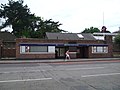 Manor House tube station entrance on the western side of Green Lanes, north of Seven Sisters' Road
 -
![Nicholl House (now demolished) was part of the Woodberry Down Estate. It has been falsely reported that the building featured in the film Schindler's List.[46]](//upload.wikimedia.org/wikipedia/commons/thumb/f/f2/NichollHouseWoodberryDown.JPG/120px-NichollHouseWoodberryDown.JPG) Nicholl House (now demolished) was part of the Woodberry Down Estate. It has been falsely reported that the building featured in the film Schindler's List.[46]
Nicholl House (now demolished) was part of the Woodberry Down Estate. It has been falsely reported that the building featured in the film Schindler's List.[46] -
 View from a flat in the new development at Woodberry Down, March 2012
 -
 Skyline tower at Woodberry Down
 -
 The New River through Woodberry Down
 -
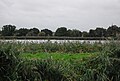 Woodberry Wetlands East Reservoir
 -
 The Castle Climbing Centre next to the West Reservoir, once the main Water Board pumping station

![Nicholl House (now demolished) was part of the Woodberry Down Estate. It has been falsely reported that the building featured in the film Schindler's List.[46]](https://en.wikipedia.org/wiki/File:NichollHouseWoodberryDown.JPG)


Education
[edit]The area has 3 schools and 1 public library:
- Woodberry Down Community Primary School (State-funded primary school)[47]
- Skinners' Academy (State-funded secondary school)[48]
- Beis Chinuch Lebonos Girls School (Independent school)
- Woodberry Down Library (Public library)[49]
Transport and locale
[edit]Nearby places
[edit]Nearest railway stations
[edit]- Manor House tube station
- Harringay Green Lanes railway station
- Finsbury Park station
- Seven Sisters station
- Stamford Hill railway station
Bus routes
[edit]The following bus routes serve Manor House: 29, 141, 253, 254, 259, 279, 341 (24 hour) and Night Bus routes N29, N253 and N279.
References and notes
[edit]- ^ North London Mercury and Crouch End Echo, Nov 11 1899
- ^ Google map showing the rough boundaries of Manor House.
- ^ Bridget Cherry and Nikolaus Pevsner, London 4: North, London, Penguin, 1999, p. 540
- ^ Posted by Hugh on April 23, 2016 at 14:12 in Local History (See History Group for main postings); Discussions, View. "How Woodberry Down Got its Name (and maybe Manor House too)". harringayonline.com. Retrieved 1 December 2022.
{{cite web}}: CS1 maint: numeric names: authors list (link) - ^ Original plans of Northumberland House in Bulletin 51, Pickering & Chatto, May 2016
- ^ Whilst no evidence has yet been unearthed that links the house to the Percys, the Dukes of Northumberland, the presence of the Percy lion over the gates suggests that there may have been a link. The Percys also had a historic connection to the area, once owning a house on Newington Green (Old and New London: Volume 2. Originally published by Cassell, Petter & Galpin, London, 1878)
- ^ Morning Advertiser, page 1, 13 November 1826,London
- ^ Roberts, Andrew. Northumberland House, The 1832 Madhouse Act and the Metropolitan Commission in Lunacy from 1832, Middlesex University, accessed 11 November 2009. Roberts cites Murphy, Elaine (2000) The Administration of Insanity in East London 1800-1870 PhD Thesis, University of London.
- ^ Seymour-Jones, Carole. Painted Shadow, Doubleday 2001.
- ^ "Painted Shadow: A Life of Vivienne Eliot by Carole Seymour-Jones". the Guardian. 14 October 2001. Retrieved 1 December 2022.
- ^ a b c d e f T. F. T. Baker & R. B. Pugh (Editors), A History of the County of Middlesex, Volume 6: Friern Barnet, Finchley, Hornsey with Highgate, Accessed online at British History Online, 1976
- ^ Thatcherite policies condemned for causing 'unjust premature death'
- ^ Baker & Pugh (see previous reference) state that the pub was built "by 1832". However, the pub's first landlord advertised is as a new building in 1834, see below
- ^ Described as "Cottage and Garden. On the Eastern Side of the Green Lanes, opposite the Road leading to Hornsey Wood House" in the Schedule of the Act to amend an Act of the Seventh Year of His Present Majesty for Consolidating the Trusts of the Several Turnpike Roads in the Neighbourhood of the Metropolis, North of the River Thames, and to make and maintain Two New or Branch Road to communicate with the said Metropolis Road, pp 853-863 of The Statutes of the United Kingdom of Great Britain and Ireland, Volume 11, George Eyre and Andrew Strahan, Printers to the King's Most Excellent Majesty, 1829". The cottage was built c. 1810. No building is shown on map OSD 152 / Serial 104 Hampstead 1807 - 08 at Hackney Archives, but one does appear on the 1814 Map of the Parish and Prebendal Manor of the Parish of Stoke Newington, also at Hackney Archives. On Crutchley's 1829 map, the building is labelled as "Lodge", a term often used at the time to refer to a very respectable villa type dwelling.
- ^ Posted by Hugh on December 17, 2016 at 9:43 in Local History (See History Group for main postings); Discussions, View. "History of the Manor House Pub". harringayonline.com. Retrieved 1 December 2022.
{{cite web}}: CS1 maint: numeric names: authors list (link) - ^ See also Settlement section in History of Harringay Prehistory to 1750
- ^ This was certainly the belief of Edwardian author J. J. Sexby who wrote in his 1905 book, "In the neighbourhood of the (Finsbury) park we still have Brownswood Road and Manor-House Tavern to remind us of the Manor of Brownswood and of its manor-house, which has now disappeared" (The Municipal Gardens, and Open Spaces of London, Lt-Col J. J. Sexby, Elliot Stock 1905).
- ^ A History of the County of Middlesex: Volume 8, Islington and Stoke Newington Parishes, Victoria County History, London, 1985. Pages 143-151.
- ^ A History of the County of Middlesex: Volume 8, Islington and Stoke Newington Parishes, Victoria County History, London, 1985, Pages 217-223
- ^ Morning Advertiser, 26 June 1837.
- ^ in November 1839 various newspapers carried the announcement of the bankruptcy of William Tombleson described as "late of the Manor-house tavern, Stoke Newington, tavern-keeper, publisher, dealer and chapman" (Wiltshire Independent - 28 November 1839). So it may well be that Tombleson took over the pub after Baily but didn't last long.
- ^ The Morning Advertiser of 31 July 1849 notes a change of licensee from Catherine Harris to William Burnell. Records also show a Michael Harris insured as a victualler at the tavern in 1840 (Nat Archives ref MS 11936/567/1323901); no doubt this is Catherine's husband. So it may well have been the Harrises who were running the pub at the time of the royal visit.
- ^ Queen Victoria's Journal in the Royal Archives at Windsor Castle, via www.armingford.net and William James Roe, Tottenham, Edmonton and Enfield Historical Notebook: With Some Incidental Notices of Harringay (or Hornsey), London 1952
- ^ Morning Advertiser, 9 August 1851, and Clerkenwell News, 10 July 1858
- ^ The Morning Post - Saturday 31 May 1851
- ^ London Evening Standard, 6 October 1854
- ^ Hackney and Kingsland Gazette, 4 June 1870
- ^ Morning Advertiser - Monday 18 July 1870
- ^ The Morning Advertiser of 2 July 1872.
- ^ Notice of Intention to Apply; an Application for Renewal of a Music and Dancing Licence from Morris Benjamin, Licensed Victualler, of The Manor House, Green Lanes, held at London Metropolitan Archives
- ^ North London Recorder, 28 February 1930
- ^ Although the latter building still exists, Transport for London no longer occupies it.
- ^ in a room on the first floor 'The Catacomb' nightclub accessed 14 April 2007
- ^ Singing the Blues and All that Jazz: Music at Manor House 1959 - 2004 A full history of music at the Manor House pub.
- ^ GLA press release 27 Jul 2001 Archived 27 September 2007 at the Wayback Machine accessed 14 April 2007
- ^ "Woodberry Down Case Study" (PDF).
- ^ Phase 2 planning
- ^ Phase 3 approval
- ^ Phases dates of the development
- ^ Genesis scoops top social housing prize at Daily Telegraph awards, 29 September 2011. Retrieved 2011-09-30.
- ^ "RICS awards 2018". 16 May 2018.
- ^ Couvée, K, Woodberry Down in Hackney: How ‘Regeneration’ is Tearing up Another East London Community
- ^ Chakrabortty, A and Robinson-Tillett, S The truth about gentrification: regeneration or con trick?. The redevelopment was originally marketed as "Woodberry Park", but the original name was reinstated after protests
- ^ "European parliamentary, council and mayoral elections 22 May 2014 | Hackney Council".
- ^ Woodberry Down Ward Profile (November 2015)
- ^ "The truth behind the rumour Schindler's List was filmed on an North East London council estate". MyLondon. 9 March 2021.
- ^ Learning Trust - primary schools list
- ^ Learning Trust - secondary schools list
- ^ Woodberry Down Library
External links
[edit]- Harringay Online - album of images of the Manor House area during the 19th and twentieth centuries
- Harringay Online - discussions about the history of the Manor House area from the history group
- Harringay Online - discussions about the history of the Manor House area from the general forum


Manor House, London
View on Grokipedia![Junction of Green Lanes and Seven Sisters Road][float-right]
Key characteristics include its evolution from a semi-rural manor-linked enclave—named after the historic Manor House Tavern pub at the crossroads—to a mixed-density urban neighborhood with ongoing estate renewals emphasizing sustainability around the preserved New River path and reservoirs now managed as nature reserves.[5] No major controversies define the area, though local development pressures, such as Woodberry Down's transformation from social housing to luxury towers since the 2000s, reflect broader London housing dynamics without unique disputes in official records.[8]
Geography
Location and Boundaries
Manor House occupies a position in North London, predominantly within the London Borough of Hackney, with portions extending into the adjacent London Borough of Haringey due to the area's straddling of municipal lines, particularly around key transport interchanges.[5] This division reflects the irregular alignment of borough boundaries in the region, where administrative lines follow historical and infrastructural developments rather than strict geographical features. The neighborhood's western boundary aligns with Finsbury Park, transitioning into areas associated with Harringay to the north and Stamford Hill to the east, forming a compact district of roughly urban residential scale without a precisely delineated southern limit beyond the park's influence.[2] These borders provide spatial context, positioning Manor House as an eastern extension of Finsbury Park's greener environs into more densely built-up zones. Natural elements, including the course of the New River and associated reservoirs at Woodberry Down, have historically shaped perceptual boundaries, channeling development patterns and contributing to the area's hydrological demarcation from neighboring locales.[9]Topography and Natural Features
Manor House lies on the relatively flat terrain of north London's Middlesex plateau, with ground levels generally between 30 and 40 meters above ordnance datum, facilitating urban development but limiting natural drainage gradients.[10] This even topography, shaped by underlying London Clay and gravel deposits, contrasts with steeper rises to the north toward Hampstead.[11] The area's hydrology is dominated by the New River, an engineered waterway completed in 1613 to convey fresh water from Hertfordshire, which threads through Woodberry Down and feeds the adjacent Stoke Newington Reservoirs.[12] These include the East and West Reservoirs, originally built in the early 19th century for storage, now partially repurposed as Woodberry Wetlands—a 11-hectare site featuring reed-fringed ponds, dykes, and scrapes that support wetland ecosystems amid urban density.[12] Silt accumulation from the New River has reduced reservoir depths from an initial 6 meters to about 2 meters, creating undulating shallows conducive to aquatic habitats.[13] Positioned within the broader Lea catchment, Manor House experiences moderated flood risks from the River Lea to the east, with historical events like the 1947 snowmelt floods affecting the Lea Valley, though local relief channels mitigate contemporary threats.[14] Urban green corridors along the reservoirs and New River path serve dual historical roles in water supply and modern recreation, buffering against fluvial overflow while enhancing ecological connectivity.[15] Woodberry Wetlands harbor diverse flora and fauna, including reedbeds exceeding 13,000 square meters, hedgerows, wildflower meadows, and wetland birds such as kingfishers and herons, with the site's semi-improved grasslands and tall herbs bolstering invertebrate populations.[16] Recent residential developments around Woodberry Down have pursued biodiversity net gain targets of at least 10%, incorporating raised beds, beehives, and species-rich seeding to offset habitat fragmentation, though local objections highlight potential disruptions to established wildlife corridors.[17][18] Empirical monitoring post-regeneration shows sustained avian diversity, underscoring the reservoirs' resilience as refugia in an urban matrix.[19]History
Origins and Early Development
The district of Manor House emerged from the rural landscape of the medieval Manor of Tottenham, where a manor-house served as the administrative center, documented in records from 1254 describing its structure and surroundings near the High Road and church.[20] This manor, part of the feudal estate held by various lords, exemplified the agrarian foundations of the area, with lands primarily used for farming and common fields supporting local tenants. The engineering of the New River in the early 17th century marked a pivotal infrastructural development, as the artificial waterway—initiated in 1604 and opened in 1613—channeled fresh water from Chadwell and Amwell springs in Hertfordshire to reservoirs in Islington, passing through what would become Manor House and influencing settlement by providing reliable water access.[21] To meet expanding urban demands, the New River Company built the East and West Reservoirs at Woodberry Down in 1833, creating storage and filtration facilities that stored millions of gallons and drew ancillary development, including maintenance structures, while preserving open water bodies amid farmland.[22] By the Victorian era, the predominantly rural character shifted toward suburbanization, with large detached villas featuring gardens extending to the New River constructed along the east end of Seven Sisters Road from 1868 to 1870, catering to affluent commuters.[23] This transition was accelerated by railway expansions, such as the Great Eastern Railway's line from Shoreditch to Enfield via Stoke Newington completed in 1872, enhancing connectivity and enabling the conversion of farmland into residential plots for the emerging middle class.[23]Interwar Expansion and Post-War Housing Initiatives
During the interwar period, Manor House underwent suburban expansion primarily through private housing initiatives and the establishment of light industry, accelerated by enhanced transport connectivity after 1918. The electrification and extension of tram and bus networks reduced commuting barriers, enabling working- and middle-class families to relocate from central London.[24] This trend intensified with the opening of Manor House Underground station on 19 September 1932, the first stop on the Piccadilly line's extension from Finsbury Park to Cockfosters, which directly spurred residential development by providing rapid access to the West End in under 20 minutes.[4] Private builders responded with semi-detached and terraced homes along Green Lanes and adjacent streets, mirroring London's wider private-sector boom that constructed over 2.5 million suburban units nationally between 1919 and 1939, though concentrated on owner-occupiers able to afford mortgages amid low interest rates.[25] Light manufacturing, including printing and food processing, also clustered in the area, employing local residents and supporting population growth without fully alleviating inner-city spillover pressures.[26] Post-World War II, acute housing shortages—exacerbated by bomb damage destroying or damaging over 450,000 homes across the UK and a baby boom increasing demand—prompted the Labour government's interventionist policies.[27] The 1931 census documented severe overcrowding in London, with around 70,000 families sharing rooms at densities exceeding two persons per room, metrics that highlighted private markets' failure to serve low-income households and justified state-led rehousing.[28] Enacted under the 1946 and 1949 Housing Acts, these initiatives mandated local authorities to prioritize council estates for slum clearance and war-displaced families, targeting 240,000 annual units nationally though actual output lagged due to material rationing.[29] In north London boroughs encompassing Manor House, such as Hornsey (later part of Haringey), councils launched experimental low-rise and mixed-tenure schemes from 1947, aiming to integrate rehousing with community facilities but often scaling to medium-rise blocks amid escalating waiting lists exceeding 100,000 in greater London by 1951.[30] Empirical gaps emerged early, as supply-demand mismatches—driven by optimistic projections ignoring maintenance costs and social isolation—fostered concentrated poverty in under-resourced estates, presaging maintenance backlogs and tenant dissatisfaction by the late 1950s.[31]Construction and Decline of Woodberry Down Estate
The Woodberry Down Estate was conceived by the London County Council (LCC) in the 1930s as a flagship social housing project to rehouse working-class families displaced from slum clearance areas in central London.[32] Planning began in 1938, envisioning a mixed development of four- and five-storey blocks of flats alongside two-storey cottages, emphasizing communal facilities like playgrounds and a health centre to foster community life.[33] Construction was delayed by World War II but resumed postwar, with initial tenders awarded in 1946 and the first residents moving in by 1948; the estate was officially opened that year.[34] By completion in 1962, it comprised 57 blocks of primarily five- to eight-storey flats across 64 acres, providing 2,013 homes in a high-density layout that prioritized volume over spaciousness.[35][36] Promoted as the "Estate of the Future," the project incorporated modernist influences, including Bauhaus-inspired designs, but inherent flaws emerged in its execution, such as inadequate ventilation, poorly designed balconies, insufficient storage, and heating systems prone to failure.[37] These construction shortcomings, combined with the rapid postwar push for quantity amid material shortages, compromised long-term durability, setting the stage for maintenance challenges under public ownership.[38] The LCC's transfer of oversight to the Greater London Council in 1965, followed by Hackney Borough Council, exacerbated inefficiencies, as centralized bureaucracies struggled with localized upkeep in an era of expanding welfare commitments. Decline accelerated from the 1970s, marked by physical deterioration including damp penetration, asbestos hazards, and structural wear in most blocks, as documented in later assessments tracing issues to chronic underfunding.[39] Council neglect was evident in repair backlogs and the elimination of on-site caretakers, whom residents credited with maintaining order; complaints highlighted unaddressed maintenance, fostering a cycle of tenant dissatisfaction and physical decay.[38] Crime and perceptions of insecurity rose alongside socioeconomic stagnation in Hackney, then dubbed Britain's poorest borough, with the estate's isolation and density amplifying vulnerabilities under strained public management.[34] Oral histories from the 1980s reveal residents' frustration with these systemic failures, attributing them to inadequate incentives in council housing models that prioritized initial provision over sustained investment.[36] By the late 1980s, the estate exemplified broader postwar public housing pitfalls, where high-density designs without robust governance led to unmanaged decline rather than enduring viability.[32]Squatting and Social Challenges in the 1980s
In the late 1980s, the Woodberry Down Estate in Manor House experienced widespread squatting as Hackney Council left numerous flats vacant amid chronic underinvestment and maintenance failures. These derelict properties, part of a larger estate comprising over 2,000 council homes built in the mid-20th century, attracted primarily young punks from the UK and Ireland seeking affordable housing during an economic downturn characterized by high unemployment in inner London.[40][41] Squatters occupied the empty units, forming ad hoc communities that temporarily repurposed the neglected spaces, though this occurred parallel to intensifying housing management issues.[42] The era was marked by associated social disorders, including drug-related crimes that contributed to the estate's notorious reputation for deprivation and instability. Flats were often boarded up in attempts to prevent further occupations, reflecting broader challenges like stigmatization and policy neglect that exacerbated urban decay rather than resolving it.[43] Conflicts arose between squatters and authorities, as Hackney Council adopted a hostile stance toward informal occupations, leading to eviction efforts amid reports of property damage from prolonged vacancy and unauthorized use.[44] These tensions underscored the limitations of tolerating squatting in decaying public housing stock. By the early 1990s, council-led clearances dismantled the squatter presence at Woodberry Down, with operations informed by similar aggressive evictions elsewhere in Hackney, such as the 1988 deployment of riot police against over 120 squats on the nearby Stamford Hill Estate.[45] A 1991 incident, where a Woodberry Down squatter exposed council irregularities in a "keys for cash" scheme allegedly aimed at displacing tenants and occupants, highlighted governance failures but did not halt the push toward formal repossession and eventual redevelopment planning.[46] This phase illustrated how permissive inaction on vacant properties fueled cycles of disorder, prompting a shift to stricter enforcement and private-sector involvement in addressing the estate's decline.[42]Transition to Private-Led Regeneration in the Late 20th Century
In the late 1990s, Hackney Council commissioned a structural evaluation of the Woodberry Down estate, revealing severe deterioration that underscored its long-term unsustainability under public management alone. The September 1998-initiated report, finalized in 1999, assessed 57 blocks housing approximately 2,000 dwellings and concluded that 31 were beyond economic repair due to concrete cancer, asbestos contamination, and outdated infrastructure, with refurbishment costs deemed excessively high relative to available council budgets.[47][41] This diagnosis shifted focus from piecemeal repairs to wholesale regeneration, as ongoing maintenance for such monolithic post-war social housing had proven fiscally burdensome amid declining public funding.[48] Influenced by Thatcher-era housing reforms, including the 1980 Housing Act's Right to Buy scheme that depleted council stocks and curtailed new social builds, policymakers pivoted toward market-oriented solutions emphasizing mixed-tenure models over uniform public rental units. These reforms, enacted from 1979 to 1990, reduced central government grants for housing maintenance by prioritizing homeownership and private sector involvement, compelling local authorities like Hackney to explore cross-subsidization where market-rate sales funded affordable replacements.[49][41] By the late 1990s, this manifested in Woodberry Down's initial planning for private-public partnerships, with feasibility assessments indicating that developer-led redevelopment offered greater viability than council-led refurbishment, potentially leveraging private capital to address the estate's £100 million-plus backlog in repairs.[41] Early resident consultations and the formation of an Estate Development Committee in the late 1990s facilitated pilot decanting strategies, where select tenants were relocated to test relocation logistics and secure sites for phased demolition. These steps demonstrated that private investment could enhance project feasibility, as public options alone lacked the scale to modernize infrastructure while preserving resident rights to return, setting the stage for formal agreements with developers like Berkeley Homes in the subsequent decade.[50][42]Notable Landmarks and Sites
The Manor House Tavern
The Manor House Tavern originated as a public house constructed between 1830 and 1834 by Stoke Newington builder Thomas Widdows, positioned adjacent to the turnpike toll gate on Green Lanes to serve passing travelers and emerging local residents.[51] This Victorian-era establishment functioned initially as a coaching inn-style venue at the crossroads, predating the area's denser urbanization. The original timber-framed structure was demolished in 1930 to facilitate the extension of the Piccadilly line Underground, with the station adopting the tavern's name upon its opening in 1932.[52] Rebuilt in 1931, the tavern adopted a Flemish Revival style characterized by red brick facades, ornate gables, and symmetrical detailing typical of interwar public house architecture, enhancing its visibility at the junction of Green Lanes and Seven Sisters Road.[53] Supplied by Watney's Brewery, it continued as a community-oriented pub, providing continuity for patrons amid infrastructural changes like the tube's arrival. The design's prominence underscored its role as a landmark, though specific wartime adaptations remain undocumented in available records. In the postwar era, the venue upstairs evolved into a key music hall, operational from 1959 onward as the Manor House Blues Club or Bluesville, hosting influential performances by acts such as The Rolling Stones in their early days, The Jimi Hendrix Experience, Cream, and Fleetwood Mac.[54] [55] This phase cemented its cultural significance in London's R&B and rock scenes, drawing diverse crowds until patronage declined in the late 20th century. The pub closed around 2000, after which the building was repurposed into shops and flats, preserving its facade as a historical anchor despite the shift from active hospitality.[56]Woodberry Down Reservoirs and Surrounding Infrastructure
The Stoke Newington East and West Reservoirs at Woodberry Down were constructed in 1833 by the New River Company to store water from the New River, addressing the expanding demand for potable water in London's suburbs.[57] These reservoirs formed a critical component of the company's 17th-century engineered waterway system, which diverted fresh water from Hertfordshire sources into the city, with the East Reservoir serving as primary storage and the West as a balancing facility.[58] By the mid-20th century, following nationalization and shifts to modern filtration, the reservoirs became disused for their original purpose but retained structural integrity, with embankments reinforced using stones salvaged from the demolition of medieval London Bridge.[13] Designated as a conservation area in 1986, the reservoirs and adjacent New River course receive heritage protection under local planning policies, preserving their Victorian engineering features amid urban encroachment.[59] The East Reservoir, now encompassing Woodberry Wetlands, holds Site of Metropolitan Importance for Nature Conservation status, supporting diverse avian and aquatic species due to decades of restricted access that fostered natural succession.[13] The West Reservoir adjoins the former New River Company pumping station, repurposed as the Castle Climbing Centre, highlighting adaptive reuse of industrial infrastructure while maintaining the site's hydrological legacy.[22] Surrounding infrastructure includes the New River Path, which traces the waterway's northern edge and connects to broader cycle networks, facilitating recreational access and influencing local microclimates through shaded corridors.[12] Engineered elements such as overflow channels and service bridges enhance ecological connectivity, promoting wetland habitats that buffer urban runoff and support biodiversity, with paths upgraded for public circulation around the East Reservoir's perimeter.[60] These features yield environmental benefits including flood mitigation and habitat provision, outweighing ongoing maintenance demands on Thames Water as owner, though specific cost figures remain tied to broader asset management rather than isolated reservoir upkeep.[58]Modern Redevelopment and Urban Renewal
Phases of Woodberry Down Regeneration
The Woodberry Down regeneration project, a partnership between the London Borough of Hackney and Berkeley Homes (a subsidiary of the Berkeley Group), commenced planning in the early 2000s to replace the aging post-war estate with modern mixed-tenure housing.[48] Initial phases focused on decanting residents from obsolete blocks, demolishing failing structures, and constructing new homes with improved energy efficiency and amenities, targeting a total of over 5,500 units across eight phases by the 2030s.[61] Phases 1 and 2, completed by the mid-2010s, delivered approximately 537 social rent homes and additional private units, alongside upgrades to utilities and public spaces.[39] Phase 3 construction began in October 2021, comprising 243 homes—117 for social rent and 126 for shared ownership—set for completion in autumn 2024, with enhanced densities enabling over 80,000 square feet of public open space and community facilities.[62] [63] Phase 4 received planning consent in May 2024 for a site-specific development incorporating further residential blocks and infrastructure improvements.[64] In September 2025, Hackney Council approved the outline masterplan for Phases 5-8, authorizing up to 3,083 additional homes with 43% affordable housing, including provisions for resident decanting from remaining estate blocks like Rowley Gardens.[65] [66] These later phases, led by Berkeley Homes, extend through 2041—with Phase 8 scheduled for 2031-2041—and emphasize higher-density builds, biodiversity enhancements, and integrated utilities to support the estate's full transformation.[67][68]Economic and Infrastructural Achievements
The Woodberry Down regeneration project has provided construction employment opportunities, with developer Berkeley Homes recruiting 20% of its workforce locally from the London Borough of Hackney to support the development of new housing and infrastructure.[69] This private-sector involvement has facilitated the delivery of over 3,000 new homes by 2020, including retail and community spaces that contribute to local business activity, though specific revenue increases from business rates remain undocumented in public reports.[42] Infrastructural enhancements have addressed longstanding deficiencies, including the opening of Skinners Academy, a new secondary school, in 2010 and the expansion of primary school facilities to accommodate growing population needs.[42] A community centre was established in 2011, alongside refurbished youth hubs and new public green spaces integrated with the site's reservoirs, improving access to leisure and utilities. Highway modifications at the Manor House junction, incorporated into the project's outline permissions, have enhanced traffic flow and connectivity. These developments, enabled by market-driven partnerships between Hackney Council and private developers like Notting Hill Genesis, have outperformed prior council-managed maintenance in delivering timely upgrades. Resident surveys from 2019 reflect strong endorsement of these outcomes, with 88% expressing satisfaction with the area as a place to live, 98% noting neighborhood improvements over the prior five years, and 97% reporting personal or family benefits from the changes.[42] Perceptions of safety have risen, with 85-90% of residents feeling secure walking alone after dark, supported by design features aimed at crime reduction and a dedicated safer neighbourhoods team; reported crime levels increased at a slower rate than the borough average during the period.[42] Such metrics underscore the effectiveness of private incentives in prioritizing resident-valued quality over state-monopoly approaches, as evidenced by 90% viewing the process as inclusive.[42]Awards and Recognitions
The Woodberry Down regeneration project, encompassing significant redevelopment in the Manor House area, was named Project of the Year and Best Regeneration Scheme in the UK at the Inside Housing Development Awards in 2018, with judges citing its scale in replacing over 1,000 social housing units while delivering mixed-tenure homes and community infrastructure.[70] In November 2023, the project received two Green Apple Environment Awards for Best Practice in Sustainability, recognizing achievements in environmental integration such as the incorporation of the historic New River and reservoirs into green public spaces, alongside metrics including reduced carbon emissions through efficient building design and on-site renewable energy systems.[71][72] Phase 2 of Woodberry Down was shortlisted for Regeneration Scheme of the Year and Best Residential Project at the British Homes Awards in 2024, evaluated on criteria including social impact, with 41% affordable housing provision and enhanced resident retention through phased decanting.[73][74] The initiative also earned recognition in the SuDS Awards for sustainable urban drainage systems, highlighting the role of reservoir-adjacent wetlands in flood management and biodiversity enhancement.[75] In October 2025, Woodberry Down was awarded Best Borough-Led Project at the Building London Planning Awards, commended for collaborative governance yielding over 5,500 new homes by project completion.[76]Controversies Surrounding Gentrification and Social Impacts
Critics of the Woodberry Down regeneration in Manor House have highlighted rising private rents and the displacement of original council tenants as key social costs of gentrification. Local reports indicate that nearby rent increases reached 9.2% in the year leading to 2025, exacerbating affordability challenges for low-income households reliant on frozen housing benefits.[77] Academic analyses describe partial displacement resulting from insufficient replacement social housing relative to demolished units, with some residents relocated temporarily or permanently outside the area.[78] However, the project's right-to-return policy has enabled a significant portion of displaced tenants to relocate back into new affordable units on similar terms, contributing to sustained community continuity.[43] Affordable housing delivery has fallen short of initial projections in later phases, fueling debates over unfulfilled promises. While early plans targeted around 41% affordable units including social rent and shared ownership, the 2025 masterplan revisions resulted in approximately 200 fewer social homes than originally outlined, prompting condemnation from residents and community groups.[41] [79] In total, about 42% of completed homes qualify as affordable, cross-subsidized by private market sales, though critics argue this model prioritizes profit over social needs.[80] Empirical reviews of similar state-led regenerations note that while displacement occurs, effective resident engagement and return mechanisms mitigate long-term exclusion compared to unmanaged decline.[81] Objections to green space and biodiversity loss intensified during 2025 planning approvals for final phases, with campaigners citing a projected 9.25% net biodiversity deficit against mandatory gains.[79] Hackney Council approved the plans despite these concerns, emphasizing compensatory landscaping and prior achievements like a 142% biodiversity net gain in initial phases through integrated green infrastructure.[18] [82] Such disputes reflect broader tensions between urban densification and environmental preservation, though site-specific assessments confirm overall enhancements in accessible wetlands and reservoirs outweigh localized losses.[68] On balance, data from comparable London regenerations indicate gentrification via mixed-tenure developments disrupts poverty concentrations, yielding improved socioeconomic outcomes. Studies link increased homeownership and tenure diversity to persistent crime reductions, with one analysis estimating a 10% drop per percentage point rise in property sales from public stock.[83] In gentrifying areas like Manor House, population shifts have correlated with declining social rented housing shares and rising incomes, challenging narratives of uniform inequity by demonstrating net poverty alleviation through economic integration rather than isolation.[84] While left-leaning critiques in mainstream outlets emphasize displacement harms—often amplifying resident anecdotes over longitudinal metrics—causal evidence favors regeneration's role in breaking cycles of deprivation, as evidenced by sustained returns and amenity uplifts.[85] [86]Governance and Administration
Local Authority and Political Structure
The Manor House area within the London Borough of Hackney is administered by Hackney London Borough Council, a unitary authority responsible for local services including planning, housing, and regeneration approvals. The council comprises 57 councillors elected across 21 wards every four years, with Labour holding a majority of 50 seats following the 2022 elections, a position unchanged as of 2025 ahead of the next vote in 2026.[87] This political composition has consistently shaped local decision-making, including oversight of development projects through cabinet committees and full council votes on major planning applications.[88] Hackney Council operates under the strategic coordination of the Greater London Authority (GLA), established in 2000 to provide region-wide governance via the Mayor of London and London Assembly.[89] The GLA exerts oversight through the London Plan, which sets binding policies on housing density, green infrastructure, and transport integration that boroughs must align with in their local plans; for instance, major regenerations require conformity checks to ensure they support metropolitan priorities like affordable housing targets. Boroughs retain primary implementation powers, but GLA interventions can occur via call-ins for strategically significant developments, influencing outcomes in areas like Manor House where cross-boundary infrastructure ties into wider London networks. The relevant ward for much of the Manor House district, including Woodberry Down, is the two-member Woodberry Down ward, represented by Labour councillors Caroline Selman (elected 2014) and Sarah Young.[88] These councillors contribute to ward forums and scrutiny panels that review regeneration proposals, advocating for resident impacts before council-wide approval; their roles include liaising on planning permissions for high-density rebuilds, ensuring compliance with local development frameworks while balancing community feedback.[90] Governance in Hackney has evolved from 1980s-era state-centric housing policies, characterized by direct council ownership and allocation amid fiscal constraints from national reforms like Right to Buy, to 2000s adoption of public-private partnerships (PPPs) driven by stock decay and funding shortfalls.[91] This shift enabled large-scale renewals without sole reliance on public budgets, as seen in Woodberry Down's 2009 masterplan agreement between Hackney Council, Berkeley Homes, and Genesis Housing Association (now part of Grainger), which decanted residents, demolished outdated blocks, and delivered over 5,500 mixed-tenure homes by leveraging private investment for infrastructure upgrades.[92] Such PPPs addressed causal factors like post-1980s council housing depletion—exacerbated by sales under the 1980 Housing Act—but introduced dependencies on developer financing, with council retaining rights to social rent units and veto powers over phases.[48]Policy Influences on Development
The regeneration of the Woodberry Down estate, adjacent to Manor House and integral to the area's urban renewal, was initially driven by Hackney Council's 2005 masterplan, approved under the then-prevailing planning framework emphasizing public-private partnerships to address post-war housing stock failures. This policy shifted from in-situ refurbishment to wholesale demolition and rebuild, motivated by structural evaluations in the 1990s revealing widespread decay in the 1930s-1960s blocks, including concrete degradation and inadequate maintenance that exacerbated social issues like high deprivation rates.[41][34] Prior council approaches, characterized by deferred repairs and fragmented upkeep, contributed causally to these failures, as evidenced by the estate's designation for comprehensive intervention rather than incremental fixes, reflecting broader inefficiencies in municipal housing management during the late 20th century.[41] Subsequent phases, including the 2014 updates and 2025 outline permissions for up to 3,083 additional dwellings across remaining sites, operated under the National Planning Policy Framework (NPPF), which presumes in favor of sustainable development to meet housing needs, overriding local objections on density and environmental impacts such as wetland disruption.[93][68] This national policy facilitated approvals despite resident concerns, prioritizing borough-wide housing delivery aligned with Hackney's Local Plan 2033 (LP33), which sets strategic targets for high-density infill to combat shortages.[94][79] Section 106 agreements under the Town and Country Planning Act 1990 played a pivotal role in mitigating development impacts, mandating developer contributions from Berkeley Homes for affordability, with allocations funding community training (£100,000 for Woodberry Down Training Centre) and infrastructure, though delivery has fallen short of original social housing promises by approximately 200 units, highlighting tensions between cross-subsidy models and sustained low-income provision.[95][96][79] Housing targets embedded in LP33 further influenced Manor House-adjacent sites via the Manor House Area Action Plan, enforcing low-carbon integrations and coordinated regeneration to meet density goals, though historical council inertia delayed effective interventions until private financing unlocked scale.[97][94]Demographics and Socioeconomics
Population Trends and Density
The Woodberry Down area, central to Manor House and encompassing much of its residential core, underwent population decline from the 1970s through the 1990s amid disinvestment, stigmatization, and deteriorating conditions on the original council estate.[41] By the early 2000s, the ward's population stood at approximately 9,500 residents, reflecting stagnation following post-war peaks that had reached around 6,500 by the 1950s before outflows due to estate maintenance failures.[98] [64] The 2011 census recorded 8,551 residents in Woodberry Down ward, indicating a slight further dip attributable to ongoing estate challenges prior to major interventions.[98] Regeneration efforts, launched in the mid-2000s, reversed this trajectory through phased demolitions and new constructions, expanding housing stock from roughly 2,000 units to over 5,500 and accommodating influxes tied to urban renewal.[41] By the 2021 census, the ward population had risen to 12,113, a 41.6% increase from 2011, driven by these developments.[98] Manor House's density aligns with intensified inner London patterns, with Woodberry Down ward reaching 16,093 persons per square kilometer in 2021 across its 0.75 km² extent.[98] This figure exceeds London's borough-wide averages and underscores the localized compression from high-rise integrations in regeneration phases.[41]Ethnic Diversity and Socioeconomic Profiles
The Harringay ward, encompassing much of the Manor House area, exhibits significant ethnic diversity as per the 2021 Census, with White British residents comprising 33% of the population, lower than the London average of 37%. Other White groups, including Turkish and Cypriot communities prominent along Green Lanes—a historic hub for Turkish Cypriot settlement since the mid-20th century—account for a substantial portion of the remaining White population, contributing to an overall White ethnic share of approximately 70%. Black residents, predominantly of African origin, represent about 10%, reflecting broader migration patterns from sub-Saharan Africa, while Mixed and Asian groups each form around 8-9%, and Other ethnic categories add further heterogeneity.[99][100][101]| Ethnic Group (2021 Census, Harringay Ward) | Approximate Percentage |
|---|---|
| White British | 33% |
| Other White (incl. Turkish/Cypriot) | ~37% |
| Black (predominantly African) | 10% |
| Asian | 9% |
| Mixed/Multiple | 8% |
| Other/Arab | 3% |