Hubbry Logo
Hackney MarshesHackney MarshesMain
Open search
Hackney Marshes
Community hub
Hackney Marshes
logo
8 pages, 0 posts
0 subscribers
Be the first to start a discussion here.
Hackney Marshes
Hackney Marshes
from Wikipedia

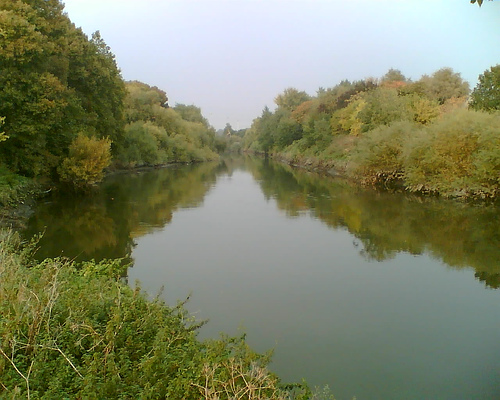
Hackney Marshes is an area of open space in London's Lower Lea Valley, lying on the western bank of the River Lea. It takes its name from its position on the eastern boundary of Hackney, the principal part of the London Borough of Hackney, and from its origin as an area of true marsh.

Key Information

The marshes were extensively drained from medieval times onwards, and rubble was dumped here from buildings damaged by air raids during World War II, raising the level of the ground.

The principal area of the marsh lies below Lea Bridge Road between the Old River Lea, and the Hackney Cut – an artificial channel of the Lee Navigation, dug about 1770, to avoid a loop in the natural watercourse. The southern extent is marked by the A12; although the industrial land around Hackney Wick Stadium was originally an extension of the marsh, it now forms a part of the Olympic Park for the 2012 Summer Olympics.

Hackney Marsh is one of the largest areas of common land in Greater London, with 136.01 hectares (336.1 acres) of protected commons.[1]

History

[edit]

The marsh

[edit]

The river itself was always an important waterway, being navigable to Hertfordshire; the Marsh was formed by the periodic flooding of the river, and so formed useful pasture, but could not be occupied permanently. Before the 10th century, the estuary of the river came as far as Hackney Wick, crossed at Old Ford. Marsh Road, the continuation of Homerton High Street, led to the marshes, and thence to Temple Mills. The Romans appear to have built a significant stone causeway across the marshes here; a periodical, the Ambulator of 1774, noted

there have been discovered within the last few years the remains of a great causeway of stone, which, by the Roman coins found there, would appear to have been one of the famous highways made by the Romans[2]

The river forms a natural boundary, so in 527 AD it formed the boundary between the Saxon kingdoms of Essex and Middlesex. In the 9th century, it formed a part of the Danelaw boundary and reputedly, King Alfred stranded an invading Viking fleet here in 895 AD. This was achieved by draining the river where it met the River Thames, but the increased drainage affected river navigability, until it was restored in the 17th century.

By medieval times, both sides had become counties in England, and attempts were made to control the flow of water through the marshes. Mills were established including the Knights Templar mill at Temple Mills. Much of the marsh was 'owned' by the Templars and used for pasture. When the Templars were abolished, the land passed to the Knights Hospitaller, and thence to the Crown during the Reformation, when monastic lands were seized. At this time, much of the land was associated with the Hackney village of Lower Homerton and with the large manor house at Hackney Wick.

Around 1770, the river was straightened by the construction of the Hackney Cut, now forming the western extent of the marsh. The natural watercourse passes to the east over the Middlesex Filter Beds Weir, just below Lea Bridge Road. A nature reserve occupies the former Middlesex Filter beds on the island between the two watercourses.

By 1795, the former Templar mills were being used for preparing lead (submerged in urine, and heated by decaying cow dung, the lead was converted to lead oxide, and then finely ground to form a pigment for white, yellow and red lead paint). A new watermill was established on the Crown land of the marshes by Prince Rupert for an improved method of boring guns, however the secret died with him in 1682 and the enterprise collapsed.[3]

At the end of the 19th century Hackney suffered from increased demand for building land, both for housing and to extend the factories in Homerton. The marshes had always suffered periodic flooding from the Lea but with the introduction of mains sewerage a flood relief sewer was constructed beneath the marshes. Most common and Lammas lands were then preserved by an Act of Parliament and passed to the control of the Metropolitan Board of Works, but the marsh remained excluded from the MBW scheme because many of the lammas rights were still exercised, predominantly grazing. This was a period of increasing arguments between landowners and groups, such as the Eton Manor Mission,[4] who were trying to use the marsh for recreation. The 337 acres (1.36 km2) of marshes were finally preserved by the London County Council in 1890, by purchasing the rights and landowners' interests for £75,000. They opened to the public in 1893 by the Chairman of the LCC, Sir John Hutton and were formally dedicated in 1894.[5] The LCC undertook further flood prevention, straightening some of the bends in the River by introducing four 'cuts', the old channels being retained to form islands.[6]

There were few houses on the marshes, but a notable exception was the White House Inn, by a bridge on the old road to Leyton. Originally built as part of a Lea fishery scheme, the pub is now long gone but a bridge remains, rebuilt to supply anti-aircraft batteries during World War II.

In the Marshes towards Hackney Wick were low public houses, the haunt of highwaymen and their Dulcineas. Dick Turpin[7] was a constant guest at the "White House," or "Tyler's Ferry," near Joe Sowter's cock-pit at Temple Mills; and few police-officers were bold enough to approach the spot.[2]

Camping on Hackney Marshes, 1970s

Small areas of the marsh have been taken for housing and sports fields and others added. 35.5 acres (144,000 m2) were taken in 1915 to build the 'National Projectile Factory'; after World War I, in 1922 this site was used to create the Mabley Green recreation ground. A further 22.5 acres (91,000 m2) were taken in 1937 for the building of the Kingsmead Estate.[8] Hackney Power Station was situated to the north west of the marshes, across the Lee Navigation, and operated between 1901 and 1976.

Between the 1970s and 1990s, a camping site was situated at the north end of the Marshes, adjacent to Cow Bridge, at one point branded as Tent City.[9][10]

The Lesney die cast model factory was built on the Homerton side of the Lee Navigation in the 1940s, having success for many years with their Matchbox brand. The factory was a major local employer and closed in 1990.

Sport

[edit]
Hackney Marshes football pitches

In 1881, men from Homerton College, then still in the London area, founded the Glyn Cricket Club. Members of the cricket club then decided to form a football section to keep fit during the winter months, this football section was to become the famous Clapton Orient Football Club which for thirty years played its home games at Millfields Road Stadium (1900–1930). In 1946 the Club was renamed Leyton Orient and their home ground is now the Matchroom Stadium in Brisbane Road, Leyton, E10 5NF.

Today the marshes provide many pleasant walks, in reach of the inner city, but the most famous use of Hackney Marshes is for Sunday league football,[11] with 88 full-size football pitches marked out. On a typical Sunday, over 100 matches are played by amateur teams in several local leagues, such as the Hackney and Leyton Sunday League and the Camden Sunday League.

Football league match in 2021.

In 2006 there was a dispute between the London Borough of Hackney and Nike, Inc. over the company's use of the borough logo on their sportswear. The dispute was settled with payment of £300,000 going to support local youth sports groups.[12]

The annual Hackney Half marathon, taking place in May, starts and finishes at the marshes.[13]

London Olympics 2012

[edit]
The 2012 Summer Olympics stadium under construction.

Part of the London Olympic park for the Summer Olympics of 2012 was built on Hackney Marshes. This caused some controversy with local residents' groups,[14][15] who expressed concerns that East Marsh was to be tarmacked and used as a disabled coach park for the games. This was a temporary measure.

Arena Fields, however, was lost to the Olympic Park and its site will become part of the legacy Queen Elizabeth Olympic Park permanently. This area is to be replaced by parkland of comparable size and value on the Hackney side at the end of the 2012 Summer Olympics. It will not be possible to reinstate the loss of mature and varied trees or to compensate for the disruption caused to wildlife by construction.

The natural course of the River Lea forms the borough boundary with Waltham Forest and Newham (except for East Marsh, which lies between the river and Temple Mills). The Olympic plans included upgrading this watercourse and improving public access. The Olympic Park lies south of the A12, on industrial land around the former Hackney Stadium.

Music, literature and film

[edit]
The sheet music of If it wasn't for the 'ouses in between
  • Alexander Baron wrote a celebrated novel The Lowlife, published in 1963. The book takes place primarily in the Hackney area and loosely depicts Baron's childhood.
  • The celebrated Cockney music hall performer Gus Elen sang a song entitled If It Wasn't for the 'Ouses In Between which included the following chorus:

Oh it really is a wery pretty garden
And Chingford to the eastward could be seen;
'Wiv a ladder and some glasses,
You could see to 'Ackney Marshes,
If it wasn't for the 'ouses in between.

  • An experimental 15-minute film Hackney Marshes November 4th 1977 by John Smith was shot on the marshes.[16] It was adapted for television the following year.[17]
  • In 1997, Nike presented a selection of Premiership players turning out for the Sunday League teams to the soundtrack of Blur's "Parklife".
  • The 2005 film Bullet Boy (Saul Dibb) used the marshes and local streets as a location.
  • Radio 1's Hackney Weekend was held here on the marshes on 23 and 24 June 2012. with acts such as Jay-Z, Rihanna, Nicki Minaj, will.i.am, Florence + The Machine, Leona Lewis and Plan B all performing across the two days.

Education

[edit]

Transport and locale

[edit]

Railway stations

[edit]

The area is not well served by public rail transport, although has many bus services. Access to the Olympic Park is served by Stratford.

Lea Bridge station is the closest rail station to the Marshes. It is one stop away from Stratford.

The nearest London Overground station are Hackney Wick and Homerton, which are about a twenty-minute walk away. At about thirty minutes walking time, the nearest London Underground stations are Leyton and Stratford. Stratford International is also a Eurostar and National Rail station. (International trains are not currently stopping here).

Walking and cycling

[edit]

Nearby, Hackney Wick is on the Capital Ring walking route, much of which is accessible to cyclists. The River Lea and local canals have a tow path which is accessible for both walking and cycling. The River Lea provides a continuous route to Hertfordshire and Bedfordshire via the Lea Valley Path for the particularly determined.

Leyton Marsh and the Walthamstow Marshes SSSI are located to the north of Hackney Marshes, and are part of the Lee Valley Regional Park.

See also

[edit]

Notes and references

[edit]
Revisions and contributorsEdit on WikipediaRead on Wikipedia
from Grokipedia
Hackney Marshes is a vast public open space in the Lower Lea Valley of , spanning the London Borough of Hackney and encompassing former marshland drained since the , now primarily utilized for recreational sports. The area, covering approximately 120 hectares along the western bank of the River Lea, features over 80 grass pitches dedicated to football, rugby, and , establishing it as a premier venue for and in the . Historically, the marshes served agricultural purposes such as grazing before transitioning in the early to organized sports facilities, with floodlights and changing rooms added post-World War II amid rubble dumping from bombed sites. Its significance lies in hosting hundreds of matches weekly, fostering community engagement and talent development, though the site has faced pressures from urban development, including proximity to the 2012 Olympic Park without direct encroachment on the core playing fields. Managed jointly by local authorities and regional park entities, the marshes preserve biodiversity alongside sports use, including habitats for wildlife in adjacent nature reserves.

Geography and Environment

Natural Formation and Drainage

The Hackney Marshes consist of a low-lying alluvial formed by sediment deposits from the River Lea and its tributaries, overlaying the Thames Group bedrock of clay, silt, sand, and gravel. This geology, situated at elevations typically below 20 meters above near the , rendered the area inherently prone to seasonal flooding from overflow of the Lea and minor streams like the Pymmes Brook and Cuckolds Brook. The marshes originally featured fen-like characteristics, with waterlogged soils supporting vegetation and periodic inundation that replenished the but limited stable . Medieval drainage initiatives transformed portions of the marshes for hay production and summer grazing under Lammas rights, involving rudimentary ditching and embanking to control water flow from the Lea tributaries. These efforts intensified in the amid growing navigation demands, culminating in the construction of the Hackney Cut in 1769—a 1.7-kilometer artificial channel bypassing meanders in the lower Lea to reduce shoaling, enhance barge traffic to , and mitigate upstream flooding on the marshes. The Cut's completion by 1770 effectively divided the river's flow, stabilizing water levels and enabling further piecemeal reclamation through improved sluices and minor cuts. Postwar interventions included the deposition of rubble from bomb-damaged buildings, which infilled low spots and raised ground levels by up to 2 meters in places, fundamentally altering the original silty-clay profile with fragmented brick, concrete, and debris layers. This anthropogenic fill, sourced primarily from East End blitz sites, compacted the substrate and reduced permeability, shifting the from predominantly marsh-fed to a more engineered drainage regime reliant on peripheral channels. Such modifications, while stabilizing the terrain against minor floods, embedded inert waste that persists in the subsoil today.

Ecology and Biodiversity

Hackney Marshes, designated as a Metropolitan Site of Importance for , encompasses diverse habitats including meadows, waterways, river banks, and scattered trees that support a variety of native and amid urban encroachment. These areas host bird such as , little owls, sparrowhawks, kestrels, and whitethroats, alongside nine and amphibians like smooth newts. The shift from to managed has facilitated populations of small mammals including water voles and wood mice, with drainage legacies altering native toward like docks and thistles interspersed with wildflowers. Recent rewilding initiatives, including the North Marsh Habitats Project initiated in 2023, have promoted biodiversity recovery by removing invasive non-native plants and replanting native species, resulting in observed rebounds of voles, kestrels, and other small mammals by early 2025. Community-led restorations along the adjacent River Lea have further enhanced small mammal habitats, countering prior declines attributed to habitat erosion. However, invasive species such as giant hogweed persist in patches, posing risks to native ecosystems despite targeted control efforts. The neighboring Lea River Navigation and Wick Woodland play crucial roles in sustaining wetland connectivity, with the former providing linear aquatic corridors for and , and the latter offering wooded buffers that link marshes to broader , mitigating urban fragmentation pressures. These adjacent features bolster overall site resilience, enabling dispersal and habitat heterogeneity despite legacy shifts from intensive drainage.

Pollution and Water Quality

The River Lea, which borders Hackney Marshes to the east, has been classified by the as having poor ecological status in both 2019 and 2022 assessments, primarily due to chronic pollution from discharges and other contaminants. This classification reflects failures in upstream water management, where overflows operated by release untreated during heavy rainfall, a practice permitted under current regulations despite contributing to bacterial loads that reduce dissolved oxygen levels. In 2023 alone, discharged into the River Lea and its tributaries 1,060 times, more than double the previous year's figure, exacerbating contamination from domestic and industrial sources. These overflows introduce high concentrations of plastics, sanitary waste, and pathogens, rendering sections of the river adjacent to the marshes unsafe for recreational use such as swimming, as confirmed by water quality tests showing elevated E. coli and other indicators. Sediment accumulation in the riverbed and floodplains carries pollutants onto the marshes during overflows or high flows, leading to soil contamination that affects grass pitch usability by promoting uneven drainage and potential heavy metal buildup from historical industrial discharges upstream. Long-term monitoring data indicate persistent poor quality despite regulatory frameworks like the Water Framework Directive, with overall assessments of the London River Lea and tributaries rated as very poor as early as 2011, underscoring systemic underinvestment in sewer infrastructure separating stormwater from sewage. Critics attribute this endurance to lax enforcement by the and Thames Water's prioritization of shareholder returns over upgrades, as evidenced by the company's record spills amid repeated infrastructure failures. Such directly impairs the marshes' role as a recreational space, with contaminated sediments limiting safe access and requiring ongoing remediation efforts that strain local authority resources.

Historical Development

Pre-Industrial Marshland

The Hackney Marshes, situated in the floodplain of the River Lea, formed a ecosystem characterized by marshy meadows, bogs, and seasonal inundation, with alluvial deposits accumulating from repeated prehistoric flooding. This fenland environment supported limited pastoral activities, such as grazing, but remained vulnerable to overflows from the Lea, constraining intensive agriculture and favoring low-density land use suited to wet conditions. Archaeological evidence indicates early human presence, including a Roman stone causeway crossing the marsh east of and nearby sarcophagus burials with a coin hoard at Temple Mills, suggesting ancillary farming and settlement in the vicinity during the Roman era (c. AD 43–410). By the medieval period (c. 1185), the marshes had been subdivided into nearly 300 strips, each under five acres, functioning primarily as Lammas land for communal use. Lammas rights, entailing exclusive hay cutting by individual holders from spring until Lammas Day (August 1), followed by open grazing for all parishioners' livestock until (March 25), promoted balanced resource allocation amid flood risks. This system, rooted in Saxon-era customs potentially dating to King Alfred's grants around 895 following his diversion of the Lea, ensured local self-sufficiency through shared access while averting overuse via temporal restrictions. Pre-18th-century interventions remained modest, with medieval efforts like watermills at Temple Mills (recorded 1307–8) and basic control of water flow yielding to the dominance of natural . By 1711, approximately 75% of the land comprised and hay meadows, underscoring the economic rationale of extensive over reclamation, as flood-prone soils limited yields and enforced communal to sustain viability. Such arrangements reflected causal constraints of the terrain, where overexploitation risked degradation without engineered barriers, maintaining ecological equilibrium through customary limits rather than capital-intensive alteration.

19th-Century Engineering and Urbanization

The Hackney Cut, constructed between 1766 and 1770 as part of improvements to the , straightened a meandering section of the river to enhance commercial transport and mitigate flooding, thereby defining the western boundary of the Hackney Marshes and enabling controlled water management that supported adjacent industrial and residential growth in the late 18th and early 19th centuries. This engineering intervention fragmented the natural tributaries and reduced seasonal inundation, but it fundamentally altered the marsh's hydrological dynamics, promoting drier conditions at the expense of the interconnected wetland ecosystem. In the Victorian period, amid London's explosive from approximately 1 million in to over 6 million by , additional drainage works targeted the low-lying marshes to combat persistent flooding, converting significant portions to market gardening for vegetable production that supplied urban markets. These efforts, driven by pragmatic needs for optimization, involved ditching and minor embankment reinforcements rather than wholesale reclamation, reflecting the era's incremental approach to taming marshland amid encroaching from and . However, such modifications intensified ecological fragmentation, as redirected flows diminished in remnant wetlands and increased vulnerability to from upstream traffic. Fishing stations along the Lea and its cuts, including establishments like the White House Inn near the marshes and the Horse and Groom on Lea Bridge Road, proliferated in the mid-to-late as utilitarian hubs for , accommodating day-trippers from who exploited the engineered waterways for recreation. These sites underscored the shift toward human-centered , with inns providing access points that capitalized on stabilized water levels post-Hackney Cut, yet they masked emerging strains from entering the system. Early precursors to formalized appeared in the form of rubble dumping to elevate flood-prone tracts for , which raised land levels incrementally but introduced contaminants that foreshadowed 20th-century infill challenges without immediate large-scale ecological collapse.

20th-Century Transformation to Recreation

In the aftermath of , Hackney Marshes underwent significant landfilling using rubble from bombed-out buildings across , a process managed by the War Debris Survey and Disposal Service to reclaim and level the uneven marshland for public use. This effort, visible in 1946 aerial photographs showing earth piled over pale debris deposits, transformed the site's topography from flood-prone lowlands into stable, elevated ground suitable for organized recreation, addressing post-war shortages of open space in densely populated . By the mid-20th century, the area had been officially repurposed as a dedicated ground under the stewardship of the London County Council, which had acquired 337 acres in for £75,000 to preserve it against urban encroachment. Council policies emphasized non-commercial public access, prioritizing the creation of level fields amid surrounding industrial and residential expansion, which provided vital green space for local communities facing acute housing pressures and limited leisure options. The 1950s and 1960s saw further expansion, with the number of usable pitches growing from around 88 in 1951 to over 120 by the decade's end, enabling widespread amateur participation as a to the era's increasing of . This development, supported by ongoing council maintenance, underscored the marshes' role in fostering and social cohesion in an urban environment strained by and post-war reconstruction.

Sports and Recreation

Football Heritage and Facilities

Hackney Marshes serves as the spiritual home of Sunday league football in England, hosting the Hackney & Leyton Sunday Football League founded in 1946. The site accommodates numerous amateur teams, with over 80 pitches supporting more than 50 matches weekly during the season from September to May. At its peak in the 1950s and 1960s, the Marshes featured up to 120 full-size pitches, enabling simultaneous games such as the 111 recorded on a single Sunday in January 1962. Currently, 88 pitches are available, comprising 60 full-size adult pitches and 14 junior pitches. The area's grassroots football culture has nurtured professional talents, including , who credits early games on the Marshes for his development before joining Manchester United's youth academy. play here emphasizes community participation and volunteer organization, contrasting with professional structures by relying on local leagues for self-managed fixtures and discipline. Facilities include the Hackney Marshes Centre, featuring 26 modern changing rooms and managed by GLL in partnership with Hackney Council since the early 2010s. This setup supports the volunteer-driven ethos of Sunday leagues, providing essential amenities for hundreds of weekly participants without heavy reliance on subsidized elite programs.

Other Leisure Activities

The open grasslands and towpaths of Hackney Marshes facilitate informal pursuits such as walking, , and , with user surveys from 2008 indicating these activities among the most cited uses by visitors. Local authority-guided routes, including a 3.87-mile walking path along the River Lea, integrate the marshes into broader recreational networks, accommodating casual exercise and scenic strolls. Picnics draw informal groups to the expansive, flat terrain, evoking a festival-like atmosphere amid the open spaces, though without formalized picnic areas. Fishing along the River Lea, historically viable in pre-industrial eras, sharply declined from the onward due to industrial effluents and ; by the , cholera outbreaks in 1866 traced to Lea-derived water underscored severe contamination, while modern events like the July 2013 fish kill—triggering thousands of deaths from low oxygen after mobilized road pollutants—demonstrate persistent hazards, restricting to rare, regulated instances amid ongoing sanitary and . Community events occasionally feature the marshes for non-competitive gatherings, such as the annual Hackney Moves festival's walking components and village setups, which in 2025 attracted over 60,000 attendees across activities. Empirical attendance data for traditional fairs remains sparse, with local reports prioritizing environmental and access management over event vibrancy.

Maintenance and Accessibility Issues

The pitches at Hackney Marshes suffer from wear due to intensive overuse by over 100 weekly amateur football matches, resulting in variable playing quality that requires ongoing resurfacing and repair. The 's broader financial pressures, including a projected need for £67 million in savings over three years amid rising service demands, have constrained dedicated funding for such upkeep, leading to criticisms of inconsistent standards despite periodic interventions. Accessibility has been further complicated by the introduction of paid parking at the Hackney Marshes Centre car park on 8 2025, with charges reaching £5.70 per hour for pre-2005 diesel vehicles—exceeding rates at nearby commercial sites like . Grassroots football clubs and users have condemned the fees as extortionate, arguing they disproportionately burden low-income participants reliant on car travel for equipment and group transport, thereby contradicting assertions of equitable sports access. Operations at key facilities like the Hackney Marshes Centre and associated pitches are managed under a contract with (GLL), extended to 2029, whereby GLL absorbs running costs in exchange for reduced subsidies. This model has enabled facility enhancements and cost savings for the but has not fully alleviated user-reported issues such as outdated amenities and , with clubs often supplementing efforts through unpaid labor.

Cultural and Social Significance

Representations in Literature and Music

Hackney Marshes appear in Brian Glanville's 1965 short story collection The King of Hackney Marshes and Other Stories, which incorporates personal anecdotes from amateur football matches played on the marshes' pitches during the mid-20th century. The title story centers on a local figure emblematic of the area's sporting culture. In poetry, Lavinia Greenlaw's 1992 poem "Love from a Foreign City," from her collection Night Photograph, evokes the marshes amid themes of displacement and urban intrusion: "They are digging up children on ." More recently, Jude Rosen's 2024 collection Reclamations from London's Edgelands presents the marshes as hybrid urban-wild spaces, drawing on historical and ecological narratives of East London's periphery. The marshes are referenced in the late-19th-century song "If It Wasn't for the 'Ouses in Between," with lyrics by Edgar Bateman and music by George Le Brunn, popularized by performer Gus Elen around 1897; the chorus imagines peering "to 'Ackney Marshes" beyond the dense , symbolizing aspirations for rural escape. In contemporary electronic music, producer Shackleton's instrumental track "Hackney Marshes," released in 2010 on the compilation Launches Dubstep into Outer Space, draws its name from the location, reflecting its influence on urban soundscapes.

Depictions in Film and Documentary

John Smith's experimental Hackney Marshes – November 4th 1977, shot over a single day from dawn to dusk on November 4, 1977, captures the expanse of the marshes' 112 football pitches from a fixed central position, employing in-camera editing and precise match-framing to generate surreal, uncanny alignments between distant figures, structures, and landscape elements, thereby subverting expectations of straightforward observational . This technique, reliant on selective framing, variable cutting rhythms, and camera speeds, oscillates between empirical recording of amateur football activity and abstracted perceptual play, critiquing the monotony of urban-adjacent recreational without or overt commentary. In his follow-up Hackney Marshes (1978), also distributed via the , Smith extends this approach to juxtapose the marshes with the adjacent high-rise tower blocks on Clapton Square, intercutting resident interviews about daily life in the structures—many now demolished—with deconstructive manipulations of filmic conventions, such as abrupt cuts and visual puns that expose the medium's artificiality. A television version, commissioned by in 1980, condenses these elements into a 10-minute format while retaining the focus on social isolation amid overlooking the open marshland, evoking 1970s through fragmented, non-linear storytelling rather than linear narrative. Smith revisited the site's transformation in The Black Tower (1987), where footage of a botched explosive demolition of one such on the marshes' periphery underscores the ephemerality of , blending factual event recording with fabricated audio overlays to question perceptual reliability in representation. These works collectively prioritize the marshes' role as a prosaic to encroaching development, avoiding glamorized portrayals in favor of perceptual and social estrangement. Feature-length narrative films featuring the marshes remain scarce, with the location typically appearing in brief, utilitarian cameos—such as establishing shots of Sunday league matches—to evoke everyday grit, contrasting with more stylized urban depictions elsewhere in cinema. This sparsity highlights the site's peripheral status in mainstream visual media, where its ordinariness resists into dramatic or heroic backdrops.

Community Role and Social Impact

Hackney Marshes functions as a primary venue for football leagues, sustaining high levels of participation amid . Historical records indicate peak usage in the 1950s and 1960s with up to 120 pitches hosting over 2,500 players on Sundays, while current facilities maintain 88 pitches, including 60 full-size adult ones, supporting leagues like the Hackney and Sunday Football League with 52 clubs and competitions involving over 250 teams. Recent upgrades are forecasted to enable nearly 3,000 additional players, reflecting ongoing demand rather than decline, with weekly matches drawing verifiable attendance from local demographics. In Hackney, where 64% of residents identify from non-white British ethnic backgrounds—including 23.1% Black/Black British and 10.5% Asian/Asian British—the marshes provide accessible outdoor spaces that correlate with measurable health gains from . Regular engagement in football and walking has been associated with reduced stress and enhanced mental , addressing elevated urban mental risks through empirical patterns of exercise in green areas. Diverse teams representing African, , and South Asian heritage exemplify its utility for multicultural integration via shared , prioritizing participation data over unsubstantiated equity claims. The site's working-class origins as a recreational outlet for London's laborers underpin its role in building social ties through league structures, where match involvement fosters direct interpersonal networks. Academic assessments note potential for heightened cohesion via diversified usage, evidenced by sustained event turnout among non-elite users, contrasting with patterns of gentrification-driven disengagement elsewhere in the borough.

Controversies and Criticisms

Antisocial Behavior and Regulatory Responses

Hackney Marshes, particularly Wick Woodland, have experienced persistent (ASB) including unlicensed raves, public consumption of , amplified music events, and associated noise disturbances extending into early morning hours. These activities have led to complaints of environmental damage, , and disruption to local residents and , exacerbated by the area's proximity to densely populated urban zones. In response, Hackney Council implemented a Public Space Protection Order (PSPO) effective November 22, 2022, prohibiting unlicensed music events, possession or consumption of nitrous oxide, amplified sound systems after certain hours, and group alcohol consumption in specified areas of Wick Woodland and Hackney Marshes. The measure was informed by resident consultations where approximately 63% of respondents reported direct experiences of ASB, noise nuisance, or environmental harm in the area. Enforcement includes fixed penalty notices up to £100, with potential criminal sanctions for non-compliance. Post-implementation data indicate a sharp decline in reported incidents, with illegal raves dropping from 161 to 15 per year, demonstrating the PSPO's empirical effectiveness in curbing organized disruptions and related harms like and damage. The council has pursued renewals, with proposals in 2025 to extend prohibitions on laughing gas, music amplification, and fires to sustain these reductions amid ongoing urban pressures. While the PSPO addresses verifiable causal factors such as crowd density enabling unchecked noise and substance use, critics argue it overreaches by curtailing spontaneous, low-impact gatherings, potentially prioritizing restriction over balanced management. This tension reflects broader challenges in high-density locales where regulatory interventions, though data-driven, can infringe on individual freedoms without fully resolving underlying behavioral incentives.

Development Conflicts and Land Use

In preparation for the , approximately 10 hectares of East Marsh within Hackney Marshes were cleared, including 12 football pitches, to create a temporary coach park accommodating up to 400 coaches and additional parking facilities as part of park-and-ride schemes from the M25. This development, proposed in December 2004 and granted by September 2004, displaced activities for local amateur leagues such as the 52-team Hackney and Sunday Football League, prompting opposition from football clubs, environmental groups, and politicians who described it as "devastation" to green space and wildlife habitats, including the felling of 50 trees on a Site of Metropolitan Importance for Nature Conservation. The Olympic Delivery Authority and London Development Agency promised full restoration of the pitches with improvements by the 2013-14 season, a commitment fulfilled through a £10 million makeover program, though critics highlighted prior unkept pledges and questioned the net benefit of short-term event infrastructure over enduring public access to playing fields. Post-Olympics, the temporary tarmacking of East Marsh fueled further disputes when Hackney Council sought retrospective in for a permanent car on part of the site to replace lost parking from Olympic-era constructions. This intersected with broader early 2010s debates over a proposed £3.6 million sports and 68-space car on North , spanning 7,144 square meters—less than the existing facilities' footprint but still on green common land. Council advocates, including Cabinet Member for Health Jonathan McShane, argued the upgrades would combat and issues by modernizing crumbling infrastructure for grassroots football, , and rugby, while incorporating eco-friendly features like additional trees and reduced overall parking from around 600 to 326 spaces across the marshes. Opponents from groups like Save Lea Marshes and the Hackney Marshes User Group launched petitions aiming for 750 signatures to force a full council , contending the eroded the "" of the borough, promoted contrary to policies, and risked enabling commercial events despite council denials. These conflicts exemplified tensions between transient event-driven land uses and the preservation of permanent facilities, with critics asserting that Olympic priorities—such as for international visitors—temporarily supplanted the marshes' core role in supporting over 100 local pitches for Sunday league play, potentially at the expense of long-term community access and ecological integrity. While restoration mitigated some immediate losses, ongoing proposals for ancillary infrastructure like car parks underscored debates over council fiscal burdens versus public health gains from enhanced sports provision, with campaigners advocating alternatives confined to existing built footprints to minimize green space encroachment.

Environmental Management Failures

Despite substantial investments in sewer infrastructure, including Thames Water's planned £1.8 billion expenditure to reduce spills from 26 overflows in , combined sewer overflows (CSOs) into the River Lea—adjacent to Hackney Marshes—have persisted, discharging untreated and contributing to chronic . In 2019 alone, one such overflow pipe released waste into the River Lea for 1,026 hours across 91 incidents, with similar events continuing into 2020. data for 2023 recorded hundreds of spills from storm overflows into the Lea catchment, underscoring a failure to prioritize engineering upgrades over regulatory delays in control. These discharges have resulted in the River Lea achieving only "Bad Ecological Status" under EU-derived water framework assessments, primarily due to ongoing pollution that degrades habitats along the marshes' eastern boundary. Plastic waste and sanitary pollutants accumulate in the at Hackney Marshes, exacerbating habitat degradation despite broader efforts like the , which focuses on the main Thames rather than tributary systems like the Lea. Thames Water's total untreated discharge hours reached 215,886 across its network in a recent reporting period, with multiple spills directly affecting the Lea, highlighting causal shortcomings in amid urban density rather than effective mitigation. Inadequate oversight of urban runoff and litter management has further intensified soil erosion in under-maintained zones of the marshes, where increased impervious surfaces accelerate pollutant-laden stormwater flows into the Lea without sufficient sustainable drainage systems (SuDS) implementation. Local authority assessments acknowledge that such runoff contributes to poor river quality and localized habitat loss, yet responses like partial rewilding address symptoms—such as erosion-prone banks—without tackling root infrastructural deficiencies in runoff capture. This reflects stewardship lapses, as council-linked ecological surveys note severe impacts on Sites of Importance for Nature Conservation (SINC) adjacent to the marshes from unmanaged discharges and debris accumulation.

Access and Infrastructure

Transport Connections

Hackney Marshes benefits from proximity to several railway stations, enhancing accessibility from . Hackney Wick station, served by trains on the Weaver line, lies approximately 1 mile east of the marshes centre, with services connecting to destinations like Stratford and Highbury & Islington in under 10 minutes. Leyton station, about a 20-minute walk south, provides access via the Central line tube and Overground services to Liverpool Street and beyond. station, roughly 1 mile west, offers additional Overground links on the Mildmay line to West Croydon. These stations, developed along 19th-century rail corridors that initially skirted the then-remote marshlands for industrial purposes like waterworks supply, now facilitate , with journey times from Liverpool Street to Stratford averaging 6 minutes. Bus services further integrate the area into London's network, with routes 236 (from ), 276 (from Waterloo), 308 (from ), W15 (from ), and night route N26 (from ) stopping directly at Hackney Marshes Centre. These routes, operated by , enable commutes from inner boroughs in 20-40 minutes depending on , supporting the site's use for and without reliance on private vehicles.

Pathways for Walking and Cycling

The Hackney Marshes incorporate segments of the Lea Valley Walk, a 15.6-mile (25 km) route along the Navigation towpath from to the Thames at Basin, providing traffic-free paths for pedestrians and cyclists through the marshland. These towpaths, elevated relative to surrounding floodplains, form part of , which crosses the marshes adjacent to the River Lea before linking eastward. The network supports commuter cycling by connecting to the Capital Ring's Section 13, a 4-mile segment from to that borders the marshes and integrates with broader orbital paths around . Designated routes, such as the 6-mile Golden Circle trail starting at and traversing the marshes, avoid the most flood-vulnerable lowlands by adhering to canal-side infrastructure managed for drainage stability, though the area's proximity to the River Lea—identified as a high-risk flood source in eastern Hackney—necessitates seasonal monitoring. Cycle usage along these paths reflects broader trends, with Hackney-specific counters logging consistent growth in daily riders amid London's overall 26% increase in journeys to 1.33 million per day in 2024, driven by post-pandemic shifts toward active . While aligned with the for seamless regional access, the pathways face maintenance shortfalls from constrained local budgets, resulting in uneven surfacing and delayed repairs that reduce reliability for regular users, as noted in borough cycling segmentation analyses tracking infrastructure wear. Hackney Council's local network maps designate these as priority to the wider system, emphasizing utility for short-haul commutes over , with filtered streets nearby reducing cross-traffic exposure.

Recent Developments

Rewilding and Ecological Recovery

Since around 2022, volunteer-led rewilding initiatives in Hackney Marshes have focused on targeted habitat enhancements in non-recreational zones, such as riverbanks and woodland edges, to promote natural succession without encroaching on the area's extensive sports pitches. Interventions include constructing log piles for shelter, establishing artificial food caches to support initial recolonization, and selective coppicing of trees to foster understory growth, all aligned with the London Borough of Hackney's Local Nature Recovery Plan for 2023–2030. These efforts address prior habitat degradation from visitor trampling and log removal, while preserving the marshes' primary function as a hub for over 80 football pitches used by amateur leagues. Ecological surveys conducted by local environmental groups have documented rapid rebounds by early 2025, with small mammals such as wood mice, short-tailed voles, and re-establishing populations, alongside sightings of weasels and returning kestrels—predatory birds observed hunting prey in restored areas. These gains, described by ecologists as occurring "almost overnight" after three years of intervention, stem from empirical monitoring that contrasts with earlier declines attributed to high human and canine activity, including an estimated 3,000 dogs traversing the site daily. Bird recoveries, including kestrels, indicate improved prey availability in taller vegetation zones. The effectiveness of these measures is causally linked to reduced maintenance intensity, such as less frequent mowing in designated recovery zones, which has enabled grassland succession and heterogeneity conducive to amid persistent urban pressures like from nearby roads. This approach empirically outperforms prior intensive management by allowing self-sustaining ecological processes, as evidenced by the absence of similar rebounds in heavily mown pitch-adjacent areas, while ensuring sports facilities remain operational and accessible. Future plans under the recovery framework include introducing reptiles like common to further diversify assemblages without compromising recreational balance.

Contemporary Policy Changes

In 2025, Hackney Council implemented parking charges at Hackney Marshes Centre car park, effective from 8 September, with rates set at £2.85 for most vehicles to generate revenue amid fiscal pressures. This measure, initially proposed in May with hourly fees up to £5.70—exceeding nearby commercial rates—drew sharp criticism from grassroots football clubs reliant on volunteer-driven operations, who argued it would deter participation and threaten the site's role as a hub for . Petitions emerged swiftly, amassing signatures against the charges for weekends when matches peak, highlighting tensions between council revenue goals and the self-funding ethos of user groups who maintain pitches through unpaid labor rather than subsidized access. Parallel to these user fees, the council extended its contract with (GLL) for managing facilities including the Hackney Marshes Centre until 2029, restructuring GLL's role as an agent rather than principal operator to cut operational costs and absorb deficits at the site. While intended to yield financial efficiencies for the authority—estimated through reduced direct liabilities—the arrangement has yielded mixed outcomes, with some reports noting sustained shortfalls despite savings, as GLL's incentives prioritize cost control over enhancements in for sports users. This shift underscores a policy pivot toward burdens but risks eroding the facilities' appeal without corresponding investments in upkeep. Public Space Protection Orders (PSPOs) covering Hackney Marshes and adjacent areas, such as Wick Woodland, have been renewed and expanded in the to address persistent antisocial behavior, with a 2022 order prohibiting unlicensed music, public drinking, and drug use, followed by a proposed three-year extension in 2025 to December 2028. These measures target nuisances like unauthorized gatherings but reflect enforcement limitations, as repeated renewals indicate underlying issues—such as inadequate policing resources—persist despite prohibitions, imposing regulatory layers without evident reductions in incidents or shifts toward preventive community oversight. Critics contend this approach burdens legitimate users with collateral restrictions while failing to address root causes like underfunded patrols.

References

Add your contribution
Related Hubs
User Avatar
No comments yet.