


Community hub
Recent from talks
Contribute something
Nothing was collected or created yet.
Flying ace
View on Wikipedia
A flying ace, fighter ace or air ace is a military aviator credited with shooting down a certain minimum number of enemy aircraft during aerial combat; the exact number of aerial victories required to officially qualify as an ace varies, but is usually considered to be five or more.
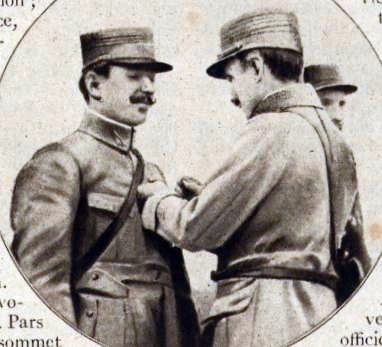
The concept of the "ace" emerged in 1915 during World War I, at the same time as aerial dogfighting. It was a propaganda term intended to provide the home front with a cult of the hero in what was otherwise a war of attrition. The individual actions of aces were widely reported and the image was disseminated of the ace as a chivalrous knight reminiscent of a bygone era.[1] For a brief early period when air-to-air combat was just being invented, the exceptionally skilled pilot could shape the battle in the skies. For most of the war, however, the image of the ace had little to do with the reality of air warfare, in which fighters fought in formation and air superiority depended heavily on the relative availability of resources.[2] The use of the term ace to describe these pilots began in World War I, when French newspapers described Adolphe Pégoud, as l'As (the ace) after he became the first pilot to down five German aircraft.
The successes of such German ace pilots as Max Immelmann and Oswald Boelcke, and especially Manfred von Richthofen, the most victorious fighter pilot of the First World War, were well-publicized for the benefit of civilian morale, and the Pour le Mérite, Prussia's highest award for gallantry, became part of the uniform of a leading German ace. In the Luftstreitkräfte, the Pour le Mérite was nicknamed Der blaue Max/The Blue Max, after Max Immelmann, who was the first pilot to receive this award. Initially, German aviators had to destroy eight Allied aircraft to receive this medal.[3] As the war progressed, the qualifications for Pour le Mérite were raised,[3] but successful German fighter pilots continued to be hailed as national heroes for the remainder of the war.
The few aces among combat aviators have historically accounted for the majority of air-to-air victories in military history.[4]
History
[edit]World War I
[edit]
World War I introduced the systematic use of true single-seat fighter aircraft, with enough speed and agility to catch and maintain contact with targets in the air, coupled with armament sufficiently powerful to destroy the targets. Aerial combat became a prominent feature with the Fokker Scourge, in the last half of 1915. This was also the beginning of a long-standing trend in warfare, showing statistically that approximately five percent of combat pilots account for the majority of air-to-air victories.[4]
As the German fighter squadrons usually fought well within German lines, it was practicable to establish and maintain very strict guidelines for the official recognition of victory claims by German pilots. Shared victories were either credited to one of the pilots concerned or to the unit as a whole – the destruction of the aircraft had to be physically confirmed by locating its wreckage, or an independent witness to the destruction had to be found. Victories were also counted for aircraft forced down within German lines, as this usually resulted in the death or capture of the enemy aircrew.
Allied fighter pilots fought mostly in German-held airspace[5][6] and were often not in a position to confirm that an enemy aircraft had crashed, so these victories were frequently claimed as "driven down", "forced to land", or "out of control" (called "probables" in later wars). These victories were usually included in a pilot's totals and citations for decorations.[7]

The British high command considered the praise of fighter pilots to be detrimental to equally brave bombers and reconnaissance aircrew – so that the British air services did not publish official statistics on the successes of individuals. Nonetheless, some pilots did become famous through press coverage,[3] making the British system for the recognition of successful fighter pilots much more informal and somewhat inconsistent. One pilot, Arthur Gould Lee, described his own score in a letter to his wife as "Eleven, five by me solo — the rest shared", adding that he was "miles from being an ace".[8] This shows that his No. 46 Squadron RAF counted shared kills, but separately from "solo" ones—one of a number of factors that seems to have varied from unit to unit. Also evident is that Lee considered a higher figure than five kills to be necessary for "ace" status. Aviation historians credit him as an ace with two enemy aircraft destroyed and five driven down out of control, for a total of seven victories.[9]
Other Allied countries, such as France and Italy, fell somewhere in between the very strict German approach and the relatively casual British one. They usually demanded independent witnessing of the destruction of an aircraft, making confirmation of victories scored in enemy territory very difficult.[10] The Belgian crediting system sometimes included "out of control" to be counted as a victory.[11]
The United States Army Air Service adopted French standards for evaluating victories, with two exceptions – during the summer 1918, while flying under the operational control of the British, the 17th Aero Squadron and the 148th Aero Squadron used British standards.[10] American newsmen, in their correspondence to their papers, decided that five victories were the minimum needed to become an ace.[12]
While "ace" status was generally won only by fighter pilots, bombers and reconnaissance crews on both sides also destroyed some enemy aircraft, typically in defending themselves from attack. The most notable example of a non-pilot ace in World War I is Charles George Gass with 39 accredited aerial victories.[13]
Between the world wars
[edit]Between the two world wars two conflicts produced flying aces, the Spanish Civil War and the Second Sino-Japanese War.
The Spanish ace Joaquín García Morato scored 40 victories for the Nationalists during the Spanish Civil War. Part of the outside intervention in the war was the supply of "volunteer" foreign pilots to both sides. Russian and American aces joined the Republican air force, while the Nationalists included Germans and Italians.
The Soviet Volunteer Group began operations in the Second Sino-Japanese War as early as December 2, 1937, resulting in 28 Soviet aces.[14] The Flying Tigers were American military pilots who were recruited sub rosa to aid the Chinese Nationalists. They spent the summer and autumn of 1941 in transit to China, and did not begin flying combat missions until December 20, 1941.
World War II
[edit].jpg)
In World War II many air forces adopted the British practice of crediting fractional shares of aerial victories, resulting in fractions or decimal scores, such as 11+1⁄2 or 26.83. Some U.S. commands also credited aircraft destroyed on the ground as equal to aerial victories. The Soviets distinguished between solo and group kills, as did the Japanese, though the Imperial Japanese Navy stopped crediting individual victories (in favor of squadron tallies) in 1943.[citation needed]
The Soviet Air Forces has the top Allied pilots in terms of aerial victories, Ivan Kozhedub credited with 66 victories and Alexander Pokryshkin scored 65 victories. It also claimed the only female aces of the war: Lydia Litvyak scored 12 victories and Yekaterina Budanova achieved 11.[15] The highest scoring pilots from the Western allies against the German Luftwaffe were Johnnie Johnson (RAF, 38 kills) and Gabby Gabreski (USAAF, 28 kills in the air and 3 on the ground).[16] In the Pacific theater Richard Bong became the top American fighter ace with 40 kills. In the Mediterranean theater Pat Pattle achieved at least 40 kills, mainly against Italian planes, and became the top fighter ace of the British Commonwealth in the war. Fighting on different sides, the French pilot Pierre Le Gloan had the unusual distinction of shooting down four German, seven Italian and seven British aircraft, the latter while he was flying for Vichy France in Syria.[17]

The German Luftwaffe continued the tradition of "one pilot, one kill", and now referred to top scorers as Experten.[N 1] Some Luftwaffe pilots achieved very high scores, such as Erich Hartmann (352 kills) or Gerhard Barkhorn (301 kills).[19] There were 107 German pilots with more than 100 kills. Most of these were won against the Soviet Air Force.[20] The highest scoring fighter ace against Western allied forces were Hans-Joachim Marseille (158 kills)[21] and Heinz Bär (208 kills, of which 124 in the west). Notable are also Heinz-Wolfgang Schnaufer, with 121 kills the highest-scoring night-fighter ace, and Werner Mölders, the first pilot to claim more than 100 kills in the history of aerial warfare.[16][22] Pilots of other Axis powers also achieved high scores, such as Ilmari Juutilainen (Finnish Air Force, 94 kills), Constantin Cantacuzino (Romanian Air Force, 69 kills) or Mato Dukovac (Croatian Air Force, 44 kills). The highest scoring Japanese fighter pilot was Tetsuzō Iwamoto, who achieved 216 kills.

A number of factors probably contributed to the very high totals of the top German aces. For a limited period (especially during Operation Barbarossa), many Axis victories were over obsolescent aircraft and either poorly trained or inexperienced Allied pilots.[23] In addition, Luftwaffe pilots generally flew many more individual sorties (sometimes well over 1000) than their Allied counterparts. Moreover, they often kept flying combat missions until they were captured, incapacitated, or killed, while successful Allied pilots were usually either promoted to positions involving less combat flying or routinely rotated back to training bases to pass their valuable combat knowledge to younger pilots. An imbalance in the number of targets available also contributed to the apparently lower numbers on the Allied side, since the number of operational Luftwaffe fighters was normally well below 1,500, with the total aircraft number never exceeding 5,000, and the total aircraft production of the Allies being nearly triple that of the other side. A difference in tactics might have been a factor as well; Erich Hartmann, for example, stated "See if there is a straggler or an uncertain pilot among the enemy... Shoot him down",[24] which would have been an efficient and relatively low-risk way of increasing the number of kills. At the same time, the Soviet 1943 "Instruction For Air Combat" stated that the first priority must be the enemy commander, which was a much riskier task, but one giving the highest return in case of a success.
Post-World War II aces
[edit]Korean War
[edit]The Korean War of 1950–53 marked the transition from piston-engined propeller driven aircraft to more modern jet aircraft. As such, it saw the world's first jet-vs-jet aces. The highest scoring ace of the war is considered to be the Soviet pilot Nikolai Sutyagin who claimed 22 kills.
Vietnam War
[edit]
The Vietnam People's Air Force had begun development of its modern air-forces, primarily trained by Czechoslovak and Soviet trainers since 1956.[25] The outbreak of the largest sustained bombardment campaign in history prompted rapid deployment of the nascent air-force, and the first engagement of the war was in April 1965 at Thanh Hóa Bridge which saw relatively outdated subsonic MiG-17 units thrown against technically superior F-105 Thunderchief and F-8 Crusader, damaging 1 F-8 and killing two F-105 jets.[26] The MiG-17 generally did not have sophisticated radars and missiles and relied on dog-fighting and maneuverability to score kills on US aircraft.[25] Since US aircraft heavily outnumbered North Vietnamese ones, the Warsaw Pact and others had begun arming North Vietnam with MiG-21 jets.[25] The VPAF had adopted a strategy of "guerrilla warfare in the sky" utilizing quick hit-and-run attacks against US targets, continually flying low and forcing faster, more heavily armed US jets to engage in dog-fighting where the MiG-17 and MiG-21 had superior maneuverability.[27] The VPAF had carried out the first air-raid on US ships since WW2, with two aces including Nguyễn Văn Bảy attacking US ships during the Battle of Đồng Hới in 1972. Quite often air-to-air losses of US fighter jets were re-attributed to surface-to-air missiles, as it was considered "less embarrassing".[28] By the war's end, the US had nevertheless confirmed 249 air-to-air US aircraft losses[29] while the figures for North Vietnam are disputed, ranging from 195 North Vietnamese aircraft from US claims[30] to 131 from Soviet, North Vietnamese and allied records.[31]
American air-to-air combat during the Vietnam War generally matched intruding United States fighter-bombers against radar-directed integrated North Vietnamese air defense systems. American F-4 Phantom II, F-8 Crusader and F-105 fighter crews usually had to contend with surface-to-air missiles and anti-aircraft artillery before opposing fighters attacked them. The long-running conflict produced 22 aces: 17 North Vietnamese pilots, two American pilots, three American weapon systems officers or WSOs (WSO is the USAF designation, one of the three was actually a US Naval aviator, with an equivalent job, but using the USN designation of Radar Intercept Officer or RIO).[32]
Arab–Israeli war
[edit]
The series of wars and conflicts between Israel and its neighbors began with Israeli independence in 1948 and continued for over three decades.
Iran–Iraq war
[edit]
Brig. General Jalil Zandi (1951–2001) was an ace fighter pilot in the Islamic Republic of Iran Air Force, serving for the full duration of the Iran–Iraq War. His record of eight confirmed and three probable[33] victories against Iraqi combat aircraft qualifies him as an ace and the most successful pilot of that conflict and the most successful Grumman F-14 Tomcat pilot worldwide.[34][35][36][37][38]
Brig. General Shahram Rostami was another Iranian ace. He was also an F-14 pilot. He had six confirmed kills. His victories include one MiG-21, two MiG-25s, and three Mirage F1s.[39]
Colonel Mohammed Rayyan was an Iraqi ace fighter pilot who shot down 10 Iranian aircraft, mostly F-4 Phantoms during the war.[40]
Indo-Pakistan War
[edit]Air Commodore Muhammad Mahmood Alam was an ace fighter pilot in the Pakistan Air Force. During the Indo-Pakistani War of 1965, Alam claimed to have downed five aircraft in a single sortie on 7 September 1965 with four downed in less than a minute, establishing a world record. These claims, however, have been widely contested but never substantiated by Indian Air Force officials.[41][42][43][44]
Russo-Ukrainian War
[edit]According to the Ministry of Defense of the Russian Federation, during the fighting in Ukraine, Lieutenant Colonel Ilya Sizov "destroyed 12 Ukrainian aircraft (3 Su-24 aircraft, 3 Su-27 aircraft, 3 MiG-29 aircraft, 2 Mi-24 helicopters, 1 Mi-14 helicopter) and two Buk-M1 anti-aircraft missile complexes.[45]
Iran - Israel Conflict
[edit]
United States Air Force F-15E pilot Capt. Claire “Atomic” Eddins and Weapons System Officer (WSO) Capt. Carla Nava shot down five Iranian drones during an attack on Israel on 13 April 2024. They became aces in a day and the first all-female crew to become flying ace's in history.[46] They were both awarded the Distinguished Flying Cross for their actions.[47]
In the same engagement, Maj. Benjamin Coffey and WSO Capt. Lacie Hester shot down six Iranian drones; they both received the Silver Star for their efforts. [48]
Accuracy
[edit]Realistic assessment of enemy casualties is important for intelligence purposes, so most air forces expend considerable effort to ensure accuracy in victory claims.[citation needed] In World War II, the aircraft gun camera came into general usage by the Luftwaffe as well as the RAF and USAAF, partly in hope of alleviating inaccurate victory claims.[citation needed]
World War I aerial victory accuracy
[edit]In World War I the standards for confirmation of aerial victories were developed. The most strict were the German and French ones which required both the existence of traceable wrecks or observations of independent observers. In contrast to this, the British system also accepted single claims of the pilots and deeds such as enemy planes "out of control", "driven down" and "forced to land".[49] Aerial victories were also divided among different pilots.[citation needed] This led to vast overclaims on the British and partially on the American side. Some air forces, such as the USAAF, also included kills on the ground as victories.[citation needed]
The most accurate figures usually belong to the air arm fighting over its own territory, where many wrecks can be located, and even identified, and where shot down enemy aircrews are either killed or captured. It is for this reason that at least 76 of the 80 aircraft credited to Manfred von Richthofen can be tied to known British losses.[50] The German Jagdstaffeln flew defensively, on their own side of the lines, in part due to General Hugh Trenchard's policy of offensive patrol.[citation needed]
World War II aerial victory accuracy
[edit]In World War II overclaims were a common problem. Nearly 50% of Royal Air Force (RAF) victories in the Battle of Britain, for instance, do not tally statistically with recorded German losses; but at least some of this apparent over-claiming can be tallied with known wrecks, and German aircrew known to have been in British PoW camps.[51] An overclaim ratio of about 2-3 was common on all sides,[52][53][54][55] and Soviet overclaims were sometimes higher.[56][57] The claims of the Luftwaffe pilots are considered as mostly reasonable and more accurate than those according to the British and American system.[58][59]
To quote an extreme example, in the Korean War, both the U.S. and Communist air arms claimed a 10-to-1 victory/loss ratio.[60][61]
Non-pilot aces
[edit]
While aces are generally thought of exclusively as fighter pilots, some have accorded this status to gunners on bombers or reconnaissance aircraft, observers in two-seater fighters such as the early Bristol F.2b, and navigators/weapons officers in jet aircraft such as the McDonnell Douglas F-4 Phantom II. Because pilots often teamed with different air crew members, an observer or gunner might be an ace while his pilot is not, or vice versa. Observer aces constitute a sizable minority in many lists.
In World War I, the observer Gottfried Ehmann of the German Luftstreitkräfte was credited with 12 kills,[62][63] for which he was awarded the Golden Military Merit Cross. In the Royal Flying Corps the observer Charles George Gass tallied 39 victories, of which 5 were actually confirmed.[64] The spread was caused by the lavish British system of aerial victory confirmation.[49]
In World War II, United States Army Air Forces S/Sgt. Michael Arooth, a Boeing B-17 Flying Fortress tail gunner serving in the 379th Bombardment Group, was credited with 19 kills[65][66] and the Consolidated B-24 Liberator gunner Arthur J. Benko (374th Bombardment Squadron) with 16 kills. The Royal Air Force's leading bomber gunner, Wallace McIntosh, was credited with eight kills while serving as a rear turret gunner on Avro Lancasters, including three on one mission. Flight Sergeant F. J. Barker contributed to 12 victories while flying as a gunner in a Boulton Paul Defiant turret-equipped fighter piloted by Flight Sergeant E. R. Thorne.[67][68] On the German side, Erwin Hentschel, the Junkers Ju 87 rear gunner of Luftwaffe pilot and anti-tank ace Hans-Ulrich Rudel, had 7 confirmed kills. The crew of the bomber pilot Otto Köhnke from Kampfgeschwader 3 is credited with the destruction of 11 enemy fighters (6 French, 1 British, 4 Soviet).
With the advent of more advanced technology, a third category of ace appeared. Charles B. DeBellevue became not only the first U.S. Air Force weapon systems officer (WSO) to become an ace but also the top American ace of the Vietnam War, with six victories.[69] Close behind with five were fellow WSO Jeffrey Feinstein[70] and Radar Intercept Officer William P. Driscoll.[71]
Ace in a day
[edit]

The first military aviators to score five or more victories on the same date, thus each becoming an "ace in a day", were pilot Julius Arigi and observer/gunner Johann Lasi of the Austro-Hungarian air force, on August 22, 1916, when they downed five Italian aircraft.[72] The feat was repeated five more times during World War I.[73][74][75]
Becoming an ace in a day became relatively common during World War II. A total of 68 U.S. pilots (43 Army Air Forces, 18 Navy, and seven Marine Corps pilots) were credited with the feat, including legendary test pilot Chuck Yeager.
In the Soviet offensive of 1944 in the Karelian Isthmus, Finnish pilot Hans Wind shot down 30 Soviet aircraft in 12 days with his Bf 109 G. In doing so, he obtained "ace in a day" status three times.
During the Indo-Pakistani War of 1965, Pakistani pilot Muhammad Mahmood Alam claimed to have downed five aircraft in a single sortie on 7 September 1965 with four downed in less than a minute, establishing a world record. According to some sources Alam is the only ace-in-a-day achiever in the jet age. These claims, however, have been contested by the Indian Air Force.[41][42][43][44]
See also
[edit]- Fighter aircraft
- Iraqi aerial victories during the Iran–Iraq war
- Light fighter
- List of aces of aces
- List of Egyptian flying aces
- List of German World War II jet aces
- List of Iranian aerial victories during the Iran–Iraq war
- List of Israeli flying aces
- List of Korean War flying aces
- List of Spanish Civil War flying aces
- List of Syrian flying aces
- List of Vietnam War flying aces
- List of World War I flying aces
- List of World War II flying aces
- Lists of flying aces in Arab–Israeli wars
- Panzer ace
- Ace Combat
Notes
[edit]- ^ For the award of decorations, the Germans initiated a points system to equal up achievements between the aces flying on the Eastern front with those on other, more demanding, fronts: one for a fighter, two for a twin-engine bomber, three for a four-engine bomber; night victories counted double; Mosquitoes counted double, due to the difficulty of bringing them down.[18]
References
[edit]- ^ Robertson, pp. 100—103.
- ^ Belich 2001.
- ^ a b c Payne, David. "Major 'Mick' Mannock, VC: Top Scoring British Flying Ace in the Great War." Archived 2017-06-21 at the Wayback Machine Western Front Association, May 21, 2008.
- ^ a b Dunnigan 2003, p. 149.
- ^ Shores et al. 1990, p. 6.
- ^ Guttman 2009, p. 39.
- ^ Shores, Franks and Guest, 1990, p. 8.
- ^ Lee 1968, p. 208.
- ^ Shores et al. 1990, pp. 236–237.
- ^ a b Franks and Bailey 1992, p. 6.
- ^ Pieters 1998, pp. 34, 85.
- ^ Farr 1979, p. 55.
- ^ Franks et al. 1997, pp. 18–19.
- ^ "Allied aces of War in China and Mongol-Manchurian border" Wio.ru Retrieved: October 10, 2014.
- ^ Bergström 2007, p. 83.
- ^ a b Sims, Edward H. (1976). The Greatest Aces. London: Random House Publishing Group. p. 17. ISBN 9780345253309.
- ^
- Musciano, Walter A. "Mystery Ace of World War Two." Air Progress, Volume 22, Number 6, June 1968.
- Shores, Christopher. Fighter Aces. London: Hamlyn Publishing, 1975. ISBN 0-600-30230-X
- ^ Johnson 1967, p. 264.
- ^ Mitcham, Samuel W. (2007). Eagles of the Third Reich - Men of the Luftwaffe in World War II. Stackpole Books. p. 217. ISBN 9780811734059.
- ^ Murray, Williamson (1996). The Luftwaffe, 1933-45 - Strategy for Defeat. Brassey's. p. 82. ISBN 9781574881257.
- ^ Heaton, Colin D.; Anne-Marie Lewis (2012). The Star of Africa - The Story of Hans Marseille, the Rogue Luftwaffe Ace Who Dominated the WWII Skies. MBI Publishing Company. ISBN 9780760343937.
- ^ Jackson, Robert (2003). Air Aces of World War II. Airlife. ISBN 9781840374124.
- ^ Shores 1983, pp. 94–95.
- ^ Toliver, Raymond F.; Constable, Trevor J. (1986). The Blond Knight of Germany. New York: McGraw-Hill. ISBN 978-0-8306-8189-1.
- ^ a b c Toperczer, István (2017-09-21). MiG-21 Aces of the Vietnam War. Bloomsbury Publishing. ISBN 9781472823571.
- ^ Toperczer, István (2017-09-21). MiG-21 Aces of the Vietnam War. Bloomsbury Publishing. p. 4. ISBN 9781472823571.
- ^ Toperczer, István (2016-10-20). MiG-17/19 Aces of the Vietnam War. Bloomsbury Publishing. ISBN 9781472812575.
- ^ E., Gordon (2008). Mikoyan MiG-21. Dexter, Keith., Komissarov, Dmitriĭ (Dmitriĭ Sergeevich). Hinckley: Midland. ISBN 9781857802573. OCLC 245555578.
- ^ "US Air-to-Air Losses in the Vietnam War". myplace.frontier.com. Retrieved 2018-06-19.
- ^ Boyne, Walter J., ed. (2002). Air warfare: an international encyclopedia. Santa Barbara, CA: ABC-CLIO. p. 679. ISBN 978-1576073452. OCLC 49225204.
- ^ "Kafedra i klinika urologii pervogo sankt-peterburgskogo gosudarstvennogo meditsinskogo universiteta im. akad. I. P. Pavlova: vchera, segodnya, zavtra". Urologicheskie Vedomosti. 5 (1): 3. 2015-03-15. doi:10.17816/uroved513-6. ISSN 2225-9074.
- ^ "Aces." Safari Kovi. Retrieved October 10, 2014.
- ^ Herbert, Adam (January 2015). "Air Power Classics". Air Force Magazine: 76.
- ^ "Imperial Iranian Air Force: Samurai in the skies." IIAF, August 22, 1980. Retrieved October 10, 2014.
- ^ Cooper, Tom and Farzad Bishop. "Fire in the Hills: Iranian and Iraqi Battles of Autumn 1982." ACIG, September 9, 2003. Retrieved October 10, 2014.
- ^ "As 45-00 victoires". Archived from the original on 2013-10-17. Retrieved 2015-04-16.
- ^ "Iranian Air-to-Air Victories 1976-1981". Archived from the original on 2010-03-23. Retrieved 2018-03-25.
- ^ "Iranian Air-to-Air Victories, 1982-Today". Archived from the original on 2010-03-23. Retrieved 2011-07-29.
- ^ John Sadler; Rosie Serdville (2017), Fighter Aces: Knights of the Skies, Casemate Publishers, p. 21, ISBN 9781612004839
- ^ Nicolle, David; Cooper, Tom (2004). Arab MiG-19 and MiG-21 Units in Combat. Osprey Publishing.
- ^ a b Air Cdre M Kaiser Tufail. "Alam's Speed-shooting Classic". Defencejournal.com. Archived from the original on 27 September 2011. Retrieved 15 November 2011.
- ^ a b Fricker, John (1979). Battle for Pakistan: the air war of 1965. I. Allan. pp. 15–17. ISBN 9780711009295.
- ^ a b Polmar, Norman; Bell, Dana (2003). One hundred years of world military aircraft. Naval Institute Press. p. 354. ISBN 978-1-59114-686-5.
Mohammed Mahmood Alam claimed five victories against Indian Air Force Hawker Hunters, four of them in less than one minute! Alam, who ended the conflict with 9 kills, became history's only jet "ace-in-a-day."
- ^ a b O' Nordeen, Lon (1985). Air Warfare in the Missile Age. Washington, D.C.: Smithsonian Institution Press. pp. 84–87. ISBN 978-0-87474-680-8.
- ^ "How Sophisticated Russia's Air Defence Network ?". Key.Aero. Key Publishing Ltd. 18 October 2022.
- ^ "This Air Force WSO became an ace in showdown with Iranian drones". Key.Aero. Military Times. 4 September 2025.
- ^ "494th Fighter Squadron, Fighter Generation Squadron honored for repelling mass Iranian drone attack".
- ^ "Air Force Silver Star recipients among those honored for repulsing Iranian missile and drone attack".
- ^ a b Shores, Christopher F. (1990). Above the trenches : a complete record of the fighter aces and units of the British Empire Air Forces 1915-1920. Norman L. R. Franks, Russell Guest. Ontario: Fortress. ISBN 0-948817-19-4. OCLC 22113328.
- ^ Robinson 1958, pp. 150–155.
- ^ Lake 2000, p. 122.
- ^ Caldwell, Donald (2012). Day Fighters in Defence of Reich : a Way Diary, 1942-45. Havertown: Frontline Books. ISBN 978-1-78383-415-0. OCLC 884646530.
- ^ Bergström, Christer (2007). Barbarossa : the air battle July-December 1941. Hersham, Surrey: Midland/Ian Allan. ISBN 978-1-85780-270-2. OCLC 141238674.
- ^ Campion, Garry (2015). The Battle of Britain, 1945-1965: The Air Ministry and the Few. Houndmills, Basingstoke, Hampshire. ISBN 978-0-230-28454-8. OCLC 918616186.
{{cite book}}: CS1 maint: location missing publisher (link) - ^ Campion, Garry (2009). The good fight : Battle of Britain propaganda and the few. Basingstoke: Palgrave Macmillan. ISBN 978-0-230-22880-1. OCLC 319175944.
- ^ Trigg, Jonathan (2016). The defeat of the Luftwaffe: The Eastern Front 1941-45, a strategy for disaster. Stroud, Gloucestershire. ISBN 978-1-4456-5186-6. OCLC 953861893.
{{cite book}}: CS1 maint: location missing publisher (link) - ^ Morgan, Hugh (2014). Soviet aces of world war 2. London: Osprey Pub. ISBN 978-1-4728-0057-2. OCLC 869378852.
- ^ Toliver, Constable, Raymond F., Trevor J. (1968). Horrido! Fighter Aces of the Luftwaffe. Barker. ISBN 9780213763817.
{{cite book}}: CS1 maint: multiple names: authors list (link) - ^ Kaplan, Philip (2007). Fighter aces of the Luftwaffe in World War II. Barnsley: Pen & Sword Aviation. ISBN 978-1-84415-460-9. OCLC 74525151.
- ^ "Korean Air War: Korean air war statistics from sources of USA and USSR." Wio (RU). Retrieved: October 10, 2014.
- ^ Shores 1983, pp. 161–167.
- ^ Imrie, Alex (1971). Pictorial history of the German Army Air Service 1914-1918. London: Allan. ISBN 0-7110-0200-2. OCLC 213232.
- ^ Treadwell, Terry C.; Alan C. Wood (2003). German fighter aces of World War One. Stroud: Tempus. ISBN 0-7524-2808-X. OCLC 52531842.
- ^ Franks et al. 1997, p. 18.
- ^ "Hall of Valor: Michael Arooth." Military Times. Retrieved: October 10, 2014.
- ^ Albert E. Conder (1994). The history of enlisted aerial gunnery, 1917-1991 : the men behind the guns (Limited ed.). Paducah, KY: Turner. ISBN 1-56311-167-5. OCLC 55871021.
- ^ "The Airmen's Stories: Sgt. F J Barker." Archived 2014-04-19 at the Wayback Machine Battle of Britain London Monument. Retrieved: April 17, 2014.
- ^ Thomas 2012, p. 55.
- ^ "Col. Charles DeBellevue." Archived 2009-09-12 at the Wayback Machine U.S. Air Force official web site. Retrieved: May 22, 2010.
- ^ "USAF Southeast Asia War Aces." Archived 2013-12-20 at the Wayback Machine National Museum of the United States Air Force, March 30, 2011. Retrieved: June 29, 2012.
- ^ "USS Constellation (CV 64)." Archived 2012-09-26 at the Wayback Machine United States Navy. Retrieved: June 29, 2012.
- ^ O'Connor 1986, pp. 190–91, 272, 324.
- ^ Franks et al. 1993, p. 70.
- ^ Shores et al. 1990, pp. 368, 390.
- ^ Franks and Bailey 1992, p. 161.
Bibliography
[edit]- Belich, Jamie. "Ace, air combat". Richard Holmes, Charles Singleton and Spencer Jones, eds. The Oxford Companion to Military History. Oxford University Press, 2001 [online 2004].
- Bergström, Christer. Barbarossa: The Air Battle, July–December 1941. Birmingham, UK: Classic Publications, 2007. ISBN 978-1-85780-270-2.
- Dunnigan, James F. How to Make War: A Comprehensive Guide to Modern Warfare in the Twenty-first Century. New York: HarperCollins, 2003. ISBN 978-0-06009-012-8.
- Farr, Finis. Rickenbacker's Luck: An American Life. New York: Houghton Mifflin, 1979. ISBN 978-0-395-27102-5.
- Franks, Norman and Frank W. Bailey. Over the Front: A Complete Record of the Fighter Aces and Units of the United States and French Air Services, 1914–1918. London: Grub Street, 1992. ISBN 978-0-948817-54-0.
- Franks, Norman, Frank W. Bailey and Russell Guest. Above the Lines: The Aces and Fighter Units of the German Air Service, Naval Air Service and Flanders Marine Corps, 1914–1918. London: Grub Street, 1993. ISBN 978-0-94881-773-1.
- ———; Guest, Russell; Alegi, Gregory (1997), Above the War Fronts: The British Two-seater Bomber Pilot and Observer Aces, the British Two-seater Fighter Observer Aces, and the Belgian, Italian, Austro-Hungarian and Russian Fighter Aces, 1914–1918, Fighting Airmen of WWI, vol. 4, London: Grub Street, ISBN 978-1-898697-56-5.
- Galland, Adolf The First and the Last London, Methuen, 1955 (Die Ersten und die Letzten Germany, Franz Schneekluth, 1953).
- Goll, Nicole-Melanie (2011). "Godwin von Brumowski (1889–1936): The Construction of an Austro-Hungarian War Hero during World War I". In Marija Wakounig; Karlo Ruzicic-Kessler (eds.). From the Industrial Revolution to World War II in East Central Europe. LIT Verlag. pp. 139–56. ISBN 978-3643901293.
- Guttman, Jon. Pusher Aces of World War 1. London: Osprey, 2009. ISBN 978-1-84603-417-6.
- Hobson, Chris. Vietnam Air Losses, USAF, USN, USMC, Fixed-Wing Aircraft Losses in Southeast Asia 1961–1973. North Branch, Minnesota: Specialty Press, 2001. ISBN 1-85780-115-6.
- Johnson, J. E. Wing Leader. London: Ballantine, 1967.
- Lake, Jon (2000). The Battle of Britain. Leicester: Amereon Limited. ISBN 1-85605-535-3.
- Lee, Arthur Gould. No Parachute. London: Jarrolds, 1968.
- O'Connor, Martin. Air Aces of the Austro-Hungarian Empire 1914–1918. Boulder, Colorado: Flying Machine Press, 1986. ISBN 978-1-89126-806-9.
- Pieters, Walter M. Above Flanders' Fields: A Complete Record of the Belgian Fighter Pilots and Their Units During the Great War, 1914–1918. London: Grub Street, 1998. ISBN 978-1-898697-83-1.
- Robertson, Linda R. (2005). The Dream of Civilized Warfare: World War I Flying Aces and the American Imagination . University of Minnesota Press. ISBN 0816642710, ISBN 978-0816642717
- Robinson, Bruce (ed.) von Richthofen and the Flying Circus. Letchworth, UK: Harleyford, 1958.
- Shores, Christopher. Air Aces. Greenwich Connecticut: Bison Books, 1983. ISBN 0-86124-104-5
- ———; Franks, Norman; Guest, Russell (1990), Above the Trenches: A Complete Record of the Fighter Aces and Units of the British Empire Air Forces 1915–1920, London: Grub Street, ISBN 978-0-948817-19-9.
- Stenman, Kari and Kalevi Keskinen. Finnish Aces of World War 2 (Osprey Aircraft of the Aces, number 23). London: Osprey Publishing. 1998. ISBN 952-5186-24-5.
- Thomas, Andrew. Defiant, Blenheim and Havoc Aces. London: Osprey Publishing, 2012. ISBN 978-1-84908-666-0.
- Toliver, Raymond J. and Trevor J. Constable. Horrido!: Fighter Aces of the Luftwaffe. London: Bantam Books, 1979. ISBN 978-0-55312-663-1.
- Toperczer, Istvan. MIG-17 and MIG-19 Units of the Vietnam War (Osprey Combat Aircraft, number 25). London: Osprey, 2001. ISBN 978-1-84176-162-6.
- ——— (2001), MIG-21 Units of the Vietnam War, Combat Aircraft, London: Osprey, ISBN 978-1-84176-263-0.
External links
[edit]

Flying ace
View on GrokipediaDefinition and criteria
Origins of the term
![Adolphe Pégoud receiving the Croix de Guerre][float-right] The term "flying ace" originated in French military aviation during World War I, derived from "l'as," a borrowing from the highest card in games like poker, applied to pilots credited with exceptional aerial combat prowess. French newspapers first used "l'as" to describe Adolphe Pégoud after he achieved five confirmed victories over German aircraft by April 1915, marking him as history's inaugural fighter ace.[9][3] Pégoud's feats, including downing reconnaissance machines and observation balloons, were verified through pilot logs, eyewitness accounts from ground observers, and physical evidence such as wreckage recovery, establishing an empirical standard for crediting victories that prioritized causal confirmation over unsubstantiated claims.[1] This French conceptualization emphasized individual skill in dogfights amid the static trench warfare on the Western Front, where aerial superiority offered a rare avenue for heroism and measurable impact. The threshold of five victories reflected the rarity of confirmed kills given the era's primitive aircraft, short combat durations, and high attrition rates, with early aces like Pégoud risking capture or death in pursuits over enemy lines.[9] Allied forces, including the British and later Americans upon entering the war in 1917, adopted the "ace" designation, translating it into English as "flying ace" to honor pilots meeting or exceeding the five-victory benchmark. British aviators initially favored terms like "star-turns" for top performers but shifted to "ace" as French standards gained traction through shared intelligence and cross-Allied recognition of combat logs and debris analysis.[3][1] This propagation underscored a consensus on verifiable destruction as the core criterion, distinguishing aces from routine pilots in an environment where inflated claims were common but rigorously scrutinized by squadron commanders.[10]Victory thresholds and standards
The status of flying ace is generally conferred upon a military aviator credited with at least five confirmed destructions of enemy aircraft in aerial combat.[1] This numerical threshold prioritizes empirical verification of outcomes, requiring corroboration through multiple eyewitness accounts, gun camera footage where available, or recovery of wreckage to establish causality in the aircraft's loss.[4] Probable victories, involving observed damage without conclusive evidence of destruction, are tracked separately and excluded from ace tallies to maintain rigor against overclaiming.[11] The five-victory benchmark emerged during World War I, when Allied and Central Powers air services adopted it as a consistent measure amid escalating dogfight engagements, with governments promoting aces for morale while standardizing claims processes.[3] This criterion later became near-universal across major combatants in subsequent conflicts, though confirmation standards varied: Western Allied forces often demanded stricter multi-witness validation, while Axis and Soviet systems sometimes relied more on pilot reports supplemented by unit logs, potentially inflating totals absent physical proof.[4] Shared kills, arising from cooperative engagements, are divided fractionally—typically equally among participants—to reflect individual contributions, with aggregated credits (e.g., three full plus two halves equaling five) qualifying for ace recognition.[5] Operational contexts influenced minor deviations; for example, Soviet and Japanese air forces emphasized solo confirmations for primary tallies due to intense frontline demands and limited reconnaissance, effectively raising the bar for shared or group actions despite retaining the five-victory baseline.[12] Such practices underscore causal realism, ensuring ace designations hinge on demonstrable, attributable impacts rather than unverified assertions.Eligible victory types
Aerial victories qualifying pilots for ace status are limited to the destruction or decisive disablement of enemy aircraft during air-to-air engagements, where the claiming pilot or crew directly contributes to the outcome against an airborne target. Confirmation standards emphasize verifiable evidence, including the pilot's firsthand account supplemented by wingman observations, allied reconnaissance reports, gun camera recordings, or recovery of wreckage demonstrating irrecoverable damage. These criteria evolved from World War I practices, where U.S. Air Service credits required proof of enemy aircraft—defined to encompass airplanes, observation balloons, and dirigibles—being destroyed in flight or forced down within allied lines, with full credit awarded to all significant contributors regardless of shared effort.[13][14] In World War II and subsequent conflicts, eligible victories adhered to similar principles but prioritized gun camera footage and witness corroboration for fixed-wing fighters, excluding non-airborne targets; balloons, prominent in World War I ace tallies (e.g., Frank Luke's 14 balloon destructions among his 18 total credits), were rarely factored post-1918 due to diminished tactical roles.[15] Shared kills in multi-aircraft engagements typically resulted in fractional credits per participant in U.S. forces by World War II, though earlier policies like those in World War I granted undivided awards to incentivize cooperative tactics.[13] Exclusions encompass indirect contributions such as mere assists without confirmed destruction, ground-based interceptions, or strafing runs against parked aircraft, as these fail to demonstrate neutralization of active aerial threats capable of contesting airspace control. Aircraft destroyed on the ground, while sometimes tallied separately for operational records, do not accrue toward ace thresholds, preserving the distinction between air superiority achievements and ground support missions.[16] This focus on direct, confirmed air-to-air attributions mitigates overclaiming risks inherent in self-reported combat, ensuring ace recognition correlates with empirically validated impacts on enemy air power.[14]Historical overview
World War I emergence
Aerial warfare in World War I began primarily with reconnaissance missions using unarmed or lightly armed aircraft, but by mid-1915, the need to protect these flights from enemy observers led to purposeful air-to-air combat. The introduction of synchronization gear for machine guns, first effectively employed by German Fokker Eindecker monoplanes, allowed pilots to fire forward through the propeller arc without striking the blades, enabling aggressive pursuit tactics over passive observation. This shift marked the emergence of dedicated fighter roles, transforming aviation from a support function to a domain of individual duels and formation dogfights by 1916-1917. Technological advancements in aircraft design further empowered skilled pilots, with late-war fighters like the maneuverable British Sopwith Camel, which claimed over 1,294 enemy aircraft, clashing against the German Fokker D.VII, noted for its speed and climb rate that gave it an edge in 1918 engagements. German ace Manfred von Richthofen achieved 80 confirmed victories, primarily in Albatros and Fokker triplanes, exemplifying tactical mastery through disciplined "Richthofen Circus" squadron sweeps that prioritized height advantage and coordinated attacks. Germany's emphasis on rigorous pilot training and doctrinal innovations, such as Oswald Boelcke's Dicta Boelcke rules for combat, produced the war's highest-scoring aces, outpacing Allied counterparts in per-pilot kill averages despite numerical parity in air forces.[17] Flying aces contributed decisively to air superiority battles, such as the 1917 campaigns over the Somme and Ypres, where control of the skies enabled uninterrupted artillery spotting and disrupted enemy supply lines, indirectly aiding ground offensives against entrenched positions. Yet, aviation's high attrition—British pilots averaged mere weeks in combat, with training accidents often exceeding frontline losses—revealed causal limits to individual skill, as fragile biplanes, unreliable engines, and exposure to flak and raking fire meant even aces like Richthofen fell to ground fire rather than superior foes, emphasizing luck and material factors over prowess alone.[18][19][20]Interwar evolution
The interwar period from 1919 to 1939 saw the flying ace concept transition from World War I's individual heroics to more structured tactical frameworks, driven by aircraft advancements like all-metal monoplanes, variable-pitch propellers, and improved armament, though full-scale aerial combat remained rare outside proxy conflicts. Air forces emphasized doctrinal refinement through exercises and limited engagements, with pursuit aviation focusing on interception roles amid rising emphasis on bombers for strategic offense. In the United States, for instance, the Army Air Corps viewed pursuit aircraft primarily as escorts or defenders against enemy bombers, a perspective shaped by budget constraints and theoretical wargaming rather than empirical combat data, which later proved inadequate for offensive air superiority needs.[21] The Spanish Civil War (1936–1939) emerged as the era's primary laboratory for testing these evolutions, pitting German Condor Legion and Italian Aviazione Legionaria forces against Soviet-supplied Republican aviators using monoplanes such as the Messerschmitt Bf 109 and Polikarpov I-16. German pilot Werner Mölders tallied 14 confirmed victories between July and November 1938, primarily against I-15 and I-16 fighters, while advocating the "finger-four" formation—a loose, staggered pairing that enhanced situational awareness and mutual protection at high speeds, supplanting tighter World War I-style lines vulnerable to ambushes. This shift underscored a doctrinal pivot from solo feats to formation cohesion, as monoplane velocities exceeding 300 mph (480 km/h) curtailed classic turning dogfights in favor of boom-and-zoom attacks exploiting altitude and energy states.[22][23] Despite such innovations, interwar aces like Mölders influenced pursuit training by stressing leadership in group maneuvers, yet broader aviation priorities diluted individual ace prominence; German development of synchronized cannons for the Bf 109 exemplified firepower upgrades for metal-skinned foes, but many nations clung to biplane obsolescence into the late 1930s, critiqued for ignoring monoplane speed advantages evident in Spain. Peacetime irrelevance confined ace validation to small-scale valor, with doctrines preparing for total war often sidelined by interservice rivalries and bomber-centric theories, as U.S. tactical schools prioritized long-range strikes over fighter-led supremacy until combat realities intervened.[21][24]World War II expansion
![Erich Hartmann before his Bf 109 G-6][float-right] The expansion of flying aces during World War II, spanning 1939 to 1945, marked the zenith of aerial combat intensity, with massive air forces engaging in sustained campaigns across multiple theaters, resulting in thousands of pilots achieving ace status through confirmed aerial victories. The German Luftwaffe dominated ace production, particularly on the Eastern Front, where superior pilot training, tactical experience, and prolonged combat exposure enabled exceptional scores against numerically superior but often less skilled Soviet opponents. Erich Hartmann, the highest-scoring ace of the war, amassed 352 confirmed victories, nearly all against Soviet aircraft, underscoring the disparity in individual pilot efficacy amid the Soviet emphasis on mass production of pilots and aircraft over elite training.[25][26] On the Eastern Front, German aces benefited from extended operational tours until incapacitation, contrasting with Allied practices of rotating experienced pilots, which limited opportunities for high kill accumulation. Luftwaffe pilots faced Soviet forces employing a quantity-over-quality strategy, leading to high attrition rates among inexperienced Red Air Force aviators and favorable engagement ratios for Germans early in the conflict. This dynamic produced clusters of super-aces, such as those in Jagdgeschwader 52, where collective claims exceeded thousands, though verification relied on witness corroboration and wreckage evidence amid chaotic conditions. Soviet aces, while numerous in lower brackets, rarely exceeded 60 confirmed kills, reflecting broader systemic losses and less emphasis on individual prowess.[27] In the Pacific Theater, aerial warfare evolved from dogfight-centric battles between agile Japanese A6M Zeros and American F4F Wildcats to later mismatches favoring U.S. F6F Hellcats and F4U Corsairs, which combined superior firepower, durability, and pilot survivability. Japanese aces achieved notable early successes in carrier operations, but the shift to kamikaze tactics from 1944 onward diverted resources and personnel—primarily inexperienced pilots—toward suicidal missions, curtailing traditional ace development as skilled veterans were either lost in attrition or repurposed. American aces, like Richard Bong with 40 victories, operated in environments prioritizing strategic bombing escorts over pure fighter sweeps, reducing dogfight frequency.[28][29] Allied aces overall numbered fewer with high scores due to technological advantages minimizing close-quarters combat, shorter combat rotations preserving pilot lives, and overwhelming numerical superiority that emphasized attrition over individual heroics. Initial kill ratios favored Axis forces owing to tactical surprises and training edges, but Allied material abundance and adaptive doctrines shifted momentum, rendering sustained ace production unsustainable for Axis powers as veteran losses mounted without adequate replacements.[30][31]Post-World War II instances
Korean War
The Korean War, fought from June 25, 1950, to July 27, 1953, marked the debut of sustained jet-versus-jet aerial combat, primarily between U.S. Air Force F-86 Sabre fighters and Soviet-supplied MiG-15s in the region known as MiG Alley along the Yalu River border with China. These clashes transitioned fighter tactics from propeller-driven dogfights to high-speed, energy-maneuvering engagements limited by jet engine performance and visual acquisition ranges, with combats often lasting seconds rather than minutes. United Nations forces, facing numerical inferiority in enemy jets—estimated at over 1,000 MiG-15s committed by Soviet, Chinese, and North Korean pilots—achieved air superiority through technological edges like radar-aimed gunsights and superior pilot training, enabling confirmed claims of approximately 792 MiG-15 destructions against 78 F-86 losses in air-to-air combat.[32] Forty U.S. pilots attained ace status with five or more confirmed aerial victories, all flying the F-86 Sabre, preserving UN command of the skies and supporting ground operations despite restrictions. Captain Joseph C. McConnell Jr. led with 16 MiG-15 kills scored between January 14 and May 18, 1953, while flying with the 39th Fighter-Interceptor Squadron, earning him recognition as the war's top jet ace and the only triple jet ace (15 victories in jet aircraft). Other notables included Major Richard J. Jubara with 10 victories and Captain James Jabara, the first jet ace with 3.5 Korean kills atop his World War II score. These aces operated under politically imposed rules of engagement that prohibited crossing the Yalu River into Chinese airspace or bombing bases there, forcing MiGs to retreat to sanctuaries and inflating enemy survival rates while limiting pursuits.[33] Soviet and Chinese pilots, often elite units from the USSR's 64th Air Corps flying under false nationalities, claimed numerous victories but faced verification challenges due to group attributions and lack of independent confirmation, with post-war analyses crediting far fewer individual aces than the 51 cited in some Soviet accounts. U.S. claims yielded a reported 10:1 kill ratio favoring the F-86, attributed to better visibility, turning radius at combat speeds, and experienced pilots rotated from World War II, though MiG-15 advantages in climb rate and armament prompted adaptations like high-altitude ambushes. Jet-era factors, including brief visual contacts and reliance on gun-camera footage for post-mission validation, reduced overclaims compared to prior wars but complicated attributions amid cluttered battlefields.[34]Vietnam War
The Vietnam War air campaigns, spanning 1965 to 1973, yielded five confirmed U.S. flying aces—the first since World War II—all during 1972's Operations Linebacker I and II amid escalated North Vietnamese MiG engagements. U.S. Navy Lieutenant Randall H. Cunningham and Lieutenant William P. Driscoll, flying as pilot and radar intercept officer in the F-4 Phantom II, achieved five MiG kills each, with their ace status secured on May 10, 1972, following TOPGUN training that emphasized close-range dogfighting tactics.[35][36] U.S. Air Force Captain Richard S. Ritchie became the first USAF ace on August 28, 1972, with five kills, while Captain Charles B. DeBellevue, a weapons systems officer, recorded six—the highest U.S. total—often in beyond-visual-range intercepts using AIM-7 Sparrow missiles.[37][35] North Vietnamese VPAF pilots claimed over 20 aces, including Nguyen Van Bay with seven credited MiG-17 victories against U.S. F-4s, F-8s, and F-105s through ground-controlled ambushes and close-range gunnery at 100-150 meters. However, verification against U.S. loss records confirms only three VPAF aces, such as Pham Thanh Ngan—the first on February 3, 1968—with overclaims stemming from misidentifications, propaganda, and erroneous attribution of SAM or antiaircraft artillery kills, invalidating about 60% of 134 asserted shootdowns.[38][35] U.S. technological edges in radar and missiles provided advantages, yet restrictive rules of engagement barring hot pursuit into border sanctuaries, dense SAM networks requiring Wild Weasel suppression, and VPAF hit-and-run tactics limited air-to-air opportunities, particularly during Operation Rolling Thunder's interdiction from 1965-1968 when MiGs largely evaded combat. Kills shifted toward radar-guided BVR shots, reducing traditional dogfight aces, though confirmations relied on gun cameras, visual sightings, and wreckage; U.S. forces claimed 95-103 MiG-17/21 destructions overall, contrasting VPAF's higher unverified assertions.[39][40][38] Shorter rotation tours—typically 100 missions or one year—further constrained ace production compared to prolonged World War II engagements, emphasizing mission survival over sustained hunter-killer patrols amid SAM and AAA threats that downed far more U.S. aircraft (1,553 total) than MiGs.[39]Arab-Israeli conflicts
In the Arab-Israeli conflicts from 1948 to 1982, Israeli Air Force pilots demonstrated exceptional combat efficiency, producing multiple flying aces who accumulated confirmed aerial victories against numerically superior Arab coalitions. Giora Epstein stands as the most prolific, credited with 17 confirmed kills, including 16 Egyptian jets primarily during the 1973 Yom Kippur War.[41] Other notable aces include Amir Nachumi with 9 victories, mainly in F-4 Phantoms over Egypt and Syria in 1973.[42] These achievements stemmed from rigorous pilot training emphasizing initiative and tactical flexibility, contrasting with Arab forces' adherence to rigid Soviet-influenced doctrines that prioritized quantity over qualitative proficiency.[43] The 1967 Six-Day War exemplified Israeli preemptive strikes that crippled Arab air forces on the ground, destroying over 450 aircraft while limiting Israeli losses to 46 planes total, enabling subsequent air superiority and incidental aerial victories.[44] In air-to-air engagements, Israeli pilots like those in Mirage III squadrons achieved confirmed kills against surviving MiG-21s and other fighters, with verified ratios exceeding 20:1 in dogfights due to superior situational awareness and marksmanship.[45] Arab claims of downing Israeli aircraft were often unsubstantiated, lacking wreckage recovery or gun-camera footage, whereas Israeli victories were corroborated by physical evidence and post-mission debriefs.[43] During the 1973 Yom Kippur War, despite initial Arab gains from ground-based surface-to-air missiles, Israeli aces adapted rapidly, securing air dominance through deep strikes and close air support that yielded over 200 confirmed aerial victories against Egyptian, Syrian, and Iraqi aircraft.[46] Epstein alone downed 12 aircraft in four days, including multiple MiG-21s in single missions, highlighting the causal impact of experienced pilots' decision-making under duress. Empirical loss ratios favored Israel approximately 20:1 in verified air combats, attributable to higher flight hours, combat simulations, and doctrinal emphasis on pilot survivability rather than mass mobilization.[43] Arab overclaims, influenced by Soviet training biases toward optimistic reporting, frequently exceeded independent assessments by factors of two or more, underscoring verification disparities rooted in institutional accountability differences.[47] By 1982's Operation Peace for Galilee, Israeli aces continued leveraging F-15 and F-16 platforms for efficient intercepts, though fewer aces emerged due to evolving threats like integrated air defenses; confirmed kills remained high against Syrian MiGs, reinforcing patterns of qualitative dominance.[42] Overall, these conflicts validated that Israeli aces' success derived from first-hand operational realism—prioritizing skilled individual agency over coalition-scale numbers—yielding sustained defensive advantages despite persistent numerical disparities.[43]Iran-Iraq War
The Iran-Iraq War, fought from September 22, 1980, to August 20, 1988, featured intense aerial combat where Iranian pilots, operating primarily U.S.-supplied Grumman F-14A Tomcat interceptors, confronted Iraqi forces using Soviet MiG-21s, MiG-23s, MiG-25s, and French Mirage F1s.[48] Iran's air force maintained defensive operations amid U.S. sanctions that restricted spare parts and maintenance, leading to attrition of its fleet but enabling aces to achieve multiple victories through radar-guided AIM-54 Phoenix missiles and close-range AIM-9 Sidewinders.[49] Iraqi offensives targeted Iranian oil infrastructure and cities, limiting opportunities for unrestricted air superiority engagements and emphasizing intercept missions over tankers and ground support.[50] Jalil Zandi stands as Iran's most prominent flying ace of the conflict, credited with 11 confirmed aerial victories flying the F-14A, including MiG-21s, MiG-23s, and a notable triple kill on January 9, 1987, using a single Phoenix missile against three MiG-23s.[49] [51] His tally, achieved between 1980 and 1988, marks the highest for any F-14 pilot in history, with eight kills via Phoenix missiles demonstrating the aircraft's beyond-visual-range capabilities against Iraqi formations.[52] Other Iranian aces included Fereidoun Ali-Mazandarani with 9 victories and Shahram Rostami with 6, both in F-14s, contributing to Iran's reported downing of over 100 Iraqi aircraft while sustaining losses from sanctions-induced mechanical failures and Iraqi ground fire.[48] Iranian ace claims, while documented through pilot debriefs, gun camera footage, and occasional wreckage recovery, face scrutiny due to the absence of systematic bilateral verification and potential overreporting amid wartime propaganda; independent analysts like Tom Cooper confirm around 55 F-14 victories overall, suggesting individual tallies like Zandi's hold up better under cross-referenced Iraqi loss records than broader Iranian totals exceeding 160.[53] Iraqi aces, such as Mohammed Rayyan with 5 kills, operated in offensive roles but achieved fewer successes against Iran's tenacious F-14 defenses.[54] The war's focus on attrition and infrastructure strikes, rather than decisive air battles, underscored Iranian pilots' role in preserving air parity despite resource constraints.[50]Indo-Pakistani wars
In the Indo-Pakistani War of 1965, Pakistani pilot Squadron Leader Muhammad Mahmood Alam claimed nine confirmed aerial victories over Indian aircraft, including a disputed feat of downing five in less than one minute on September 7 during the Battle of Sargodha, using an F-86 Sabre against Hawker Hunters and Folland Gnats.[55][56] This achievement, celebrated in Pakistani military lore as an "ace in a day" record, lacks corroborating gun camera footage or independent verification, with Indian sources denying the losses and attributing some claims to propaganda amid mutual overreporting of enemy shootdowns.[57][58] Indian Air Force pilots recorded fewer confirmed kills in 1965, with no individuals reaching ace status (five or more victories); notable actions included Flight Lieutenant Virendra Singh Pathania's downing of a Pakistani Sabre on September 3, the IAF's first air-to-air victory of the war, using a Folland Gnat.[59] Overall air losses were contested, with Pakistan claiming 35 Indian aircraft destroyed against 19 of its own, while India reported higher Pakistani attrition, but verified ace tallies remained low due to the conflict's brevity—about 17 days of intense operations—and emphasis on close air support rather than prolonged dogfights.[56] The 1971 Indo-Pakistani War saw even fewer Pakistani aces emerge, as the Pakistan Air Force suffered rapid attrition and was largely grounded after initial clashes, claiming around 40 Indian kills but losing over 40 aircraft per neutral estimates. Indian pilots achieved multiple verified victories, such as Wing Commander A.S. Sanghvi's three kills with MiG-21s, but again no aces exceeded four confirmed, reflecting the war's focus on supporting Bengali independence operations and quick cessation via ceasefire on December 16.[56] In the 1999 Kargil conflict, air-to-air engagements were minimal, with no aces recorded; Indian Mirage 2000s conducted precision strikes without combat losses, while Pakistani claims of downing Indian jets lacked substantiation. These short wars prioritized tactical interdiction over sustained air superiority contests, limiting opportunities for high-scoring aces compared to prolonged conflicts like World War II.[60]Russo-Ukrainian War claims
In the Russo-Ukrainian War, which began in 2014 and intensified with Russia's full-scale invasion on February 24, 2022, no pilots from either side have achieved verified ace status, defined as five or more confirmed aerial victories over enemy aircraft. Aerial engagements have been exceedingly rare, with most Russian aircraft losses attributed to Ukrainian surface-to-air missiles (SAMs) rather than fighter-to-fighter combat, reflecting the dominance of integrated air defenses, beyond-visual-range (BVR) missiles, and suppression of enemy air defenses (SEAD) operations. This scarcity of dogfights stems from causal factors including Russia's failure to secure air superiority early in the invasion, Ukrainian pilots' reluctance to engage without favorable odds, and the proliferation of drones and precision-guided munitions that prioritize standoff engagements over close-quarters maneuvering. A prominent example of unverified claims emerged in early 2022 with the "Ghost of Kyiv," a purported Ukrainian MiG-29 pilot credited with downing between six and 40 Russian aircraft in the war's opening days, amplified across social media and Western outlets for morale-boosting effect.[61] Ukrainian authorities, including the Air Force, later acknowledged on May 1, 2022, that the figure was a mythical composite representing the collective efforts of Kyiv's pilots, not a single individual, designed as wartime propaganda to inspire resistance amid heavy losses.[62][63] Similar unproven narratives surfaced on the Russian side, with state media claiming multiple Ukrainian jets downed by Su-35 pilots, but lacking wreckage or independent verification, these assertions mirror historical patterns of inflated tallies in conflicts with opaque reporting. Ukrainian achievements have centered on air defense resilience, with pilots like those flying F-16s since mid-2024 claiming isolated successes, such as downing cruise missiles or drones in defensive intercepts, but none accumulating confirmed kills against manned fighters sufficient for ace recognition. Russian claims of air-to-air victories, including against helicopters, remain sporadic and contested, often without empirical corroboration like crash site evidence, underscoring propaganda's role in both narratives amid systemic biases in reporting from state-aligned and Western sources. The empirical trend—fewer than a dozen documented pilot-vs-pilot engagements by 2025—highlights the obsolescence of traditional flying aces in modern warfare, where missile-centric and unmanned systems have supplanted visual-range dogfights as decisive factors.Verification challenges
Historical confirmation methods
In World War I, confirmation of aerial victories relied heavily on eyewitness reports from pilots and observers, ground witnesses, and physical inspection of crash sites or wreckage when accessible, as combat often occurred over contested or enemy-held territory limiting recovery efforts. German procedures emphasized locating downed aircraft debris or pilot parachutes to validate claims, with aces like Manfred von Richthofen retrieving trophies such as machine guns from wrecks as proof. British and French standards demanded stricter criteria, such as observing the enemy machine "driven down out of control" or exploding, corroborated by at least two independent witnesses to minimize unsubstantiated assertions.[64] World War II saw the introduction of technological aids like gun cameras, which automatically filmed enemy aircraft during firing sequences to capture empirical evidence of hits and destruction, becoming a cornerstone for Allied confirmations particularly in the US Army Air Forces. Pilot debriefings, wingman testimonies, and intelligence cross-checks against known enemy losses categorized victories as confirmed (destroyed), probable, or damaged, with gun footage overriding subjective accounts where discrepancies arose. Luftwaffe methods prioritized multiple witness statements or film, requiring two corroborators for non-officer pilots, though over enemy lines, claims often hinged on reported observations without wreckage verification.[65] Postwar eras shifted toward integrated sensor data for jet and missile engagements, incorporating radar intercepts, telemetry from guided weapons like the AIM-7 Sparrow, and digital logs to trace trajectories, as high speeds reduced visual eyewitness reliability compared to propeller-driven dogfights. Electronic countermeasures, by jamming radar and communication links, complicated track continuity, necessitating redundant sources such as AWACS surveillance, debris field analysis, and adversary loss records for validation. Review boards enforced multi-source convergence to counter perceptual biases in beyond-visual-range kills, ensuring credits reflected causal destruction rather than isolated claims.[14]Propaganda and overclaims
During World War I, German pilots adhered to rigorous confirmation standards, requiring visual proof of enemy aircraft destruction such as wreckage observation or crash site verification, which often resulted in underreporting potential kills to ensure tally credibility and avoid morale erosion from disputed claims.[66] This conservative approach contrasted with more lenient Allied practices, where probable victories contributed to inflated public narratives of ace prowess for propaganda purposes.[67] In World War II, Soviet air forces exhibited systematic overclaiming, with pilot reports frequently exceeding verified enemy losses by factors of 2 to 3 times in specific operations, driven by Stalinist directives prioritizing exaggerated success metrics to mask operational deficiencies and bolster regime legitimacy.[68] [69] Postwar cross-referencing of loss records, such as Soviet claims of 928 German aircraft destroyed against 658 actual Luftwaffe losses in analyzed engagements, underscores this pattern of inflation, where individual ace tallies like those exceeding 100 victories often lacked independent corroboration.[68] Command structures across major combatants incentivized overclaims by tying promotions, decorations such as the Knight's Cross, and continued frontline assignments to confirmed victories, pressuring pilots to classify damaged or fleeing aircraft as kills to meet thresholds for advancement.[70] This causal link fostered a culture where unit leaders endorsed unsubstantiated reports to sustain operational tempo and personal status, with Allied media amplifying ace heroism for domestic morale while Axis efficiency masked similar distortions through selective verification.[65] Postwar audits and archival comparisons have quantified overclaims at 20 to 50 percent or higher in many air forces, debunking postwar narratives assuming consistent accuracy and highlighting how propaganda imperatives routinely outpaced empirical validation.[65] Such discrepancies, evident in Luftwaffe Eastern Front claims totaling around 45,000 against Soviet fighter losses of approximately 20,000 to 25,000, reveal systemic biases favoring reported triumphs over audited realities.[71]Modern verification difficulties
In the jet and missile era, verification of aerial victories has become significantly more challenging due to the prevalence of beyond-visual-range (BVR) engagements, where missiles are fired at targets detected primarily by radar rather than visual sighting. Unlike World War I and II dogfights, which often produced observable wreckage or eyewitness accounts from both sides, BVR kills rely on electronic data such as radar locks, missile telemetry, and inferred enemy losses, which are difficult to independently confirm without physical evidence or adversary acknowledgment. This shift obscures attribution, as pilots may launch weapons in networked operations involving multiple aircraft, AWACS, or ground controllers, diluting individual credit.[72][73] Post-Vietnam, the rarity of sustained air-to-air combat opportunities further diminishes ace production, as Western air forces achieve dominance through technological asymmetries like stealth, electronic warfare, and precision strikes, reducing the need for pilot-centric dogfights. The U.S. Air Force has recorded no new flying aces—defined as five confirmed victories—since the Vietnam War ended in 1975, with the last American aces, such as Captain Richard S. Ritchie and Captain Charles B. DeBellevue, achieving their totals in 1972. Modern metrics prioritize systemic mission outcomes, such as air campaign effectiveness, over personal kill tallies, reflecting a doctrinal evolution toward distributed lethality rather than individual heroism.[37][74][73] By the 2020s, additional factors compound these issues: unmanned drones and surface-to-air missiles (SAMs) increasingly supplant manned fighters in threat neutralization, while stealth technologies and radar evasion tactics minimize detectable engagements altogether. Evidence gathering is hampered by contested environments where wreckage may not be recoverable, and adversaries often withhold loss confirmations amid information warfare. The American Fighter Aces Association, maintaining official tallies, recognizes no 21st-century U.S. aces, underscoring how air power's causal emphasis on integrated networks over solo exploits renders traditional verification—and thus ace recognition—largely obsolete.[16][75]Specialized ace categories
Non-pilot contributors
In multi-seat aircraft during World War I, such as reconnaissance and fighter-bomber types, observers and gunners frequently shared credit for aerial victories with pilots, leading some non-pilots to achieve ace status independently through confirmed kills totaling five or more enemy aircraft.[76] These contributions arose from the division of roles, where observers manned forward-facing machine guns, directed maneuvers, and fired on targets, while gunners covered rear defenses, enabling effective combat in cooperative settings.[77] Verification followed similar protocols to pilot claims, relying on eyewitness corroboration from accompanying aircraft, ground reports, and physical evidence like wreckage or captured pilots, though non-pilot credits were often jointly awarded to reflect team efforts.[76] Prominent examples include Frederick Libby, an American serving in the Royal Flying Corps, who became the first U.S. aviator credited as an ace on August 30, 1916, with five victories as an observer-gunner in F.E.2b pushers, downing German fighters through aimed Lewis gun fire during patrols over the Western Front.[77] Similarly, British observer Charles George Gass amassed 39 confirmed victories between 1917 and 1918 while flying in Bristol Fighters, earning the Military Cross and Distinguished Service Order for his marksmanship and reconnaissance work, despite never piloting.[78] In these cases, the observer's role in spotting, aiming, and firing proved decisive, particularly against superior German single-seaters, highlighting the tactical interdependence in early aerial warfare. During World War II, non-pilot aces became rarer with the dominance of single-seat fighters, but bomber and reconnaissance gunners still qualified under some criteria, such as the U.S. Army Air Forces crediting 305 enlisted aerial gunners with five or more victories by 1945, primarily from defensive actions against interceptors over Europe and the Pacific.[79] These individuals, operating .50-caliber turrets on B-17s and B-24s, downed enemies through sustained fire during missions like the Schweinfurt raids, yet their achievements were typically subsumed under crew or pilot narratives rather than highlighted individually.[79] Despite empirical parity in confirmation standards, non-pilot contributors have faced systemic under-recognition in aviation historiography, which emphasizes solitary pilot exploits and fighter sweeps, marginalizing the collective dynamics of multi-crew operations that accounted for a notable fraction of early aces.[76] This pilot-centric focus, evident in post-war memoirs and official tallies, overlooks how observers and gunners enabled sustained engagements in vulnerable aircraft, contributing to overall air superiority without the glamour of solo pursuits.[76]Ace in a day events
René Fonck, the leading French ace of World War I with 75 confirmed victories, achieved a record six aerial kills on May 9, 1918, during a single patrol south of Moreuil, France, flying a SPAD XIII against German two-seaters. This feat stemmed from a wager with fellow pilot Frank Baylies to down an enemy aircraft without ammunition expenditure, leading Fonck to pursue a formation methodically, downing them sequentially via precise gunnery despite hazy visibility. Verification came from French squadron logs, German loss records, and crash site inspections, confirming five outright destructions and one probable.[80][81] Manfred von Richthofen, the German "Red Baron" with 80 victories, recorded multiple kills on several days, peaking at four in one engagement during early 1917 patrols over the Western Front, exploiting height advantages and squadron coordination against British scouts. These instances highlighted ambush tactics, where Jasta 11 dove from superior altitude onto disorganized foes, but Richthofen never reached five in 24 hours, with claims corroborated by wingman testimonies and Allied reconnaissance photos of wrecks. In World War II, such outliers continued amid larger air battles. British pilot Marmaduke Pattle scored five or more victories on three separate days in 1941 over North Africa, including April 19 against Italian CR.42 biplanes, leveraging Hurricane monoplane speed in low-level bounces on inexperienced Axis pilots during the Greek campaign. U.S. Navy commander David McCampbell tallied seven kills on October 24, 1944, off Leyte Gulf, Philippines, leading four Hellcats against 60 Japanese aircraft, using hit-and-run passes that downed Zekes and Judys via .50-caliber fire, confirmed by gun films and U.S. carrier logs amid overwhelming odds.[82][83] Post-1945 examples include Pakistani pilot Muhammad Mahmood Alam's claimed five Indian Hawker Hunters downed in under one minute on September 7, 1965, over Sargodha during the Indo-Pakistani War, flying an F-86 Sabre in a defensive intercept where he turned into an attacking formation, firing 149 rounds across the group. Pakistan Air Force records cite radar tracks and wreckage, but Indian accounts confirm only two losses with attributions to ground fire or accidents, illustrating verification gaps in short-range, visual-range combats without gun cameras.[84]| Pilot | Date | Kills | Conflict | Key Factors |
|---|---|---|---|---|
| René Fonck | May 9, 1918 | 6 | World War I | Bet-driven pursuit; sequential stalks on two-seaters |
| Manfred von Richthofen | Early 1917 days | Up to 4 | World War I | Squadron dives from altitude on scouts |
| Marmaduke Pattle | April 19, 1941 | 5+ | World War II | Speed advantage over biplanes in desert |
| David McCampbell | Oct 24, 1944 | 7 | World War II | Small-team ambush on large formation |
| M.M. Alam | Sept 7, 1965 | 5 (claimed) | Indo-Pak War | Turning intercept vs. attackers |
Record-holding aces
 | Erich Hartmann | 352 | Eastern Front focus; verified via logs and witnesses.[86] |
| World War II (Allied) | Ivan Kozhedub | 62 | Soviet; includes jet kills.[88] |
| Korean War | Joseph McConnell | 16 | Jet-era U.S. record; all MiG-15s.[33] |