Hubbry Logo
WingmanWingmanMain
Open search
Wingman
Community hub
Wingman
logo
8 pages, 0 posts
0 subscribers
Be the first to start a discussion here.
Contribute something
Wingman
Wingman
from Wikipedia
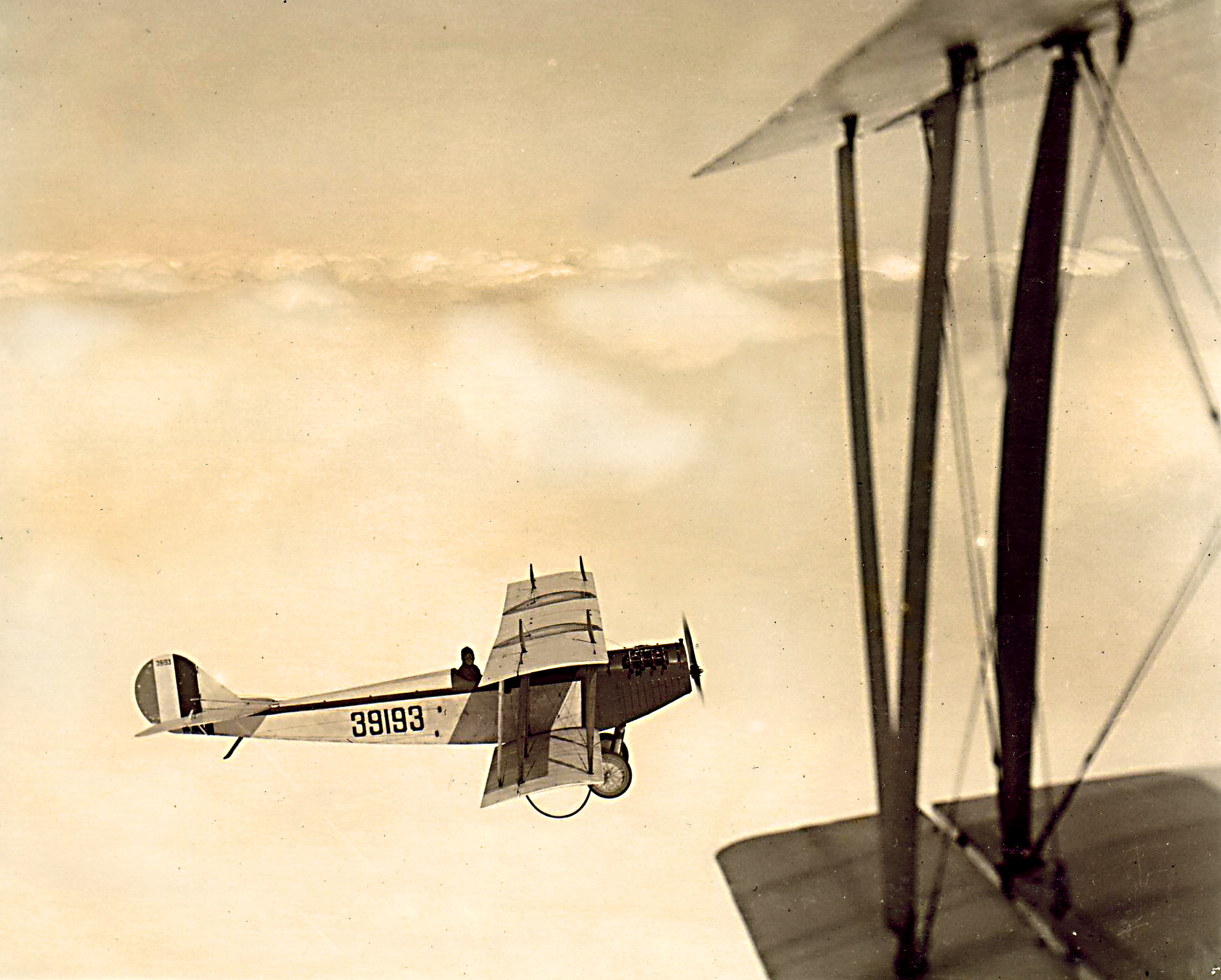
Curtiss JN-4 "Jenny" formation

A wingman (or wingmate) is the pilot of a secondary aircraft providing support or protection to a primary aircraft in a potentially dangerous situation, traditionally flying in formation to the side and slightly behind the primary craft. The term is sometimes used in reference to the secondary aircraft itself, particularly when it is an unmanned aerial vehicle (UAV) rather than human-piloted plane.

According to the U.S. Air Force,

The traditional military definition of a "Wingman" refers to the pattern in which fighter jets fly. There is always a lead aircraft and another which flies off the right wing of and behind the lead. This second pilot is called the "Wingman" because they primarily protects the lead by "watching his back."[1]

Description

[edit]

The wingman's role is to support aerial combat by making a flight both safer and more capable: amplifying situational awareness, increasing firepower, and allowing more dynamic tactics.[citation needed]

Origins

[edit]

The concept of a wingman is nearly as old as fighter aviation. On 9 August 1915, Oswald Boelcke was already acting in the role when he shot down a French airplane pursuing Max Immelmann.[2]

Colonel Robert Smith provided an extensive description of the work and role of wingmen during the Korean War. Among a wingman's primary responsibilities are remaining close to the leader of the aerial formation and warning the leader of any immediate threats at the cost of losing mutual protection. Smith described the responsibilities as mutually exclusive: to never lose the leader requires that the wingman watch what is in front of them while warning the leader of threats requires focusing on the rear. In order to protect the leader, the wingman needs to react constantly according to his surroundings and movements. Smith described the difficulties of flying under conditions of poor visibility and the trying effects on human perception under such conditions, especially considering the danger of becoming separated from the formation leader. According to Smith, wingmen are expected to remain with the leader, even at the cost of giving up an easy kill.[3]

Unmanned aerial vehicles as wingmen

[edit]

The development of UAVs led to the development of such vehicles as "loyal wingmen" flying in formation with a manned fighter aircraft serving in various supporting roles.

The European development project FCAS includes such UAVs.

The Chinese Feihong Company under the Ninth Academy of the state-owned China Aerospace Science and Technology Corporation presented an upgraded version of its "loyal wingman" FH-97A at the 2022 Zhuhai Airshow.

The Boeing MQ-28 Ghost Bat is another example.

See also

[edit]

References

[edit]

Bibliography

[edit]
[edit]
Revisions and contributorsEdit on WikipediaRead on Wikipedia
from Grokipedia
A wingman is a pilot who flies in formation behind and to the side of a lead aircraft, providing protection, support, and situational awareness during missions, a role originating in military aviation during World War II. The term, first attested in 1943, derives from the tactical positioning of fighter aircraft to cover each other's vulnerabilities in combat or training formations. In broader military culture, particularly within the United States Air Force, the "wingman concept" has evolved since the early 2000s into a peer-support framework emphasizing mutual care for physical, mental, and social well-being among service members, independent of the chain of command. Beyond , "wingman" has entered colloquial English as a for a trusted companion who assists another in social or personal endeavors, most notably in romantic pursuits by distracting competitors or facilitating introductions. This figurative extension gained prominence in the , popularized by the 1986 Top Gun, where naval aviators are depicted applying formation tactics to barroom flirtations, though dictionary records formalize the dating-sidekick sense by the early 2000s. The term underscores themes of loyalty and teamwork, appearing in contexts from professional mentorship—such as a CEO's advisor—to casual friendships, always implying proactive backup without seeking personal gain.

Aviation

Definition and role

In military aviation, a wingman is defined as the pilot of a secondary aircraft that operates in close formation with a lead aircraft, providing essential support, protection, and enhanced during combat or high-risk missions. This role emphasizes mutual reliance, where the wingman maintains a position typically just outside and behind the lead's wing to cover vulnerabilities and contribute to overall flight safety. The primary responsibilities of a wingman include maintaining vigilant by monitoring for threats in the lead's blind spots, such as enemy or missiles, thereby serving as an extra set of eyes and ears for the formation. is a core duty, involving defensive actions to engage potential dangers targeting the lead and ensuring the lead can concentrate on primary objectives like or attack. Additional tasks encompass formation maintenance to avoid unsafe maneuvers and relaying critical communications to facilitate coordinated responses. Unlike roles such as a or weapons systems (WSO), who operate within the same to handle guidance or weaponry, the functions as an independent pilot in a separate fighter, fostering peer-level across platforms. The WSO, for instance, focuses on operating onboard systems in two-seat like the F-15E, whereas the provides external, -to- support. The tactical concept of paired or small-group flights dates to World War I, but the term "wingman" was first attested in 1943 and became standardized in U.S. Air Force and Navy doctrine following World War II.

Historical development

The concept of the wingman in aviation originated during World War I, when fighter aircraft began escorting reconnaissance planes over enemy lines, leading to the adoption of small formations for mutual support. Initially, pilots flew in loose groups primarily for observation, but by 1915–1918, British and French aviators increasingly used paired flights to provide protective cover, allowing one pilot to focus on scouting while the other scanned for threats. This shift emphasized teamwork over individual heroics, as formation flying enhanced survivability through shared vigilance and firepower. World War II marked significant advancements in wingman tactics, particularly through the German Luftwaffe's formalized structures in . The "Rotte," a pair of aircraft where the wingman provided defensive cover while the leader engaged, formed the core unit, expanding into the "Schwarm" of four planes for coordinated attacks and mutual protection. These tactics, honed during the , prioritized flexibility and over rigid lines. Allied forces adapted similar principles post-1940; for instance, the U.S. Navy developed the "" in 1941–1942, a defensive maneuver where wingmen crisscrossed paths to counter superior Japanese Zero fighters, enabling effective cover in dogfights. Notable examples include U.S. Navy pilot , who as wingman to Edward "Butch" O'Hare in the Pacific Theater from 1943 achieved 19 aerial victories by 1944, leveraging paired formations for threat monitoring and strike support. Similarly, during the in May 1942, O'Hare's solo engagement—stemming from his wingman's aircraft failure—highlighted the critical reliance on wingman backup for mission success. The transition to the during the (1950–1953) transformed wingman roles due to increased speeds, necessitating tighter formations for visual contact and coordinated maneuvers. U.S. Air Force pilots in F-86 Sabres flew in pairs or elements, with the wingman positioned about 1,000 feet offset to maintain formation while scanning for MiG-15 threats, a practice that became essential for survival in high-speed intercepts. By the mid-1950s, USAF doctrine codified the wingman as standard in fighter squadrons, emphasizing roles like cover and threat warning in the of jet combat. From the 1970s to the 1990s, the introduction of multi-role aircraft like the F-15 Eagle and F-16 Fighting Falcon further evolved wingman tactics toward interoperability in beyond-visual-range (BVR) engagements. These jets integrated radar-guided missiles and data links, allowing wingmen to extend sensor coverage and coordinate long-range shots while the leader focused on primary targets. USAF tactics stressed fluid positioning for mutual support, adapting WWII pair concepts to electronic warfare environments and enabling seamless shifts between air superiority and ground attack roles.

Tactical employment

In tactical , wingmen operate within standardized formations designed to maximize mutual , distribution, and defensive coverage. The basic two-ship formation consists of a lead and a wingman positioned slightly behind and offset, typically in an echelon or combat spread configuration to allow the wingman to monitor threats while the lead focuses forward. Combat spread positions the wingman approximately 0.3 to 2.0 nautical miles abeam, ideally 0.7 nautical miles, enabling optimal lookout without compromising maneuverability. In visual range, pilots maintain separations of 500 to 1,000 feet to ensure safe spacing during tight maneuvers, with echelon adjustments signaling turns via hand gestures like a clenched . These formations draw from historical tactics such as the German Schwarm, adapted for modern paired flights to optimize 360-degree awareness. During combat, the wingman's primary responsibility is defensive scanning, covering the 180-degree sector opposite the lead to detect and report threats, thereby providing mutual support and reducing vulnerability. For instance, upon spotting an enemy , the wingman issues a brevity call such as "Bogey, 3 o'clock!" to alert the formation, followed by executing a defensive break or maneuver to position for offensive engagement. The wingman prioritizes protecting the lead, maintaining separation while clearing obstacles or induced risks like surface-to-air missiles. Engagement protocols emphasize rapid communication and role adherence, with the USAF's "check-six" directive requiring the wingman to visually verify the rear sector for threats during critical phases like missile launches or dogfights. In beyond-visual-range scenarios, wingmen integrate with airborne warning and control systems (AWACS) for coordinated intercepts, where the wingman assumes tactical lead if needed to execute shots while the formation leader maneuvers. This priority on lead protection extends to close-quarters combat, where the wingman employs lag pursuit or high-yo-yo maneuvers to bracket targets without exposing the formation. Beyond combat, wingmen support non-combat missions such as escorting bombers, as seen in formations protecting B-17s from interceptors, or conducting sweeps to clear sectors ahead of strike packages. They also provide for search-and-rescue operations, scanning for threats during personnel recovery in contested environments. In modern fighter jets, adaptations like the datalink enable wingmen to function as sensor extensions, sharing tracks and tactical data with the lead even beyond visual proximity, enhancing without requiring tight formations. This network-centric approach allows real-time exchange of threat information among F-15s and other platforms, reducing reliance on voice calls and improving response times in dynamic battlespaces.

Training and culture

Selection of wingmen in fighter aviation typically involves assigning top-performing pilots who demonstrate exceptional situational awareness, clear communication skills, and unwavering loyalty to the mission and team. These qualities are essential for maintaining formation integrity and providing effective support during high-stress operations. In the United States Air Force (USAF), newly qualified fighter pilots begin their operational tours as wingmen, typically accumulating around 500 flight hours in their mission aircraft to be considered experienced for advanced assignments. Training for wingmen emphasizes advanced tactical proficiency through specialized programs like the U.S. Navy's Tactics Instructor (SFTI) course, formerly known as TOPGUN, which has been operational since 1969 and focuses on elite fighter tactics. Participants, drawn from the top 1% of naval aviators, undergo intensive instruction in , coordinated threat response drills, and simulator-based scenarios that simulate sudden role switches between lead and wingman positions to build adaptability under pressure. These exercises incorporate multiplayer simulations to hone real-time decision-making, electronic countermeasures, and communication protocols during multi-bogey engagements. The role holds deep cultural significance in , particularly in the USAF, where the "Wingman Concept" was formalized in the early 1990s as part of a broader awareness and resilience initiative, evolving into a philosophy that promotes mutual for on the ground and in the air. This ethos encourages peer checks and proactive support among airmen, extending beyond flight operations to foster a culture of vigilance and . Since the , the USAF has reinforced this through annual "Wingman Day" events, which include half-day stand-downs focused on training, strategies, and accident prevention. Wingmen face notable psychological challenges, including the need to suppress personal ego in favor of supporting the lead pilot, which requires balancing individual instincts with team-oriented discipline to avoid compromising mission objectives. This mindset is critical in high-stakes environments where split-second deference can mean the difference between success and failure. Real-world examples underscore these demands, such as during the when USAF Major Bob Pardo executed "" in 1967, using his F-4 Phantom II to physically nudge his damaged wingman's aircraft out of hostile airspace, saving the crew despite risking his own plane—a maneuver initially denied recognition due to its unorthodoxy but later awarded the . Global variations in wingman training reflect doctrinal differences, with emphasizing standardization to enhance interoperability among member nations. Programs like the Euro-NATO Joint Jet Pilot Training (ENJJPT) promote uniform procedures for fighter operations, including coordinated tactics, to ensure seamless joint missions. In contrast, training for paired tactics prioritizes aggressive offensive maneuvers, where the wingman rapidly ascends to engage threats independently, reflecting a doctrine that leverages bold, initiative-driven actions to seize air superiority.

Loyal wingman systems

Concept and advantages

The loyal wingman concept refers to (AI)-controlled unmanned aerial vehicles (UAVs) designed to operate semi-autonomously alongside manned , executing support roles such as , electronic warfare, and threat engagement to minimize risks to human pilots. These systems extend the traditional wingman function by integrating advanced autonomy, allowing UAVs to perform tasks in contested environments where manned aircraft face heightened dangers. Unlike fully independent drones, loyal wingmen emphasize collaborative operations within manned-unmanned teaming (MUM-T) frameworks, where the UAV acts as a protective extension of the piloted platform. At its core, the loyal wingman operates on principles of MUM-T, serving as a force multiplier by augmenting the capabilities of a single manned jet through networked coordination. Autonomy levels vary from remotely piloted configurations for precise control in complex scenarios to fully AI-driven modes enabling independent decision-making, such as threat identification and evasion maneuvers. This spectrum allows for flexible integration, where the UAV can break formation to handle high-risk tasks while the manned aircraft maintains overall . Sensor fusion across the team provides comprehensive 360-degree awareness, combining data from multiple platforms to reduce pilot workload and enhance tactical responsiveness. Key advantages include significant cost-effectiveness, with loyal wingman UAVs projected to cost 25-33% of a manned fighter like the F-35, due to simpler designs, no life-support systems, and attritable construction that permits expendable use in high-threat zones. They enable higher generation rates by eliminating limitations, supporting sustained operations over extended periods. Enhanced survivability stems from their ability to absorb threats—such as drawing enemy fire or conducting suppression missions—while protecting the manned asset, thereby increasing overall mission success rates. Scalability further amplifies these benefits, as swarms of 2-10 UAVs can accompany a single manned jet, overwhelming adversaries through distributed sensing and firepower. Strategically, loyal wingmen address critical challenges like persistent pilot shortages in air forces worldwide and escalating threats from peer competitors such as and , who are advancing similar systems. The U.S. Department of Defense's 2019 initiative exemplifies this rationale, aiming to field AI-enabled wingmen to bolster force projection in peer conflicts without proportionally expanding manned fleets. By retaining core wingman roles like and decoying but adding autonomous , these systems transform aerial operations into more resilient, efficient teaming constructs.

Major development programs

The has spearheaded several key initiatives in loyal wingman development through the Collaborative Combat Aircraft (CCA) program, aimed at integrating autonomous drones with manned fighters for enhanced combat capabilities. The U.S. Air Force's CCA effort evolved from the earlier program, which transitioned out of its research phase in 2022 to become a formal acquisition program, with prototype flights occurring as early as 2021 and advancing to operational demonstrations by 2024. In September 2025, the U.S. Navy selected , , , and to develop conceptual designs for carrier-based CCA variants, focusing on autonomous operations from aircraft carriers to support missions. Recent milestones include Anduril's YFQ-44A completing its first flight on October 31, 2025, just 556 days after initial design, and unveiling its Gambit 6 multirole CCA on November 4, 2025, emphasizing air-to-ground and collaborative roles. Ground testing for the broader CCA program began in May 2025 at , selected as the primary readiness location. Australia's MQ-28 , developed by in partnership with the Royal Australian Air Force (RAAF), represents a pioneering loyal wingman platform designed for teaming with manned like the F/A-18F Super Hornet and F-35 Lightning II. The program achieved its first flight in 2021, marking the initial uncrewed combat aerial vehicle fully designed and manufactured in . By March 2025, the prototype had completed over 100 test flights, supported by more than 20,000 hours of simulation, demonstrating autonomous operations and mission effectiveness. In September 2025, and the RAAF concluded operational trials four months ahead of schedule, accumulating 150 flight hours and validating integration for air-to-air and strike roles, with planned tests for air-to-air missiles to further enhance its combat utility. As of November 2025, announced that the MQ-28 is on track for its first live-fire weapons test, involving an AIM-120 missile, in December 2025. European efforts center on the Wingman concept, a twin-engine stealth tailored for the (FCAS), a multinational program involving , , and . Unveiled at the in June 2024, the concept features a tailless, canard-equipped design optimized for low-observability and high performance, intended to operate as an escort for next-generation manned fighters. A full-scale was displayed at the event, highlighting internal weapons bays for air-to-air and air-to-surface munitions, with operational deployment targeted for the alongside upgraded Eurofighter aircraft in the FCAS architecture. Other international programs underscore global momentum in loyal wingman technology. In the United Kingdom, BAE Systems revealed an updated loyal wingman concept in February 2024 as part of the (GCAP), formerly Tempest, featuring a stealthier uncrewed combat aircraft with twin internal bays for weapons and a prototype flight planned within two years to support teaming. China showcased prototypes of five unmanned combat aerial vehicle types, including variants of the GJ-11 Sharp Sword stealth drone, during its September 2025 Victory Day parade in , with a folding-wing GJ-11J or GJ-21 model demonstrated for potential shipborne operations as a loyal wingman in carrier-based formations. The GJ-11 is estimated to have a range of 1,500-4,000 km and endurance of 6-8 hours. In India, Hindustan Aeronautics Limited (HAL), in collaboration with the Defence Research and Development Organisation (DRDO), advanced the CATS Warrior loyal wingman under the Combat Air Teaming System (CATS) initiative, completing its first engine ground run in January 2025 and targeting in early 2027 after taxi trials, building on low-observable design for unmanned teaming with manned platforms. Collaborative frameworks are accelerating development through technology sharing. Under the pact, the and are exploring joint loyal wingman efforts, with the MQ-28 drawing strong interest from the U.S. Navy in April 2025 as a model for industrial partnerships and potential strike variants to reduce costs and enhance . has intensified its push for interoperable drone swarms in 2025, emphasizing ethical standards, resilience, and alliance-wide integration in its strategic blueprint for drone dominance.

Technological challenges

Achieving high levels of autonomy in loyal wingman systems, particularly Level 4 or 5 as defined by standards, remains a primary obstacle, necessitating AI capable of real-time threat evasion and without constant human intervention. Current AI systems struggle with edge-case scenarios, such as electronic warfare jamming that disrupts or unpredictable combat dynamics, where nuanced judgment akin to human pilots is required to avoid catastrophic errors like or mission failure. For instance, demonstrations like the X-62A flight have shown AI handling dogfights, but scaling to contested anti-access/area-denial environments exposes limitations in translating human intent into safe, adaptive actions. Communication and control systems for loyal wingmen face vulnerabilities to cyber threats and bandwidth constraints, especially in swarming configurations involving 1-10 UAVs exchanging gigabytes of per second. Secure datalinks, essential for maintaining human oversight, are susceptible to enemy disruptions, software viruses, or logic bombs, potentially leading to loss of control if ground stations or manned links fail. In complex electromagnetic environments, sharing between platforms is hindered, complicating and coordinated maneuvers. Design trade-offs in attritable airframes prioritize balancing stealth, operational range of approximately 500-1,000 nautical miles, and capacity for air-to-air missiles, all while targeting unit costs of $20-40 million to enable affordable production of hundreds of units. High-stealth configurations, as seen in Lockheed Martin's CCA prototype, enhance survivability but inflate expenses, prompting shifts toward semi-stealthy designs that accept higher attrition rates in high-threat operations. systems must support subsonic cruising with bursts to supersonic speeds for evasion, yet integrating efficient engines without compromising the attritable cost model poses ongoing challenges. Integration with legacy manned aircraft, such as the F-35, requires upgrades to systems like the Autonomic Logistics Information System (ALIS) for seamless data interoperability, while addressing regulatory and safety concerns over AI-authorized "kill decisions" under . Ensuring human-AI teaming avoids coordination flaws demands novel hazard analysis methods like STPA-Coordination to certify safe operations, but standardization across platforms remains elusive. Political and doctrinal hurdles further complicate manned-unmanned ratios and pilot training for collaborative tactics. As of November 2025, the U.S. Collaborative Combat Aircraft (CCA) program experiences delays in achieving semi-autonomous flight milestones, with Anduril's YFQ-44 Fury postponed from summer to mid-October due to for independent takeoff and landing, highlighting AI certification bottlenecks. Chinese prototypes, including the and GJ-11, demonstrate basic in simulations but remain unproven in combat-like conditions, limited by weak AI and real-time communication gaps. Overall, no loyal wingman system has reached full operational deployment, with investments exceeding $8 billion through 2030 underscoring persistent barriers.

Social and cultural meanings

Origins of the term in social contexts

The term "wingman" originated as aviation slang in the early 1940s, specifically during among pilots in the Royal Air Force and , where it described a secondary pilot flying alongside and protecting the lead aircraft in formation. This military usage emphasized mutual support and vigilance, a concept that began extending beyond combat into off-duty social interactions within U.S. military culture in the 1980s. The 1986 film accelerated this etymological transition into civilian , particularly in contexts, by showing naval aviators using paired tactics in bars to approach women, thereby popularizing "wingman" as a for a friend who aids romantic pursuits. This influence marked the term's widespread adoption in non-military during the late and . In the early 2000s, the U.S. Air Force formalized its "Wingman ethos" as part of broader initiatives to combat personal stressors and isolation, reinforcing the term's application to everyday welfare checks among airmen. Early documented civilian uses emerged in the late and early 2000s within self-help literature on and the emerging community, where wingmen were described as strategic allies in approaching potential partners. The launch of Thomas Edwards' Professional Wingman service in 2009 further institutionalized the role, offering paid coaching for men navigating social and romantic scenarios. Initially centered on male friendships in military and dating slang, the term's cultural evolution in the 2000s introduced gender neutrality through "wingwoman," a variant denoting a female supporter in similar contexts, reflecting broader inclusivity in social metaphors.

Role in dating and social interactions

In dating and social interactions, a wingman serves as a supportive ally to the "lead," the primary individual pursuing a romantic interest, by fulfilling key functions such as distracting potential competitors, supplying conversation starters, or affirming the lead's appeal to enhance their desirability. For instance, in group settings like bars or parties, the wingman might converse with accompanying friends of the target to create opportunities for isolation and one-on-one engagement, thereby lowering barriers to interaction. The psychological foundation of the wingman role lies in reducing approach anxiety through mechanisms like , where the presence of a companion signals sociability and value, making the lead more attractive to potential partners. by Ackerman and Kenrick (2009) demonstrates that men are approximately 150% more likely to initiate interactions with women accompanied by friends in social environments, as the wingman facilitates access by engaging the group or posing as a non-threatening counterpart. Complementing this, a study by White, Stackhouse, and Argo (2012) reveals that individuals are willing to embellish a friend's —such as exaggerating their achievements or appeal—when acting as a wingman, driven by and coalitional motives, which further bolsters the lead's perceived status and self-assurance. These effects align with evolutionary principles observed in human and animal behaviors, where allies amplify success by mitigating risks in competitive scenarios. Effective wingman strategies include conducting "warm-up" conversations to build rapport in a venue, signaling discreet exit cues to allow the lead to pair off smoothly, and offering post-interaction debriefs to analyze outcomes and adjust tactics for future attempts. Variations exist between platonic wingmen, often close friends providing unpaid support, and , which charge $50–$200 per hour for structured in real-world settings; same-sex wingmen may assist in gender-specific dynamics, such as wingwomen helping women deflect unwanted advances, while opposite-sex wingmen can simulate couple-like scenarios to deter rivals. In modern adaptations, wingmen have extended to through profile reviews, message crafting, or group chats where friends vet matches, with 22% of online daters enlisting such help according to a 2017 survey of . Apps like (launched 2017) enable this by allowing trusted contacts to curate profiles and swipe on behalf of users, blending traditional support with digital efficiency. The have seen heightened emphasis on and anti-harassment protocols in wingman practices, influenced by the , ensuring strategies prioritize clear boundaries and mutual respect to foster safe interactions. Data on effectiveness underscores the value of wingmen; Ackerman and Kenrick (2009) reported that 68.8% of young adults who employed cooperative strategies successfully formed long-term romantic partnerships, with women noting marginally higher success rates when using friends for support or avoidance. In bar-like settings, the presence of a wingman not only increases approach opportunities but also correlates with improved outcomes through enhanced , though results vary by context and execution.

Depictions in media

The concept of the wingman has been prominently featured in , often blending origins with themes of and camaraderie. In the 1986 Top Gun, Goose serves as Lieutenant Pete "Maverick" Mitchell's radar intercept officer and wingman, embodying both professional support and personal friendship, with their dynamic highlighting the risks of aerial combat and emotional bonds among pilots. This portrayal extends to the 2022 sequel , where Maverick reflects on Goose's legacy while mentoring new pilots, reinforcing the wingman's role as a symbol of trust and sacrifice in high-stakes scenarios. The trilogy (2009–2013), directed by , depicts social wingmen through the chaotic bachelor party adventures of friends Phil, Stu, Alan, and Doug, where their group mimics wingman support in navigating comedic mishaps and romantic pursuits during escapades. In television, the wingman trope frequently appears in comedic and dramatic contexts to explore social dynamics and metaphorical assistance. The sitcom How I Met Your Mother (2005–2014) showcases Barney Stinson's elaborate "wingman" strategies in episodes like "Rebound Bro" (Season 3, Episode 11), where he recruits a replacement for Ted Mosby to aid in seduction tactics, satirizing male friendship rituals in urban dating scenes. Similarly, the 2014 episode "Wingman" from Person of Interest (Season 4, Episode 3) uses the term to describe a professional social facilitator whose expertise in matchmaking draws the protagonists into a plot involving surveillance and protection, extending the concept to AI-assisted support in a sci-fi thriller framework. Literature and comics have portrayed wingmen in both realistic and fantastical lenses, drawing from historical and imaginative sci-fi. Tom Wolfe's 1979 nonfiction book The Right Stuff chronicles the lives of test pilots like , emphasizing wingman roles in experimental flights where mutual reliance during high-risk maneuvers defined the "right stuff" ethos of bravery and precision among early space program pioneers. In , Masakazu Katsura's (1983–1985) reimagines the wingman as a alter ego for protagonist Kenta Hirono, who transforms into the titular hero using a magical to battle villains alongside allies, blending influences with themes of heroic companionship and personal empowerment. Video games have integrated the wingman as both a gameplay mechanic and narrative element, particularly in simulation and social genres. Project Wingman (2020), an arcade flight combat simulator developed by Sector D2, centers on player-piloted supported by AI wingmen in intense dogfights and missions, evoking tactics while allowing customization of squadron dynamics for strategic depth. The trope also appears in dating simulations, such as expansions in The Sims series, where Sims can enlist friends to boost romantic interactions at social venues, facilitating through group activities and indirect support in building relationships. These depictions have shaped cultural perceptions of the wingman, often reinforcing traditional gender stereotypes where male characters predominantly aid other males in romantic or adventurous pursuits, as seen in early 2000s comedies. However, 2020s romantic comedies like (2023) and (2024) introduce more diverse representations, featuring female leads with platonic wingwomen who challenge heteronormative dynamics and promote egalitarian friendships. By 2025, video game modifications, such as those on for titles like , have added explicit social wingman mechanics, enabling players to script AI companions for enhanced scenarios and reflecting evolving player demands for inclusive social simulations. Critics argue that media portrayals frequently exaggerate the wingman's for humorous or dramatic effect, leading to misconceptions about real-world social or professional applications, such as oversimplifying loyalty in or romantic success in friendships. This exaggeration can perpetuate outdated tropes, though recent works increasingly critique and subvert them to offer more nuanced views of support roles.

References

Add your contribution
Related Hubs
Contribute something
User Avatar
No comments yet.