Hubbry Logo
AmbassidaeAmbassidaeMain
Open search
Ambassidae
Community hub
Ambassidae
logo
8 pages, 0 posts
0 subscribers
Be the first to start a discussion here.
Ambassidae
Ambassidae
from Wikipedia

Asiatic glassfishes
Temporal range: Ypresian to present
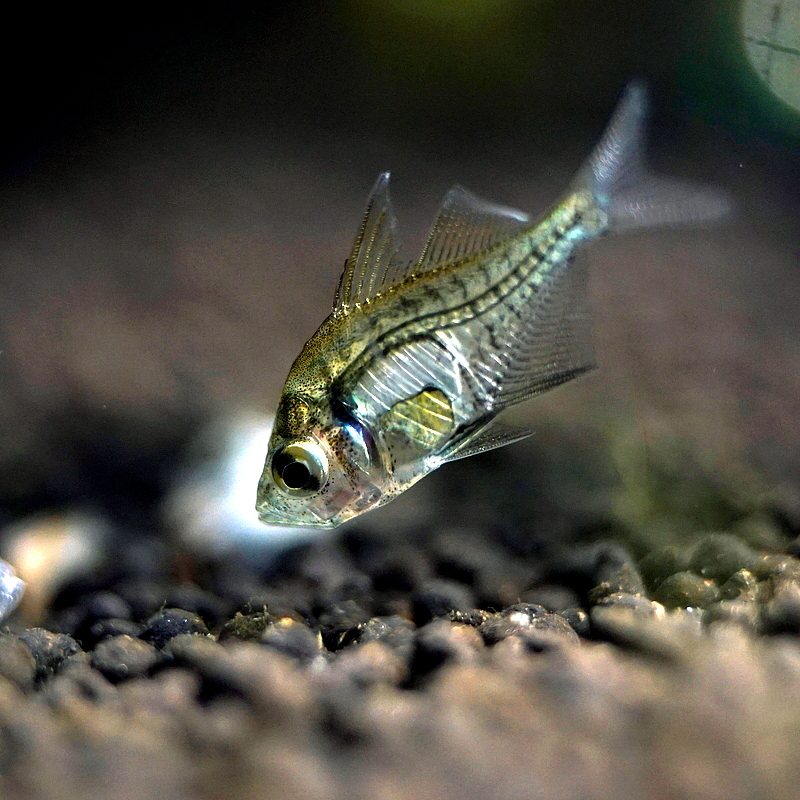
Indian glassy fish, Parambassis ranga
Scientific classification Edit this classification
Kingdom: Animalia
Phylum: Chordata
Class: Actinopterygii
Order: Mugiliformes
Family: Ambassidae
Klunzinger, 1870
Genera[1]

Ambassis
Chanda
Dapalis
Denariusa
Gymnochanda
Kapurdia
Parambassis
Pseudambassis
Pseudoambassis
Tetracentrum

The Asiatic glassfishes are a family, the Ambassidae, of freshwater and marine ray-finned fishes. Some species are known as perchlets.

The family has also been called Chandidae, and some sources continue to use the name,[2] but as Ambassidae was used earlier, it has precedence over Chandidae, which was first used in 1905.[3]

Taxonomy

[edit]

This family was formerly classified in the order Perciformes but most authorities currently consider this order to be paraphyletic. Currently the Ambassidae are of uncertain affinities (incertae sedis) within the subseries Ovalentaria.[4]

Description

[edit]

The largest species reaches a maximum size around 26 cm (10 in). Many of the species are noted for their transparent or semitransparent bodies, which makes them desirable for the aquarium trade. The Indian glassy fish (Parambassis ranga) is transparent, but showier specimens that had been injected with artificial coloring were sold as novelty pets in the 1990s. Since then, these "painted fish" have become much less popular, with more fishkeepers seeking naturally pigmented specimens.[5]

The species in the family are native to Asia, Oceania, the Indian Ocean, and the western Pacific Ocean. The family includes eight genera[1] and about 51 species.[6]

Fossils

[edit]
Dapalis macrurus

The earliest fossil remains of this family are from the Early Eocene, with the fossil genus Kapurdia from the early Eocene of Rajasthan, India[7] and otoliths of Ambassis antipodus from the Early Eocene of New Zealand.[8] One of the most notable fossil members of the family is Dapalis, which appears to be a stem group-glassfish that was dominant in freshwater and estuarine ecosystems throughout Europe from the Middle Eocene to Middle Miocene, with 21 species known from both fossil skeletons and otoliths.[9][10]

References

[edit]
Revisions and contributorsEdit on WikipediaRead on Wikipedia
from Grokipedia
Ambassidae is a family of small ray-finned fishes commonly known as Asiatic glassfishes, comprising 8 genera and 57 that inhabit freshwater, brackish, and marine environments across the region. These fishes are distinguished by their semi-transparent bodies, which give them their common name, and typically reach a maximum length of around 26 cm. They feature a with 7-8 spines and 7-11 soft rays, an anal fin with 3 spines and 7-11 soft rays, pelvic fins with 1 spine and 5 soft rays, and 24-25 vertebrae. Taxonomically, Ambassidae belongs to the order within the class , though the family was formerly classified under and sometimes referred to as Chandidae. The name "Ambassidae" derives from the Greek word ambasis, meaning "climbing up," reflecting the behavior of some species. Distribution spans from the western , including and , to , , and the Pacific islands, with species occupying diverse habitats such as coastal waters, river mouths, mangroves, sandy shores, and clear flowing creeks. Many species are , tolerating a wide range of salinities, and are often found in estuaries or within 20 km of the sea. Biologically, Ambassidae species exhibit nonguarding and normal activity levels, with some known as perchlets due to their perch-like appearance and habits. They play ecological roles in coastal and continental ecosystems, contributing to food webs as both predators of small and prey for larger . Regionally, such as in , 7 species across 4 genera are recorded, highlighting their diversity in estuarine and marine settings. The family's evolutionary history involves Cenozoic colonization of the , underscoring their adaptability to varied aquatic environments.

Taxonomy and Classification

Higher Classification

Ambassidae is classified within the class Actinopterygii, the ray-finned fishes, which encompasses the vast majority of extant fish species. The family is positioned in the superorder Acanthopterygii and the subdivision Percomorpha, reflecting its spiny-rayed dorsal fin structure and advanced evolutionary traits shared with other percomorph groups. In terms of ordinal placement, Ambassidae has historically been associated with Perciformes but is now more accurately situated within the series Ovalentaria as incertae sedis, based on molecular phylogenetic analyses that highlight its uncertain position relative to established orders like Mugiliformes. This placement underscores close phylogenetic ties to other percomorph fishes, including cichlids and mullets, supported by multi-locus molecular data from nearly 2,000 species. The subseries Ovalentaria itself lacks clear morphological synapomorphies but is robustly resolved in molecular phylogenies with high bootstrap support (97%). The family Ambassidae was originally described by Klunzinger in , establishing it as the senior synonym for the group. It was formerly known under the name Chandidae, proposed by Fowler in 1905, but this designation became obsolete due to nomenclatural priority rules under the . The of the family name derives from the Greek word ambasis (ἄμβασις), meaning "climbing up" or "ascent," alluding to the tendency of some species to inhabit vegetated shallows or climb into marginal habitats like mangroves.

Genera and Species

The family Ambassidae encompasses eight recognized genera: Ambassis, Chanda, Denariusa, Gymnochanda, Parambassis, Pseudambassis, Pseudoambassis, and Tetracentrum. These genera collectively include approximately 57 valid species (as of April 2025), distributed across freshwater, brackish, and marine habitats in the Indo-Pacific region. The genus Ambassis is the most speciose, comprising 18 species, many of which exhibit high morphological similarity and transparent body forms characteristic of the family. Notable examples include Ambassis ambassis (Commerson's glassfish), a widespread species reaching up to 15 cm in standard length, and Parambassis ranga (Indian glassy perchlet), which is frequently encountered in the aquarium trade due to its striking translucency and peaceful demeanor. The largest species in the family, Parambassis gulliveri (giant glassfish), attains a maximum length of about 24 cm. Recent taxonomic revisions have been informed by , revealing non-monophyly in major genera such as Ambassis and Parambassis, prompting calls for further systematic rearrangements to better reflect evolutionary relationships. For instance, a multilocus study on Indian Ambassis highlighted cryptic diversity and supported synonymies in some cases, while broader analyses in 2023 emphasized biogeographic patterns influencing genus boundaries. These updates underscore the ongoing refinement of ambassid beyond traditional morphology-based classifications.
GenusApproximate Number of SpeciesNotes
Ambassis18Most diverse; includes widespread forms.
Parambassis8Includes large species like P. gulliveri; some aquarium trades.
Chanda11Primarily Asian freshwater species.
Denariusa2Australian endemics.
Gymnochanda5Small, ornate species from .
Pseudambassis1Monotypic; P. lala.
Pseudoambassis4Australian and New Guinean taxa.
Tetracentrum3Rare, poorly known .

Description

Morphology

Ambassidae fishes are characterized by an elongate to oval-shaped body that is laterally compressed, facilitating streamlined movement in aquatic environments. The body is covered with small scales, and the is terminal and oblique, positioned for capturing prey in open water. The fin structure includes a single with 7–8 spines followed by 7–11 soft rays, an anal fin featuring 3 spines and 7–11 soft rays, and pelvic fins with 1 spine and 5 soft rays. The consists of 24–25 vertebrae, contributing to the family's compact yet flexible body plan. There is no adipose fin present. Head morphology includes large eyes adapted for low-light conditions, often comprising a significant portion of the head length, along with a well-developed system that can be continuous or interrupted across species for sensory detection of vibrations. Sexual dimorphism is minor and varies by species, with some exhibiting subtle differences in fin ray counts or body proportions during reproductive periods. The semi-transparent body structure enhances in their habitats.

Size and Coloration

Members of the Ambassidae family exhibit a relatively small body size, with most species attaining lengths between 5 and 10 cm in total length (TL). For instance, reaches about 9.5 cm TL, while Chanda nama can grow to 11 cm TL. Larger species within the family, such as those in the genus Parambassis, may exceed 25 cm TL, with the maximum reported length for the family being approximately 26 cm. Ambassis gymnocephalus represents an intermediate example, achieving up to 16 cm TL. These dimensions reflect their adaptation to planktivorous lifestyles in shallow, often vegetated waters, where smaller sizes facilitate maneuverability. The coloration of Ambassidae is predominantly silvery or semi-transparent, often described as glass-like due to minimal pigmentation in the skin and scales. This reduced pigmentation allows internal structures to be faintly visible, creating a translucent appearance that blends seamlessly with surrounding . In some species, such as Parambassis pulcinella, a subtle golden sheen overlays the transparency, enhancing visual subtlety. Color variations occur across species and life stages, with juveniles frequently displaying dark spots or bars on the fins for added camouflage. For example, Ambassis miops features blackish caudal fin lobes, while Ambassis urotaenia shows a blackish band on the caudal fin. Adults often develop an iridescent sheen, contributed by guanine crystals in the skin that produce reflective properties without fully obscuring transparency. These features support predator avoidance by mimicking open water, where the semi-transparent body minimizes visual detection.

Distribution and Habitat

Geographic Range

The family Ambassidae, commonly known as Asiatic glassfishes, is primarily distributed across the Indo-West Pacific region, spanning from the to the western . This range encompasses coastal and freshwater systems in South and , including rivers and estuaries of , , , , , and the , as well as extending eastward to islands, , and . The family is notably absent from the Atlantic Ocean and deep oceanic waters, with distributions confined to continental shelves and adjacent inland areas. Specific locales highlight the family's prevalence in coastal Asia, where species inhabit rivers, mangroves, and brackish zones from the along India's western coast to the in . In the western Pacific, occurrences are recorded in northern Australian river systems, such as those in and the , and across Melanesian islands including and . Some marine species, such as those in the genus Ambassis, extend northward to southern , where at least five species are documented in coastal and estuarine habitats. Additionally, a subset of species reaches the western , including subtropical eastern from to and islands like and . Endemism is particularly high in the freshwater systems of and , where genera such as Denariusa and Tetracentrum are restricted to endemic riverine habitats, reflecting limited dispersal beyond these Gondwanan remnants. Marine and brackish species show broader distributions, but freshwater forms often exhibit regional specificity, such as in South Asian rivers or n peat swamps. Historically, the family's range expanded during the era following the breakup of , with an ancestral lineage originating in Australian freshwaters around 55.7 million years ago. Marine dispersals facilitated colonization of approximately 55.7–49 million years ago and the regions, including , between 44.3–32 million years ago, enabling the current pan-Indo-Pacific distribution.

Environmental Preferences

Members of the Ambassidae family, commonly known as glassfishes or perchlets, are fishes capable of inhabiting a wide range of salinities, from freshwater to brackish and marine environments. They predominantly occupy shallow coastal, estuarine, and riverine habitats across the Indo-West Pacific, where salinity gradients provide transitional zones for . Many species thrive in slow-flowing rivers, forests, and tidal creeks, often within 20 km of the , reflecting their to dynamic aquatic systems with fluctuating conditions. These fishes exhibit tolerance to varying water conditions, including low dissolved oxygen levels common in estuarine and settings, though specific thresholds vary by species. For instance, species like Ambassis ambassis demonstrate a broad range of 17–32°C and salinity tolerance from 2–35‰, enabling persistence in hypoxic, warm waters typical of their preferred microhabitats. They often seek cover near vegetation, submerged structures such as roots and log snags, or sandy substrates, which provide refuge from predators and currents in these sheltered environments. Juveniles particularly favor shallower, protected areas like fringes and beds, where reduced flow and higher structural complexity support early development. Salinity adaptations in Ambassidae involve effective , with species maintaining plasma osmotic concentrations across gradients up to approximately 35‰ before abrupt increases occur at higher levels. Direct transfer to salinities exceeding 53‰ is lethal, but gradual acclimation allows survival in brackish transition zones, underscoring their in estuarine interfaces. This physiological flexibility facilitates spatial separation among co-occurring species, influenced by interactions between and in estuarine habitats.

Biology

Reproduction

Members of the Ambassidae family are oviparous nonguarders, characterized by where females scatter adhesive, demersal eggs over substrates such as aquatic vegetation or the bottom, with no provided post-spawning. This reproductive mode is consistent across genera, including Ambassis and Parambassis, where eggs adhere to surfaces to prevent drift in flowing or brackish environments. The eggs are typically spherical, transparent, and contain a single oil droplet for during early development, measuring approximately 0.5–0.6 mm in . Spawning in Ambassidae is often seasonal, peaking during warmer months in brackish or estuarine waters that facilitate egg adhesion and larval dispersal, though some species exhibit extended or year-round activity depending on environmental cues like and water levels. For instance, in , breeding occurs prolifically during rainy seasons in slightly brackish conditions, with pairs forming through displays involving intensified male coloration and chasing behaviors to stimulate egg release. Similarly, Ambassis agassizii spawns from November to January in wetlands, often in multiple batches triggered by rising and temperatures between 19–27°C, with males pursuing females toward prior to nocturnal egg deposition. Larval development begins with planktonic, transparent prolarvae that hatch within 19–24 hours at 27–35°C, relying on reserves for initial nutrition and exhibiting minimal pigmentation for among aquatic debris. These larvae, initially 1.5–1.6 mm in standard length, transition to active feeding around 2–3 days post-hatching as the is absorbed, with rays forming by 7 mm and juveniles reaching transparency similar to adults for predatory avoidance. Growth to typically occurs within 6–12 months, varying by and conditions; for example, Parambassis siamensis matures at 20–35 mm standard length in 3–4 months under optimal temperatures, enabling multiple generations annually. Fecundity in Ambassidae ranges from 100–500 eggs per spawning event in smaller species like , increasing with female size to several thousand in larger forms such as Ambassis agassizii, where ovaries may contain 380–9,966 eggs across multiple batches. This variation supports population resilience in variable habitats, with batch spawning allowing repeated reproduction over the season without depleting energy reserves entirely.

Diet and Feeding

Members of the family Ambassidae are primarily carnivorous, with diets dominated by , particularly small crustaceans such as copepods (Pseudodiaptomus stuhlmanni) and mysids (Mesopodopsis africana), as well as and fish larvae. In estuarine environments, these fishes exhibit opportunistic feeding, with comprising the bulk of their intake across species. For instance, in the Asian species Chanda nama, microcrustacea and like mayflies (Ephemeroptera) form the core diet, supplemented by fish scales in adults. Dietary preferences vary among genera and species, reflecting ecological niches within habitats. Ambassis productus is notably piscivorous, consuming and larvae alongside , while Ambassis natalensis is more insectivorous, targeting surface-dwelling prey such as chironomid pupae and . Ambassis gymnocephalus shows seasonal specialization, feeding heavily on fish eggs during winter months in systems like St. Lucia Estuary. These differences minimize , with 83–92.5% of prey consisting of suspended items rather than benthic organisms. Ontogenetic shifts in diet are evident, particularly in Chanda nama, where juveniles under 25 mm standard length focus on planktonic microcrustacea and small through consumption of suspended particles, transitioning to larger prey including scales as adults exceed this size. In Ambassis species, fry below 30 mm are predominantly zooplanktivorous or insectivorous, with adults diversifying to include eggs and larvae for higher energy intake. Feeding occurs in bimodal patterns, peaking at dawn and dusk, often targeting suspended prey via ambush tactics adapted to their protrusible mouths. As mid-level predators, Ambassidae occupy a key trophic position in estuarine food webs, facilitating energy transfer from primary consumers like to higher predators through their consumption of small and larvae. Species such as Ambassis ambassis serve as pivotal links in these systems, enhancing flow in dynamic estuarine environments.

Fossil Record

Earliest Known Fossils

The earliest known fossils attributable to the crown group Ambassidae date to the Early Eocene Ypresian stage, approximately 56 to 47 million years ago. These records primarily consist of otoliths from marginal marine and lagoonal deposits, suggesting an early diversification in coastal environments during a period of global warming following the Paleocene-Eocene Thermal Maximum. A significant early assemblage comes from the Cambay Shale Formation in , western India, where otoliths of at least three unnamed Ambassidae species dominate the teleostean fauna recovered from subsurface lignite mine samples. These fossils, preserved in greenish-black shales indicative of lagoonal conditions, represent one of the oldest substantial records of the family in the Indo-Pacific region and highlight its presence in nearshore habitats shortly after the family's inferred freshwater origins in . The age of the Cambay Shale is confirmed through based on (e.g., Nummulites spp.) and calcareous nannoplankton (e.g., Toweius pertusus), correlated with to approximately 55–53 million years ago, with supporting of associated volcanic tuffs yielding ~54.5 Ma via ⁴⁰Ar/³⁹Ar methods. Additional Early Eocene fossils include isolated otoliths assigned to Ambassis antipodus from marine sediments in , providing evidence of the family's early expansion into southern high-latitude waters. Stem-group Ambassidae, represented by the genus Dapalis, appear in European lagerstätten during the Middle Eocene, such as lagoonal deposits yielding skeletal remains and otoliths that indicate a broader paleobiogeographic distribution across Tethyan seaways. Preservation in these assemblages typically involves otoliths and disarticulated skeletal elements within fine-grained marine sediments, reflecting rapid burial in low-oxygen settings that favored the family's translucent-bodied morphology and early marine adaptations. The Eocene onset of the fossil record is further corroborated by biostratigraphic correlations with global standard sections and radiometric calibrations of volcanic horizons, establishing a timeline for the family's radiation amid post-K/Pg recovery.

Extinct Taxa

The primary extinct within Ambassidae is Dapalis Gistel, 1848, known exclusively from records spanning the Middle Eocene to the Middle Miocene, predominantly in European deposits. This genus encompasses 21 documented , reflecting significant paleobiodiversity in ancient aquatic systems. Fossils of Dapalis are primarily recovered from lacustrine and estuarine sediments, indicating to freshwater and brackish conditions during a period of warm, subtropical climates associated with the Tethyan realm. Notable species include Dapalis pauciserratus Ahnelt, Bradić-Milinović & Schwarzhans, 2024, from the Lower () of the Central in , based on articulated skeletons preserving otoliths and showing an elongated body form with reduced serrations on the preopercle, akin to the slender morphology of extant ambassids. Another example is Dapalis macrurus (Agassiz, 1834), documented from uppermost lagerstätten in , where well-preserved specimens highlight delicate skeletal features typical of the genus. Recent discoveries, such as four additional species (D. absconditus, D. octospinus, D. parvus, and D. quintus) from the same Serbian locality, underscore the highest known sympatric diversity for Dapalis, with five co-occurring forms in a single assemblage. Diversity of Dapalis peaked during the Eocene to early in the region, a remnant of the Tethys Sea, where multiple coexisted in isolated freshwater basins on the Western Balkan Island. The genus appears to have gone extinct by the Ottnangian stage of the early , coinciding with broader faunal turnovers in European inland waters. Paleoenvironments for these fossils were predominantly freshwater lacustrine, with some estuarine influences, differing from the euryhaline tolerances observed in many modern Ambassidae . Earlier records of Ambassidae in include unnamed otolith-based taxa referred to as Genus Ambassidarum spp. from the Early Eocene (Ypresian) Cambay Shale in , , representing at least three morphotypes in shallow marine to brackish settings. These Indian fossils, dating to approximately 54 million years ago, predate the main European radiation of Dapalis and suggest an initial diversification in coastal environments before a shift toward inland habitats in later taxa.

Human Interactions

Aquarium Trade

Ambassidae, commonly known as glassfishes or perchlets, play a notable role in the ornamental trade due to their translucent bodies that reveal internal organs, appealing to aquarists seeking unique displays. Species from this family are exported primarily from and , where wild captures from rivers and estuaries supply the global market. Among the most popular species in the aquarium trade is the Indian glassy perchlet (Parambassis ranga), native to and , valued for its fully transparent appearance and schooling behavior. Other commonly traded species include the sailfin glass perchlet (Ambassis agrammus) from and , and the humphead glass perchlet (Parambassis pulcinella) from the Ataran River basin in , both prized for their delicate fins and subtle hues. These fish are sourced almost exclusively from wild populations in countries like , , and , contributing to regional economies through ornamental exports. In captivity, Ambassidae require specific conditions to thrive, typically in freshwater or slightly brackish aquaria with a range of 6.5–8.0 and temperatures between 20–30°C (68–86°F). They are shoaling that should be kept in groups of at least six to reduce stress, in tanks of minimum 75 liters (20 gallons) featuring dense planting, floating vegetation, and a dark substrate to mimic their natural habitat and enhance their visibility. A varied diet of small live, frozen, or dried foods, such as or flakes, supports their health, though they prefer gentle water flow to avoid exhaustion. The trade in Ambassidae is significant in Southeast Asian exports, with species like P. ranga appearing regularly in international markets, though exact volumes are not well-documented due to the fragmented nature of the industry. Challenges include high mortality rates during shipping, often exceeding 20–30% for delicate species, attributed to their sensitivity to poor , temperature fluctuations, and stress from capture and transport. This has led to calls for improved handling protocols in exporting regions. Captive breeding of Ambassidae is possible but uncommon in the trade, with successes reported for P. ranga in controlled setups. Pairs spawn in heavily planted tanks at 27–29°C (80–84°F), laying up to 200 adhesive eggs on or substrate that hatch within 24 hours; fry require or nauplii and low-flow conditions for survival. Despite these techniques, most traded specimens remain wild-caught, as commercial-scale breeding remains rare due to challenges in raising delicate larvae.

Conservation

Most species in the Ambassidae family are assessed as Least Concern on the (various dates, latest assessments as of 2025), reflecting their broad distribution across marine, brackish, and freshwater s in the region. However, certain endemic freshwater species face elevated risks due to restricted ranges and localized pressures; for example, Ambassis agassizii is globally Least Concern (assessed 2019) but was considered regionally extinct in parts of , such as Victoria, until a 2022 rediscovery, owing to historical habitat alterations. Similarly, Pseudambassis lala is classified as global Near Threatened (assessed 2024), driven by ongoing environmental degradation in riverine systems. Parambassis baculis, found in the , has experienced population declines despite its Least Concern status (assessed 2010), highlighting vulnerabilities in fragmented habitats. Key threats to Ambassidae include habitat loss from , , and river damming, which particularly impacts freshwater endemics in and . Overfishing for local food markets and the aquarium trade exacerbates pressures on vulnerable populations, while riverine from industrial and agricultural runoff degrades . In estuarine environments, introduce competition and predation risks, and is altering levels, potentially disrupting brackish-water adaptations. For instance, in Australian river basins, altered flow regimes from extraction have contributed to localized declines in species like Ambassis agassizii. Conservation efforts focus on habitat protection, with several species benefiting from designated areas in and , such as national parks in the that preserve critical freshwater ecosystems for taxa like Parambassis baculis. In , regulatory measures under state threatened species legislation aim to mitigate for endemics. No Ambassidae species are currently appended to , but international monitoring of ornamental trade volumes supports sustainable harvesting guidelines. Population trends indicate ongoing declines in isolated freshwater populations due to cumulative threats, whereas marine and brackish-water groups remain generally stable.

References

Add your contribution
Related Hubs
User Avatar
No comments yet.