


Community hub
Recent from talks
Contribute something
Nothing was collected or created yet.
Antelope squirrel
View on Wikipedia
| Antelope squirrels Temporal range: Late Miocene - Recent
| |
|---|---|

| |
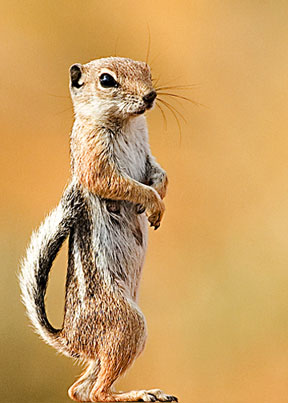
| White-tailed antelope squirrel (Ammospermophilus leucurus) | |
Scientific classification 
| |
| Kingdom: | Animalia |
| Phylum: | Chordata |
| Class: | Mammalia |
| Order: | Rodentia |
| Family: | Sciuridae |
| Tribe: | Marmotini |
| Genus: | Ammospermophilus Merriam, 1892 |
| Type species | |
| Spermophilus leucurus Merriam, 1892
| |
| Species | |
|
A. harrisii | |
Antelope squirrels or antelope ground squirrels of the genus Ammospermophilus are sciurids found in the desert and dry scrub areas of the southwestern United States and northern Mexico. They are a type of ground squirrel and are able to resist hyperthermia and can survive body temperatures over 40 °C (104 °F).
Common characteristics
[edit]All the antelope squirrels share a common white stripe along the lateral sides from the shoulder to the hip similar to chipmunks. However, unlike chipmunks, these characteristic white stripes do not extend onto the head of the animals. The tails of antelope squirrels are often arched forward over their back.[1] In the United States, these ground squirrels are found in the dry, desert like regions of the southwest. The different members of the genus Ammospermophilus have unique adaptations that allow them to overcome the extreme heat of the day and the low temperatures of the night. All antelope squirrels burrow into the ground for shelter, however not all are social creatures. Each antelope squirrel has a white ventral surface with little variation.
Species
[edit]The four unique species of the genus Ammospermophilus can be distinguished by some variations in size, weight, and appearance. There are currently five recognized species:[2]
| Image | Name | Description | Distribution |
|---|---|---|---|
 |
Harris's antelope squirrel (A. harrisii) |
A. harrisii is mostly gray with some brown on the upper fore and hind limbs. It usually carries the tail arched over the back. They range in length from 220 to 250 millimetres (8.7 to 9.8 in) with a tail length of 74–94 millimetres (2.9–3.7 in). They weigh 113–150 grams (4.0–5.3 oz).[3] |
Arizona and New Mexico in the US, and Sonora in Mexico. |
| Espíritu Santo antelope squirrel (A. insularis) |
Some authorities treat it as a subspecies of A. leucurus. |
Isla Espíritu Santo, Mexico. | |
 |
Texas antelope squirrel (A. interpres) |
A. interpres has a lateral tail hairs with three black bands, the underside of the tail is grayish white, and they go from gray in the winter to reddish-gray in the summer. They range in length from 203–229 millimetres (8.0–9.0 in) with a tail length of 50.8–76.2 millimetres (2.00–3.00 in). The females weigh 84–115 grams (3.0–4.1 oz) and the males weigh 94–121 grams (3.3–4.3 oz).[4] |
Texas and New Mexico in the US, and in Mexico. |
 |
White-tailed antelope squirrel (A. leucurus) |
A. leucurus possesses slightly longer limbs and small, round ears with a reddish color pattern on the outer surface of the limbs. They range in length from 194–239 millimetres (7.6–9.4 in) with a tail length of 54–87 millimetres (2.1–3.4 in). They weigh between 85–156 grams (3.0–5.5 oz).[5] |
southwestern United States and Mexico's Baja California Peninsula. |
_(10-29-09)_carrizo_plain_national_monument,_slo_co,_ca_-01_(4063083082).jpg) |
San Joaquin antelope squirrel or Nelson's antelope squirrel (A. nelsoni) |
A. nelsoni are yellowish-brown or buffy-tan on the dorsal head and neck and outer surface of the limbs. The tail is thicker than the other ground squirrels with fringes. The males are slightly larger than the females with a length of 234–267 millimetres (9.2–10.5 in) and 230–256 millimetres (9.1–10.1 in), respectively. The summer and winter pelages are distinctive with the winter pelage being much darker. These can be distinguished from the White-tailed squirrels by their larger size and more grey in their pelage. Their skulls also vary in the size of the zygomatic arch (larger in Nelson's) and the inflated auditory bullae and nasal bones of A. nelsoni. The upper incisors and first upper molars are also larger.[6] |
San Joaquin Valley, California. |
All are somewhat similar in appearance and behavior. They are around 14–17 cm (5.5–6.7 in) in head-and-body length with a 6–10 cm (2.4–3.9 in) tail, and weigh 110–150 g (3.9–5.3 oz). The tail is somewhat flattened. They have a single white stripe on both flanks and none on the face. They live in burrows, which they dig for themselves. They are diurnal, and do not hibernate (though they become less active during the winter), so they are fairly easily seen.
Reproduction
[edit]The typical life span of a wild antelope squirrel is 2–4 years; although, in captivity they have been known to survive 11 years.[3] Males and females are sexually mature by the end of their first year. The reproductive season last from February to March with typically one litter per year. Each litter contains between 5-14 young that will wean around 8 weeks and make their first appearance above ground. All antelope squirrels give birth to and nurse their young in burrows. However, they do vary in the way they dig the burrows. For example, the white-tailed squirrel digs shallow burrows under brush or will use the abandoned burrows of kangaroo rats.[7] These squirrels are not monogamous and have been known to mate with multiple partners each breeding season.[5]
Habitat
[edit]Antelope squirrels are commonly found in dry, shrubby areas of the southern United States into Mexico. These areas are sandy with rocky areas that provide soil that can be burrowed into for shelter and to escape the heat of the day.[5] The temperatures in these regions can exceed 37.8 °C (100.0 °F) during the day and require special adaptations by the ground squirrels to survive. During the night, temperatures in these desert and dry areas may dip below freezing which again requires adaptations to survive. There is very limited free-standing water supply.[8] These regions can experience long bouts of drought. A. harrisii does not require surface water within its range but will drink on occasion from basins and bird-baths.
Diet
[edit]Ground Squirrels are important dispersers of seeds in the dry, shrubby deserts they live in. They participate in a behavior known as caching where seeds, fruits and vegetation are stored in burrows or hidden spots for consumption at a later time.[9] The ground squirrels are omnivores and will feed on arthropods, insects, and carrion when these food sources are available. Their diets often rotate between green vegetation, fruits and seeds based on availability and season. All Antelope Squirrels carry their food in their cheek pouches for transport.
Behavior
[edit]A. leucurus have larger feet than other antelope squirrels, which allow them to quickly evade and escape predators. They remain cool during the hot desert days by retreating to their burrows and limiting the majority of activity to the early morning and late evening hours. Some white-tailed squirrels have been known to sound shrill alarm calls when predators are nearby to warn relatives of incoming danger.
A. nelsoni are able to function in temperatures up to 40 °C (104 °F) and do not hibernate, however, they will lower their core temperature to within a few degrees of the ambient temperature of a burrow. Likewise, they will lower their activity level when food is scarce to preserve energy.
A. interpres live in very hot, arid climates and so have adapted to laying flat (to maximize heat distribution) in a shaded spot against the cool ground. This allows for the Texas squirrel to be active during the hottest part of the day when most predators are inactive.
A. harrisii are the only antelope squirrels who dig their own burrows instead of re-purposing burrows of other animals. They cool down by salivation and holding their tails above their heads to provide shade. They also flatten themselves on the ground to cool. During times of cold, they utilize cached seeds but also continue to forage.[10]
References
[edit]- ^ Kays, Roland W.; Wilson, Don E. (2002). Mammals of North America. Princeton, NJ: Princeton University Press. p. 64. ISBN 0691070121.
- ^ "IUCN RedList: A. harrisii, A. nelsoni, A.interpres, A. leucurus" accessed 5 January 2015.
- ^ a b "Arizona Desert Museum: Ammospermophilus harrisii" accessed 5 January 2015.
- ^ "Mammals of Texas Online: Ammospermophilus interpres" accessed 5 January 2015.
- ^ a b c "Animal Diversity Web: Ammospermophilus leucurus" accessed 5 January 2015.
- ^ "Animal Diversity Web: Ammospermophilus nelsoni" accessed 5 January 2015.
- ^ "Idaho Museum of Natural History Online: Ammospermophilus leucurus" accessed 5 January 2015.
- ^ Zeiner, D.C., W.F. Laudenslayer, Jr., K.E. Mayer, and M. White, eds. 1988-1990. California Wildlife. Vol. I-III, California Department of Fish and Game, Sacramento, California.
- ^ "Digital Desert: Ammospermophilus leucurus" accessed 5 January 2015.
- ^ "Pawnation: Antelope Ground Squirrel Adaptations Archived December 27, 2014, at the Wayback Machine" accessed 5 January 2015.
Further reading
[edit]
- Thorington, R. W. Jr. and R. S. Hoffman. 2005. Family Sciuridae. pp. 754–818 in Mammal Species of the World a Taxonomic and Geographic Reference. D. E. Wilson and D. M. Reeder eds. Johns Hopkins University Press, Baltimore.


| National | |
|---|---|
| Other | |

Antelope squirrel
View on GrokipediaTaxonomy
Genus classification
The genus Ammospermophilus encompasses the antelope squirrels, a group of small ground squirrels adapted to arid environments in western North America. The name derives from the Greek words ammos (sand) and spermophilus (seed-lover), highlighting their preference for sandy habitats and seed-based diet.[9] Established as a distinct genus by Clinton Hart Merriam in 1892, it was originally classified under Spermophilus but later separated based on morphological, chromosomal, biochemical, and molecular sequence data that support its unique evolutionary lineage.[10] In taxonomic classification, Ammospermophilus belongs to the order Rodentia, suborder Sciuromorpha, family Sciuridae, subfamily Xerinae (which includes xerine squirrels specialized for dry, arid conditions), tribe Marmotini, and genus Ammospermophilus.[10] This placement reflects its position among other ground-dwelling sciurids, with the subfamily Xerinae encompassing taxa adapted to xeric ecosystems across North America and beyond. Phylogenetically, Ammospermophilus forms a basal clade within the ground squirrels, closely related to desert-adapted genera such as Otospermophilus, with the group diverging from other Sciuridae lineages during the early to middle Miocene around 17.5 million years ago.[11] Fossil evidence indicates that the genus achieved nearly its modern form by the late Miocene Clarendonian stage (approximately 12–9 million years ago), coinciding with the expansion of arid landscapes and grassland biomes that facilitated diversification among xerophilic rodents.[12] Subsequent intra-generic divergences occurred during the late Miocene to Pliocene (5–11 million years ago), driven by tectonic uplift, desert formation, and climatic shifts in western North America.[13] Key diagnostic traits of the genus include a distinctive bounding gait that mimics the leaping motion of antelopes—alternating bounds with stiff-legged propulsion—distinguishing it from the more scampering locomotion of related ground squirrels. Unlike chipmunks (Tamias spp.), which also inhabit arid regions but possess prominent facial stripes and external fur-lined cheek pouches, Ammospermophilus species exhibit lateral body stripes and internal cheek pouches adapted for seed transport, underscoring their specialized role in desert seed dispersal.[7] The genus comprises five extant species, including A. leucurus (white-tailed antelope squirrel) as a representative example.[10]Species list
The genus Ammospermophilus comprises five recognized species, each adapted to arid environments across western North America.[10]| Common Name | Binomial Name | Brief Distinguishing Features | Primary Geographic Range |
|---|---|---|---|
| Harris's antelope squirrel | Ammospermophilus harrisii | Medium-sized with grayish-brown fur, white underparts, white lateral stripes from shoulder to tail base. | Southwestern United States (Arizona, New Mexico) and northwestern Mexico (Sonora).[6] |
| Texas antelope squirrel | Ammospermophilus interpres | Small with one narrow white lateral line on each side, grayish-white underside of tail, and relatively long tail and hind limbs for the genus. | Western Texas, adjacent south-central New Mexico, and northern Mexico (Chihuahuan Desert regions). |
| White-tailed antelope squirrel | Ammospermophilus leucurus | Grayish-brown fur with white underparts and tail underside, white lateral stripes, and a white eye ring; includes subspecies like A. l. peninsulae in Baja California. | Southwestern United States (Oregon to New Mexico) and northwestern Mexico (Baja California Peninsula).[7] |
| Nelson's antelope squirrel | Ammospermophilus nelsoni | Buffy-clay coloration with white underparts, single white lateral line, smaller size, and shorter tail compared to co-occurring ground squirrels. | San Joaquin Valley, California (limited to arid grasslands and shrublands).[5] |
| Espíritu Santo antelope squirrel | Ammospermophilus insularis | Similar to A. leucurus but larger and slightly darker on the back, with white lateral stripes and tail underside. | Endemic to Isla Espíritu Santo, Baja California Sur, Mexico.[14] |
Physical description
Size and morphology
Antelope squirrels are small to medium-sized rodents with head and body lengths ranging from 140 to 200 mm, tail lengths of 50 to 100 mm, and body weights between 90 and 150 g across species.[6][7][16][5] Sexual dimorphism is minimal, though males tend to be slightly larger than females in some species.[17][6] These squirrels have a slender build that facilitates quick, bounding locomotion, large eyes suited to their diurnal lifestyle, short and rounded ears, and a bushy tail that is often white on the underside.[18][7] Their fur exhibits color variations from grayish-brown to tawny tones, aiding in camouflage against rocky and desert substrates; species differ slightly, with A. leucurus having a distinctive white tail underside.[16][12] The dental structure includes four prominent, continuously growing incisors specialized for gnawing hard seeds and nuts, with a typical formula of I 1/1, C 0/0, P 1-2/1, M 3/3 (totaling 20–22 teeth), where premolar variation occurs across populations.[12][16][15] Juveniles emerge with softer, finer fur shortly after birth, when they are initially hairless and helpless, while adults display seasonal pelage changes through biannual molts that shift fur color and density between summer buff tones and winter grays.[7][12][19]Adaptations to environment
Antelope squirrels, belonging to the genus Ammospermophilus, exhibit remarkable physiological and behavioral adaptations that enable them to survive in harsh arid environments characterized by extreme temperatures and limited water availability. These traits allow them to maintain homeostasis without relying on free-standing water sources or extensive shade, distinguishing them from less specialized rodents.[20] For thermoregulation, antelope squirrels tolerate elevated body temperatures up to 42°C, leveraging hyperthermia to extend periods of surface activity during hot days while minimizing evaporative water loss through panting.[20] This labile body temperature regulation, which can fluctuate between 30°C and 42°C in response to ambient conditions, is facilitated by nasal countercurrent heat exchange, where exhaled air is cooled upon leaving the body, conserving heat and moisture.[21] During extreme heat, individuals enter shallow torpor or estivation-like states, reducing metabolic rates to endure prolonged periods of inactivity, though full estivation lasting up to 8 months occurs in some closely related species under severe drought conditions.[22] Water conservation is achieved through highly efficient kidneys that produce urine concentrated up to 12.2 times the osmolarity of plasma, enabling the retention of vital fluids even during dehydration.[18] Up to 90% of their hydration needs are met metabolically from oxidizing seeds and other dry foods, supplemented by behavioral avoidance of midday heat to limit perspiration.[23] Burrowing provides essential microclimatic refuge, with systems extending up to 5 m in length and typically 0.3–0.6 m in depth, offering shade, humidity, and escape from predators.[24] These squirrels construct burrows under shrubs or rocks, using them for protection from extreme temperatures year-round.[24] Sensory adaptations enhance survival in sparse desert landscapes; enhanced olfaction allows detection of buried seeds and predators from afar, while ultraviolet (UV) vision aids in identifying ripe fruits and vegetation against the bright environment.[25][26]Distribution and habitat
Geographic range
Antelope squirrels of the genus Ammospermophilus are primarily distributed across the southwestern United States, encompassing states such as California, Arizona, New Mexico, and Texas, with their range extending southward into northern Mexico.[27][28] This distribution spans major arid regions, including the Sonoran Desert in the southwest, the Mojave Desert in the interior, and the Chihuahuan Desert in the southeast.[29] Within these areas, the squirrels occupy diverse arid and semi-arid landscapes, from coastal lowlands to inland valleys and foothills. Historically, the range of certain species, such as the San Joaquin antelope squirrel (A. nelsoni), extended more broadly across the San Joaquin Valley floor in California, from northwestern Merced and eastern San Benito counties southward to the northern border of Santa Barbara County.[8] However, agricultural conversion has led to significant contraction, with approximately 80% of this species' original range lost due to habitat transformation for crops and urban development.[30] Currently, populations persist in fragmented remnants, often at lower densities, while the genus as a whole maintains occupancy in suitable desert patches. Altitudinally, antelope squirrels occur from near sea level up to about 2,000 meters, varying by species; for example, A. nelsoni is typically found between 50 and 1,100 meters, and A. leucurus up to around 1,800 m.[5][31][25][32] Dispersal in antelope squirrels is generally limited, with individuals exhibiting non-migratory behavior and short-distance movements within home ranges averaging 2.6 to 7.2 hectares.[33] Occasional long-distance dispersals, such as up to 1.3 kilometers by immature males, facilitate gene flow across populations, particularly in phylogeographically connected desert regions.[33] These patterns contribute to moderate genetic exchange despite habitat fragmentation, as evidenced by low to moderate divergence among populations in studies of mitochondrial and nuclear markers.[28] Antelope squirrels show a strong preference for arid and semi-arid zones characterized by low annual precipitation, typically less than 300 millimeters, which aligns with the climatic conditions of their desert habitats.[34] In regions like the San Joaquin Valley, average annual rainfall is around 143 to 150 millimeters, primarily occurring as winter rain, supporting sparse vegetation suitable for their burrowing lifestyle.[35] These climatic preferences limit their distribution to areas with minimal moisture, where they have evolved physiological adaptations to conserve water and withstand extreme aridity.[36]Habitat types
Antelope squirrels, belonging to the genus Ammospermophilus, primarily occupy arid shrublands, grasslands, and rocky deserts across the southwestern United States and northern Mexico.[5] These habitats often feature sparse to moderate vegetation cover, including dominant plants such as creosote bush (Larrea tridentata), mesquite (Prosopis spp.), and various cacti like prickly pear (Opuntia spp.) and Joshua tree (Yucca brevifolia), which provide both foraging opportunities and protective cover.[7] They are also common in desert washes, riparian zones, and alkali scrub areas with sagebrush (Artemisia spp.), saltbush (Atriplex spp.), and ephedra (Ephedra spp.).[24] Such environments typically receive less than 23 cm of annual precipitation, supporting open, gently sloping terrains ideal for their ground-dwelling lifestyle.[5] Microhabitat preferences emphasize friable, sandy or loamy soils that facilitate burrowing, with a tolerance for gravelly or rocky substrates in open areas interspersed with scattered shrubs for escape and thermoregulation.[24] Burrows are often constructed in arroyo sides, under shrubs, or even along road berms, requiring soils with moderate salinity but avoiding highly alkaline or waterlogged conditions.[5] These features allow for shallow to deep tunnel systems (up to 50 cm deep) that provide refuge from predators and extreme temperatures, while the mosaic of open ground and vegetation clumps supports vigilant foraging.[6] Seasonal variations in habitat use reflect adaptations to climatic extremes, with antelope squirrels favoring deeper burrows in rocky outcrops during hot summers to evade midday heat, and shifting toward more vegetated valleys or sheltered burrows in winter for warmth and reduced exposure.[7] Population densities fluctuate accordingly, peaking at 0.24–0.36 individuals per hectare in spring through late summer and dropping to 0.08–0.24 per hectare in autumn and winter, as they huddle in burrows during cooler periods.[6] Year-round activity persists in milder regions, though it diminishes during inclement weather.[24] Antelope squirrels demonstrate tolerance for moderately disturbed human-altered habitats, such as roadsides and ditch banks, where they utilize berms and irrigated edges for burrowing, but they generally avoid intensive agricultural zones due to habitat conversion and associated threats like pesticides.[6] In areas with off-road vehicle use or light grazing, they persist in remnant shrublands, though heavy disturbance from oil extraction or urbanization leads to population declines.[5]Behavior
Activity patterns
Antelope squirrels, belonging to the genus Ammospermophilus, exhibit strictly diurnal activity patterns, emerging from their burrows during daylight hours to forage and engage in other behaviors. In their desert habitats, they are active year-round across much of their range, with peak surface activity occurring when ambient temperatures range between 15°C and 30°C.[24] Their daily cycles are influenced by circadian rhythms entrained primarily by photoperiod, though temperature plays a significant role in modulating emergence and retreat times.[37] Antelope ground squirrels rely on their extremely labile body temperatures that fluctuate with environmental conditions to help maintain activity and energy balance at all seasons of the year.[38] During summer months, particularly June through July, activity follows a distinct bimodal pattern to mitigate heat stress, with pronounced peaks in mid-morning (typically 2-4 hours after sunrise) and late afternoon (2-3 hours before sunset), while avoiding the midday heat when temperatures exceed 35°C.[38] In milder seasons like spring and fall, activity is more continuous throughout the daylight period, often extending from shortly after sunrise until near sunset, allowing for extended foraging and basking.[18] In cooler winter months, individuals in southern populations remain active but spend considerable time basking in the sun to maintain body temperature, with overall daily activity durations shortened by shorter day lengths.[24] When threatened, antelope squirrels employ a rapid bounding or "stotting" gait for evasion, characterized by stiff-legged leaps that allow quick maneuvers across open terrain. This locomotion, aided by elongated hind feet, enables effective escape from predators while returning to burrow entrances.[7]Social interactions
Antelope squirrels are primarily solitary, inhabiting individual burrows for most of the year, though they form loose aggregations in areas with abundant food resources and may share burrows during winter to conserve heat.[39] They establish dominance hierarchies upon encountering conspecifics rather than maintaining strictly exclusive territories, allowing for some overlap in home ranges that average around 6 hectares.[18] This loose social structure facilitates tolerance among individuals, particularly females with their young, but limits deeper group cohesion compared to more colonial ground squirrels.[40] Communication among antelope squirrels relies on a combination of vocal, visual, and chemical signals. Vocalizations include trill-like alarm calls that vary by species and habitat, with longer, pure-toned trills in open desert species like Ammospermophilus leucurus and A. harrisii serving to warn of predators while minimizing caller location.[41] Tail-flicking and flaring provide visual cues, often signaling aggression or agitation during encounters. Scent marking via cheek glands further aids in conveying individual identity and status, depositing pheromones to delineate personal space without rigid territorial boundaries.[42] These signals are essential for coordinating brief interactions in their otherwise independent lifestyles. During the breeding season, social dynamics intensify as males actively defend territories to access receptive females, exhibiting heightened aggression toward rivals.[40] Females display increased aggression postpartum to protect their litters, reinforcing solitary rearing patterns. Interspecies interactions often involve competition for burrows, particularly with kangaroo rats (Dipodomys spp.), whose engineered mounds antelope squirrels frequently occupy or contest, influencing local rodent community structure.[5] Alarm calls may also play a role in deterring avian predators during foraging.[41]Diet and foraging
Food sources
Antelope squirrels (genus Ammospermophilus) exhibit an omnivorous diet, with plant matter comprising 70-90% of their intake, primarily seeds from grasses, forbs, and cacti, supplemented by green vegetation during wetter seasons.[24][43] Animal matter accounts for the remaining 10-30%, including insects, spiders, and occasional small vertebrates such as lizards.[24][6] Dietary composition shifts seasonally to match resource availability; in summer, favored foods include mesquite beans and fruits from cacti like prickly pear and cholla, while winter reliance falls on cached seeds stored in burrows.[6][24] Opportunistic scavenging of carrion supplements the diet year-round when encountered.[39] In spring, green foliage and fungi can dominate, comprising up to 60% of consumption in some species, providing hydration in arid environments.[43][24] Nutritional adaptations enable efficient processing of this diet, including gut fermentation to break down high-fiber plant material with approximately 50% dry matter digestibility, while seeds deliver essential fats and metabolic water to minimize drinking needs.[18][24] Dietary variations occur among species; for instance, Harris's antelope squirrels (A. harrisii) incorporate higher proportions of insects alongside cactus fruits and mesquite beans.[6] In contrast, the San Joaquin antelope squirrel (A. nelsoni) depends more on alkali sink vegetation, such as seeds and foliage from saltbush (Atriplex spp.) and Mormon tea (Ephedra californica), with arthropods like beetles and grasshoppers forming 7-41% of intake depending on season.[43]Foraging techniques
Antelope squirrels employ surface foraging techniques, primarily using their forepaws to dig shallow pits or divots in the soil to uncover buried or hidden seeds, often leaving behind small holes approximately 5 cm in diameter under vegetation cover.[44] They rely heavily on olfaction to detect these seeds, actively sniffing the ground to locate potential food items before excavating.[25] This method allows them to efficiently target subsurface resources in arid environments, where seeds may be scattered or lightly buried by natural processes.[44] Scatter-hoarding is a key strategy, in which uneaten food items such as seeds are buried in multiple shallow caches dispersed across their home range rather than stored in a single larder, reducing the risk of total loss to predators or theft. These squirrels transport seeds in their cheek pouches and select caching sites based on soil type and cover, often revisiting them later using olfactory cues. To access elevated food sources, antelope squirrels climb low shrubs, rocks, or even spiny cacti like barrel cacti, using these vantage points to scan for insects, fruits, or additional seeds while minimizing exposure to ground predators.[44] This behavior enhances their ability to exploit diverse microhabitats within their foraging area.[6] Opportunistic feeding supplements their diet through scavenging carrion or raiding small vertebrate nests when encountered, though they lack tool use and instead handle seeds precisely with their sharp incisors for husking and consumption.[25] Daily foraging excursions can extend up to 1-2 km from the burrow, allowing coverage of large areas—averaging about 1 km per day in some populations—while maintaining energy efficiency in resource-scarce deserts.[18]Reproduction
Breeding biology
Antelope squirrels (genus Ammospermophilus) exhibit seasonal breeding primarily in spring, from February to May or June in most species, triggered by increasing day length and endogenous hormonal rhythms that synchronize reproductive cycles with favorable environmental conditions.[24] In southern populations, such as those in Baja California, breeding seasons are longer, spanning approximately half the year (e.g., April to September) in milder climates due to less pronounced seasonal constraints, while northern populations strictly limit activity to late winter through early spring. Induced ovulation occurs in females, allowing flexibility in response to male presence during estrus.[45] Rainfall indirectly influences timing by promoting vegetation growth, which supports post-breeding energy demands, though photoperiod remains the dominant cue.[18] The mating system is polygynandrous (promiscuous), with both males and females mating multiply, leading to intense male competition through chases, displays, and mate-guarding of receptive females.[25] Males emerge earlier in the season to establish dominance hierarchies, intercepting females as they become receptive, which facilitates sperm competition via repeated matings by multiple partners.[46] Females typically produce one to two litters annually, with litter sizes ranging from 5 to 14 young and an average of 6 to 8, reflecting the species' adaptation to variable desert resources.[47] Social mating interactions, such as male-female chases, align with broader behavioral patterns observed in social contexts.[6] Gestation lasts 29 to 35 days across species, enabling rapid reproduction synchronized with spring resource peaks.[48] Females reach sexual maturity at 8 to 10 months, often breeding in their first year, while males may mature slightly earlier to capitalize on the short receptive window.[49] Some females experience post-partum estrus, permitting a second litter if conditions allow, though this is less common in arid environments.[5]Life cycle stages
The neonatal stage of antelope squirrels begins with altricial young born hairless, with closed eyes and ears, weighing approximately 3–4 grams.[50] These newborns, characterized by purple skin, remain in the burrow nest and are nursed by the female for 4–6 weeks, relying entirely on maternal milk during this period.[50] Skin pigmentation emerges around 9 days postnatal, followed by light pelage at 19 days and body stripes at 24 days.[50] Juvenile development accelerates after eyes open at approximately 30 days, allowing the young to emerge from the burrow and begin exploring.[50] Solid food consumption starts around 35 days, with weaning completed by 60 days when juveniles weigh 66–95 grams.[50] Independence is achieved at 2–3 months, though full adult size is reached by 6 months, coinciding with skeletal maturity around 1 year.[50] In adulthood, antelope squirrels exhibit a lifespan of 2–5 years in the wild, influenced by environmental factors, though individuals can live up to 8–11 years in captivity.[49] Senescence involves gradual declines in activity and reproductive success, but high juvenile mortality—ranging from 50–70% due to predation and starvation—significantly limits population recruitment.[5] Growth rates are rapid initially, with weight gain of 5–10 grams per week in the first few months, supporting the transition from neonatal dependence to foraging autonomy.[50] By 4 months, body mass approaches the adult average of about 124 grams.[50]Conservation
Status and threats
The conservation status of antelope squirrels (genus Ammospermophilus) varies by species, with most classified as Least Concern by the IUCN due to their wide distributions in arid habitats across the southwestern United States and Mexico. The island antelope squirrel (A. insularis), often treated as a subspecies of the white-tailed antelope squirrel (A. leucurus), is also Least Concern, though its insular populations face risks from introduced predators. For example, the white-tailed antelope squirrel (A. leucurus) and Texas antelope squirrel (A. interpres) maintain stable populations over expansive ranges, such as the Sonoran and Chihuahuan Deserts, where they benefit from relatively intact shrubland and grassland ecosystems.[51][52] The Harris's antelope squirrel (A. harrisii) is also globally Least Concern but designated as a Species of Greatest Conservation Need (Tier 2) in Arizona, reflecting localized vulnerabilities in fragmented desert habitats.[53][54] In contrast, the San Joaquin antelope squirrel (A. nelsoni), endemic to California's San Joaquin Valley, is listed as Endangered by the IUCN and Threatened by the state of California, primarily due to severe habitat loss. Over 80% of its historical range—originally spanning about 3.5 million acres—has been converted to agriculture and urban development, confining remaining populations to fragmented patches of alkali sink scrub and valley saltbush.[55][36] Population estimates for A. nelsoni suggest declines, with crude surveys indicating densities of 3–10 individuals per hectare across approximately 41,300 hectares of optimal remaining habitat, though ongoing fragmentation continues to reduce numbers.[56] In broader terms, endemic species like A. nelsoni show persistent downward trends, while those in larger desert systems, such as A. leucurus in the Sonoran Desert, remain stable.[5] Primary threats to antelope squirrels include habitat fragmentation from agricultural expansion and urbanization, which disrupts foraging areas and burrow sites essential for thermoregulation and predator avoidance. Climate change exacerbates these pressures by intensifying droughts and altering vegetation cover, particularly in California valleys where reduced precipitation limits shrub regrowth critical for cover. Predation by feral cats poses an additional risk, especially in peri-urban areas and on Gulf of California islands where A. leucurus populations are isolated and vulnerable to introduced predators. Disease outbreaks, such as plague (Yersinia pestis), have historically caused epizootics in species like A. leucurus, leading to localized die-offs through flea-vectored transmission among rodent hosts.[36][49][57][58] Recent assessments, including 2023 studies on A. nelsoni population dynamics in grazed plots, highlight ongoing declines in endemic taxa amid these threats, with projections indicating further range contractions due to compounded habitat and climatic stressors by mid-century.[59][34]Protection efforts
The San Joaquin antelope squirrel (Ammospermophilus nelsoni) is listed as a threatened species under the California Endangered Species Act (CESA) since 1980, providing legal protections against take and requiring mitigation for habitat impacts in development projects.[35] The U.S. Fish and Wildlife Service (USFWS) designates it as a federal species of concern and includes it in the 1998 Recovery Plan for Upland Species of the San Joaquin Valley and Southern End of the San Francisco Bay, which guides monitoring and recovery actions.[8] In Mexico, insular populations of antelope squirrels, such as subspecies of the white-tailed antelope squirrel (A. leucurus), occur in protected areas like the Archipiélago de Espíritu Santo Biosphere Reserve in Baja California Sur, where habitat conservation efforts preserve xeric scrub ecosystems.[60] Conservation programs in the San Joaquin Valley emphasize habitat restoration and translocation to counter fragmentation. Between 2019 and 2021, projects translocated San Joaquin antelope squirrels from core populations to extirpated sites within the Carrizo Plain National Monument, using soft-release methods with artificial burrows and supplemental feeding.[61] These efforts, spanning 2020–2021 releases of 67 individuals to two sites, incorporated burrow facilitation by co-introducing or leveraging existing giant kangaroo rat (Dipodomys ingens) colonies, which improved survival by providing ready-made burrows and reducing establishment barriers.[62] Research efforts include ongoing distribution surveys and habitat modeling to inform protections. From 2017 to 2019, camera-trap surveys across 326 sites detected the species at 160 locations, leading to GIS-based habitat suitability models that identified 5,931 km² of high- to moderate-quality arid shrub scrub remaining, often associated with kangaroo rat burrows.[63] Recent genetic studies, such as 2014 phylogeographic analyses of Ammospermophilus across North American deserts, examine subspecies diversification and dispersal patterns to guide targeted conservation, while climate modeling predicts range shifts due to aridification.[28] Public education initiatives, including exhibits at desert museums like those in the Sonoran Desert, raise awareness of antelope squirrel ecology and threats. Success stories highlight population persistence through these measures. In translocation sites with kangaroo rat facilitation, reintroduced San Joaquin antelope squirrels maintained a viable population through April 2023, with individuals observed up to 1 km from release points in 2024, demonstrating improved outcomes over non-facilitated efforts where populations failed.[62] In Arizona, Harris's antelope squirrel (A. harrisii), a Species of Greatest Conservation Need, benefits from habitat management in protected reserves, contributing to stable or recovering populations in Sonoran Desert areas since 2020.[54]References
- https://en.wikisource.org/wiki/Natural_History_of_the_Ground_Squirrels_of_California/Desert_Antelope_Ground_Squirrel