


Community hub
Recent from talks
Contribute something
Nothing was collected or created yet.
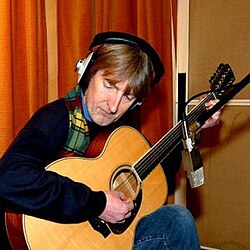
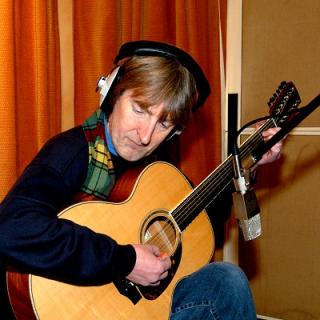
Anthony Phillips
View on Wikipedia
Key Information


Anthony Edwin Phillips (born 23 December 1951) is an English musician and composer who gained prominence as the original lead guitarist of the rock band Genesis, from 1967 to 1970.[1] He left in July 1970 and learned to play more instruments, before he began a solo career. His departure from Genesis on the eve of the group's breakthrough to mainstream popularity has led him to be dubbed "the Pete Best of progressive rock" (though unlike Best, Phillips left voluntarily).[2]
Phillips released his first solo album, The Geese & the Ghost, in 1977. He continues to release solo material, including further solo albums, television and film music, collaborations with several artists, and compilation albums of his recordings.
Early life
[edit]Phillips was born on 23 December 1951 in Chiswick, then a part of Middlesex, and grew up in the nearby Putney and Roehampton areas.[3] He attended St Edmund's preparatory school in Hindhead, Surrey, during which he formed a group and took part in a performance of "My Old Man's a Dustman" in the school hut as the singer, but forgot the words and was kicked out. This led to his decision to learn the guitar.[3][4] The Shadows were a major early influence on Phillips, who learned enough to perform a rendition of "Foot Tapper" in the school lounge.[5][6] At thirteen Phillips acquired a Fender Stratocaster and wrote his first song, "Patricia", an instrumental about the first girl he had a crush on.[7] It gradually evolved into the Genesis song "In Hiding", which appears on From Genesis to Revelation.[6] He was not entirely a self-taught guitar player; he received some tuition in rudimentary chords from classical guitarist David Channon, who became a big source of inspiration for Phillips, and used sheet music to songs by the Beatles that his mother would send him. Phillips then picked up more chord knowledge, and learned to copy music "reasonably well".[8] As a teenager, Phillips briefly lived in the United States.[9]
In April 1965, Phillips attended Charterhouse, an independent school in Godalming, Surrey.[10] In the following month, he formed a band with fellow pupils Rivers Jobe, Richard Macphail, Mike Rutherford, and Rob Tyrell, naming themselves Anon. They based their sets on songs by the Beatles and the Rolling Stones, and recorded one demo, Phillips's song "Pennsylvania Flickhouse".[10] The group disbanded in December 1966.[10] Phillips was also a member of another band during 1966, Spoken Word, which included David Thomas (vocals), Ronnie Gunn (piano), Jeremy Ensor (bass, later of the Principal Edwards Magic Theatre), David Chadwick (guitar), and Peter Gabriel (drums). They recorded an acetate, a cover of "Evening".[11]
Career
[edit]1967–1970: Genesis
[edit]In January 1967, after Anon had split up, Phillips and Rutherford became a songwriting unit and started recording several demos. They invited Charterhouse pupil Tony Banks, a member of Garden Wall, another disbanded school group, to play keyboards. Banks agreed, and suggested involving his Garden Wall bandmates, singer Peter Gabriel (the same one who was the drummer for Spoken Word) and drummer Chris Stewart.[10] After the five made a demo tape, it was given to Jonathan King, who signed them to his publishing company and had them record some singles. He named the group Genesis, and suggested they record a studio album, which became From Genesis to Revelation. Phillips was particularly angry when King added string arrangements to their songs without their knowledge, since the limitations of the recording technology meant that everything else on the album had to be reduced to mono as a consequence.[12] Phillips said he had little role in Genesis's songwriting during this period, and that most of the songs on From Genesis to Revelation were written by Gabriel and Banks.[13]
In September 1969, the 17-year-old Phillips chose not to pursue a university degree and instead reunite with Gabriel, Banks and Rutherford after they had decided to become a full-time band.[10][9] However, early in 1970 the constant touring had become wearing on Phillips partly due to the lack of scope for solos in the band's set and the shortage of time to develop new material.[14] To further complicate matters he had developed stage fright which got progressively worse as time went on, and battled with it for three months thinking it was a passing phase. After falling ill with bronchial pneumonia, Phillips was advised by his doctor to quit the band.[15] In June 1970, Phillips had recovered enough to reunite with his bandmates and record their second album, Trespass. Despite his various problems at the time, Phillips enjoyed the recording sessions.[16] By this time Genesis songs were more often written by the group as a whole, and Phillips was pleased when a song he had originally written by himself, "Visions of Angels", was expanded with a group-composed middle section that he felt made the song much more powerful.[17] After recording finished in July the band resumed touring, though early into the tour Phillips announced his decision to leave. His final gig took place at Haywards Heath on 18 July.[9] Tour manager Richard Macphail later said that the group seriously considered disbanding altogether in the wake of Phillips's departure.[18]
Nursery Cryme, the next Genesis album, opens with "The Musical Box" which is based on a piece written by Phillips and Rutherford originally titled "F#" (pronounced "F Sharp").[19] Steve Hackett, who became Genesis's guitarist half a year after Phillips left, commented that at the time of their fifth album, Selling England by the Pound, the 12-string guitar style developed during Phillips's era was still important to Genesis's work and he felt Phillips deserved more credit for "architecting the sound of Genesis".[20]
1970–1977: Studies and teaching
[edit]After leaving Genesis, Phillips lacked a solid direction. He secured a place at the University of Kent to study history, but later said he had a "quasi-nervous breakdown" around this time and "the idea of going to university seemed completely terrifying."[21] He had recently listened to the Karelia Suite by Jean Sibelius and recognised his musical ability was "terribly limited", which encouraged him to become a more proficient musician.[22][23] He studied harmony, counterpoint, and orchestration at Guildhall School of Music and Drama in London on a part-time basis and from 1972, began teaching classical guitar.[21] He became a qualified music teacher in 1974 and taught at Reed's School in Cobham.[21] In the following year, he taught troubled adolescents in rehabilitation at Peper Harow House in Godalming which lasted into the 1980s.[9] By the late 1970s, Phillips had become proficient at the piano.
1977–present: Solo career
[edit]Albums
[edit]Phillips' debut solo album The Geese & the Ghost was released in 1977, and written and recorded intermittently between 1969 and 1976. It is an acoustic folk progressive rock album that was originally a collaboration with Mike Rutherford, but the latter was too involved with Genesis and had limited availability. Peter Cross produced the album's cover artwork, and would collaborate with Phillips on his future record sleeves until the 2000s. Although the album failed to make a commercial impact, it has gained retrospective acclaim.[citation needed]
Phillips considered furthering his music education, but The Geese & the Ghost had earned enough for him to continue making albums.[24] He signed a three-album deal with Arista Records, but and the label insisted on more direct and commercially oriented songs. The first album was Wise After the Event, and featured Rupert Hine, Michael Giles, Mel Collins, and John G. Perry, with Phillips on lead vocals.[2] Released in 1978, it also failed commercially. In the same year, a compilation of off-cuts and incomplete pieces was released as Private Parts & Pieces on Passport Records the US. According to Phillips, the series "arose partly out of poverty. I was just getting by, library music was just getting going. I had to issue a collection of twelve-string or solo-piano stuff to boost my income."[2] Phillips continued with the series and put out twelve Private Parts and Pieces albums that range in musical style; the most recent edition, The Golden Hour was released in 2024.[25]
Sides was his final album released on Arista, and features one side of pop-oriented material and another of more adventurous and progressive rock-inspired tracks.[21] His next album was 1984 in 1981, which marked a major stylistic shift to electronic synthesizers and drum machine. In 1982, Phillips moved out of his parents' home in Send, Surrey to Clapham, south London, where he set up a recording studio. He struggled to pay the mortgage at first, and had several lodgers to help compensate.[26] Phillips continued with commercial-oriented pop with his next album Invisible Men, released in 1983. Like with Sides and 1984, it failed commercially.
In 1987, Phillips went to the US to promote Private Parts & Pieces VII: Slow Waves, Soft Stars as it has attracted some attention in the ambient and New-age circles. During his visit he was a guest presenter for VH1, and a proposed album for the New-age label Windham Hill Records was shelved as he "got the brief so completely wrong".[21] His fortunes increased soon after, when he signed a publishing deal with Virgin Records as a television and film writer, which also granted him an advance, two studio album releases, and a reissue of his back catalogue. This allowed him to purchase new equipment and marked a return to making a full-scale album, the instrumental Slow Dance.[21]
In 1988 he recorded an album with Harry Williamson called Tarka. The album's cover featured a picture of a woman and did not credit Phillips or Williamson, which led to it often being filed under "female vocalist" in record shops.[2] Phillips returned to the acoustic guitar with Field Day in 2005.
In 2014, Esoteric Recordings acquired Phillips' back catalogue and began a reissue campaign of most of his albums with bonus content.[27]
In 2024, Phillips revealed he had a potential new album of solo piano pieces, but ongoing wrist problems has prevented him completing it. He had expressed a wish to produce another full-scale album like Slow Dance, but said he lacked energy to practice, write, and record, and was no longer interested to become familiar with contemporary recording equipment.[26]
Library music
[edit]Since leaving Genesis, Phillips' main source of income has been from his library music for television and film.[21] His first commissions were for Riverside Studios in 1976, and included a piece for a shampoo advert.[21][28] In 1981, he signed with the newly-formed production music label Atmosphere (now a part of Universal Production Music) and has appeared on many of its releases. In 1994, Atmosphere was acquired by BMG and the uptake in commission work secured him financially: "I made almost nothing for the first 25 years of my life, then was very lucky."[21] Phillips produces music for other companies, such as Extreme Music, 9 Lives, APM, Addictive Tracks, Audio Wallpaper, West One, and Cavendish, sometimes in collaboration with Chris White, Samuel Bohn, or James Collins.[29]
Other projects
[edit]Phillips began writing material with Andrew Latimer of Camel in 1981, and was a featured performer on that band's album, The Single Factor (released in 1982).[30] He co-wrote "Tears on the Ballroom Floor" for I Hear Talk by Bucks Fizz.[31]
In 2008, Italian journalist Mario Giammetti published a biography on Phillips entitled The Exile.
Discography
[edit]- From Genesis to Revelation (1969)
- Trespass (1970)
- Genesis Archive 1967–75 (1998; box set compilation)
- Platinum Collection (2004; compilation)
- Genesis 1970–1975 (2008; box set)
- R-Kive (2014; box set compilation)
- BBC Broadcasts (2023; box set of live recordings)
Solo
[edit]- The Geese & the Ghost (1977)
- Wise After the Event (1978)
- Private Parts & Pieces (1978)
- Sides (1979)
- Private Parts & Pieces II: Back to the Pavilion (1980)
- 1984 (1981)
- Private Parts & Pieces III: Antiques (1982)
- Invisible Men (1983)
- Private Parts & Pieces IV: A Catch at the Tables (1984)
- Harvest of the Heart (1985; compilation)
- Private Parts & Pieces V: Twelve (1985)
- Private Parts & Pieces VI: Ivory Moon (1986)
- Private Parts & Pieces VII: Slow Waves, Soft Stars (1987)
- Tarka (1988, with Harry Williamson)
- Missing Links Volume One: Finger Painting (1989)
- Slow Dance (1990)
- Private Parts & Pieces VIII: New England (1992)
- Sail the World (1994)
- Missing Links Volume Two: The Sky Road (1994)
- Gypsy Suite (1995, with Harry Williamson)
- The Living Room Concert (1995)
- The Meadows of Englewood (1996, with Guillermo Cazenave)
- Private Parts & Pieces IX: Dragonfly Dreams (1996)
- Missing Links Volume Three: Time and Tide (1997)
- Live Radio Sessions (1998, with Guillermo Cazenave; live radio sessions recorded 1997)
- Archive Collection Volume I (1998)
- Private Parts & Pieces X: Soirée (1999)
- Radio Clyde (2003; live radio session recorded 1978)
- Archive Collection Volume II (2004)
- Field Day (2005)
- Wildlife (2007, with Joji Hirota)
- Missing Links Volume Four: Pathways & Promenades (2009)
- Ahead of the Field: Music for TV and Film (2010)
- Seventh Heaven (2012, with Andrew Skeet)
- Private Parts & Pieces XI: City of Dreams (2012)
- Harvest of the Heart: An Anthology (2014; box set compilation)
- Strings of Light (2019)
- Private Parts & Pieces XII: The Golden Hour (2024)
Appears on
[edit]- Intergalactic Touring Band – Intergalactic Touring Band (1977)
- Mike Rutherford – Smallcreep's Day (1980)
- Mother Gong – Battle of the Birds (1981)
- Camel – The Single Factor (1982)
- Iva Twydell – Duel (1982)
- Asha (Denis Quinn) – Open Secret (1987)
- Asha (Denis Quinn) – Mystic Heart (1989)
- Asha (Denis Quinn) – Amadora (1991)
- David Thomas & Ronnie Gunn – The Giants Dance (1996)
- Various Artists – Sport + Leisure (1996)
- ProgAID – All Around the World (2004)
- Robert Foster – Guitar Sketches (2006)
- Steve Hackett – Out of the Tunnel's Mouth (2009)
- Various Artists – Factual Underscores 2 (2012)
- Various Artists – The Summer Soundtrack (2013)
- Al Lethbridge – Inspiring Worlds (2014)
- Various Artists – Children's Party Themes-Halloween (2014)
- John Hackett – Another Life (2015)
- Various Artists – My Love Will Get You Home (2015)
- Ellesmere – "Les Chateaux de la Loire" (2015)
- The Gift – Why the Sea is Salt (2016)
- Anna Madsen – Efflorescence (2016)
- Various Artists – Science and Technology (2017)
- Various Artists – Harmony for Elephants (2018)
- Anon – "Pennsylvania Flickhouse" (2019)
- Algebra – Deconstructing Classics (2019)
References
[edit]- ^ Eder, Bruce. "Biography: Anthony Phillips". Allmusic. Retrieved 16 April 2010.
- ^ a b c d Stump, Paul (1997). The Music's All that Matters: A History of Progressive Rock. Quartet Books Limited. pp. 308–316. ISBN 0-7043-8036-6.
- ^ a b Genesis 2007, pp. 16–17.
- ^ Cherry Red Interview 2014, 03:36–04:16.
- ^ Cherry Red Interview 2014, 04:23–04:50.
- ^ a b Negrin, Dave (22 May 2008). "Taking tn the Wildlife: An Interview with Anthony Phillips". World of Genesis. Archived from the original on 20 October 2018. Retrieved 20 October 2018.
- ^ Giammetti 2020, p. 29.
- ^ Cherry Red Interview 2014, 05:22–06:54.
- ^ a b c d "The Geese and The Ghost Press Kit". Passport Records. 1977. pp. 2–3. Retrieved 22 March 2018.
- ^ a b c d e Frame 1983, p. 23.
- ^ Giammetti 2020, p. 16.
- ^ Giammetti 2020, p. 30.
- ^ Giammetti 2020, p. 25.
- ^ Giammetti 2020, p. 41.
- ^ Cherry Red Interview 2014, 34:06–37:37.
- ^ Giammetti 2020, p. 52.
- ^ Giammetti 2020, p. 53, 63-64.
- ^ Giammetti 2020, p. 72.
- ^ Giammetti 2020, p. 97.
- ^ Giammetti 2020, p. 198.
- ^ a b c d e f g h i Easlea, Daryl (1 July 2024). "Why so many musicians envy Anthony Phillips' career after Genesis". Loudersound. Retrieved 17 May 2025.
- ^ Hedges, Dan (26 March 1977). "It's that candour moment..." Sounds. Retrieved 22 March 2018.
- ^ Genesis 2007, pp. 84–85.
- ^ Cherry Red Interview 2014, 10:26–10:45.
- ^ "ANTHONY PHILLIPS discography and reviews". Progarchives.com. Retrieved 9 May 2020.
- ^ a b "Anthony Phillips - That's My Vinyl Answer - Part 1 (of 2)". August 2024. Retrieved 18 May 2025 – via YouTube.
- ^ Zimmerman, Lee (25 February 2020). "Anthony Phillips: From Genesis to "Strings of Light"". Goldmine. Retrieved 25 May 2025.
- ^ Hewitt, Alan (6 December 2001). ""Tell us about your latest projects, Anthony..." – Anthony and Jonathan talk about Radio Clyde, Archive Collection 2 and the forthcoming Private Parts & Pieces album". The Waiting Room Online. Retrieved 18 May 2025.
- ^ Gerlach, Steffen (16 January 2022). "Anthony Phillips – Recording Compendium: Special – Library Music". Genesis News. Retrieved 18 May 2025.
- ^ "Interview: Anthony Phillips (solo, Genesis)". Hit-channel.com. 26 September 2014. Retrieved 9 May 2020.
- ^ Parkyn, Geoff (Winter 1984–1985). "News contd. Page I". Genesis Information. No. 34. pp. 14, 15. Retrieved 13 October 2018.
Sources
[edit]- Banks, Tony; Collins, Phil; Gabriel, Peter; Hackett, Steve; Rutherford, Mike (2007). Dodd, Philipp (ed.). Genesis. Chapter and Verse. Weidenfeld & Nicolson. ISBN 978-0-297-84434-1.
- Bowler, Dave; Dray, Bryan (1992). Genesis: A Biography. Sidgwick & Jackson Ltd. ISBN 978-0-283-06132-5.
- Frame, Pete (1983). The Complete Rock Family Trees. Omnibus Press. ISBN 978-0-7119-0465-1.
- Giammetti, Mario (2020). Genesis 1967 to 1975 - The Peter Gabriel Years. Kingmaker. ISBN 978-1-913218-62-1.
- Powell, Mark (2014). Interviews – Anthony Phillips 2. Cherry Red TV. Retrieved 23 April 2018.
External links
[edit]| Studio albums | |
|---|---|
| Live albums | |
| Compilations | |
| Box sets | |
| EPs | |
| Singles |
|
| Other songs | |
| Video albums | |
| Tours | |
| Related musicians | |
| Related articles | |

| International | |
|---|---|
| National | |
| Artists | |
| People | |
| Other | |

Anthony Phillips
View on GrokipediaEarly years
Childhood and family background
Anthony Phillips was born on 23 December 1951 in Chiswick, West London, England, into a wealthy family.[2] His father worked as a banker and served as president of an insurance company until his death in 1997, while his mother, Pauline, provided a supportive home environment.[5] Phillips had an older half-sister named Anne and a younger brother, Rob, born in 1958, who later took up the oboe as a musical pursuit.[5] The family's affluence allowed for a stable upbringing in the Putney and Roehampton areas, where Phillips spent his early years.[5] From a young age, Phillips was exposed to a range of musical styles through family and cultural influences, including the classical works of Ralph Vaughan Williams and the emerging pop sounds of The Beatles and The Shadows.[5] These early encounters with both classical and contemporary music laid the groundwork for his later compositional interests, though formal training would come during his school years.[6]Education and musical influences
Phillips attended St Edmund's Preparatory School in Hindhead, Surrey, during his early years, where he first explored music through group performances, including a rendition of "My Old Man's a Dustman."[7] In April 1965, at age 13, he enrolled at Charterhouse School, an independent boarding school in Godalming, Surrey, marking the start of his more structured musical development.[4] There, Phillips received his first guitar as a gift from his parents and began self-teaching the instrument, while also pursuing formal lessons in classical guitar and piano to refine his technique.[8] These school years laid the foundation for his acoustic and compositional skills, with Phillips experimenting with early songwriting as young as age 13, including the instrumental piece "Patricia," later featured on Genesis's archival releases. A pivotal aspect of his education at Charterhouse involved honing classical guitar proficiency, which emphasized precise fingerpicking and right-hand control, influencing his later layered arrangements.[9] Phillips acquired both acoustic and electric guitars during this period, eventually incorporating a 12-string model that became central to his sound, enabling intricate arpeggios and harmonies.[10] Phillips' formative musical influences blended classical, folk, and emerging rock elements. Classical composers Claude Debussy and Maurice Ravel profoundly shaped his impressionistic and atmospheric style, drawing him toward elegant orchestration and subtle dynamics.[9] Folk guitarists such as John Renbourn inspired his acoustic explorations, evident in his intricate fingerstyle techniques.[11] Additionally, the progressive rock of The Moody Blues provided early exposure to symphonic structures and conceptual songwriting, guiding his transition toward rock music.[12] These inspirations, combined with pop acts like The Beatles and The Beach Boys, fueled his initial compositions and instrument acquisition, setting the stage for his rock involvement.[13]Genesis period
Band formation and early demos
Anthony Phillips first encountered Peter Gabriel, Tony Banks, and Mike Rutherford at Charterhouse School in Godalming, Surrey, during 1966–1967, where they were fellow students drawn together by a shared interest in music.[1] Phillips, who had honed his guitar playing through school activities, collaborated closely with Rutherford on early compositions, often using acoustic and 12-string guitars to create intricate arrangements.[14] In early 1967, these connections led to the formal formation of the band Genesis, with Phillips serving as lead guitarist and a primary co-songwriter alongside his bandmates.[15] The group emerged from the merger of two school bands, Anon (featuring Phillips and Rutherford) and Garden Wall (featuring Gabriel and Banks), marking the start of their collaborative songwriting efforts.[15] The nascent Genesis conducted rehearsals in the school's music rooms and nearby spaces, focusing on original material that blended folk, classical, and rock influences.[1] Phillips contributed significantly to these sessions, co-writing guitar-driven pieces that emphasized harmony and melody, such as early versions of tracks developed during this period.[14] Among their initial recordings were demos captured in 1967, including "The Silent Sun," a gentle, Bee Gees-inspired song co-authored by Banks and Gabriel but shaped by the band's collective input, with Phillips providing rhythmic guitar support.[1] These home-recorded tapes, produced on basic equipment, showcased the group's potential and were crucial in attracting external attention.[16] In late 1967, producer Jonathan King, a former Charterhouse alumnus, discovered Genesis after receiving one of their demo tapes through a school contact, impressed by Gabriel's vocals and the band's songwriting.[16] King took on management duties, renaming the band from The Garden Wall to Genesis—inspired by biblical themes he suggested for their material—and arranged a recording deal with Decca Records.[15] This signing enabled professional sessions at Regent Sound Studios in London, where Phillips' acoustic guitar work began to define the band's early sound, though often layered under King's orchestral additions.[16] The agreement marked Genesis' entry into the music industry, setting the stage for their debut releases.[1]From Genesis to Revelation and Trespass
Anthony Phillips played a pivotal role in Genesis' debut album, From Genesis to Revelation (1969), contributing to the composition and arrangement of several tracks alongside bandmates Peter Gabriel, Tony Banks, and Mike Rutherford. He provided rhythmic strumming on the acoustic guitar for "Silent Sun," a Bee Gees-influenced pop single that highlighted the band's early melodic style.[15] On "The Serpent," Phillips co-wrote the song with Banks and Gabriel and delivered a standout guitar riff that underscored the track's brooding atmosphere, originally titled "She is Beautiful" before adaptation to fit the album's concept.[15] Additionally, he featured a brief electric guitar solo on "The Conqueror," one of the few such instances in his Genesis tenure, employing a high-register wailing tone.[15] The album's production, overseen by Jonathan King, presented significant challenges for Phillips and the band, with a frugal budget and rushed four-track recording resulting in squeezed dynamics and occasional distortion. Phillips expressed strong dissatisfaction with arranger Arthur Greenslade's addition of strings and brass, which he felt undermined the intended warm acoustic guitar sound, describing it as an "indescribably awful feeling."[15] These pop-oriented decisions, including King's mono reduction of backing tracks, rendered the sound "weedy and anemic" in Phillips' view, limiting artistic control.[17] Commercially, the album achieved little success, selling only a few hundred copies upon its March 1969 release and often misfiled in record stores' religious sections due to its title, though it later gained reissues amid Genesis' rising fame.[15] Phillips' contributions to Genesis' second album, Trespass (1970), marked a shift toward more expansive arrangements, with his acoustic 12-string guitar, lead electric guitar, dulcimer, and backing vocals integral to the sound.[18] He co-wrote "Stagnation" with Banks, Rutherford, Gabriel, blending intricate 12-string layers with orchestral elements to create a seminal progressive piece exploring themes of isolation. On "The Knife," his 12-string acoustics drove the track's aggressive riffs and folk-prog fusion, contributing to its heavier, more dynamic edge.[19] This period saw the band's evolution from concise pop structures to experimental, longer-form compositions, influenced by Phillips and Rutherford's 12-string interplay and Banks' growing use of organ and Mellotron, as they adapted to live performances with noisier audiences by increasing tempo and power.[17]Departure from the band
Anthony Phillips departed from Genesis in July 1970, following the band's final concert with him on 18 July at Haywards Heath.[4] The decision stemmed from a combination of severe stage fright, exacerbated by a bout of glandular fever that had weakened his nervous system during intensive touring, and a growing desire to pursue academic studies rather than the demands of band life.[20][21][22] Phillips made his last significant contributions to the band during the recording sessions for their second album, Trespass, in mid-1970, where he co-wrote and performed on tracks that showcased his intricate acoustic guitar style.[23] His exit had a profound emotional impact on the remaining members, nearly leading to the band's dissolution as they grappled with the loss of a founding creative force.[5] Despite the band's efforts to persuade him to stay— with members like Mike Rutherford trying to convince him for an extended period—Phillips ultimately left for good, citing irreconcilable personal challenges.[24] Genesis then auditioned several guitarists over the ensuing months before recruiting Steve Hackett in early 1971, marking a pivotal shift toward a more dynamic live sound.[23] In later interviews, Phillips reflected on the departure without bitterness, describing it as an unavoidable necessity driven by fear: "I was basically, fundamentally scared."[22] He acknowledged some regret over missing Genesis's later successes but emphasized the relief of escaping the touring pressures, noting that the decision allowed him to prioritize health and personal growth.[10]Transitional phase
University studies
After leaving Genesis in 1970, Phillips deferred planned university studies at the University of Kent in philosophy and history. Instead, he pursued part-time external studies at the Guildhall School of Music and Drama in classical guitar, piano, harmony, and counterpoint, earning a teaching diploma (LGSM) in December 1973.[25][26] During this period, Phillips balanced his studies with musical activities, including composing scores for student film projects. These efforts helped develop his skills in orchestration and thematic development. His training in harmony and counterpoint influenced his later compositional approach, blending classical elements with progressive rock.[1]Teaching and early compositions
Following his teaching diploma from the Guildhall School of Music and Drama in 1973, Phillips began a career as a part-time music teacher. He taught at Reed's School, an independent day and boarding school in Cobham, Surrey, starting in 1972. In 1975, he added teaching at Peper Harow, a therapeutic community in Godalming, Surrey, dedicated to supporting troubled adolescents through education and rehabilitation; he continued there part-time until at least 1979.[25][26] During this time, Phillips composed music for student film projects and early demos, honing his skills in orchestral and atmospheric scoring that would influence his later work. These pieces, often created in his home studio, reflected a blend of classical influences from his studies and his progressive rock background.[1][27] Phillips also pursued early collaborations, notably with former Genesis drummer Phil Collins on demo recordings in the summer of 1973. Amid a temporary lull in Genesis activities, the pair—joined by bassist Mike Rutherford—worked on tracks like "Silver Song," with Collins providing lead vocals; this session generated material that appeared on Phillips' 1977 debut solo album, The Geese & the Ghost.[25][27] Balancing the demands of teaching, especially the emotionally intensive work at Peper Harow, with his growing compositional output proved challenging, as Phillips managed lesson planning and student support alongside recording sessions. He gradually shifted focus toward full-time music pursuits while continuing to teach part-time.[26]Solo career
Debut album and initial releases
Anthony Phillips' debut solo album, The Geese & the Ghost, was released in March 1977 on Hit & Run Music in the United Kingdom.[28] The album, which took several years to complete with recording spanning from August 1973 to October 1976 at studios including Island Studios and Send Barns, was produced by Phillips alongside Simon Heyworth and his former Genesis bandmate Mike Rutherford.[29] It featured elaborate orchestral arrangements and a blend of progressive rock and folk elements, drawing on pastoral and mythical themes inspired by English countryside imagery and folklore.[30] The album showcased Phillips' songwriting in collaboration with Rutherford on several tracks, including the instrumental "Cole's Old Dear," a gentle acoustic piece evoking rural nostalgia, and the epic title track suite, which incorporated flute and string sections for a symphonic feel.[31] Guest appearances added depth, with Phil Collins providing lead vocals on "Which Way the Wind Blows" and "Silver Song," while Rutherford contributed guitar, bass, and keyboards throughout.[32] These elements highlighted Phillips' transitional style from his Genesis roots, emphasizing intricate guitar work and narrative-driven compositions. Following the debut, Phillips released Wise After the Event in May 1978 on Arista Records in the UK and June 1978 in the US, produced by Rupert Hine.[33] The album shifted toward a more intimate, acoustic-oriented sound with pastoral lyrics and subtle orchestral touches, as heard in tracks like "Regrets" and the instrumental "Birdsong."[34] His third album, Sides, arrived in April 1979 on Arista, further embracing acoustic guitar-driven arrangements and diverse song structures, including pop-inflected pieces like "I Want Your Love" alongside folk-prog hybrids.[35] Recorded primarily at Essex Studios, it reflected Phillips' evolving preference for lighter, more personal instrumentation over the grandeur of his debut.[36] The extended production timeline for The Geese & the Ghost, amid Phillips' studies and teaching commitments, presented logistical challenges, yet the album received positive critical notice in progressive rock circles for its ambitious scope, earning a 7.8/10 rating on AllMusic.[29] Subsequent releases like Wise After the Event garnered acclaim for their delicate acoustic finesse, though initial commercial success remained modest, solidifying Phillips' niche as a thoughtful composer in the post-Genesis landscape.[37]Private Parts & Pieces series
The Private Parts & Pieces series represents a cornerstone of Anthony Phillips' solo output, commencing with the eponymous Volume I in 1978 as a collection of primarily acoustic guitar and piano instrumentals recorded between 1972 and 1976.[38] This inaugural release, subtitled "A collection of guitar and piano solos, duets and ensembles," showcased Phillips' intricate fingerstyle guitar work, drawing from his early acoustic roots, and featured evocative pieces such as "Master of Time," a contemplative seven-minute composition blending classical influences with pastoral imagery.[38] Issued initially on vinyl by Passport Records in the US and Arista in the UK, it established the series' format as an archival anthology of intimate, non-commercial material, allowing Phillips to explore personal themes without the pressures of mainstream expectations.[38] The series evolved across subsequent volumes, expanding from pure acoustic foundations to incorporate broader instrumentation and subtle electronic elements in later entries, while maintaining a focus on introspection and natural motifs. Volume II: Back to the Pavilion followed in 1980, emphasizing guitar duets and ensembles with a nostalgic tone, released on vinyl by Arista.[39] Volumes III: Antiques (1982) and IV: A Catch at the Tables (1984) continued this trajectory, with the former highlighting classical guitar duets in collaboration with Enrique Berro García and the latter delving into contrapuntal guitar works inspired by 17th-century lute music, both issued on vinyl and later CD formats.[40] By Volume V: Twelve (1985), Phillips centered on 12-string guitar explorations themed around the months of the year, while Volume VI: Ivory Moon (1986) shifted toward solo piano pieces spanning 1971–1985, reflecting seasonal and reflective moods. Volumes VII: Slow Waves, Soft Stars (1987) introduced ambient synth layers alongside guitar, evoking serene landscapes, and VIII: New England (1992) blended folk elements with guest musicians, capturing rural American inspirations—all progressively available in CD reissues. Later volumes further diversified: IX: Dragonfly Dreams (1996) returned to acoustic guitar with ethereal, nature-infused vignettes; X: Soirée (1999) focused exclusively on solo piano in a romantic vein; XI: City of Dreams (2012) integrated electronics and orchestral touches for dreamlike sequences; and XII: The Golden Hour (2024) featured contemplative suites like the four-part "Wynchmore Hill Suite," emphasizing twilight introspection, released on CD by Esoteric Antenna.[41] Boxed sets, such as the 2015 Esoteric Recordings edition of Volumes I–IV and the 2016 set for V–VIII, have preserved and expanded access to these works, often including bonus tracks from archival sessions.[42] Throughout its run, the series has sustained Phillips' career by blending unreleased archival material with new compositions, fostering a dedicated audience for his nuanced, thematic explorations of time, nature, and solitude—evident in titles like "Field of Eternity" from Volume I and "Motherforest" from Volume II—without venturing into full vocal or rock-oriented albums.[38] This ongoing project, now spanning over four decades and multiple formats from vinyl to digital, underscores Phillips' commitment to instrumental storytelling, evolving stylistically from folk-classical purity to ambient-infused subtlety while remaining rooted in acoustic intimacy.[43]Later studio albums and collaborations
In the early 1980s, Phillips ventured into more experimental and vocal-driven territory with his album 1984, released in June 1981 on Passport Records. Inspired by George Orwell's dystopian novel, the album features a synth-heavy, instrumental suite divided into two main parts, "1984 Part I" and "1984 Part II," bookended by shorter tracks like "Prelude" and "Postlude." Phillips primarily handled keyboards and synthesizers, with guest contributions from John Hackett on flute and Mel Collins on saxophone, marking a shift from his earlier acoustic focus toward progressive electronic sounds.[44][45] This was followed by Invisible Men in 1983 (US release) and 1984 (UK release) on Passport Records (US) and PRT Records (UK), a collaborative effort with songwriter Richard Scott that introduced pop-rock elements with vocals. The album blends catchy melodies, electronic keyboards (including Polymoog and ARP 2600), and diverse instrumentation such as saxes by Bimbo Acock and percussion by Joji Hirota, produced by Phillips, Scott, and Trevor Vallis. Tracks like "Sally" and "Guru" highlight Phillips' songwriting in a more commercial vein, contrasting his prior instrumental work.[46][47] The late 1980s saw Phillips engage in film-inspired collaborations, notably Tarka (1988) with Harry Williamson on PRT Records. This instrumental soundtrack, based on the novel Tarka the Otter, fuses English folk melodies with classical orchestral arrangements and rock influences, featuring Phillips and Williamson on acoustic guitars and keyboards, violin by Krysia Osostowicz, and the National Philharmonic Orchestra conducted by Jeremy Gilbert. Produced by Simon Heyworth, it exemplifies Phillips' ability to integrate acoustic and symphonic elements.[48][49] Entering the 1990s, Phillips explored ambient and neoclassical realms with Slow Dance (1990) on Virgin Records, a 50-minute instrumental suite in two parts emphasizing orchestral and electronic textures. Composed and produced by Phillips with Simon Heyworth, it includes clarinet by Martin Robertson and oboe by Ian Hardwick, with strings conducted by John Owen-Edwards. The album's meditative style influenced later reissues, including a 2024 2CD edition by Esoteric Recordings featuring remastered audio and unreleased vignettes.[50][51] A notable collaboration from this period is Dragonfly Dreams (1996, as Private Parts & Pieces IX) with Joji Hirota on Arcangelo Records, though it draws on earlier recordings. This instrumental album merges acoustic guitars, keyboards, and Japanese percussion, co-written in part with Quique Berro Garcia and Richard Scott, creating a dreamy, world-music-infused soundscape that bridges Phillips' folk roots with ambient experimentation.[52][53] Phillips' output in the 2010s and 2020s reflects an evolution toward hybrid acoustic-electronic compositions, often with collaborators. Strings of Light (2019) on Esoteric Recordings is a double-CD instrumental collection showcasing Phillips on 6- and 12-string guitars, cittern, and Fender Stratocaster, produced with James Collins and emphasizing melodic, classical-inspired guitar work. Recent joint projects with Collins include Beyond the Outer Reaches (November 2024) on The Scoring House, a 15-track ambient album blending orchestral strings, synthesizers, and acoustic elements for a cosmic, progressive atmosphere, and Perpetual Motion (June 2025), continuing this fusion with electronic pulses and guitar-driven motifs across 15 pieces.[54][2][55] This period also involves reissues highlighting Phillips' archival depth, such as the expanded 2CD reissue of The Anthony Phillips Band's Sail the World (original 1994, reissued April 2025) on Esoteric Recordings, which adds 15 unreleased bonus tracks and remastered audio, underscoring his ongoing progressive and ambient influences in a hybrid sonic palette.[56][57]Additional contributions
Library and production music
Anthony Phillips began contributing to library and production music in the late 1970s, primarily through collaborations with labels like KPM Music Library, where he composed atmospheric tracks designed for use in film, television, and other media.[58] His work for KPM intensified during the 1980s, focusing on mood-enhancing cues that could be licensed royalty-free for various productions.[59] Notable releases include the 1999 English Pastoral compilation on Atmosphere Music, compiling 19 cues evoking rural English landscapes through folk and classical influences.[58] Phillips' style in these works often merges his signature acoustic techniques—honed in his solo career—with orchestral arrangements and electronic textures, creating versatile soundscapes for non-narrative media.[60] Phillips has composed numerous cues specifically for television and film, including themes for wildlife documentaries such as those featured in the Survival and Natural World series, where his evocative, nature-inspired compositions underscore animal behaviors and environmental narratives.[61] These pieces emphasize subtlety and emotional depth, prioritizing royalty-free accessibility for broadcasters and filmmakers.[62] In recent years, Phillips has revisited his library archive through compilations like Cinematic Guitars (2024), a collaboration with James Collins on Addictive Tracks Ltd., which remasters and presents 10 guitar-centric tracks originally created for production use, highlighting his enduring impact in the genre.[63]Film, television, and guest appearances
Anthony Phillips has composed extensively for television, particularly nature documentaries, drawing from his production music library to create atmospheric scores that enhance visual storytelling. He contributed music to over a dozen episodes and specials of the ITV series Survival, including award-winning programs like Creatures of the Magic Water (adapted from his piece "The Condor Flies"). His work for Survival was compiled on the 1995 album Wildlife, co-composed with Joji Hirota, featuring tracks such as "Sunrise and Sea Monsters" used in episodes exploring marine life. Additionally, Phillips scored segments for the BBC's Natural World series and provided music for Discovery Channel's Shark Week, notably the 2000 episode "Jurassic Shark," with cues like "Jurassic Shark: Opening Theme" and "Voyage of the Whale Shark." In film and television drama, Phillips' compositions appear in series such as the 2018 Spanish Netflix production Fariña, where tracks like "A Moment in Time" underscore narrative tension. He has also written for Channel 4 plays and the ITV series Lifeboat, often utilizing acoustic guitar and orchestral elements to evoke emotional depth. These scores, sometimes sourced from his broader library music catalog, highlight his versatility in blending progressive rock influences with subtle, evocative soundscapes. Beyond scoring, Phillips has made notable guest appearances on other artists' albums, contributing guitar and arrangements. He played 12-string guitar on Mike Rutherford's 1980 solo album Smallcreep's Day, adding textured layers to tracks like "Moonshine" and "Time and Time Again." On Camel's 1982 release The Single Factor, Phillips provided guitar on several songs, including "A Heart with Your Name On It," complementing the band's progressive style. Other contributions include guitar and keyboards on select tracks of David Thomas and Ronnie Gunn's 1996 album The Giants Dance. These one-off collaborations reflect Phillips' enduring connections within the progressive rock community.Discography
Albums with Genesis
Anthony Phillips contributed to Genesis' first two studio albums as the band's original guitarist and co-songwriter, providing acoustic and electric guitar parts alongside his collaborative writing efforts.[64]From Genesis to Revelation (1969)
Released on 7 March 1969 by Decca Records and produced by Jonathan King, From Genesis to Revelation marked Genesis' debut, with Phillips handling guitar duties across all tracks and co-writing every song alongside Tony Banks, Peter Gabriel, and Mike Rutherford.[64] The album's track listing, as per the original LP release, includes:- "Where the Sour Turns to Sweet" (3:14) – Phillips on guitar, co-written by Phillips, Banks, Gabriel, Rutherford
- "In the Beginning" (3:46) – Phillips on guitar, co-written by Phillips, Banks, Gabriel, Rutherford
- "Fireside Song" (4:18) – Phillips on guitar, co-written by Phillips, Banks, Gabriel, Rutherford
- "The Serpent" (4:39) – Phillips on guitar, co-written by Phillips, Banks, Gabriel, Rutherford
- "Am I Very Wrong?" (3:33) – Phillips on guitar, co-written by Phillips, Banks, Gabriel, Rutherford
- "In the Wilderness" (3:31) – Phillips on guitar, co-written by Phillips, Banks, Gabriel, Rutherford
- "The Conqueror" (3:42) – Phillips on guitar, co-written by Phillips, Banks, Gabriel, Rutherford
- "In Hiding" (3:02) – Phillips on guitar, co-written by Phillips, Banks, Gabriel, Rutherford
- "One Day" (3:21) – Phillips on guitar, co-written by Phillips, Banks, Gabriel, Rutherford
- "Window" (3:34) – Phillips on guitar, co-written by Phillips, Banks, Gabriel, Rutherford
- "In Limbo" (3:31) – Phillips on guitar, co-written by Phillips, Banks, Gabriel, Rutherford
- "Silent Sun" (2:14) – Phillips on guitar, co-written by Phillips, Banks, Gabriel, Rutherford
Trespass (1970)
Genesis' second album, Trespass, released on 23 October 1970 by Charisma Records and self-produced by the band, featured Phillips prominently on 12-string acoustic guitar, lead electric guitar, and dulcimer, with backing vocals; all tracks were composed and arranged collectively by the band members.[65] Phillips' acoustic guitar work defined the album's folk-prog texture, particularly in extended pieces, while his lead electric guitar added dynamic solos. The track listing includes:- "Looking for Someone" (6:46) – Phillips on 12-string acoustic guitar, lead electric guitar, dulcimer, backing vocals; composed by Genesis
- "White Mountain" (6:35) – Phillips on 12-string acoustic guitar, lead electric guitar, dulcimer, backing vocals; composed by Genesis
- "Visions of Angels" (6:52) – Phillips on 12-string acoustic guitar, lead electric guitar, dulcimer, backing vocals; composed by Genesis (originally written during the From Genesis to Revelation era)
- "Stagnation" (8:51) – Phillips on 12-string acoustic guitar, lead electric guitar, dulcimer, backing vocals; composed by Genesis
- "Dusk" (4:14) – Phillips on 12-string acoustic guitar, lead electric guitar, dulcimer, backing vocals; composed by Genesis
- "The Knife" (9:18) – Phillips on 12-string acoustic guitar, lead electric guitar, dulcimer, backing vocals; composed by Genesis